
Transit Performance and Reliability Evaluation for Arterial Corridors
Transit Performance and Reliability Evaluation for Arterial Corridors Natalia Zuniga Garcia, M. Sc. Randy B. Machemehl, Ph. D. Natalia Ruiz-Juri, Ph. D. Heidi W. Ross, M. Sc. Nadia Florez-Morcote, M. Sc. June 5 th, 2019 COLLABORATE. INNOVATE. EDUCATE.
Outline 1. 2. 3. 4. 5. 2/14 Background Introduction Case Study Metrics Future Work COLLABORATE. INNOVATE. EDUCATE.
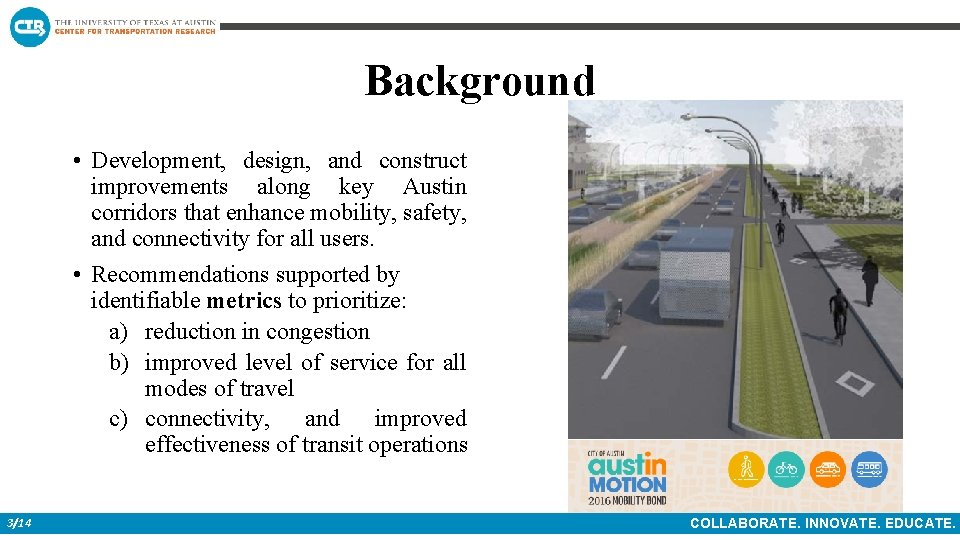
Background • Development, design, and construct improvements along key Austin corridors that enhance mobility, safety, and connectivity for all users. • Recommendations supported by identifiable metrics to prioritize: a) reduction in congestion b) improved level of service for all modes of travel c) connectivity, and improved effectiveness of transit operations 3/14 COLLABORATE. INNOVATE. EDUCATE.
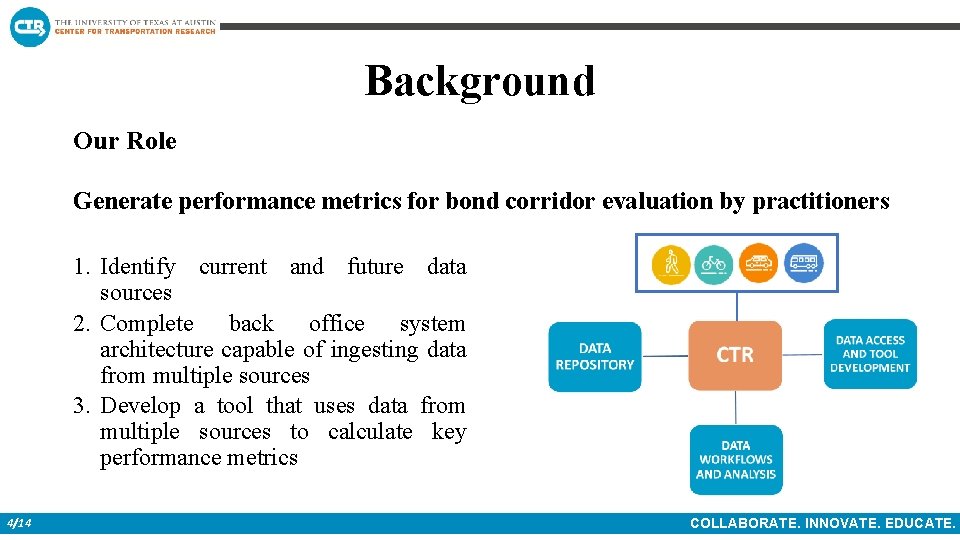
Background Our Role Generate performance metrics for bond corridor evaluation by practitioners 1. Identify current and future data sources 2. Complete back office system architecture capable of ingesting data from multiple sources 3. Develop a tool that uses data from multiple sources to calculate key performance metrics 4/14 COLLABORATE. INNOVATE. EDUCATE.
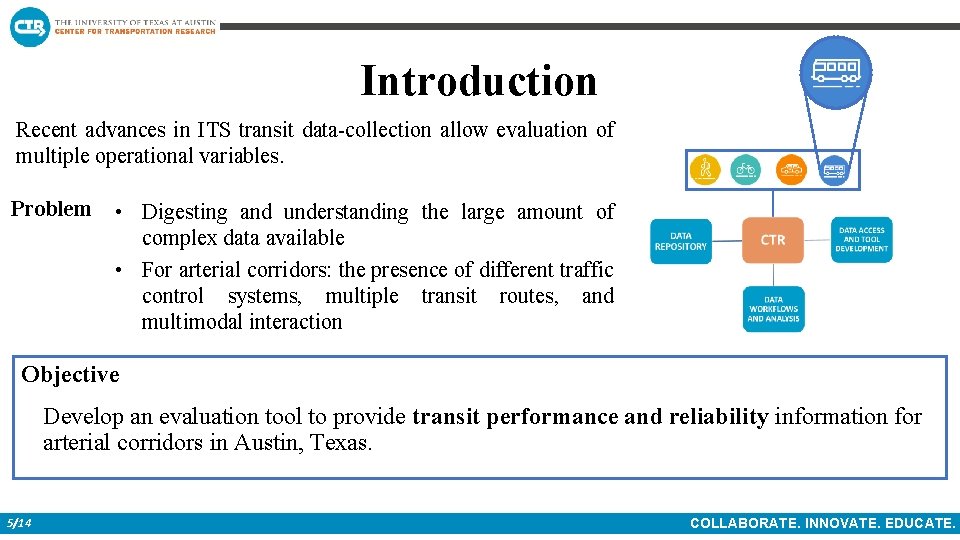
Introduction Recent advances in ITS transit data-collection allow evaluation of multiple operational variables. Problem • Digesting and understanding the large amount of complex data available • For arterial corridors: the presence of different traffic control systems, multiple transit routes, and multimodal interaction Objective Develop an evaluation tool to provide transit performance and reliability information for arterial corridors in Austin, Texas. 5/14 COLLABORATE. INNOVATE. EDUCATE.
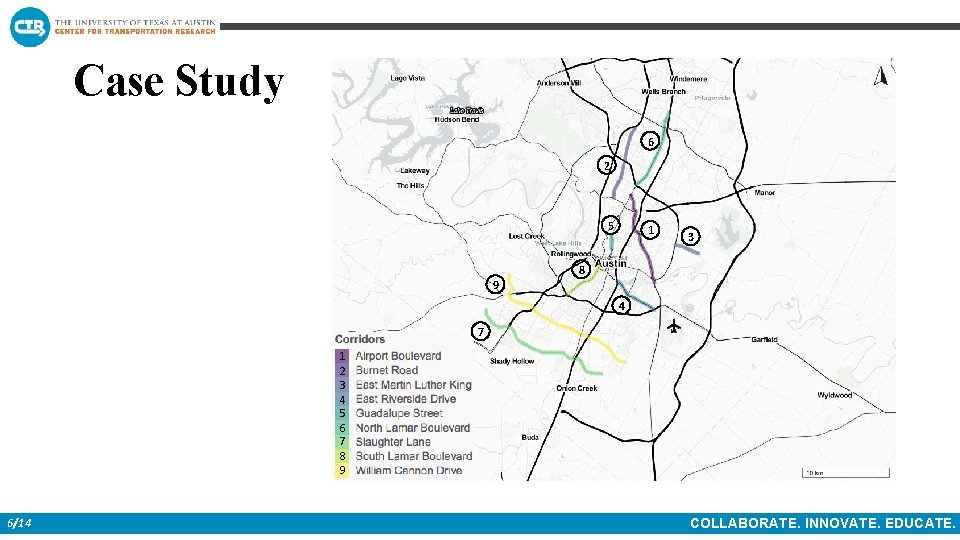
Case Study 6 2 5 1 3 8 9 4 7 1 2 3 4 5 6 7 8 9 6/14 COLLABORATE. INNOVATE. EDUCATE.
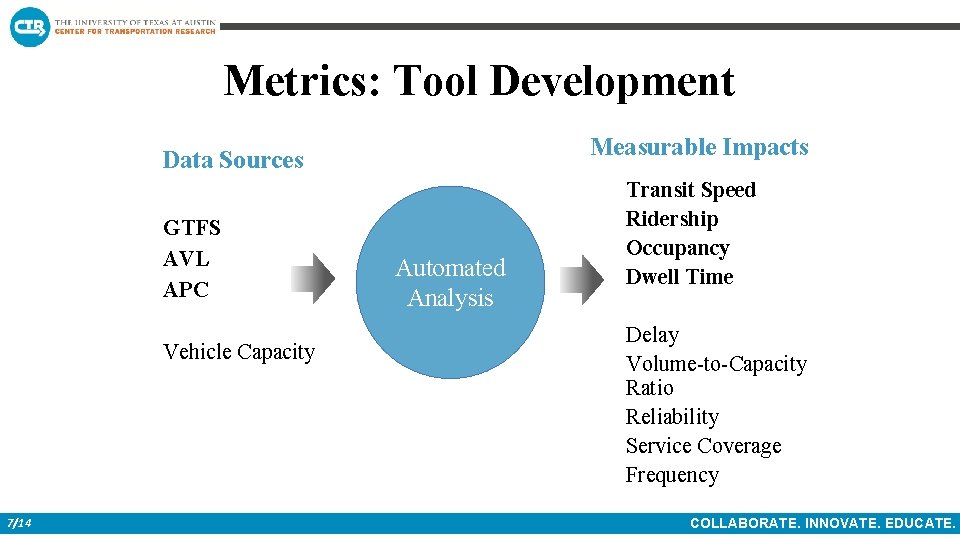
Metrics: Tool Development Measurable Impacts Data Sources GTFS AVL APC Vehicle Capacity 7/14 Automated Analysis Transit Speed Ridership Occupancy Dwell Time Delay Volume-to-Capacity Ratio Reliability Service Coverage Frequency COLLABORATE. INNOVATE. EDUCATE.
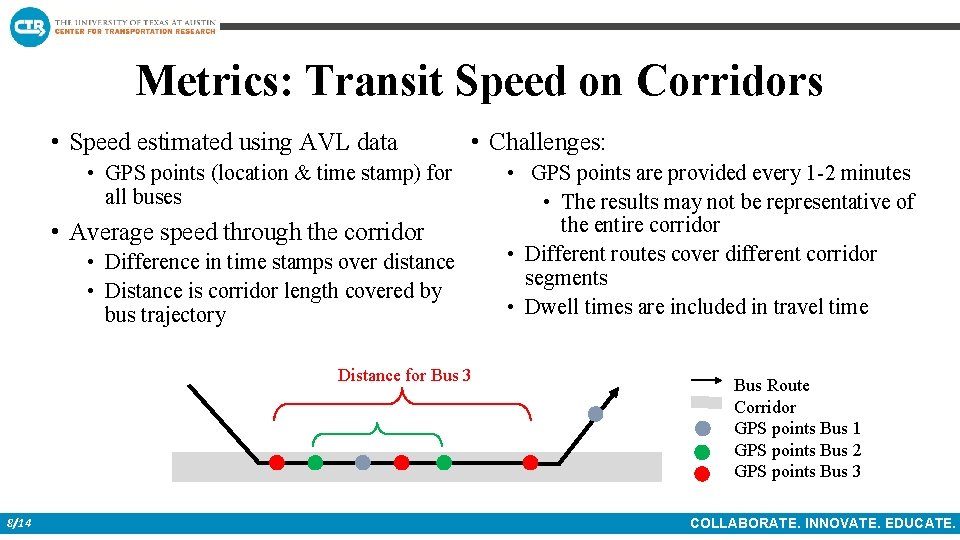
Metrics: Transit Speed on Corridors • Speed estimated using AVL data • Challenges: • GPS points (location & time stamp) for all buses • Average speed through the corridor • Difference in time stamps over distance • Distance is corridor length covered by bus trajectory Distance for Bus 3 8/14 • GPS points are provided every 1 -2 minutes • The results may not be representative of the entire corridor • Different routes cover different corridor segments • Dwell times are included in travel time Bus Route Corridor GPS points Bus 1 GPS points Bus 2 GPS points Bus 3 COLLABORATE. INNOVATE. EDUCATE.
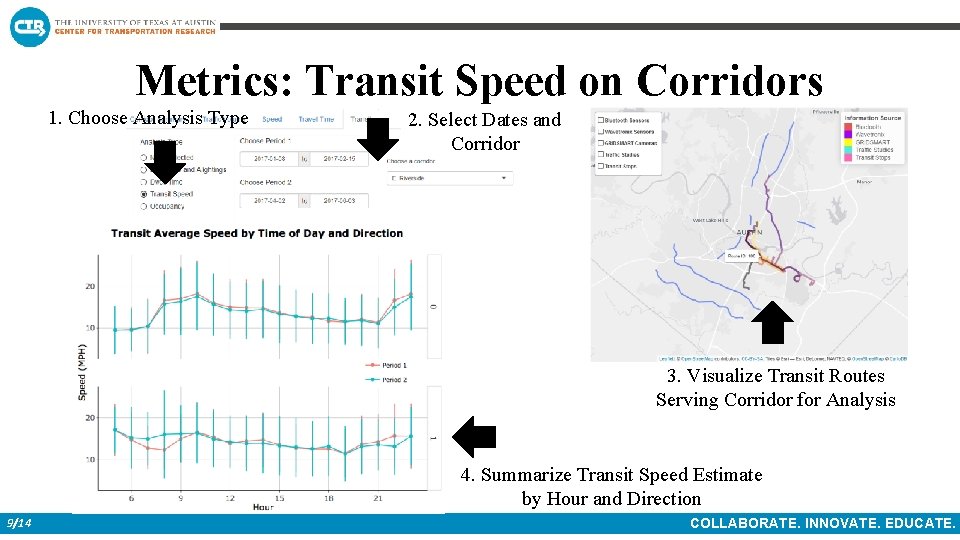
Metrics: Transit Speed on Corridors 1. Choose Analysis Type 2. Select Dates and Corridor 3. Visualize Transit Routes Serving Corridor for Analysis 4. Summarize Transit Speed Estimate by Hour and Direction 9/14 COLLABORATE. INNOVATE. EDUCATE.

Metrics: Occupancy Number of Passengers 1. Choose Analysis Type 2. Select Dates and Corridor 3. Visualize Transit Routes Serving Corridor for Analysis 4. Summarize Transit Occupancy by Hour 10/14 COLLABORATE. INNOVATE. EDUCATE.

Metrics: Boardings and Alightings 1. Choose Analysis Type 2. Select Dates 3. Visualize Transit Stops and Routes 4. Summarize Passenger Counts (not normalized by number of stops) 11/14 COLLABORATE. INNOVATE. EDUCATE.
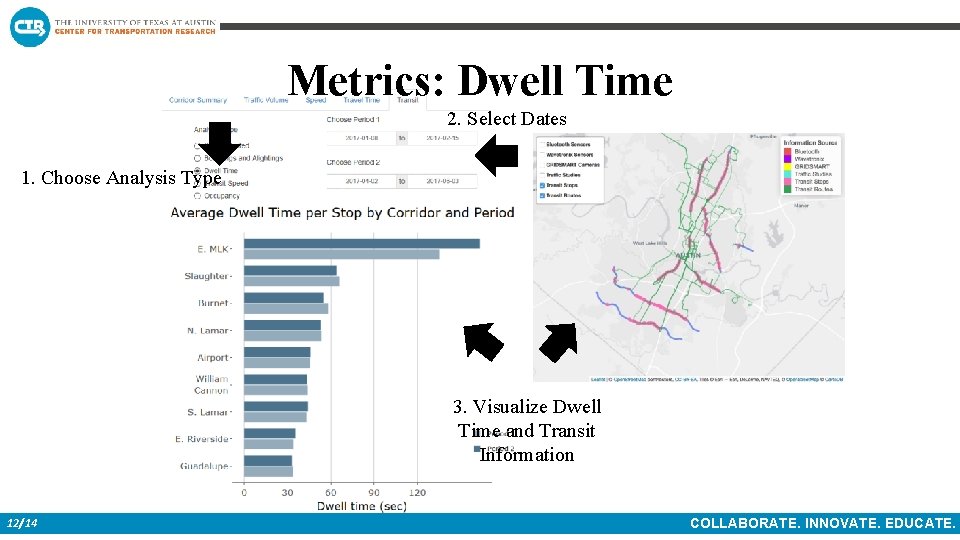
Metrics: Dwell Time 2. Select Dates 1. Choose Analysis Type 3. Visualize Dwell Time and Transit Information 12/14 COLLABORATE. INNOVATE. EDUCATE.
Future Work • Estimate bus trajectory • Integrate AVL and APC • Update speed estimation • Estimate bus on-time performance • Integrate GTFS and APC 13/14 COLLABORATE. INNOVATE. EDUCATE.

THANKS Questions or Comments? nzuniga@utexas. edu 14/14 COLLABORATE. INNOVATE. EDUCATE.
- Slides: 14