
TRANSIT DEVELOPMENT DESIGN GUIDELINES UPDATE MAY 2016 PROJECT
- Slides: 9
TRANSIT DEVELOPMENT DESIGN GUIDELINES UPDATE MAY 2016
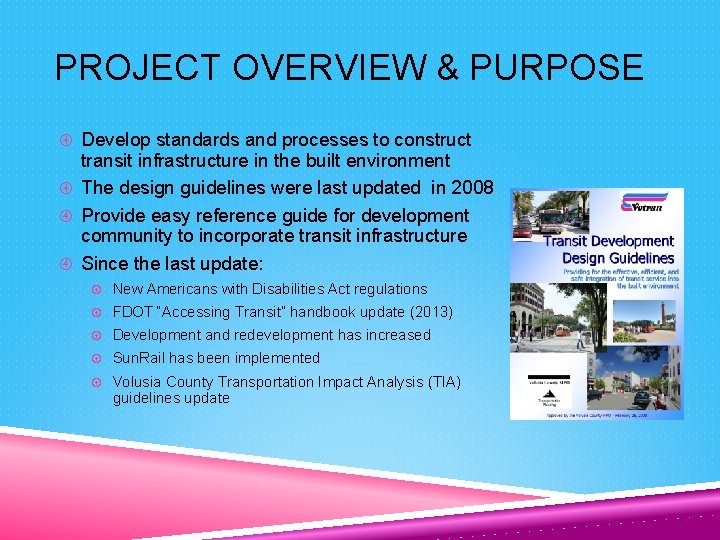
PROJECT OVERVIEW & PURPOSE Develop standards and processes to construct transit infrastructure in the built environment The design guidelines were last updated in 2008 Provide easy reference guide for development community to incorporate transit infrastructure Since the last update: New Americans with Disabilities Act regulations FDOT “Accessing Transit” handbook update (2013) Development and redevelopment has increased Sun. Rail has been implemented Volusia County Transportation Impact Analysis (TIA) guidelines update
TDDG METHODOLOGY To be used in coordination with the TIA guidelines Emphasis on future transit corridors within the existing Votran service area US 17/92 International Speedway Boulevard A 1 A US 1 SR 40 Development projects outside of the Votran service area would require funding mechanisms General parameters / best practices
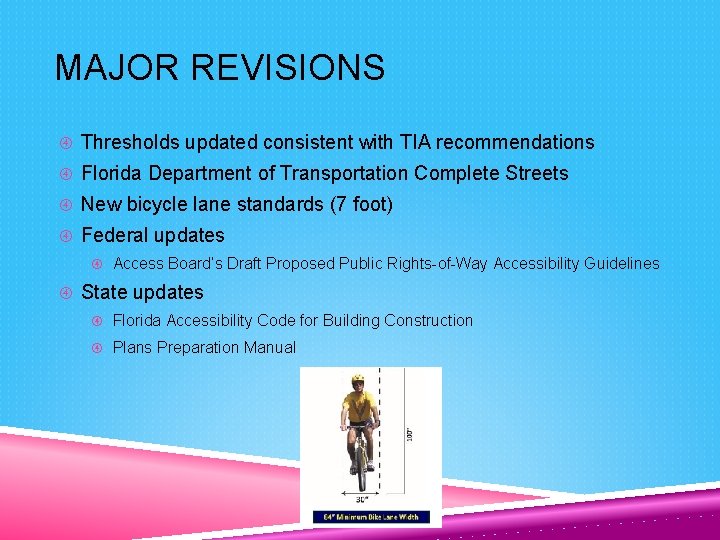
MAJOR REVISIONS Thresholds updated consistent with TIA recommendations Florida Department of Transportation Complete Streets New bicycle lane standards (7 foot) Federal updates Access Board’s Draft Proposed Public Rights-of-Way Accessibility Guidelines State updates Florida Accessibility Code for Building Construction Plans Preparation Manual
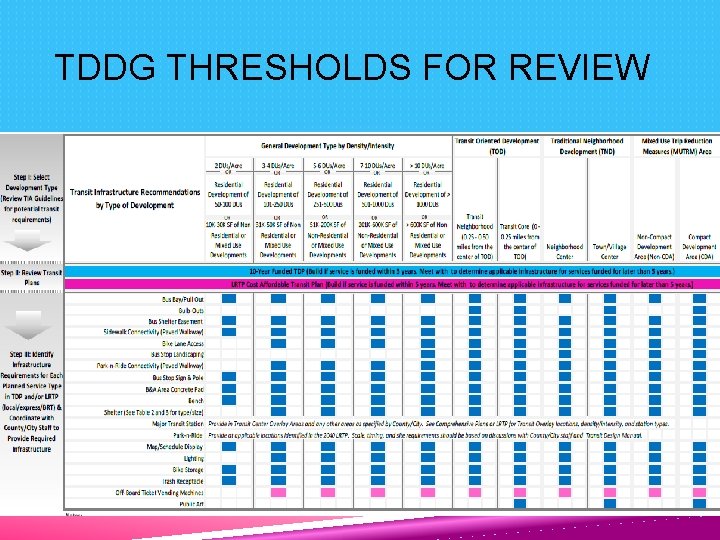
TDDG THRESHOLDS FOR REVIEW
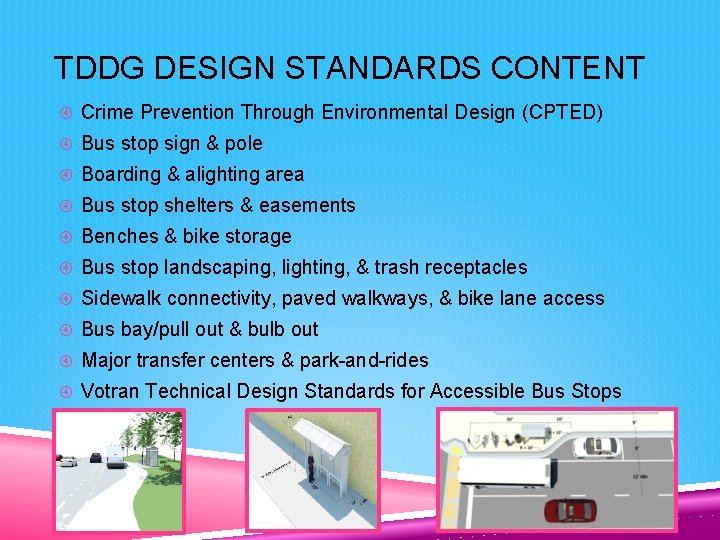
TDDG DESIGN STANDARDS CONTENT Crime Prevention Through Environmental Design (CPTED) Bus stop sign & pole Boarding & alighting area Bus stop shelters & easements Benches & bike storage Bus stop landscaping, lighting, & trash receptacles Sidewalk connectivity, paved walkways, & bike lane access Bus bay/pull out & bulb out Major transfer centers & park-and-rides Votran Technical Design Standards for Accessible Bus Stops
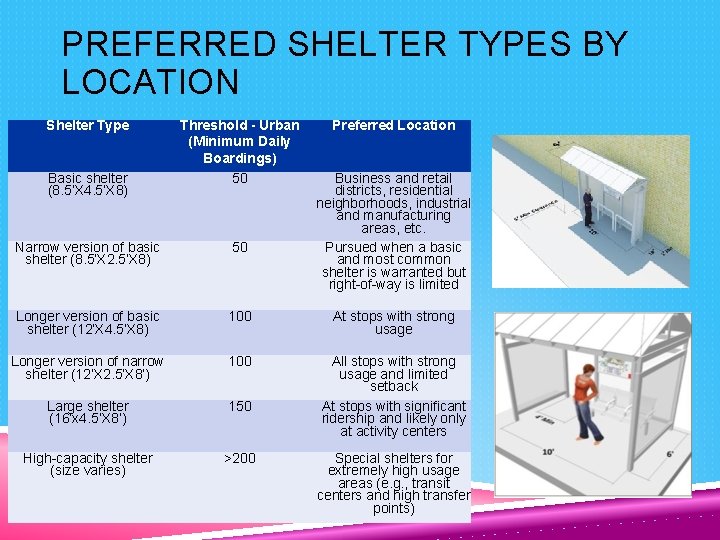
PREFERRED SHELTER TYPES BY LOCATION Shelter Type Basic shelter (8. 5’X 4. 5’X 8) Threshold - Urban (Minimum Daily Boardings) 50 Preferred Location Business and retail districts, residential neighborhoods, industrial and manufacturing areas, etc. Pursued when a basic and most common shelter is warranted but right-of-way is limited Narrow version of basic shelter (8. 5’X 2. 5’X 8) 50 Longer version of basic shelter (12’X 4. 5’X 8) 100 At stops with strong usage Longer version of narrow shelter (12’X 2. 5’X 8’) 100 Large shelter (16’x 4. 5’X 8’) 150 All stops with strong usage and limited setback At stops with significant ridership and likely only at activity centers High-capacity shelter (size varies) >200 Special shelters for extremely high usage areas (e. g. , transit centers and high transfer points)
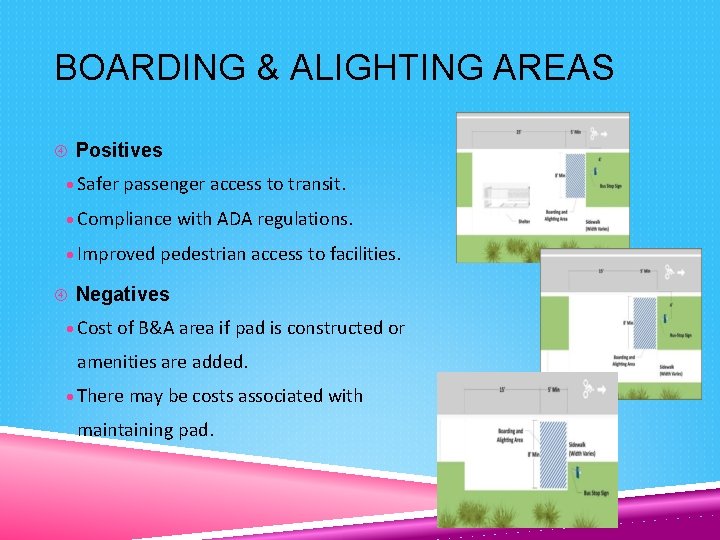
BOARDING & ALIGHTING AREAS Positives Safer passenger access to transit. Compliance with ADA regulations. Improved pedestrian access to facilities. Negatives Cost of B&A area if pad is constructed or amenities are added. There may be costs associated with maintaining pad.
PROJECT CONTACT INFORMATION Heather Blanck La. Chant Barnett Assistant General Manager of Planning, Senior Project Manager Marketing, and Customer Service Tindale Oliver Votran LBarnett@tindaleoliver. com hblanck@volusia. org 386 -756 -7496 (407) 657 -9210 ext. 2237