
Transistor Odds and Ends PHY 201 Blum 1
Transistor Odds and Ends PHY 201 (Blum) 1
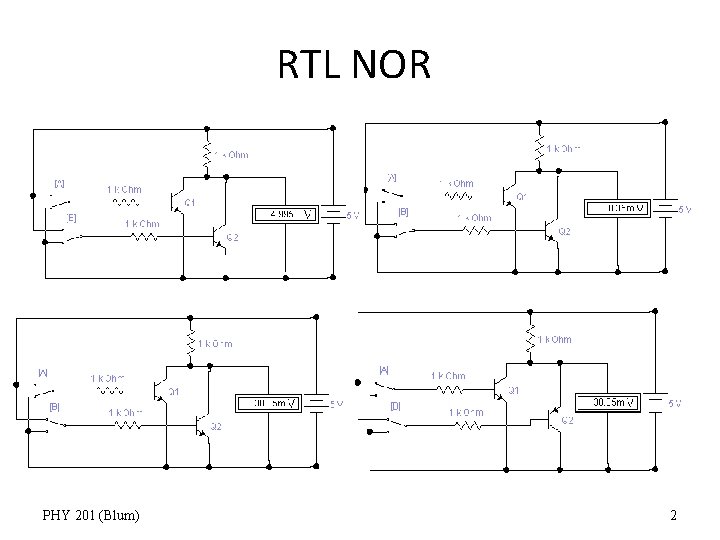
RTL NOR PHY 201 (Blum) 2
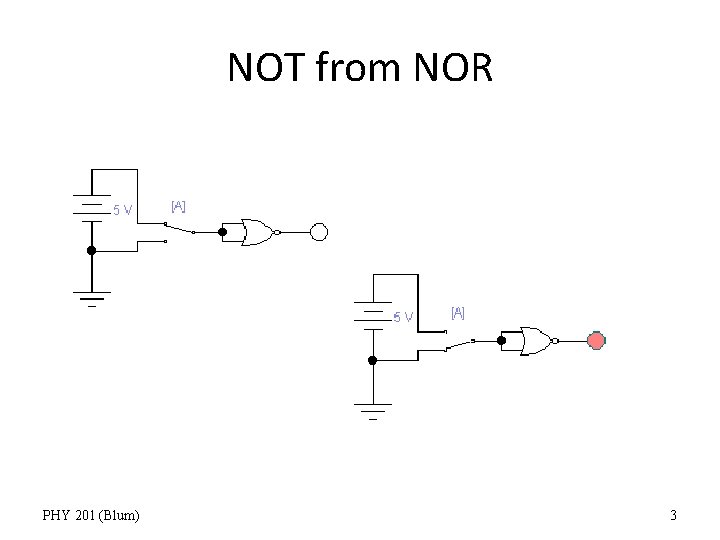
NOT from NOR PHY 201 (Blum) 3
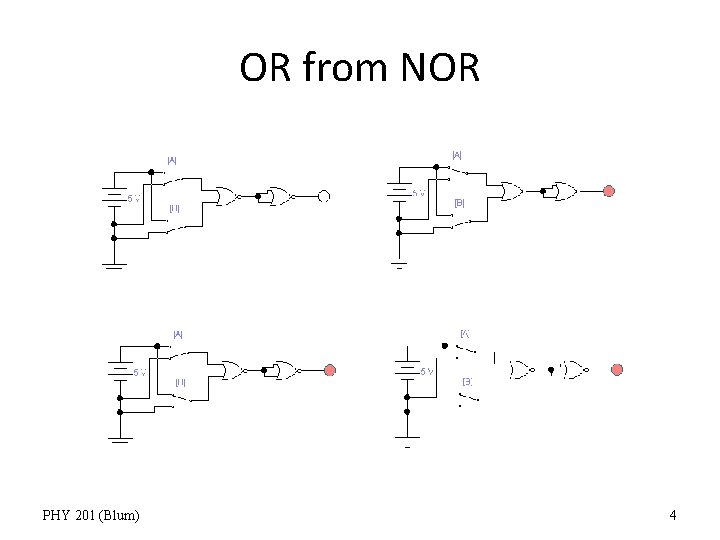
OR from NOR PHY 201 (Blum) 4
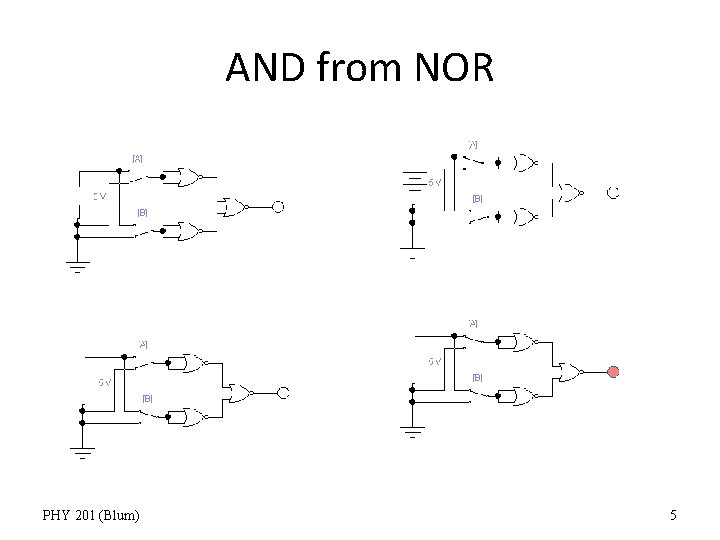
AND from NOR PHY 201 (Blum) 5
Sequential Logic • Whereas combinatorial logic depends only on the current inputs, sequential logic can also depend on the previous “state” of the system. • Circuitry designed to hold a high or low state is known as a flip-flop. • A flip-flop is the smallest unit of RAM – random access memory. • Recall there are two basic categories of RAM: dynamic RAM (DRAM) and static RAM (SRAM). PHY 201 (Blum) 6
Flip Flops • Flip-flops serve as the elementary units for memory in digital systems. Two features are needed: • 1. The circuit must be able to “hold” either state (a high or low output) and not simply reflect the input at any given time. • 2. But in some circumstances, we must be able to change (to “set” and “reset”) the values. PHY 201 (Blum) 7
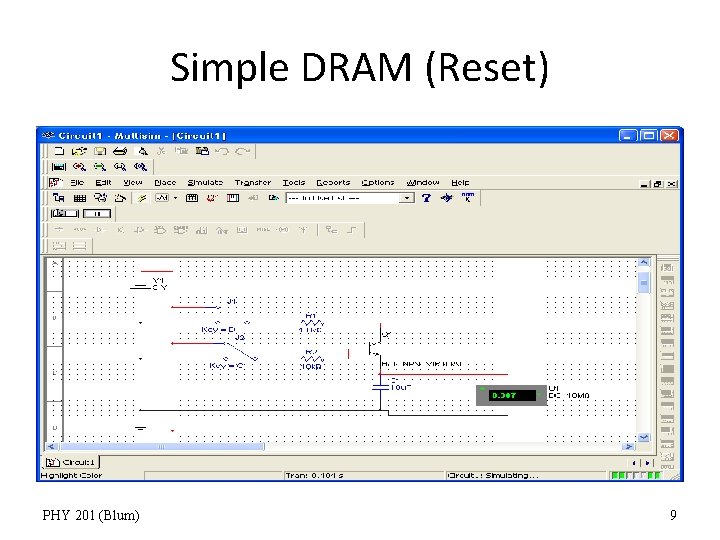
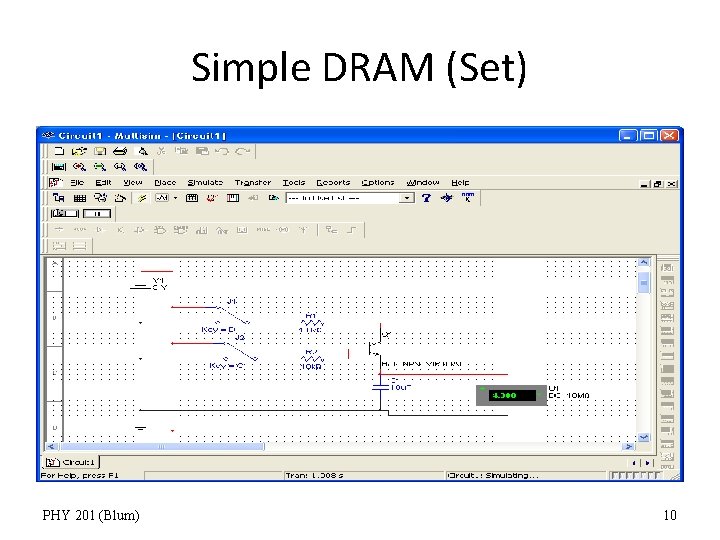
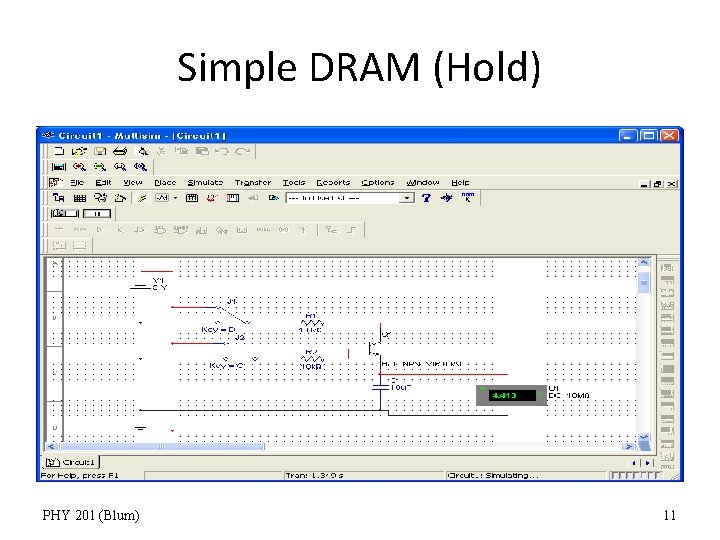
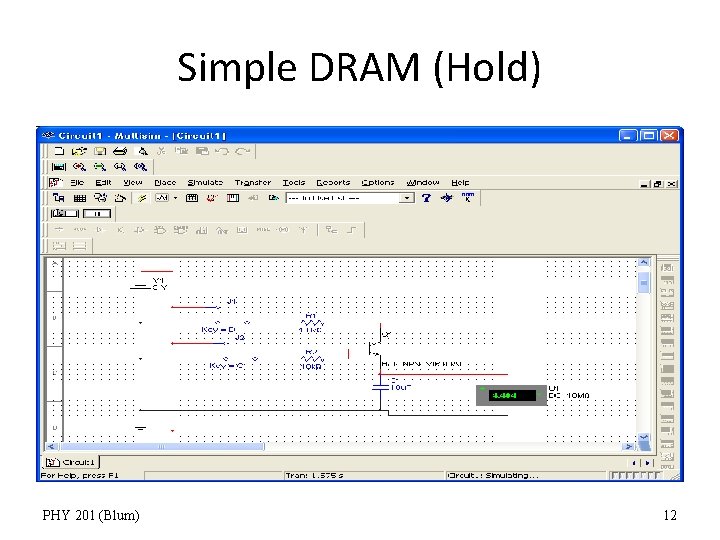
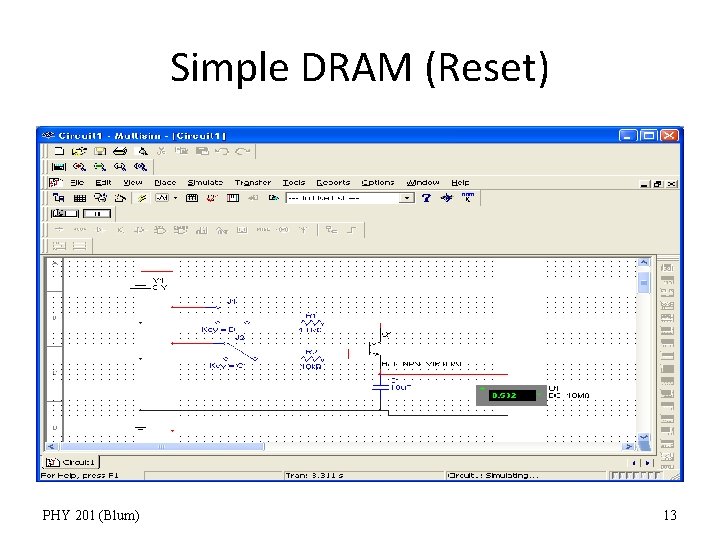
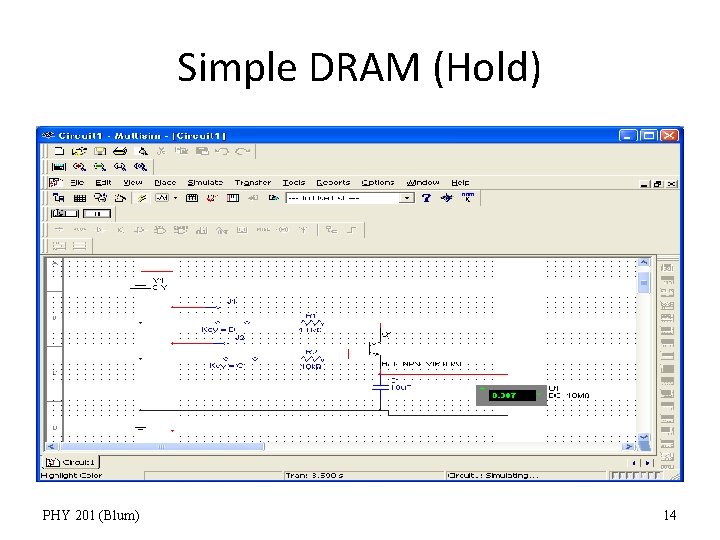
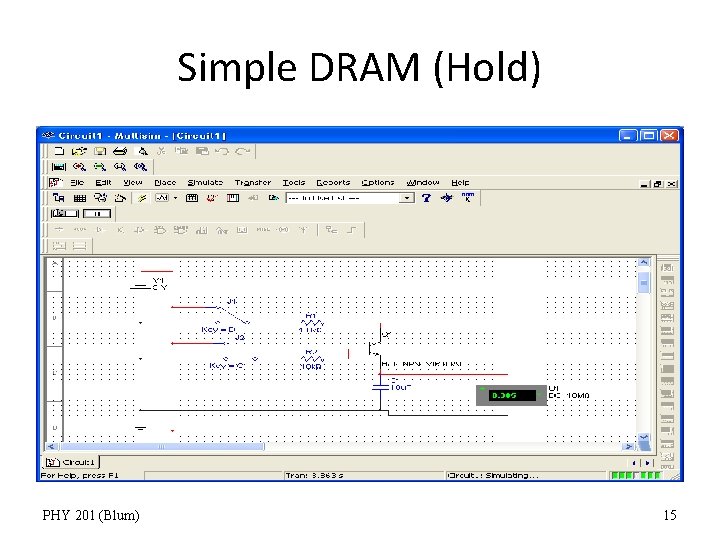
Remembrance of states past • The way in which the previous state information is held is different for different types of memory • In DRAM (dynamic random access memory), the state (1 or 0) is held by a charge (or lack thereof) remaining on a capacitor – Charges tend to leak off of capacitors, which is why DRAM must be periodically refreshed PHY 201 (Blum) 8
Simple DRAM (Reset) PHY 201 (Blum) 9
Simple DRAM (Set) PHY 201 (Blum) 10
Simple DRAM (Hold) PHY 201 (Blum) 11
Simple DRAM (Hold) PHY 201 (Blum) 12
Simple DRAM (Reset) PHY 201 (Blum) 13
Simple DRAM (Hold) PHY 201 (Blum) 14
Simple DRAM (Hold) PHY 201 (Blum) 15

Analog-to-Digital Converter ADC
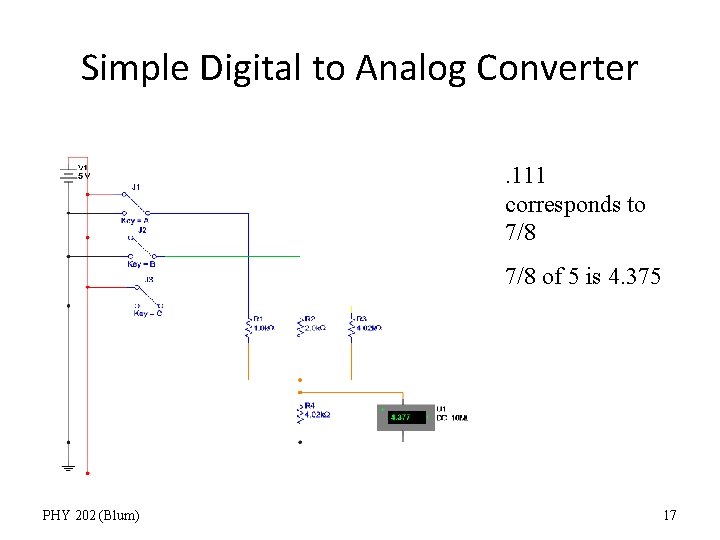
Simple Digital to Analog Converter. 111 corresponds to 7/8 of 5 is 4. 375 PHY 202 (Blum) 17
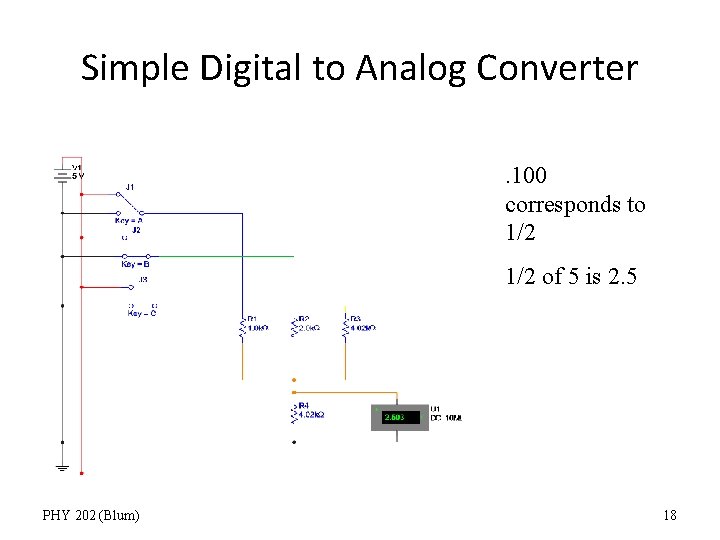
Simple Digital to Analog Converter. 100 corresponds to 1/2 of 5 is 2. 5 PHY 202 (Blum) 18
Analog-to-Digital • We have seen a simple digital-to-analog converter, now we consider the reverse process • For this purpose we introduce a new circuit element — the comparator • A digital comparator would compare two binary inputs A and B and determine if A is larger than B (as well as if A = B). • An analog comparator would determine whether voltage A is larger than voltage B PHY 202 (Blum) 19

PHY 202 (Blum) 20
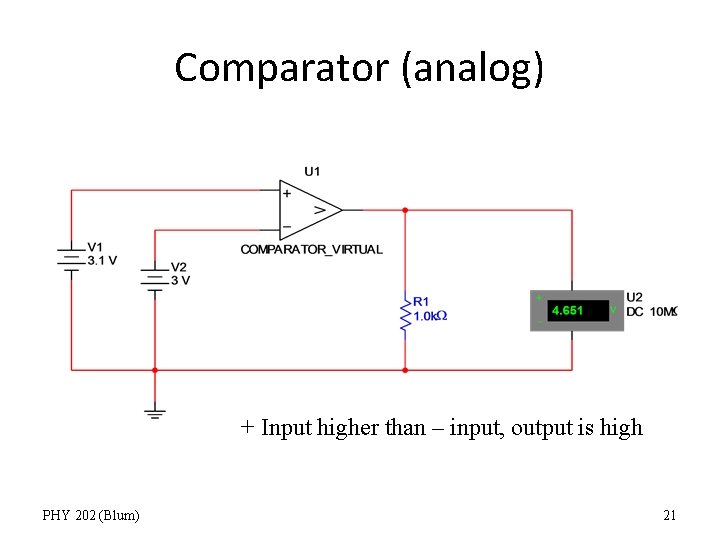
Comparator (analog) + Input higher than – input, output is high PHY 202 (Blum) 21
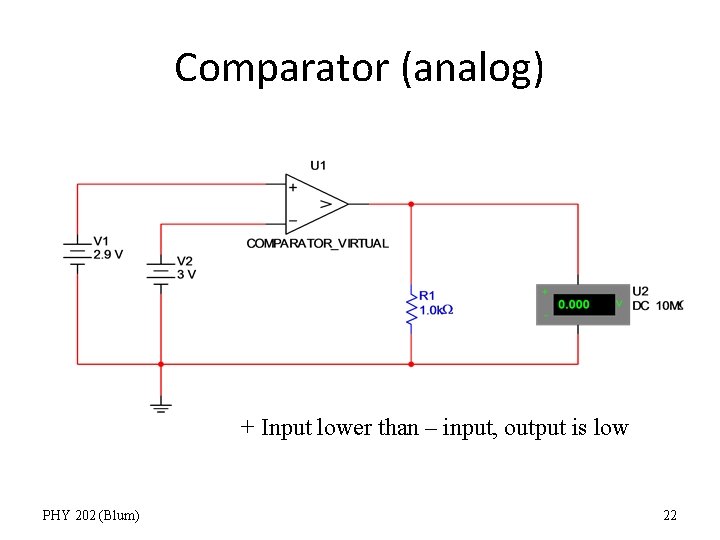
Comparator (analog) + Input lower than – input, output is low PHY 202 (Blum) 22
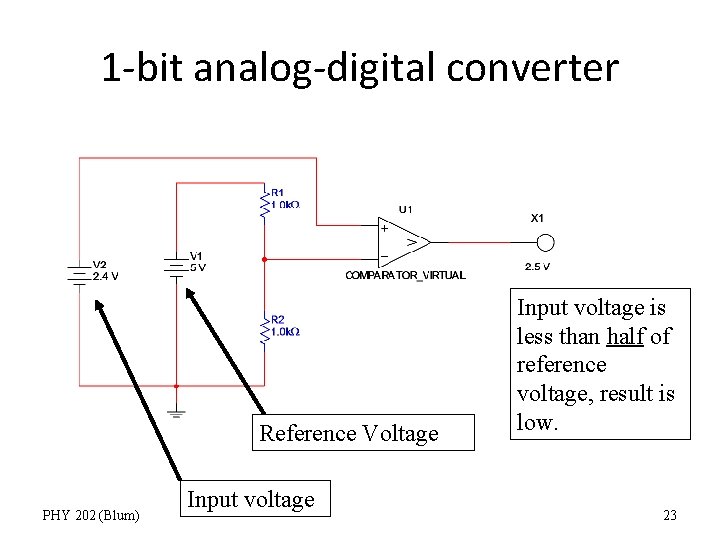
1 -bit analog-digital converter Reference Voltage PHY 202 (Blum) Input voltage is less than half of reference voltage, result is low. 23
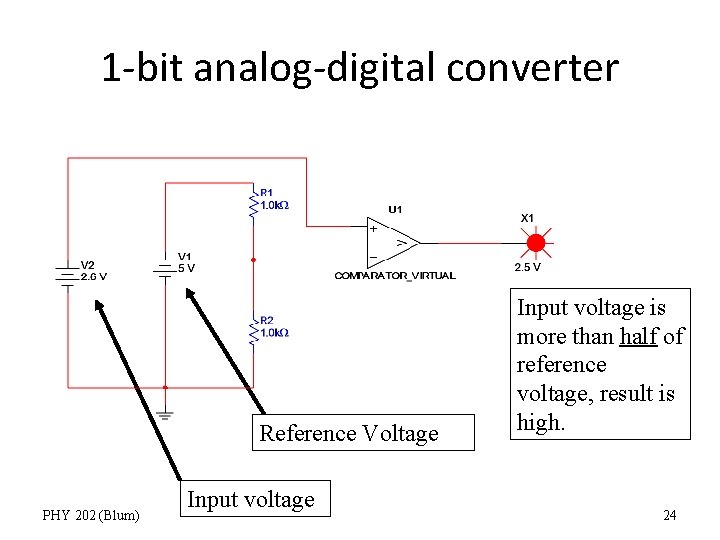
1 -bit analog-digital converter Reference Voltage PHY 202 (Blum) Input voltage is more than half of reference voltage, result is high. 24
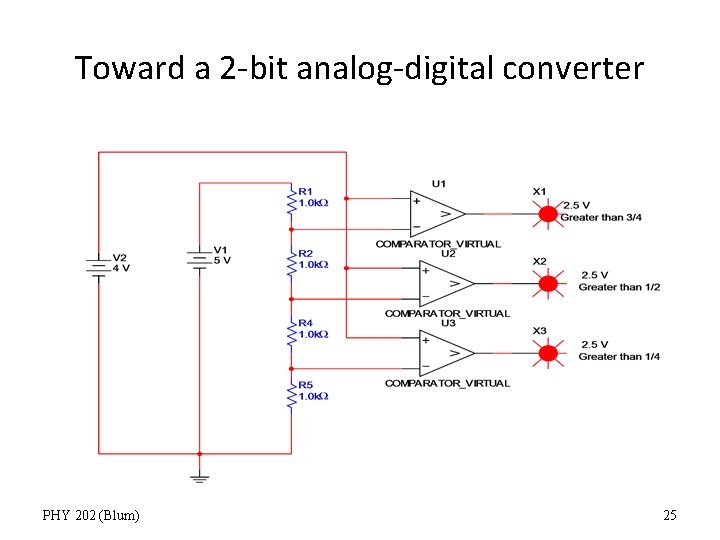
Toward a 2 -bit analog-digital converter PHY 202 (Blum) 25
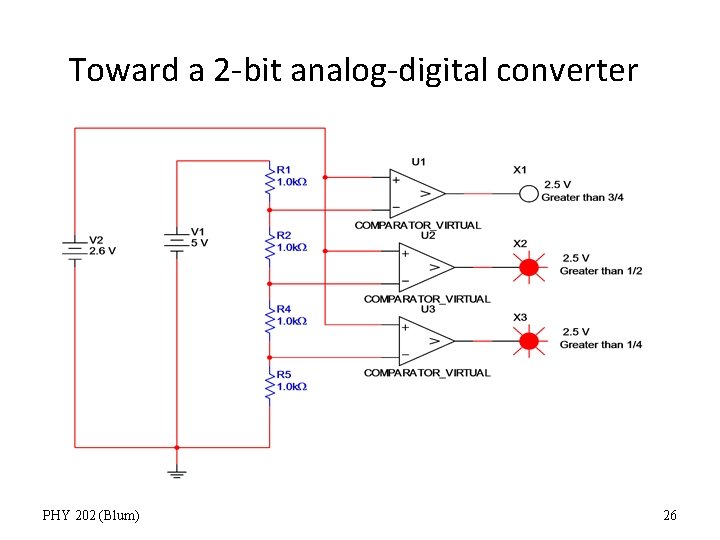
Toward a 2 -bit analog-digital converter PHY 202 (Blum) 26
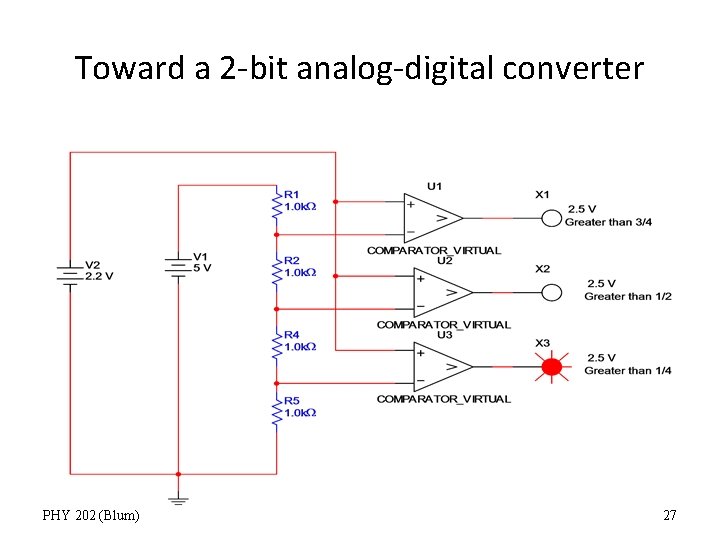
Toward a 2 -bit analog-digital converter PHY 202 (Blum) 27
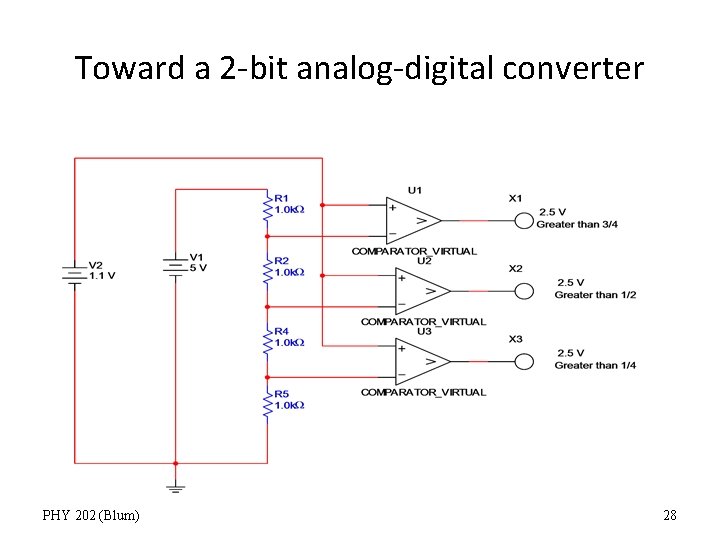
Toward a 2 -bit analog-digital converter PHY 202 (Blum) 28
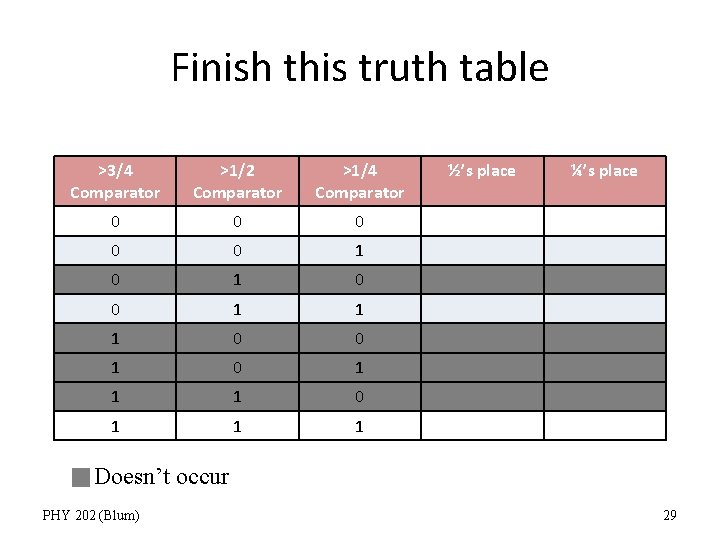
Finish this truth table >3/4 Comparator >1/2 Comparator >1/4 Comparator 0 0 0 1 1 1 0 0 1 1 1 ½’s place ¼’s place Doesn’t occur PHY 202 (Blum) 29
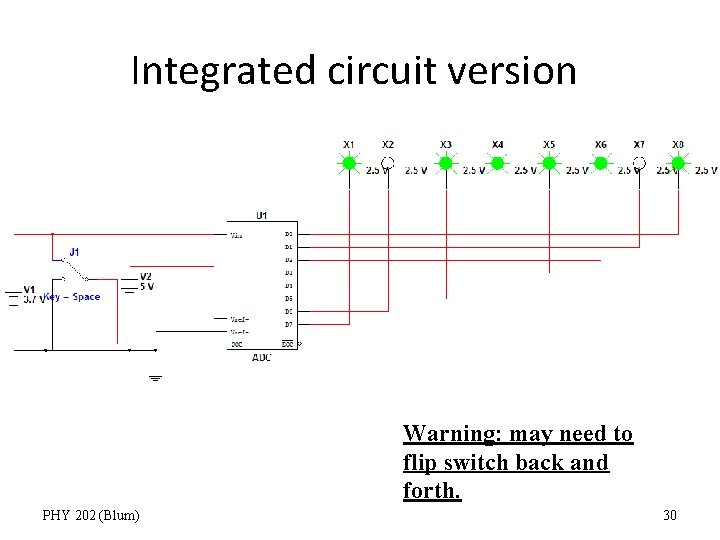
Integrated circuit version Warning: may need to flip switch back and forth. PHY 202 (Blum) 30
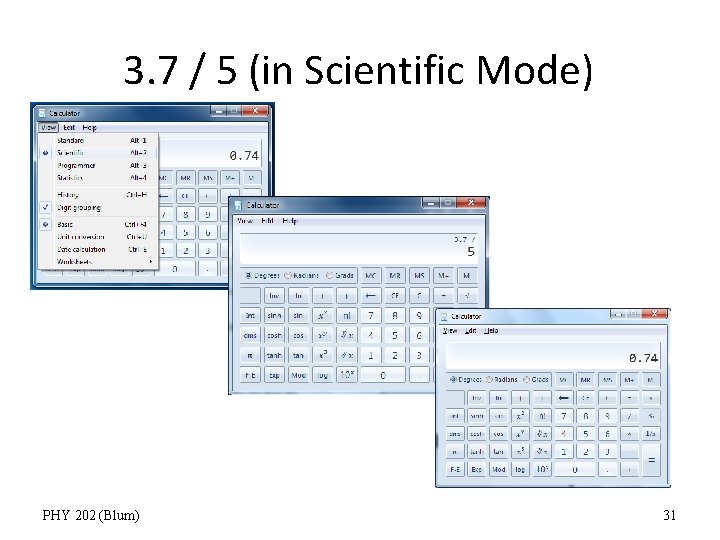
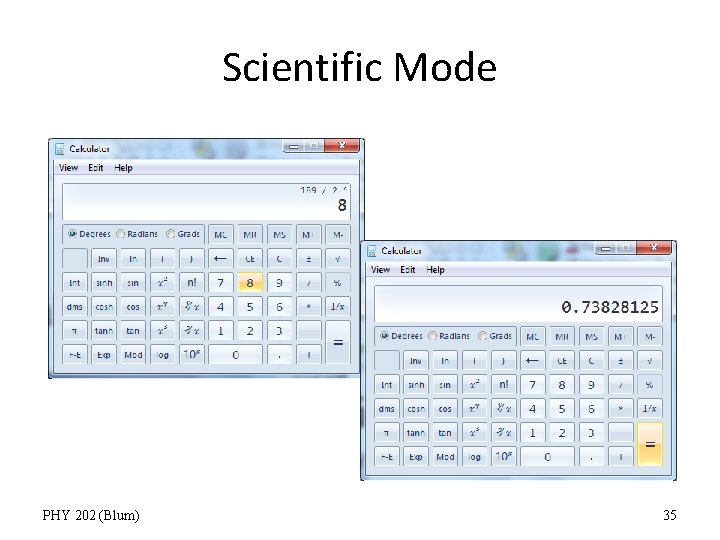
3. 7 / 5 (in Scientific Mode) PHY 202 (Blum) 31
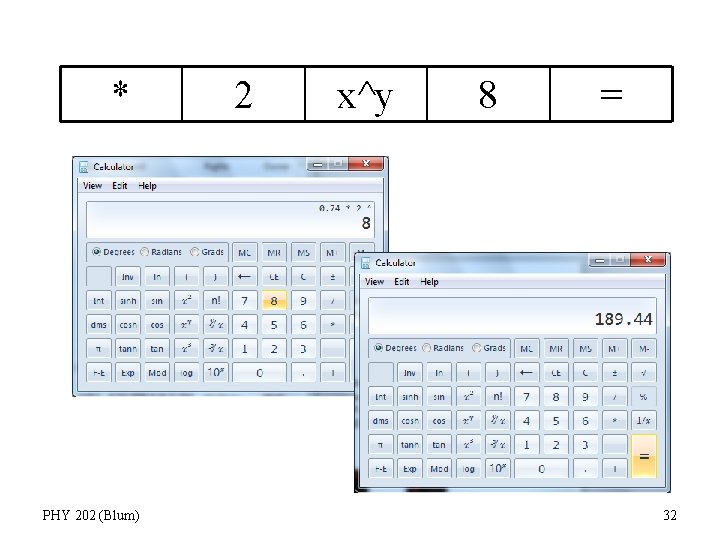
* PHY 202 (Blum) 2 x^y 8 = 32
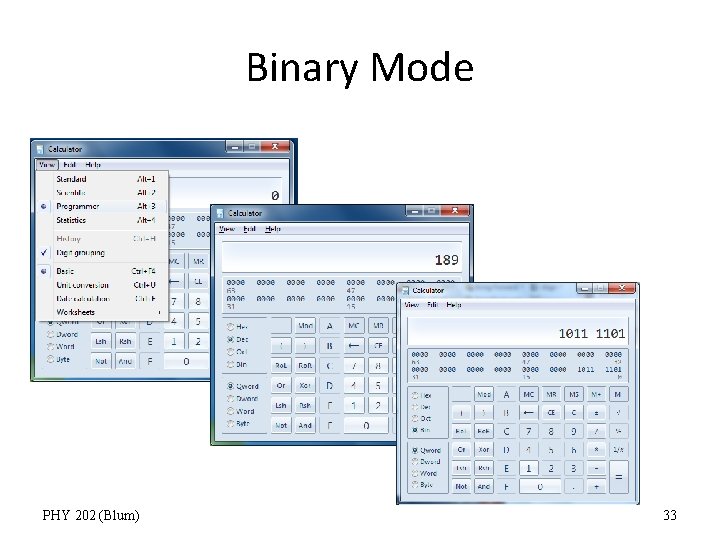
Binary Mode PHY 202 (Blum) 33
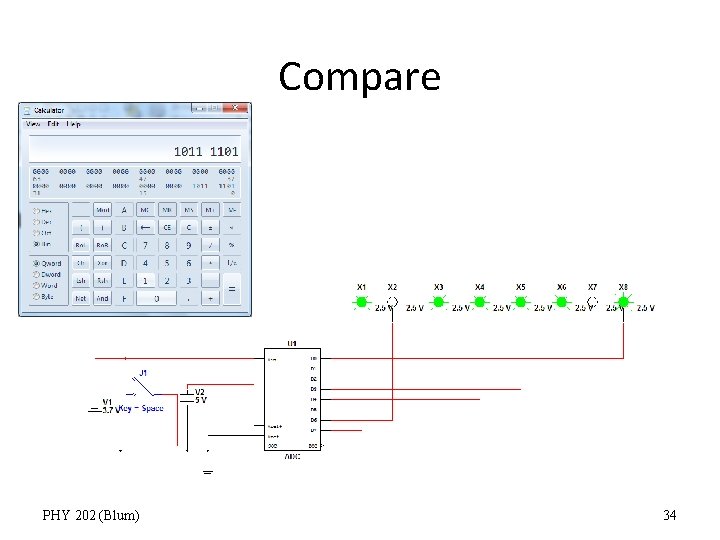
Compare PHY 202 (Blum) 34
Scientific Mode PHY 202 (Blum) 35
Digital Comparators PHY 201 (Blum)
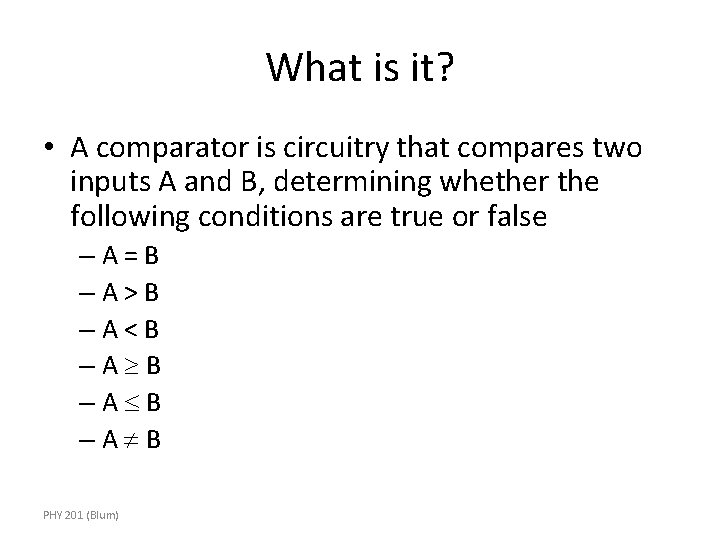
What is it? • A comparator is circuitry that compares two inputs A and B, determining whether the following conditions are true or false – A = B – A > B – A < B – A B PHY 201 (Blum)
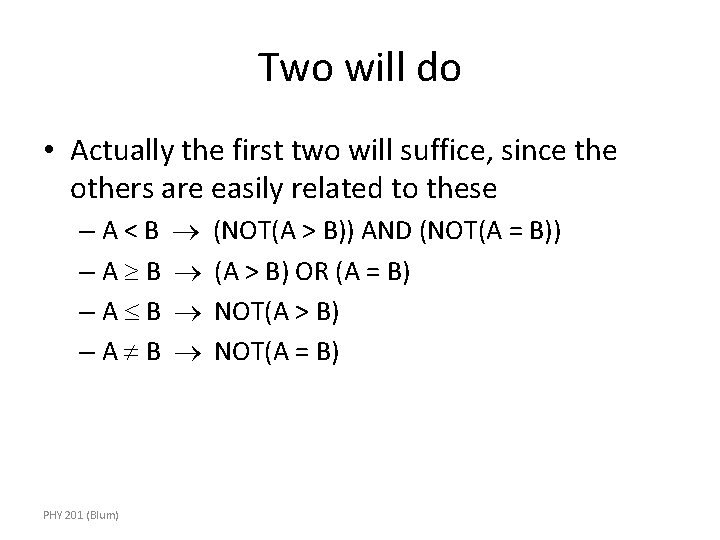
Two will do • Actually the first two will suffice, since the others are easily related to these – A < B (NOT(A > B)) AND (NOT(A = B)) – A B (A > B) OR (A = B) – A B NOT(A > B) – A B NOT(A = B) PHY 201 (Blum)
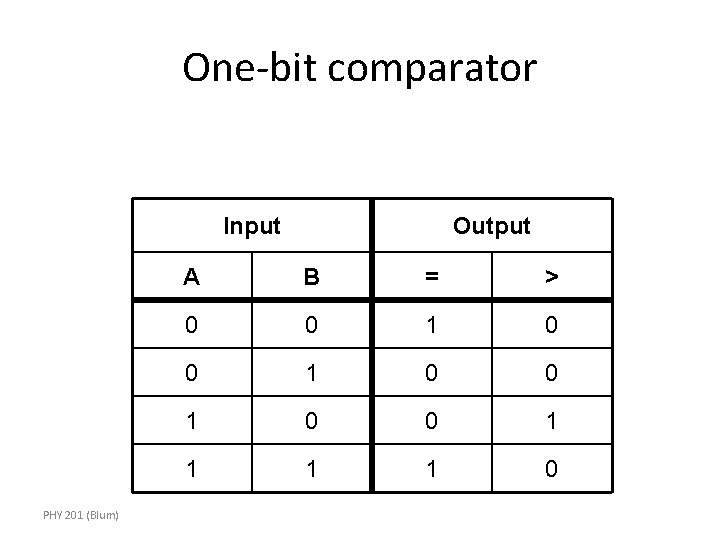
One-bit comparator Input PHY 201 (Blum) Output A B = > 0 0 1 1 1 1 0
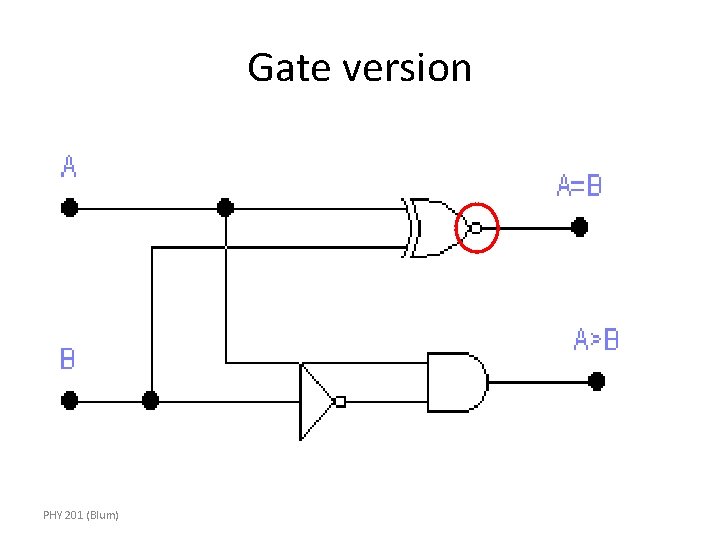
Gate version PHY 201 (Blum)
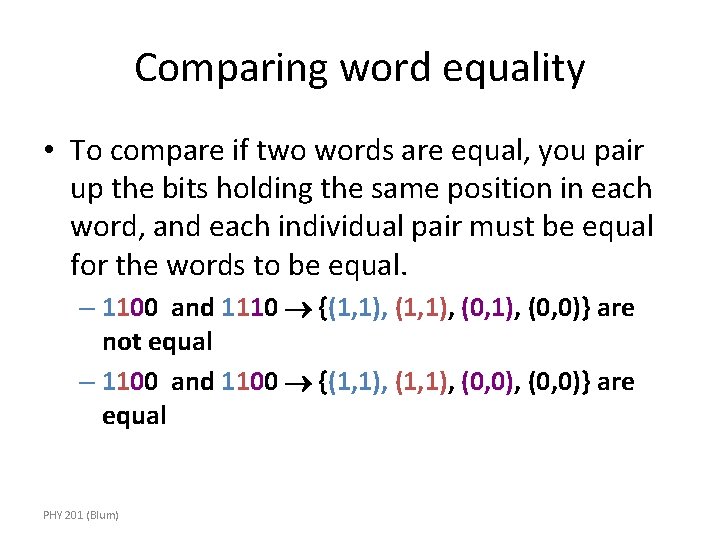
Comparing word equality • To compare if two words are equal, you pair up the bits holding the same position in each word, and each individual pair must be equal for the words to be equal. – 1100 and 1110 {(1, 1), (0, 0)} are not equal – 1100 and 1100 {(1, 1), (0, 0), (0, 0)} are equal PHY 201 (Blum)
Comparing word inequality • Assume unsigned integers, then – If the most significant bit of word A is greater than the most significant bit of word B, then word A is greater than word B. – If the most significant bit of word A is less than the most significant bit of word B, then word A is less than word B. – If the most significant bit of word A is equal to the most significant bit of word B, then we must compare the next most significant bits. PHY 201 (Blum)
And so on • If the most significant bits are equal, one compares the next-most significant bits. • Then if the next most significant bits are equal, one compares the next-most significant bits, and so on. • It seems that one must know the outcome of testing the more significant bits before one proceeds to the less significant bits. PHY 201 (Blum)
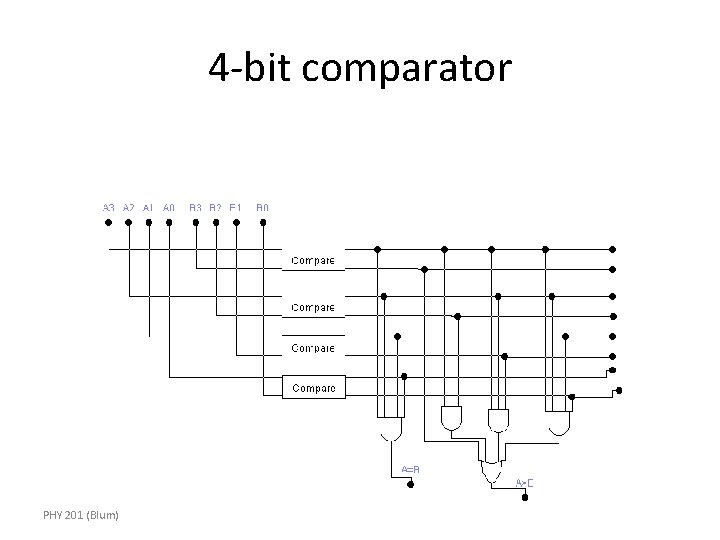
4 -bit comparator PHY 201 (Blum)
- Slides: 44