
Transient Heat Conduction Chapter 4 The Temperature is
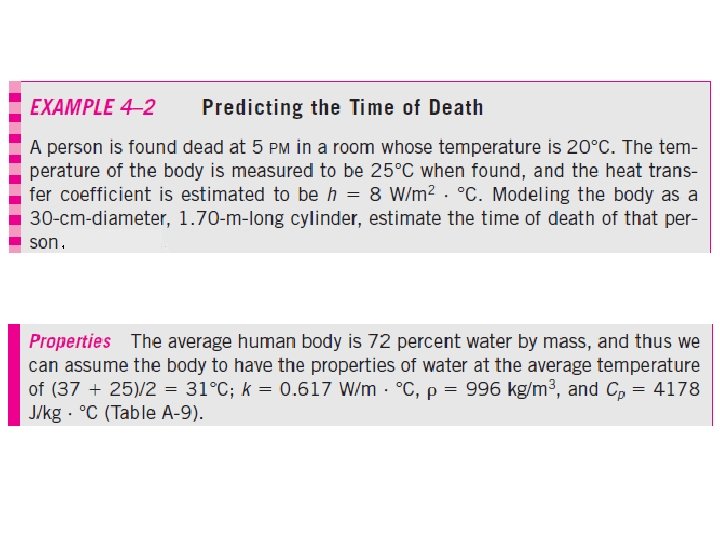
- Slides: 36
Transient Heat Conduction
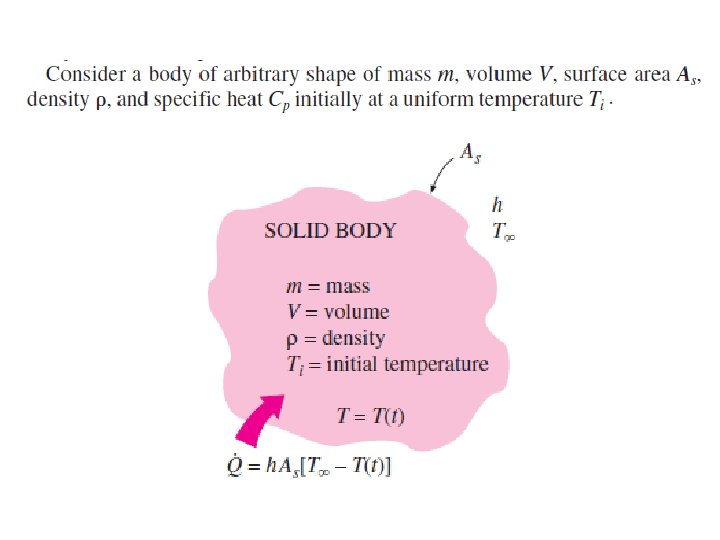
Chapter 4 • The Temperature is usually changing with time as well as position. • T = T(x, y, z, t) for transient 3 -dimensional HT. • T = T(z, y, z) for steady 3 -dimensional HT. • In the previous lectures, we discussed the steady state heat transfer. • In this chapter we discuss the heat conduction as a function of time in one dimension.
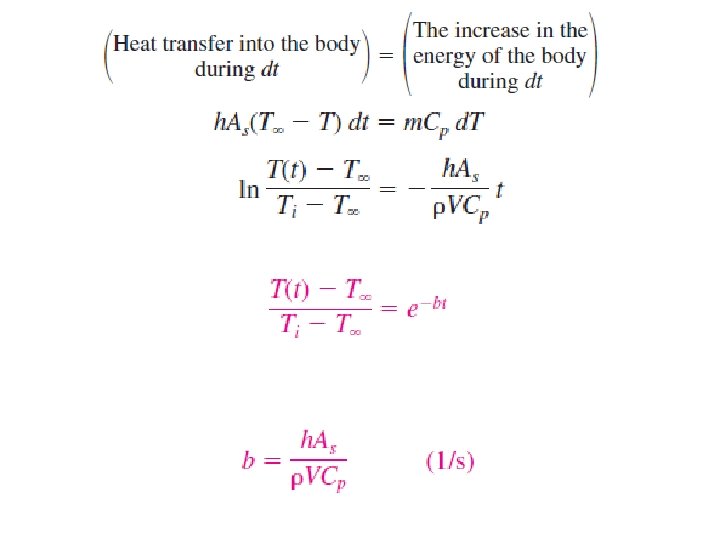
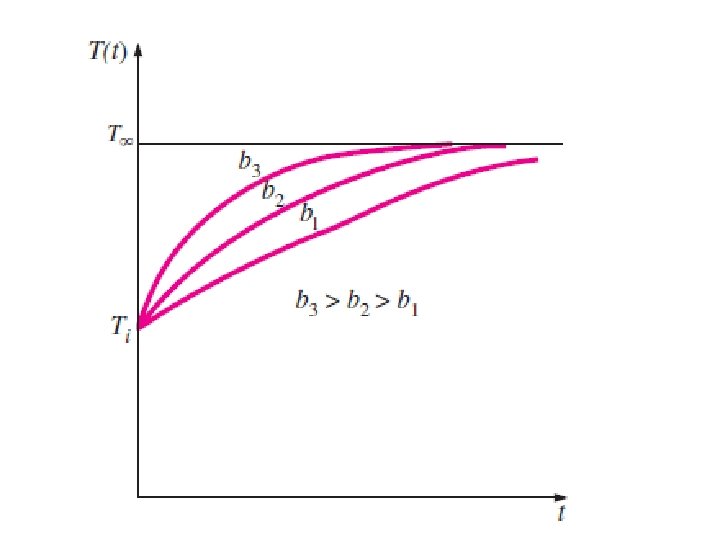
Objectives • We will start with the analysis of lumped systems in which the temperature of a solid varies with time but remains uniform throughout the solid at any time. • Then, we consider the variation of T with time and position for one dimensional heat conduction in walls, cylinders, and spheres.
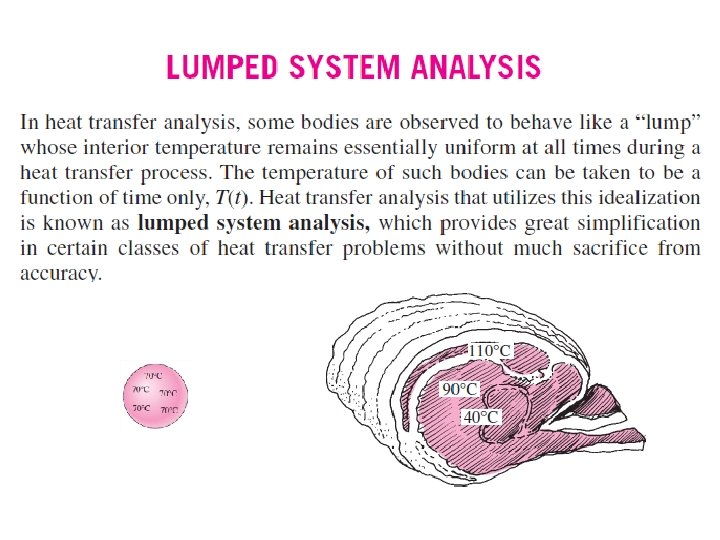
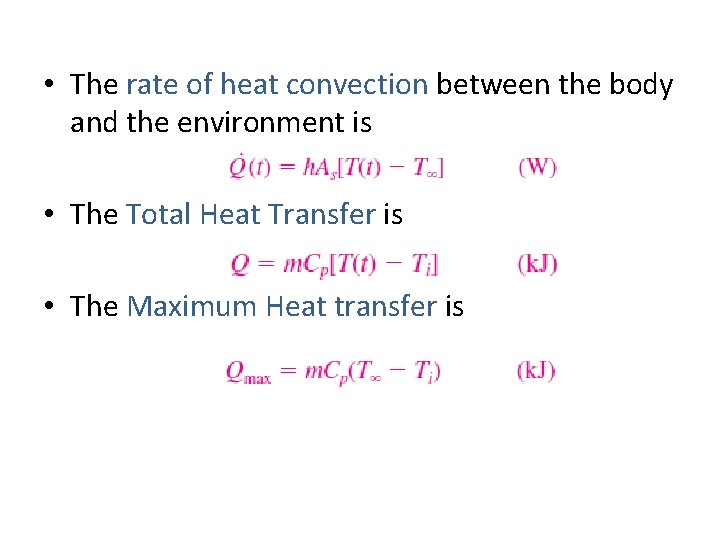
• The rate of heat convection between the body and the environment is • The Total Heat Transfer is • The Maximum Heat transfer is
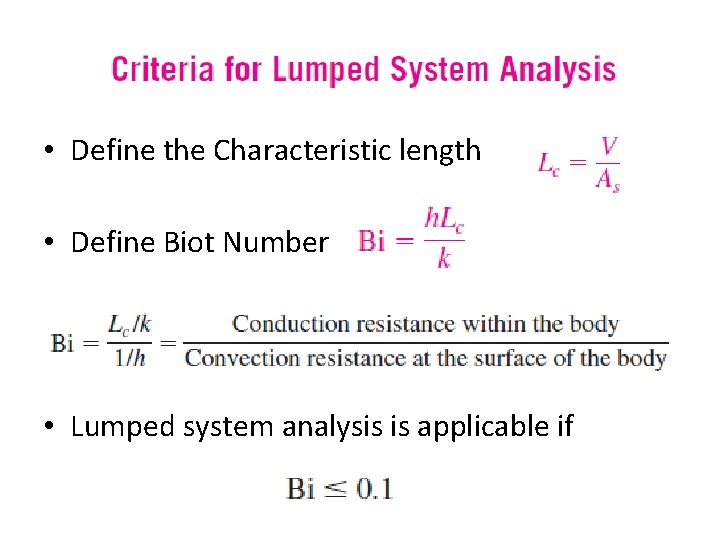
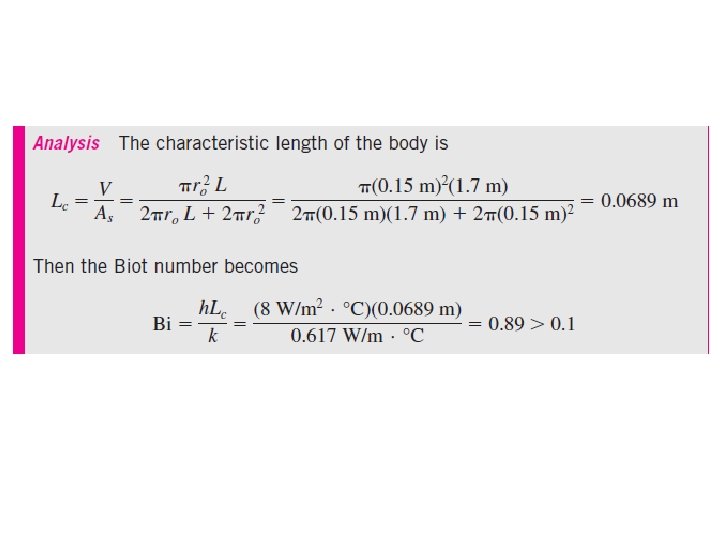
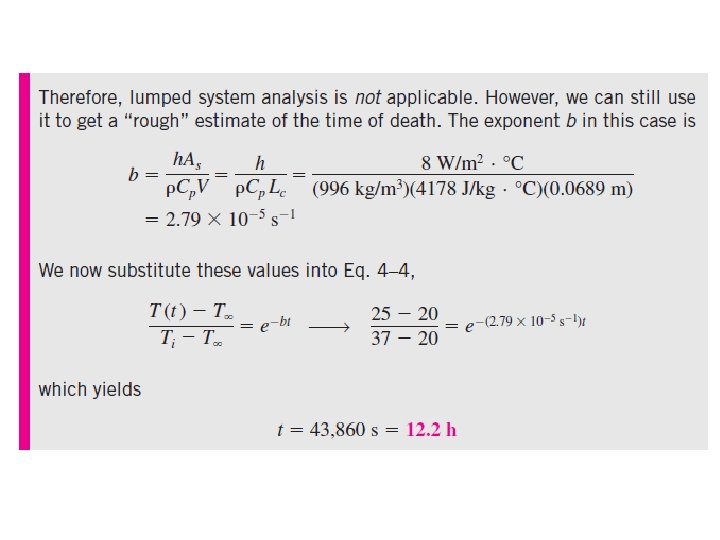
• Define the Characteristic length • Define Biot Number • Lumped system analysis is applicable if
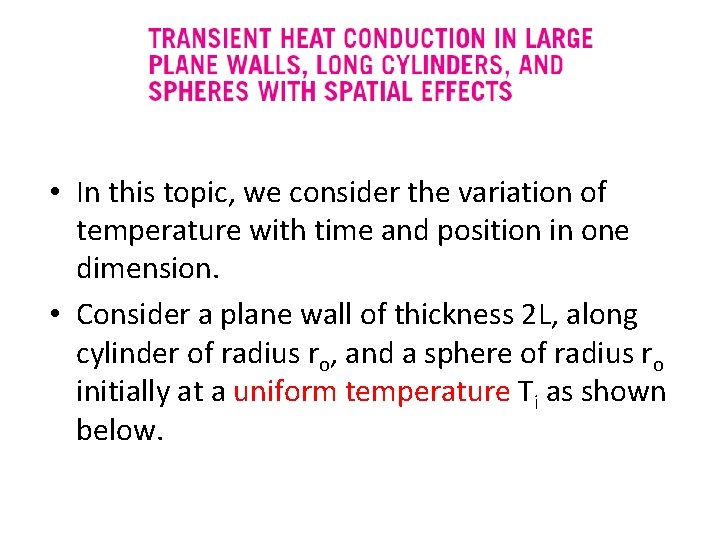
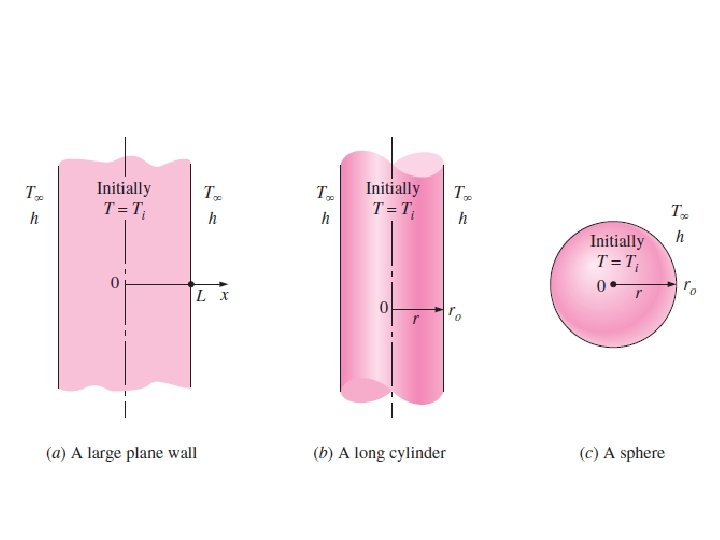
• In this topic, we consider the variation of temperature with time and position in one dimension. • Consider a plane wall of thickness 2 L, along cylinder of radius ro, and a sphere of radius ro initially at a uniform temperature Ti as shown below.
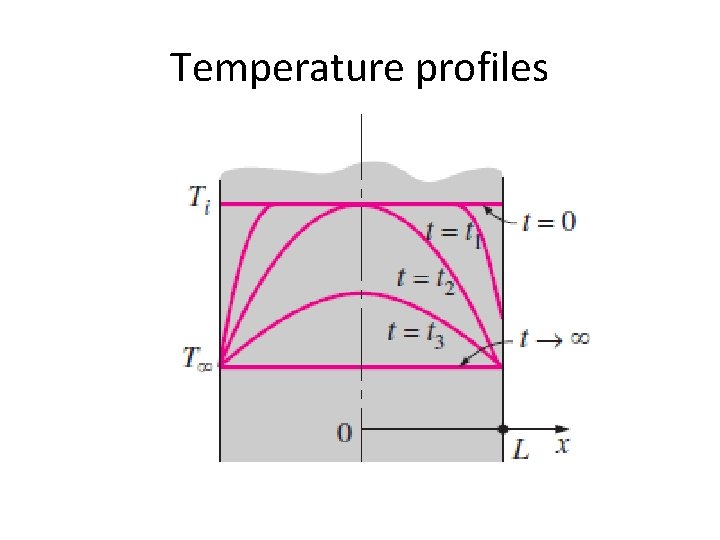
Temperature profiles
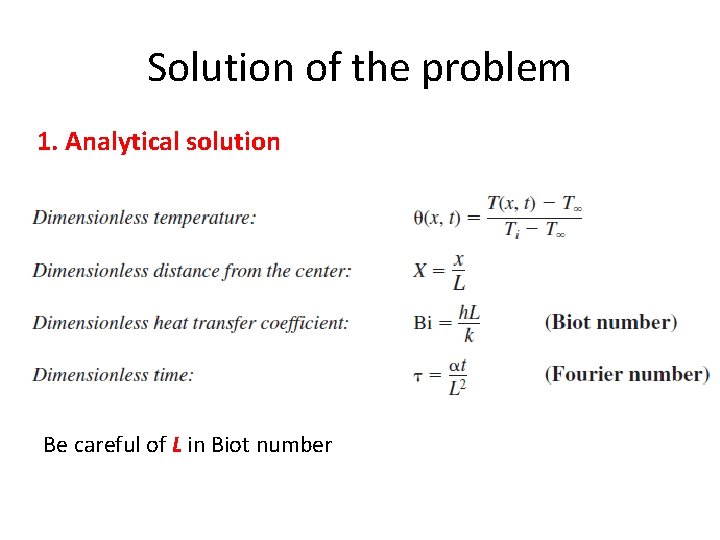
Solution of the problem 1. Analytical solution Be careful of L in Biot number
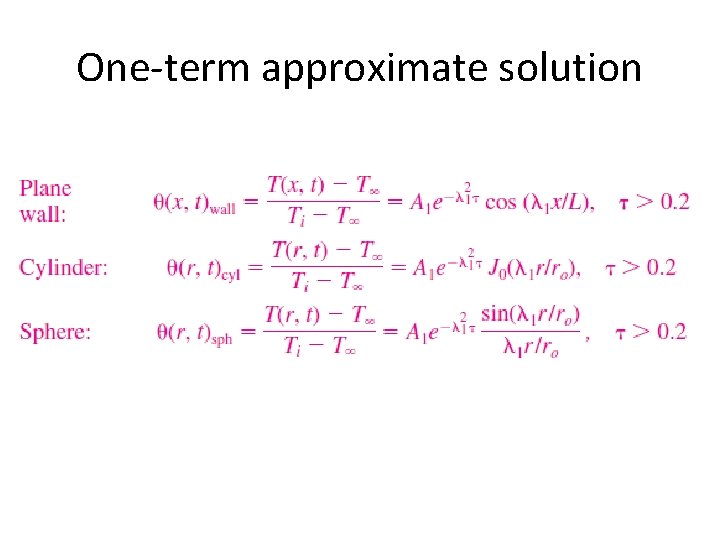
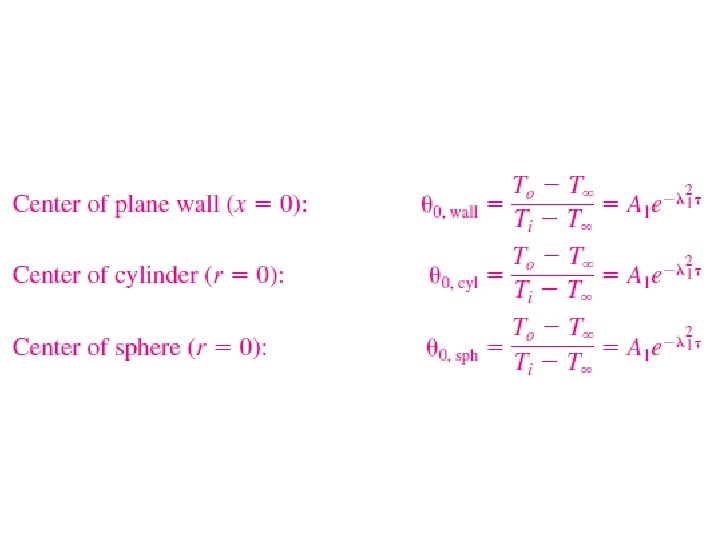
One-term approximate solution
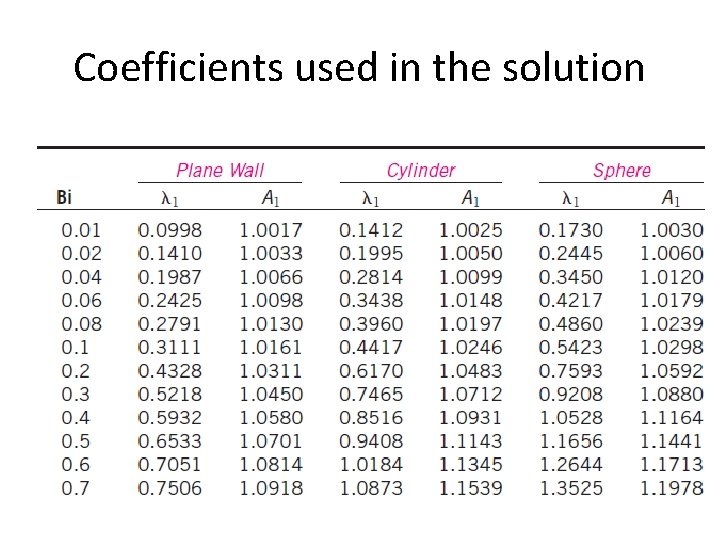
Coefficients used in the solution
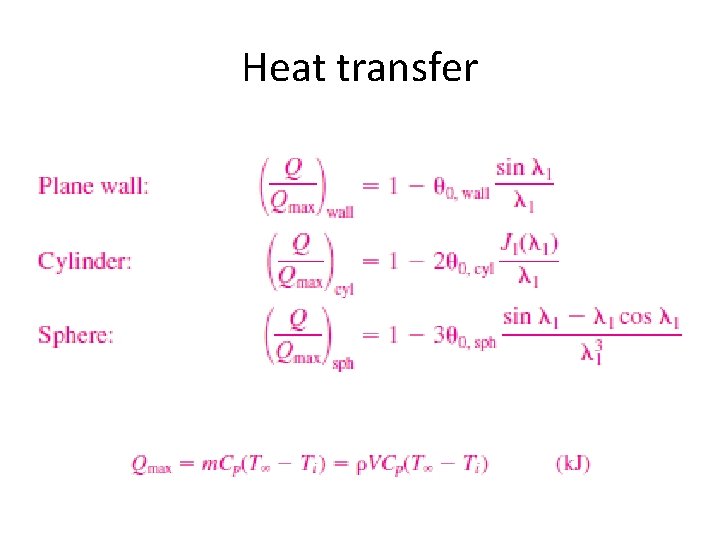
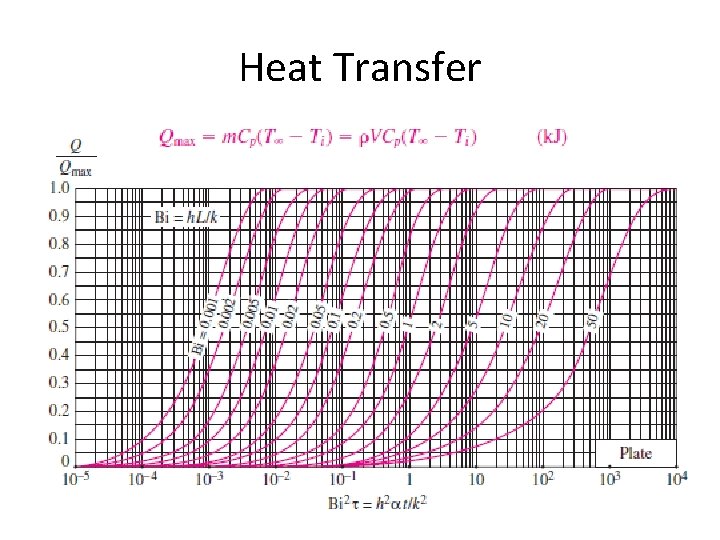
Heat transfer
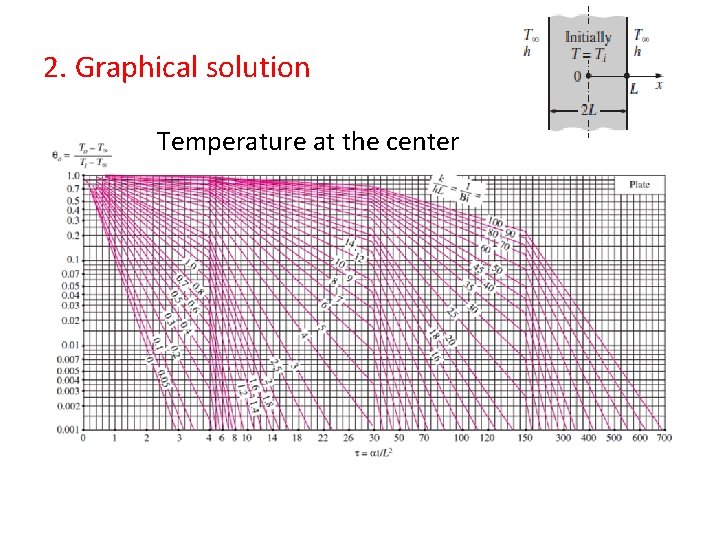
2. Graphical solution Temperature at the center
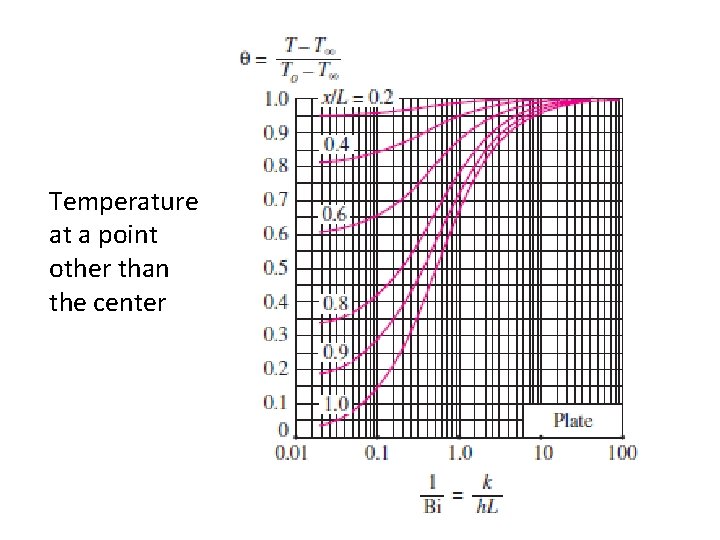
Temperature at a point other than the center
Heat Transfer
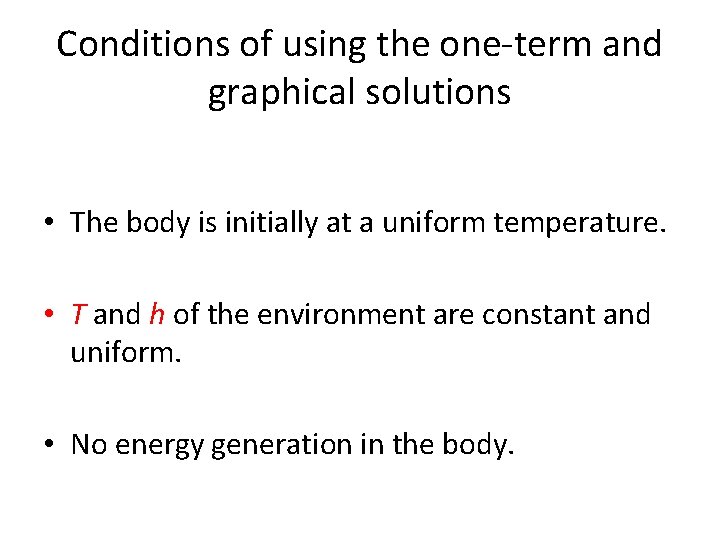
Conditions of using the one-term and graphical solutions • The body is initially at a uniform temperature. • T and h of the environment are constant and uniform. • No energy generation in the body.
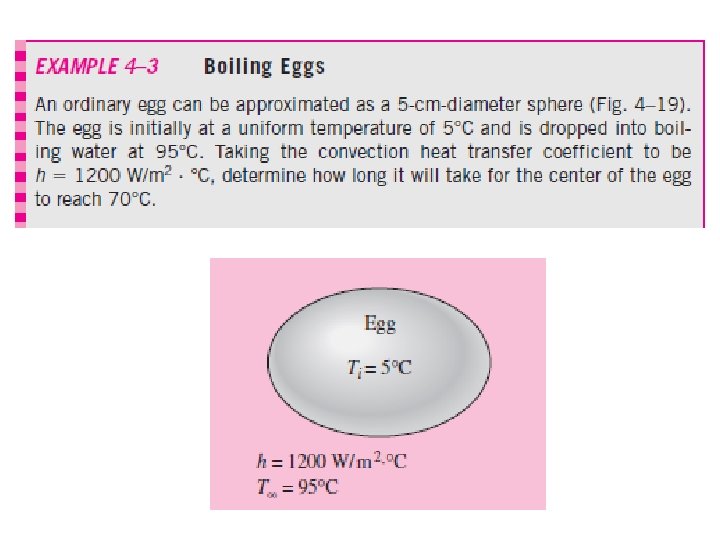
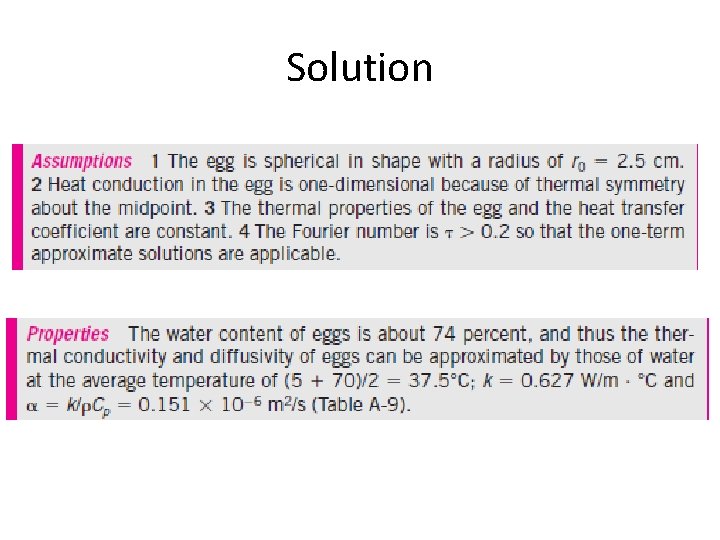
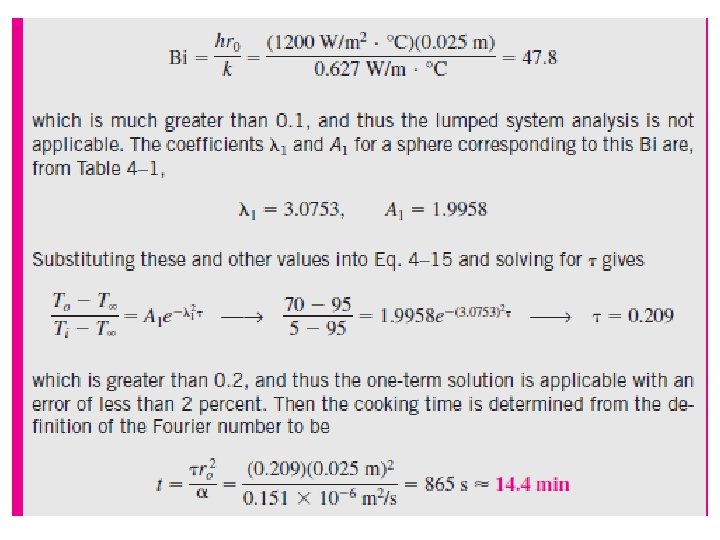
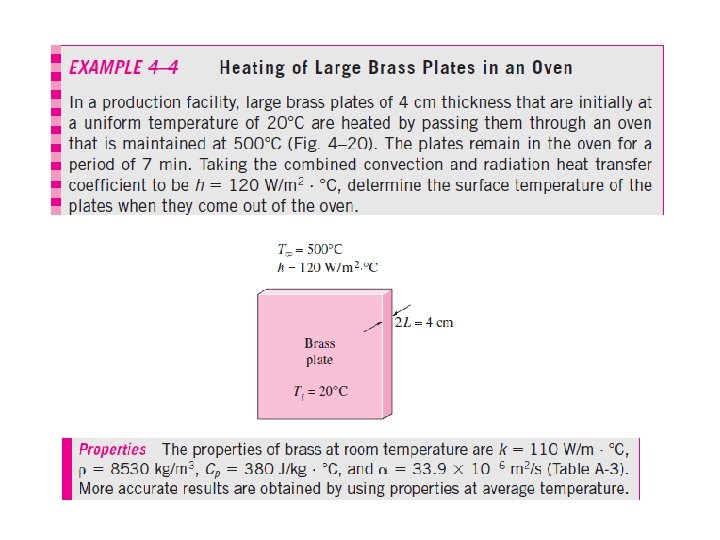
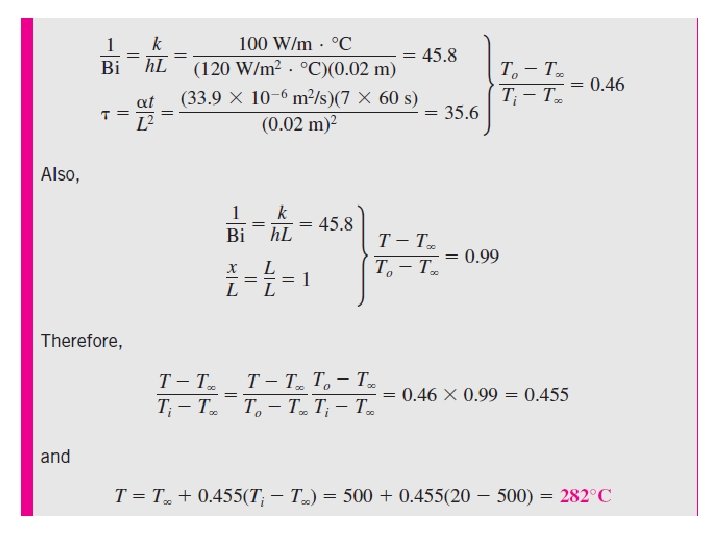
Solution
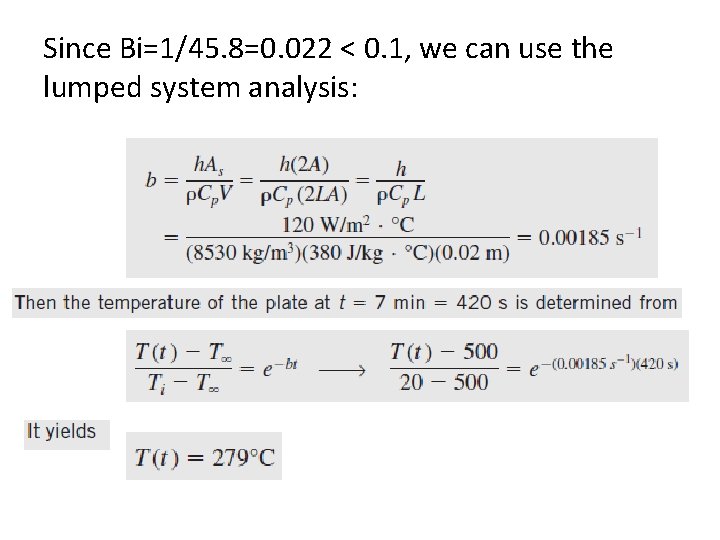
Since Bi=1/45. 8=0. 022 < 0. 1, we can use the lumped system analysis: