
TRANSFORMING SCIENCE PEDAGOGY USING CONCEPT MAPPING TO DESIGN
- Slides: 14
TRANSFORMING SCIENCE PEDAGOGY: USING CONCEPT MAPPING TO DESIGN AN INTERDISCIPLINARY APPROACH TO TEACHING MIDDLE SCHOOL SCIENCE Sumitra Himangshu-Pennybacker Virtual Presentation Seventh International Concept Mapping Conference Tallinn, September 05, 2016
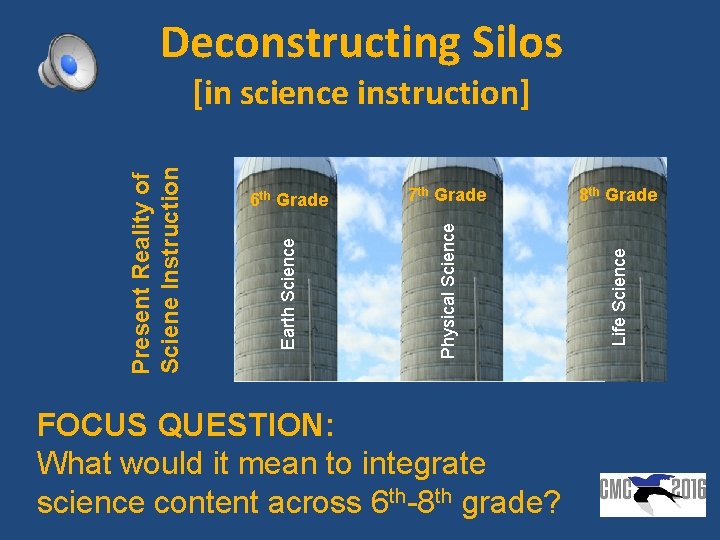
Deconstructing Silos 6 th Grade 7 th Grade 8 th Grade Earth Science Physical Science Life Science Present Reality of Sciene Instruction [in science instruction] FOCUS QUESTION: What would it mean to integrate science content across 6 th-8 th grade?
TAKE HOME • Visualization of propositional knowledge is critical for pre-service teacher capacity to distinguish interdisciplinary relationship(s) • BUILDING CAPACITY: (i) Initial Ideas: Individual concept maps (ii) Finding Consensus: Comparison of individual concept maps (iii) Making Meaning: Create a group concept map.
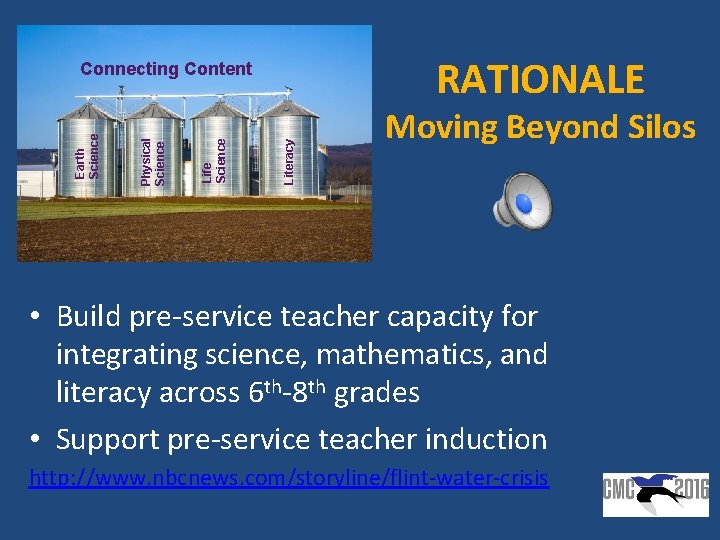
RATIONALE Literacy Life Science Physical Science Earth Science Connecting Content Moving Beyond Silos • Build pre-service teacher capacity for integrating science, mathematics, and literacy across 6 th-8 th grades • Support pre-service teacher induction http: //www. nbcnews. com/storyline/flint-water-crisis
THEORETICAL FRAMEWORK
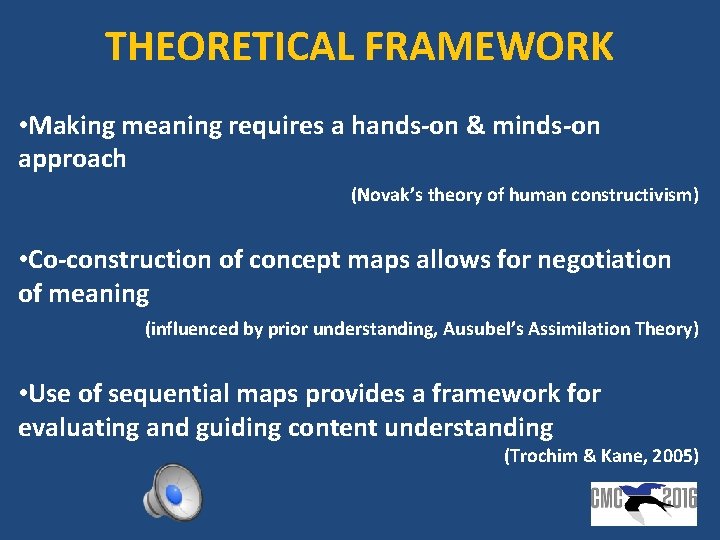
THEORETICAL FRAMEWORK • Making meaning requires a hands-on & minds-on approach (Novak’s theory of human constructivism) • Co-construction of concept maps allows for negotiation of meaning (influenced by prior understanding, Ausubel’s Assimilation Theory) • Use of sequential maps provides a framework for evaluating and guiding content understanding (Trochim & Kane, 2005)
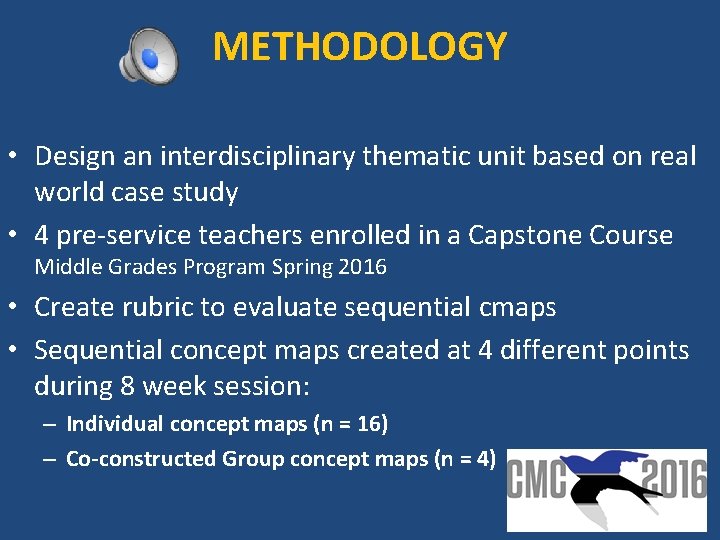
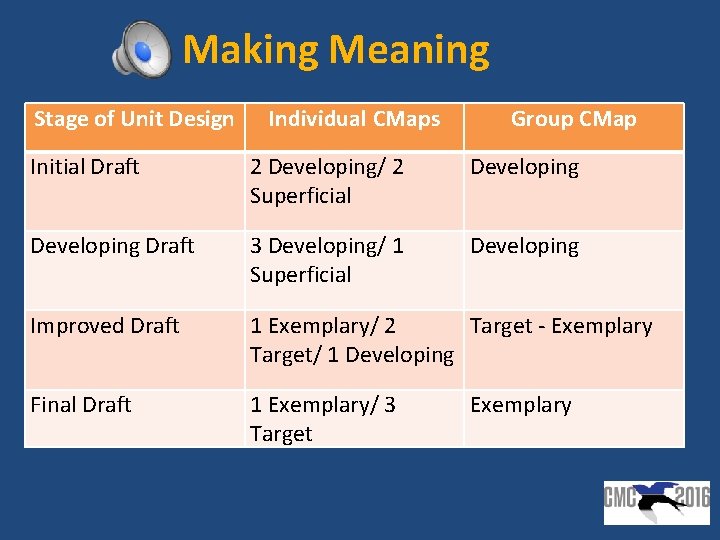
METHODOLOGY • Design an interdisciplinary thematic unit based on real world case study • 4 pre-service teachers enrolled in a Capstone Course Middle Grades Program Spring 2016 • Create rubric to evaluate sequential cmaps • Sequential concept maps created at 4 different points during 8 week session: – Individual concept maps (n = 16) – Co-constructed Group concept maps (n = 4)
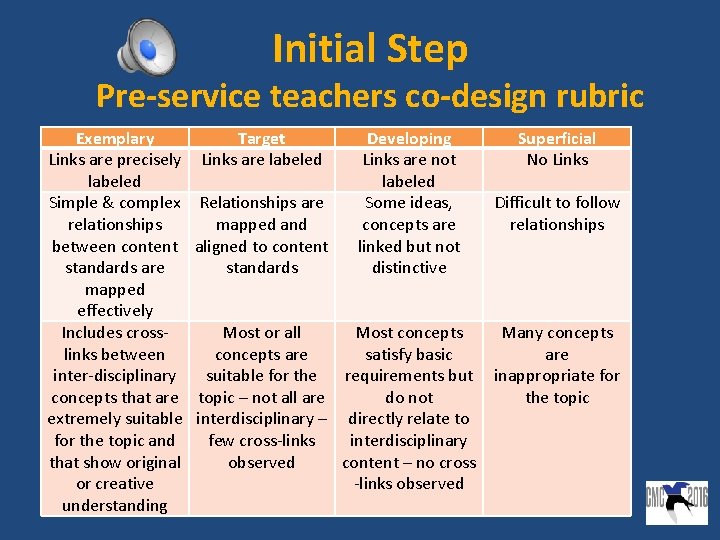
Initial Step Pre-service teachers co-design rubric Exemplary Links are precisely labeled Simple & complex relationships between content standards are mapped effectively Includes crosslinks between inter-disciplinary concepts that are extremely suitable for the topic and that show original or creative understanding Target Links are labeled Relationships are mapped and aligned to content standards Developing Links are not labeled Some ideas, concepts are linked but not distinctive Superficial No Links Difficult to follow relationships Most or all Most concepts Many concepts are satisfy basic are suitable for the requirements but inappropriate for topic – not all are do not the topic interdisciplinary – directly relate to few cross-links interdisciplinary observed content – no cross -links observed
Finding Consensus C 1 C 2
Finding Consensus C 3 C 4
Making Meaning Stage of Unit Design Individual CMaps Group CMap Initial Draft 2 Developing/ 2 Superficial Developing Draft 3 Developing/ 1 Superficial Developing Improved Draft 1 Exemplary/ 2 Target - Exemplary Target/ 1 Developing Final Draft 1 Exemplary/ 3 Target Exemplary
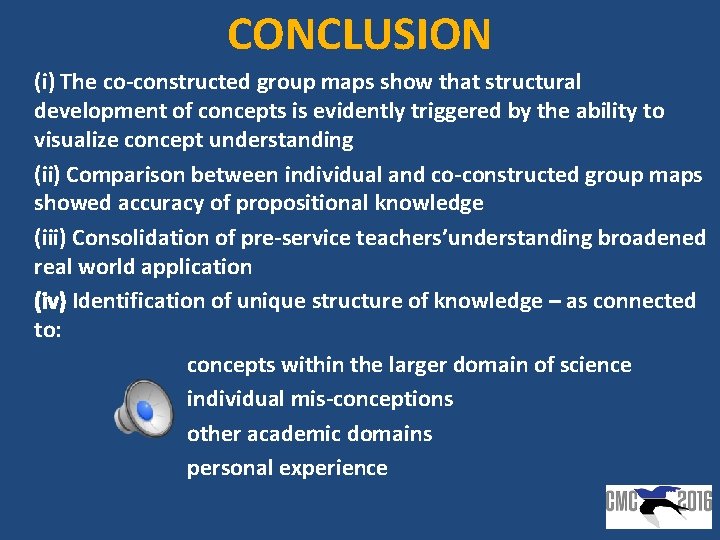
CONCLUSION (i) The co-constructed group maps show that structural development of concepts is evidently triggered by the ability to visualize concept understanding (ii) Comparison between individual and co-constructed group maps showed accuracy of propositional knowledge (iii) Consolidation of pre-service teachers’understanding broadened real world application (iv) Identification of unique structure of knowledge – as connected to: concepts within the larger domain of science individual mis-conceptions other academic domains personal experience
Future Directions for teacher induction • Build capacity for interdisciplinary science education curricula • Discussion & co-construction of maps – visualize integration of topics • Real world applications broadening individual understanding
Next Steps Moving Beyond Silos • Integrating STEM & literacy concepts through peerinduction by pairing recent graduates with current pre-service teachers • Exploring dichotomy between knowledge acquisition and assessment EMAIL: sumitra. himangshu@mga. edu