
Transforming Learning The approach Empowering transformational change and
- Slides: 23
Transforming Learning The approach Empowering transformational change and leadership at all levels.
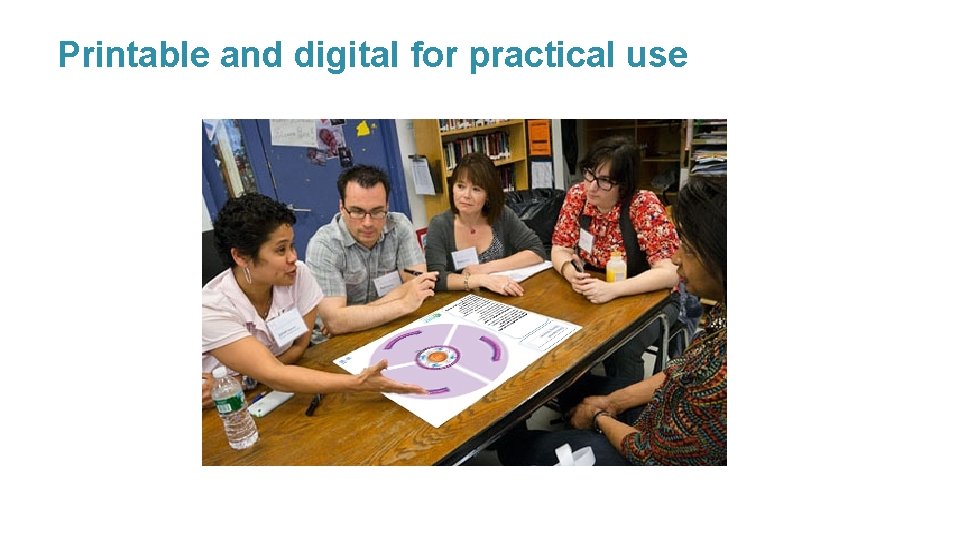
Printable and digital for practical use
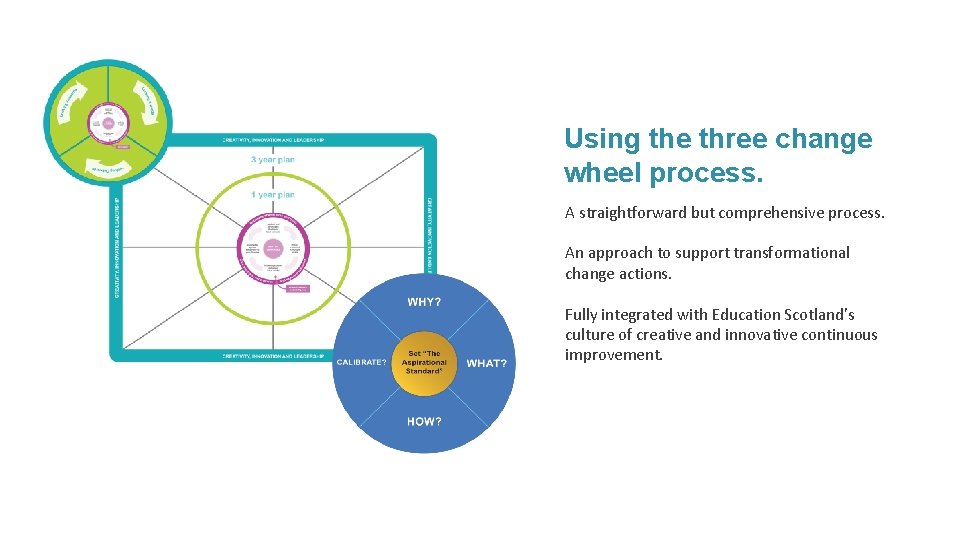
Using the three change wheel process. A straightforward but comprehensive process. An approach to support transformational change actions. Fully integrated with Education Scotland’s culture of creative and innovative continuous improvement.
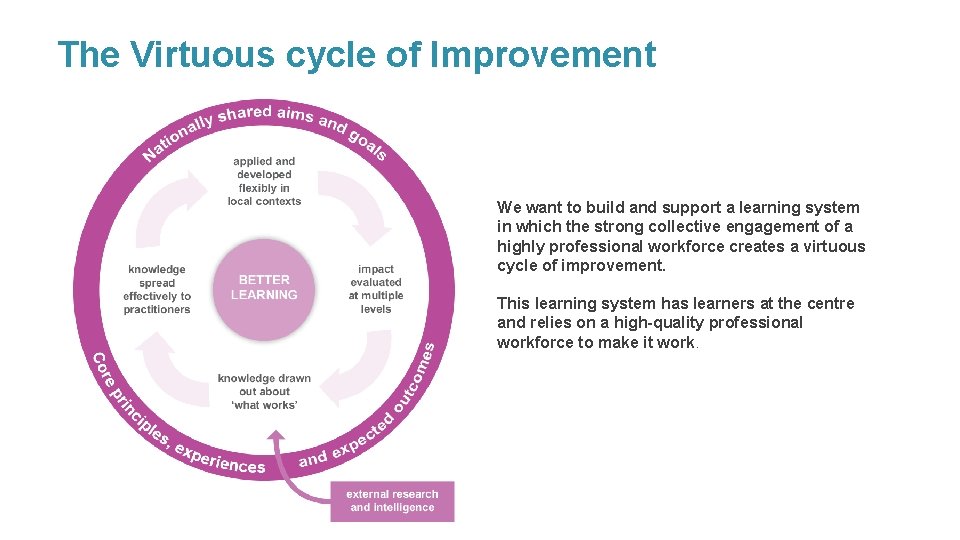
The Virtuous cycle of Improvement We want to build and support a learning system in which the strong collective engagement of a highly professional workforce creates a virtuous cycle of improvement. This learning system has learners at the centre and relies on a high-quality professional workforce to make it work.
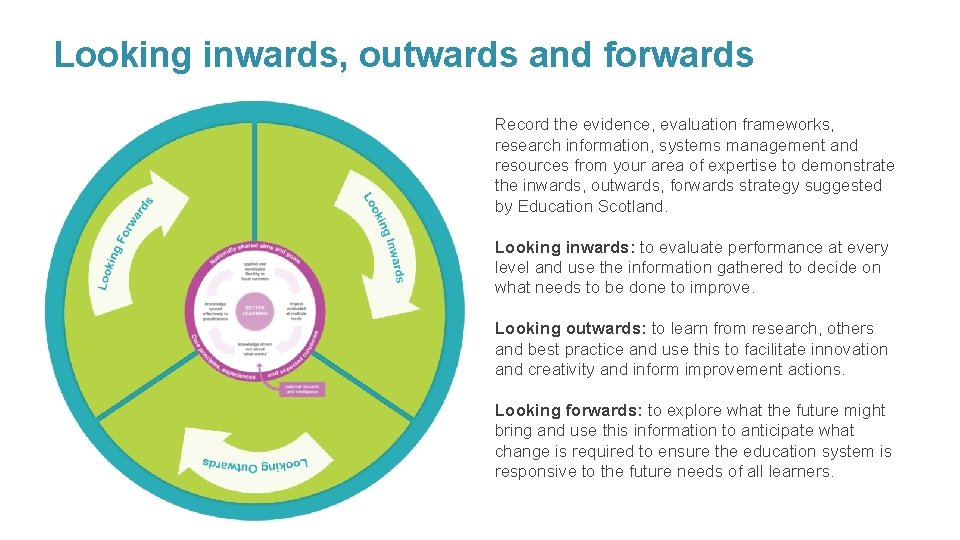
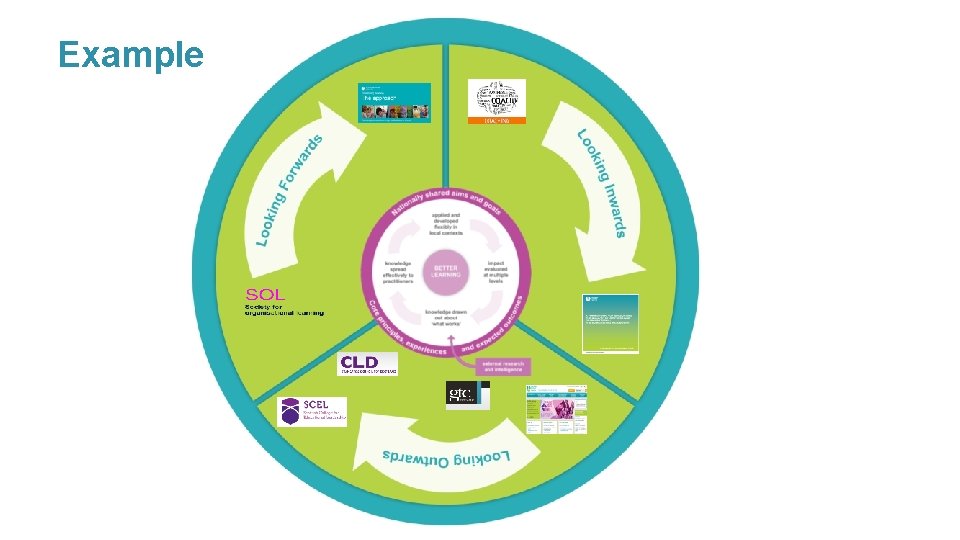
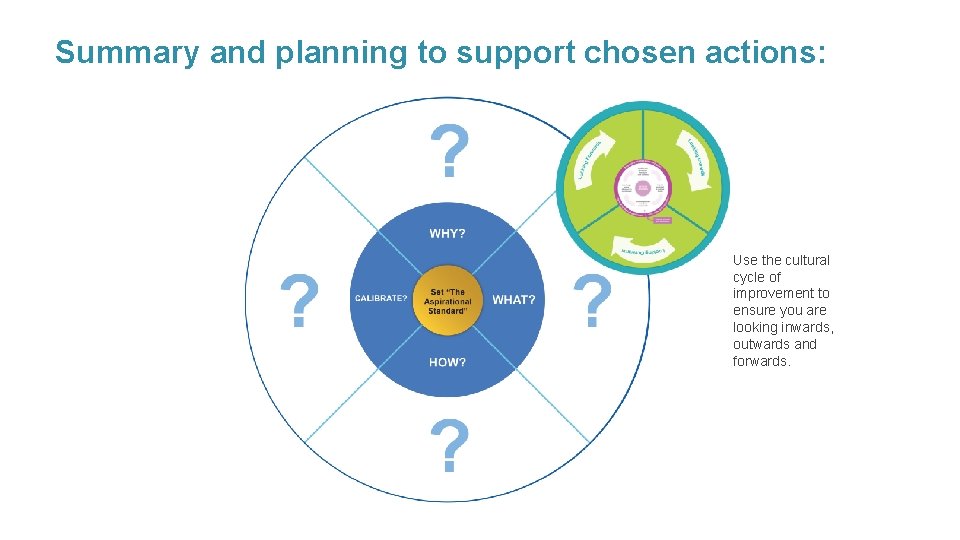
Looking inwards, outwards and forwards Record the evidence, evaluation frameworks, research information, systems management and resources from your area of expertise to demonstrate the inwards, outwards, forwards strategy suggested by Education Scotland. Looking inwards: to evaluate performance at every level and use the information gathered to decide on what needs to be done to improve. Looking outwards: to learn from research, others and best practice and use this to facilitate innovation and creativity and inform improvement actions. Looking forwards: to explore what the future might bring and use this information to anticipate what change is required to ensure the education system is responsive to the future needs of all learners.
Example
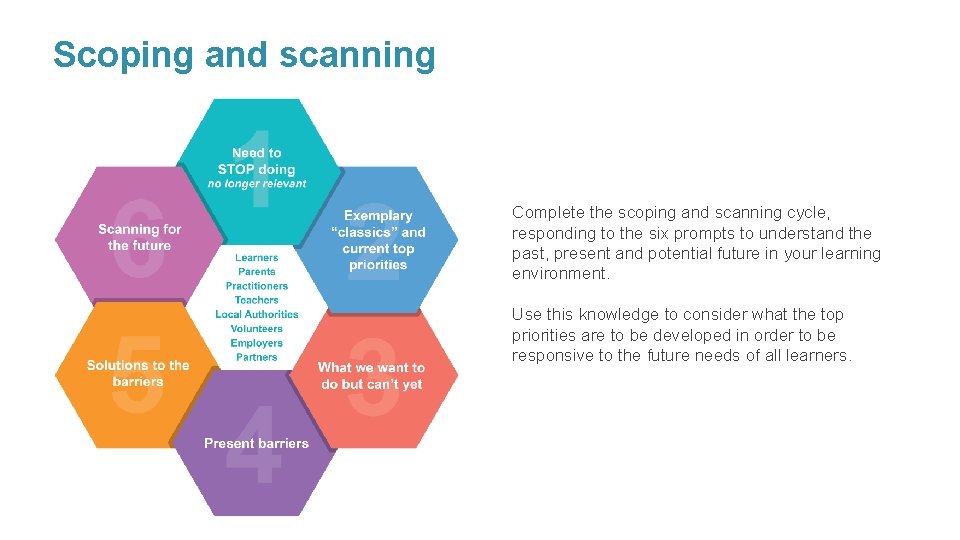
Scoping and scanning Complete the scoping and scanning cycle, responding to the six prompts to understand the past, present and potential future in your learning environment. Use this knowledge to consider what the top priorities are to be developed in order to be responsive to the future needs of all learners.
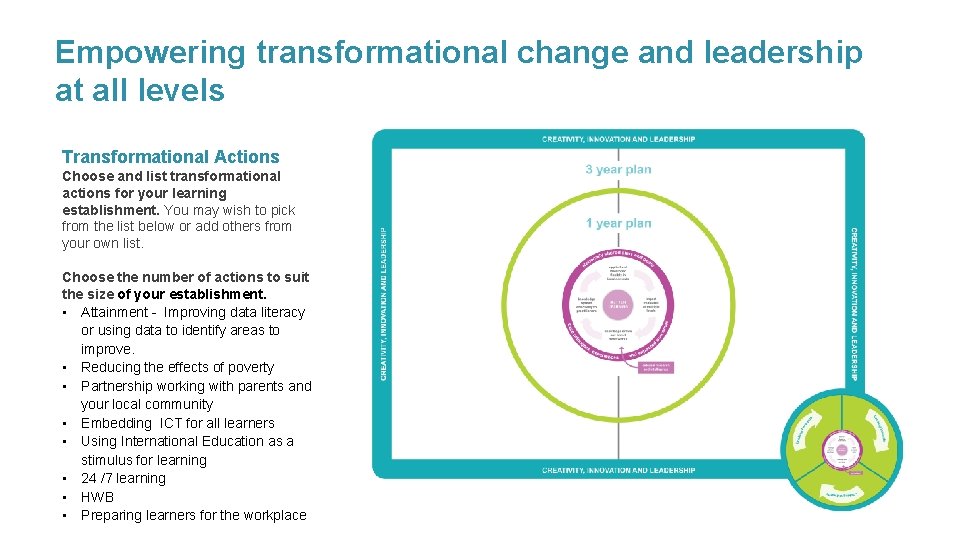
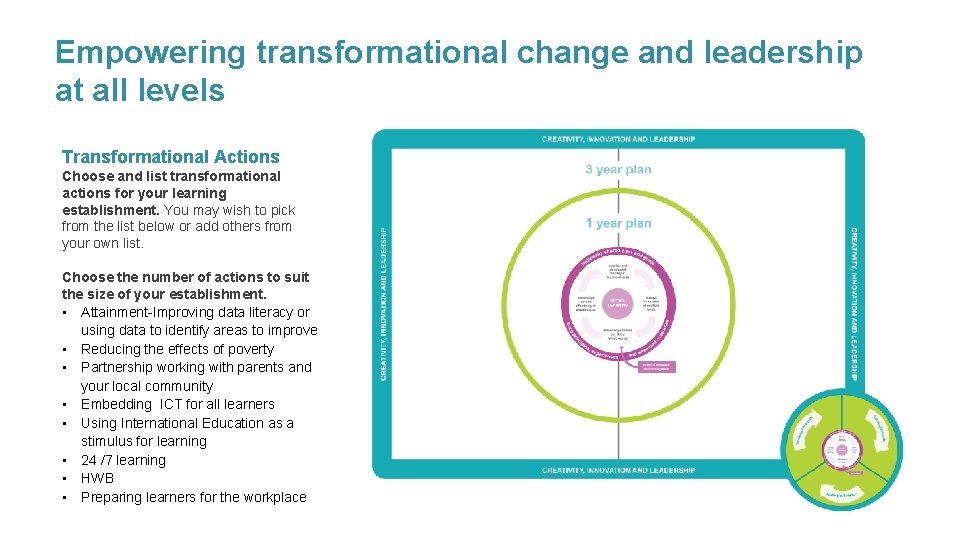
Empowering transformational change and leadership at all levels Transformational Actions Choose and list transformational actions for your learning establishment. You may wish to pick from the list below or add others from your own list. Choose the number of actions to suit the size of your establishment. • Attainment - Improving data literacy or using data to identify areas to improve. • Reducing the effects of poverty • Partnership working with parents and your local community • Embedding ICT for all learners • Using International Education as a stimulus for learning • 24 /7 learning • HWB • Preparing learners for the workplace
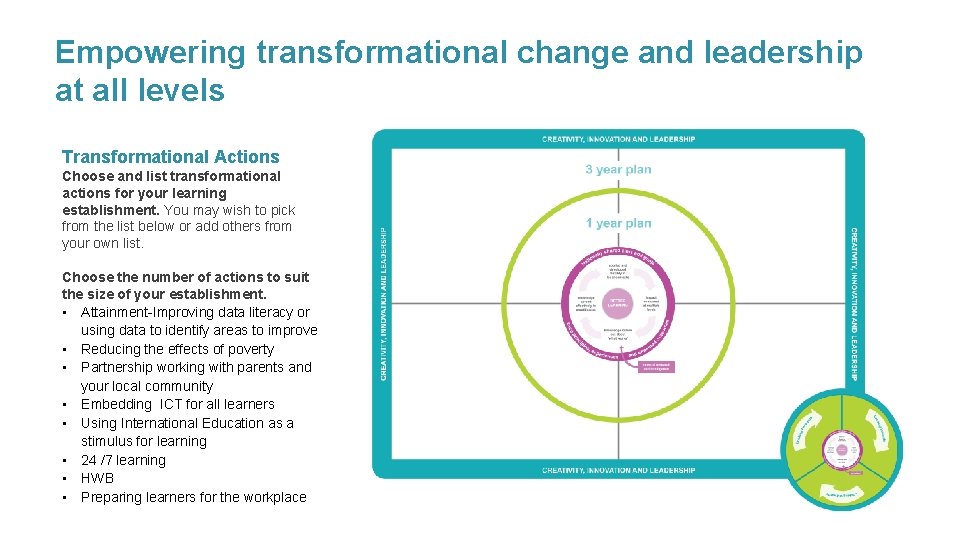
Empowering transformational change and leadership at all levels Transformational Actions Choose and list transformational actions for your learning establishment. You may wish to pick from the list below or add others from your own list. Choose the number of actions to suit the size of your establishment. • Attainment-Improving data literacy or using data to identify areas to improve • Reducing the effects of poverty • Partnership working with parents and your local community • Embedding ICT for all learners • Using International Education as a stimulus for learning • 24 /7 learning • HWB • Preparing learners for the workplace
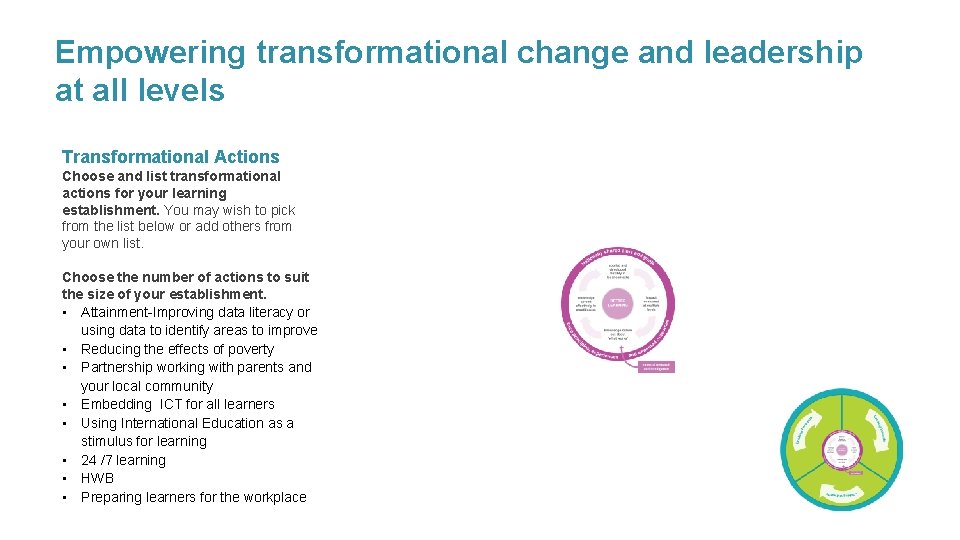
Empowering transformational change and leadership at all levels Transformational Actions Choose and list transformational actions for your learning establishment. You may wish to pick from the list below or add others from your own list. Choose the number of actions to suit the size of your establishment. • Attainment-Improving data literacy or using data to identify areas to improve • Reducing the effects of poverty • Partnership working with parents and your local community • Embedding ICT for all learners • Using International Education as a stimulus for learning • 24 /7 learning • HWB • Preparing learners for the workplace
Empowering transformational change and leadership at all levels Transformational Actions Choose and list transformational actions for your learning establishment. You may wish to pick from the list below or add others from your own list. Choose the number of actions to suit the size of your establishment. • Attainment-Improving data literacy or using data to identify areas to improve • Reducing the effects of poverty • Partnership working with parents and your local community • Embedding ICT for all learners • Using International Education as a stimulus for learning • 24 /7 learning • HWB • Preparing learners for the workplace
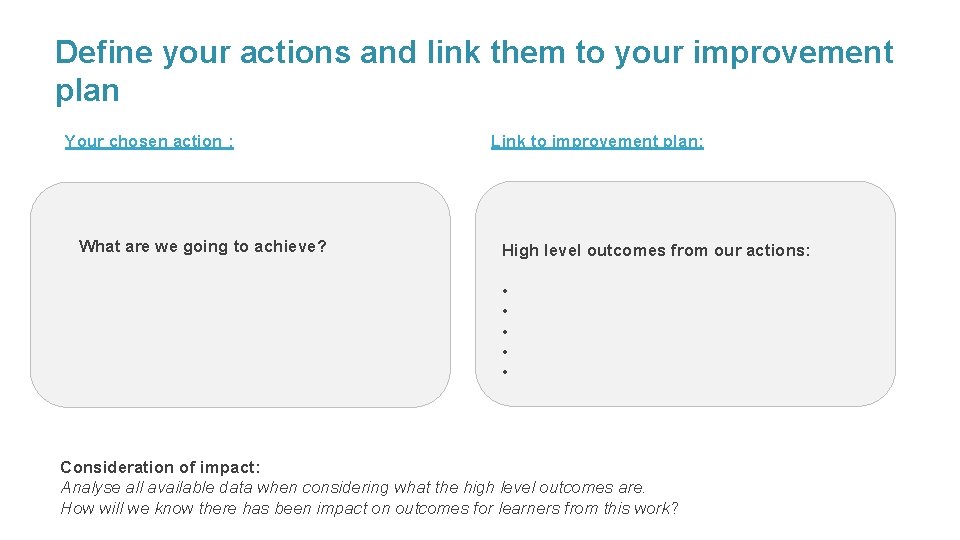
Define your actions and link them to your improvement plan Your chosen action : What are we going to achieve? Link to improvement plan: High level outcomes from our actions: • • • Consideration of impact: Analyse all available data when considering what the high level outcomes are. How will we know there has been impact on outcomes for learners from this work?
Summary and planning to support chosen actions: Use the cultural cycle of improvement to ensure you are looking inwards, outwards and forwards.
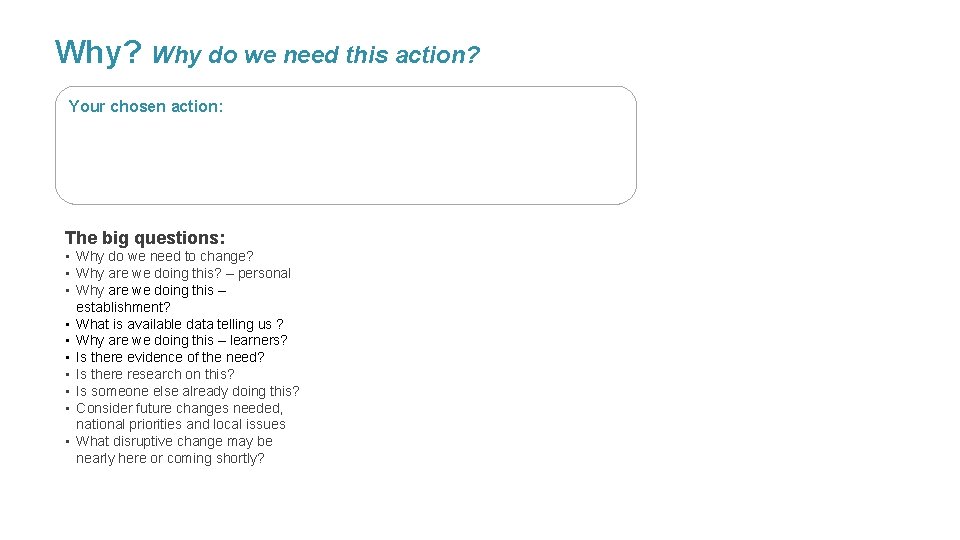
Why? Why do we need this action? Your chosen action: The big questions: • Why do we need to change? • Why are we doing this? – personal • Why are we doing this – establishment? • What is available data telling us ? • Why are we doing this – learners? • Is there evidence of the need? • Is there research on this? • Is someone else already doing this? • Consider future changes needed, national priorities and local issues • What disruptive change may be nearly here or coming shortly?
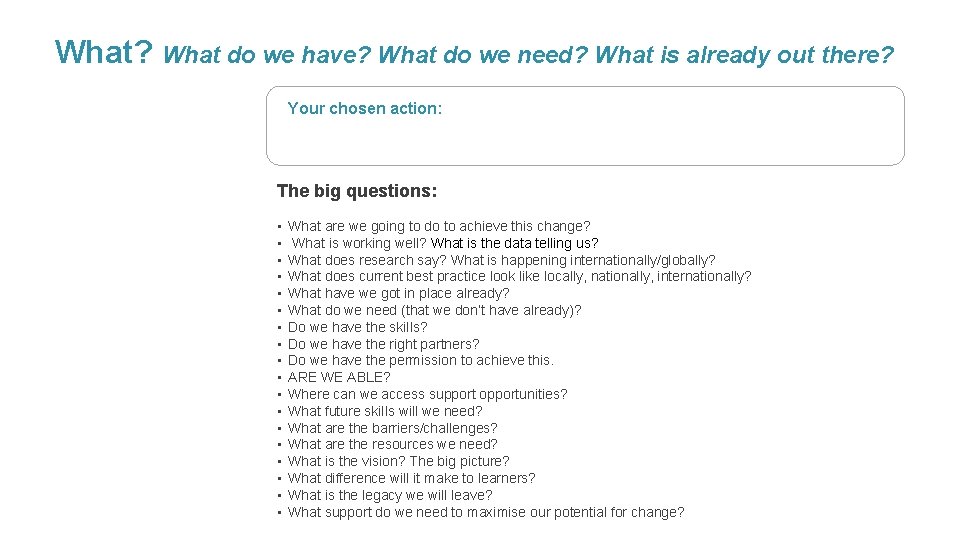
What? What do we have? What do we need? What is already out there? Your chosen action: The big questions: • • • • • What are we going to do to achieve this change? What is working well? What is the data telling us? What does research say? What is happening internationally/globally? What does current best practice look like locally, nationally, internationally? What have we got in place already? What do we need (that we don’t have already)? Do we have the skills? Do we have the right partners? Do we have the permission to achieve this. ARE WE ABLE? Where can we access support opportunities? What future skills will we need? What are the barriers/challenges? What are the resources we need? What is the vision? The big picture? What difference will it make to learners? What is the legacy we will leave? What support do we need to maximise our potential for change?
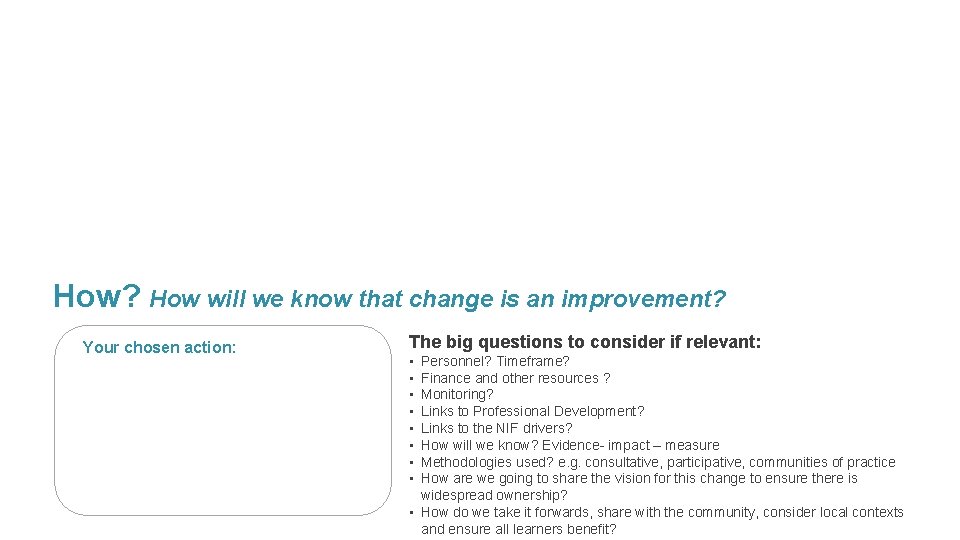
How? How will we know that change is an improvement? Your chosen action: The big questions to consider if relevant: • • Personnel? Timeframe? Finance and other resources ? Monitoring? Links to Professional Development? Links to the NIF drivers? How will we know? Evidence- impact – measure Methodologies used? e. g. consultative, participative, communities of practice How are we going to share the vision for this change to ensure there is widespread ownership? • How do we take it forwards, share with the community, consider local contexts and ensure all learners benefit?
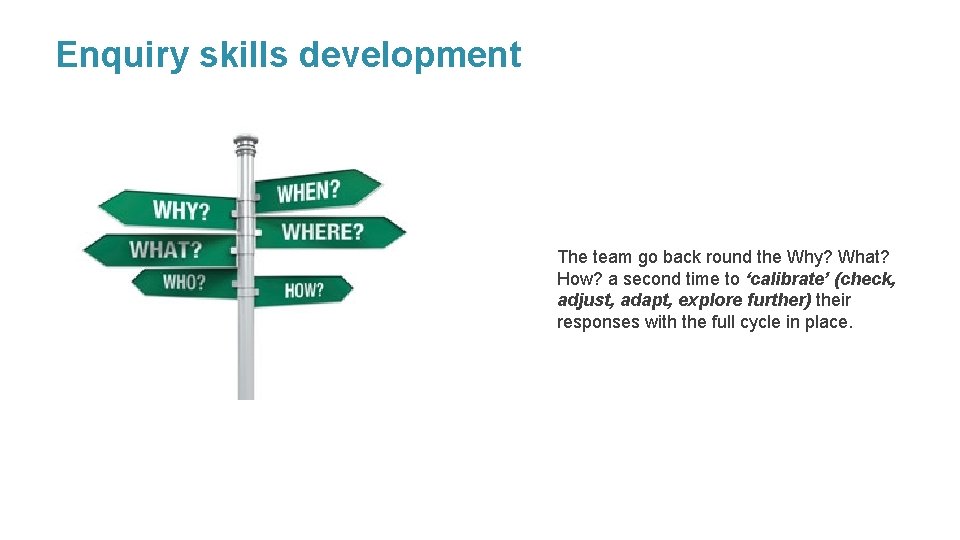
Enquiry skills development The team go back round the Why? What? How? a second time to ‘calibrate’ (check, adjust, adapt, explore further) their responses with the full cycle in place.
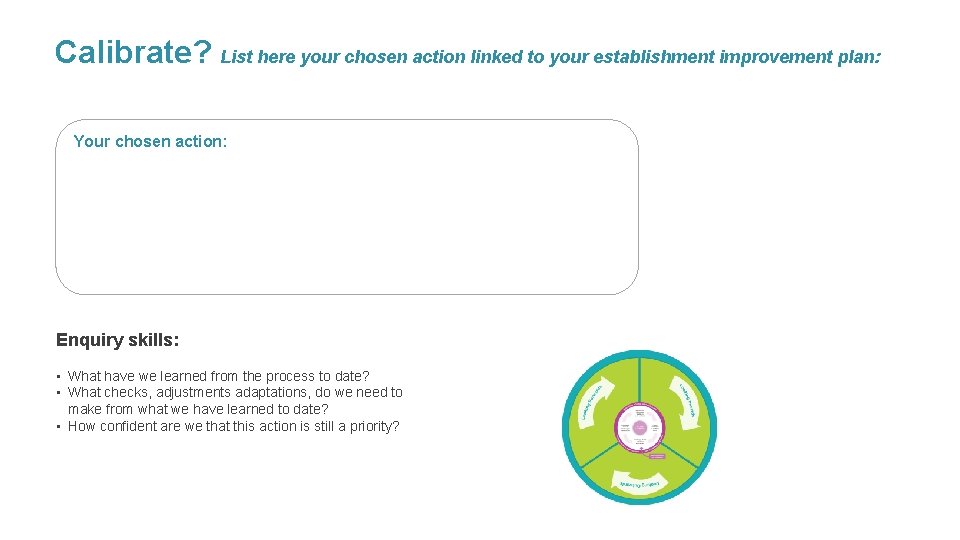
Calibrate? List here your chosen action linked to your establishment improvement plan: Your chosen action: Enquiry skills: • What have we learned from the process to date? • What checks, adjustments adaptations, do we need to make from what we have learned to date? • How confident are we that this action is still a priority?
Aspirational actions If we are successful what will the aspirational action points look like? • • •
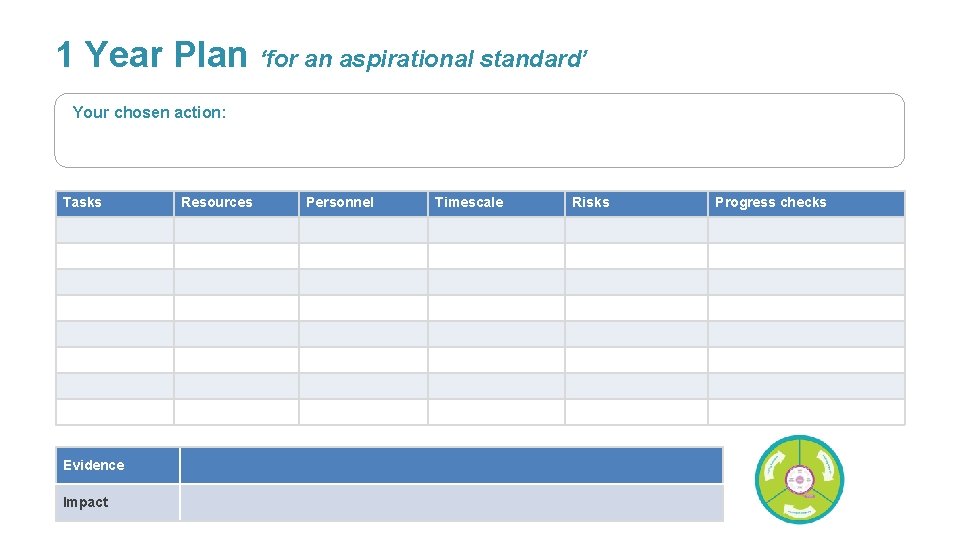
1 Year Plan ‘for an aspirational standard’ Your chosen action: Tasks Resources Personnel Timescale Where do you want to be in 1 year? How will the vision look in progress? Evidence Impact Risks Progress checks
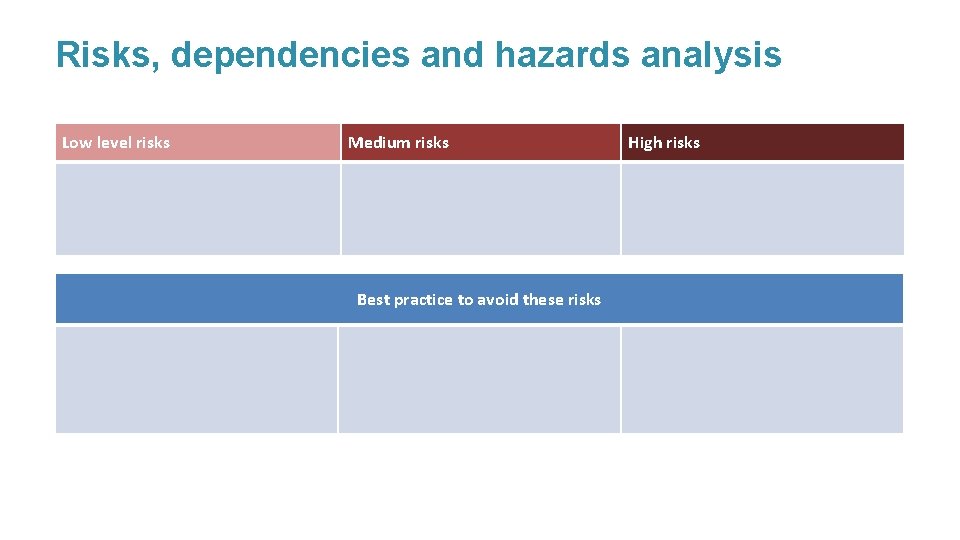
Risks, dependencies and hazards analysis Low level risks Medium risks Best practice to avoid these risks High risks
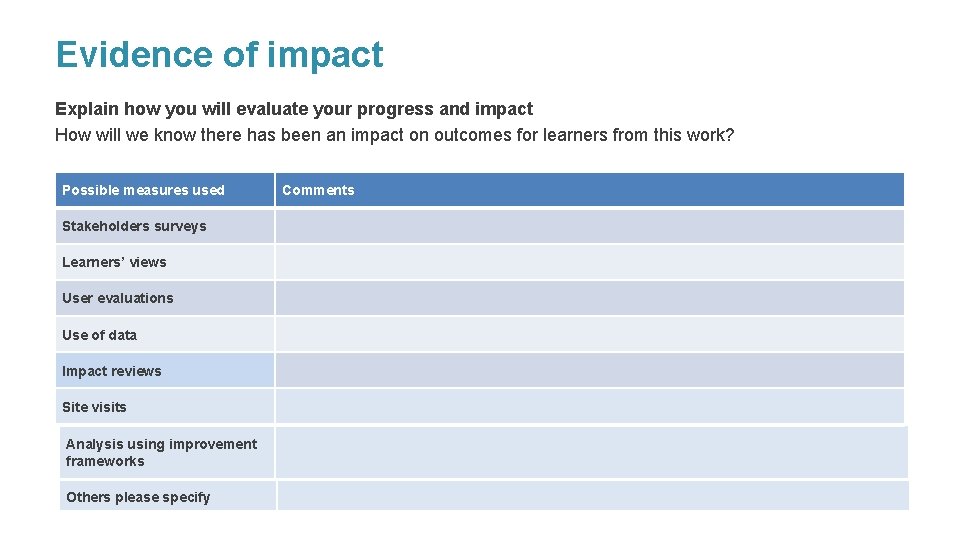
Evidence of impact Explain how you will evaluate your progress and impact How will we know there has been an impact on outcomes for learners from this work? Possible measures used Stakeholders surveys Learners’ views User evaluations Use of data Impact reviews Site visits Analysis using improvement frameworks Others please specify Comments
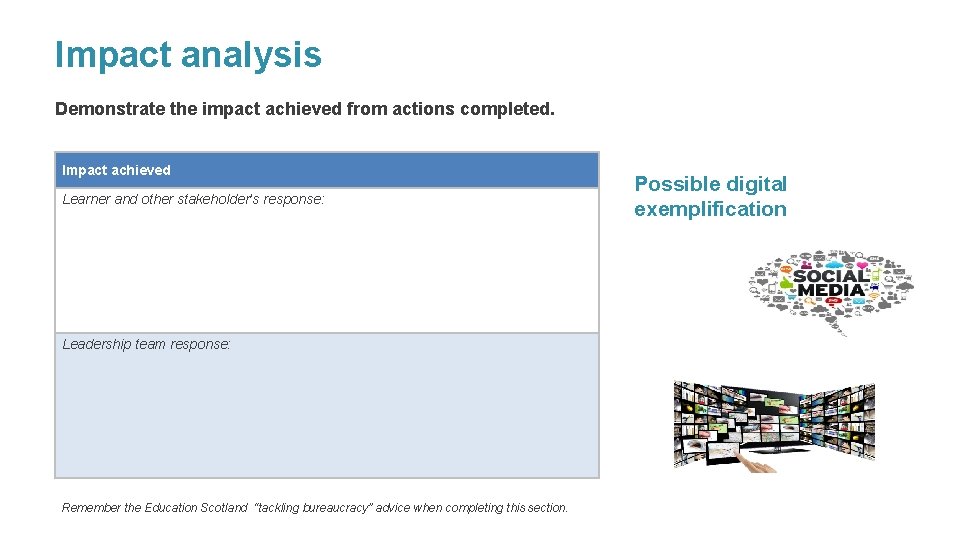
Impact analysis Demonstrate the impact achieved from actions completed. Impact achieved Learner and other stakeholder’s response: Leadership team response: Remember the Education Scotland “tackling bureaucracy” advice when completing this section. Possible digital exemplification