
Transforming into a TraumaInformed Care Practice Anita Ravi

- Slides: 28
Transforming into a Trauma-Informed Care Practice � Anita Ravi MD, MPH, MSHP � 1/28/17 The Institute for Family Health's Purp. LE Clinic
DISCLOSURES � none
Goals by 9: 00 AM Increase familiarity with: � Familiarity with trauma-informed care principles � Rationale for trauma-informed care � Designing trauma-sensitive clinical care
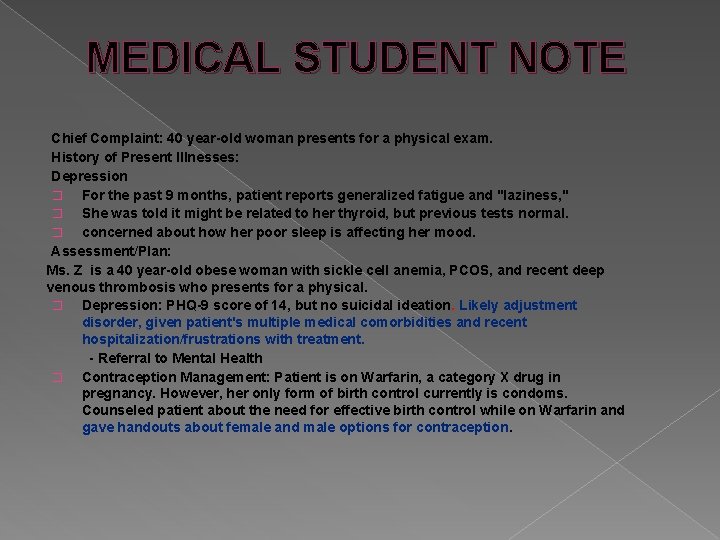
MEDICAL STUDENT NOTE Chief Complaint: 40 year-old woman presents for a physical exam. History of Present Illnesses: Depression � For the past 9 months, patient reports generalized fatigue and "laziness, " � She was told it might be related to her thyroid, but previous tests normal. � concerned about how her poor sleep is affecting her mood. Assessment/Plan: Ms. Z is a 40 year-old obese woman with sickle cell anemia, PCOS, and recent deep venous thrombosis who presents for a physical. � Depression: PHQ-9 score of 14, but no suicidal ideation. Likely adjustment disorder, given patient's multiple medical comorbidities and recent hospitalization/frustrations with treatment. - Referral to Mental Health � Contraception Management: Patient is on Warfarin, a category X drug in pregnancy. However, her only form of birth control currently is condoms. Counseled patient about the need for effective birth control while on Warfarin and gave handouts about female and male options for contraception.
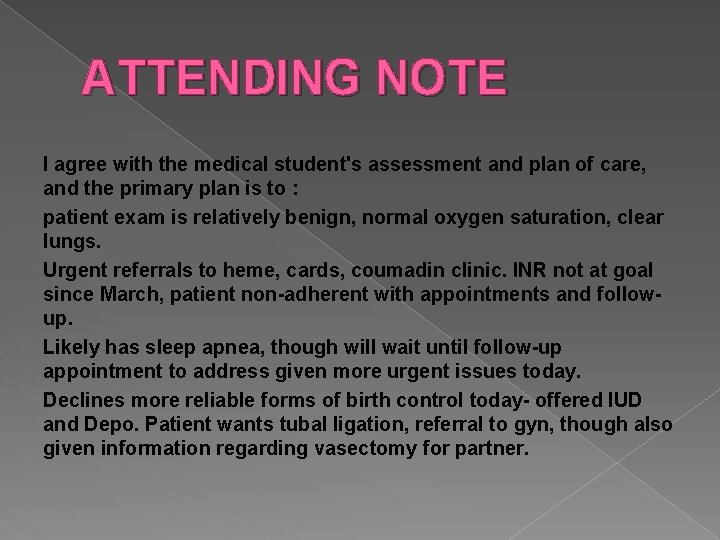
ATTENDING NOTE I agree with the medical student's assessment and plan of care, and the primary plan is to : patient exam is relatively benign, normal oxygen saturation, clear lungs. Urgent referrals to heme, cards, coumadin clinic. INR not at goal since March, patient non-adherent with appointments and followup. Likely has sleep apnea, though will wait until follow-up appointment to address given more urgent issues today. Declines more reliable forms of birth control today- offered IUD and Depo. Patient wants tubal ligation, referral to gyn, though also given information regarding vasectomy for partner.
ATTENDING NOTE I agree with the medical student's assessment and plan of care, and the primary plan is to : patient exam is relatively benign, normal oxygen saturation, clear lungs. Urgent referrals to heme, cards, coumadin clinic. INR not at goal since March, patient non-adherent with appointments and followup. Likely has sleep apnea, though will wait until follow-up appointment to address given more urgent issues today. Declines more reliable forms of birth control today- offered IUD and Depo. Patient wants tubal ligation, referral to gyn, though also given information regarding vasectomy for partner.
4 Rs of Trauma-Informed Care Realizing the widespread impact of trauma 2. Recognizing signs and symptoms of trauma in people, including patients, their families, staff and clinical team members 3. Responding by fully integrating knowledge about trauma into policies, procedures, and practices, and 4. Seeking to actively resist Re-traumatization 1. Source: Trauma-Informed Approach and Trauma-Specific Interventions. http: //www. samhsa. gov/nctic/trauma-interventions
Who’s on our schedule? � Known survivors � New Survivors � Acute Trauma � Chronic Trauma � All genders � All ages � All forms of care- outpatient, inpatient, ED, subspecialty
What is Trauma? � Exposure to actual or threatened death, serious injury or violence in one or more of four ways: - Directly experiencing the event - Witnessing, in person, the event occurring to others - Learning that such an event happened to a close family member or friend - -experiencing repeated or extreme exposure to aversive details of such events (i. e. first responders) Source: American Psychiatric Association
Examples of Trauma The experience of violence or victimization, including: � � � � � Sexual abuse Physical abuse Psychological abuse Neglect Loss Witnessing violence Terrorism Natural disasters War
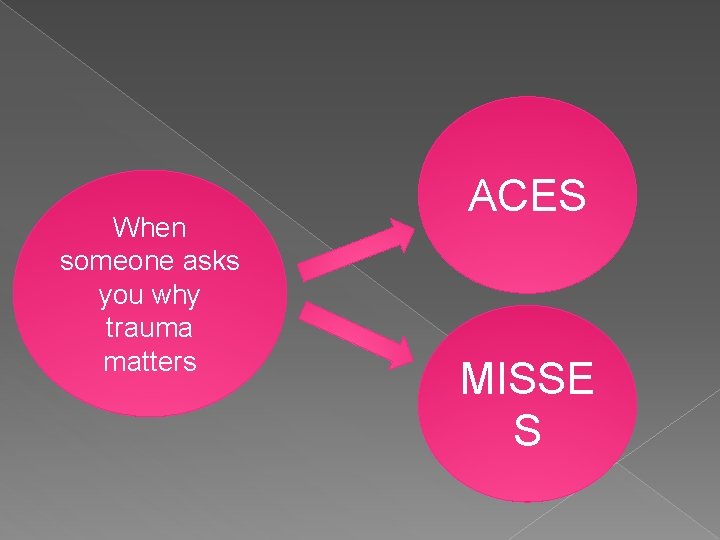
When someone asks you why trauma matters ACES MISSE S
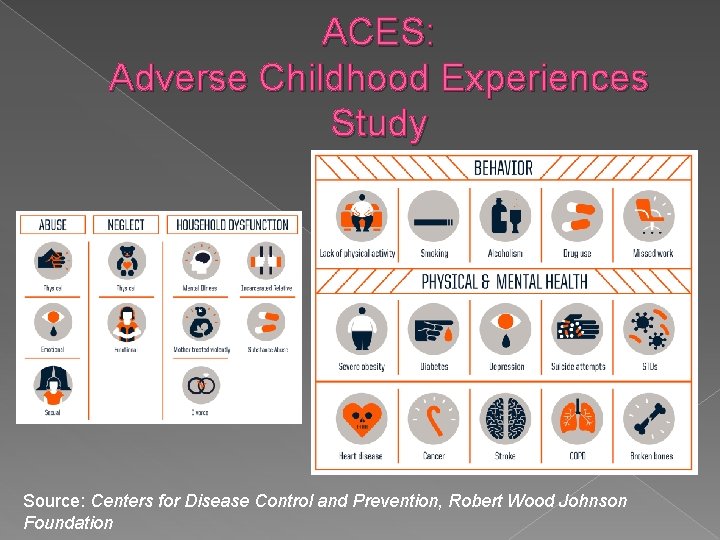
ACES: Adverse Childhood Experiences Study Source: Centers for Disease Control and Prevention, Robert Wood Johnson Foundation
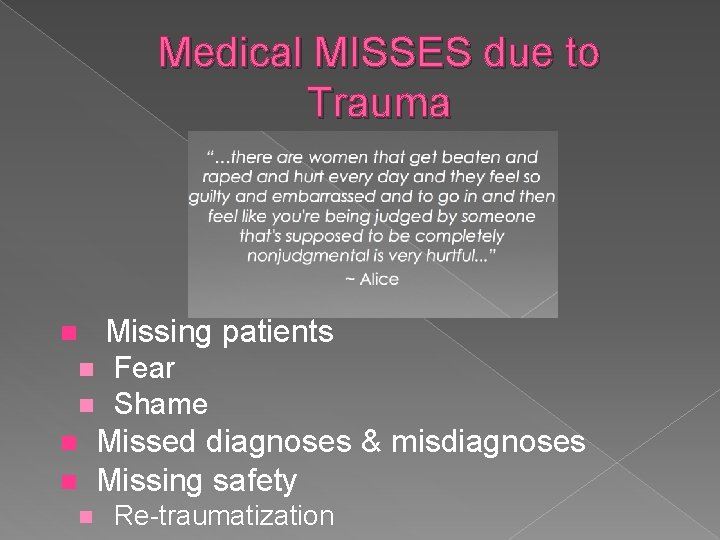
Medical MISSES due to Trauma n n n Missing patients Fear Shame Missed diagnoses & misdiagnoses Missing safety Re-traumatization
Reasons for Misdiagnosis � Potential clinical presentations : Vague, generalized symptoms Sexual dysfunction Chronic pain Obesity Mental health symptoms � Coping Behaviors smoking alcohol and drug use disordered eating high-risk sexual behaviors
TIPS TO TRANSFORM INTO A TRAUMA-INFORMED CARE MODEL The Setting The Physical Exam The Care Coordination
3 Ps KEY TO TRAUMA INFORMED CARE: � Preparation � Predictability � Permission
Preparation � Review chart summary and history B speaks Spanish and reports frequent bloody noses recently and hasn’t been to a doctor in quite a while. He came to the US from Guatemala as an unaccompanied minor when he was 17. He’s very reticent to share about his difficult childhood and will probably clam up and not be truthful when asked questions about depression or anxiety. If it’s possible, I think it might be good to avoid the PHQ-9. Because of lots of barriers and his resistance to go to an outside organization, I’m going to start doing therapy…
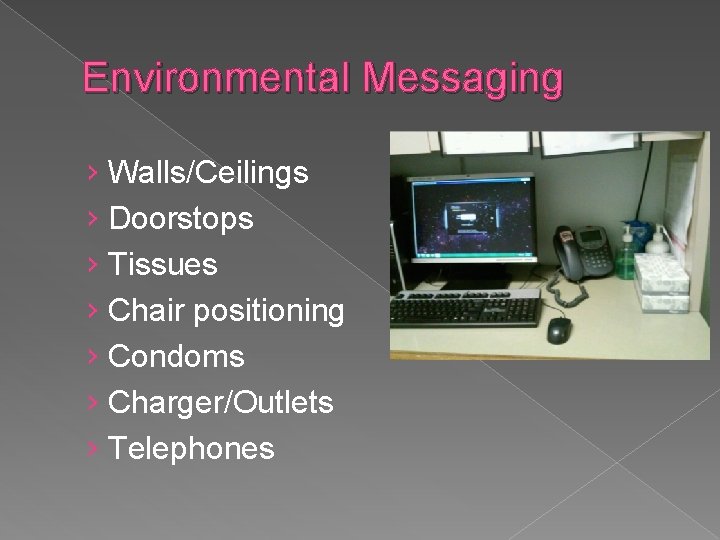
Environmental Messaging › Walls/Ceilings › Doorstops › Tissues › Chair positioning › Condoms › Charger/Outlets › Telephones
The Visit � Child/Accompanying visitor plans � Sit Down � Interpreter Preferences � Review what to expect: › Confidentiality › What kind of questions will be asked and why › Electronics use
The Physical � Ask about comfort, order preferences � Explain all steps of visit, exam, procedure � Allow patient to remain fully clothed for as long as possible � Ask patient to shift clothing out of the way
Invasive Procedures � Describe all steps before doing � Equipment preparation � Sensory expectations � Procedure invasiveness (TVUS probe) � Gyn: Offer speculum self-insertion, take -home speculum
Language � � � Table, not bed Stirrups v foot rests v nothing “you may notice… “move forward until you…” “if you want, you can. . . ” or “some people find it helpful when…” Non-verbal cues of discomfort
Care Coordination � � � Team huddles Reconsider rounding format Referral outreach Leverage your trust Imaging expectations Sensitive precepting, documentation › After visit summary › “Difficult” patients- “TBD” › “Eye rolling” diagnoses: � “Fibromyalgia” � Substance abuse � Obesity
Pass it on � Share what works � Speak up about “eye roller” patients � Create a space for feedback and questions - Staff - Referring organizations � Advocate for EMR Changes
Final thoughts… � GOAL IS NOT DISCLOSURE � Consider UNIVERSAL TRAUMA PRECAUTIONS
Other resources Tools for Organizations to incorporate Trauma-Informed Care http: //www. futureswithoutviolence. org/measuring-trauma-informed-practice-tools-for-organizations/ � CRITICAL STUDY ON SHIFTING MOMENTUM TOWARD'S TRAUMA INFORMED CARE: Felitti VJ, Anda RF, Nordenberg D, et al. Relationship of childhood abuse and household dysfunction to many of the leading causes of death in adults. The Adverse Childhood Experiences (ACE) Study. Am J Prev Med. 1998; 14(4): 245 -258. � HELPFUL REVIEWS: � Reeves E. A synthesis of the literature on trauma-informed care. Issues Ment Health Nurs. 2015; 36(9): 698 -709. � Raja S, Hasnain M, Hoersch M, Gove-Yin S, Rajagopalan C. Trauma informed care in medicine: current knowledge and future research directions. Fam Community Health. 2015; 38(3): 216 -226. � Trauma-Informed Approach and Trauma-Specific Interventions. http: //www. samhsa. gov/nctic/traumainterventions. Accessed March 25, 2016. � Shannon PJ. Refugees' advice to physicians: how to ask about mental health. Fam Pract. 2014; 31(4): 462 -466. � Schachter CL, Stalker, C. A. , Teram, E. , Lasiuk, G. C. Danilkewich, A. . Handbook on sensitive practice for health care practictioner: Lessons from adult survivors of childhood abuse. . Ottawa: Public Health Agency of Canada; 2008. � Reproductive Health Access Project (online) Trauma-Informed Pelvic Exams. In: Project RHA, ed. Resources 2015. � Clardie S. Post-traumatic stress disorder within a primary care setting: effectively and sensitively responding to sexual trauma survivors. WMJ. 2004; 103(6): 73 -77.
Goals by 9: 00 AM Increase familiarity with: � Familiarity with trauma-informed care principles � Rationale for trauma-informed care ACES, Misses � Designing trauma-sensitive clinical care 3 Ps: Preparation, predictability, permission
THANK YOU!!!! FEEDBACK Question, Comments, Feedback, welcome! aravi@institute. org