
Transforming and Analyzing Cubic Functions Cubic Functions For

Transforming and Analyzing Cubic Functions
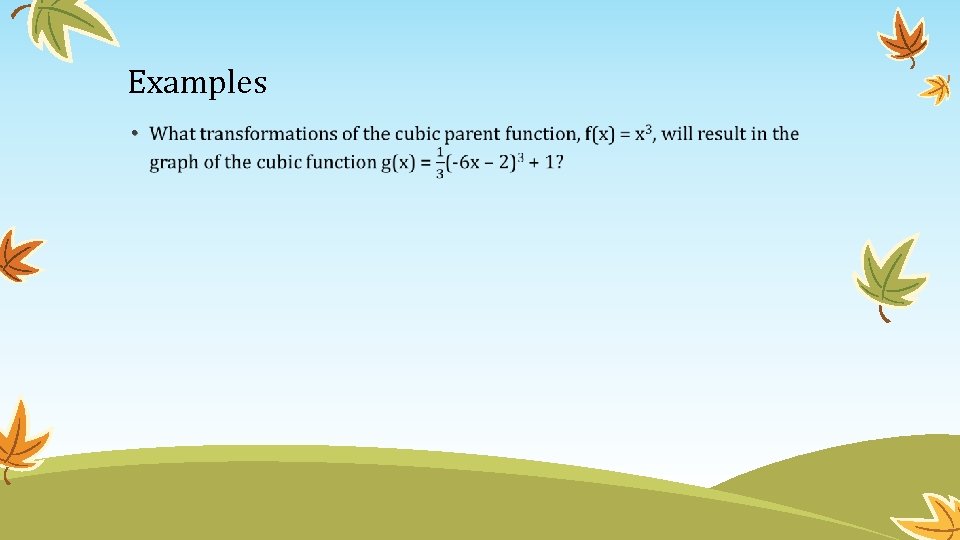
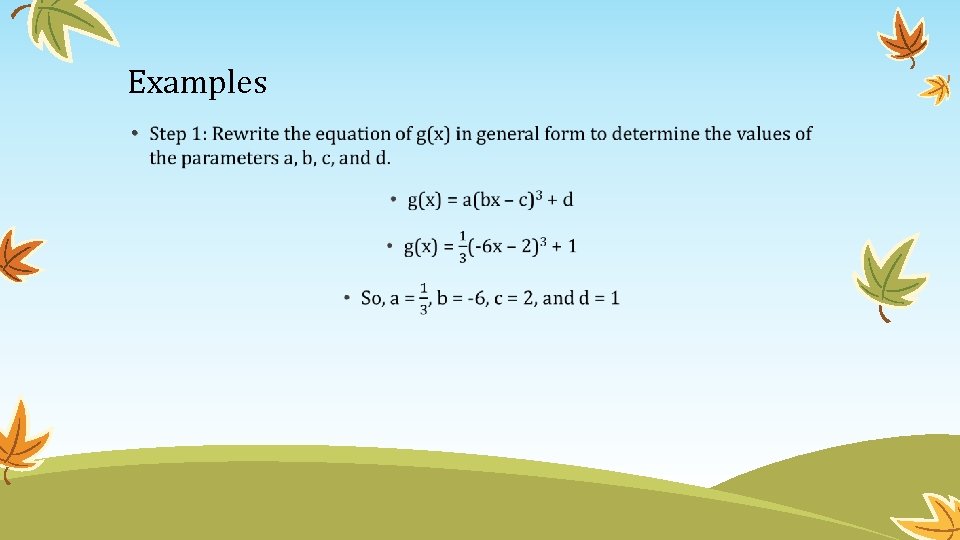
Cubic Functions • For a cubic function, the general form is f(x) = a(bx – c)3 + d, where a, b, c, and d are real numbers. • The cubic parent function is f(x) = x 3 • The full family of cubic functions is generated by applying transformations to the cubic parent function • Transformations are applied using parameters that are multiplied or added to the independent variable in the functional relationship
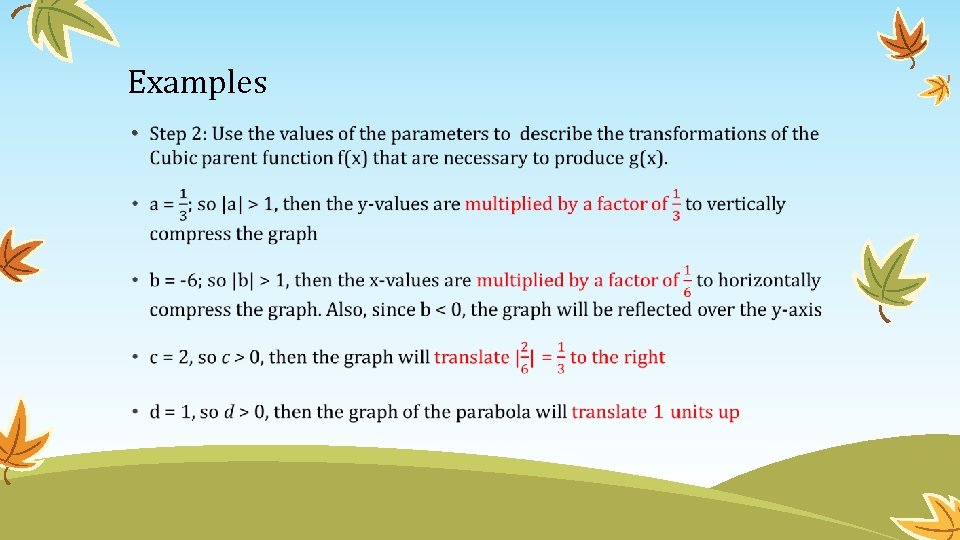
Changes in a • The parameter a influences the vertical stretch or compression of the graph of the parabola. • If |a| > 1, then the y-values are multiplied by a factor of a to vertically stretch the graph • If 0 < |a| < 1, then the y-values are multiplied by a factor of a to vertically compress the graph
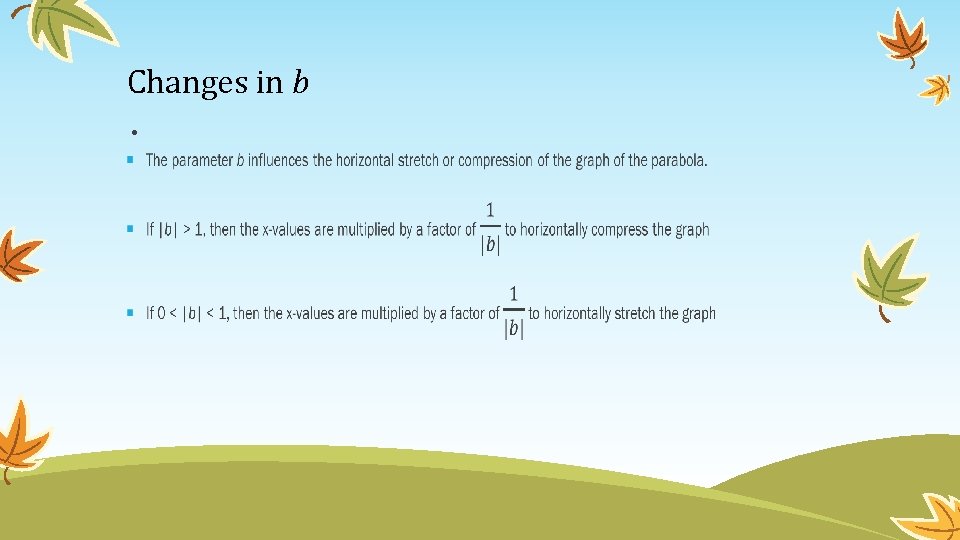
Changes in b •

Changes in b • If b < 0, the all of the x-values will change signs and the parabola will be reflected across the y-axis. • Since the parabola has a vertical axis of symmetry, the horizontal reflection is noticeable in the graph.
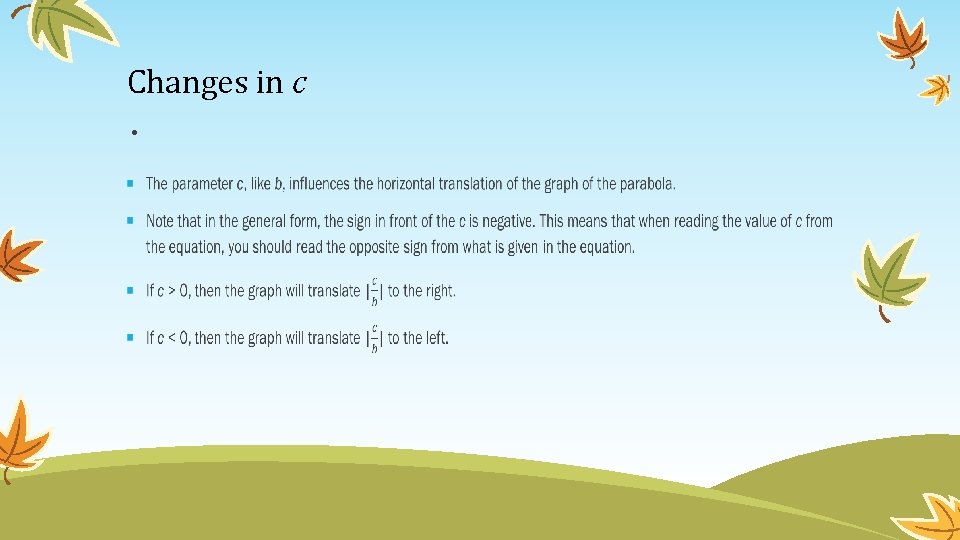
Changes in c •
Changes in d • The parameter d influences the vertical translation of the graph of the parabola. • If d > 0, then the graph of the parabola will translate |d| units up. • If d < 0, then the graph of the parabola will translate |d| units down.
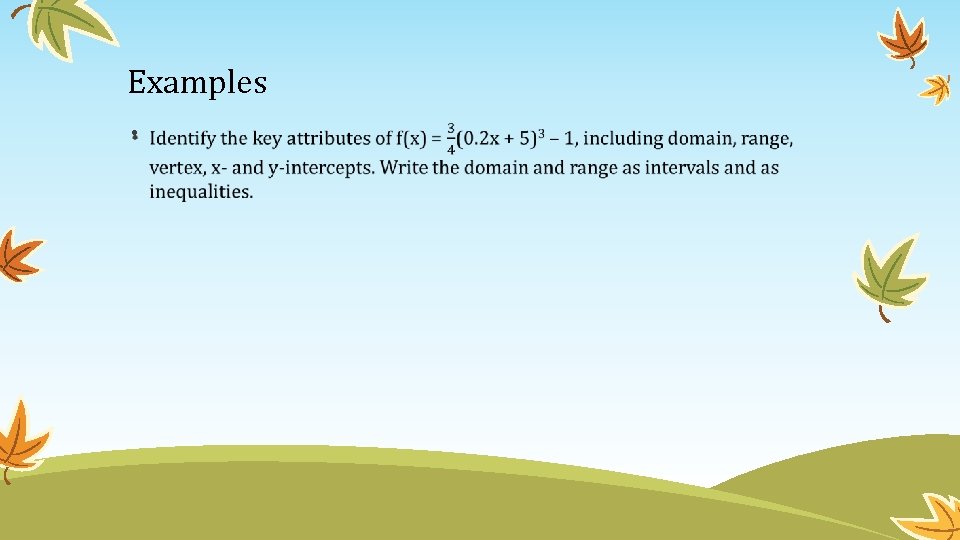
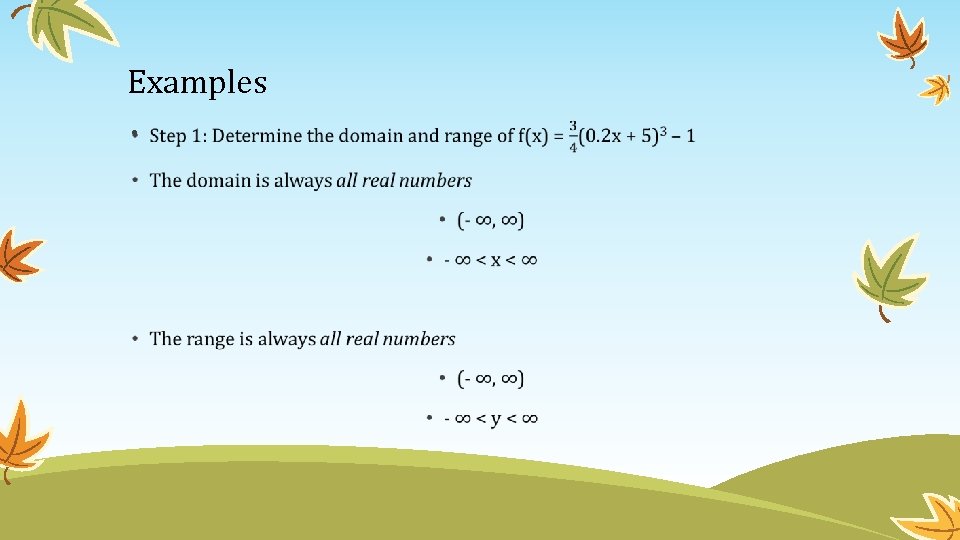
Domain and Range •
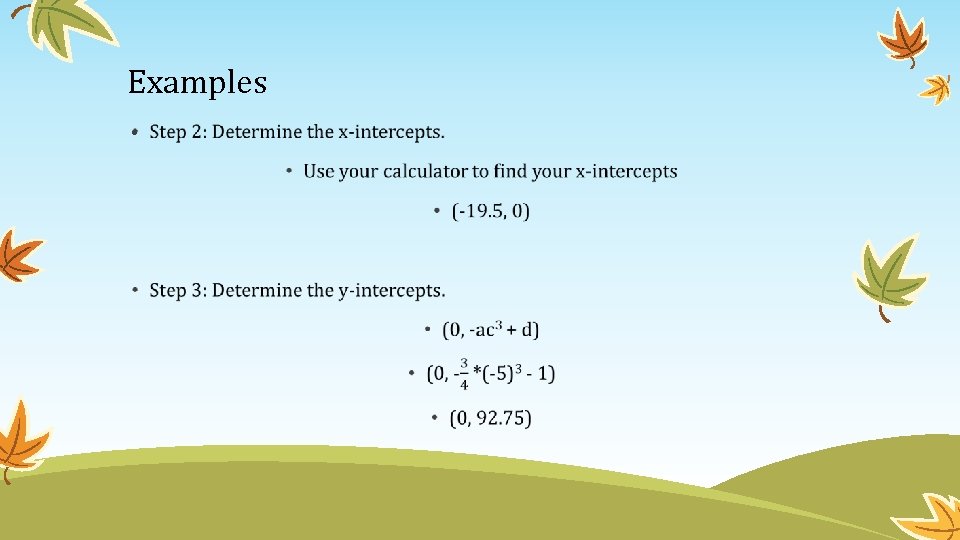
x- and y-intercept • A cubic equation can have as many as three x-intercepts • Use a graphing calculator to find your x-intercepts • If the equation of the parabola is in the general form, y = a(bx – c) 3 + d then we find the y-intercept by substituting x = 0: • the y-intercept becomes (0, -ac 3 + d)
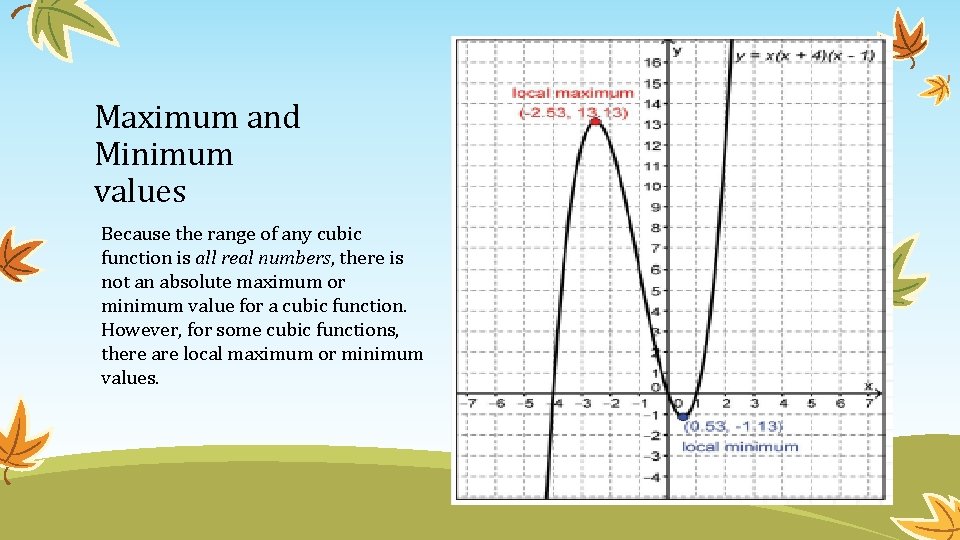
Maximum and Minimum values Because the range of any cubic function is all real numbers, there is not an absolute maximum or minimum value for a cubic function. However, for some cubic functions, there are local maximum or minimum values.
Examples •
Examples •
Examples •
Examples •
Examples •
Examples •
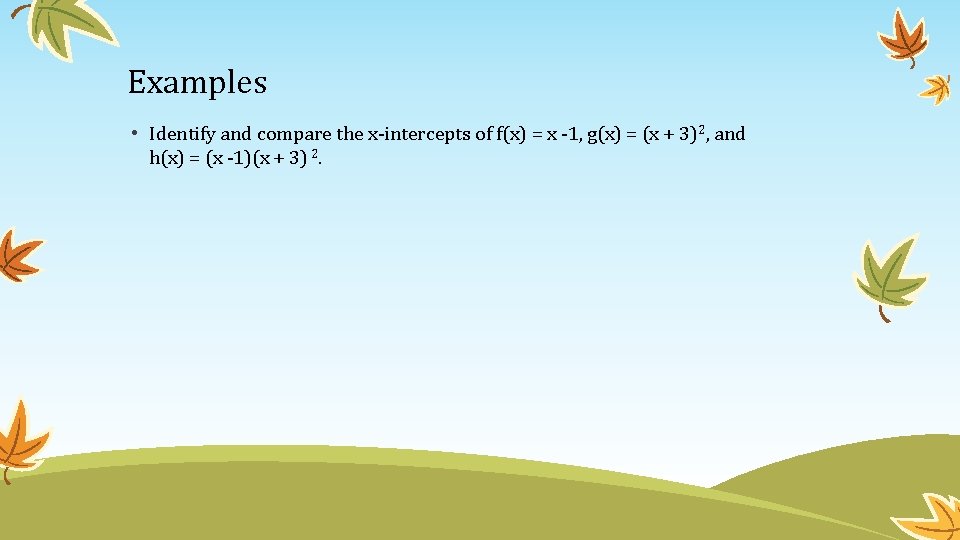
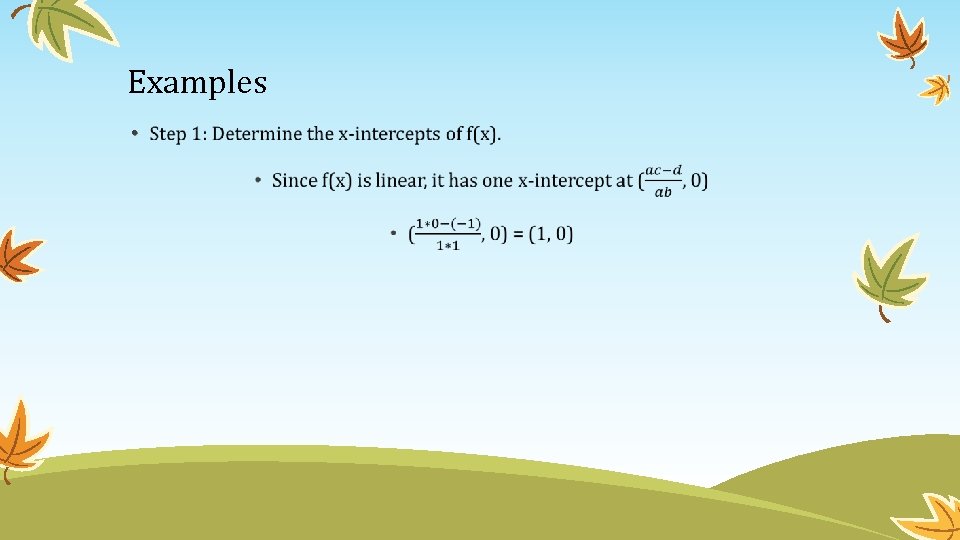
Examples • Identify and compare the x-intercepts of f(x) = x -1, g(x) = (x + 3) 2, and h(x) = (x -1)(x + 3) 2.
Examples •
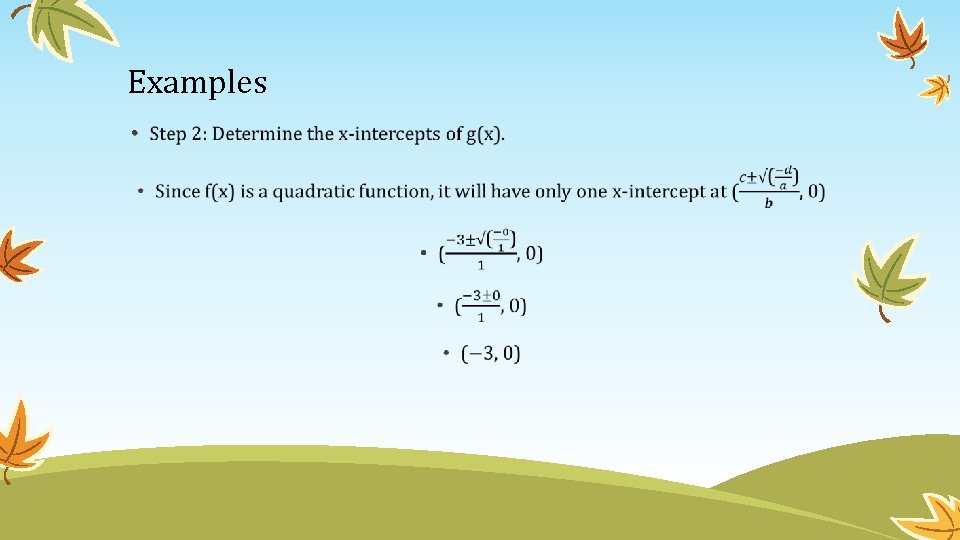
Examples •
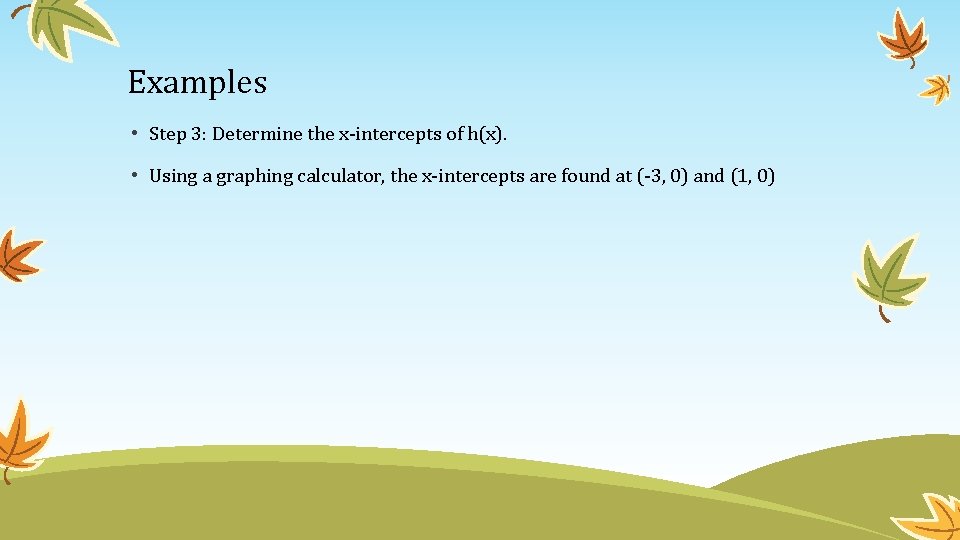
Examples • Step 3: Determine the x-intercepts of h(x). • Using a graphing calculator, the x-intercepts are found at (-3, 0) and (1, 0)
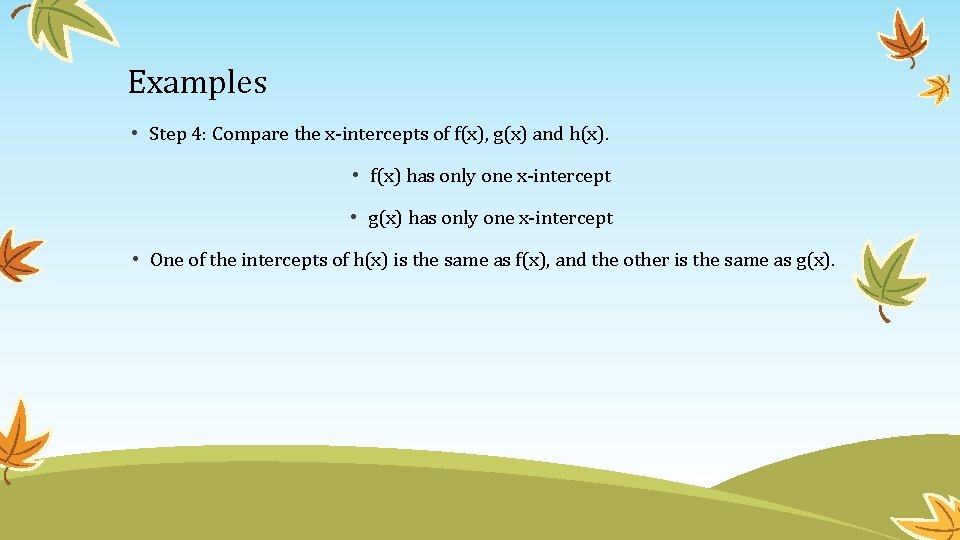
Examples • Step 4: Compare the x-intercepts of f(x), g(x) and h(x). • f(x) has only one x-intercept • g(x) has only one x-intercept • One of the intercepts of h(x) is the same as f(x), and the other is the same as g(x).
- Slides: 21