
Transformative Paradigm EDLP 711 Antonio Mc Laren Bill
Transformative Paradigm EDLP 711 Antonio Mc. Laren Bill Caten Decardra Jackson Donna Jackson
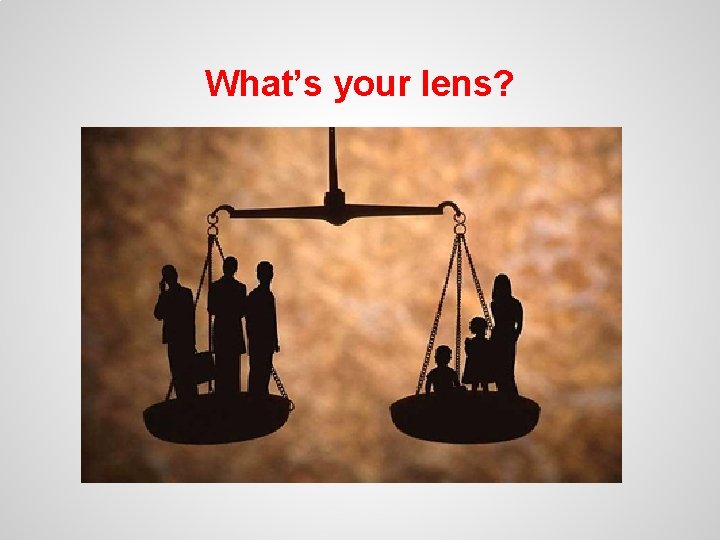
What’s your lens?
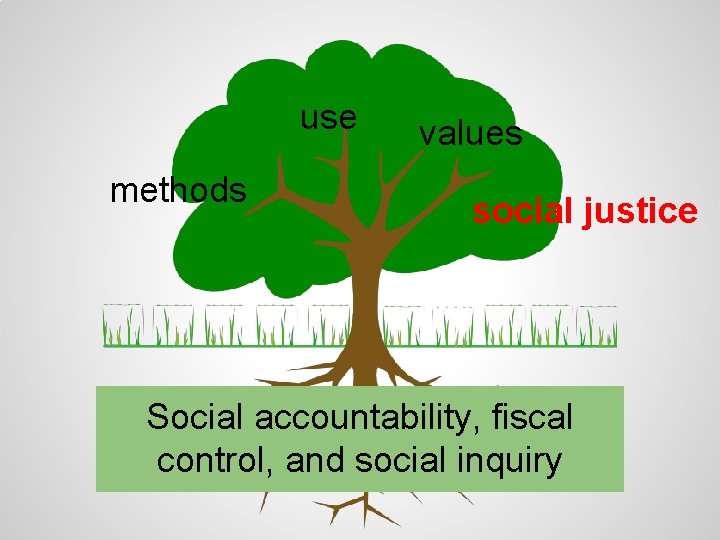
use methods values social justice Social accountability, fiscal control, and social inquiry
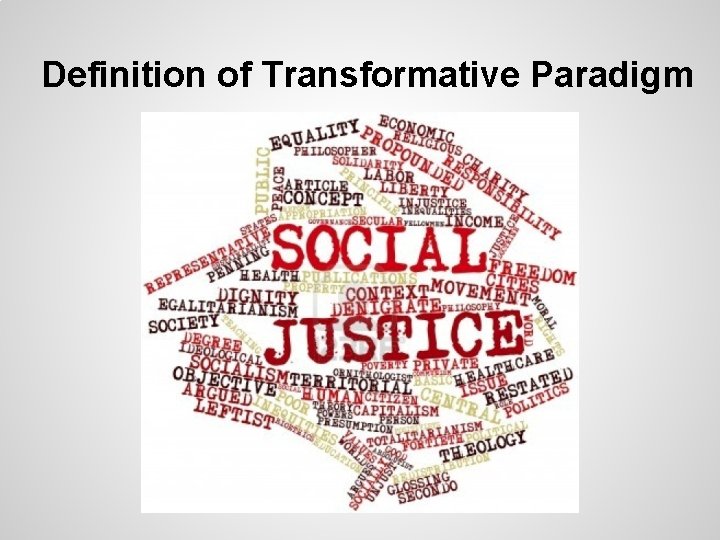
Definition of Transformative Paradigm
Axiology - Importance of Cultural Respect/Cultural Norms - Promotion of Social Justice - Furtherance of human rights - Addressing inequities; Reciprocity is necessary
Ontology - World is multifaceted - Rejects cultural relativism - Versions of reality are based on social positioning - Conscious recognition of consequences of privileging versions of reality
Epistemology - Knowledge constructed within a context of power & privilege - Knowledge neither absolute nor relative - Interactive link between evaluator and participant/stakeholders - Knowledge is socially and historically situated - need to address issues of power and trust
Methodology - Qualitative (dialogic) but quantitative and mixed methods can be used - Contextual, cyclical, consideration of historical factors, especially as they related to oppression
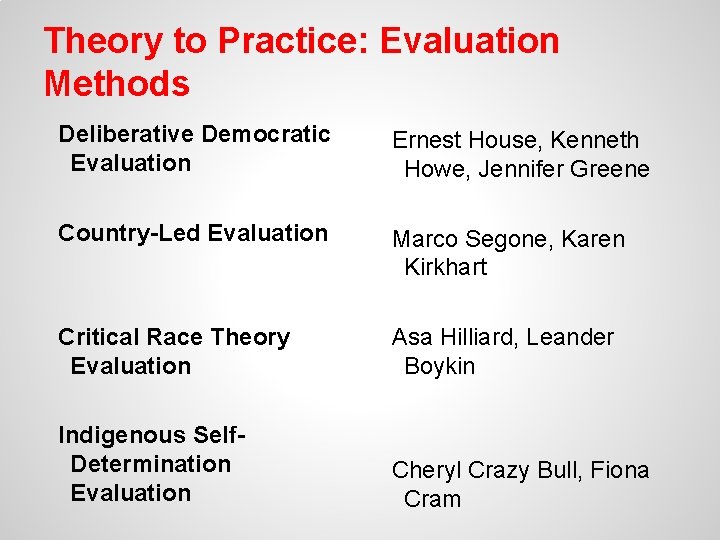
Theory to Practice: Evaluation Methods Deliberative Democratic Evaluation Ernest House, Kenneth Howe, Jennifer Greene Country-Led Evaluation Marco Segone, Karen Kirkhart Critical Race Theory Evaluation Asa Hilliard, Leander Boykin Indigenous Self. Determination Evaluation Cheryl Crazy Bull, Fiona Cram
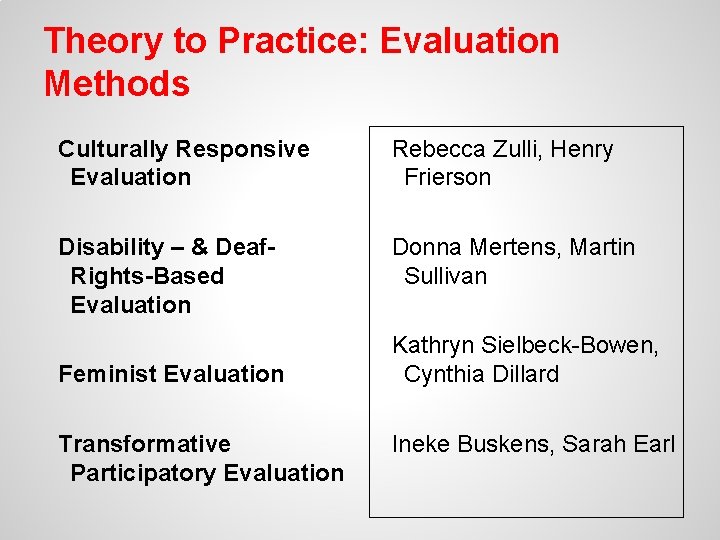
Theory to Practice: Evaluation Methods Culturally Responsive Evaluation Rebecca Zulli, Henry Frierson Disability – & Deaf. Rights-Based Evaluation Donna Mertens, Martin Sullivan Feminist Evaluation Transformative Participatory Evaluation Kathryn Sielbeck-Bowen, Cynthia Dillard Ineke Buskens, Sarah Earl
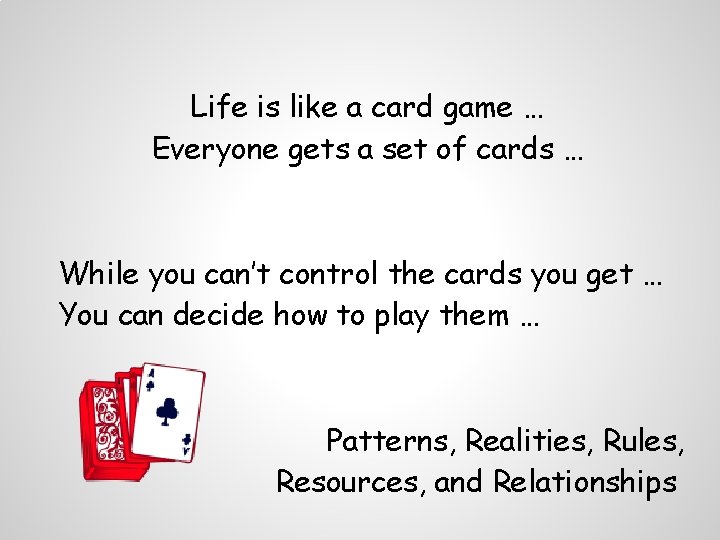
Life is like a card game … Everyone gets a set of cards … While you can’t control the cards you get … You can decide how to play them … Patterns, Realities, Rules, Resources, and Relationships
- Slides: 12