
Transformations of Functions By Mathew Kuruvilla 8 4

Transformations of Functions By: Mathew Kuruvilla 8 -4
Project Chapters Intro Chapter 1: Translations of Functions Slide 5 Chapter 2: Vertical Stretches and Compressions of Functions Slide 4 Slide 7 Chapter 3: Horizontal Stretches and Compressions of Functions -Slide 10

Intro The first thing you need to know are three basic types of parent functions: f(x)=x^2 f(x)=lxl f(x)=√x This is all the basic knowledge you should now for the future lesson reviews.

Chapter 1: Translations of Functions
Translating Up or Down When you are translating up or down (vertical translation), you always have this general format in the equation if it is y=f(x): y=f(x)+k. If 'k' is greater than 0, then the graph would be vertically translated that many spaces up. If 'k' is less than 0, then the graph would be vertically translated that many spaces down.

Translating Left or Right When you are translating left or right (horizontal translation), you always have this general format in the equation if it is y=f(x): y=f(x-h). If 'h' is greater than 0, then the graph would be horizontally translated that many spaces to the right. If 'h' is less than 0, then the graph would be horizontally translated that many spaces to the left.
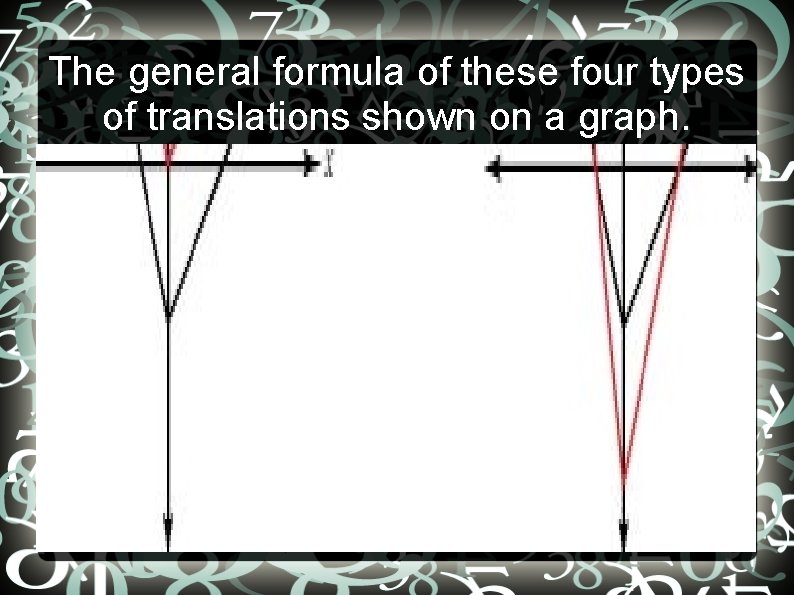
The general formula of these four types of translations shown on a graph.
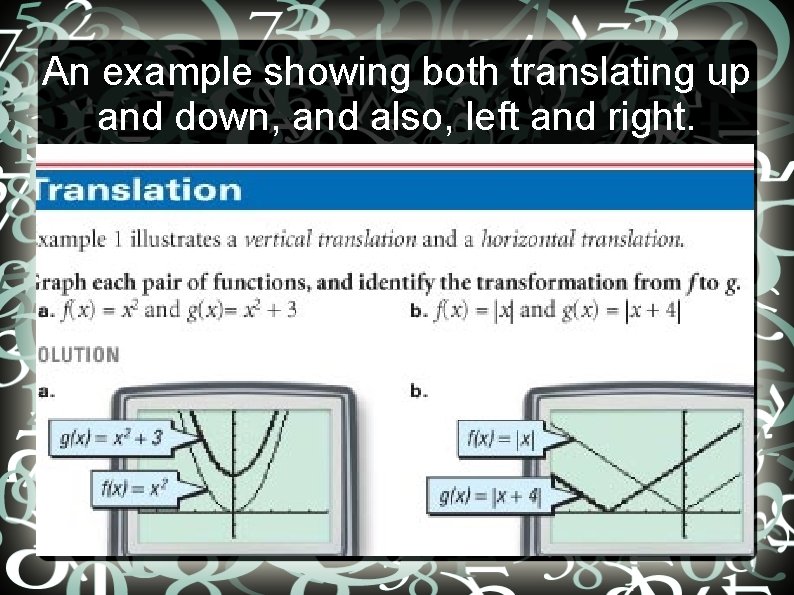
An example showing both translating up and down, and also, left and right.
Chapter 2: Vertical Stretches and Compressions of Functions
Vertical Stretch When you are stretching (or compressing) a function vertically, the general equation for this, if it is y=f(x), would be: y=af(x) If 'a' is greater than one in the equation, then the equation gets stretched by a factor of 'a'.
Vertically Compression When you are compressing (or stretching) a function vertically, the general equation for this, if it is y=f(x), would be: y=af(x) If 'a' is less than one and also greater than zero in the equation, then the equation gets compressed by a factor of 'a'.
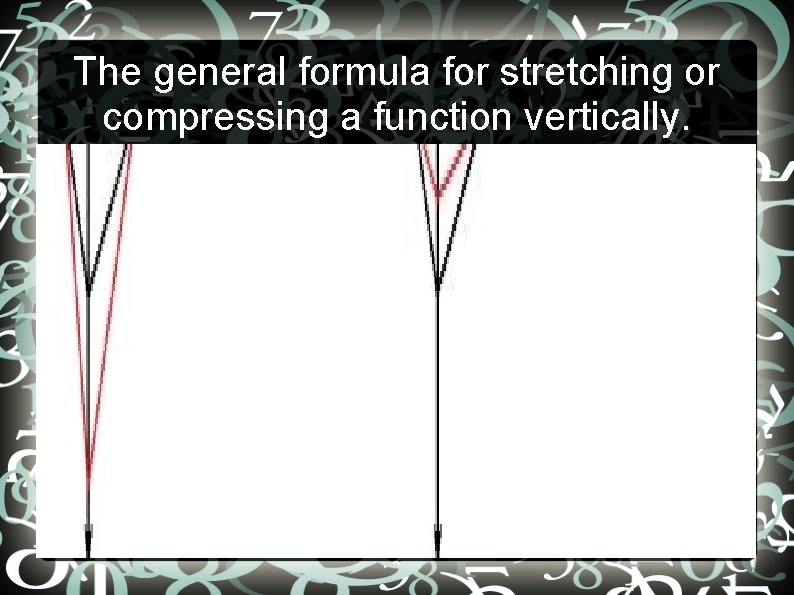
The general formula for stretching or compressing a function vertically.
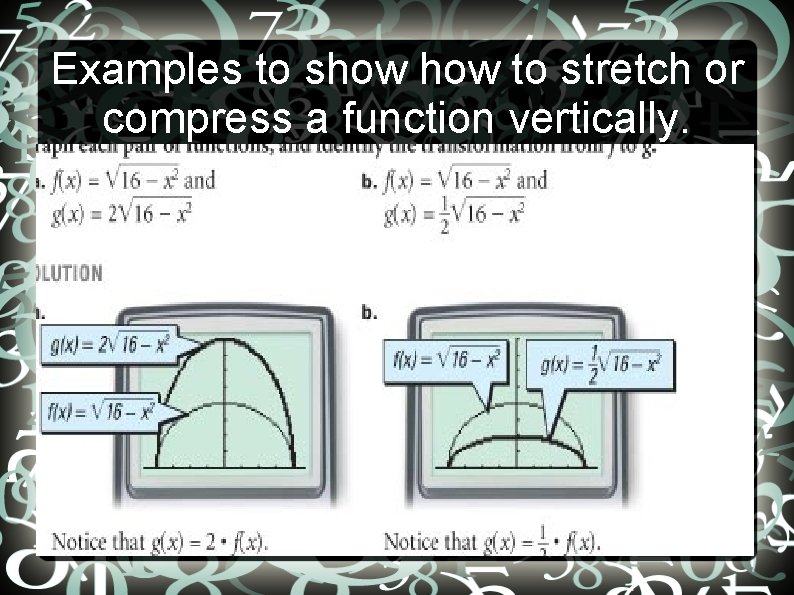
Examples to show to stretch or compress a function vertically.
Chapter 3: Horizontal Stretches and Compressions of Functions
Horizontally Stretch When you are stretching (or compressing) a function horizontally, the general equation for this, if it is y=f(x), would be: y=f(bx) If 'b' is less than one and greater than zero in the equation, then the equation gets stretched by a factor of 1/b.
Horizontal Compression When you are compressing (or stretching) a function horizontally, the general equation for this, if it is y=f(x), would be: y=f(bx) If 'b' is greater than one in the equation, then the equation gets stretched by a factor of 1/b.
The general formula for stretching or compressing a function horizontally.
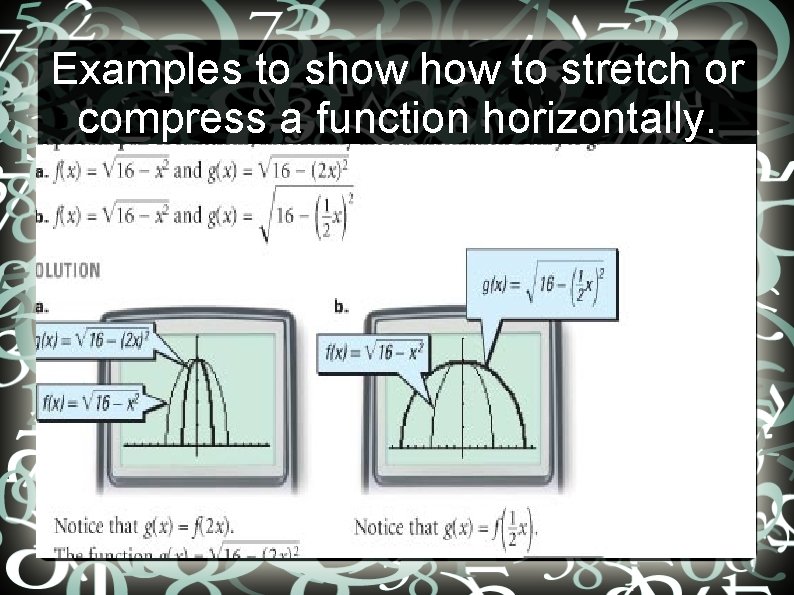
Examples to show to stretch or compress a function horizontally.

The End Thanks for watching and Good Luck on the Midterm!!!!! (You'll really need it. . . )
- Slides: 19