
Transformations and Symmetry Transformations Reflection Translation Glide Reflection


- Slides: 25
Transformations and Symmetry
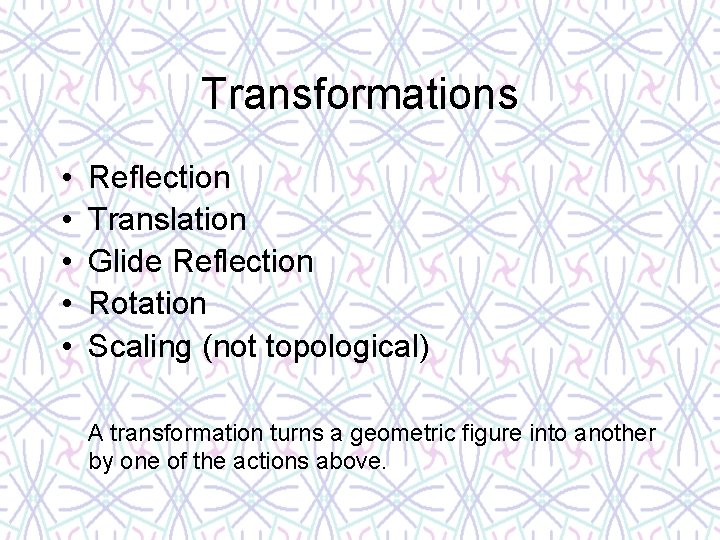
Transformations • • • Reflection Translation Glide Reflection Rotation Scaling (not topological) A transformation turns a geometric figure into another by one of the actions above.
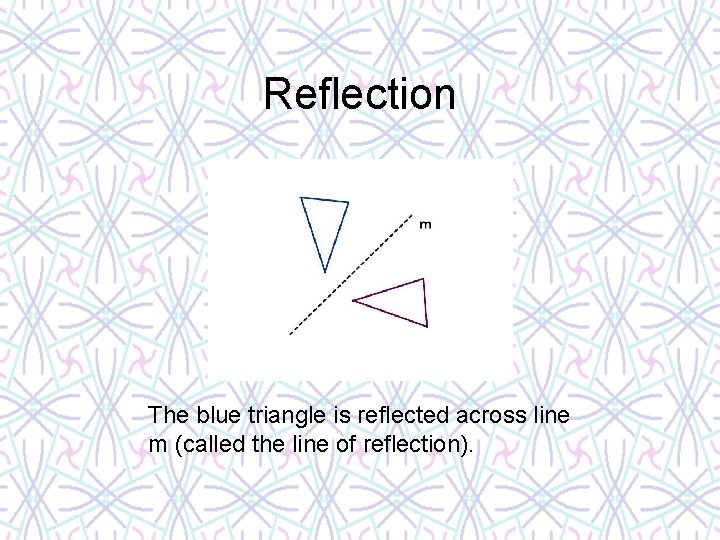
Reflection The blue triangle is reflected across line m (called the line of reflection).
Translation Sliding a figure. A translation could be accomplished by several reflections.
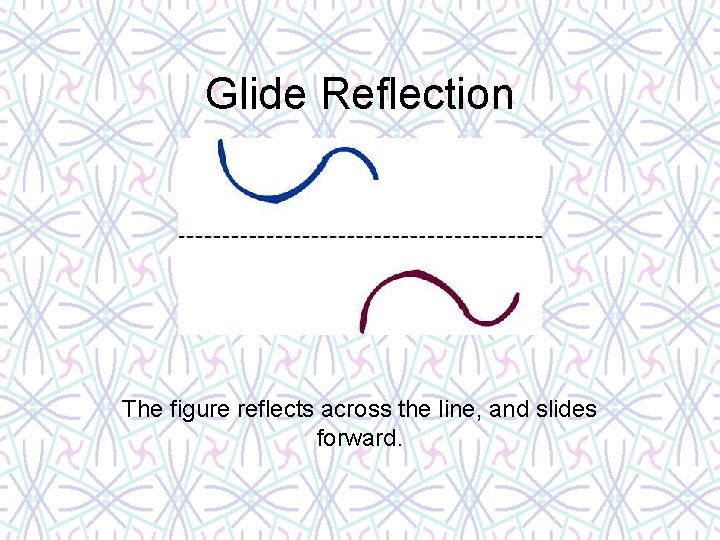
Glide Reflection The figure reflects across the line, and slides forward.
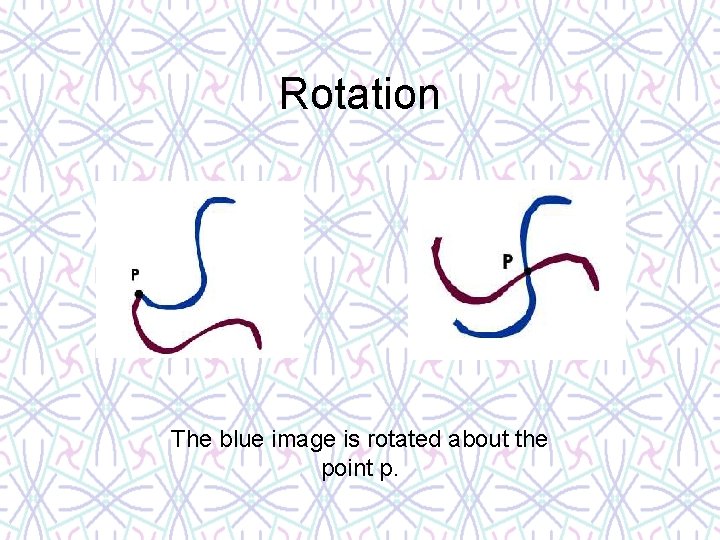
Rotation The blue image is rotated about the point p.
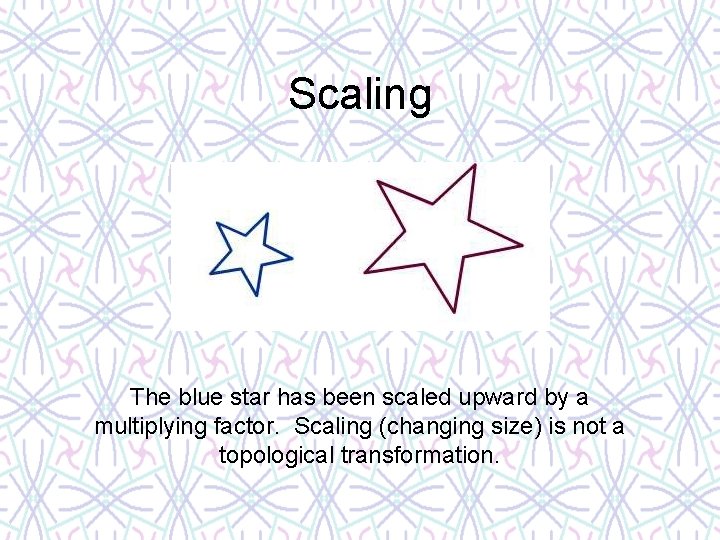
Scaling The blue star has been scaled upward by a multiplying factor. Scaling (changing size) is not a topological transformation.
Symmetry • Our basic idea of symmetry is 2 -fold symmetry • A figure whose halves are mirror images of each other over a fold line • We could think of this as being able to transform half of the image into the other half by reflection
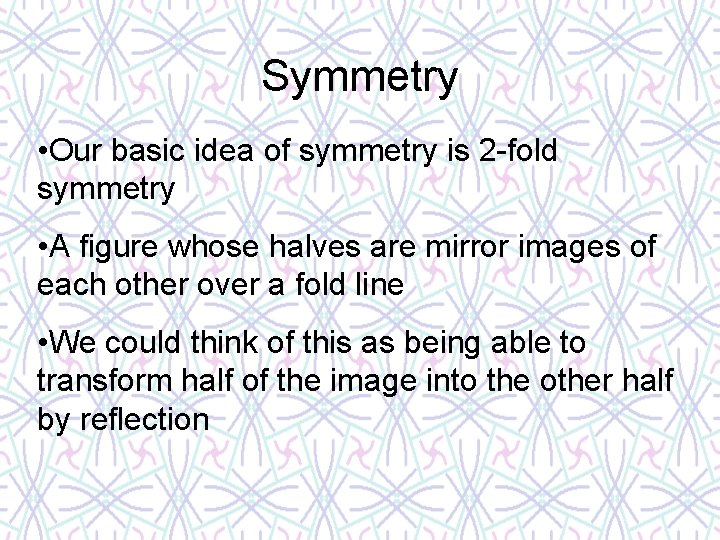
Which are the lines of symmetry? Only m
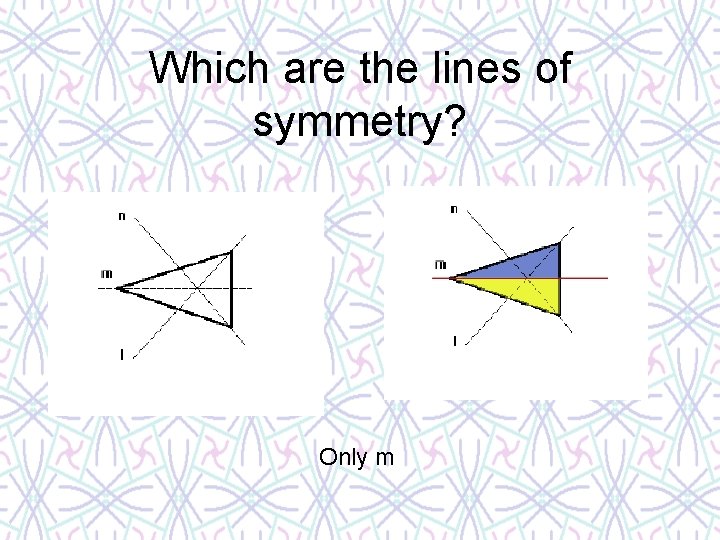
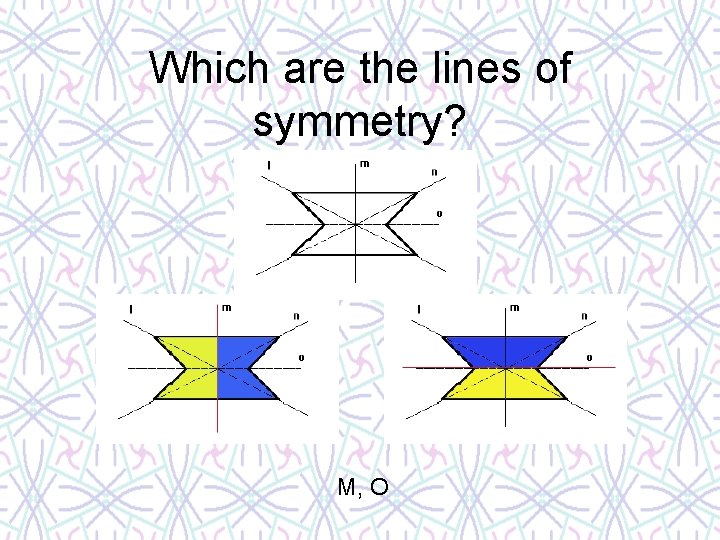
Which are the lines of symmetry? L, M, N, O
Which are the lines of symmetry? M, O
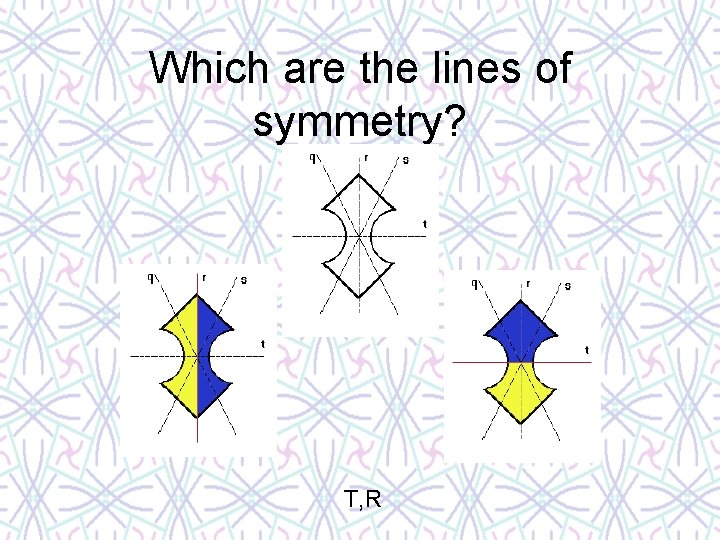
Which are the lines of symmetry? T, R
Symmetry (II) • More complicated types of symmetry arise if we consider objects obtained from reflection, PLUS other transformations such as rotation • Various patterns have been characterized as symmetry groups
Conway Notation • Is one way mathematicians use to describe various symmetry groups • Can get very complicated!
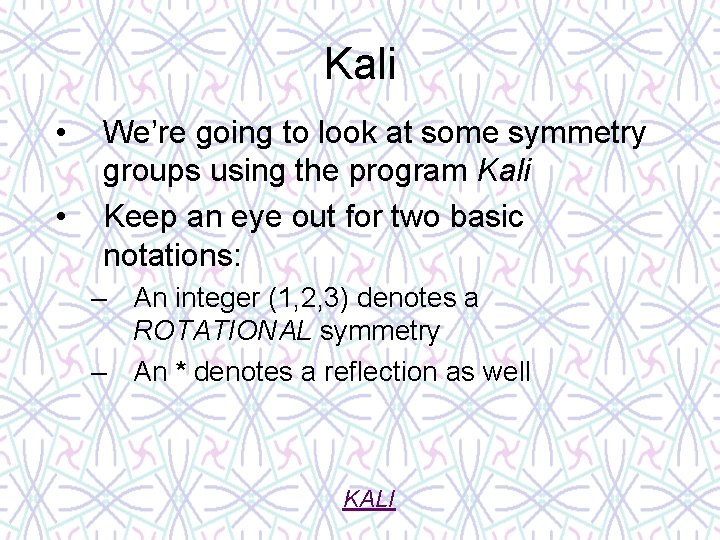
Kali • • We’re going to look at some symmetry groups using the program Kali Keep an eye out for two basic notations: – An integer (1, 2, 3) denotes a ROTATIONAL symmetry – An * denotes a reflection as well KALI
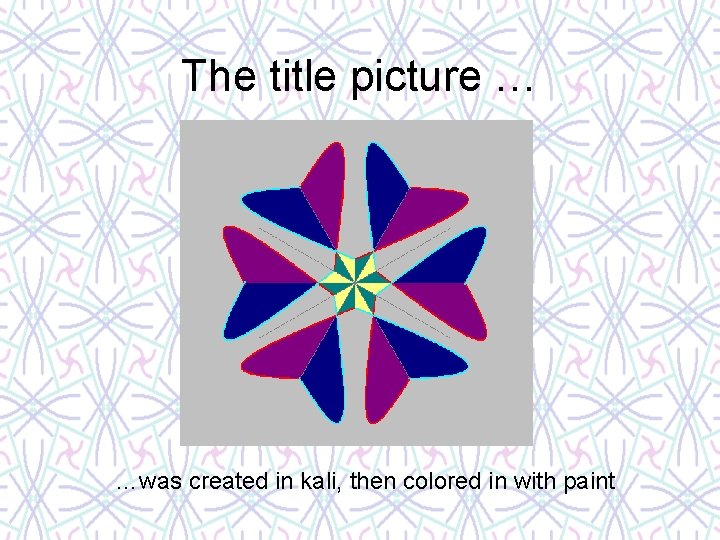
The title picture … …was created in kali, then colored in with paint
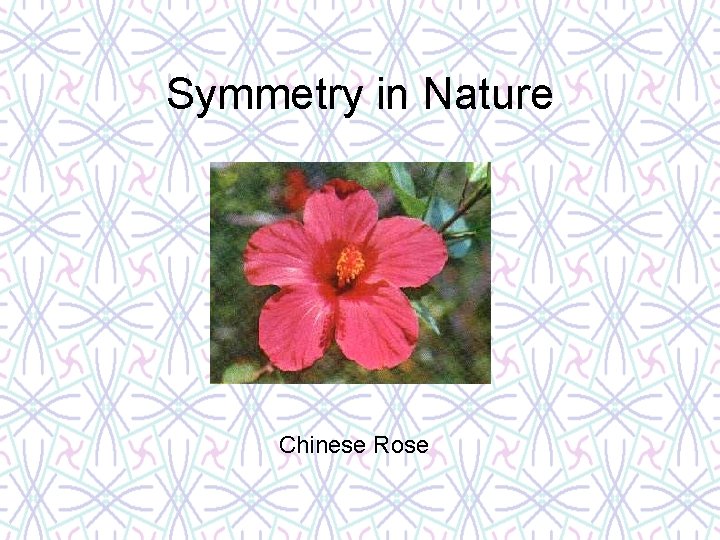
Symmetry in Nature Chinese Rose
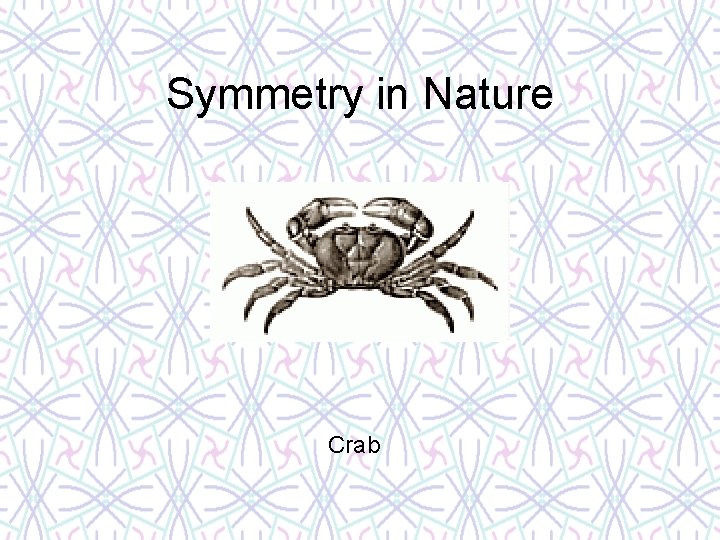
Symmetry in Nature Crab
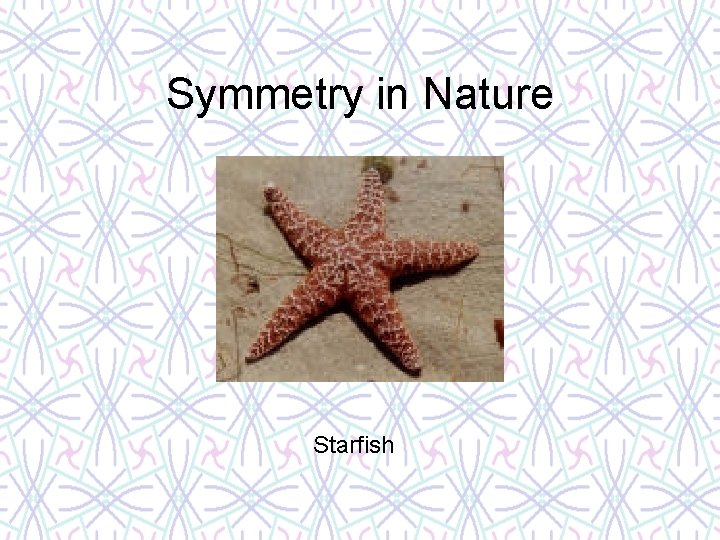
Symmetry in Nature Starfish
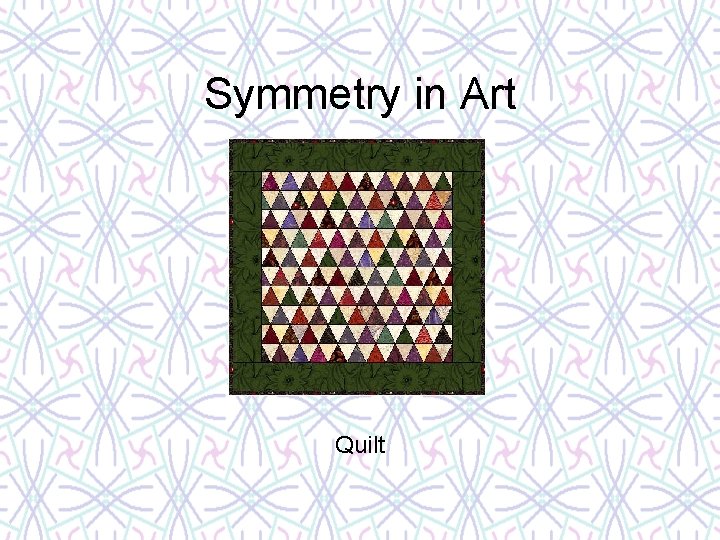
Symmetry in Art Quilt
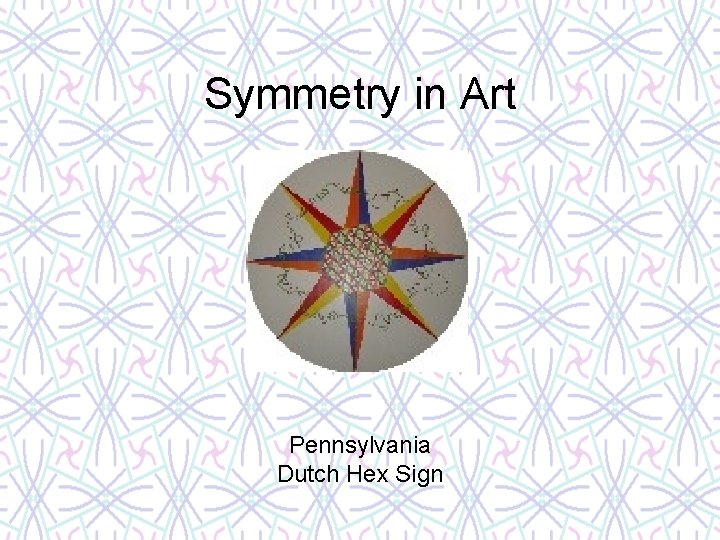
Symmetry in Art Pennsylvania Dutch Hex Sign
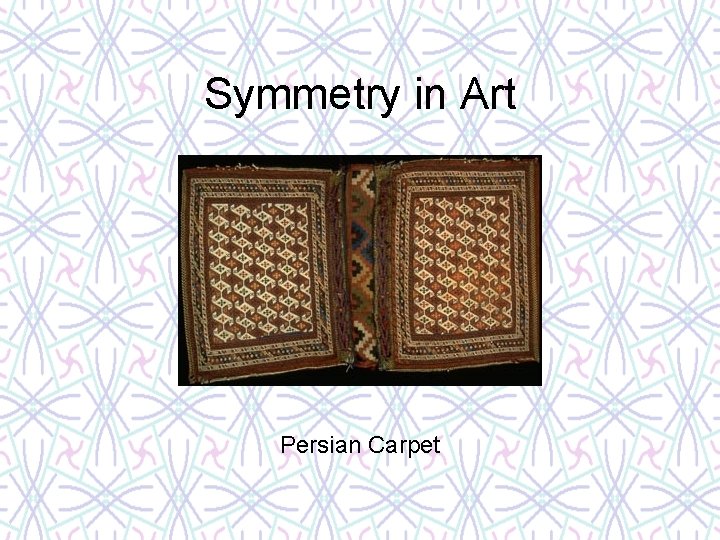
Symmetry in Art Persian Carpet
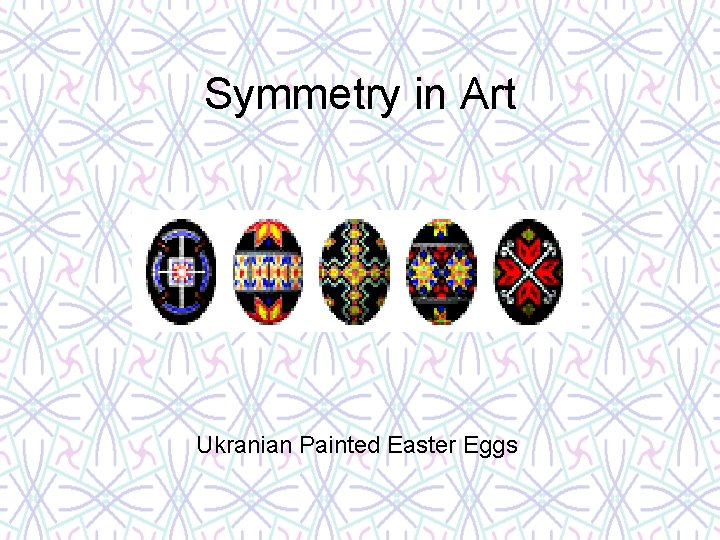
Symmetry in Art Ukranian Painted Easter Eggs
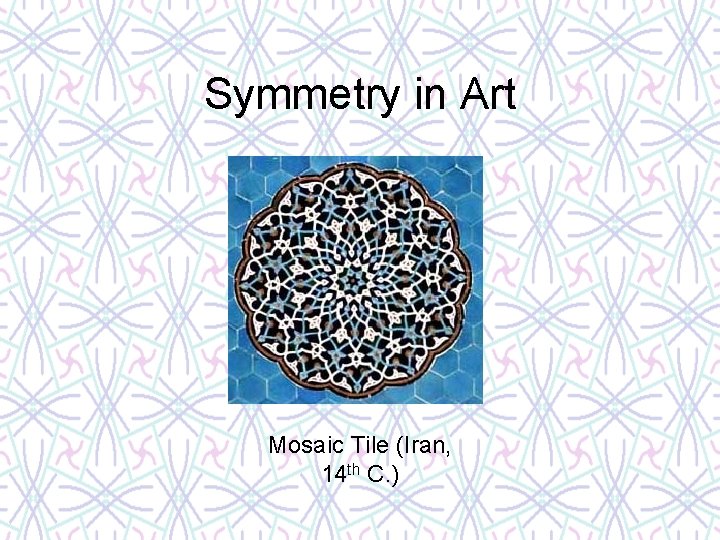
Symmetry in Art Mosaic Tile (Iran, 14 th C. )
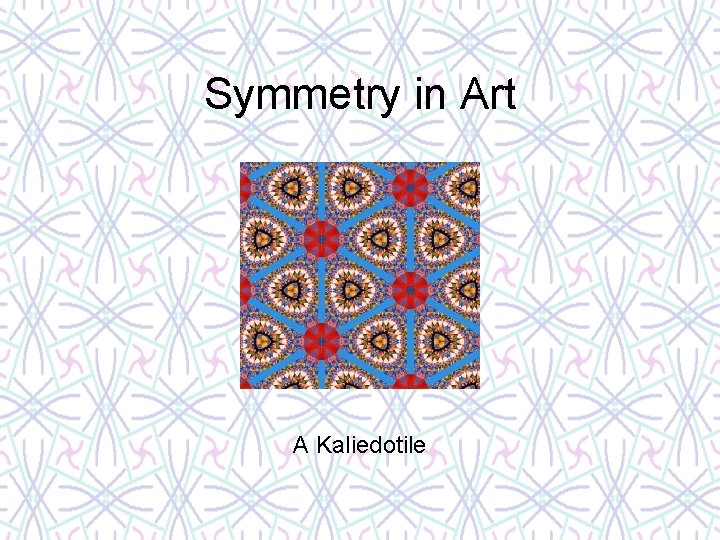
Symmetry in Art A Kaliedotile