
Transformation of cultural and linguistic capital the struggle
- Slides: 40
Transformation of cultural and linguistic capital: the struggle to be a ‘good’ student Yvonne Slough-Kuss AIE Conference, Mumbai, October 11, 2014 Intercultural Understanding: Reflection, Responsibility and Action
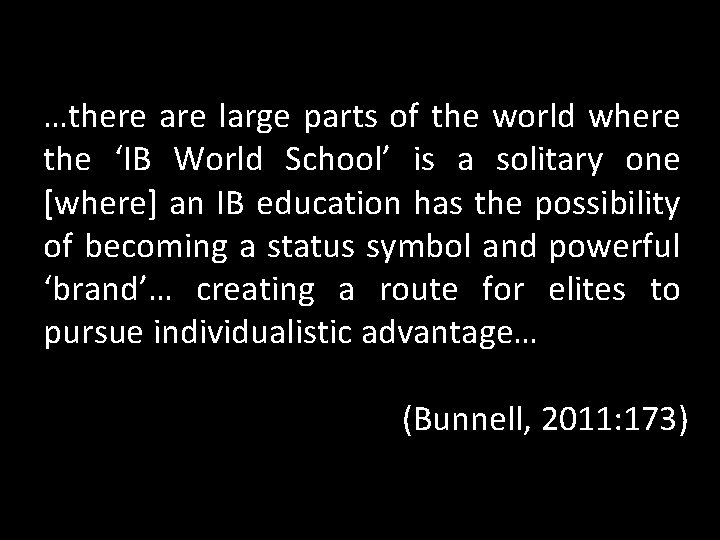
…there are large parts of the world where the ‘IB World School’ is a solitary one [where] an IB education has the possibility of becoming a status symbol and powerful ‘brand’… creating a route for elites to pursue individualistic advantage… (Bunnell, 2011: 173)
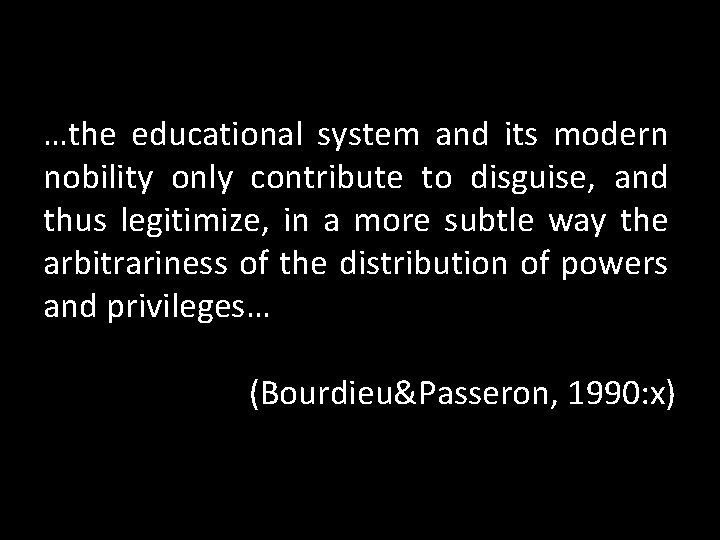
…the educational system and its modern nobility only contribute to disguise, and thus legitimize, in a more subtle way the arbitrariness of the distribution of powers and privileges… (Bourdieu&Passeron, 1990: x)
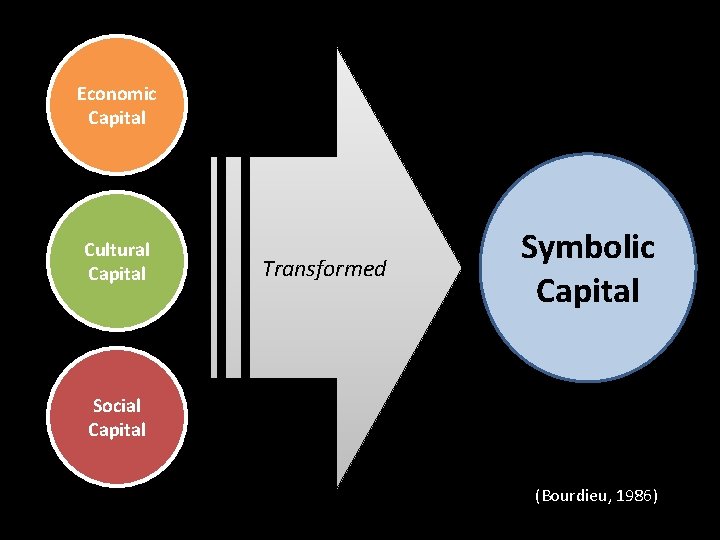
Theory of Symbolic Capital (Bourdieu, 1986)
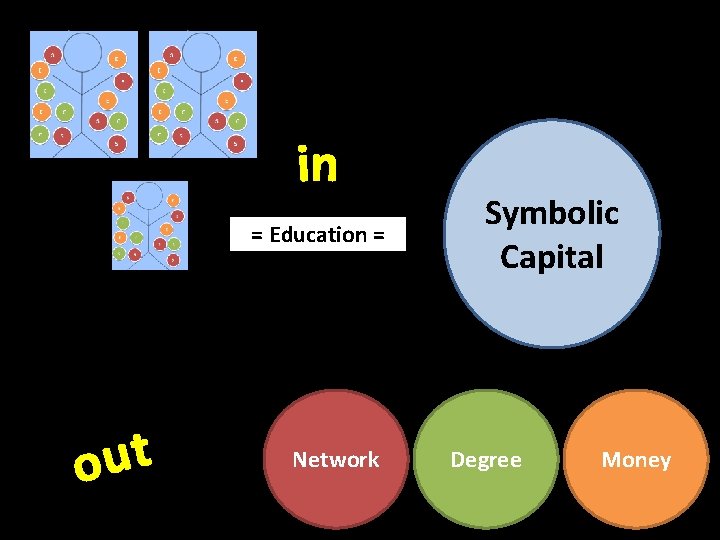
Economic Capital Cultural Capital Transformed Symbolic Capital Social Capital (Bourdieu, 1986)
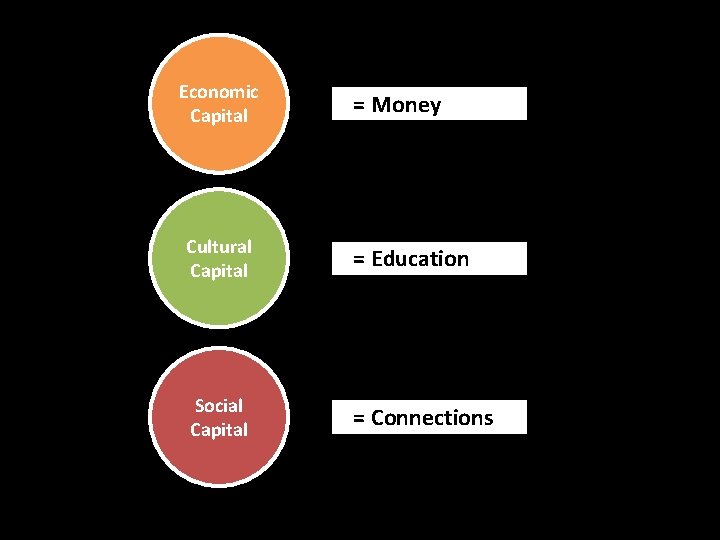
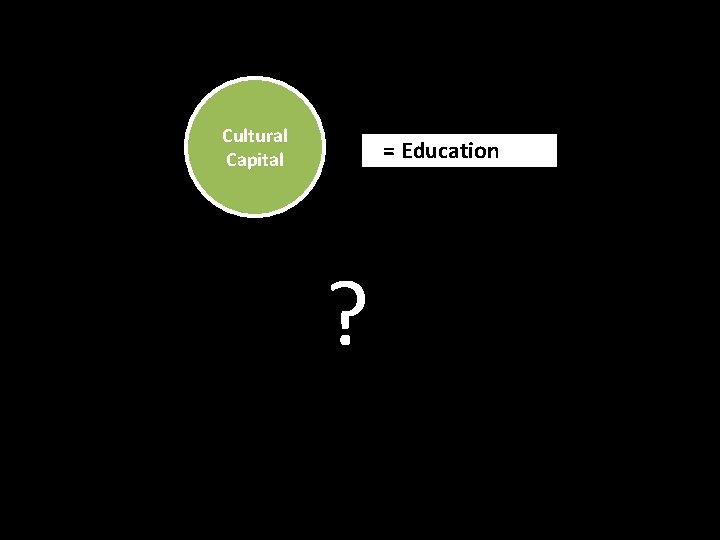
Economic Capital = Money Cultural Capital = Education Social Capital = Connections
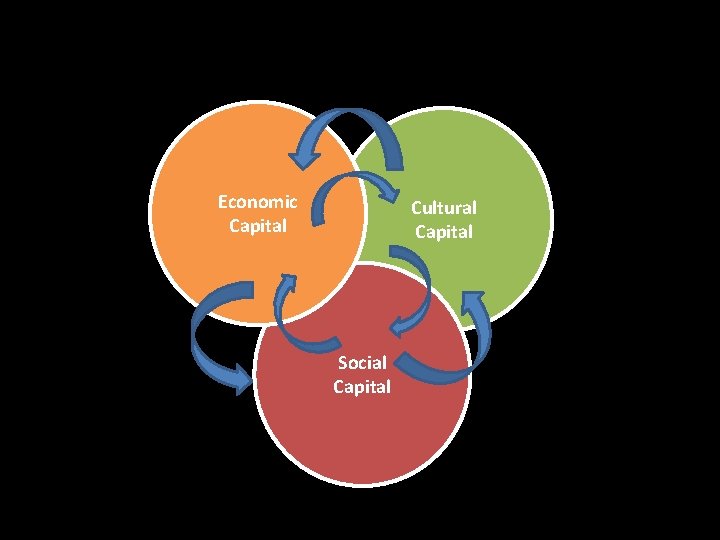
Economic Capital Cultural Capital Social Capital
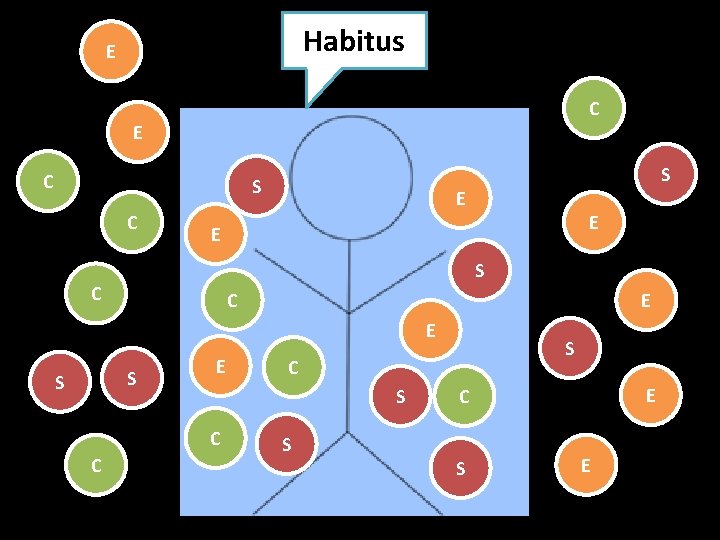
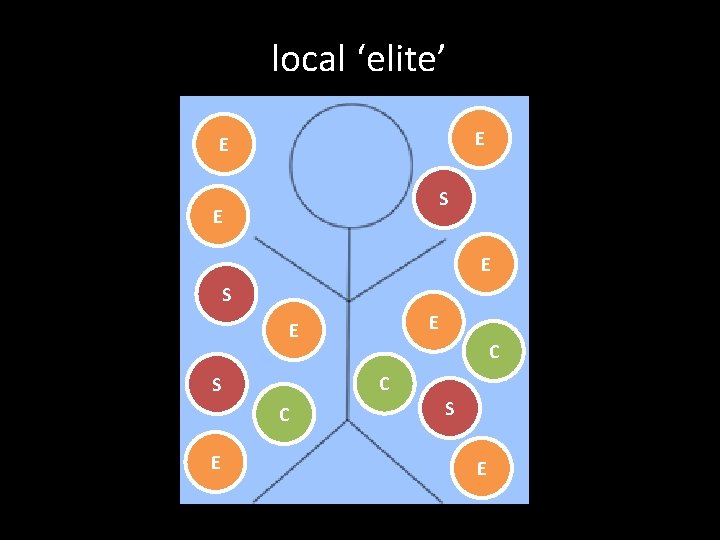
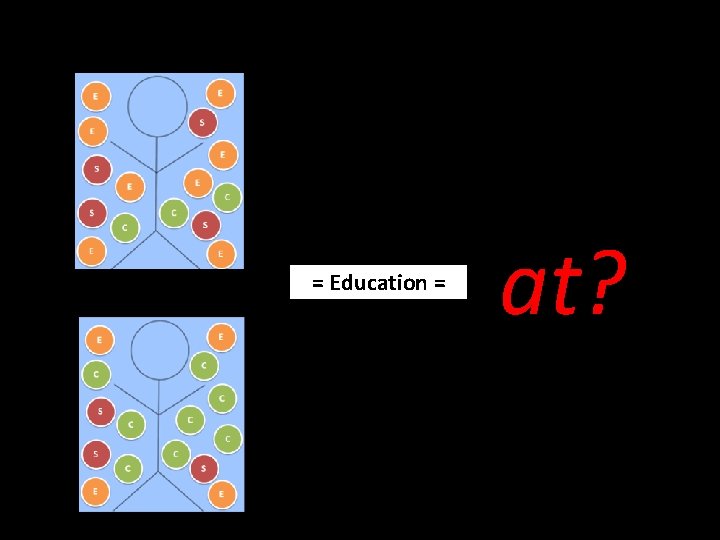
Habitus E C S C E E S C S C C E E C S S S E C S E
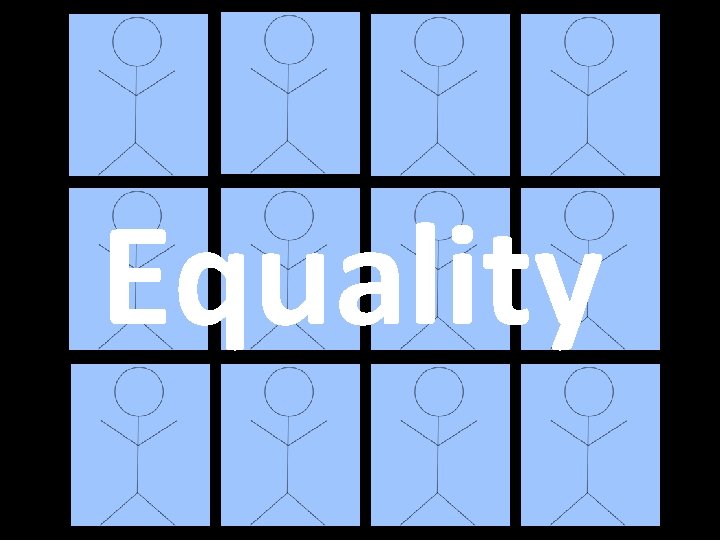
Equality
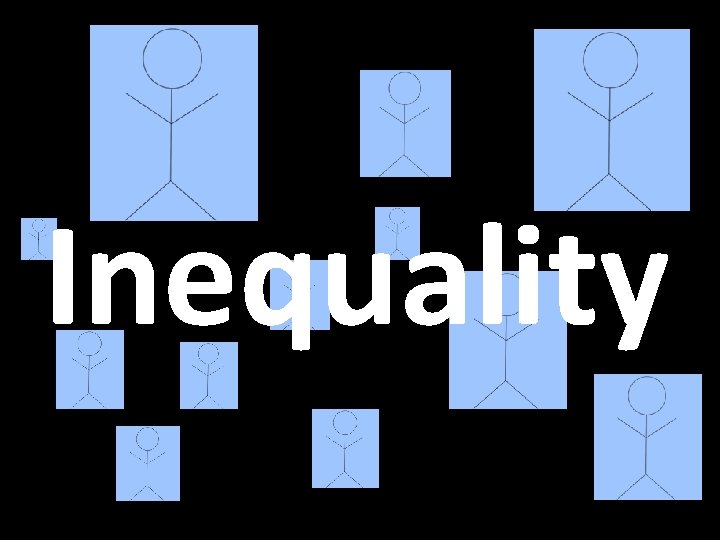
Inequality
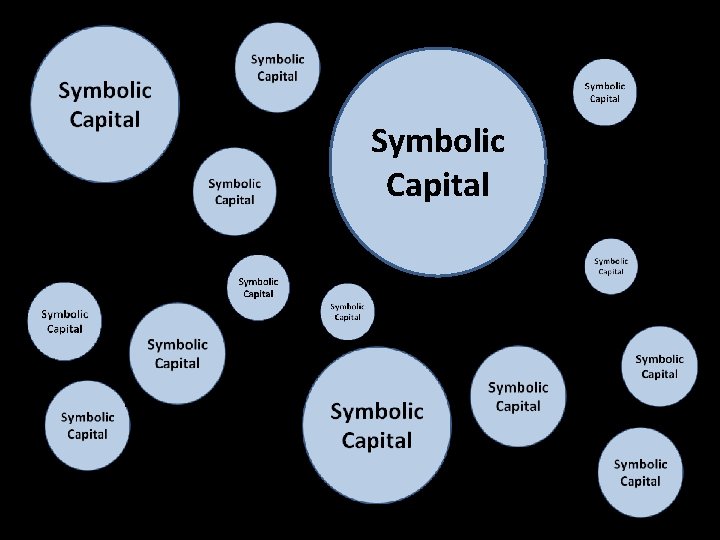
Symbolic Capital
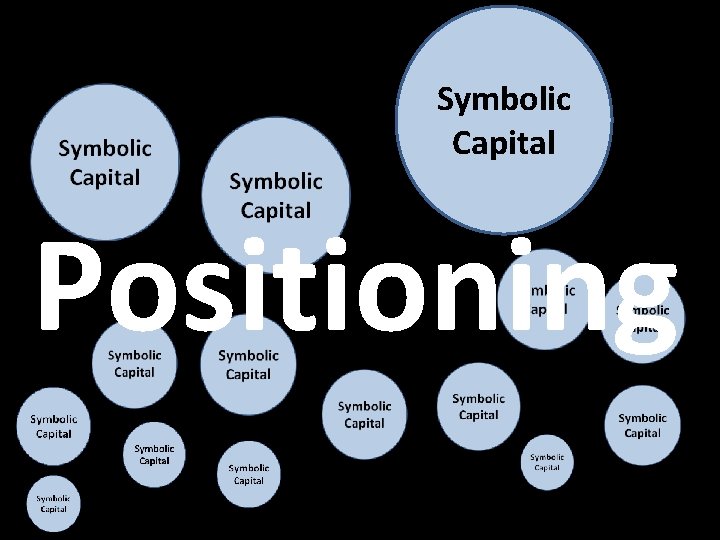
Symbolic Capital Positioning
Cultural Capital = Education ?
= Education = Network Symbolic Capital Degree Money
International schools?
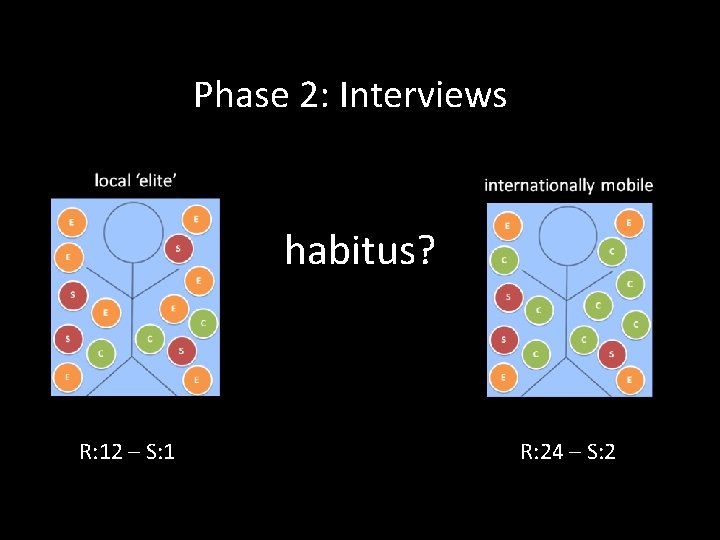
local ‘elite’’ E E S E E C S C E C S E
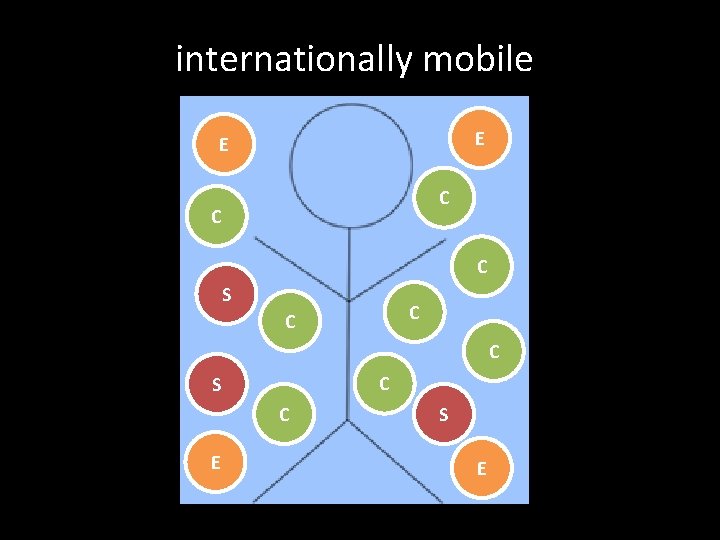
internationally mobile’ E E C C C S C E S E
Cultural Capital
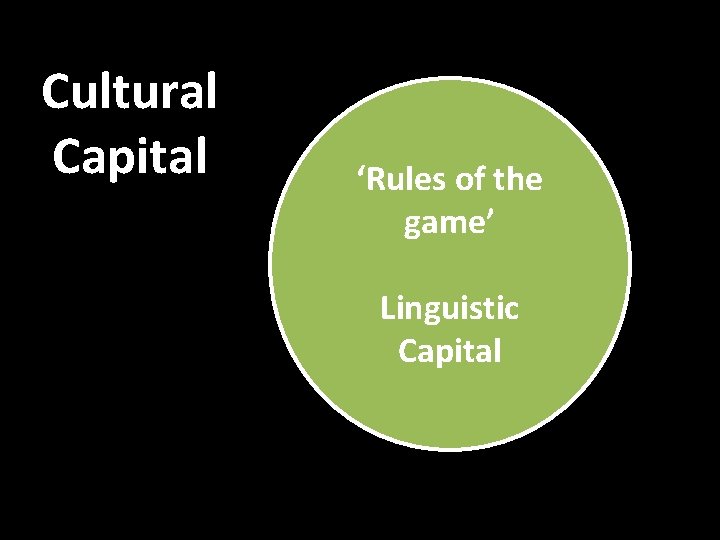
Cultural Capital ‘Rules of the game’ Linguistic Capital
Rules of the game
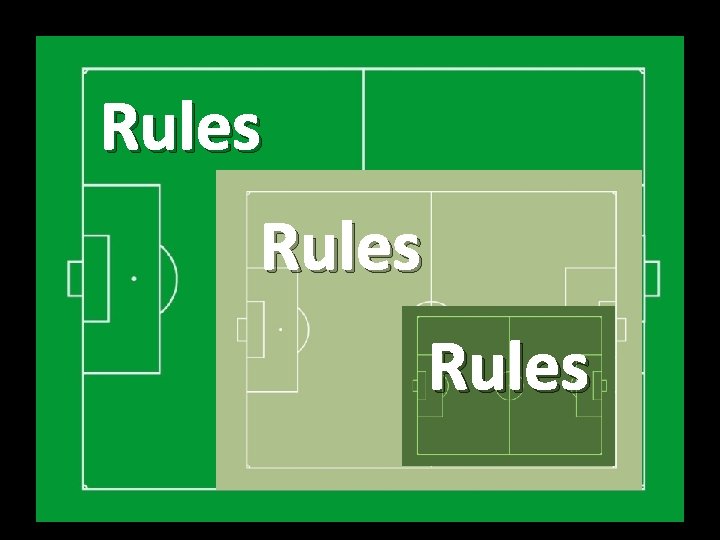
Rules
Rules
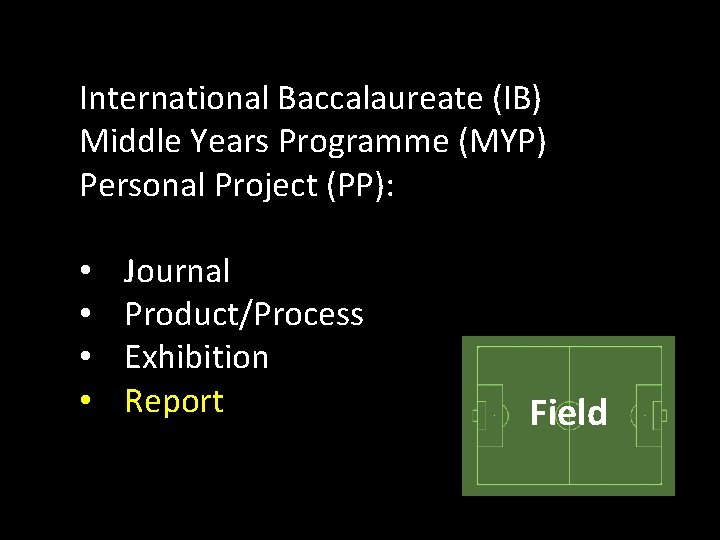
International Baccalaureate (IB) Middle Years Programme (MYP) Personal Project (PP): • • Journal Product/Process Exhibition Report Field
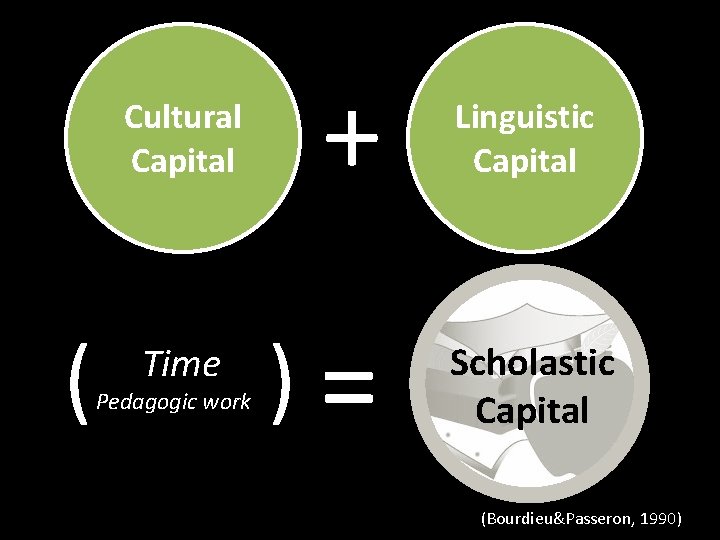
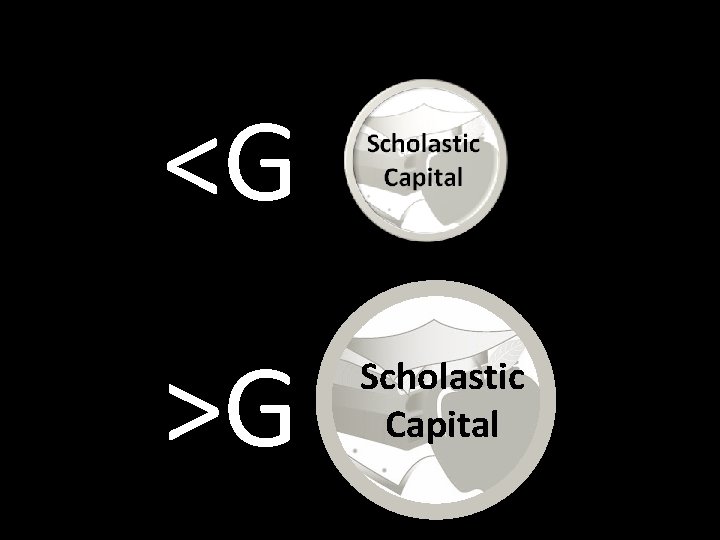
Cultural Capital ( Time Pedagogic work + )= Linguistic Capital Scholastic Capital (Bourdieu&Passeron, 1990)
<G >G Scholastic Capital
= Education = at?
How and why do students use specific discursive strategies when positioning themselves as ‘good’ students?
Case Study Critical Discourse Analysis (Fairclough, 2003) Qualitative - Interpretive IB MYP International School of Eastern Europe 25 PP Reports (pseudonym)
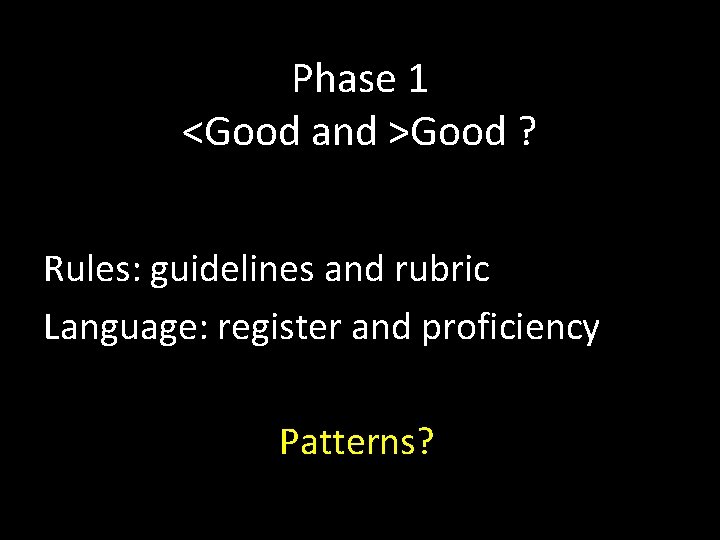
Phase 1 <Good and >Good ? Rules: guidelines and rubric Language: register and proficiency Patterns?
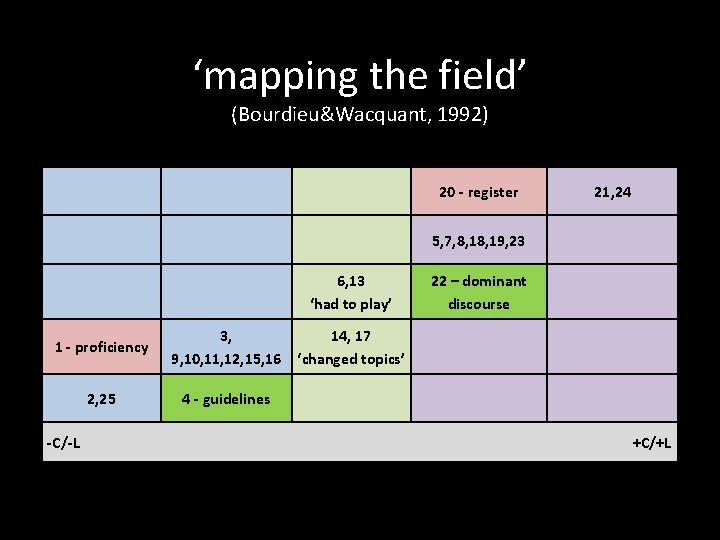
‘mapping the field’ (Bourdieu&Wacquant, 1992) 20 - register 21, 24 5, 7, 8, 19, 23 6, 13 ‘had to play’ 22 – dominant discourse 1 - proficiency 3, 9, 10, 11, 12, 15, 16 14, 17 ‘changed topics’ 2, 25 4 - guidelines -C/-L +C/+L
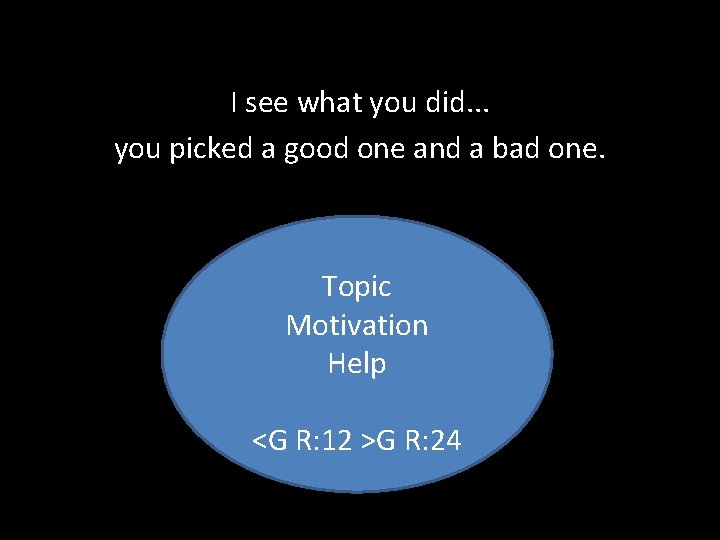
I see what you did. . . you picked a good one and a bad one. Topic Motivation Help <G R: 12 >G R: 24
Phase 2: Interviews habitus? R: 12 – S: 1 R: 24 – S: 2
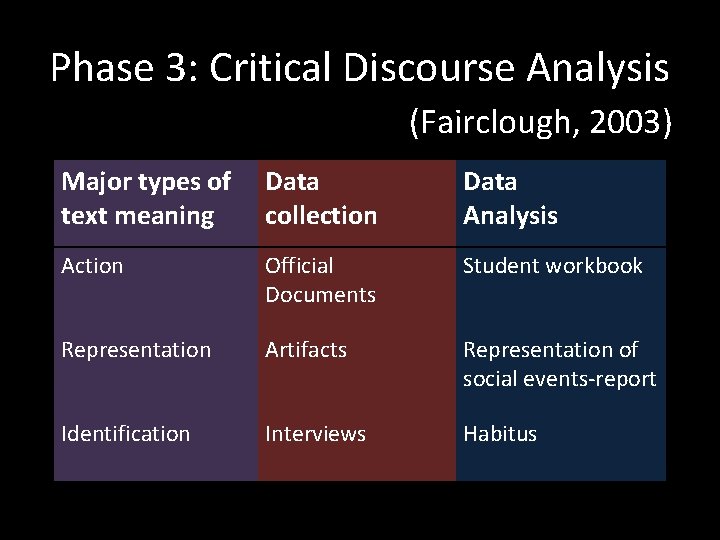
Phase 3: Critical Discourse Analysis (Fairclough, 2003) Major types of Data text meaning collection Data Analysis Action Official Documents Student workbook Representation Artifacts Representation of social events-report Identification Interviews Habitus
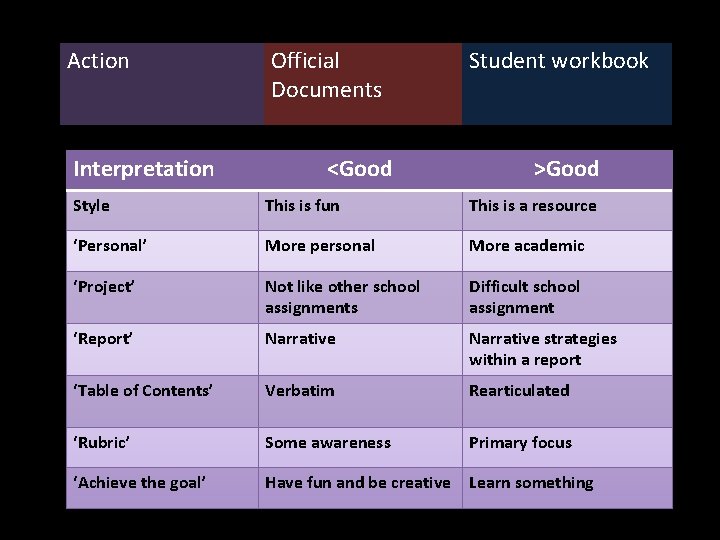
Action Interpretation Official Documents <Good Student workbook >Good Style This is fun This is a resource ‘Personal’ More personal More academic ‘Project’ Not like other school assignments Difficult school assignment ‘Report’ Narrative strategies within a report ‘Table of Contents’ Verbatim Rearticulated ‘Rubric’ Some awareness Primary focus ‘Achieve the goal’ Have fun and be creative Learn something
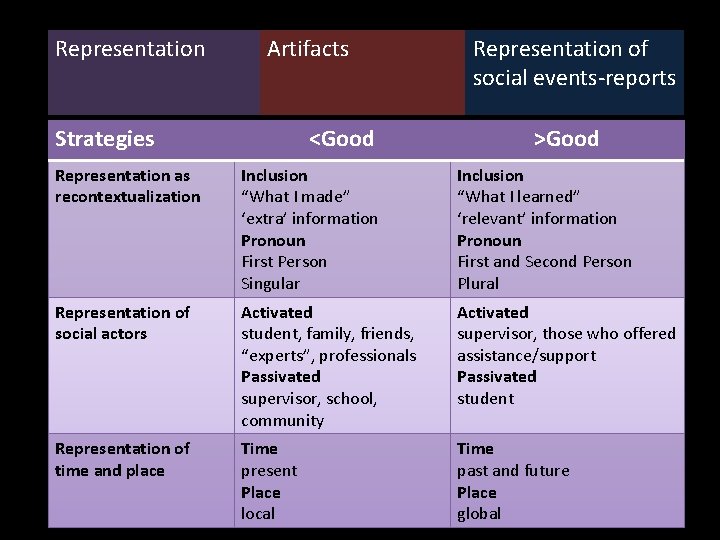
Representation Artifacts Strategies <Good Representation of social events-reports >Good Representation as recontextualization Inclusion “What I made” ‘extra’ information Pronoun First Person Singular Inclusion “What I learned” ‘relevant’ information Pronoun First and Second Person Plural Representation of social actors Activated student, family, friends, “experts”, professionals Passivated supervisor, school, community Activated supervisor, those who offered assistance/support Passivated student Representation of time and place Time present Place local Time past and future Place global
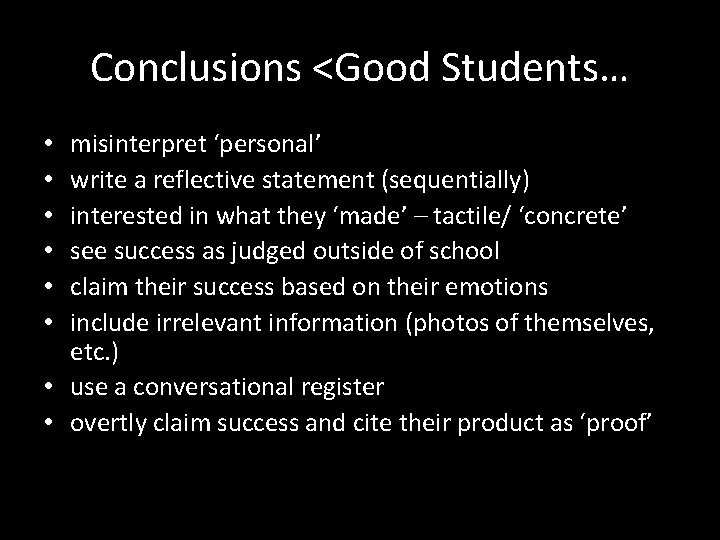
Conclusions <Good Students… misinterpret ‘personal’ write a reflective statement (sequentially) interested in what they ‘made’ – tactile/ ‘concrete’ see success as judged outside of school claim their success based on their emotions include irrelevant information (photos of themselves, etc. ) • use a conversational register • overtly claim success and cite their product as ‘proof’ • • •
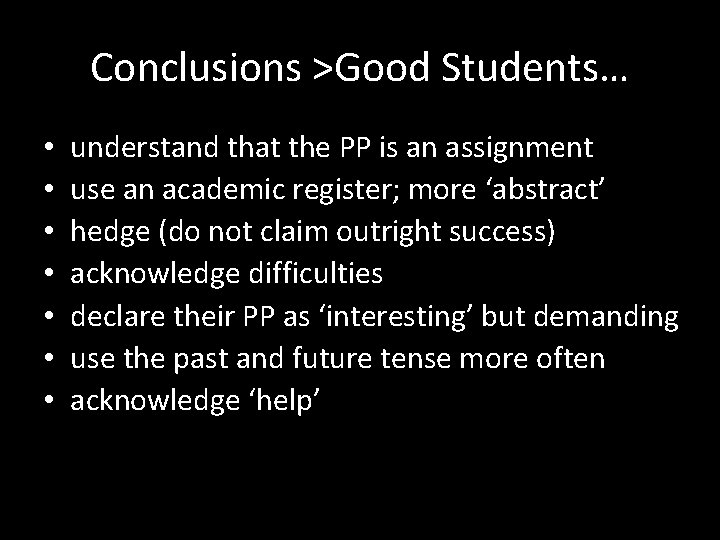
Conclusions >Good Students… • • understand that the PP is an assignment use an academic register; more ‘abstract’ hedge (do not claim outright success) acknowledge difficulties declare their PP as ‘interesting’ but demanding use the past and future tense more often acknowledge ‘help’
Further research… • Use of economic and social capital to compensate for a lack of scholastic capital (cultural and linguistic capital) • Value of allowing students to ‘publish’ work with language errors • The ‘Personal Project’ – the assignment • The role of supervisors
Discussion ‘Let me show you how to cheat!’ Acts of ‘symbolic violence’? (Delpit, 2006: 165) (Bourdieu, 1990) ‘Conscious or unconscious’ ‘positioning’? (Bourdieu quoted in Jenkins 2002) There is need to define ‘student centered’. (Neumann, 2013)
References BOURDIEU, P. , 1986. The Forms of Capital, in J. G. Richardson (ed. ) Handbook of Theory and Research for the Sociology of Education. New York: Greenwood Press. Pp. 241 -258. BOURDIEU, P. and PASSERON, J. C. , 1990. Reproduction in Education, Society and Culture, 2 nd Ed. Sage Publications: London. BOURDIEU, P. and WACQUANT, L. , 1992. An Invitation to Reflexive Sociology. Cambridge: Polity Press. BUNNELL, T. , 2011. The International Baccalaureate and ‘growth skepticism’: a ‘social limits’ framework. International Studies in Sociology of Education, 21(2), pp. 161 -176. DELPIT, L. , 2006. Other people's children: cultural conflict in the classroom. New York: New Press. FAIRCLOUGH, N. , 2003. Analysing Discourse: Textual analysis for Social Research. New York: Routledge JENKINS, R. , 2002. Pierre Bourdieu: revised addition. New York: Routledge. NEUMANN, J. , 2013. Developing a new framework for conceptualizing “Student-Centered Learning”. The Education Forum. 77 (2), pp. 161 -175.