
Transferring from community college to fouryear college Student
- Slides: 25
Transferring from community college to four-year college: Student challenges and institutional solutions
Research & Context Shanna Smith Jaggars AVP Research & Program Assessment, OSU OSAS Research Affiliate, CCRC, Columbia University
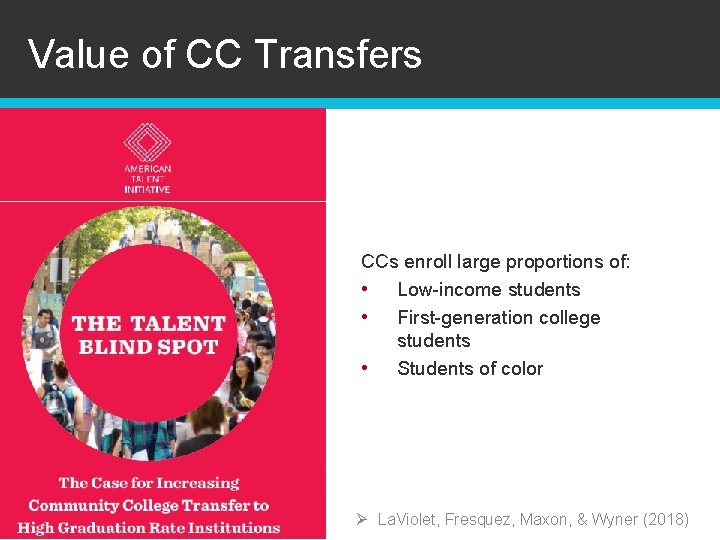
Value of CC Transfers CC TRANSFER OUTCOMES CCs enroll large proportions of: • Low-income students • First-generation college students • Students of color Ø La. Violet, Fresquez, Maxon, & Wyner (2018)
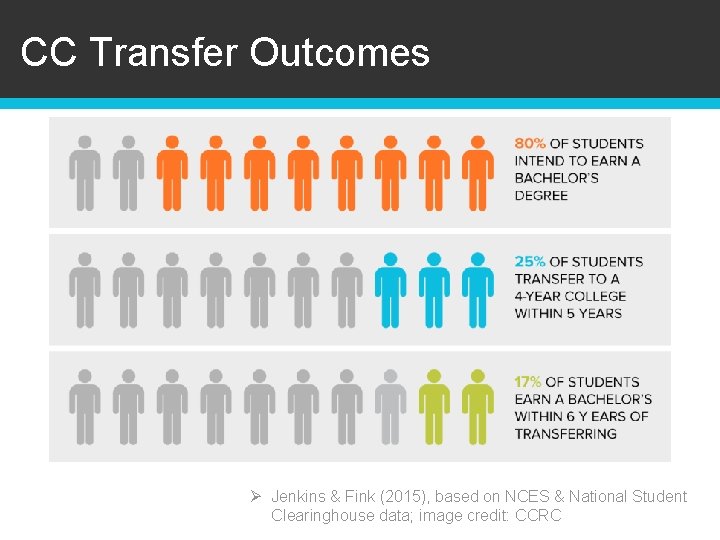
CC Transfer Outcomes CC TRANSFER OUTCOMES Ø Jenkins & Fink (2015), based on NCES & National Student Clearinghouse data; image credit: CCRC
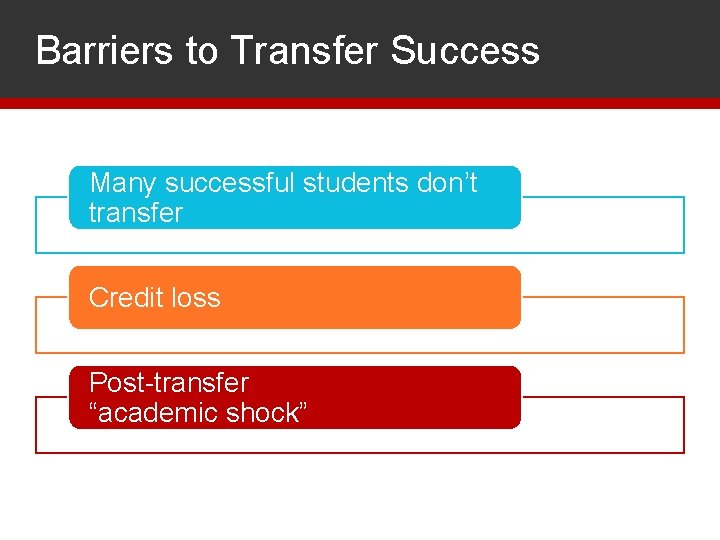
Barriers to Transfer Success Many successful students don’t transfer Credit loss Post-transfer “academic shock”
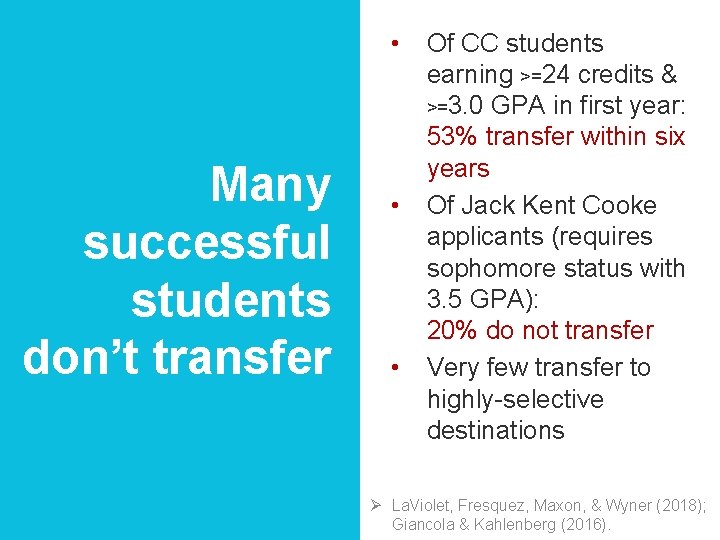
• Many successful students don’t transfer • • Of CC students earning >=24 credits & >=3. 0 GPA in first year: 53% transfer within six years Of Jack Kent Cooke applicants (requires sophomore status with 3. 5 GPA): 20% do not transfer Very few transfer to highly-selective destinations Ø La. Violet, Fresquez, Maxon, & Wyner (2018); Giancola & Kahlenberg (2016).
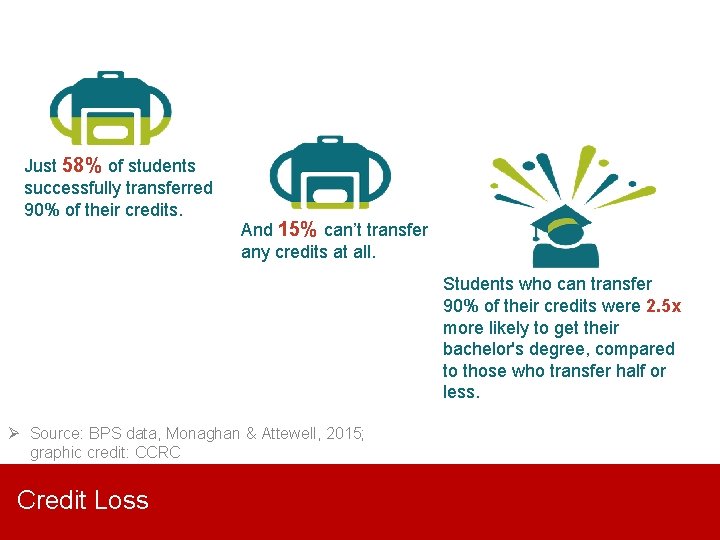
Just 58% of students successfully transferred 90% of their credits. And 15% can’t transfer any credits at all. Students who can transfer 90% of their credits were 2. 5 x more likely to get their bachelor's degree, compared to those who transfer half or less. Ø Source: BPS data, Monaghan & Attewell, 2015; graphic credit: CCRC Credit Loss
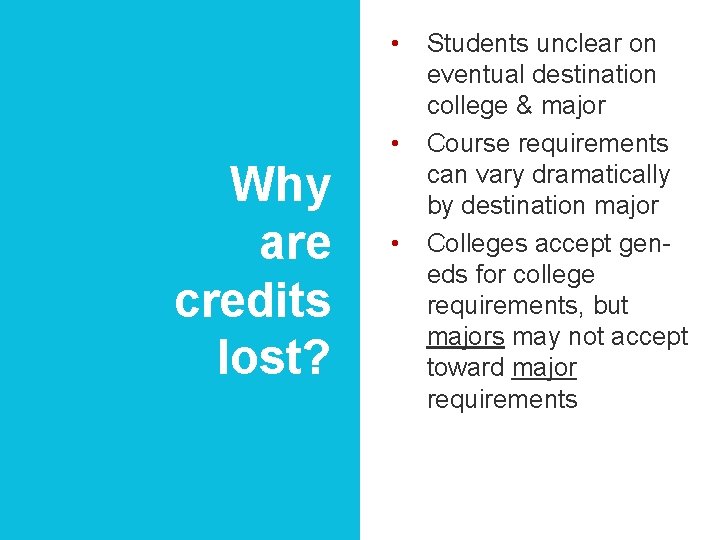
• • Why are credits lost? • Students unclear on eventual destination college & major Course requirements can vary dramatically by destination major Colleges accept geneds for college requirements, but majors may not accept toward major requirements
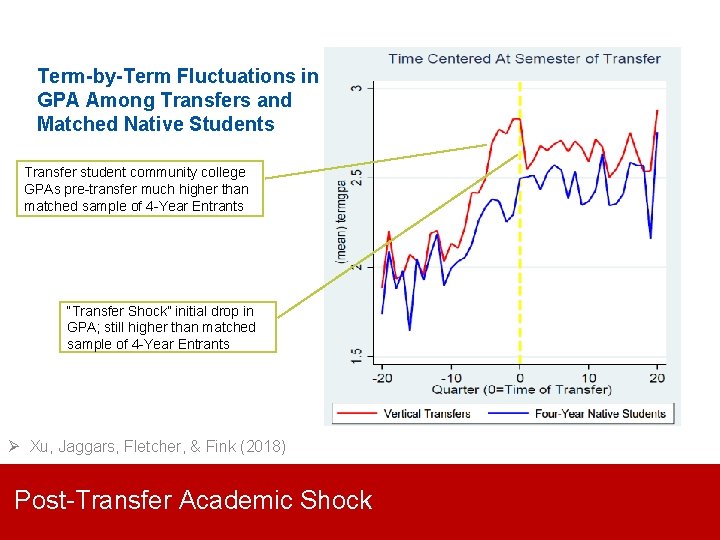
Term-by-Term Fluctuations in GPA Among Transfers and Matched Native Students Transfer student community college GPAs pre-transfer much higher than matched sample of 4 -Year Entrants “Transfer Shock” initial drop in GPA; still higher than matched sample of 4 -Year Entrants Ø Xu, Jaggars, Fletcher, & Fink (2018) Post-Transfer Academic Shock
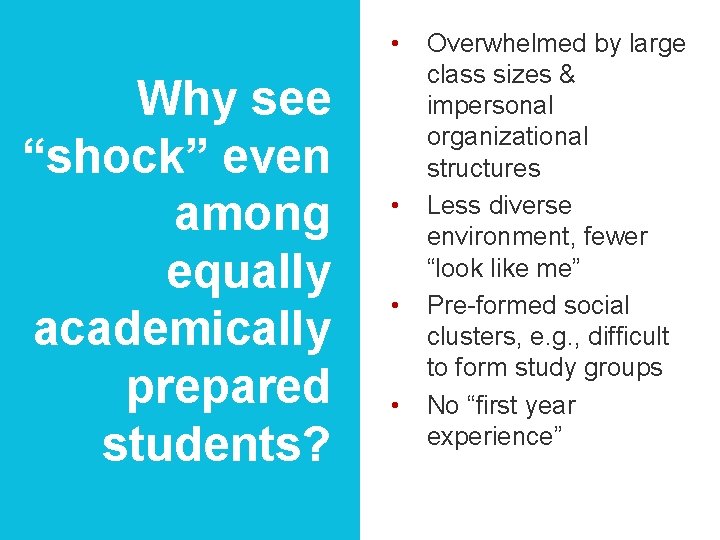
• Why see “shock” even among equally academically prepared students? • • • Overwhelmed by large class sizes & impersonal organizational structures Less diverse environment, fewer “look like me” Pre-formed social clusters, e. g. , difficult to form study groups No “first year experience”
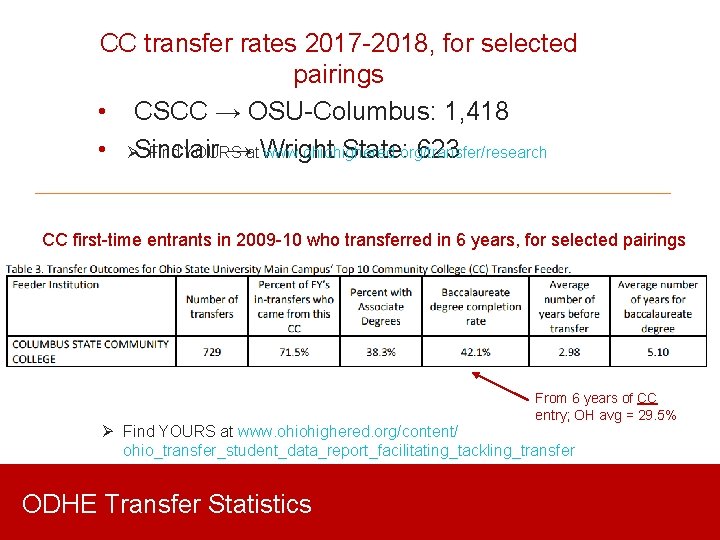
CC transfer rates 2017 -2018, for selected pairings • CSCC → OSU-Columbus: 1, 418 • ØSinclair →at. Wright State: 623 Find YOURS www. ohiohighered. org/transfer/research CC first-time entrants in 2009 -10 who transferred in 6 years, for selected pairings From 6 years of CC entry; OH avg = 29. 5% Ø Find YOURS at www. ohiohighered. org/content/ ohio_transfer_student_data_report_facilitating_tackling_transfer ODHE Transfer Statistics
CSCC & OSU Mary Whitt, CSCC Chaka Wilson, OSU
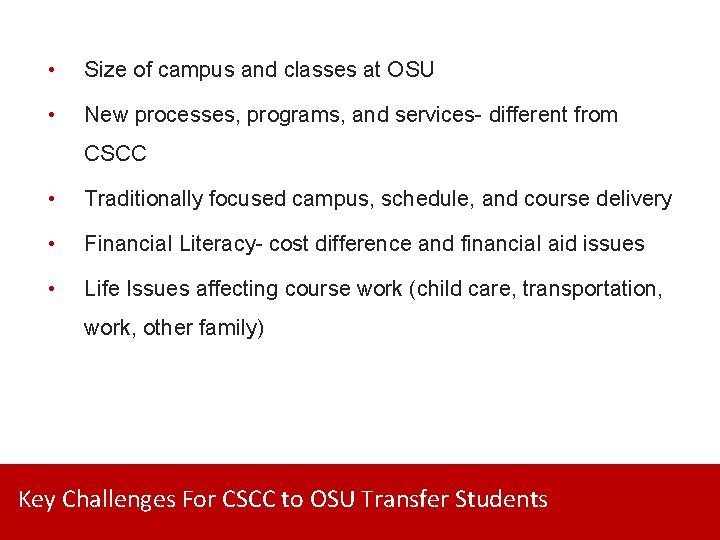
• Size of campus and classes at OSU • New processes, programs, and services- different from CSCC • Traditionally focused campus, schedule, and course delivery • Financial Literacy- cost difference and financial aid issues • Life Issues affecting course work (child care, transportation, work, other family) Key Challenges For CSCC to OSU Transfer Students
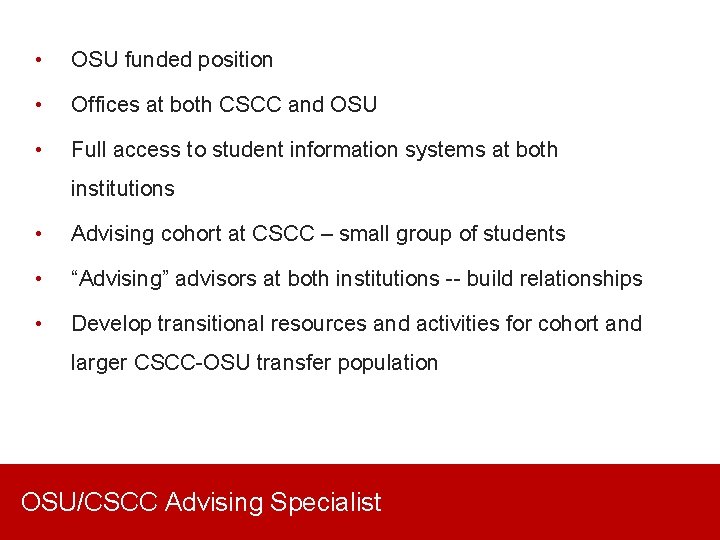
• OSU funded position • Offices at both CSCC and OSU • Full access to student information systems at both institutions • Advising cohort at CSCC – small group of students • “Advising” advisors at both institutions -- build relationships • Develop transitional resources and activities for cohort and larger CSCC-OSU transfer population OSU/CSCC Advising Specialist
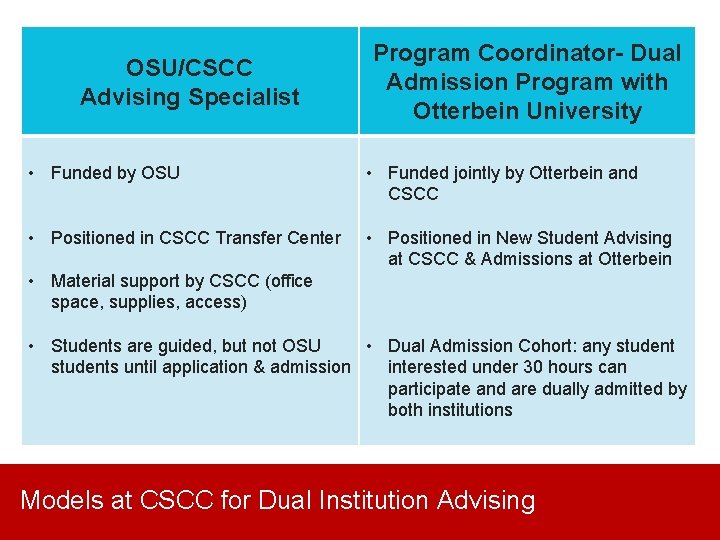
OSU/CSCC Advising Specialist Program Coordinator- Dual Admission Program with Otterbein University • Funded by OSU • Funded jointly by Otterbein and CSCC • Positioned in CSCC Transfer Center • Positioned in New Student Advising at CSCC & Admissions at Otterbein • Material support by CSCC (office space, supplies, access) • Students are guided, but not OSU • Dual Admission Cohort: any students until application & admission interested under 30 hours can participate and are dually admitted by both institutions Models at CSCC for Dual Institution Advising
Laura Hinkebein, Sinclair College Don Miller, Wright State University
Impetus for Change § Articulation Agreements that quickly expired § Students unclear about who to contact and when § Four-year institution frustrated about the information the student was given at the community college § Community College frustrated when their students’ classes didn’t apply to their four year degree
Goals of the Partnership § Shared goal of completion of Associate Degree and then Bachelor Degree § Clear Academic Pathways § Easy Transfer process § Improved Faculty and Advising relationships
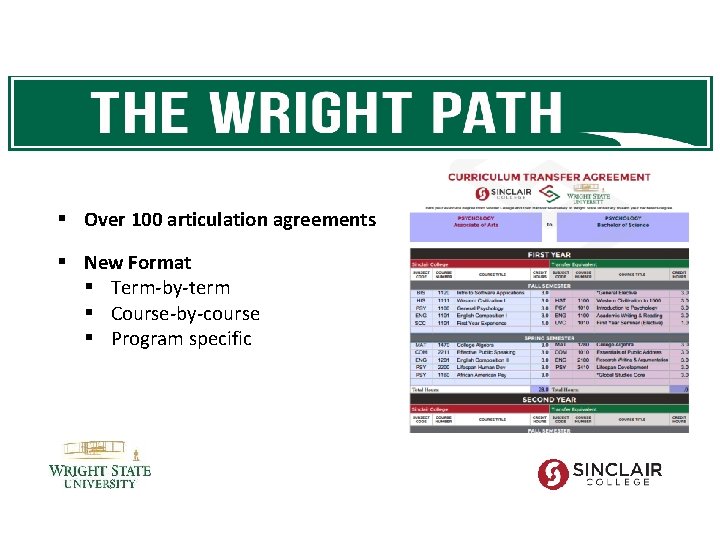
§ Over 100 articulation agreements § New Format § Term-by-term § Course-by-course § Program specific
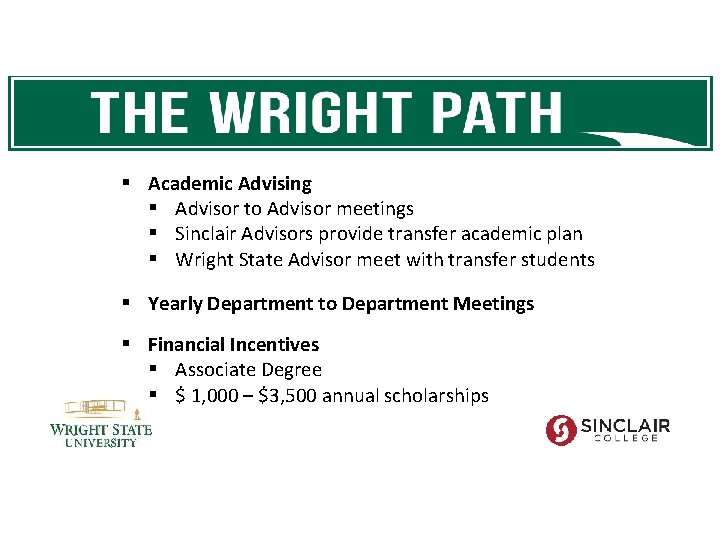
§ Academic Advising § Advisor to Advisor meetings § Sinclair Advisors provide transfer academic plan § Wright State Advisor meet with transfer students § Yearly Department to Department Meetings § Financial Incentives § Associate Degree § $ 1, 000 – $3, 500 annual scholarships
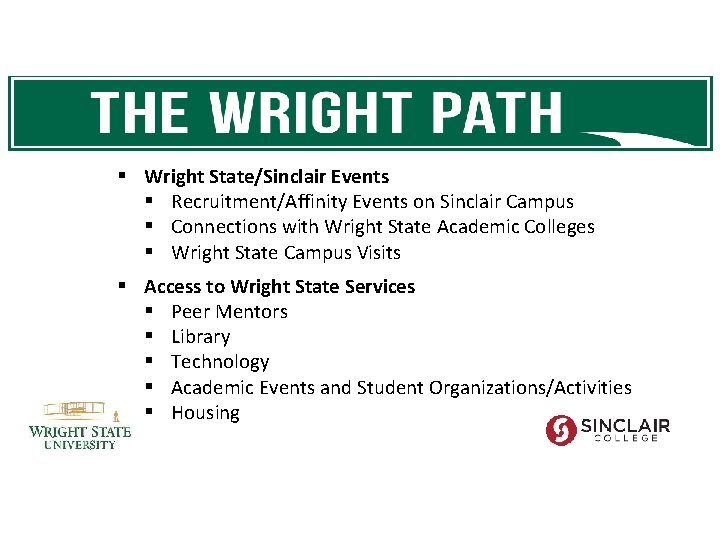
§ Wright State/Sinclair Events § Recruitment/Affinity Events on Sinclair Campus § Connections with Wright State Academic Colleges § Wright State Campus Visits § Access to Wright State Services § Peer Mentors § Library § Technology § Academic Events and Student Organizations/Activities § Housing
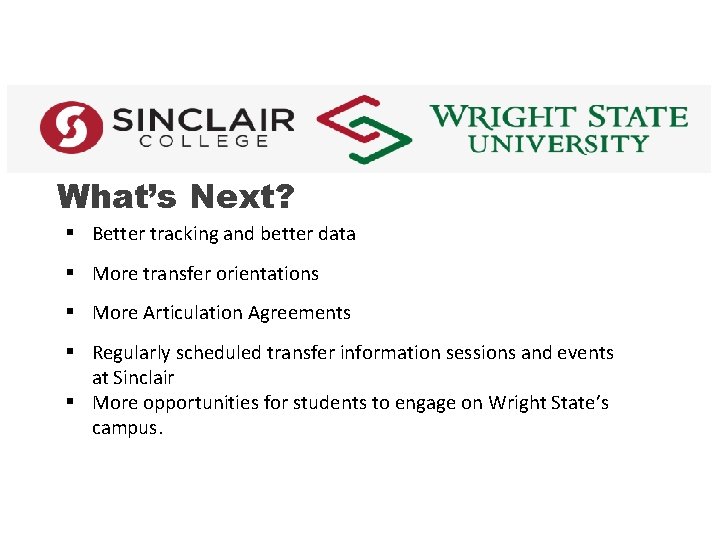
What’s Next? § Better tracking and better data § More transfer orientations § More Articulation Agreements § Regularly scheduled transfer information sessions and events at Sinclair § More opportunities for students to engage on Wright State’s campus.
Questions?
Using NSC, identified: • CCs with high transferout Ns and better-than -expected bachelor’s completion rates • Their 4 -year partners with better-thanexpected transfer-in bachelor’s completion rates Aspen/CCRC: Wyner, Deane, Jenkins & Fink, 2016