
Transfer of Property After Death 3 Ways to











- Slides: 35
Transfer of Property After Death
3 Ways to Transfer Property* (property owned by an individual) • By Contract • By Will • By Operation of Law
Transfer of Property By Contract
Transfer of Property by Contract Property is transferred by contract after death when a named beneficiary is listed on the property
Types of property that often will have a named beneficiary are: • • • Life Insurance Policies Retirement Accounts Bank Accounts U. S. Savings Bonds Stocks, bonds, mutual funds and brokerage accounts • More and more states are allowing real estate deeds to list a beneficiary • Vehicle Titles
Bank accounts, stocks, bonds, and brokerage accounts with named beneficiaries are sometimes called • Totten Trusts • Pay on Death Accounts • Transfer on Death Accounts
Benefits of Transferring Property by Contract • • Avoids Probate Keeps the property transfer private Speeds up the transfer process Makes it relatively easy to change beneficiaries http: //www. benefitspro. com
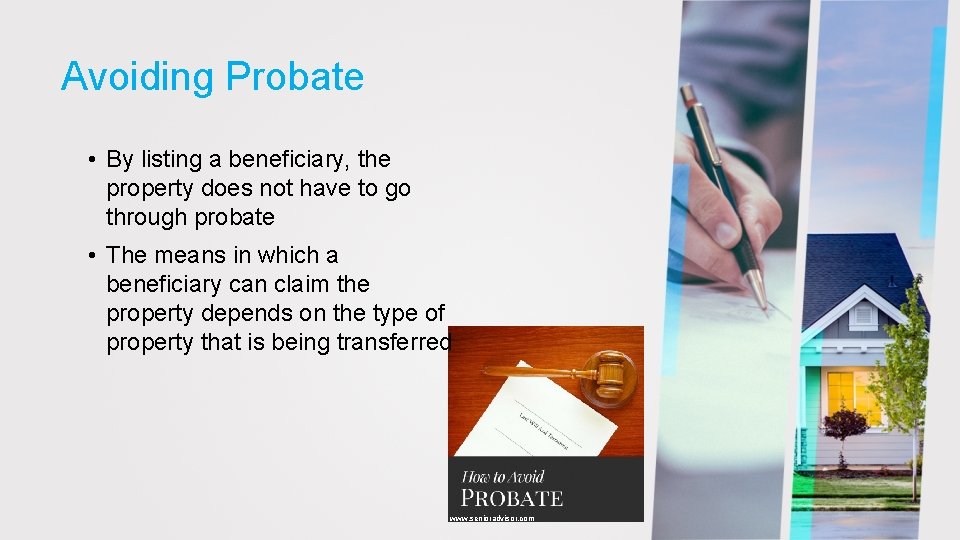
Avoiding Probate • By listing a beneficiary, the property does not have to go through probate • The means in which a beneficiary can claim the property depends on the type of property that is being transferred www. senioradvisor. com
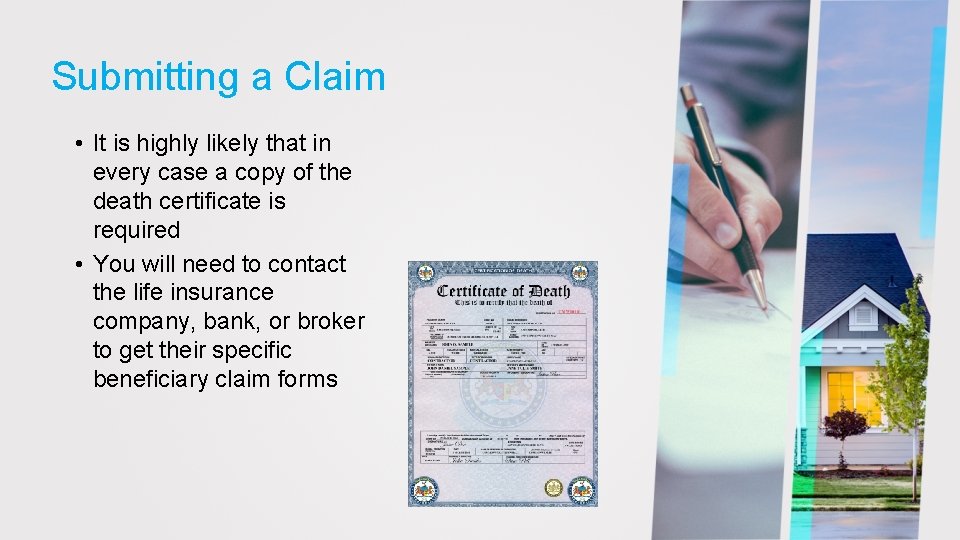
Submitting a Claim • It is highly likely that in every case a copy of the death certificate is required • You will need to contact the life insurance company, bank, or broker to get their specific beneficiary claim forms
Health Savings Accounts • Health Savings Accounts can pass to the surviving spouse and continue as a HSA • When a HSA is given to someone other than a surviving spouse it ceases to be a HAS and is taxed as ordinary income
Transferring Real Estate • Real Estate laws vary from state to state but the person who inherits the land must put something in the public land records showing that ownership has changed. www. deeds. com
Transferring Vehicles • Some states now allow vehicles to be transferred by POD, a new title and registration will need to be created and the associated fees will need to be paid as well http: //nchouse 103. com
Transfer of Property by a Will
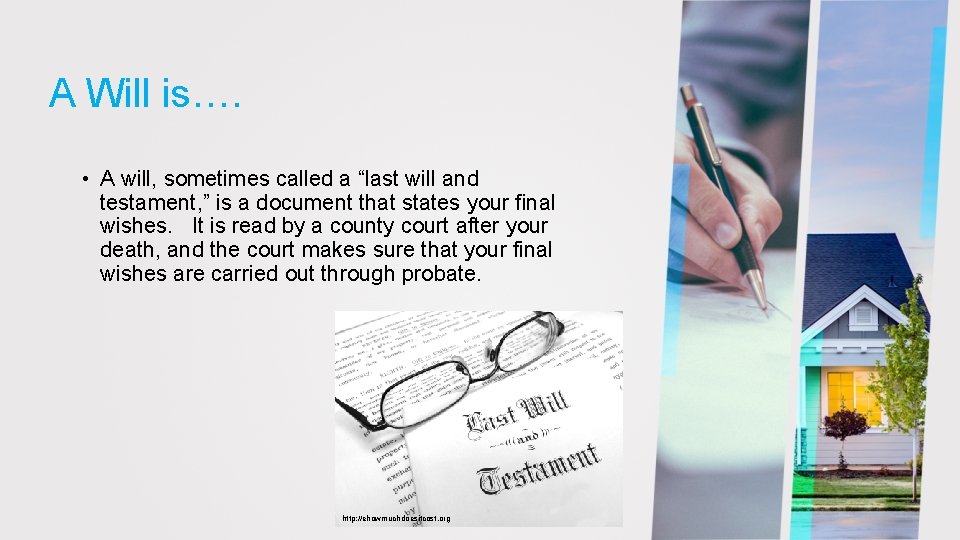
A Will is…. • A will, sometimes called a “last will and testament, ” is a document that states your final wishes. It is read by a county court after your death, and the court makes sure that your final wishes are carried out through probate. http: //ehowmuchdoesitcost. org
What is Probate?
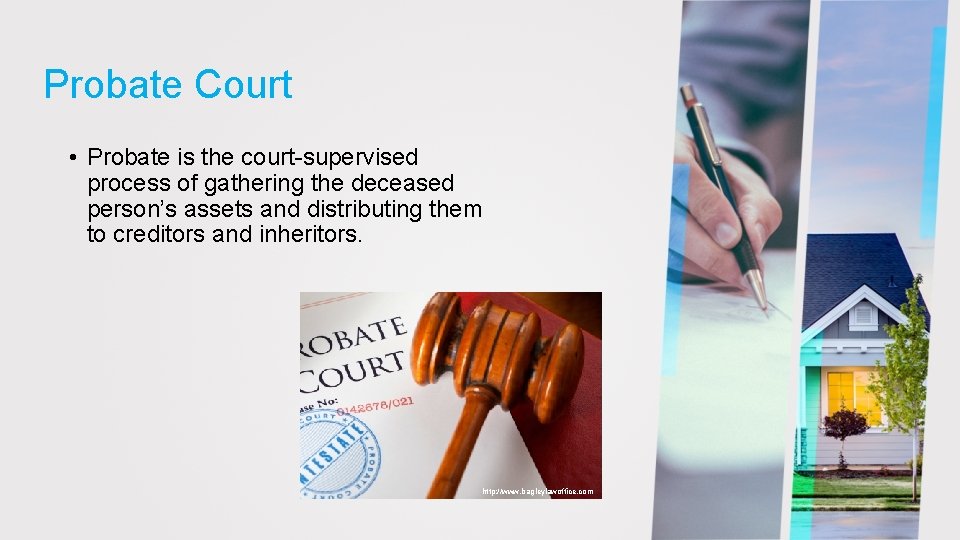
Probate Court • Probate is the court-supervised process of gathering the deceased person’s assets and distributing them to creditors and inheritors. http: //www. bagleylawoffice. com
The Will in Probate • The will is usually the guiding document that tells the court how the deceased person wanted their assets distributed • The will must be submitted to the court for their approval, this is called proving the will • If a person dies without a valid will, or the will cannot be found, then the deceased is deemed to have died intestate, which will be covered under transferring of property by operation of law http: //udonlawyers. com
The Executor • The will typically names an executor who will handle the probate process • This is sometimes called the personal representative • The named executor can decline serving • Any interested party can petition to be named executor • The court can determine that someone is unfit to serve as executor and appoint someone else
First Steps in Serving as Executor of an Estate • What property was owned • Where any beneficiaries named on the property • What is the value of the property
Pay Debts • • • Federal and State Estate Taxes Federal and State Income Taxes Medical Bills Funeral Expenses Creditors who file formal claims
Distribute Assets to Beneficiaries • Give specific items that have bequeathed • Distribute specific pecuniary amounts, for example giving $10, 000 • Calculate and distribute remaining percentage of estate, e. g. 50% to Andrews University
Transfer of Property by Operation of Law
Transfer of Property by Operation of Law • Real Estate Title • Dying Intestate
Real Estate Title • Depending on how property is owned it is sometimes passed on by operation of law • The most common example of this is with real estate that is owned by more than one person
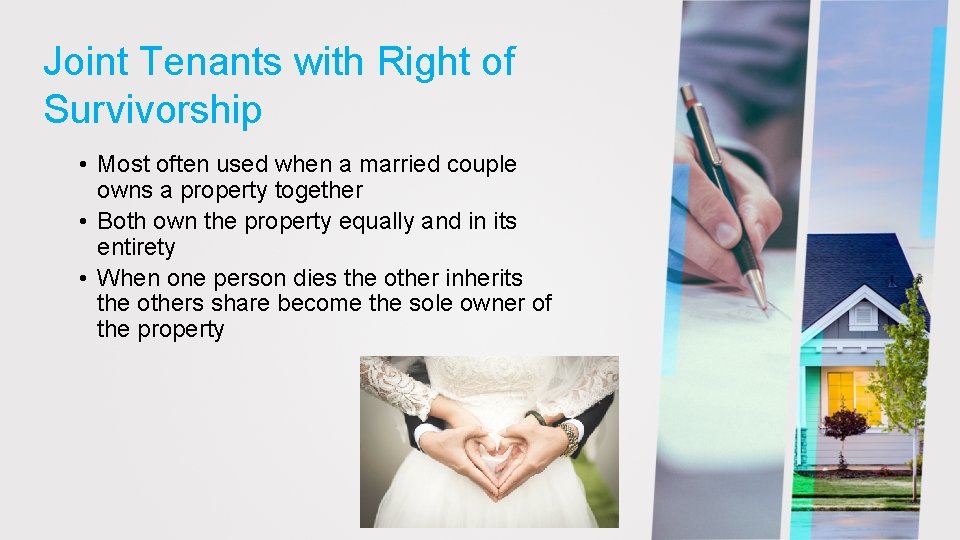
Joint Tenants with Right of Survivorship • Most often used when a married couple owns a property together • Both own the property equally and in its entirety • When one person dies the other inherits the others share become the sole owner of the property
Tenants in Common Alternative ways for more than one person to own title to Real Estate: • Ownership can be split unevenly (one owner may have 75% while the other may have 25%) • When one person dies, their portion may be passed to a beneficiary through the probate process
Community Property • Each person owns the property they brought to the marriage separately • Each owns the property that was acquired during their marriage jointly
Community Property • Upon the dissolution of the marriage the community property is split between the two parties and the separate property is retained by the original owner
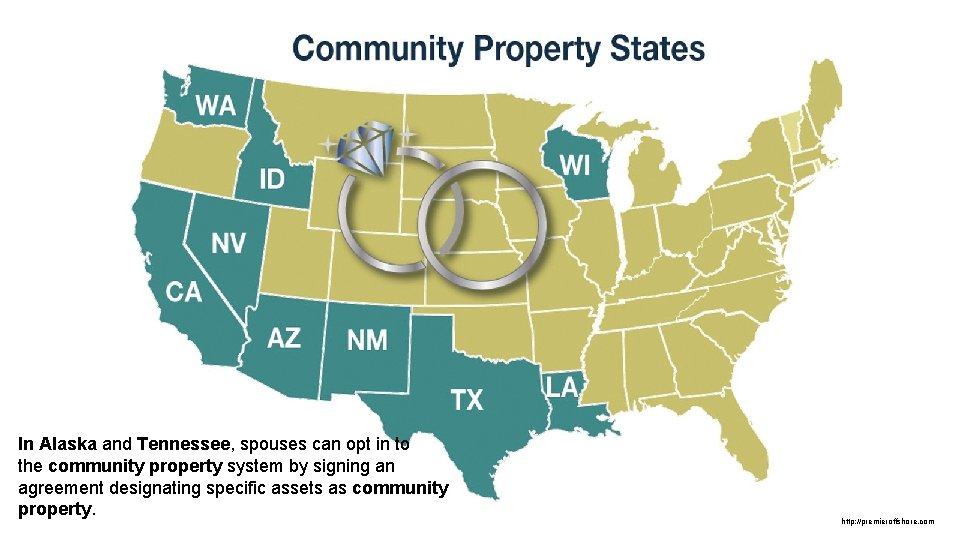
In Alaska and Tennessee, spouses can opt in to the community property system by signing an agreement designating specific assets as community property. http: //premieroffshore. com
Almost Community Property • In Alaska and Tennessee, spouses can opt in to the community property system by signing an agreement designating specific assets as community property.
Dying Intestate • If you die without making a will, a court will distribute your property according to the laws of your state.
Dying Intestate • When someone dies without a will, the intestacy laws of the state where they reside will determine how their property is distributed upon their death. • This includes any bank accounts, securities, real estate, and other assets you own at the time of death. • Each state’s intestacy laws are different
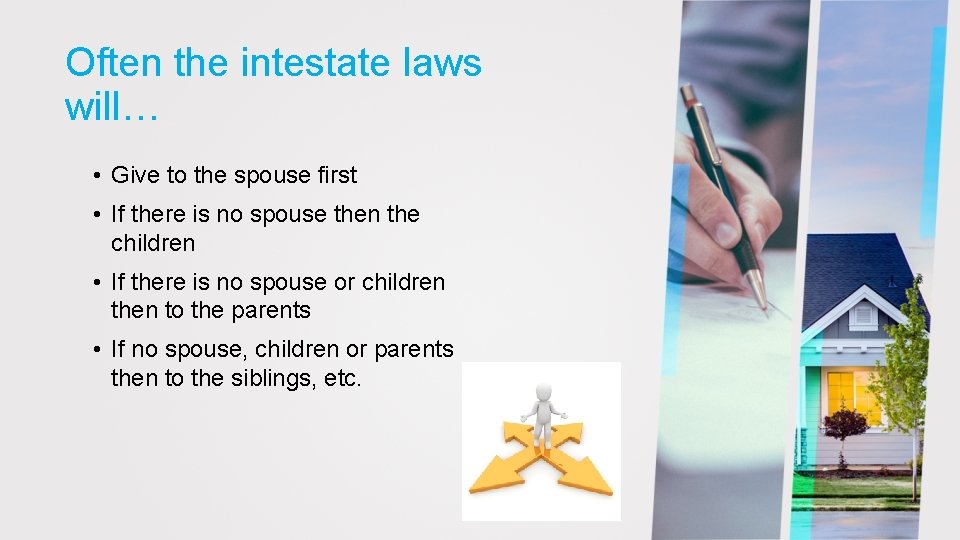
Often the intestate laws will… • Give to the spouse first • If there is no spouse then the children • If there is no spouse or children then to the parents • If no spouse, children or parents then to the siblings, etc.
Intestate Laws Will Not…. • Allow for Charitable Contributions
Guardianship • When you die intestate a judge will decide who is to be guardian of minor children