
Transfer of Energy in the Biosphere The interaction
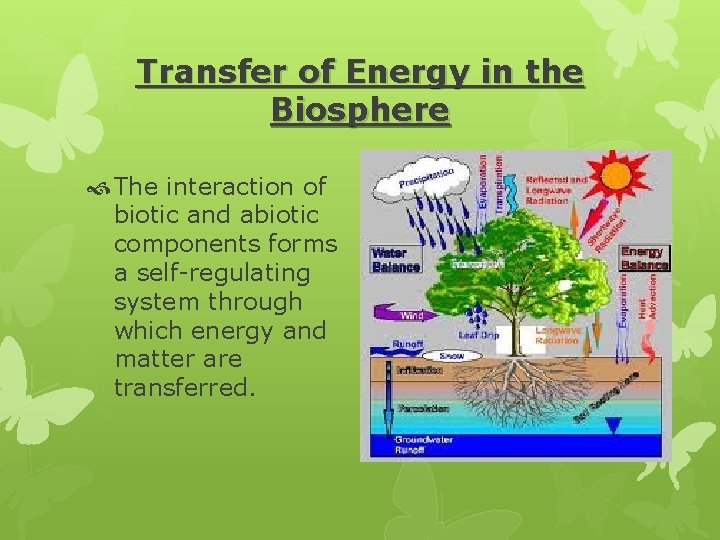
Transfer of Energy in the Biosphere The interaction of biotic and abiotic components forms a self-regulating system through which energy and matter are transferred.
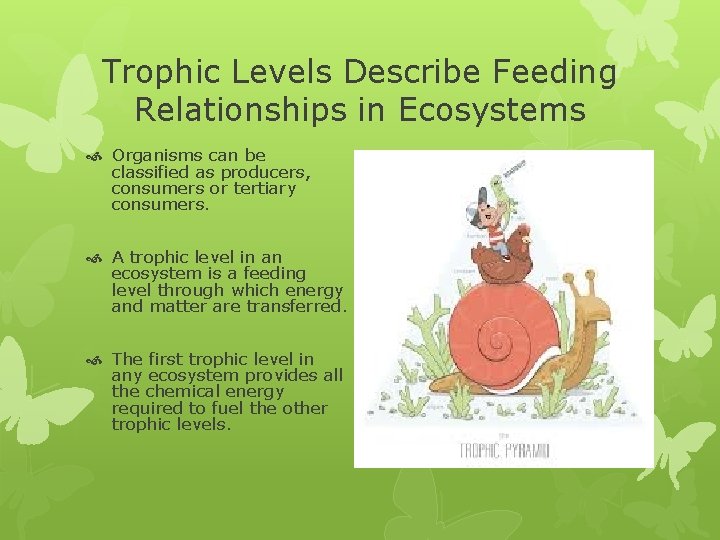
Trophic Levels Describe Feeding Relationships in Ecosystems Organisms can be classified as producers, consumers or tertiary consumers. A trophic level in an ecosystem is a feeding level through which energy and matter are transferred. The first trophic level in any ecosystem provides all the chemical energy required to fuel the other trophic levels.
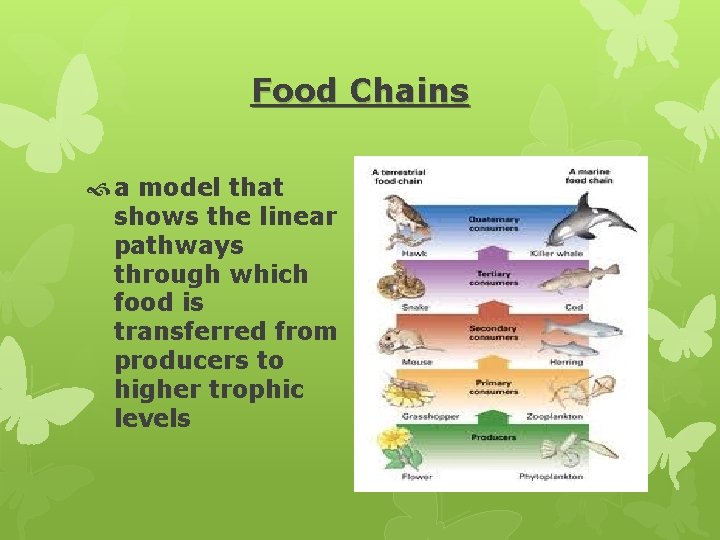
Food Chains a model that shows the linear pathways through which food is transferred from producers to higher trophic levels
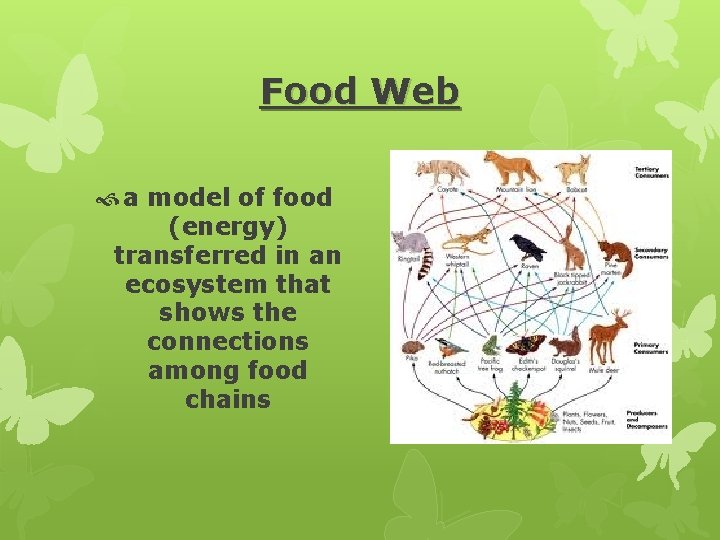
Food Web a model of food (energy) transferred in an ecosystem that shows the connections among food chains
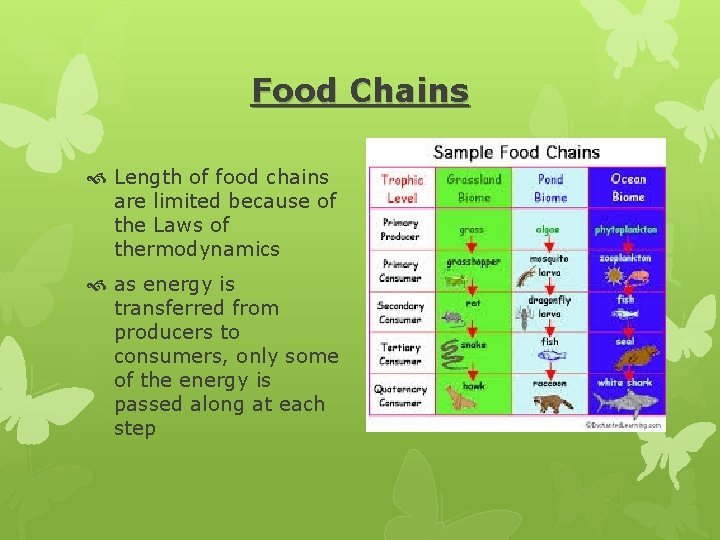
Food Chains Length of food chains are limited because of the Laws of thermodynamics as energy is transferred from producers to consumers, only some of the energy is passed along at each step
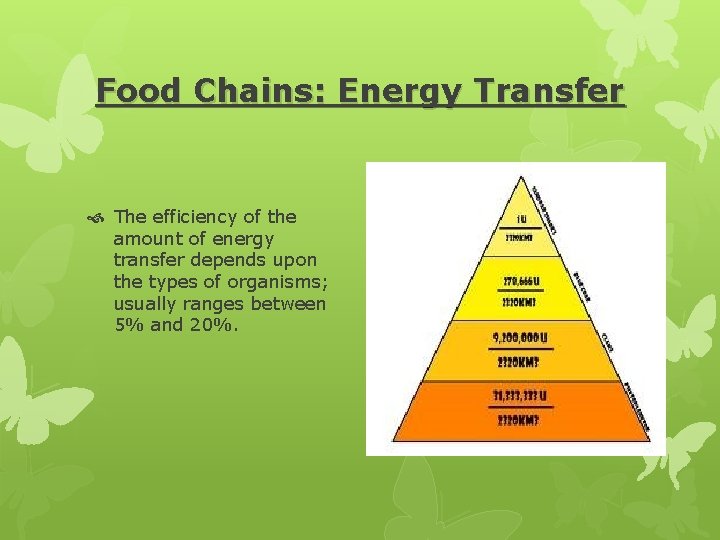
Food Chains: Energy Transfer The efficiency of the amount of energy transfer depends upon the types of organisms; usually ranges between 5% and 20%.
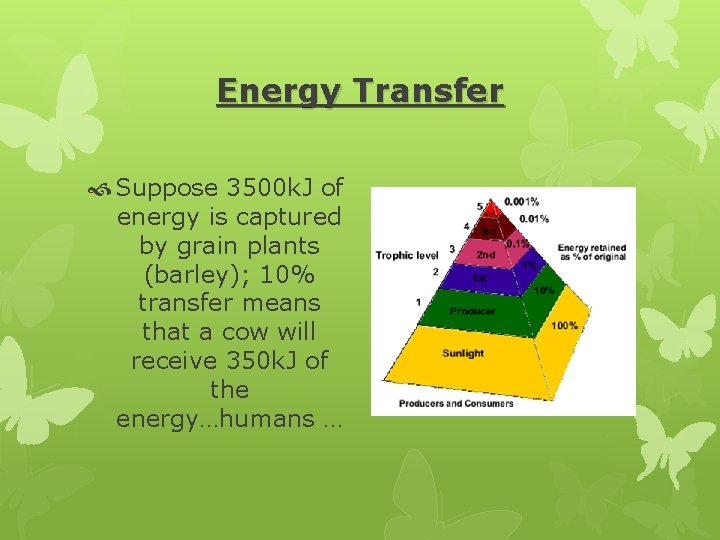
Energy Transfer Suppose 3500 k. J of energy is captured by grain plants (barley); 10% transfer means that a cow will receive 350 k. J of the energy…humans …
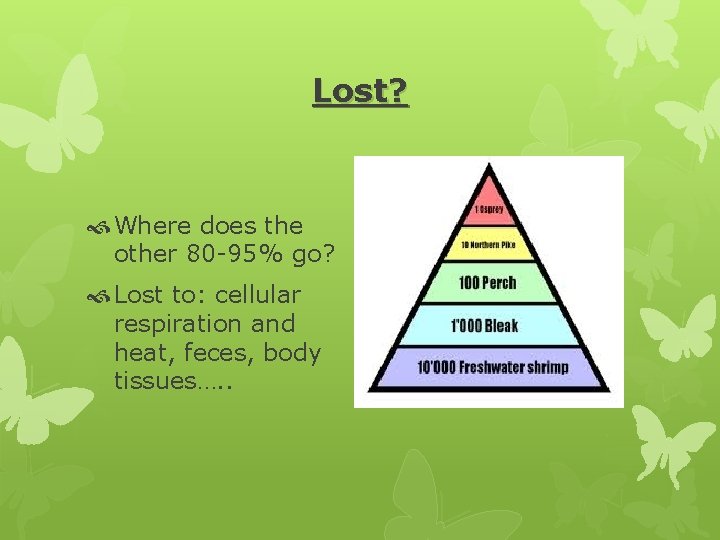
Lost? Where does the other 80 -95% go? Lost to: cellular respiration and heat, feces, body tissues…. .
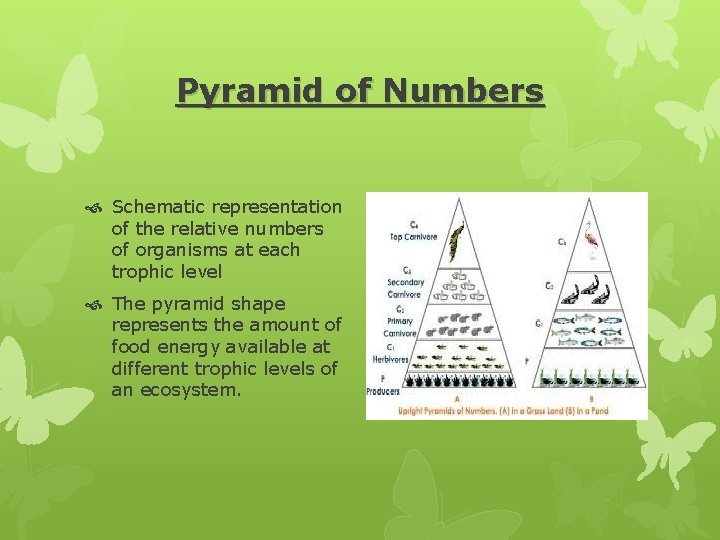
Pyramid of Numbers Schematic representation of the relative numbers of organisms at each trophic level The pyramid shape represents the amount of food energy available at different trophic levels of an ecosystem.
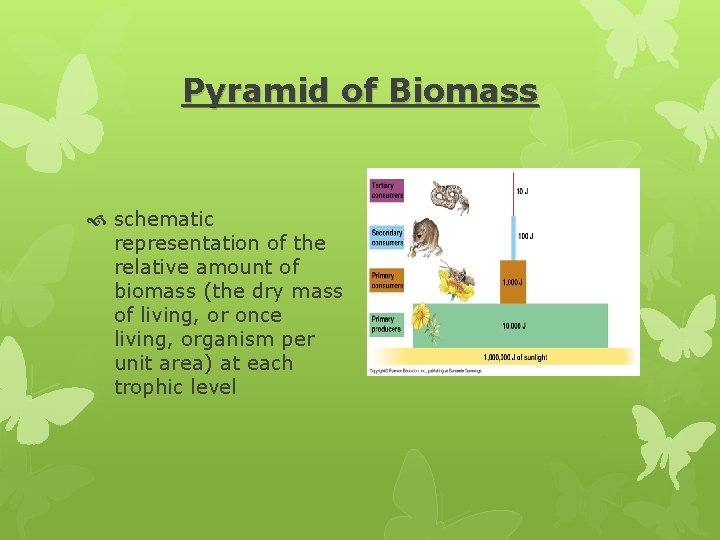
Pyramid of Biomass schematic representation of the relative amount of biomass (the dry mass of living, or once living, organism per unit area) at each trophic level
- Slides: 10