
Transfer Functions Convenient representation of a linear dynamic

- Slides: 28
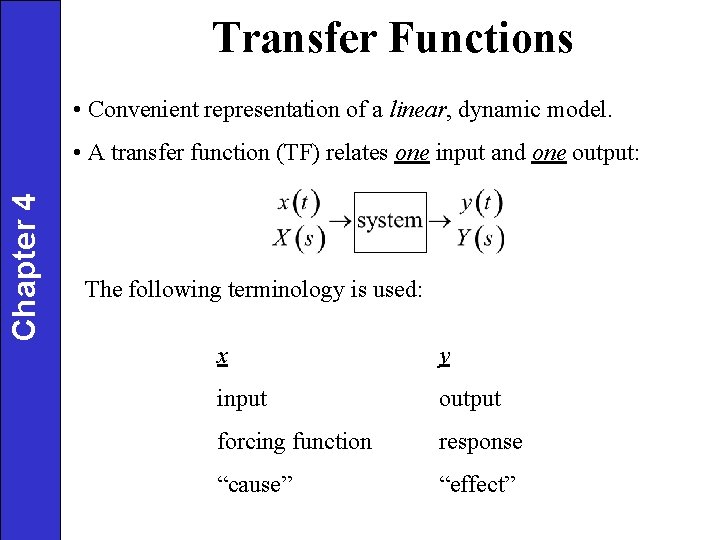
Transfer Functions • Convenient representation of a linear, dynamic model. Chapter 4 • A transfer function (TF) relates one input and one output: The following terminology is used: x y input output forcing function response “cause” “effect”
Definition
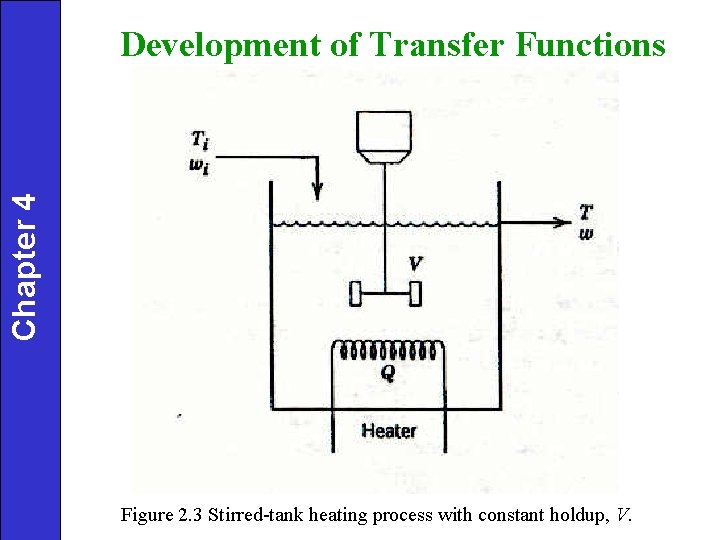
Chapter 4 Development of Transfer Functions Figure 2. 3 Stirred-tank heating process with constant holdup, V.
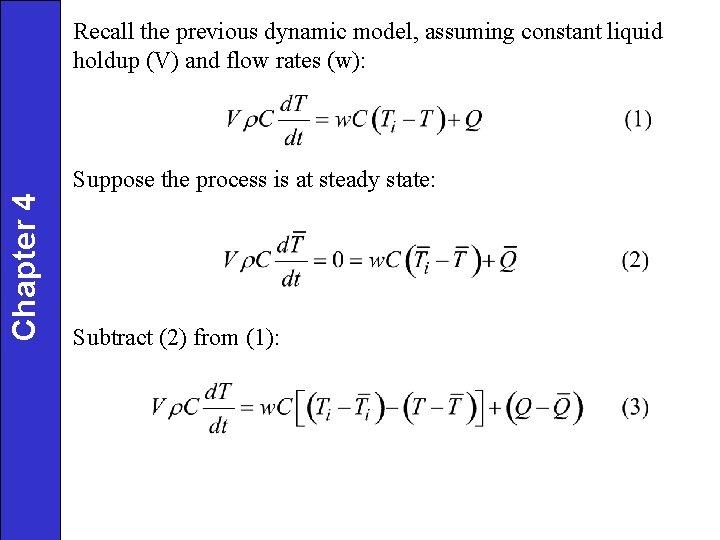
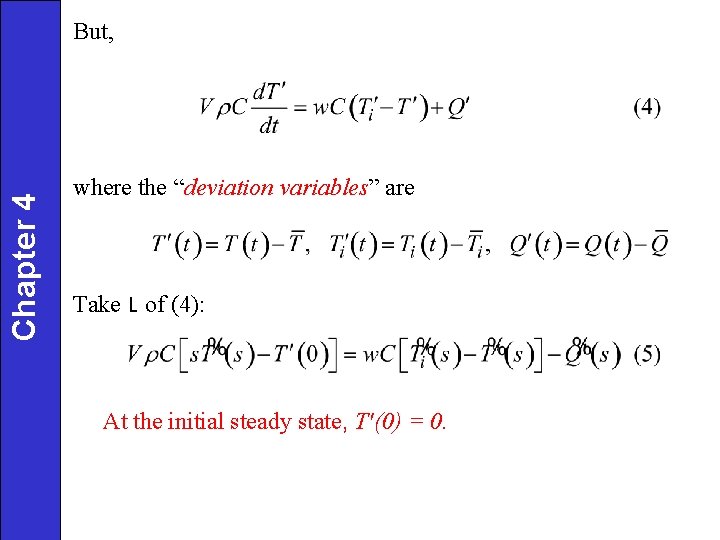
Recall the previous dynamic model, assuming constant liquid holdup (V) and flow rates (w): Chapter 4 Suppose the process is at steady state: Subtract (2) from (1):
Chapter 4 But, where the “deviation variables” are Take L of (4): At the initial steady state, T′(0) = 0.
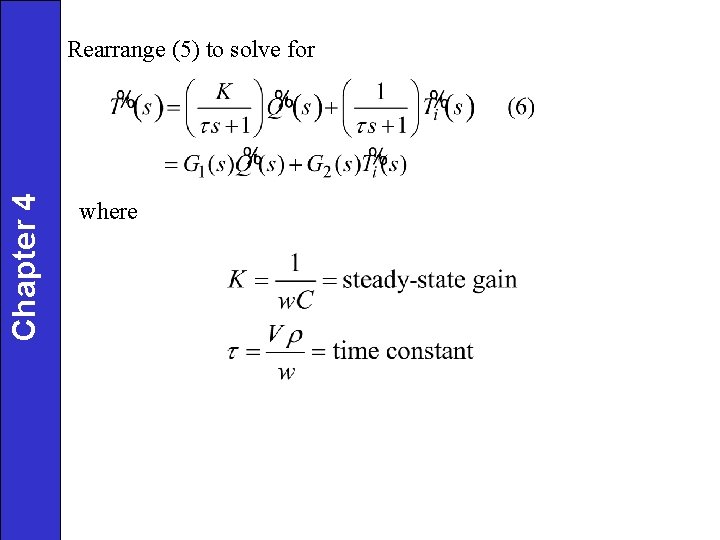
Chapter 4 Rearrange (5) to solve for where
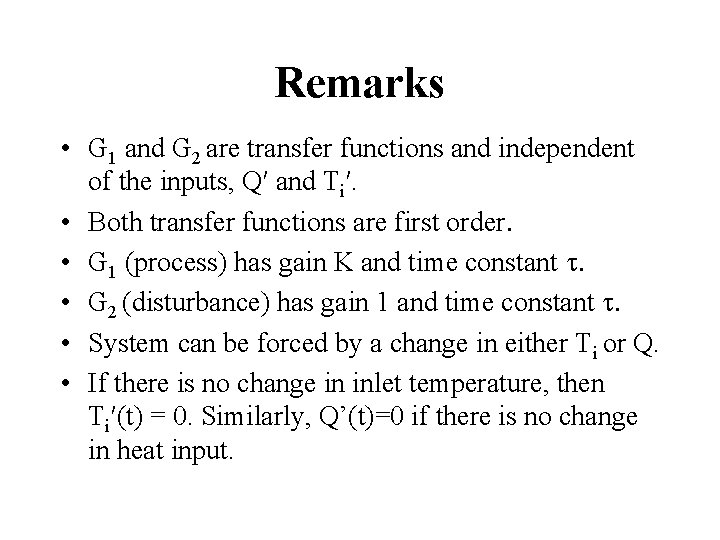
Remarks • G 1 and G 2 are transfer functions and independent of the inputs, Q′ and Ti′. • Both transfer functions are first order. • G 1 (process) has gain K and time constant t. • G 2 (disturbance) has gain 1 and time constant t. • System can be forced by a change in either Ti or Q. • If there is no change in inlet temperature, then Ti′(t) = 0. Similarly, Q’(t)=0 if there is no change in heat input.
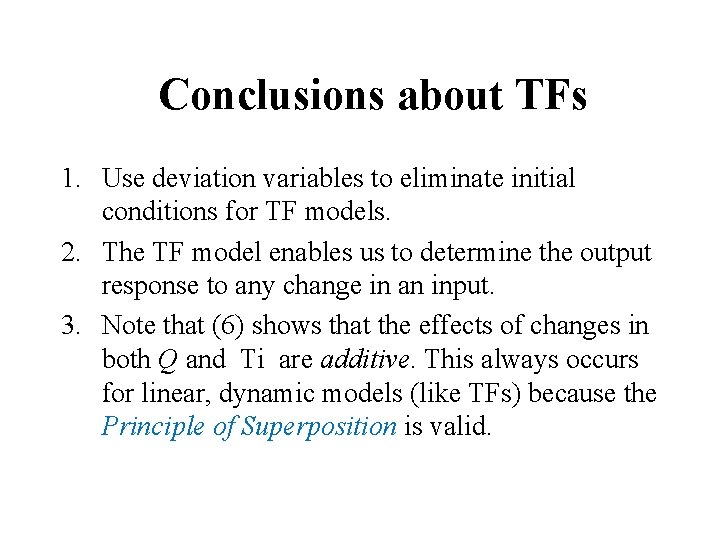
Conclusions about TFs 1. Use deviation variables to eliminate initial conditions for TF models. 2. The TF model enables us to determine the output response to any change in an input. 3. Note that (6) shows that the effects of changes in both Q and Ti are additive. This always occurs for linear, dynamic models (like TFs) because the Principle of Superposition is valid.
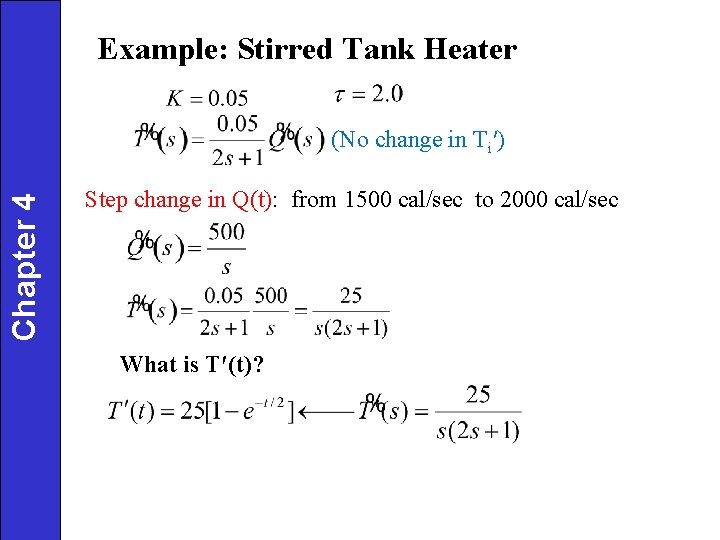
Example: Stirred Tank Heater Chapter 4 (No change in Ti′) Step change in Q(t): from 1500 cal/sec to 2000 cal/sec What is T′(t)?
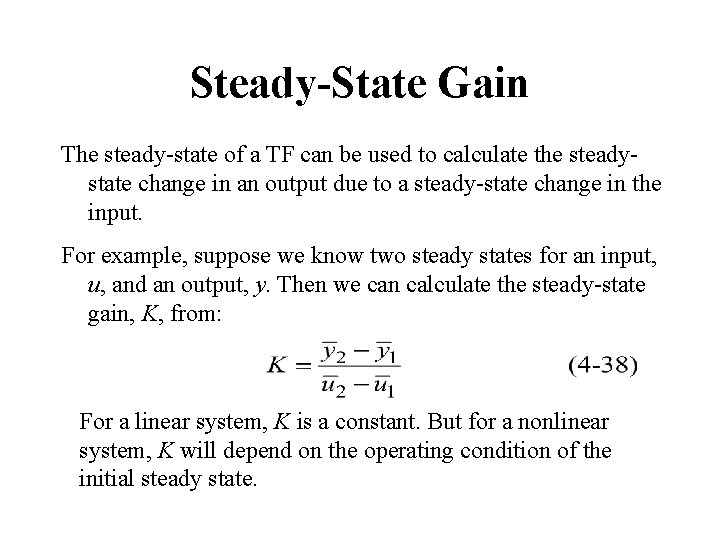
Steady-State Gain The steady-state of a TF can be used to calculate the steadystate change in an output due to a steady-state change in the input. For example, suppose we know two steady states for an input, u, and an output, y. Then we can calculate the steady-state gain, K, from: For a linear system, K is a constant. But for a nonlinear system, K will depend on the operating condition of the initial steady state.
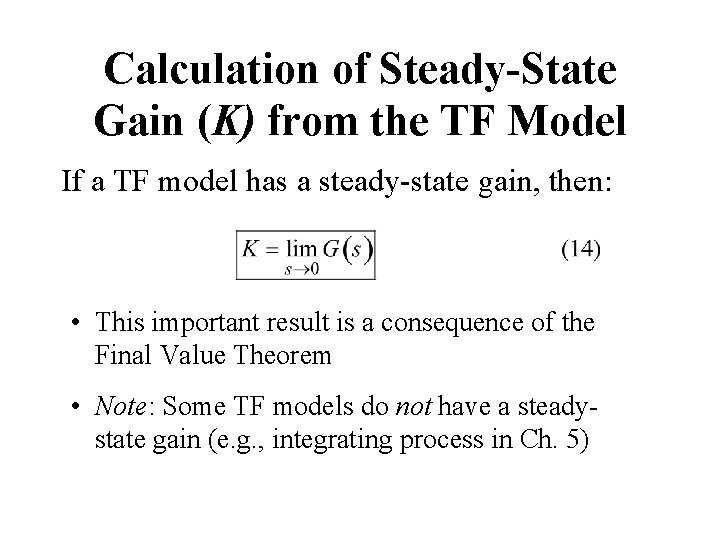
Calculation of Steady-State Gain (K) from the TF Model If a TF model has a steady-state gain, then: • This important result is a consequence of the Final Value Theorem • Note: Some TF models do not have a steadystate gain (e. g. , integrating process in Ch. 5)
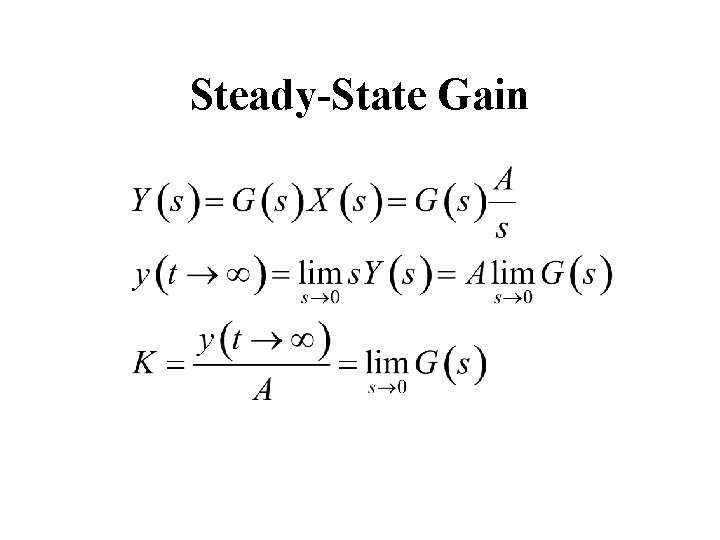
Steady-State Gain
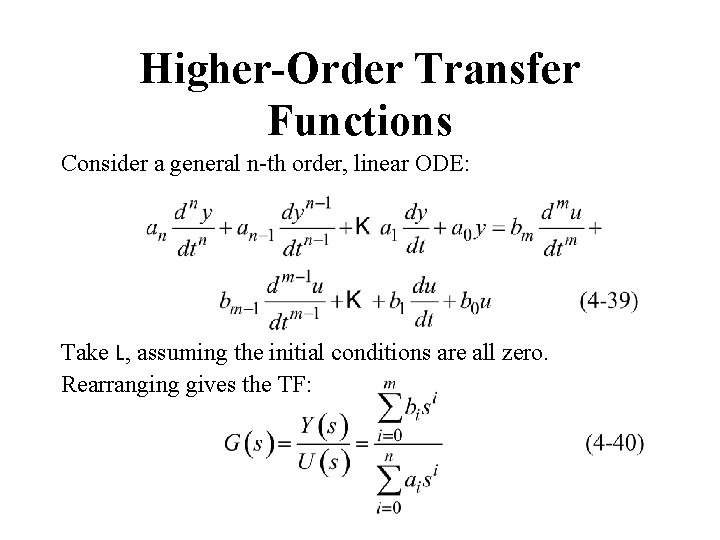
Higher-Order Transfer Functions Consider a general n-th order, linear ODE: Take L, assuming the initial conditions are all zero. Rearranging gives the TF:
Order of Transfer Function • The order of the TF is defined to be the order of the denominator polynomial. • The order of the TF is equal to the order of the ODE.
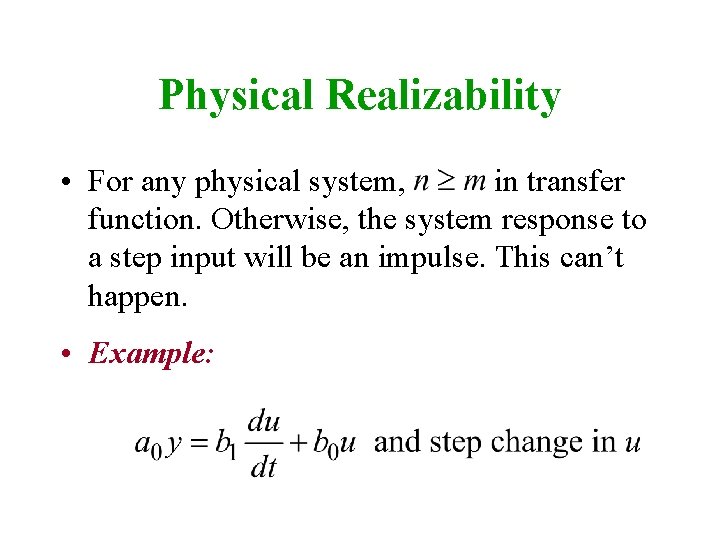
Physical Realizability • For any physical system, in transfer function. Otherwise, the system response to a step input will be an impulse. This can’t happen. • Example:
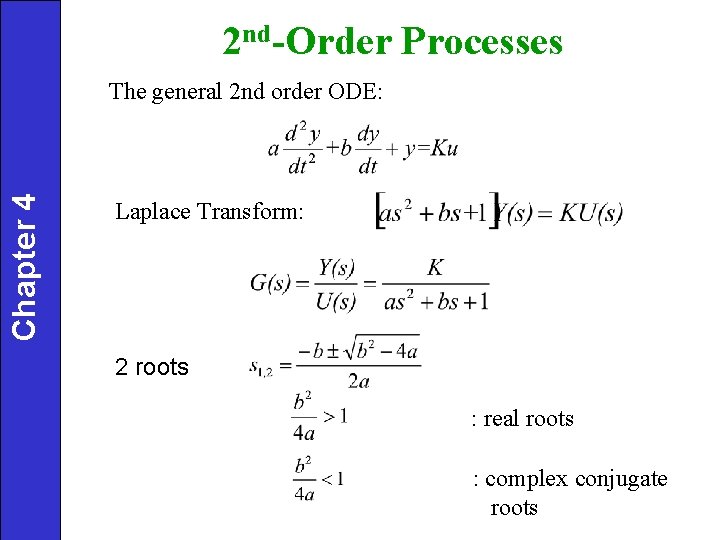
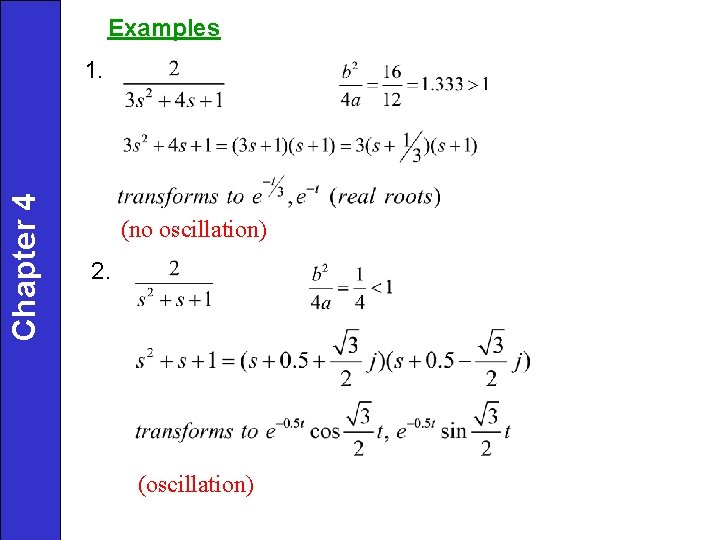
2 nd-Order Processes Chapter 4 The general 2 nd order ODE: Laplace Transform: 2 roots : real roots : complex conjugate roots
Examples Chapter 4 1. (no oscillation) 2. (oscillation)
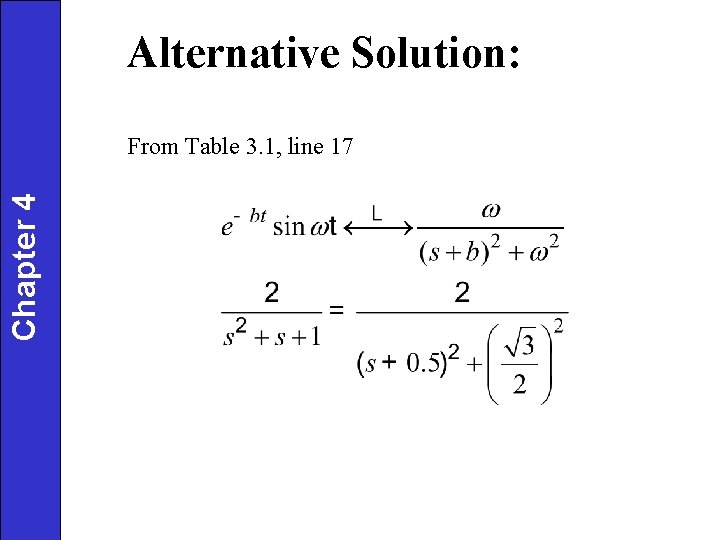
Alternative Solution: Chapter 4 From Table 3. 1, line 17
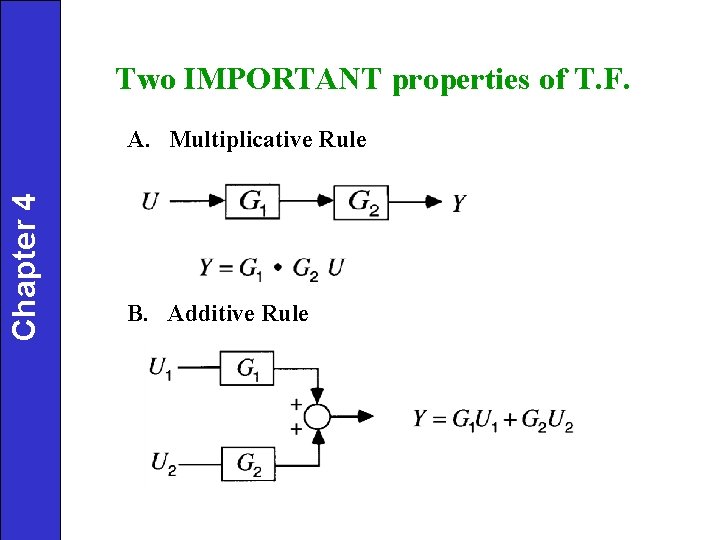
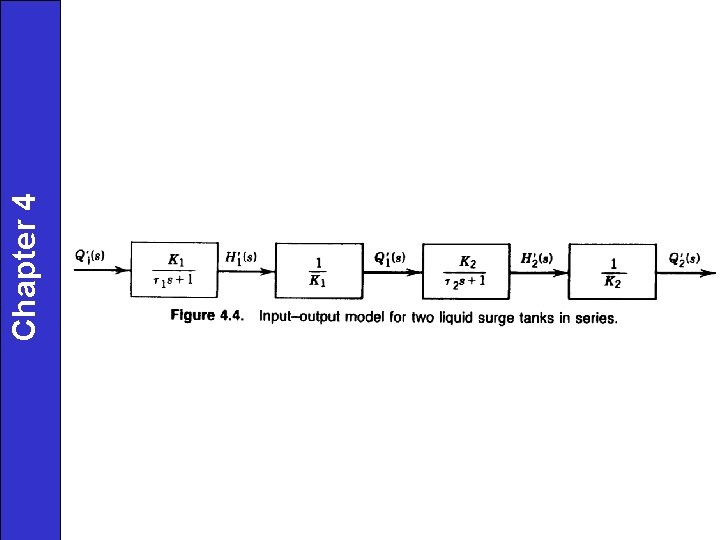
Two IMPORTANT properties of T. F. Chapter 4 A. Multiplicative Rule B. Additive Rule
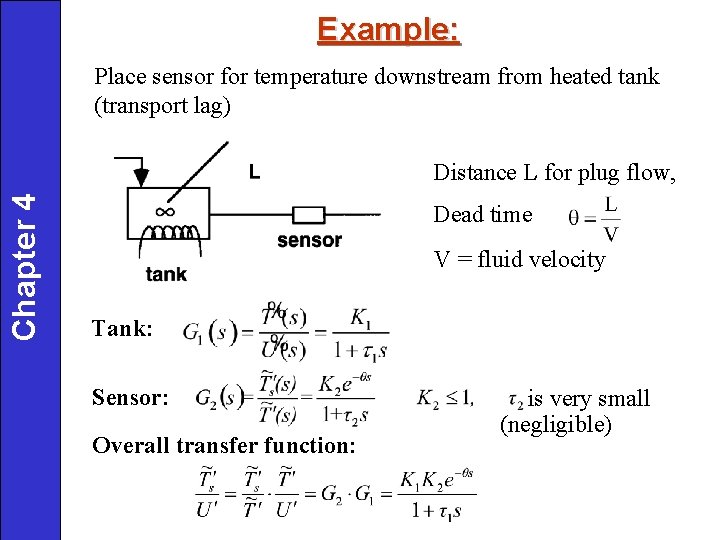
Example: Place sensor for temperature downstream from heated tank (transport lag) Chapter 4 Distance L for plug flow, Dead time V = fluid velocity Tank: Sensor: Overall transfer function: is very small (negligible)
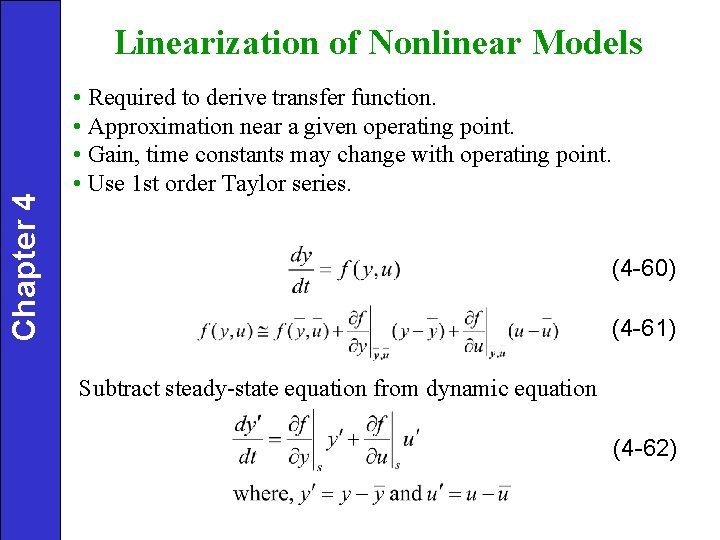
Chapter 4 Linearization of Nonlinear Models • Required to derive transfer function. • Approximation near a given operating point. • Gain, time constants may change with operating point. • Use 1 st order Taylor series. (4 -60) (4 -61) Subtract steady-state equation from dynamic equation (4 -62)
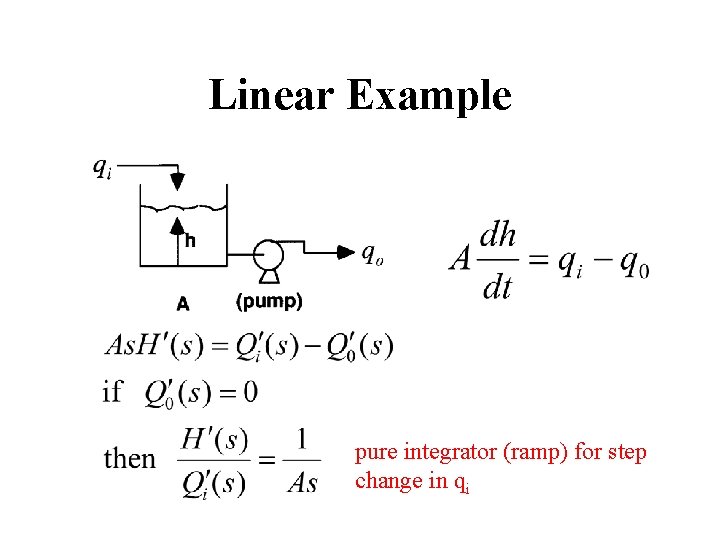
Linear Example pure integrator (ramp) for step change in qi
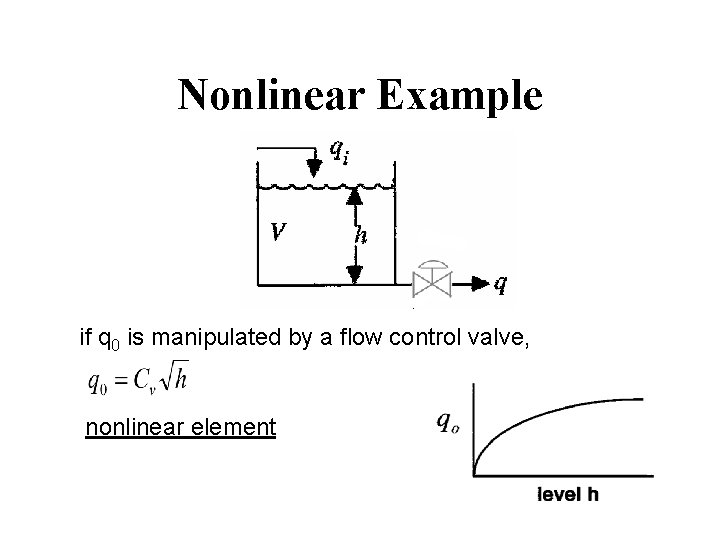
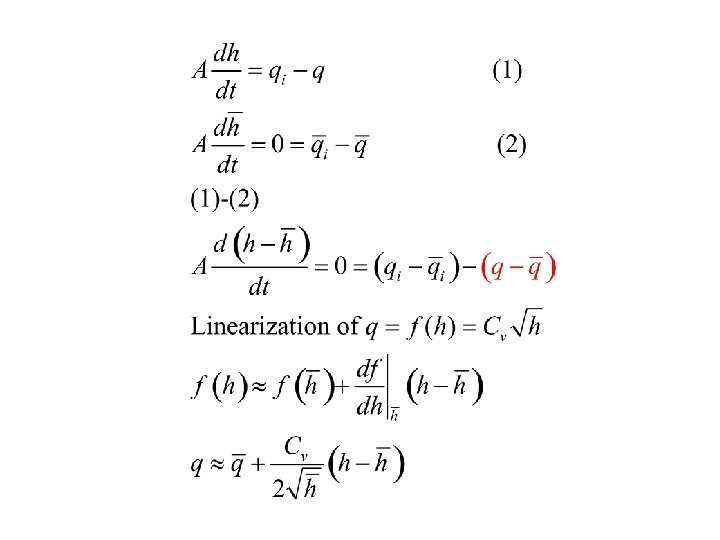
Nonlinear Example if q 0 is manipulated by a flow control valve, nonlinear element
Chapter 4
Chapter 4
Chapter 4