
Transcutaneous electrical nerve stimulation TENS for spinal cord

- Slides: 25
Transcutaneous electrical nerve stimulation (TENS) for spinal cord injury with neuropathic pain 101. 12. 19. Ching-Chuan Liang
Outline • • • Background Review Question Objective Method Assessment of methodological quality • Data collection and analysis • Refrences 2
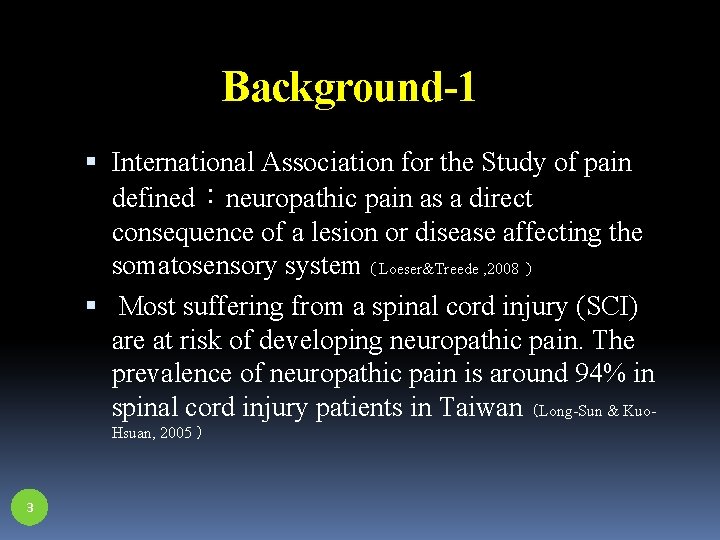
Background-1 International Association for the Study of pain defined:neuropathic pain as a direct consequence of a lesion or disease affecting the somatosensory system(Loeser&Treede , 2008 ) Most suffering from a spinal cord injury (SCI) are at risk of developing neuropathic pain. The prevalence of neuropathic pain is around 94% in spinal cord injury patients in Taiwan(Long-Sun & Kuo. Hsuan, 2005 ) 3
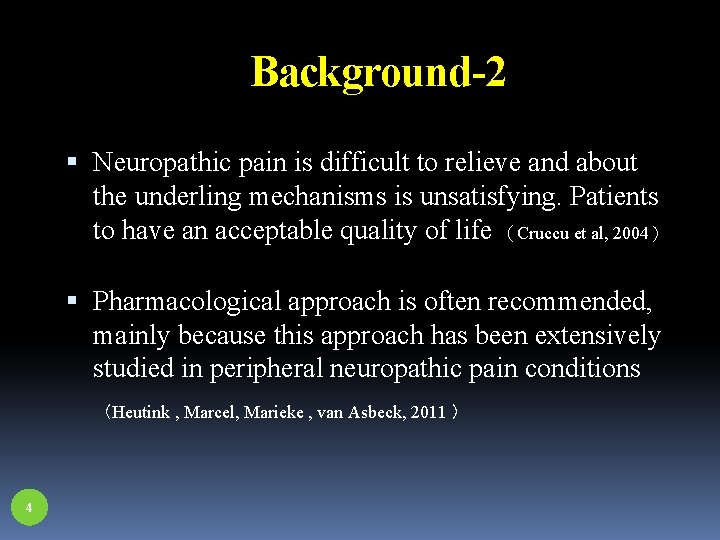
Background-2 Neuropathic pain is difficult to relieve and about the underling mechanisms is unsatisfying. Patients to have an acceptable quality of life (Cruccu et al, 2004) Pharmacological approach is often recommended, mainly because this approach has been extensively studied in peripheral neuropathic pain conditions (Heutink , Marcel, Marieke , van Asbeck, 2011 ) 4
Background-3 In 1965 Melzack and Wall derived from folk tradition, that rubbing the skin over a painful area relieves pain, found scientific support in the gatecontrol theory. TENS, Surface electrodes are placed over the painful area or the nerve, It is delivered at high frequency and low intensity, to produce an intense activation of Aβ afferents and to evoke parenthesize that cover the painful area(Melzack & 5 Wall, 1965 ; Norrbrink et al, 2003 : Penza et al, 2011 )
Review Question What is the experience of transcutaneous electrical nerve stimulation (TENS) in spinal cord injury with neuropathic pain ? 6
Objective To assess the effectiveness of TENS for spinal cord injury with neuropathic pain. 7
Methods Type of participants: Inclusion criteria: spinal cord injury with neuropathic pain, l complete or incomplete injury. With transcutaneous electrical nerve stimulation procedure. The setting will within in patients, dwelling and out- patient department. 8
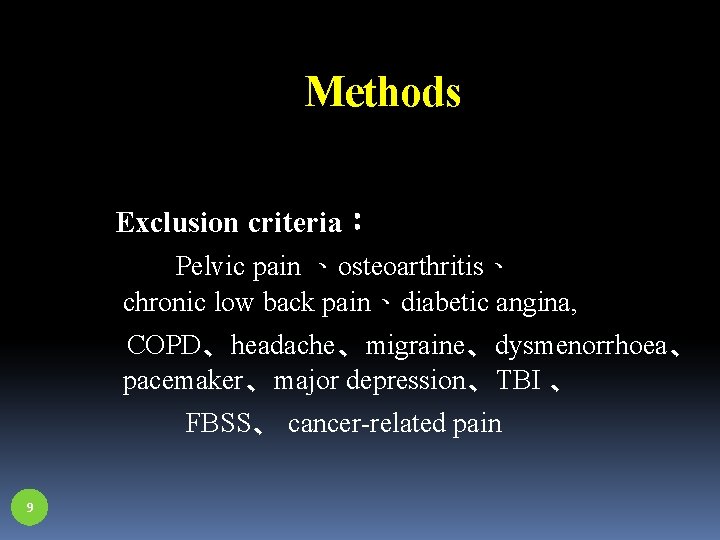
Methods Exclusion criteria: Pelvic pain 、osteoarthritis、 chronic low back pain、diabetic angina, COPD、headache、migraine、dysmenorrhoea、 pacemaker、major depression、TBI 、 FBSS、 cancer-related pain 9
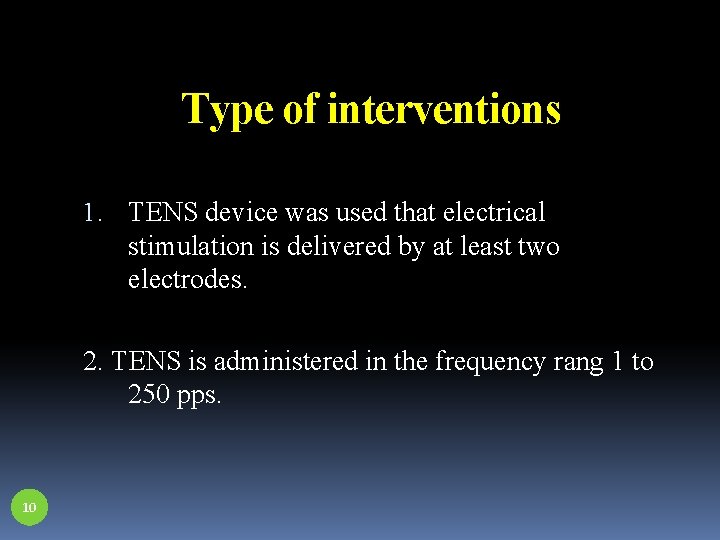
Type of interventions 1. TENS device was used that electrical stimulation is delivered by at least two electrodes. 2. TENS is administered in the frequency rang 1 to 250 pps. 10
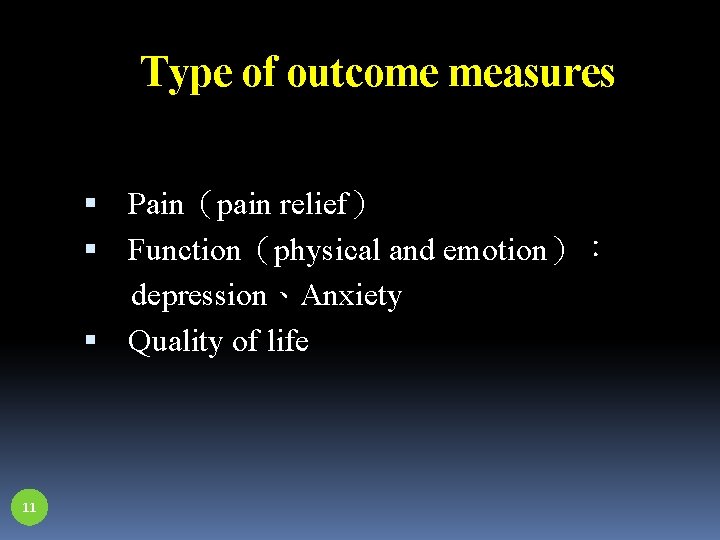
Type of outcome measures Pain(pain relief) Function(physical and emotion): depression、Anxiety Quality of life 11
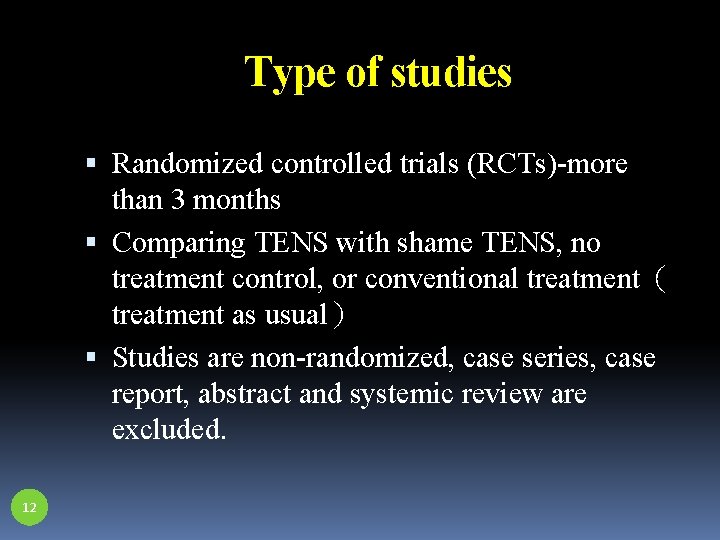
Type of studies Randomized controlled trials (RCTs)-more than 3 months Comparing TENS with shame TENS, no treatment control, or conventional treatment( treatment as usual) Studies are non-randomized, case series, case report, abstract and systemic review are excluded. 12
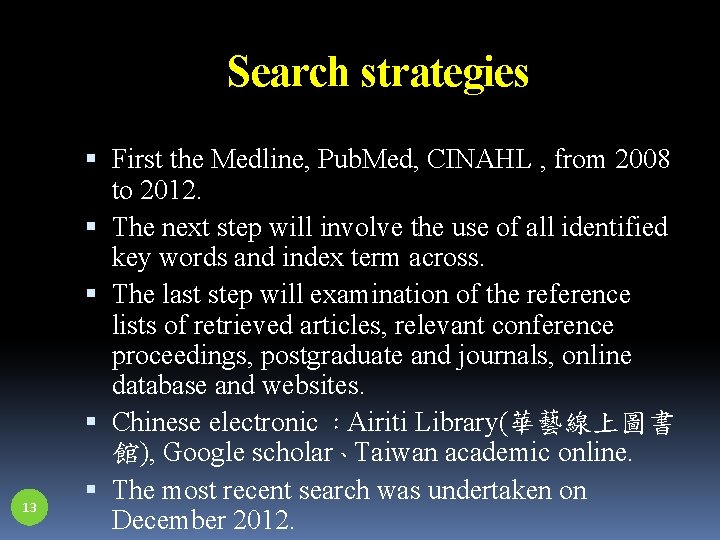
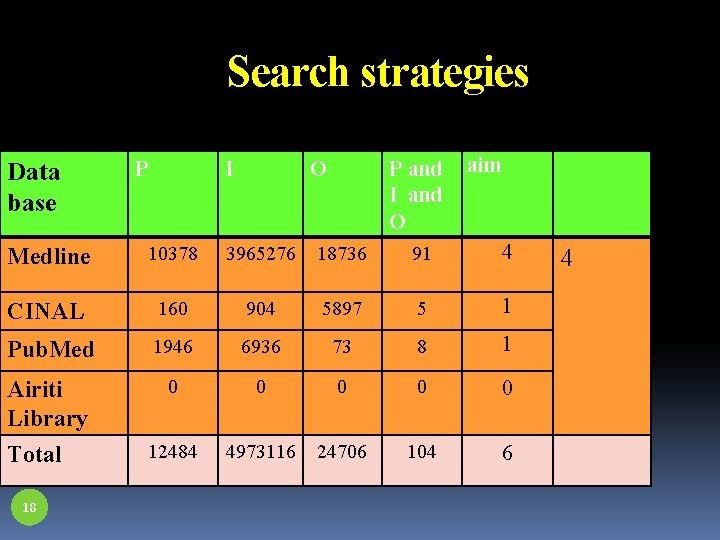
Search strategies 13 First the Medline, Pub. Med, CINAHL , from 2008 to 2012. The next step will involve the use of all identified key words and index term across. The last step will examination of the reference lists of retrieved articles, relevant conference proceedings, postgraduate and journals, online database and websites. Chinese electronic :Airiti Library(華藝線上圖書 館), Google scholar、Taiwan academic online. The most recent search was undertaken on December 2012.
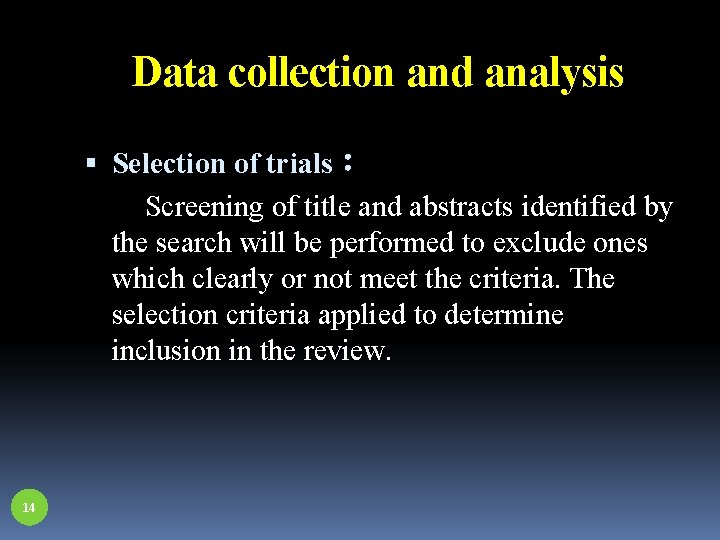
Data collection and analysis Selection of trials: Screening of title and abstracts identified by the search will be performed to exclude ones which clearly or not meet the criteria. The selection criteria applied to determine inclusion in the review. 14
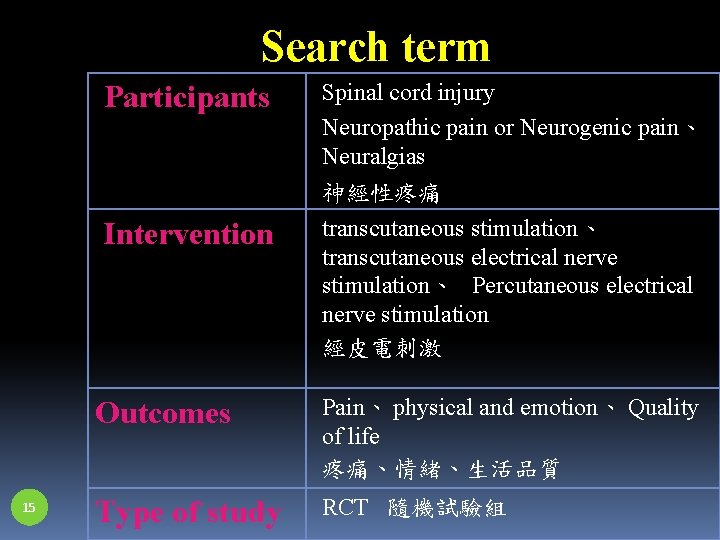
Search term 15 Participants Spinal cord injury Neuropathic pain or Neurogenic pain、 Neuralgias 神經性疼痛 Intervention transcutaneous stimulation、 transcutaneous electrical nerve stimulation、 Percutaneous electrical nerve stimulation 經皮電刺激 Outcomes Pain、 physical and emotion、 Quality of life 疼痛、情緒、生活品質 Type of study RCT 隨機試驗組
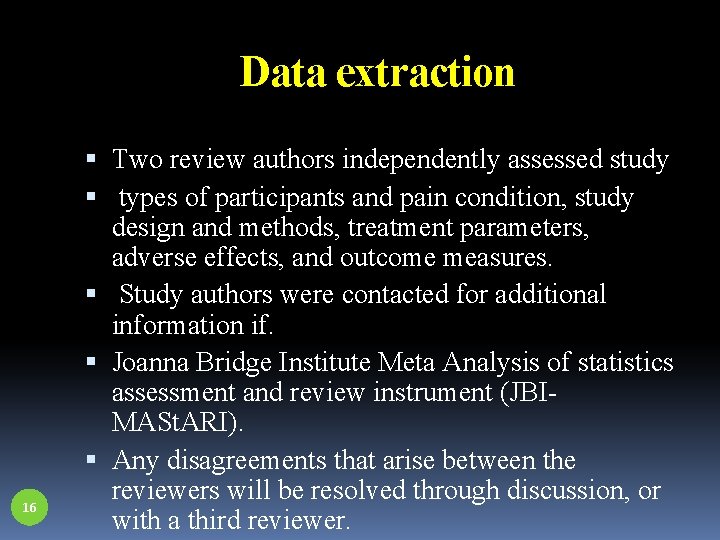
Data extraction 16 Two review authors independently assessed study types of participants and pain condition, study design and methods, treatment parameters, adverse effects, and outcome measures. Study authors were contacted for additional information if. Joanna Bridge Institute Meta Analysis of statistics assessment and review instrument (JBIMASt. ARI). Any disagreements that arise between the reviewers will be resolved through discussion, or with a third reviewer.
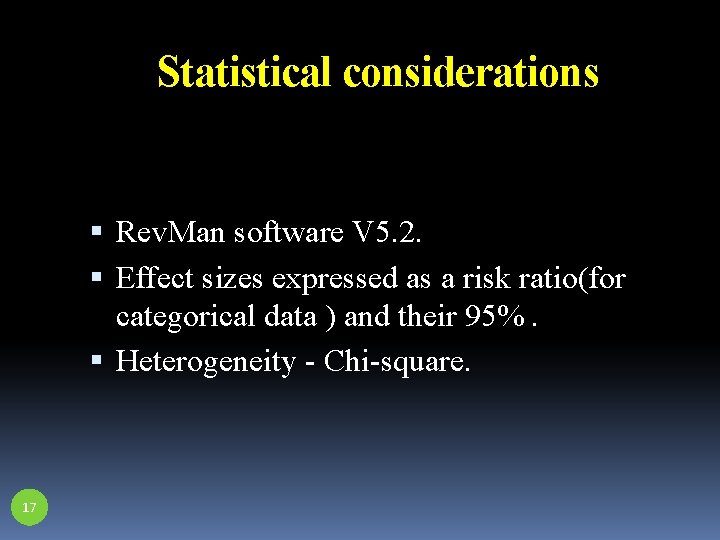
Statistical considerations Rev. Man software V 5. 2. Effect sizes expressed as a risk ratio(for categorical data ) and their 95%. Heterogeneity - Chi-square. 17
Search strategies Data base P I O P and I and O aim Medline 10378 3965276 18736 91 4 CINAL 160 904 5897 5 1 Pub. Med 1946 6936 73 8 1 Airiti Library 0 0 0 12484 4973116 24706 104 6 Total 18 4
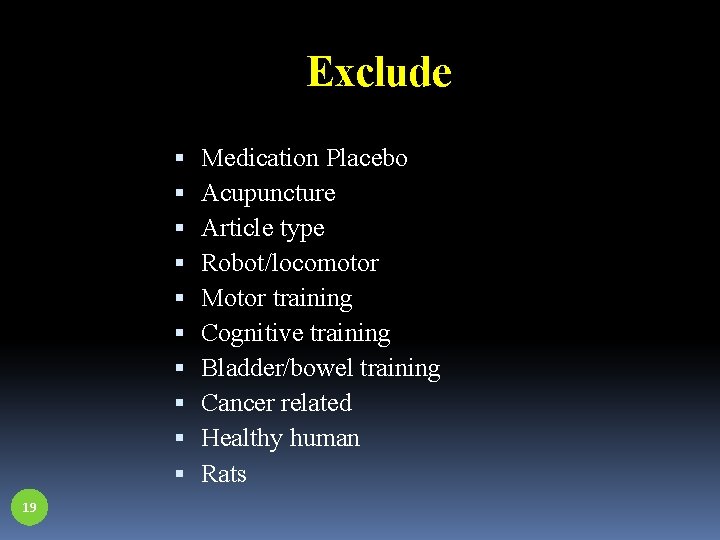
Exclude 19 Medication Placebo Acupuncture Article type Robot/locomotor Motor training Cognitive training Bladder/bowel training Cancer related Healthy human Rats
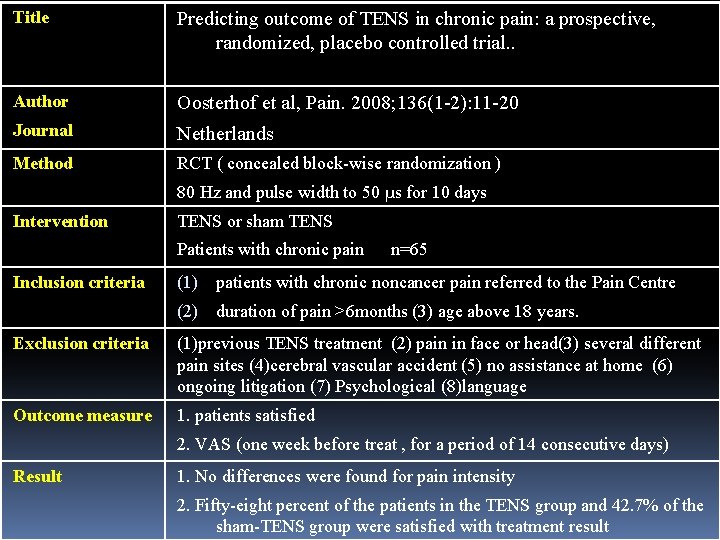
Title Predicting outcome of TENS in chronic pain: a prospective, randomized, placebo controlled trial. . Author Oosterhof et al, Pain. 2008; 136(1 -2): 11 -20 Journal Netherlands Method RCT ( concealed block-wise randomization ) 80 Hz and pulse width to 50 μs for 10 days Intervention TENS or sham TENS Patients with chronic pain Inclusion criteria n=65 (1) patients with chronic noncancer pain referred to the Pain Centre (2) duration of pain >6 months (3) age above 18 years. Exclusion criteria (1)previous TENS treatment (2) pain in face or head(3) several different pain sites (4)cerebral vascular accident (5) no assistance at home (6) ongoing litigation (7) Psychological (8)language Outcome measure 1. patients satisfied 2. VAS (one week before treat , for a period of 14 consecutive days) Result 1. No differences were found for pain intensity 2. Fifty-eight percent of the patients in the TENS group and 42. 7% of the sham-TENS group were satisfied with treatment result
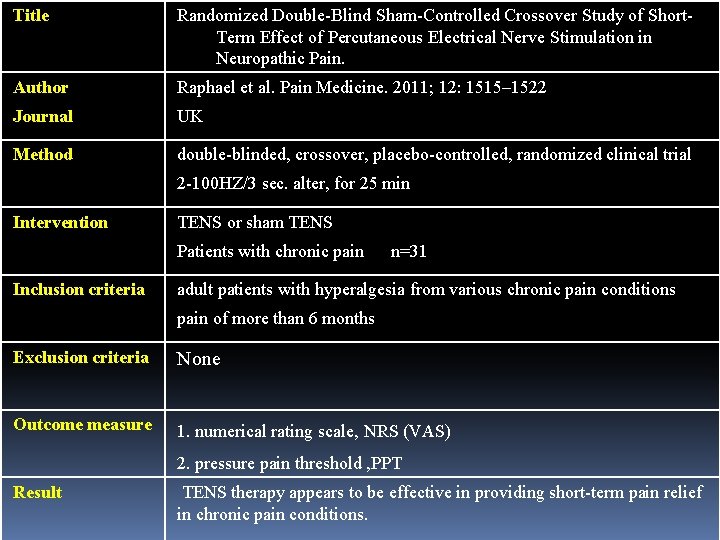
Title Randomized Double-Blind Sham-Controlled Crossover Study of Short. Term Effect of Percutaneous Electrical Nerve Stimulation in Neuropathic Pain. Author Raphael et al. Pain Medicine. 2011; 12: 1515– 1522 Journal UK Method double-blinded, crossover, placebo-controlled, randomized clinical trial 2 -100 HZ/3 sec. alter, for 25 min Intervention TENS or sham TENS Patients with chronic pain Inclusion criteria n=31 adult patients with hyperalgesia from various chronic pain conditions pain of more than 6 months Exclusion criteria None Outcome measure 1. numerical rating scale, NRS (VAS) 2. pressure pain threshold , PPT Result TENS therapy appears to be effective in providing short-term pain relief in chronic pain conditions.
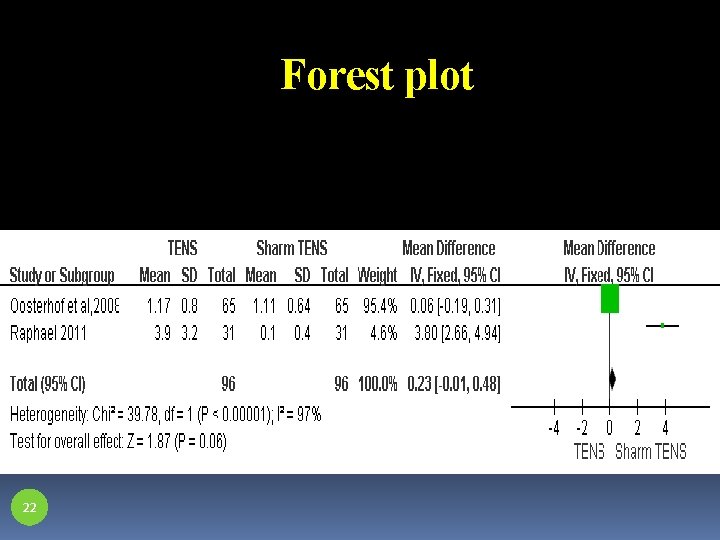
Forest plot 22
References 23 Cecilia N. Transcutaneous electrical nerve stimulation for treatment of spinal cord injury neuropathic pain. Journal of Rehabilitation Research & Development. 2009; 46(1): 85 -94. Cruccu G, Aziz T Z, Garcia-Larrea L, Hansson P, Jensen TS, Lefaucheur JP, Simpson BA, Taylor RS. EFNS guidelines on neurostimulation therapy for neuropathic pain. European Journal of Neurology 2007, 14: 952– 970. Fattal c, Kong-A-Siou D, Gilbert C, Ventura M, Albert T. What is the efficacy of physical therapeutics for treating neuropathic pain in spinal cord injury patients? Ann Phys Rehabil Med. 2009; 52(2): 149 -166. Heutink M, Marcel WM, Marieke M, van Asbeck, FWA. Chronic spinal cord injury pain: pharmacological and non-pharmacological treatments and treatment effectiveness. Disability & Rehabilitation. 2011; 33(5): 433 -440. Jon H R, Tarek AR, Jane LS, Alan B, Robert L A, Sharon W. Randomized Double-Blind Sham-Controlled Crossover Study of Short-Term Effect of Percutaneous Electrical Nerve Stimulation in Neuropathic Pain Medicine. 2011; 12: 1515– 1522. Johnson MI, Bjordal JM. Transcutaneous electrical nerve stimulation for the management of painful conditions: focus on neuropathic pain. Expert Review of neurotherapeutics. 2011; 11(5): 735 -753.
24 Josimari M D, Deirdre MW, Carol V, Barbara AR, Kathleen AS. Effectiveness of Transcutaneous Electrical Nerve Stimulation for Treatment of Hyperalgesia and Pain. Curr Rheumatol Rep. 2008 ; 10(6): 492 -499. Loeser JD, Treede RD. The Kyoto protocol of IASP basic pain terminology. Pain 2008; 137(3): 473 -477. Long-Sun R, Kuo-Hsuan C. Neuropathic Pain: Mechanisms and Treatments. Chang Gung Med J. 2005 ; 28(9): 597 -604. Melzack R, Wall PD. Pain mechanisms: a new theory. Science (NY) 1965; 150: 971– 979. Norrbrink BC, Lund I, Ertzgaard P, Holtz A, Hultling C, Levi R, Werhagen L, Lundeberg T. Pain in a Swedish spinal cord injury population. Clin Rehabil. 2003; 17(6): 685– 90. Oosterhof J, Samwel HJ, de Boo TM, Wilder-Smith OH, Oostendorp RA, Crul BJ. Predicting outcome of TENS in chronic pain: a prospective, randomized, placebo controlled trial. Pain. 2008; 136(1 -2): 11 -20. Penza P, Bricchi M, Scola A, Campanella A, Lauria G. Electroacupuncture is not effective in chronic painful neuropathies. Pain Med. 2011 Dec; 12(12): 1819 -1823. Sam Chong M, Zahid HB. Diagnosis and Treatment of Neurophathic pain. 2003; 58(25): S 5 -S 11. Werhagen L, Budh CN, Hultling C, Molander C. Neuropathic pain after traumatic spinal cord injury—Relations to gender, spinal level, completeness, and age at the time of injury. Spinal Cord. 2004; 42(12): 665– 73.
Thanks for Your Attention