
Transcriptome and analysis of gene transcription Gene expression

![Terminology: arrays, chips Preparation Support Density [probes/cm 2] Macroarray (High Density Array) Printing of](https://slidetodoc.com/presentation_image_h/db3413b3575bb1ee348380859497ca76/image-14.jpg "Terminology: arrays, chips Preparation Support Density [probes/cm 2] Macroarray (High Density Array) Printing of")

- Slides: 25
Transcriptome and analysis of gene transcription
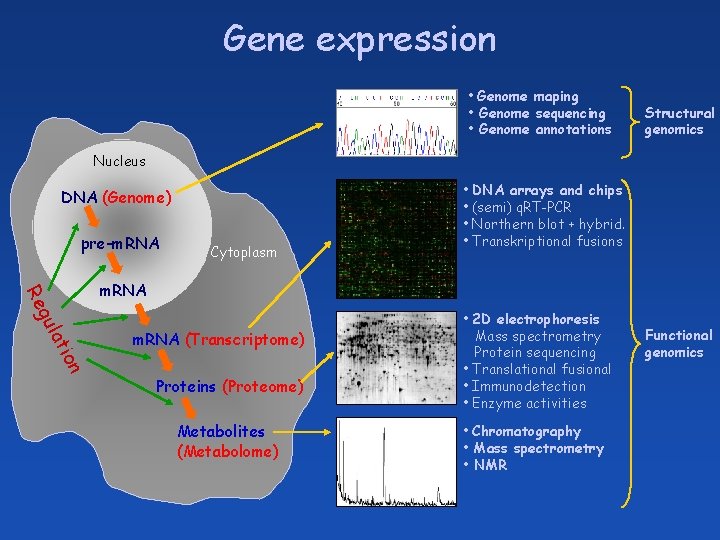
Gene expression • Genome maping • Genome sequencing • Genome annotations Structural genomics Nucleus DNA (Genome) pre-m. RNA Cytoplasm • DNA arrays and chips • (semi) q. RT-PCR • Northern blot + hybrid. • Transkriptional fusions a gul Re m. RNA n tio m. RNA (Transcriptome) Proteins (Proteome) Metabolites (Metabolome) • 2 D electrophoresis Mass spectrometry Protein sequencing • Translational fusional • Immunodetection • Enzyme activities • Chromatography • Mass spectrometry • NMR Functional genomics
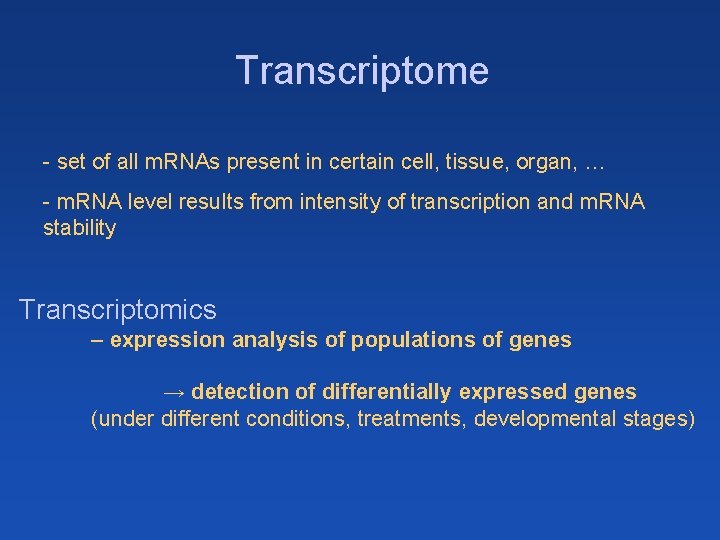
Transcriptome - set of all m. RNAs present in certain cell, tissue, organ, … - m. RNA level results from intensity of transcription and m. RNA stability Transcriptomics – expression analysis of populations of genes → detection of differentially expressed genes (under different conditions, treatments, developmental stages)
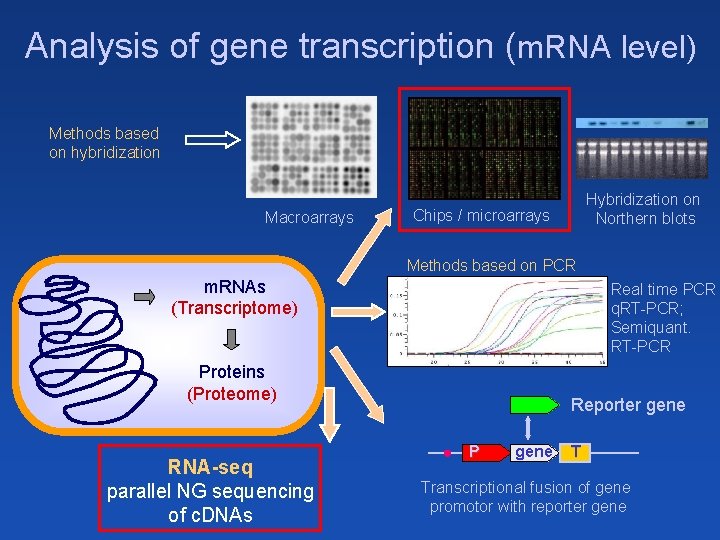
Analysis of gene transcription (m. RNA level) Methods based on hybridization Macroarrays Hybridization on Northern blots Chips / microarrays Methods based on PCR m. RNAs (Transcriptome) Real time PCR q. RT-PCR; Semiquant. RT-PCR DNA (Genome) Proteins (Proteome) RNA-seq parallel NG sequencing of c. DNAs Reporter gene P gene T Transcriptional fusion of gene promotor with reporter gene
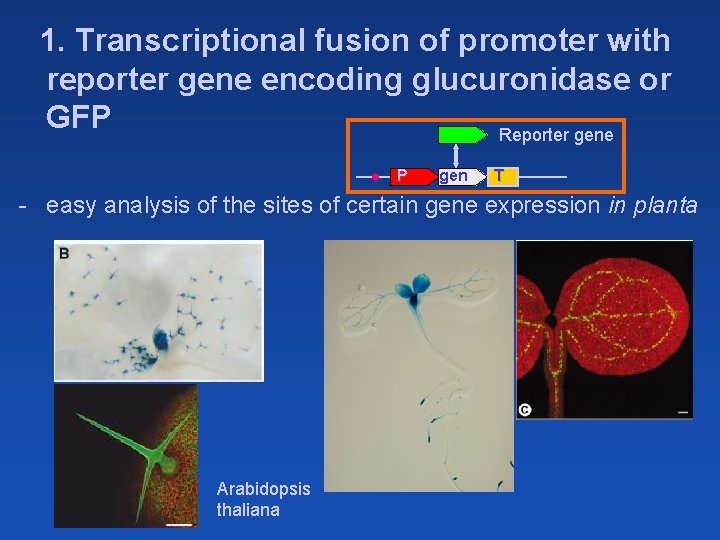
1. Transcriptional fusion of promoter with reporter gene encoding glucuronidase or GFP Reporter gene P gen T - easy analysis of the sites of certain gene expression in planta Arabidopsis thaliana
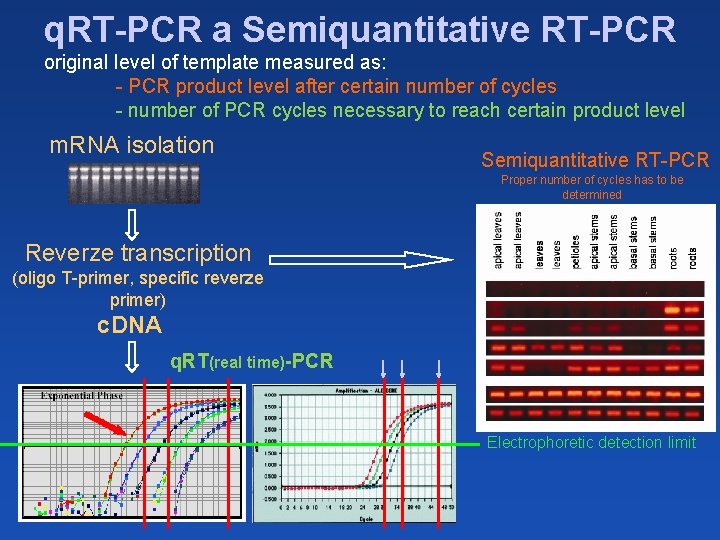
q. RT-PCR a Semiquantitative RT-PCR original level of template measured as: - PCR product level after certain number of cycles - number of PCR cycles necessary to reach certain product level m. RNA isolation Semiquantitative RT-PCR Proper number of cycles has to be determined Reverze transcription (oligo T-primer, specific reverze primer) c. DNA q. RT(real time)-PCR Electrophoretic detection limit
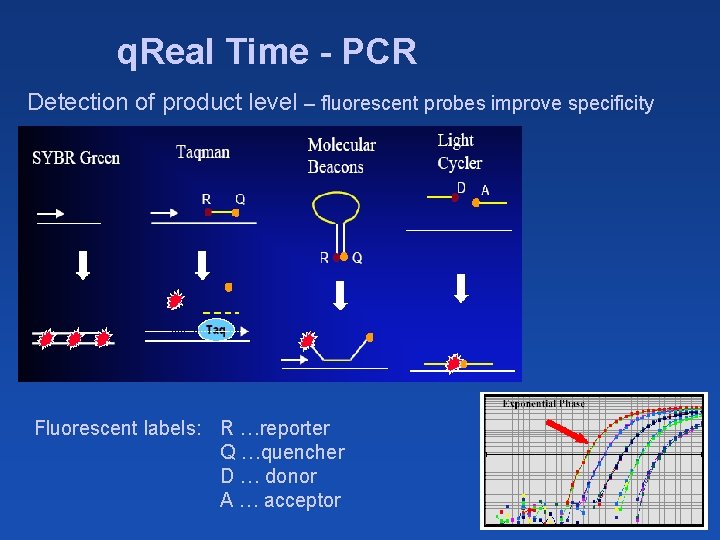
q. Real Time - PCR Detection of product level – fluorescent probes improve specificity Fluorescent labels: R …reporter Q …quencher D … donor A … acceptor
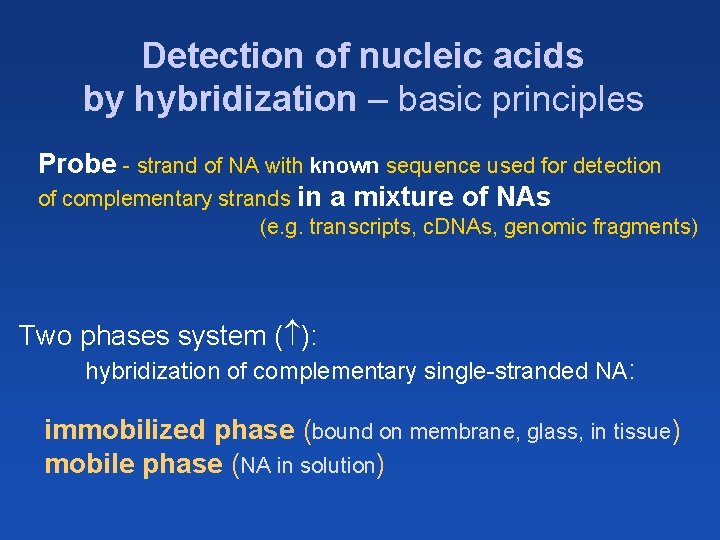
Detection of nucleic acids by hybridization – basic principles Probe - strand of NA with known sequence used for detection of complementary strands in a mixture of NAs (e. g. transcripts, c. DNAs, genomic fragments) Two phases system ( ): hybridization of complementary single-stranded NA: immobilized phase (bound on membrane, glass, in tissue) mobile phase (NA in solution)
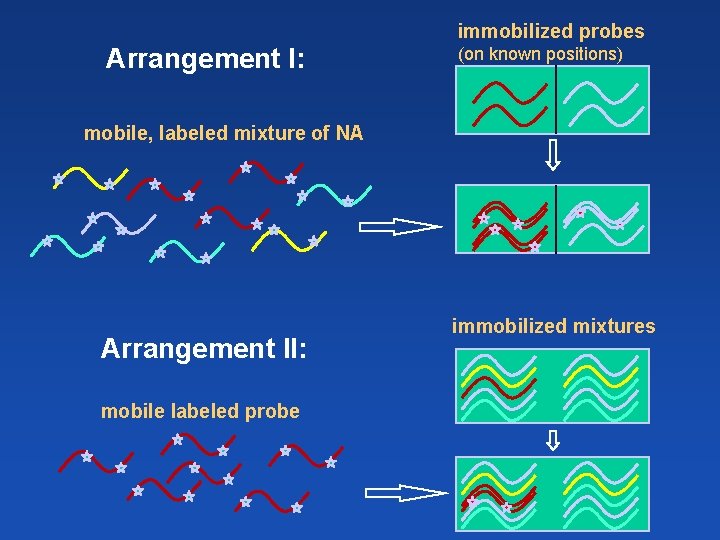
immobilized probes Arrangement I: (on known positions) mobile, labeled mixture of NA Arrangement II: mobile labeled probe immobilized mixtures
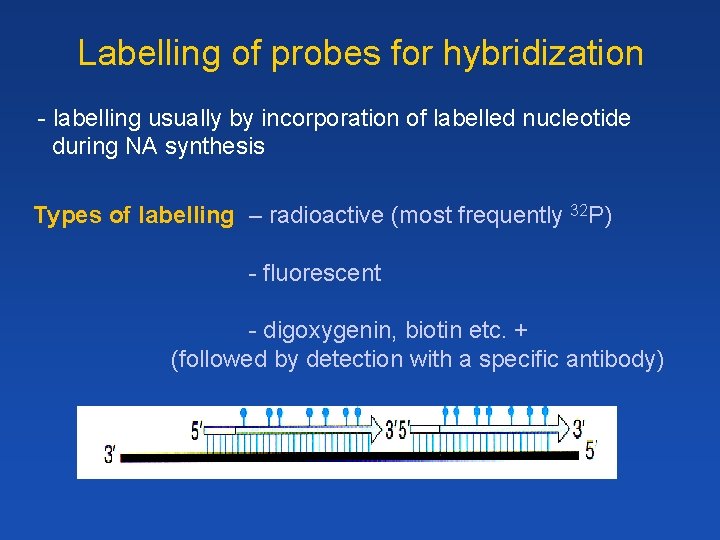
Labelling of probes for hybridization - labelling usually by incorporation of labelled nucleotide during NA synthesis Types of labelling – radioactive (most frequently 32 P) - fluorescent - digoxygenin, biotin etc. + (followed by detection with a specific antibody)
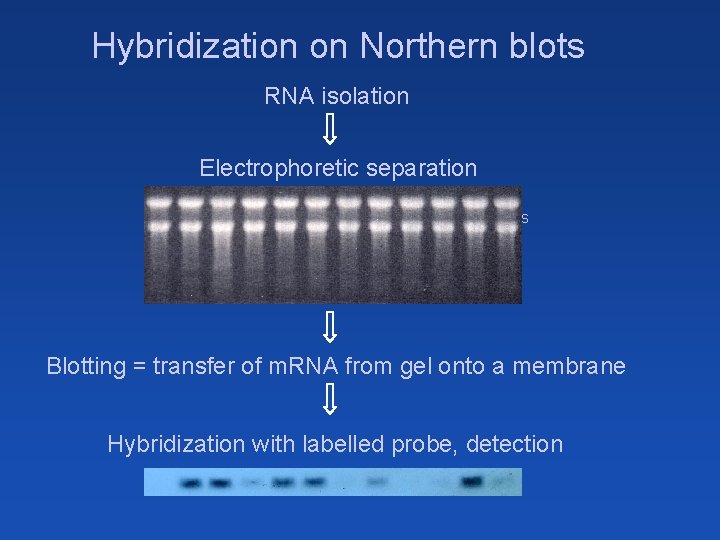
Hybridization on Northern blots RNA isolation Electrophoretic separation Macroarrays Microarrays Blotting = transfer of m. RNA from gel onto a membrane Hybridization with labelled probe, detection
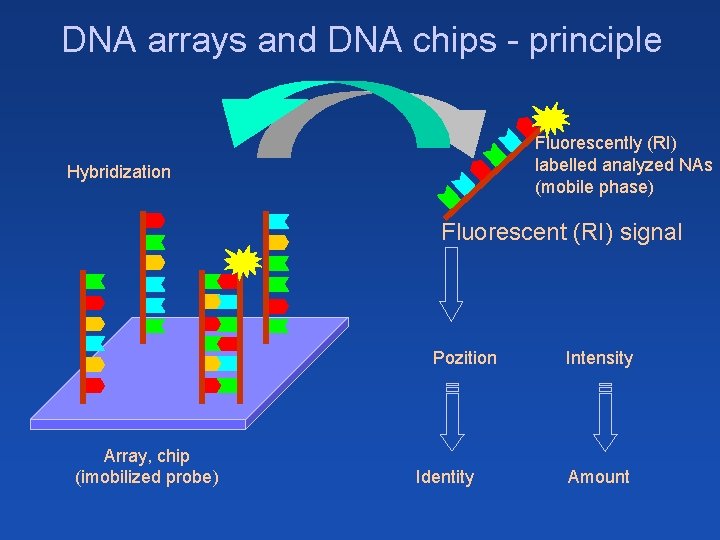
DNA arrays and DNA chips - principle Fluorescently (RI) labelled analyzed NAs (mobile phase) Hybridization Fluorescent (RI) signal Pozition Array, chip (imobilized probe) Identity Intensity Amount
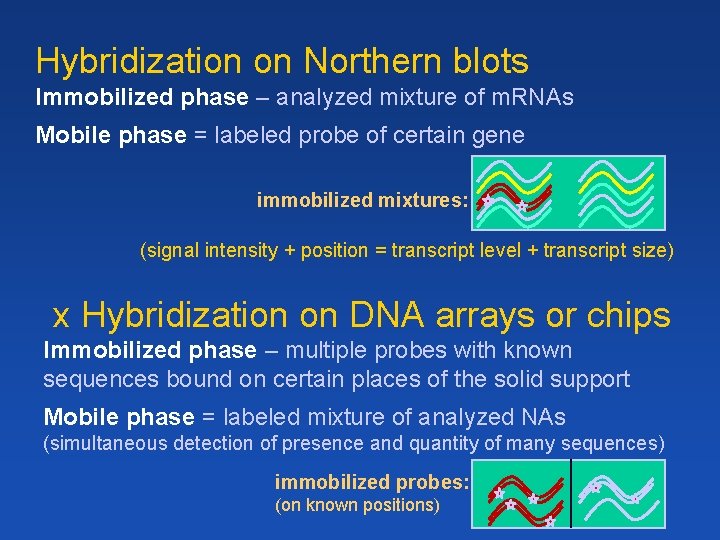
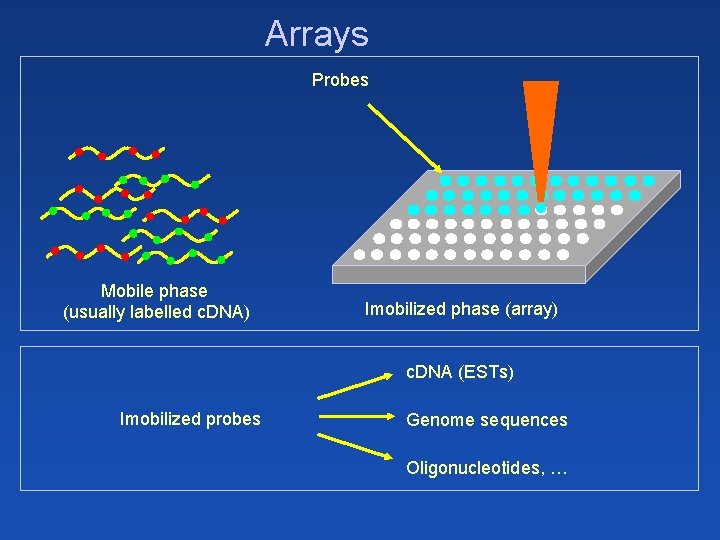
Hybridization on Northern blots Immobilized phase – analyzed mixture of m. RNAs Mobile phase = labeled probe of certain gene immobilized mixtures: (signal intensity + position = transcript level + transcript size) x Hybridization on DNA arrays or chips Immobilized phase – multiple probes with known sequences bound on certain places of the solid support Mobile phase = labeled mixture of analyzed NAs (simultaneous detection of presence and quantity of many sequences) immobilized probes: (on known positions)
Terminology: arrays, chips Preparation Support Density [probes/cm 2] Macroarray (High Density Array) Printing of oligonucleotids or PCR fragments Membrane max. 64 e. g. glass up to 104 Microarray Printing of oligonucleotids or PCR fragments Direct synthesis on the support e. g. glass Chip up to 2. 5 *105
Arrays Probes Mobile phase (usually labelled c. DNA) Imobilized phase (array) c. DNA (ESTs) Imobilized probes Genome sequences Oligonucleotides, …
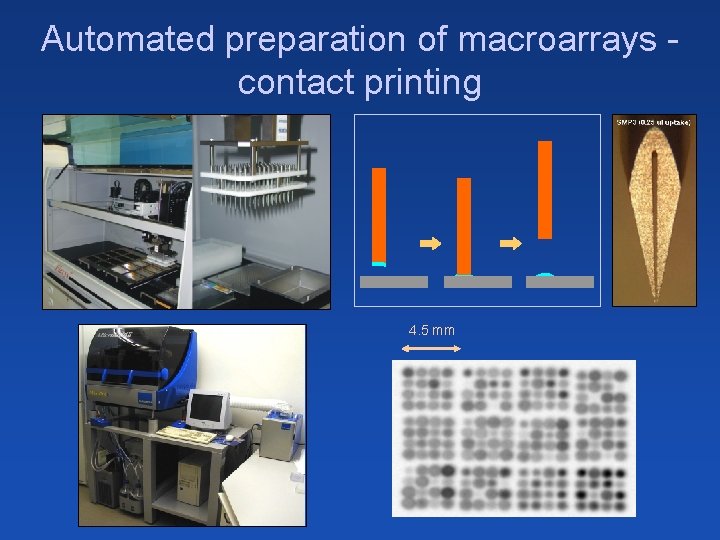
Automated preparation of macroarrays contact printing 4. 5 mm
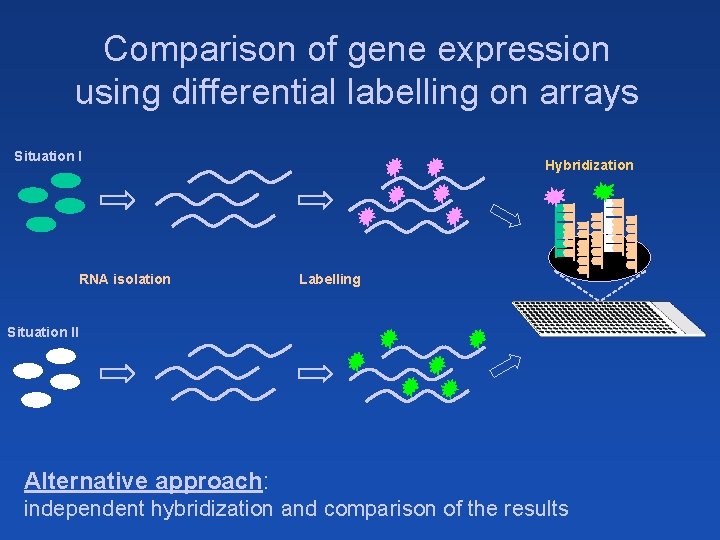
Comparison of gene expression using differential labelling on arrays Situation I RNA isolation Hybridization Labelling Situation II Alternative approach: independent hybridization and comparison of the results
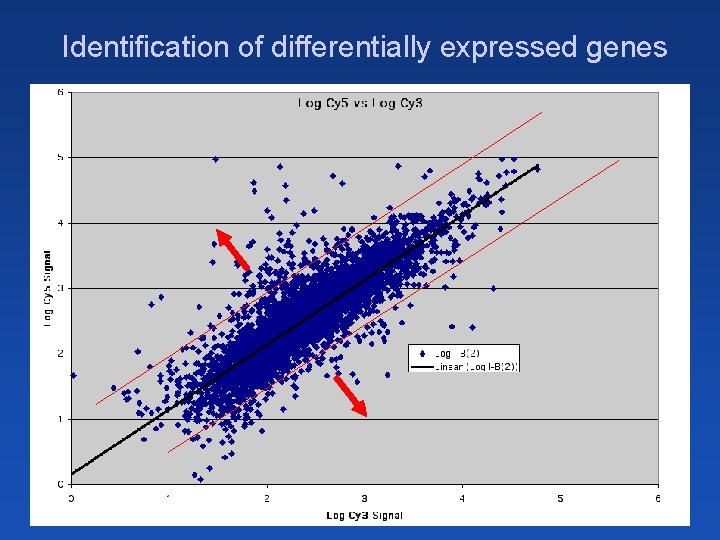
Identification of differentially expressed genes
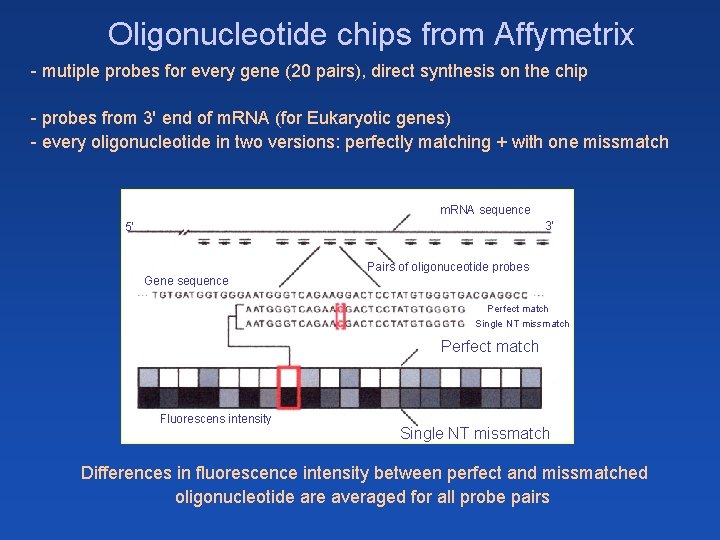
Oligonucleotide chips from Affymetrix - mutiple probes for every gene (20 pairs), direct synthesis on the chip - probes from 3' end of m. RNA (for Eukaryotic genes) - every oligonucleotide in two versions: perfectly matching + with one missmatch m. RNA sequence 3‘ 5‘ Pairs of oligonuceotide probes Gene sequence Perfect match Single NT missmatch Perfect match Fluorescens intensity Single NT missmatch Differences in fluorescence intensity between perfect and missmatched oligonucleotide are averaged for all probe pairs
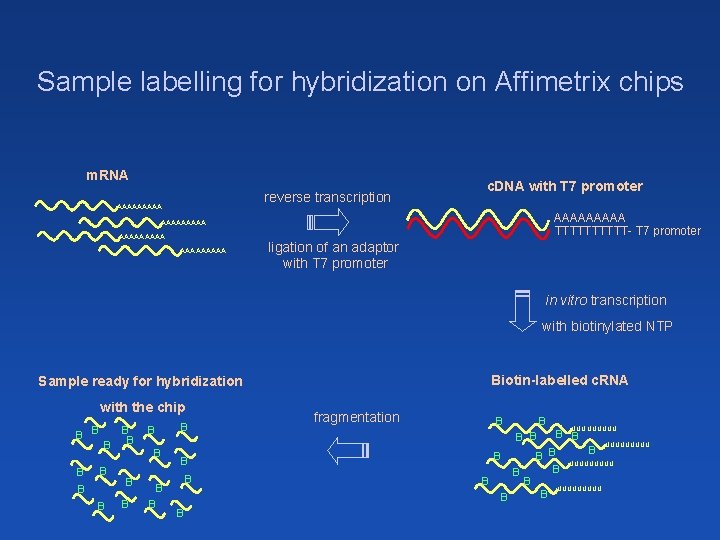
Sample labelling for hybridization on Affimetrix chips m. RNA reverse transcription AAAAA c. DNA with T 7 promoter AAAAA TTTTT- T 7 promoter AAAAAAAAA ligation of an adaptor with T 7 promoter in vitro transcription with biotinylated NTP Biotin-labelled c. RNA Sample ready for hybridization with the chip B B B B fragmentation B B B B UUUUUUUUU B B B B UUUUU
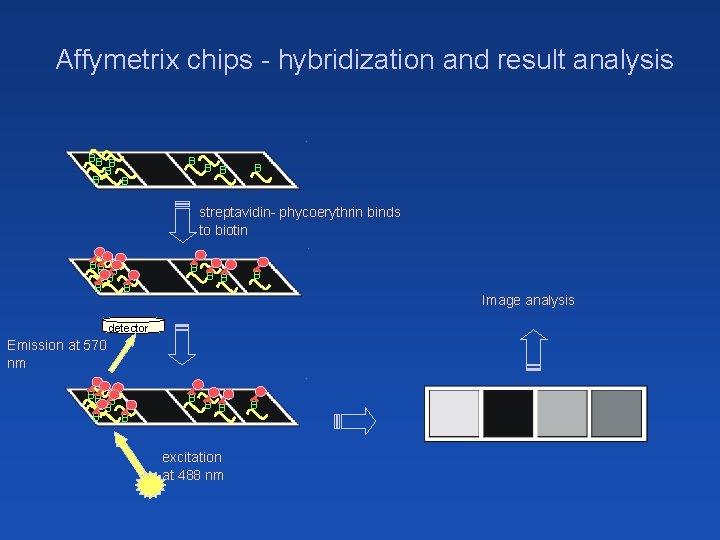
Affymetrix chips - hybridization and result analysis BB B B B B streptavidin- phycoerythrin binds to biotin BB B B B B Image analysis detector Emission at 570 nm BB B B B excitation at 488 nm B
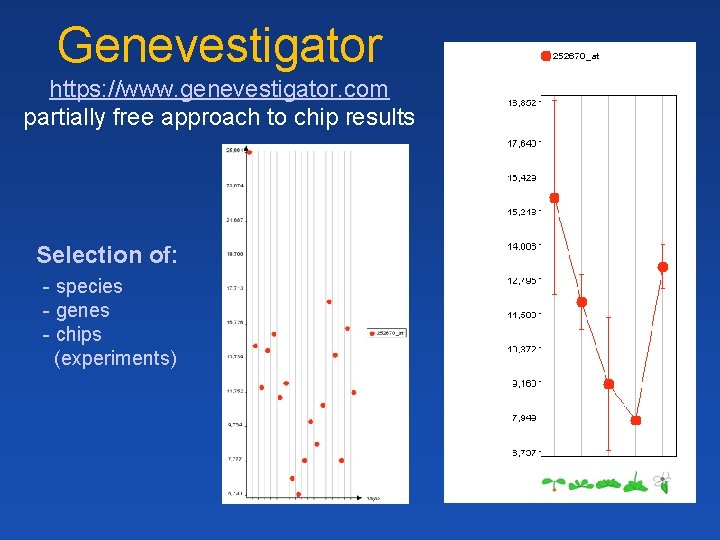
Genevestigator https: //www. genevestigator. com partially free approach to chip results Selection of: - species - genes - chips (experiments)
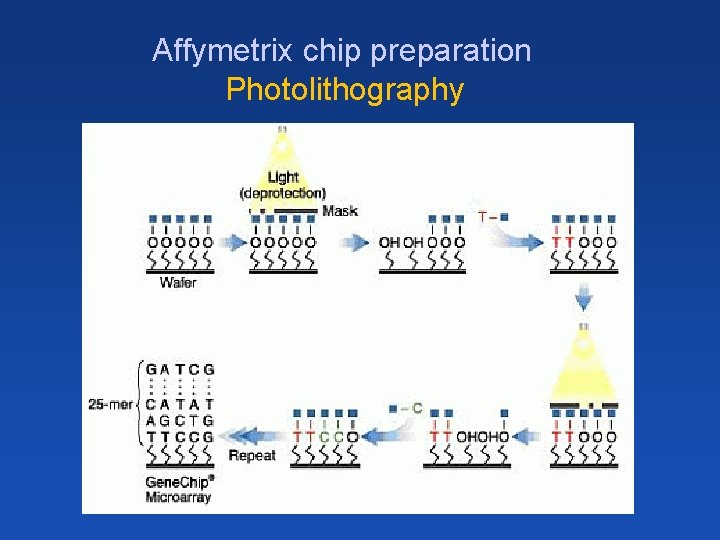
Affymetrix chip preparation Photolithography
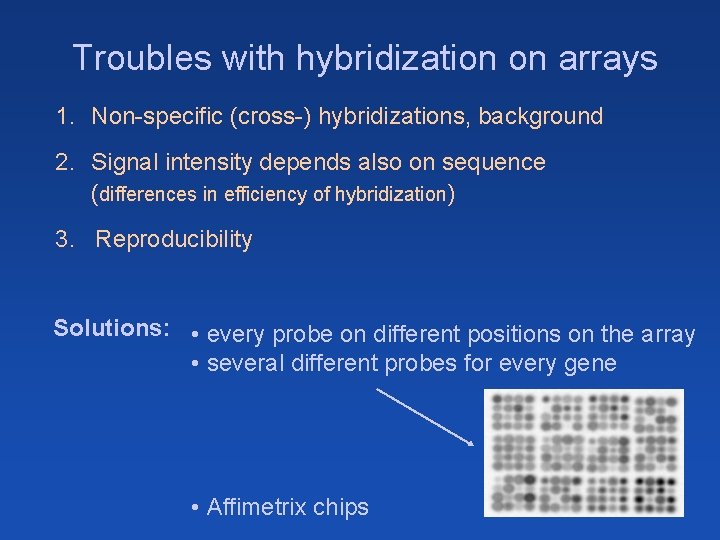
Troubles with hybridization on arrays 1. Non-specific (cross-) hybridizations, background 2. Signal intensity depends also on sequence (differences in efficiency of hybridization) 3. Reproducibility Solutions: • every probe on different positions on the array • several different probes for every gene • Affimetrix chips