
TRANSCRIPTION TRANSLATION From DNA to Protein Chapter 11

- Slides: 27
TRANSCRIPTION & TRANSLATION: From DNA to Protein Chapter 11, Section 2
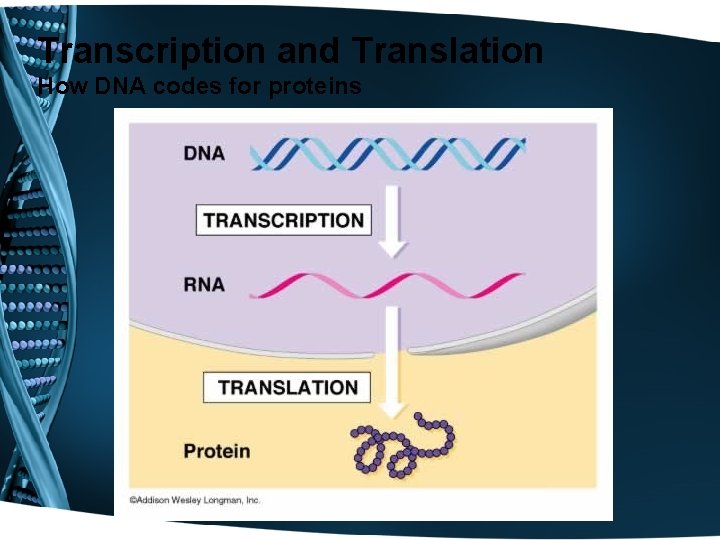
Genes & Proteins • What is the function of a gene? gene – Codes for traits, inherited from parents • Hair color, attached earlobes, widow’s peak – Provide recipe for making specific proteins • Proteins make up muscles, hair, tissues, enzymes, & pigments • Protein Synthesis = reading the DNA, forming RNA, using RNA to make the protein (DNA RNA Protein)
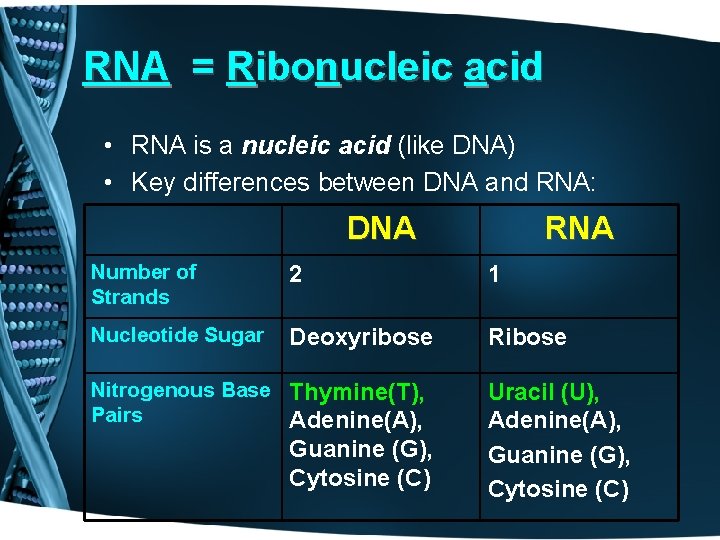
RNA = Ribonucleic acid • RNA is a nucleic acid (like DNA) • Key differences between DNA and RNA: DNA RNA Number of Strands 2 1 Nucleotide Sugar Deoxyribose Ribose Nitrogenous Base Thymine(T), Pairs Adenine(A), Guanine (G), Cytosine (C) Uracil (U), Adenine(A), Guanine (G), Cytosine (C)
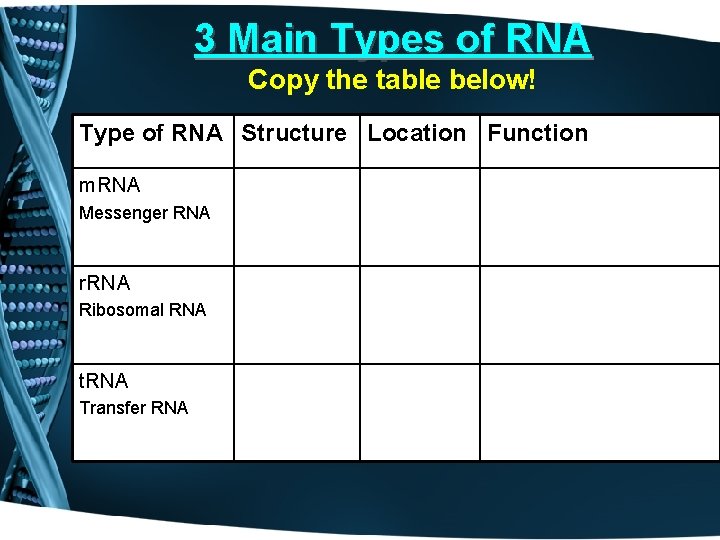
3 Main Types of RNA Copy the table below! Type of RNA Structure Location Function m. RNA Messenger RNA r. RNA Ribosomal RNA t. RNA Transfer RNA
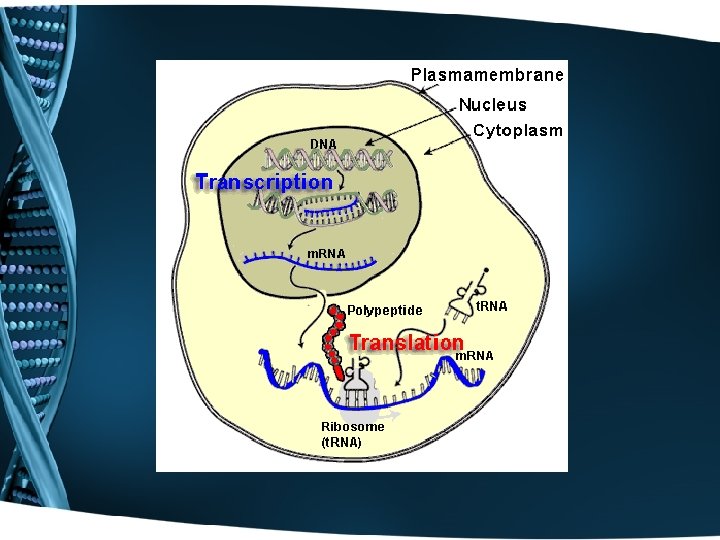
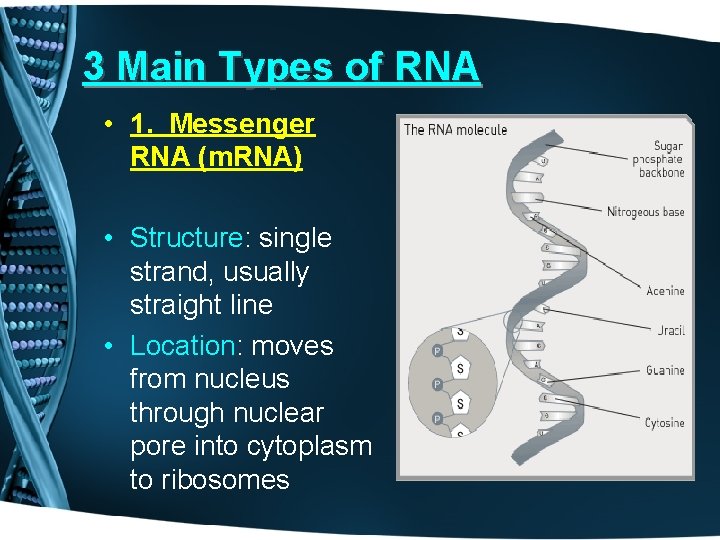
3 Main Types of RNA • 1. Messenger RNA (m. RNA) • Structure: single strand, usually straight line • Location: moves from nucleus through nuclear pore into cytoplasm to ribosomes
m. RNA continued Function: • Carries “message” contained on DNA to the ribosomes in the cytosol – Single strand can fit through nuclear pores, unlike double stranded DNA • Message is then used to create proteins that will express the trait
2. Ribosomal RNA (r. RNA) • Structure – Part of the structure of ribosomes – 2 part snowman turned upside down • Location – In ribosomes: In cytosol and rough endoplasmic reticulim – Created in nucleolus • Function – Codes for creation of ribosomes
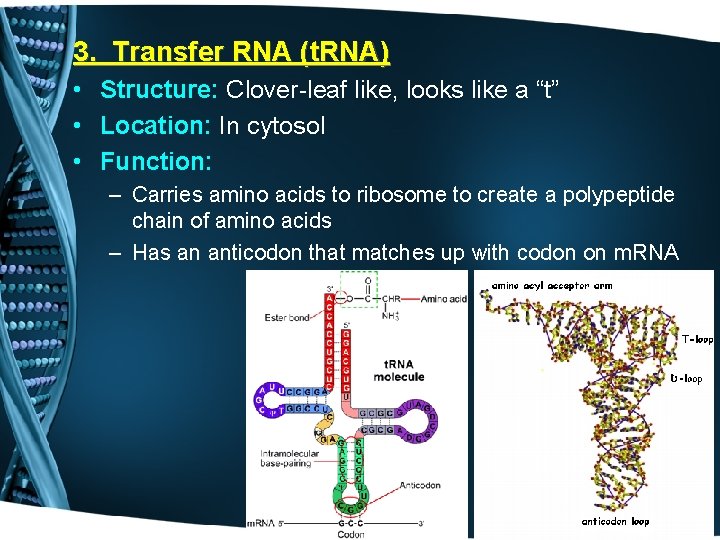
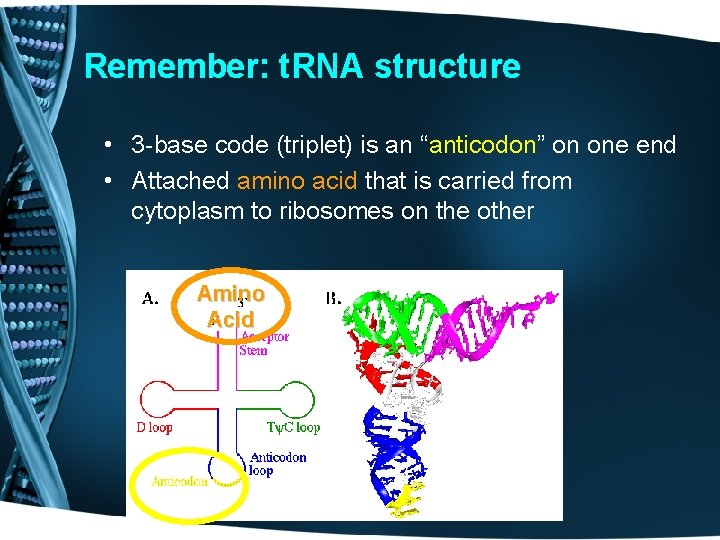
3. Transfer RNA (t. RNA) • Structure: Clover-leaf like, looks like a “t” • Location: In cytosol • Function: – Carries amino acids to ribosome to create a polypeptide chain of amino acids – Has an anticodon that matches up with codon on m. RNA
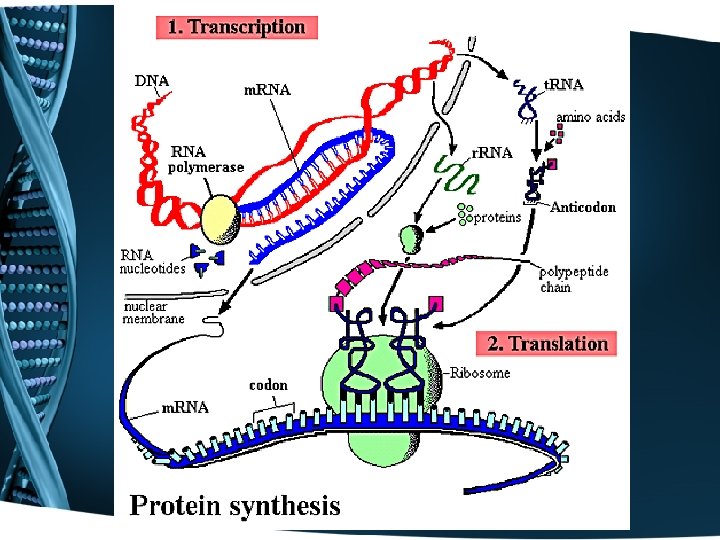
How do we take the genetic code and actually make something from it? • Well, first we have to get the code “heard” • Then we have to convert it to a language that is understood • Processes of: – Transcription – Translation
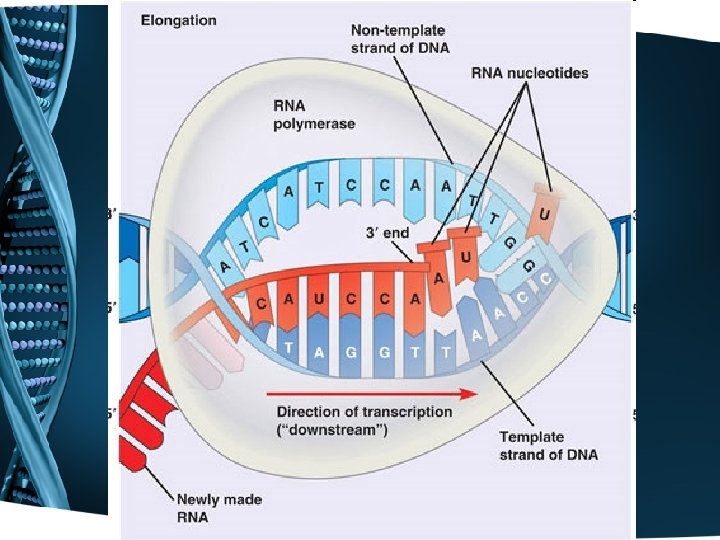
Transcription • Transcription = enzymes make RNA by copying a portion of DNA in the nucleus – Remember, DNA is too big to leave the nucleus! • If a DNA sequence is AATCCGGA, what is the complimentary RNA sequence? (Remember RNA doesn’t have Thymine, it has Uracil instead) • AATCCGGA (DNA) • UUAGGCCU (RNA) • The m. RNA that gets sequenced is sent out of the nucleus to help make protein
Note Quiz 3/8/12 Take a small sheet of paper, put your name, the date, and class per. 1. What are 2 differences between the structure of RNA and DNA? 2. Which comes first: translation or transcription? 3. Which type or RNA transports the message from the DNA inside the nucleus to the ribosomes in the cytoplasm. You have 3 minutes. Turn it in when you are done.
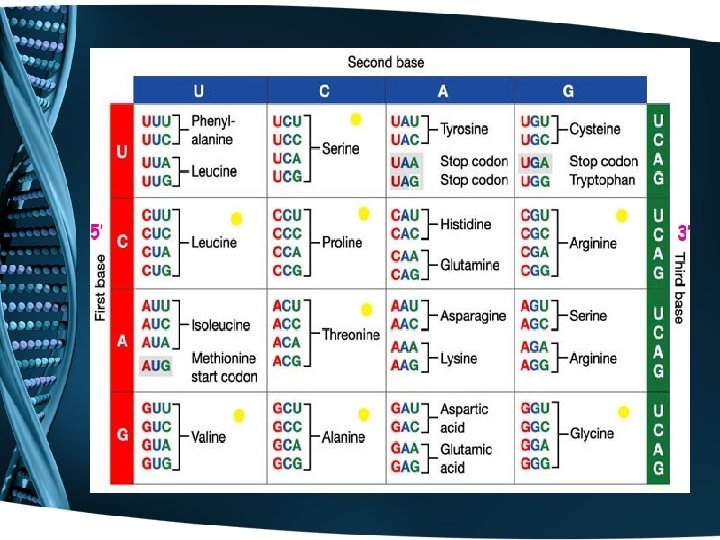
Genetic Code • A certain sequence of Nitrogenous Bases codes for a specific Amino Acid needed to make a Protein • Codon = the nitrogenous bases of 3 adjacent nucleotides in m. RNA that code for – Start Signal (starts the protein making process) – Stop Signal (stops the protein making process) – Amino Acid • An amino acid can be coded for by more than one codon • 20 amino acids combine in different combinations to make various proteins
Transcription and Translation How DNA codes for proteins
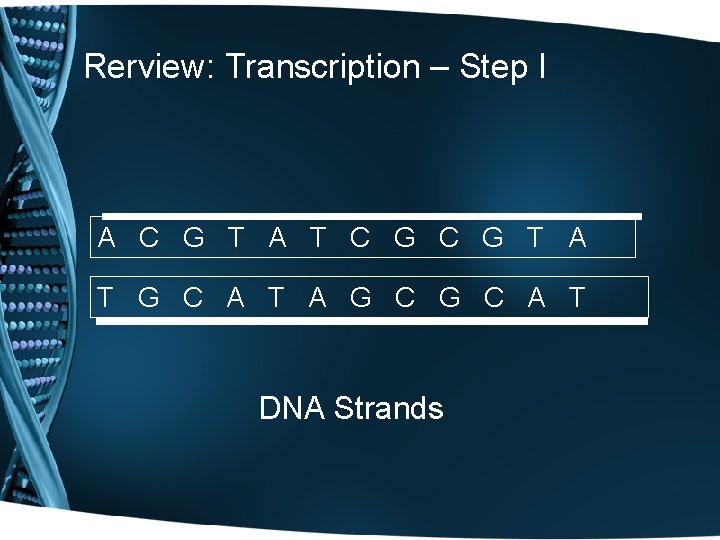
Rerview: Transcription – Step I A C G T A T G C A T A G C A T DNA Strands
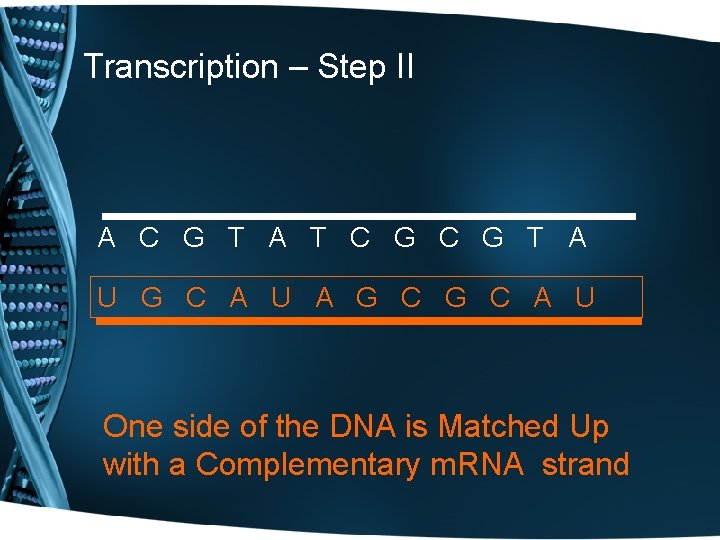
Transcription – Step II A C G T A T C G T A U G C A U A G C A U One side of the DNA is Matched Up with a Complementary m. RNA strand
Transcription Reminders • The template strand is the DNA strand being copied • The m. RNA strand is the same as the DNA strand except Us have replaced Ts
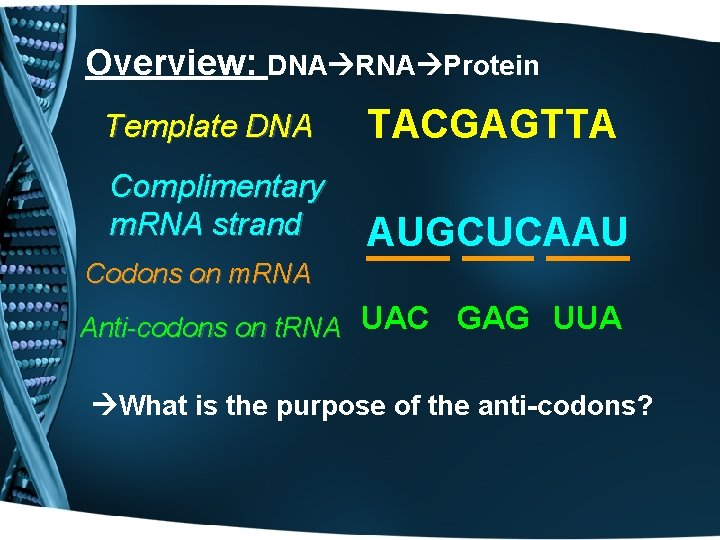
Overview: DNA RNA Protein Template DNA TACGAGTTA Complimentary m. RNA strand AUGCUCAAU Codons on m. RNA Anti-codons on t. RNA UAC GAG UUA What is the purpose of the anti-codons?
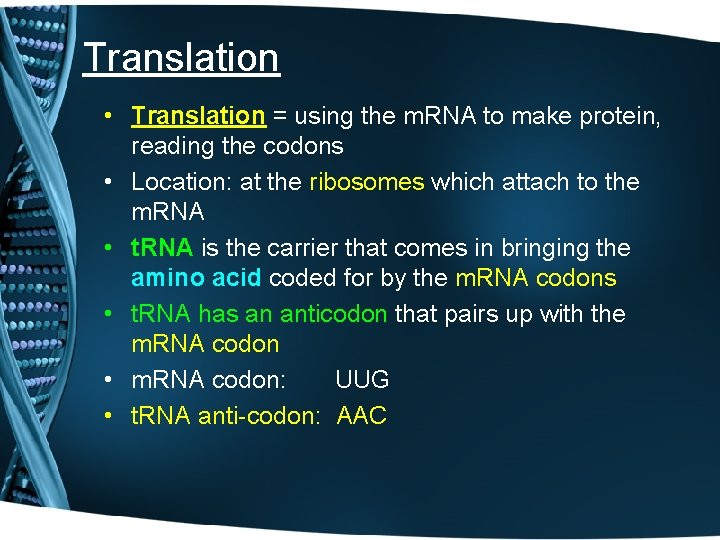
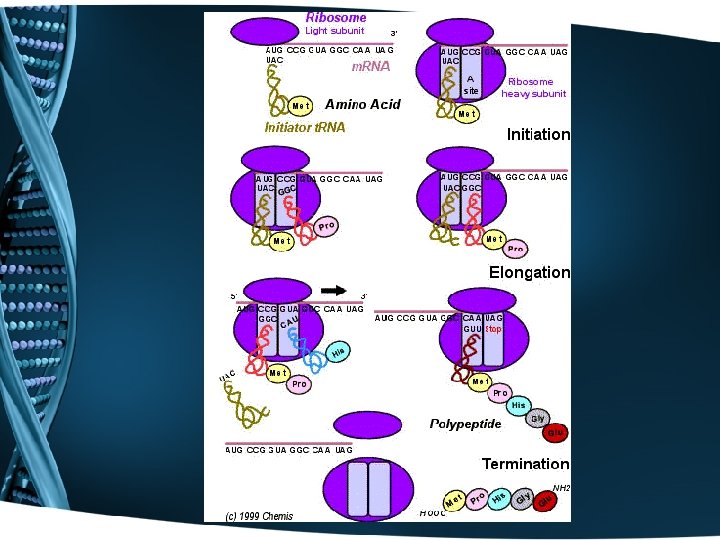
Translation • Translation = using the m. RNA to make protein, reading the codons • Location: at the ribosomes which attach to the m. RNA • t. RNA is the carrier that comes in bringing the amino acid coded for by the m. RNA codons • t. RNA has an anticodon that pairs up with the m. RNA codon • m. RNA codon: UUG • t. RNA anti-codon: AAC
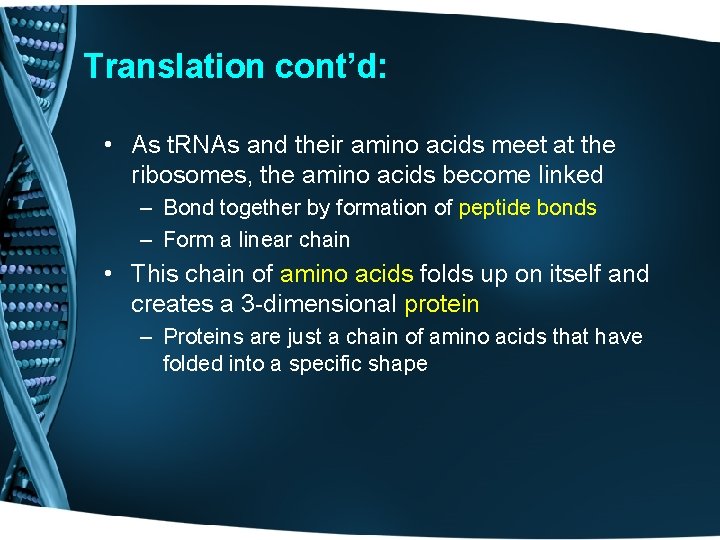
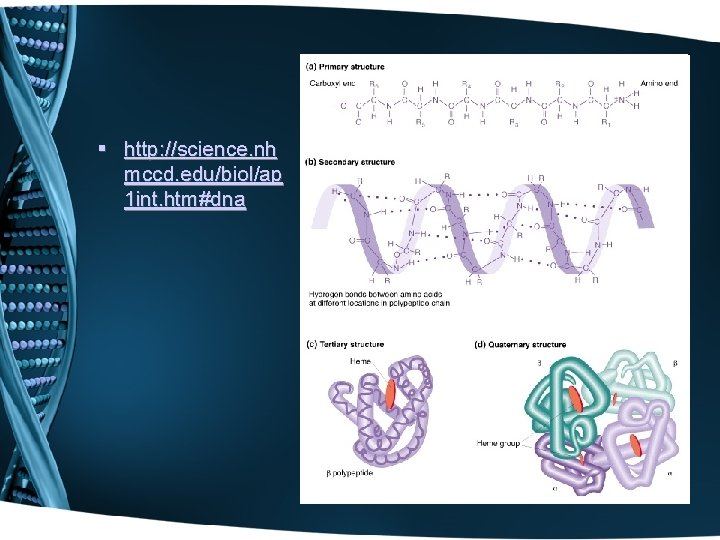
Translation cont’d: • As t. RNAs and their amino acids meet at the ribosomes, the amino acids become linked – Bond together by formation of peptide bonds – Form a linear chain • This chain of amino acids folds up on itself and creates a 3 -dimensional protein – Proteins are just a chain of amino acids that have folded into a specific shape
§ http: //science. nh mccd. edu/biol/ap 1 int. htm#dna
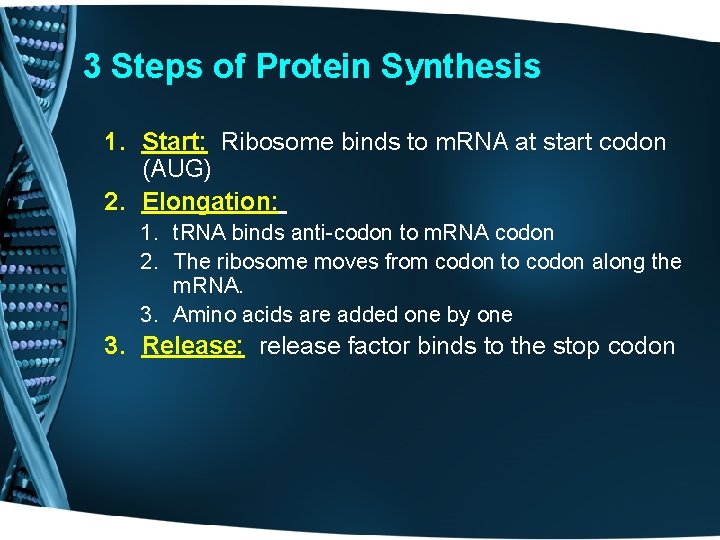
3 Steps of Protein Synthesis 1. Start: Ribosome binds to m. RNA at start codon (AUG) 2. Elongation: 1. t. RNA binds anti-codon to m. RNA codon 2. The ribosome moves from codon to codon along the m. RNA. 3. Amino acids are added one by one 3. Release: release factor binds to the stop codon
Remember: t. RNA structure • 3 -base code (triplet) is an “anticodon” on one end • Attached amino acid that is carried from cytoplasm to ribosomes on the other Amino Acid