
Transcription Synthesizing RNA from DNA 6 2 Transcription
- Slides: 21
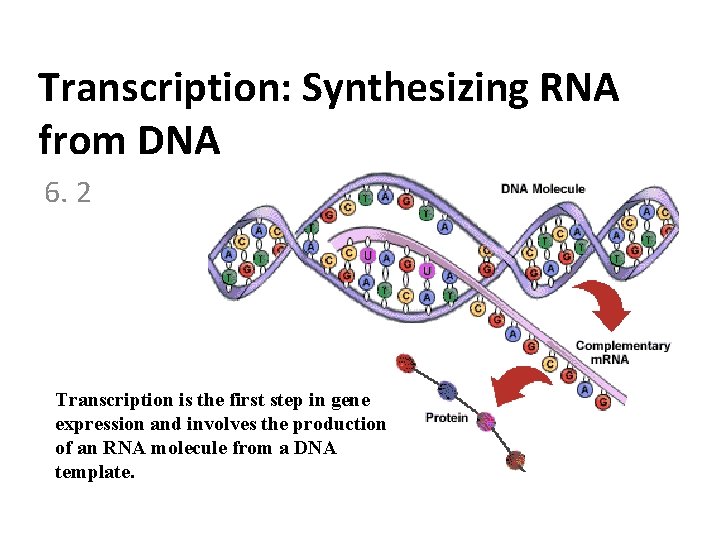
Transcription: Synthesizing RNA from DNA 6. 2 Transcription is the first step in gene expression and involves the production of an RNA molecule from a DNA template.
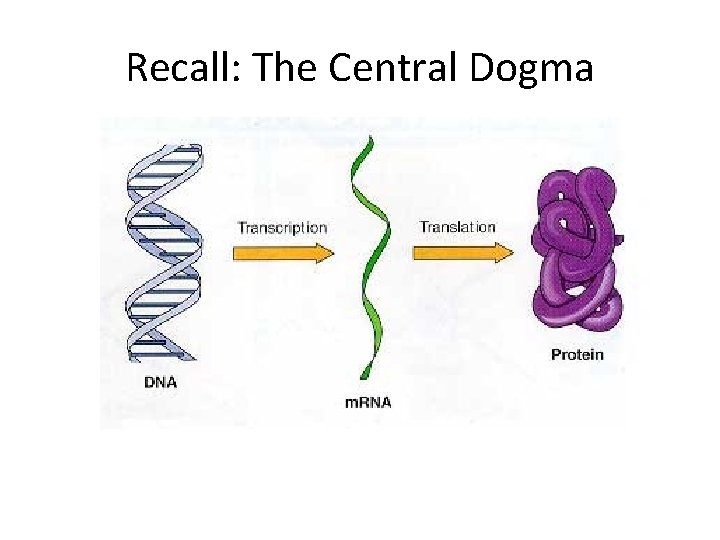
Recall: The Central Dogma
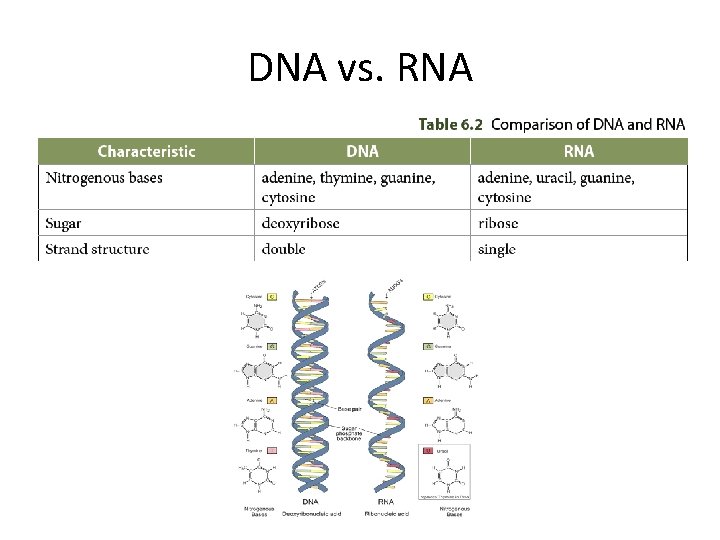
DNA vs. RNA
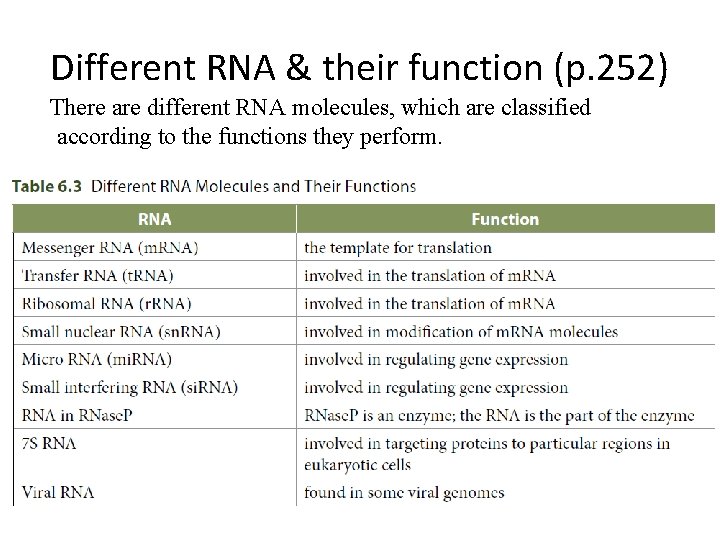
Different RNA & their function (p. 252) There are different RNA molecules, which are classified according to the functions they perform.
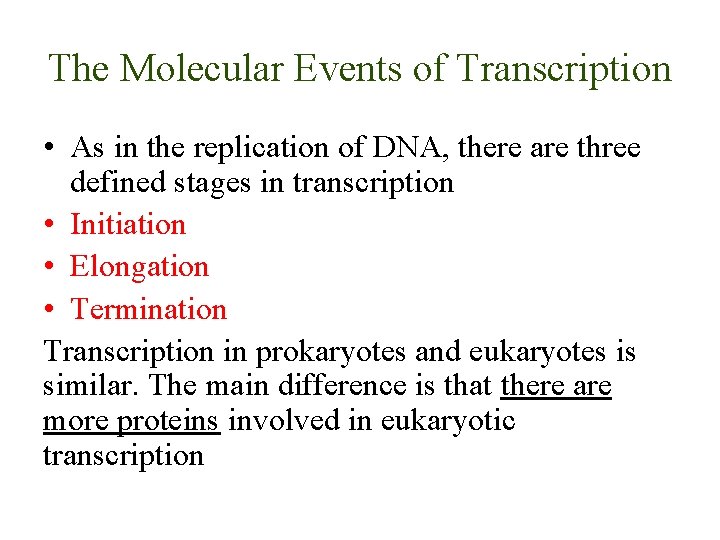
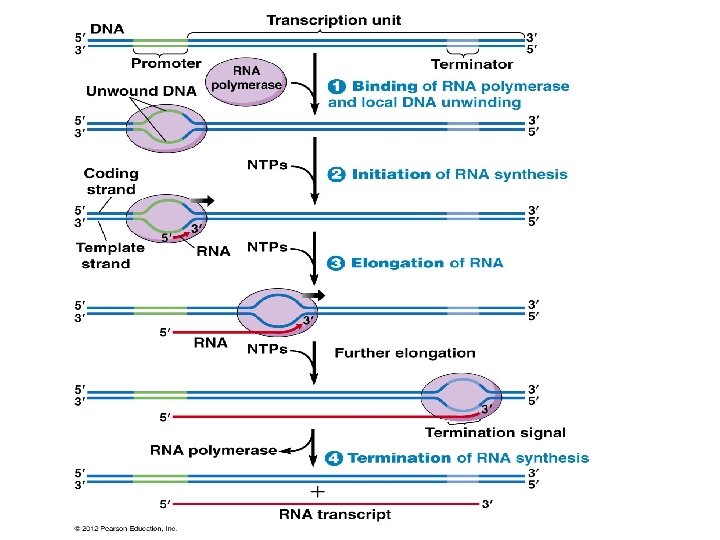
The Molecular Events of Transcription • As in the replication of DNA, there are three defined stages in transcription • Initiation • Elongation • Termination Transcription in prokaryotes and eukaryotes is similar. The main difference is that there are more proteins involved in eukaryotic transcription
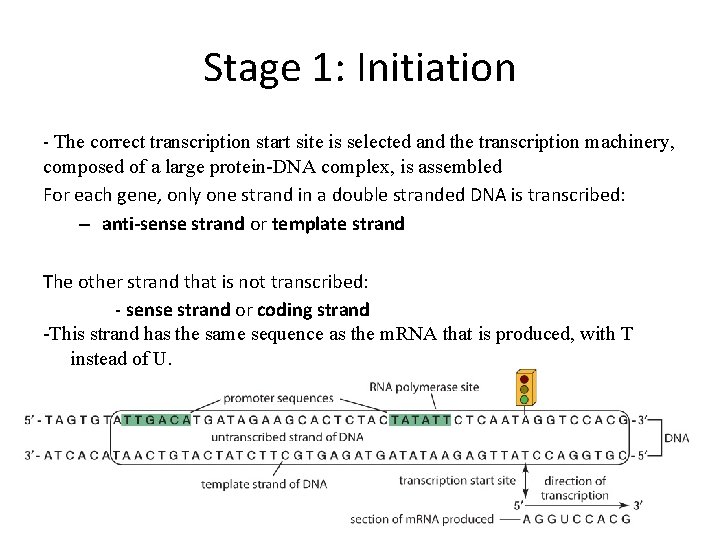
Stage 1: Initiation - The correct transcription start site is selected and the transcription machinery, composed of a large protein-DNA complex, is assembled For each gene, only one strand in a double stranded DNA is transcribed: – anti-sense strand or template strand The other strand that is not transcribed: - sense strand or coding strand -This strand has the same sequence as the m. RNA that is produced, with T instead of U.
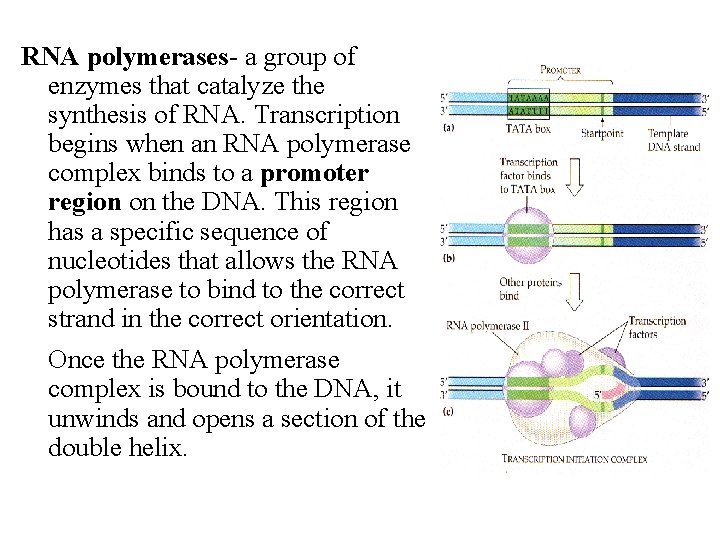
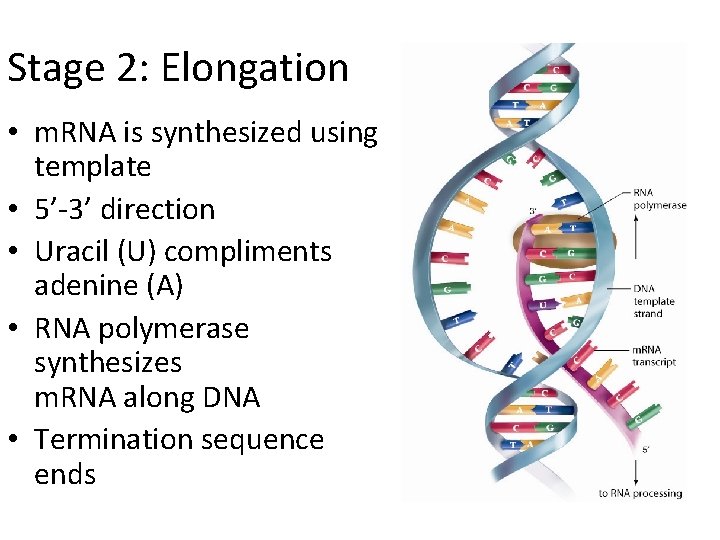
RNA polymerases- a group of enzymes that catalyze the synthesis of RNA. Transcription begins when an RNA polymerase complex binds to a promoter region on the DNA. This region has a specific sequence of nucleotides that allows the RNA polymerase to bind to the correct strand in the correct orientation. Once the RNA polymerase complex is bound to the DNA, it unwinds and opens a section of the double helix.
Stage 2: Elongation • m. RNA is synthesized using template • 5’-3’ direction • Uracil (U) compliments adenine (A) • RNA polymerase synthesizes m. RNA along DNA • Termination sequence ends
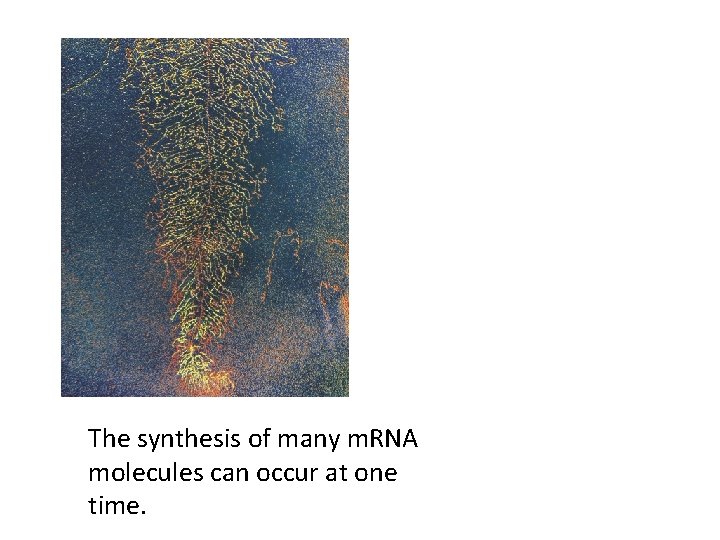
The synthesis of many m. RNA molecules can occur at one time.
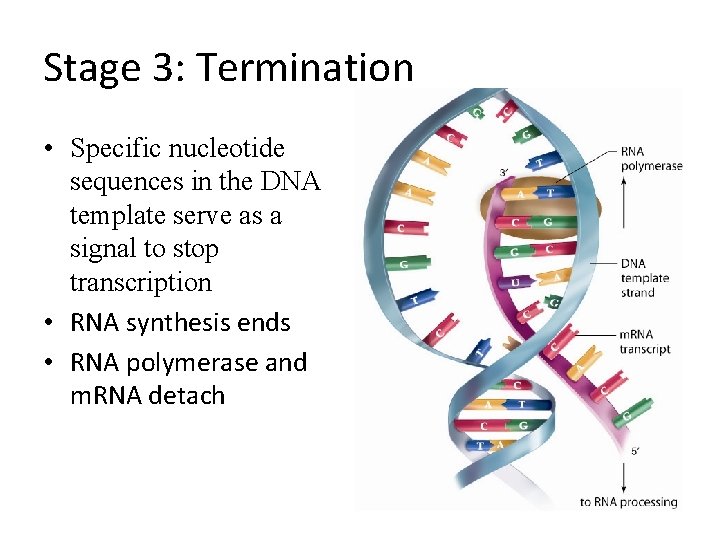
Stage 3: Termination • Specific nucleotide sequences in the DNA template serve as a signal to stop transcription • RNA synthesis ends • RNA polymerase and m. RNA detach
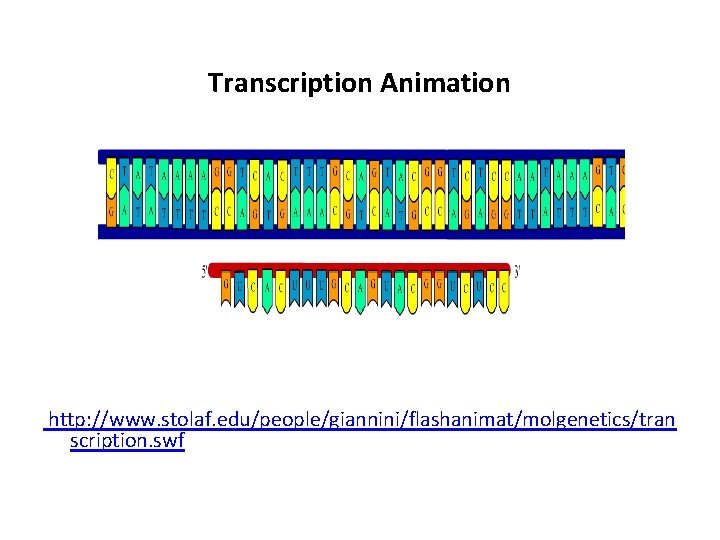
Transcription Animation http: //www. stolaf. edu/people/giannini/flashanimat/molgenetics/tran scription. swf
In prokaryotes, transcription and translation can occur simultaneously. In eukaryotes, m. RNA must undergo modifications before it crosses the nuclear membrane to the cytoplasm. Once the modified m. RNA enters the cytoplasm, it can undergo translation. There are three modifications that convert precursor m. RNA (prem. RNA) to mature m. RNA.
m. RNA Modifications in Eukaryotes • Prokaryotes: m. RNA is immediately ready for protein synthesis • Eukaryotes: m. RNA requires some modifications – Convert precursor m. RNA (pre-m. RNA) to mature m. RNA – There are 3 modifications…
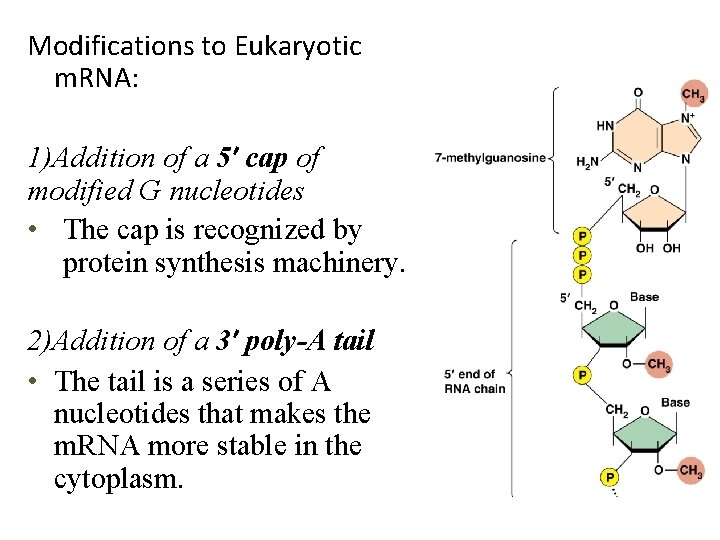
Modifications to Eukaryotic m. RNA: 1)Addition of a 5′ cap of modified G nucleotides • The cap is recognized by protein synthesis machinery. 2)Addition of a 3′ poly-A tail • The tail is a series of A nucleotides that makes the m. RNA more stable in the cytoplasm.
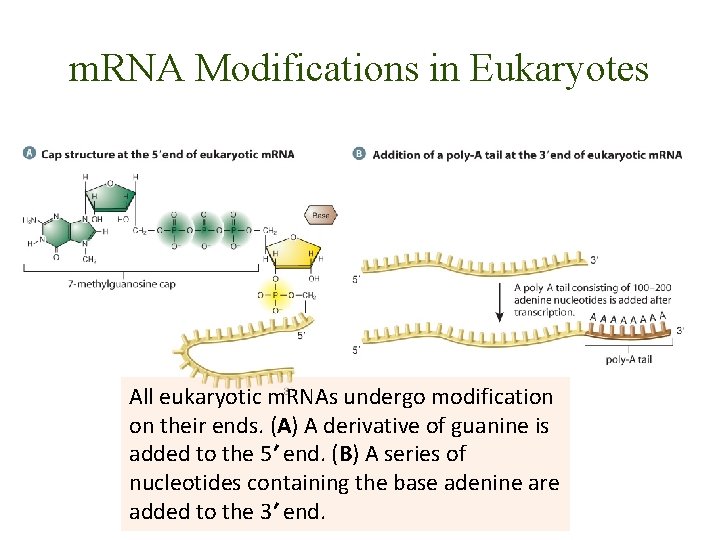
m. RNA Modifications in Eukaryotes All eukaryotic m. RNAs undergo modification on their ends. (A) A derivative of guanine is added to the 5′ end. (B) A series of nucleotides containing the base adenine are added to the 3′ end.
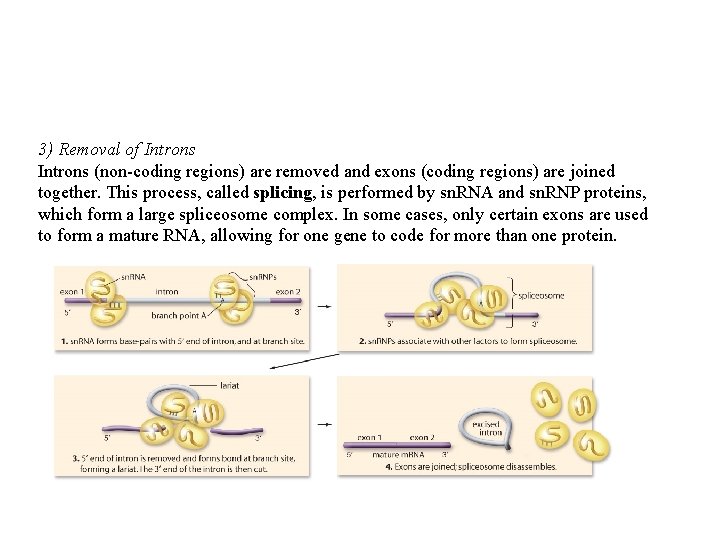
3) Removal of Introns (non-coding regions) are removed and exons (coding regions) are joined together. This process, called splicing, is performed by sn. RNA and sn. RNP proteins, which form a large spliceosome complex. In some cases, only certain exons are used to form a mature RNA, allowing for one gene to code for more than one protein.
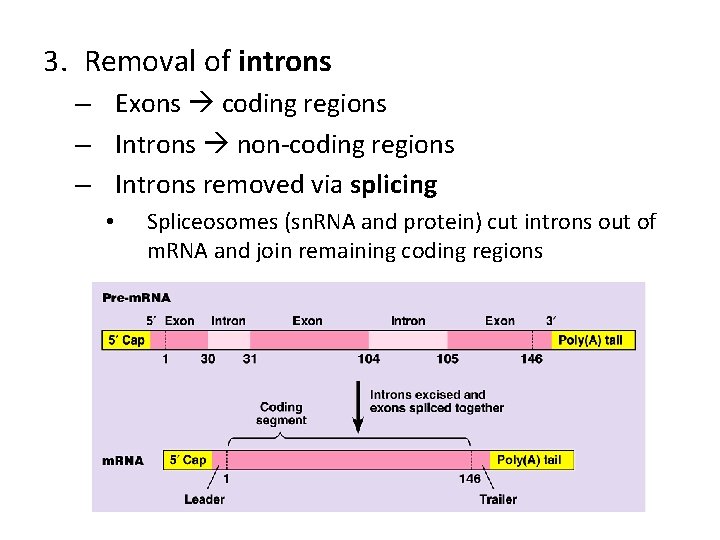
3. Removal of introns – Exons coding regions – Introns non-coding regions – Introns removed via splicing • Spliceosomes (sn. RNA and protein) cut introns out of m. RNA and join remaining coding regions
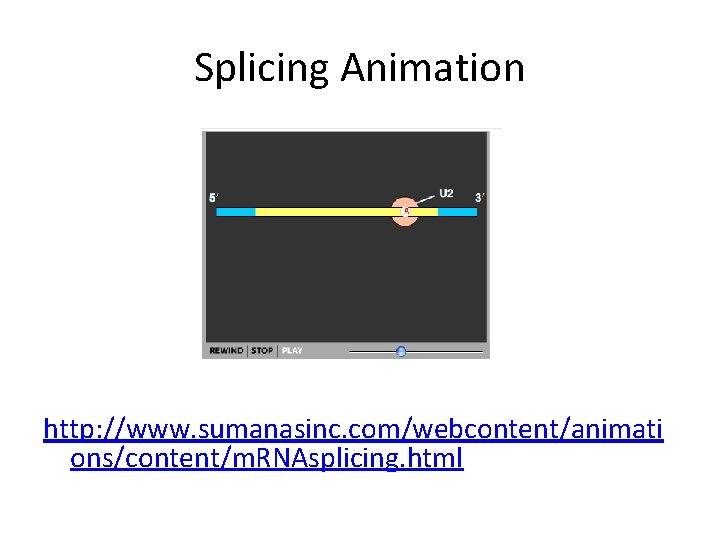
Splicing Animation http: //www. sumanasinc. com/webcontent/animati ons/content/m. RNAsplicing. html
• m. RNA is now ready to be translated by a ribosome into a protein • It is now called m. RNA transcript • No quality control to check for errors – More errors in transcription than replication • b/c a single gene is transcribe repeatedly errors are not as detrimental • Proteins w/ error can be degraded
Learning Expectations. . . • DNA vs. RNA • 3 steps in transcription – Initiation – Elongation – termination • Modifications to m. Rna – 5’ cap – poly-A tail – splicing