
Transcription and Translation Essential Question How is information
- Slides: 14
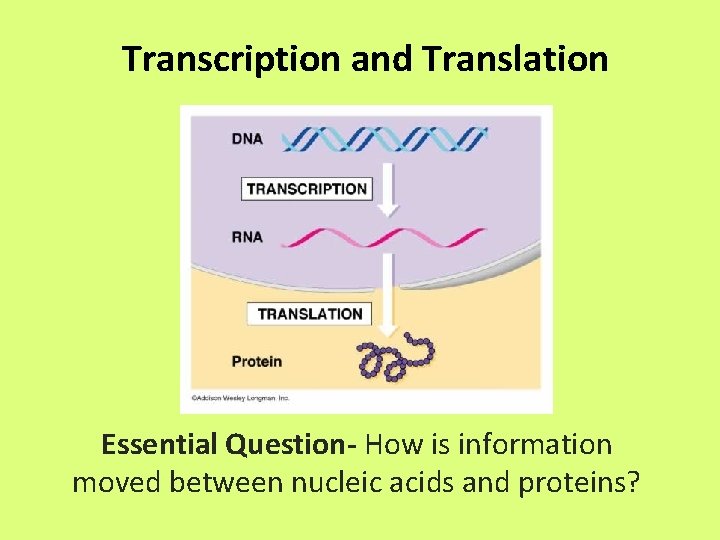
Transcription and Translation Essential Question- How is information moved between nucleic acids and proteins?
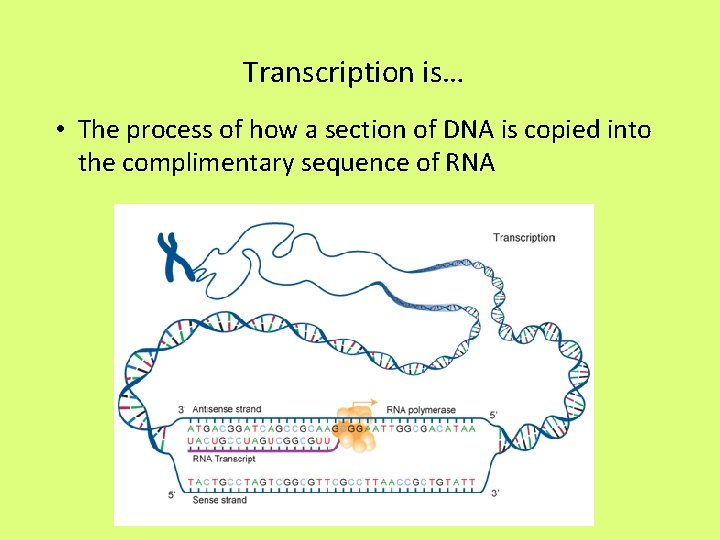
Transcription is… • The process of how a section of DNA is copied into the complimentary sequence of RNA
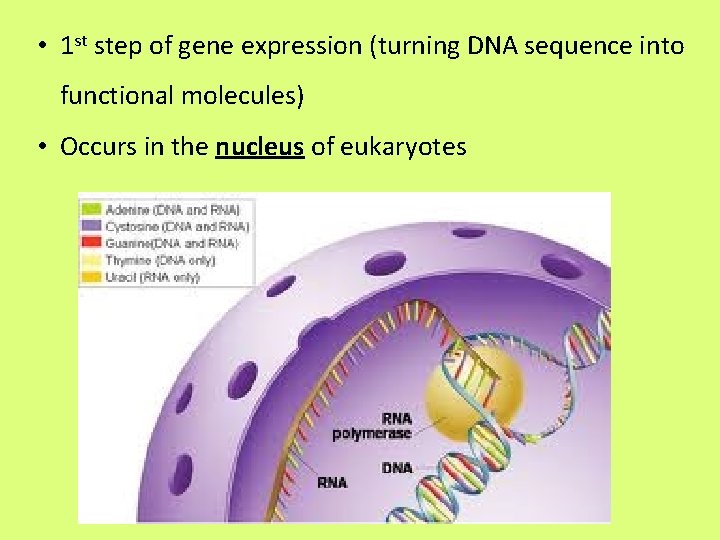
• 1 st step of gene expression (turning DNA sequence into functional molecules) • Occurs in the nucleus of eukaryotes
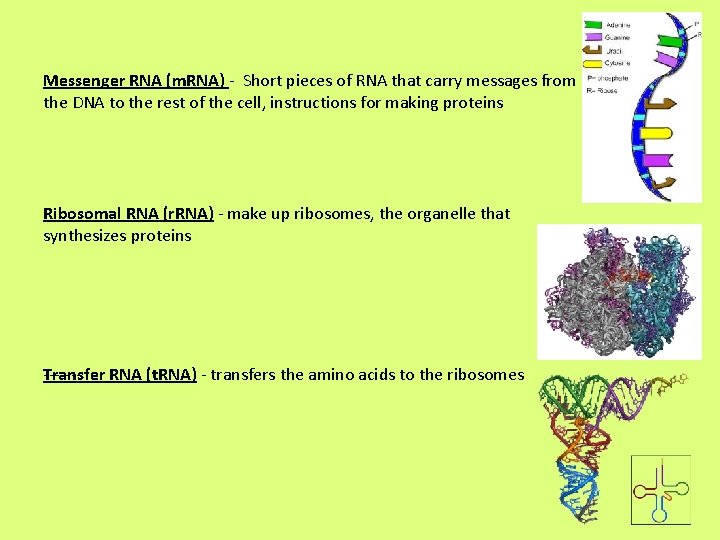
Messenger RNA (m. RNA) Short pieces of RNA that carry messages from the DNA to the rest of the cell, instructions for making proteins Ribosomal RNA (r. RNA) make up ribosomes, the organelle that synthesizes proteins Transfer RNA (t. RNA) transfers the amino acids to the ribosomes
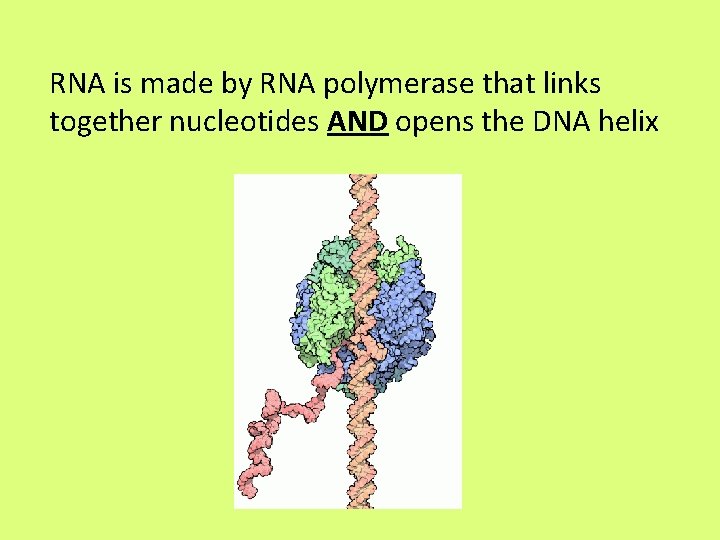
RNA is made by RNA polymerase that links together nucleotides AND opens the DNA helix
Steps of Transcription • Initiation- RNA polymerase binds to and opens the DNA • Elongation RNA strand is made • Termination RNA polymerase comes off the DNA and the DNA helix closes These are the same steps as DNA replication
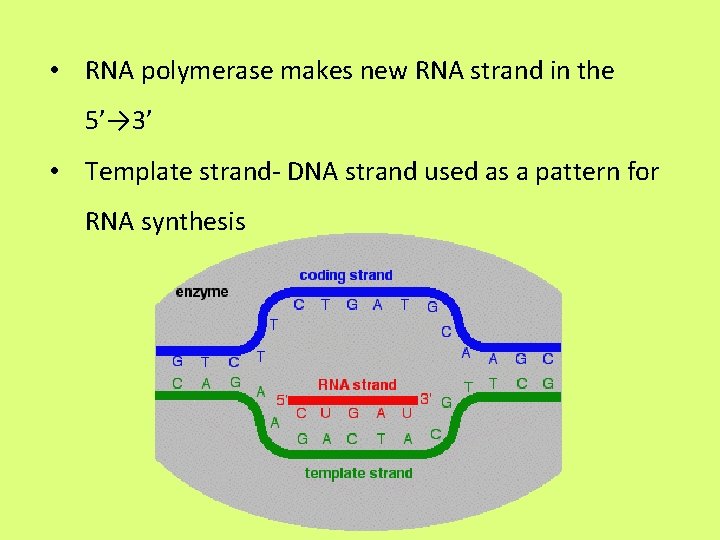
• RNA polymerase makes new RNA strand in the 5’→ 3’ • Template strand DNA strand used as a pattern for RNA synthesis
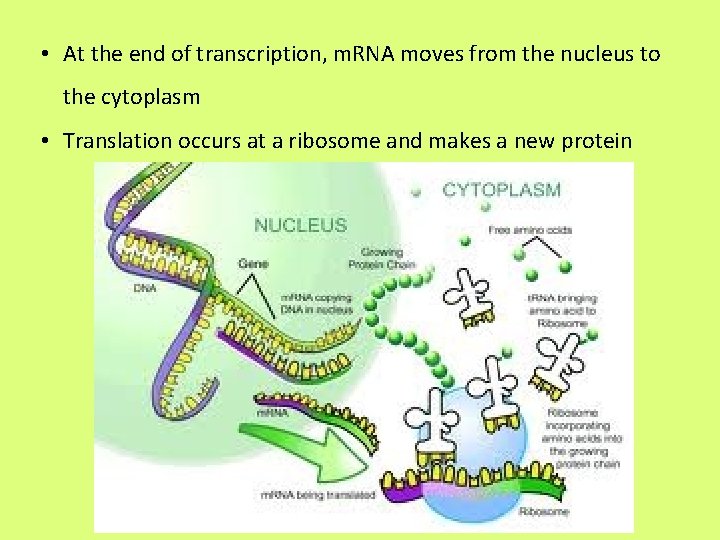
• At the end of transcription, m. RNA moves from the nucleus to the cytoplasm • Translation occurs at a ribosome and makes a new protein
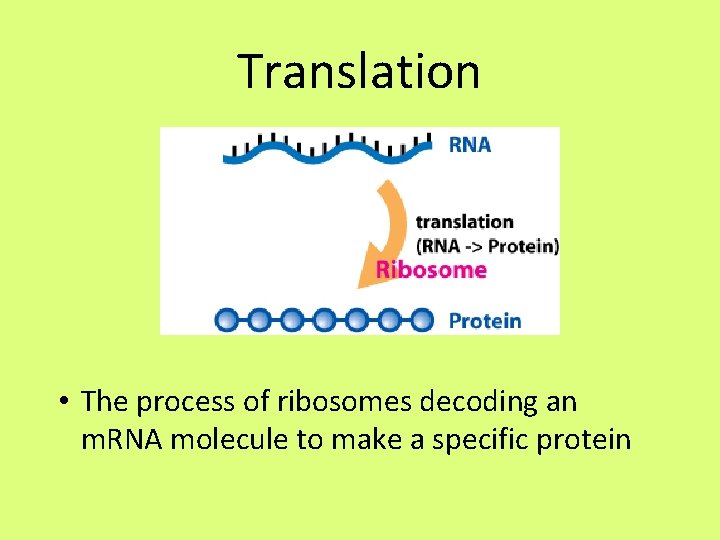
Translation • The process of ribosomes decoding an m. RNA molecule to make a specific protein
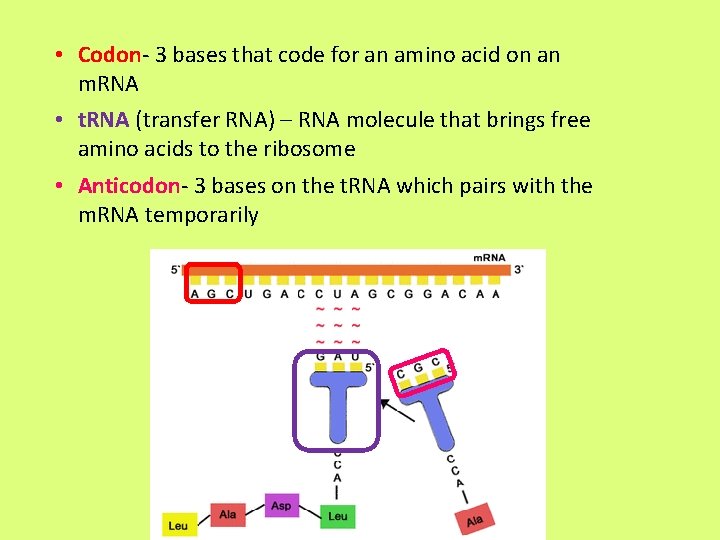
• Codon 3 bases that code for an amino acid on an m. RNA • t. RNA (transfer RNA) – RNA molecule that brings free amino acids to the ribosome • Anticodon 3 bases on the t. RNA which pairs with the m. RNA temporarily
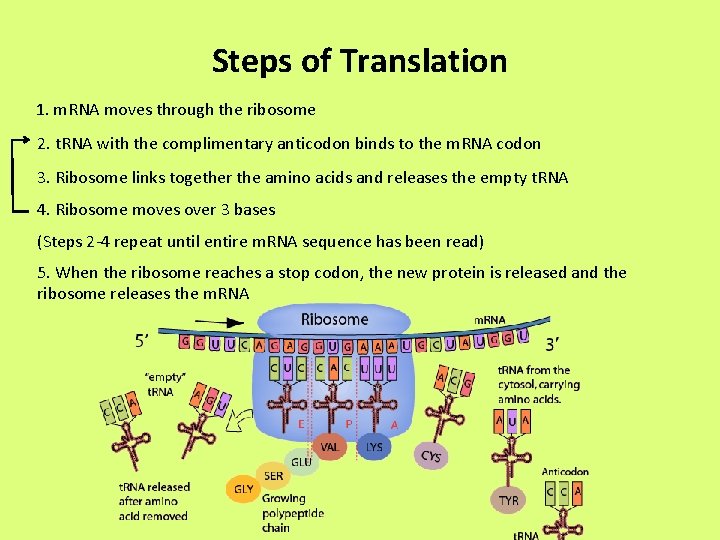
Steps of Translation 1. m. RNA moves through the ribosome 2. t. RNA with the complimentary anticodon binds to the m. RNA codon 3. Ribosome links together the amino acids and releases the empty t. RNA 4. Ribosome moves over 3 bases (Steps 2 4 repeat until entire m. RNA sequence has been read) 5. When the ribosome reaches a stop codon, the new protein is released and the ribosome releases the m. RNA
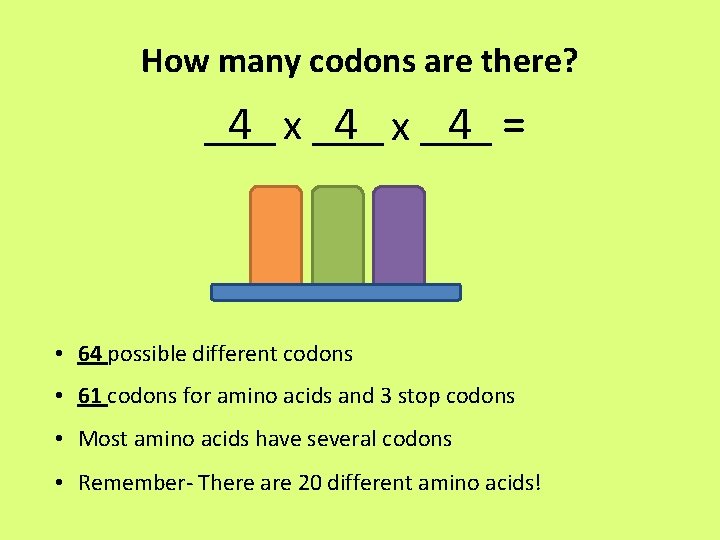
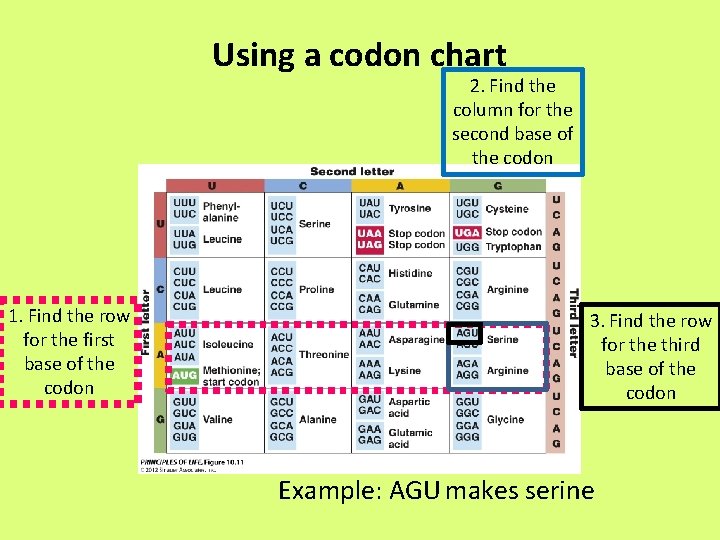
How many codons are there? 4 x 4 = • 64 possible different codons • 61 codons for amino acids and 3 stop codons • Most amino acids have several codons • Remember There are 20 different amino acids!
Using a codon chart 2. Find the column for the second base of the codon 1. Find the row for the first base of the codon 3. Find the row for the third base of the codon Example: AGU makes serine
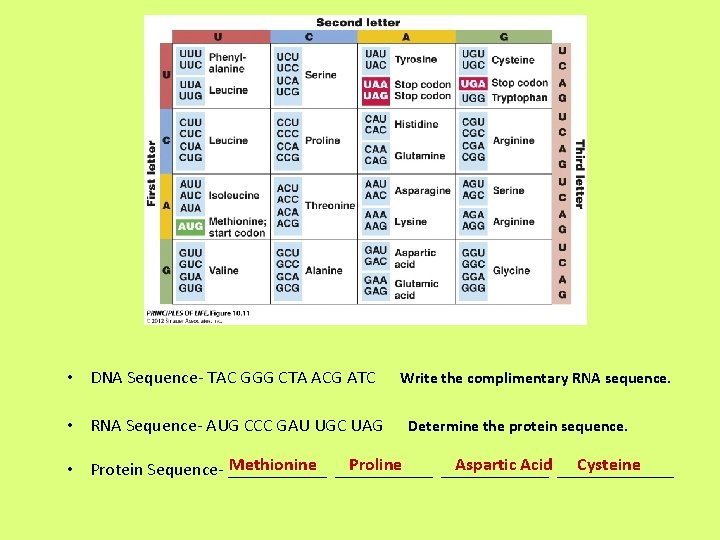
• DNA Sequence TAC GGG CTA ACG ATC • RNA Sequence AUG CCC GAU UGC UAG Write the complimentary RNA sequence. Determine the protein sequence. Methionine ______ Proline Aspartic Acid _______ Cysteine • Protein Sequence ____________