
TRANSCRIPTION AND TRANSLATION DNA Proteins Cells Bodies are
TRANSCRIPTION AND TRANSLATION
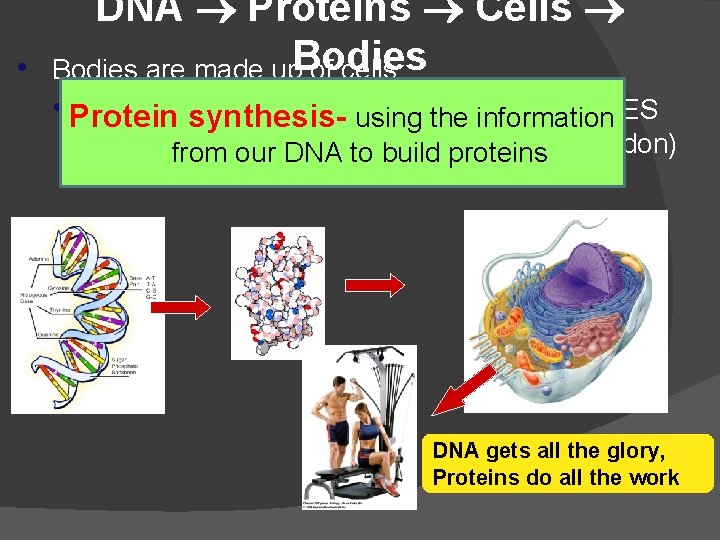
DNA Proteins Cells • Bodies are made up. Bodies of cells • Protein All cells synthesisrun on a set of instructions or CODES using the information spelledfrom out in DNA (read every 3 bases- codon) our DNA to build proteins DNA gets all the glory, Proteins do all the work
What do we know? � DNA �Is in the nucleus, want to keep it there so it is protected � Proteins �Made at ribosomes �Control rate of reactions and regulate cell processes �Important cell structures �Code for specific physical and behavioral traits Need to get DNA information outside of the nucleus using a messenger.
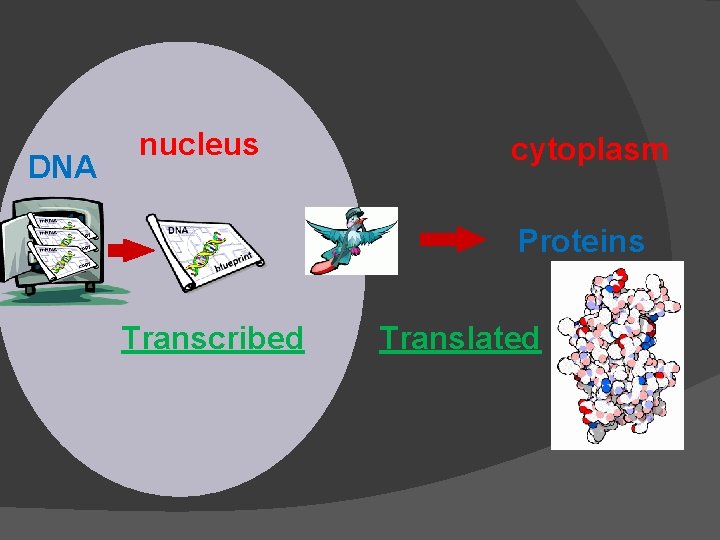
DNA nucleus cytoplasm Proteins Transcribed Translated
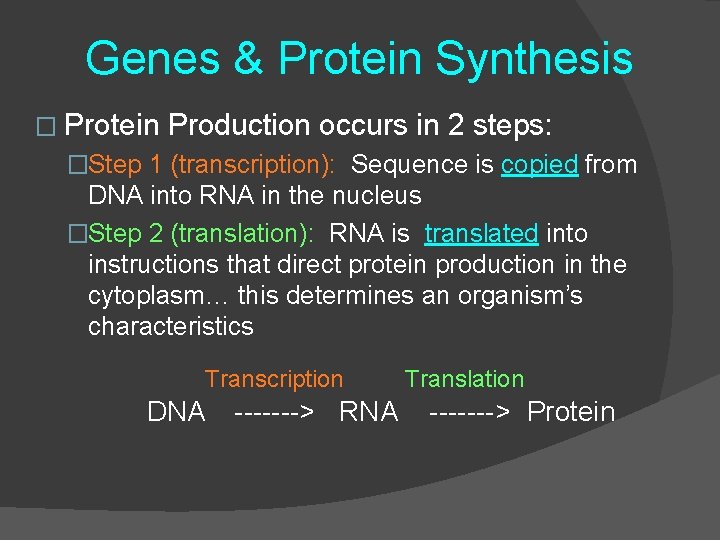
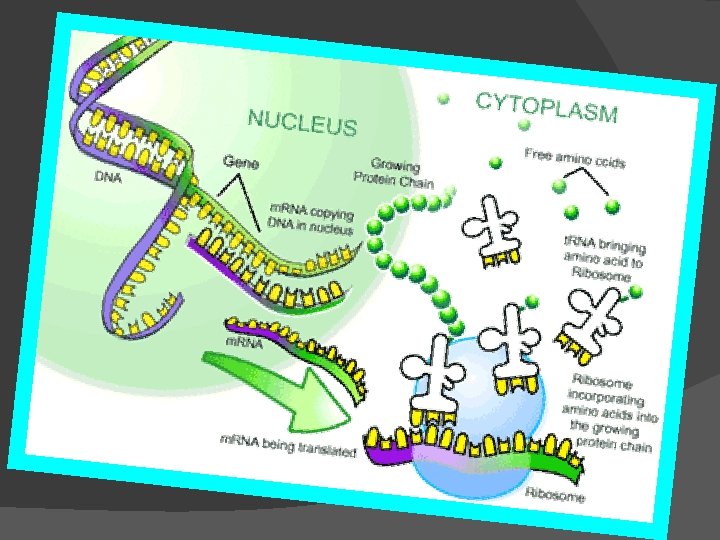
Genes & Protein Synthesis � Protein Production occurs in 2 steps: �Step 1 (transcription): Sequence is copied from DNA into RNA in the nucleus �Step 2 (translation): RNA is translated into instructions that direct protein production in the cytoplasm… this determines an organism’s characteristics Transcription DNA -------> RNA Translation -------> Protein
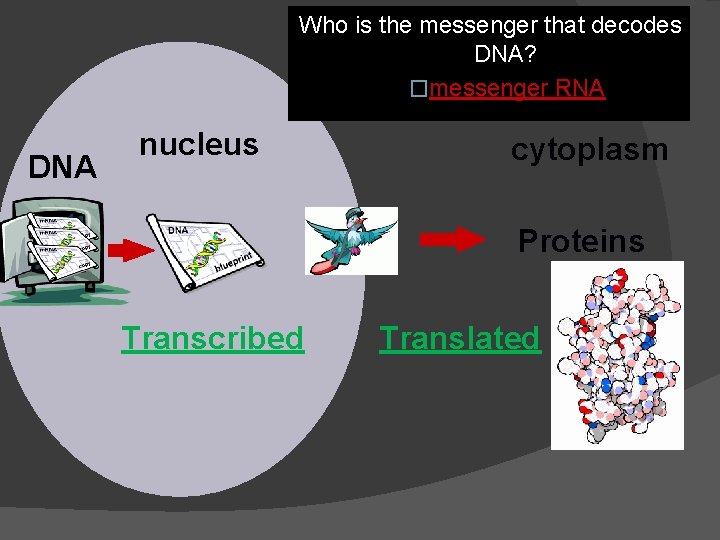
Who is the messenger that decodes DNA? �messenger RNA DNA nucleus cytoplasm Proteins Transcribed Translated
Types of RNA involved in Protein Synthesis � Role of RNA- controls assembly of amino acids into proteins 1. Messenger (m. RNA)- carries the “blueprint” for protein assembly from the nucleus to the ribosome 2. Transfer (t. RNA)- brings the correct amino acid to the ribosome and pairs up with an m. RNA code for that amino acid building protein 3. Ribosomal (r. RNA)- hold ribosomal proteins in place
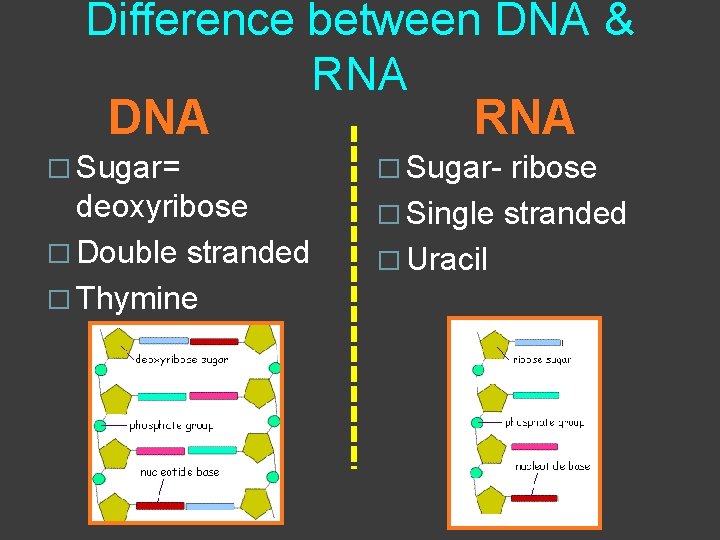
Difference between DNA & RNA DNA RNA � Sugar= deoxyribose � Double stranded � Thymine � Sugar- ribose � Single stranded � Uracil
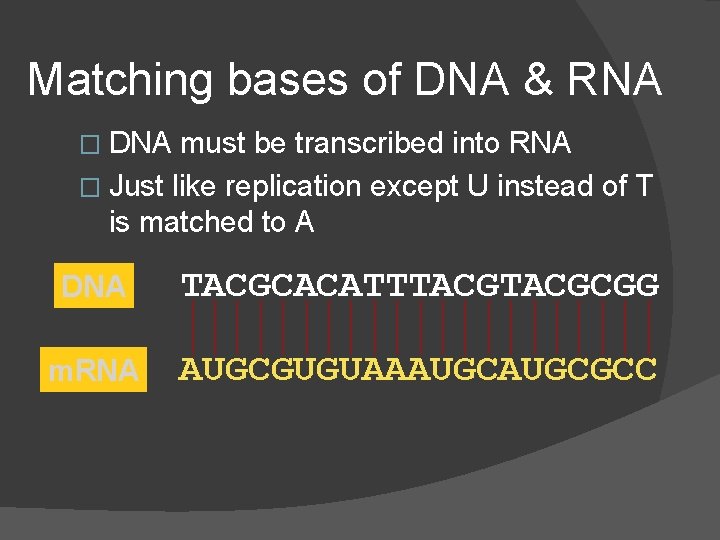
Matching bases of DNA & RNA � DNA must be transcribed into RNA � Just like replication except U instead of T is matched to A DNA TACGCACATTTACGCGG m. RNA AUGCGUGUAAAUGCGCC
Transcription of DNA into RNA � Transcription differs from replication in 3 ways: 1. Only one region of one DNA strand is used as a template 2. RNA polymerase is used instead of DNA polymerase 3. RNA is single stranded & DNA is double stranded
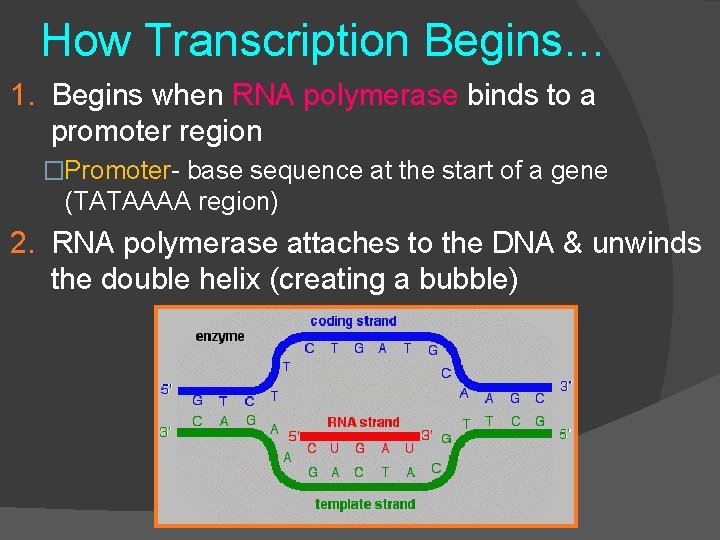
How Transcription Begins… 1. Begins when RNA polymerase binds to a promoter region �Promoter- base sequence at the start of a gene (TATAAAA region) 2. RNA polymerase attaches to the DNA & unwinds the double helix (creating a bubble)
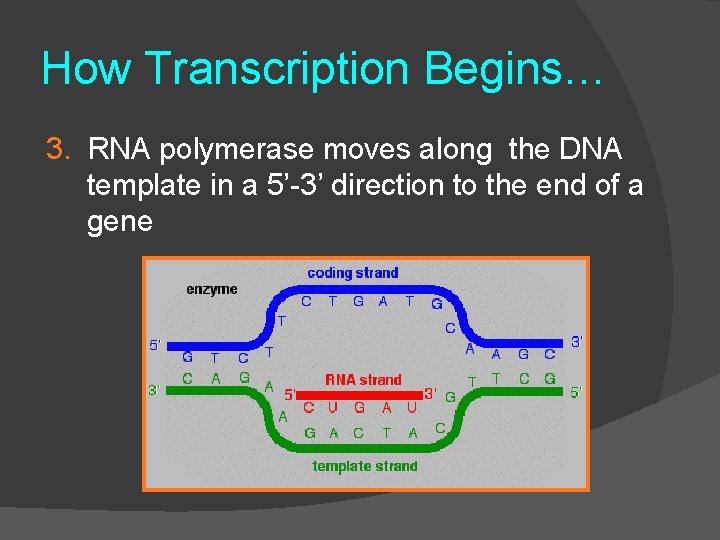
How Transcription Begins… 3. RNA polymerase moves along the DNA template in a 5’-3’ direction to the end of a gene
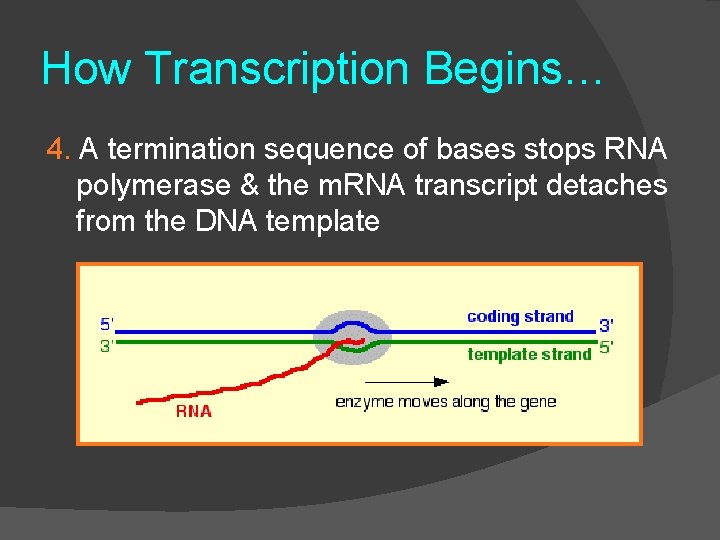
How Transcription Begins… 4. A termination sequence of bases stops RNA polymerase & the m. RNA transcript detaches from the DNA template
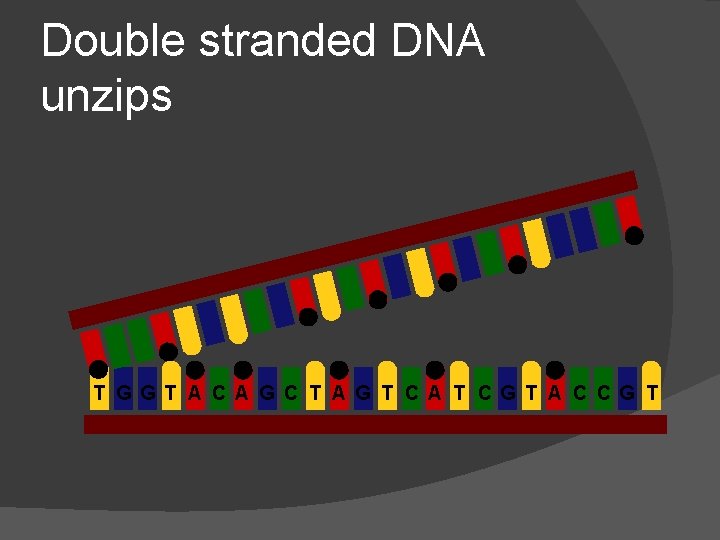
Double stranded DNA unzips T G G T A C A G C T A G T C A T CG T A C CG T
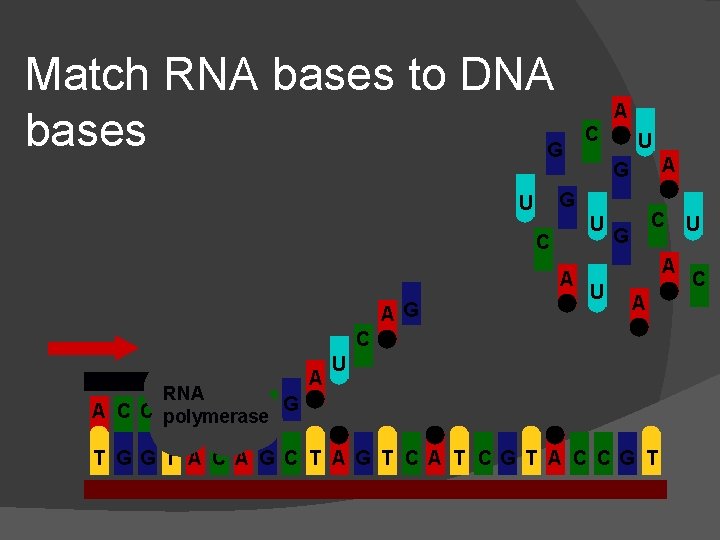
Match RNA bases to DNA bases G C U A G G U U C A AG A C G A U A C RNA A C C polymerase G A U T G G T A C A G C T A G T C A T CG T A C CG T U C
Finishing Touches on m. RNA Transcripts: � Newly formed m. RNA is unfinished & is modified before leaving the nucleus �Noncoding portions (Introns) are cut out �Coding regions (Exons) are put together to produce the final transcript forming the m. RNA strand m. RNA now leaves the nucleus & enters the cytoplasm
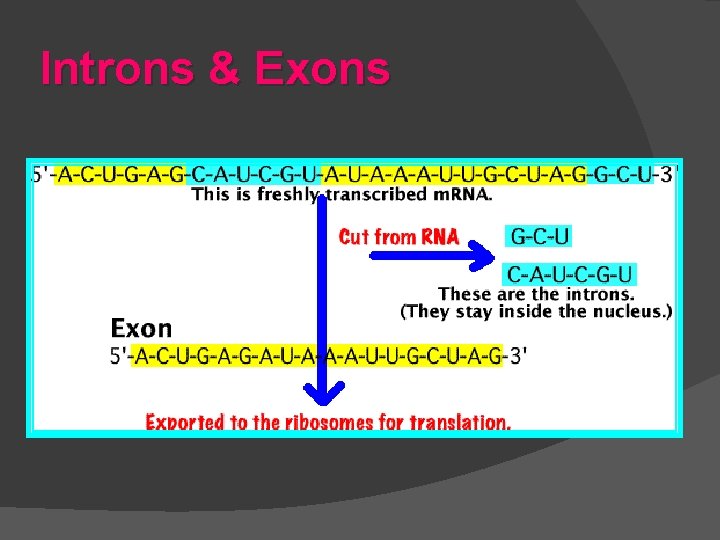
Introns & Exons
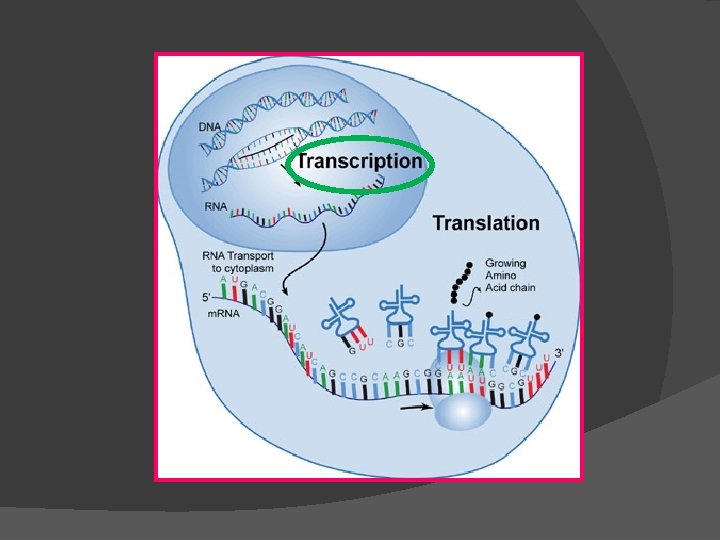
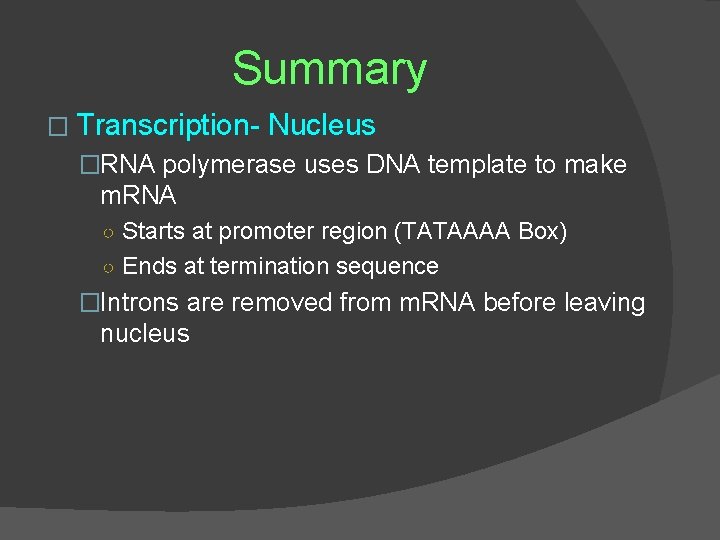
Summary � Transcription- Nucleus �RNA polymerase uses DNA template to make m. RNA ○ Starts at promoter region (TATAAAA Box) ○ Ends at termination sequence �Introns are removed from m. RNA before leaving nucleus
From m. RNA to Proteins � Every 3 bases (triplet) on m. RNA (codon) specifies an amino acid into a growing polypeptide chain (chain of protein) ○ 61 codons- code for amino acids ○ 3 codons- code to stop protein synthesis ○ 1 codon- codes to start protein synthesis (AUG- methionine)
How Translation Begins… 1. m. RNA enters the cytoplasm and attaches to a ribosome (AUG initiates the process) 2. m. RNA is read by its codons as it passes through the ribosome (feeds between a small & large subunit)
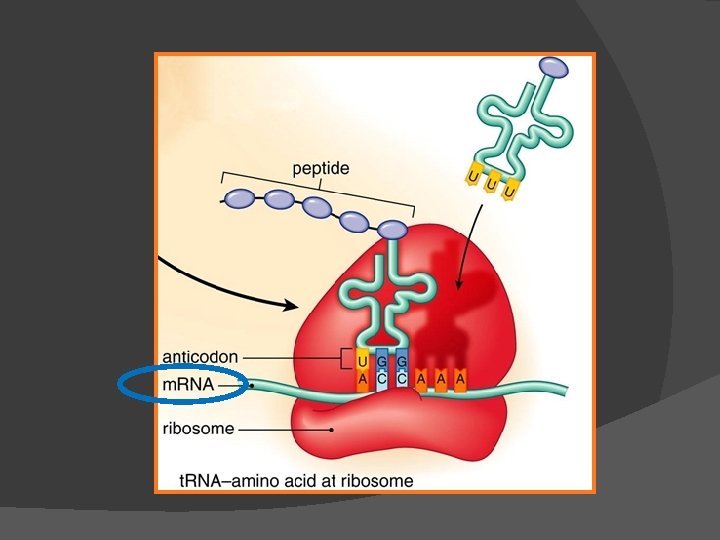
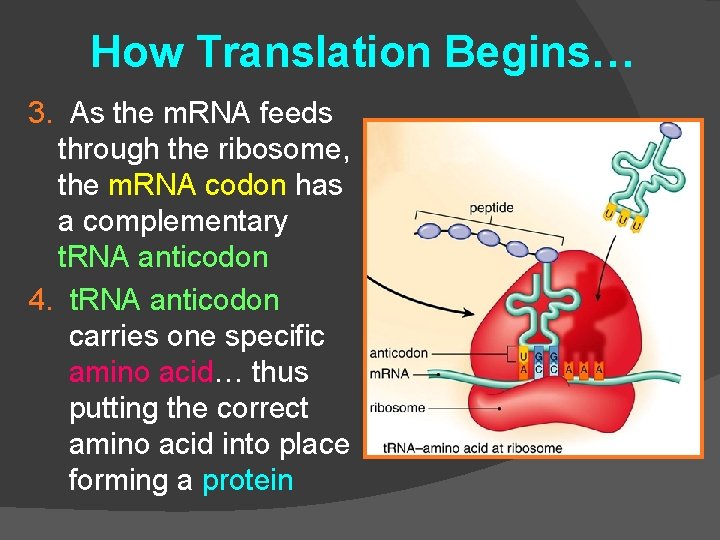
How Translation Begins… 3. As the m. RNA feeds through the ribosome, the m. RNA codon has a complementary t. RNA anticodon 4. t. RNA anticodon carries one specific amino acid… thus putting the correct amino acid into place forming a protein
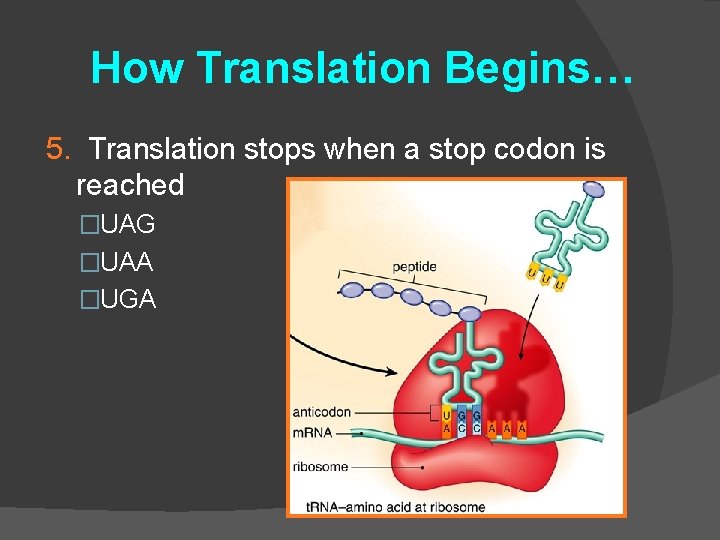
How Translation Begins… 5. Translation stops when a stop codon is reached �UAG �UAA �UGA
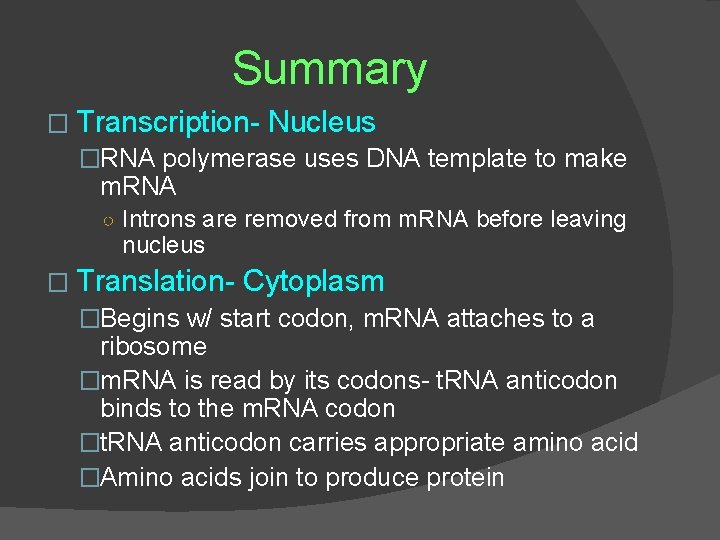
Summary � Transcription- Nucleus �RNA polymerase uses DNA template to make m. RNA ○ Introns are removed from m. RNA before leaving nucleus � Translation- Cytoplasm �Begins w/ start codon, m. RNA attaches to a ribosome �m. RNA is read by its codons- t. RNA anticodon binds to the m. RNA codon �t. RNA anticodon carries appropriate amino acid �Amino acids join to produce protein
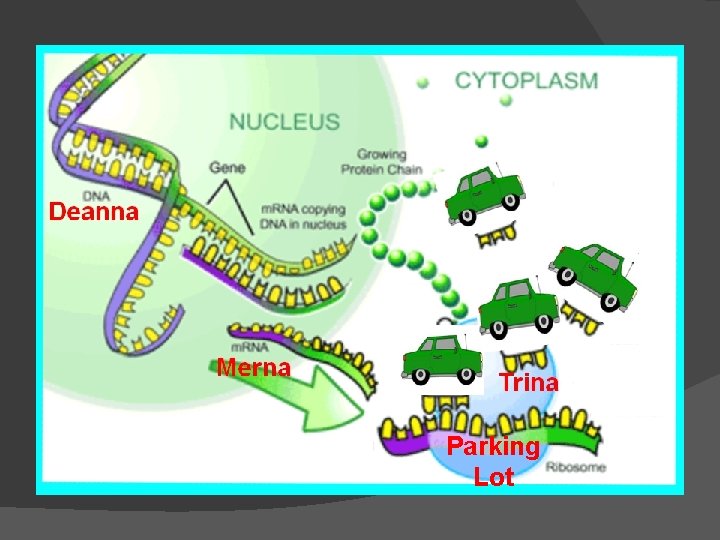
Parking Lot
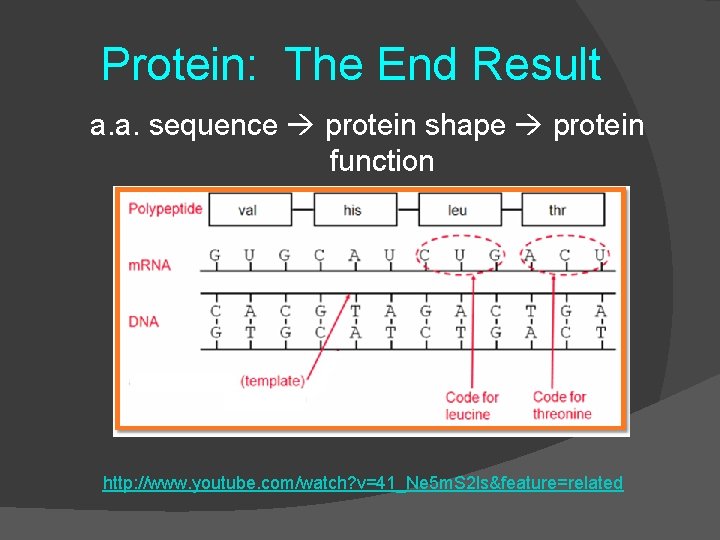
Protein: The End Result a. a. sequence protein shape protein function http: //www. youtube. com/watch? v=41_Ne 5 m. S 2 ls&feature=related
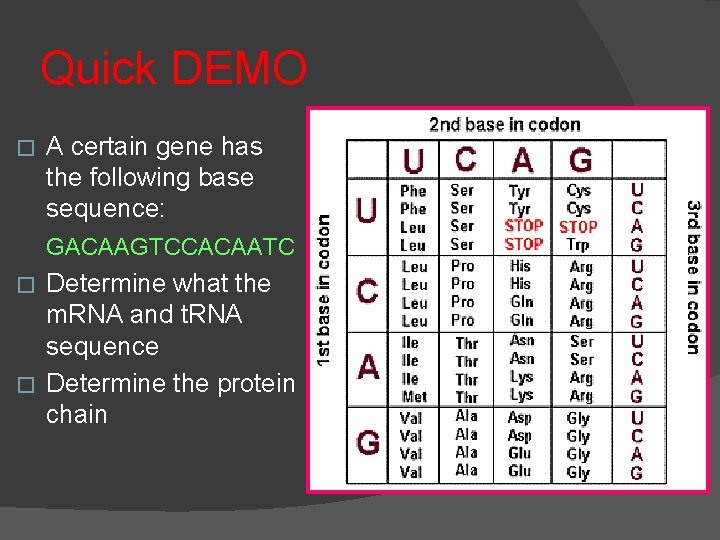
Quick DEMO � A certain gene has the following base sequence: GACAAGTCCACAATC Determine what the m. RNA and t. RNA sequence � Determine the protein chain �
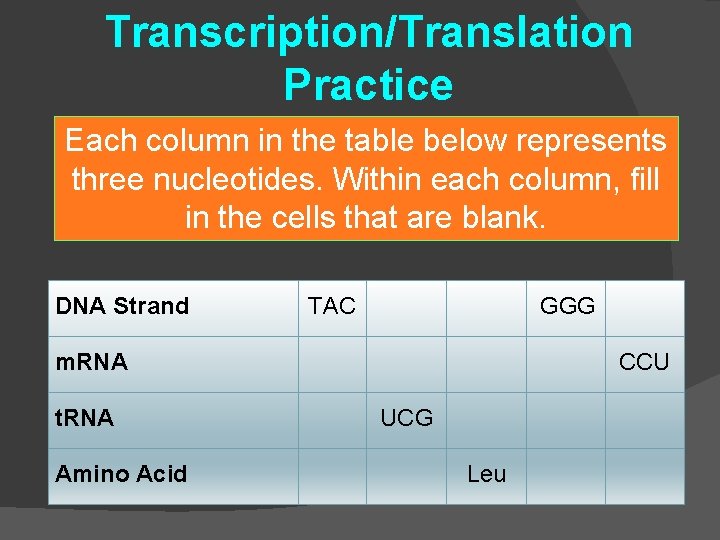
Transcription/Translation Practice Each column in the table below represents three nucleotides. Within each column, fill in the cells that are blank. DNA Strand TAC GGG m. RNA t. RNA Amino Acid CCU UCG Leu
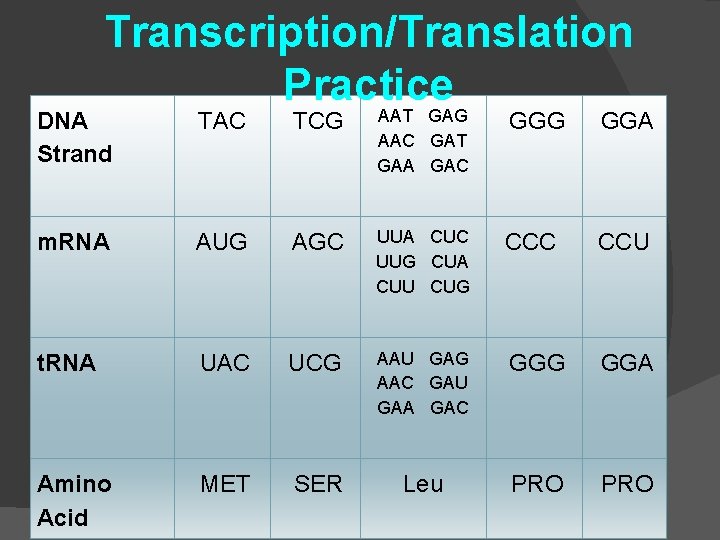
Transcription/Translation Practice DNA Strand TAC TCG AAT GAG AAC GAT GAA GAC GGG GGA m. RNA AUG AGC UUA CUC UUG CUA CUU CUG CCC CCU t. RNA UAC UCG AAU GAG AAC GAU GAA GAC GGG GGA Amino Acid MET SER Leu PRO
- Slides: 31