
Transcription 1 Gene Expression 1 a All of
- Slides: 13
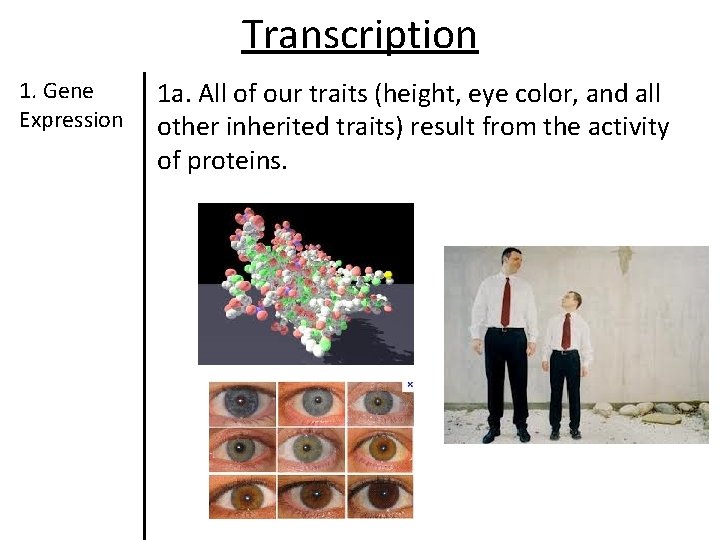
Transcription 1. Gene Expression 1 a. All of our traits (height, eye color, and all other inherited traits) result from the activity of proteins.
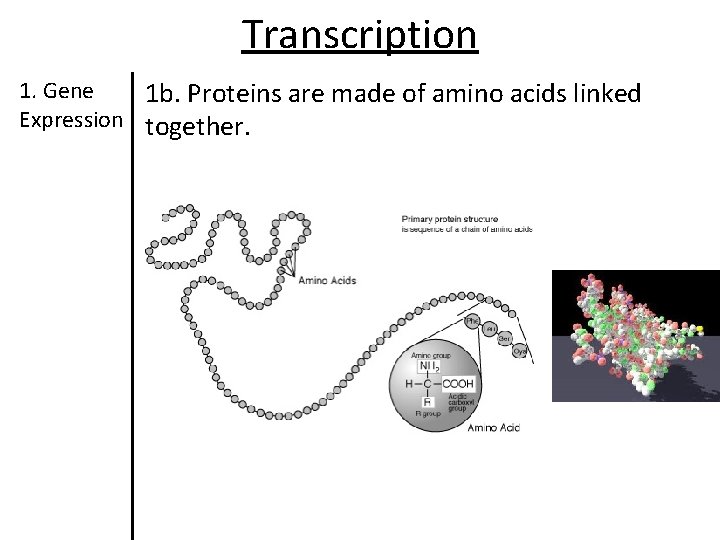
Transcription 1. Gene 1 b. Proteins are made of amino acids linked Expression together.
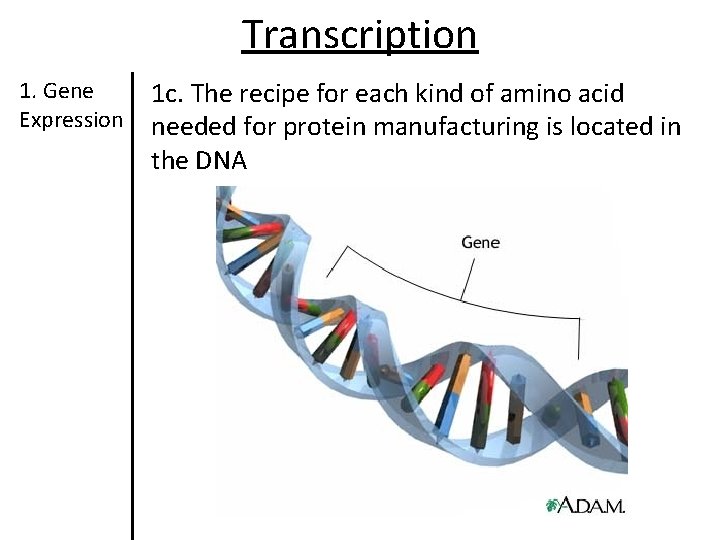
Transcription 1. Gene Expression 1 c. The recipe for each kind of amino acid needed for protein manufacturing is located in the DNA
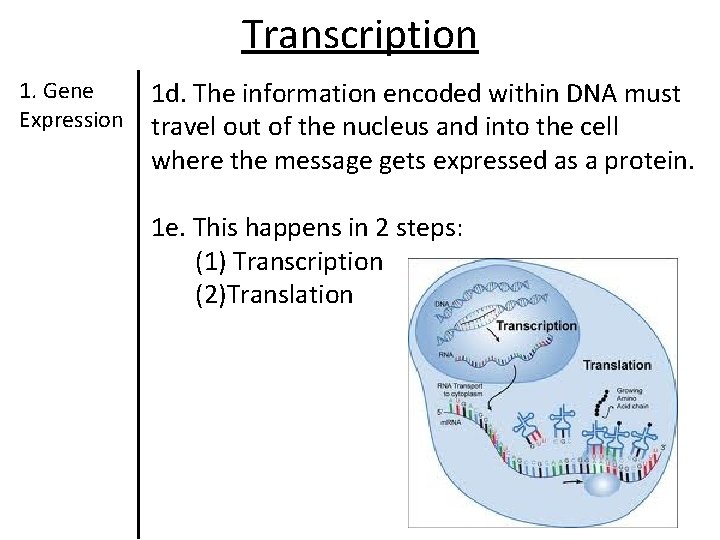
Transcription 1. Gene Expression 1 d. The information encoded within DNA must travel out of the nucleus and into the cell where the message gets expressed as a protein. 1 e. This happens in 2 steps: (1) Transcription (2)Translation
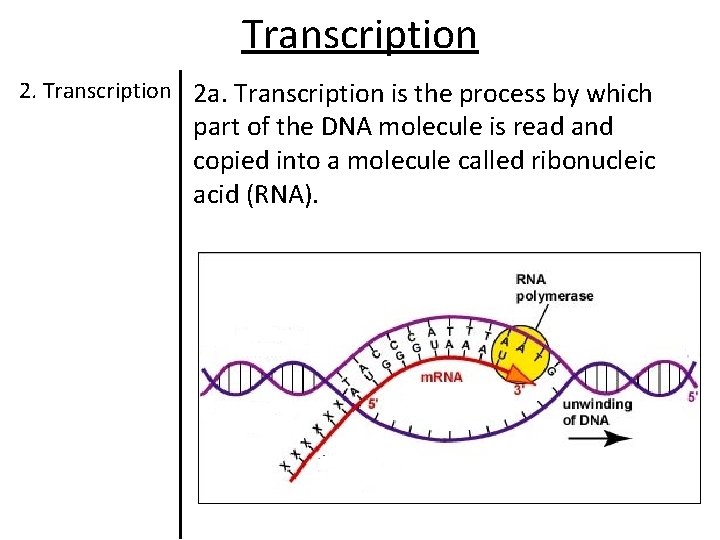
Transcription 2 a. Transcription is the process by which part of the DNA molecule is read and copied into a molecule called ribonucleic acid (RNA).
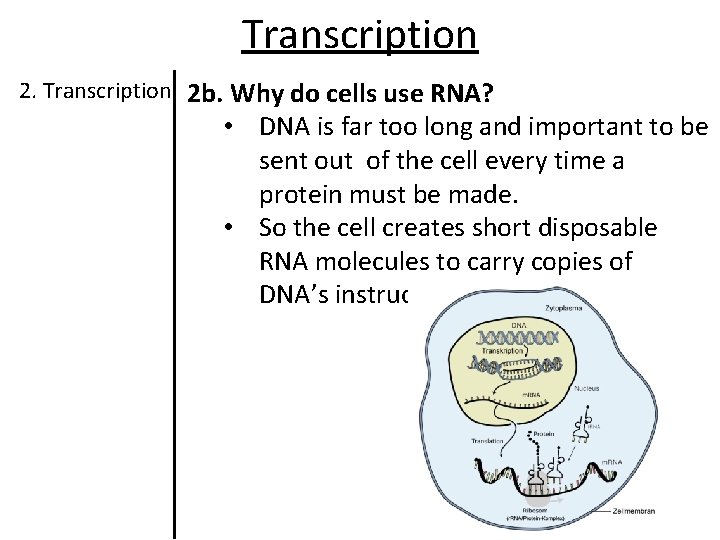
Transcription 2 b. Why do cells use RNA? • DNA is far too long and important to be sent out of the cell every time a protein must be made. • So the cell creates short disposable RNA molecules to carry copies of DNA’s instructions.
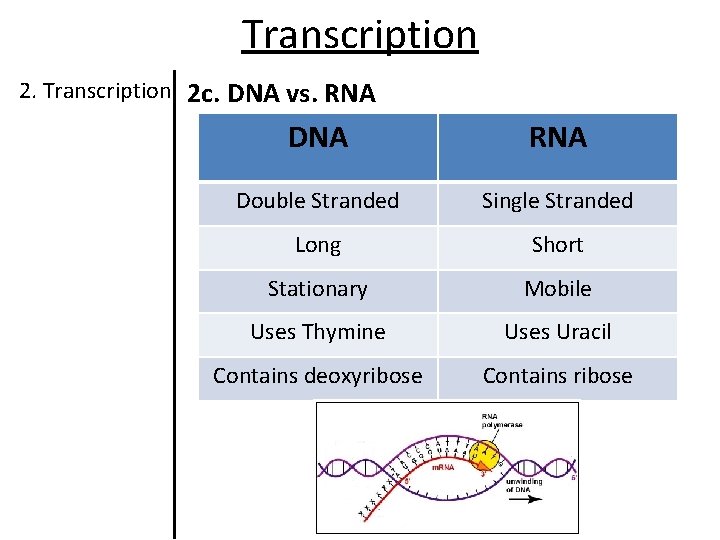
Transcription 2 c. DNA vs. RNA DNA RNA Double Stranded Single Stranded Long Short Stationary Mobile Uses Thymine Uses Uracil Contains deoxyribose Contains ribose
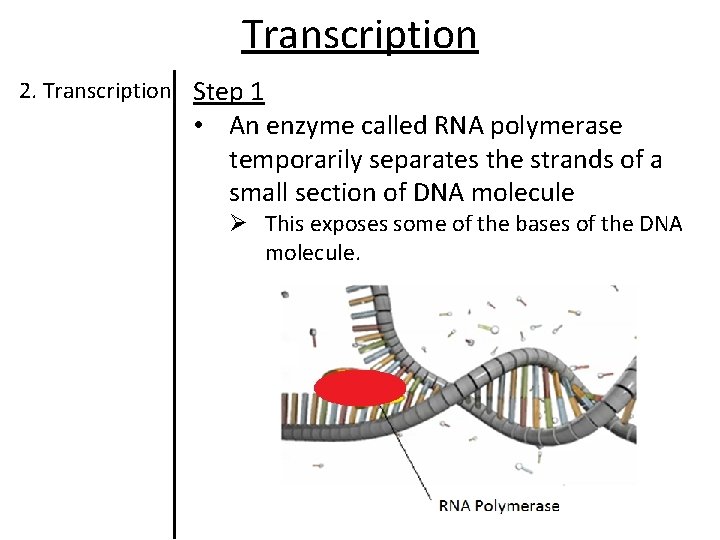
Transcription 2. Transcription Step 1 • An enzyme called RNA polymerase temporarily separates the strands of a small section of DNA molecule Ø This exposes some of the bases of the DNA molecule.
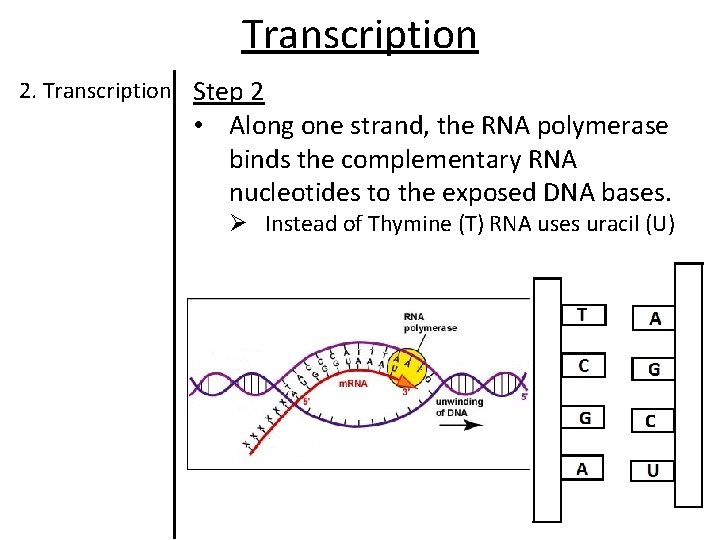
Transcription 2. Transcription Step 2 • Along one strand, the RNA polymerase binds the complementary RNA nucleotides to the exposed DNA bases. Ø Instead of Thymine (T) RNA uses uracil (U)
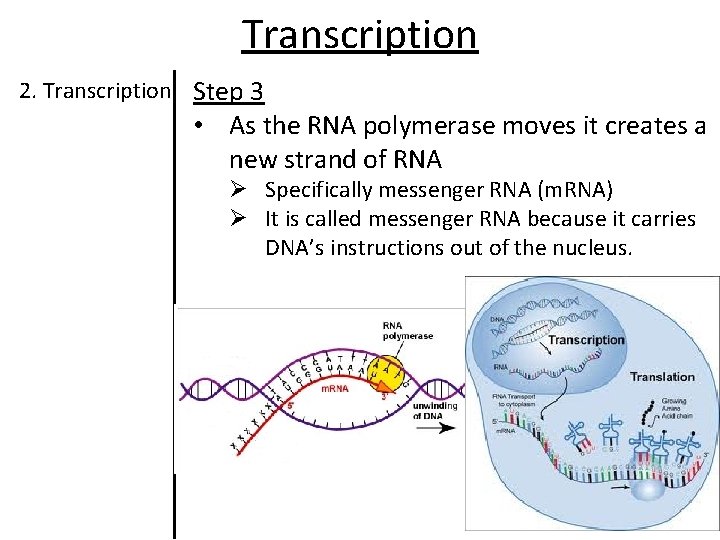
Transcription 2. Transcription Step 3 • As the RNA polymerase moves it creates a new strand of RNA Ø Specifically messenger RNA (m. RNA) Ø It is called messenger RNA because it carries DNA’s instructions out of the nucleus.
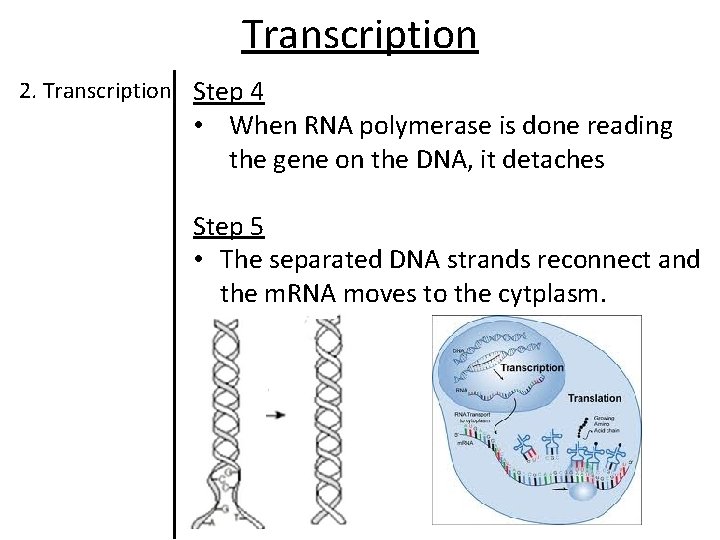
Transcription 2. Transcription Step 4 • When RNA polymerase is done reading the gene on the DNA, it detaches Step 5 • The separated DNA strands reconnect and the m. RNA moves to the cytplasm.
links https: //www. youtube. com/watch? v=NJxobgk. PE Ao https: //www. youtube. com/watch? v=41_Ne 5 m. S 2 ls
AGENDA 1/14/13 • Assignment: –Transcription worksheet • Homework: –Gene Expression Reading (continued…)