
Transcranial magnetic stimulation TMS Neuromodulation Working Group Meeting
- Slides: 12
Transcranial magnetic stimulation (TMS) Neuromodulation Working Group Meeting 1 st Dec 2017 Katherine Naish
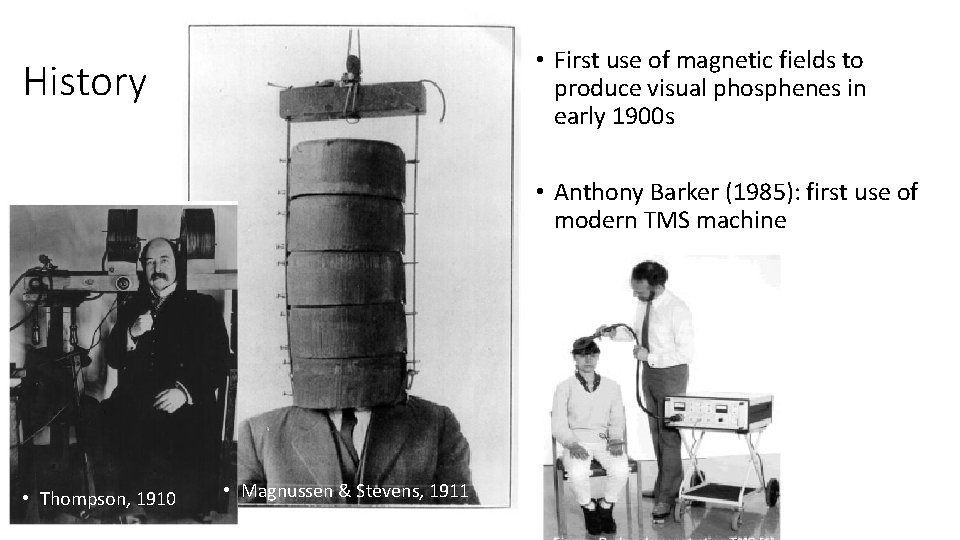
• First use of magnetic fields to produce visual phosphenes in early 1900 s History • Anthony Barker (1985): first use of modern TMS machine • Thompson, 1910 • Magnussen & Stevens, 1911
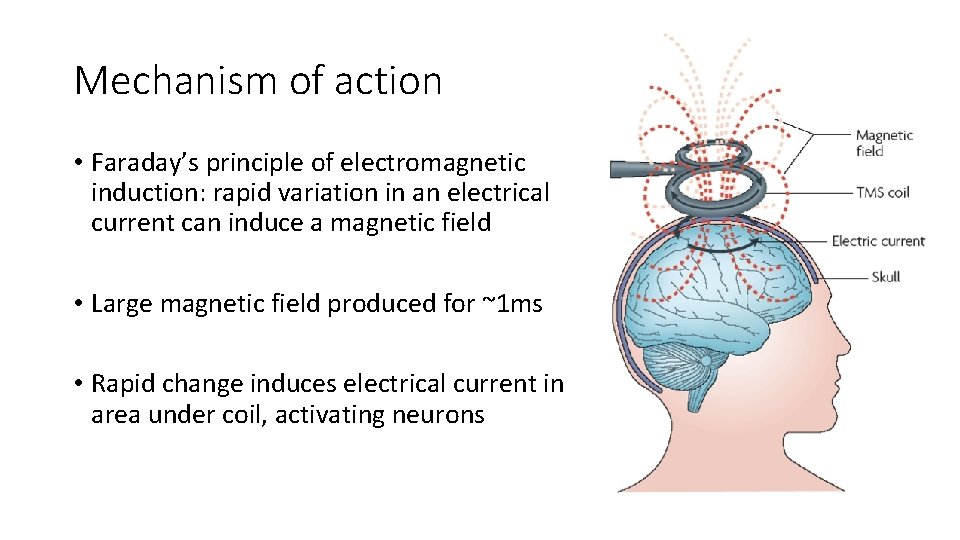
Mechanism of action • Faraday’s principle of electromagnetic induction: rapid variation in an electrical current can induce a magnetic field • Large magnetic field produced for ~1 ms • Rapid change induces electrical current in area under coil, activating neurons
Types of TMS • Single-pulse TMS (sp. TMS) • Paired-pulse TMS (pp. TMS) • Repetitive TMS (r. TMS)
Uses of TMS • Single-pulse and paired-pulse used primarily to study the motor system (effects also seen for visual cortex) • Repetitive used to induce longer-lasting changes (therapeutic use) or for disruption of function
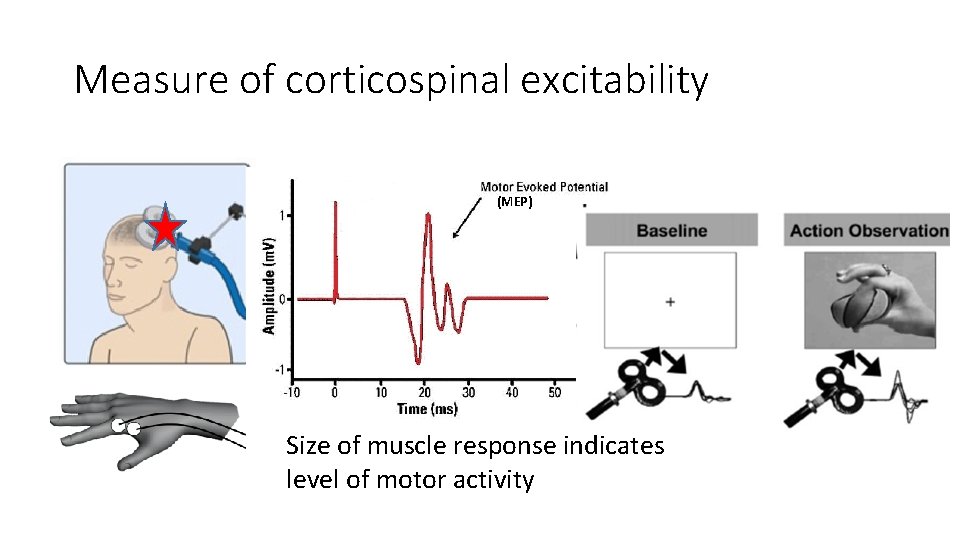
Measure of corticospinal excitability (MEP) Size of muscle response indicates level of motor activity
Disruption of function • https: //www. youtube. com/watch? v=gp 8 Kn. AHkwdo
Repetitive TMS (r. TMS) • Repeated pulses over period of seconds or minutes; usually over multiple sessions • Effects last longer than period of stimulation • Frequencies above 1 Hz usually increase cortical excitability; 1 Hz or lower usually decrease excitability
Repetitive TMS (r. TMS) • Potential mechanism: long term potentiation (LTP) or depression (LTD) • Pharmacological evidence that after-effects involve glutamatergic NMDA receptor • Compensatory changes in brain activity
Important parameters • Stimulation intensity • Pulse frequency • Inter-pulse intervals (e. g. , for pp. TMS) • Duration of stimulation
Repetitive TMS (r. TMS) • Therapeutic uses of increasing/decreasing function in certain areas • First therapeutic use for depression, on basis that depression caused by dysfunction in left PFC • More recently, r. TMS used to reduce cravings in substance abuse disorders
Repetitive TMS (r. TMS) • Considerable within- and between-subject variability • Differences in brain anatomy • Level of attention • Hormonal changes • Different effects at different stages of menstrual cycle in women; differences between morning and evening effects