
Transcranial Direct Current Stimulation Chris Rorden l www




- Slides: 16
Transcranial Direct Current Stimulation Chris Rorden l www. mricro. com l www. cabiatl. com l Method l Designs l Safety l 1
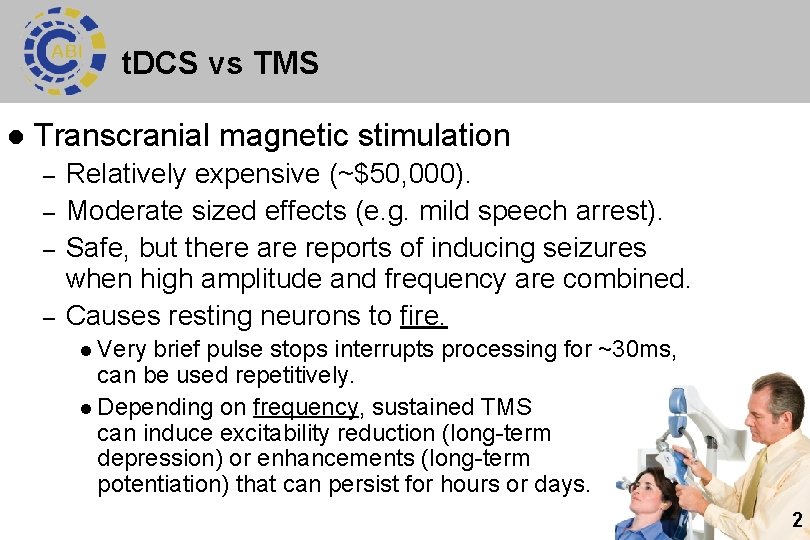
t. DCS vs TMS l Transcranial magnetic stimulation – – Relatively expensive (~$50, 000). Moderate sized effects (e. g. mild speech arrest). Safe, but there are reports of inducing seizures when high amplitude and frequency are combined. Causes resting neurons to fire. l Very brief pulse stops interrupts processing for ~30 ms, can be used repetitively. l Depending on frequency, sustained TMS can induce excitability reduction (long-term depression) or enhancements (long-term potentiation) that can persist for hours or days. 2
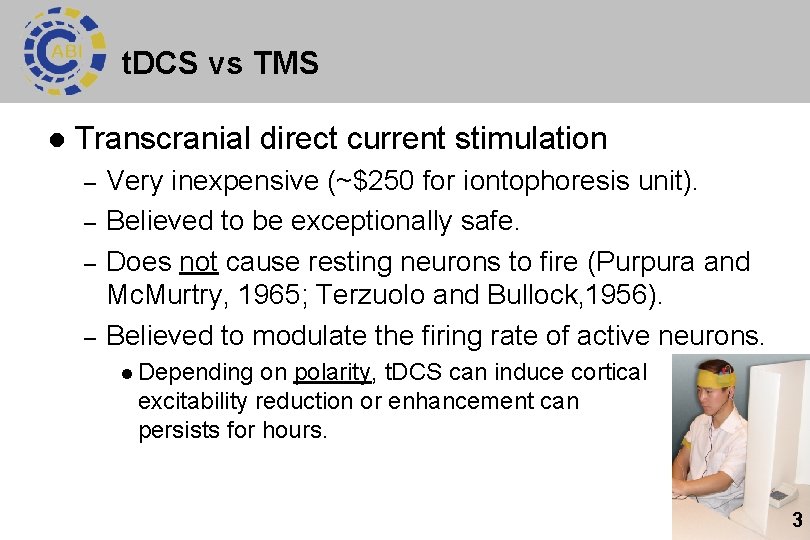
t. DCS vs TMS l Transcranial direct current stimulation – – Very inexpensive (~$250 for iontophoresis unit). Believed to be exceptionally safe. Does not cause resting neurons to fire (Purpura and Mc. Murtry, 1965; Terzuolo and Bullock, 1956). Believed to modulate the firing rate of active neurons. l Depending on polarity, t. DCS can induce cortical excitability reduction or enhancement can persists for hours. 3
t. DCS vs TENS Transcutaneous Electrical Nerve Stimulation systems are used to treat pain. l TENS pulsed 2 -160 Hz, 5 -80 m. A. l At slow frequency and high amplitude TENS induces muscle contraction. l In contrast, t. DCS uses constant 1 -2 m. A. l 4
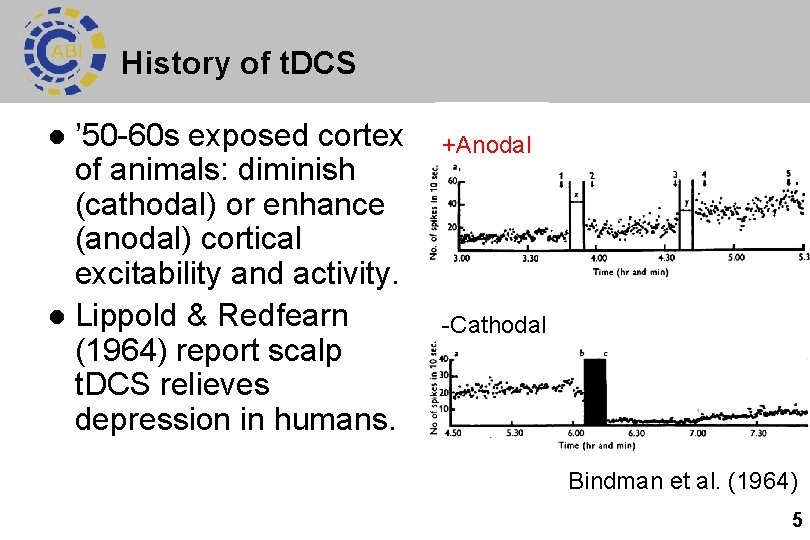
History of t. DCS ’ 50 -60 s exposed cortex of animals: diminish (cathodal) or enhance (anodal) cortical excitability and activity. l Lippold & Redfearn (1964) report scalp t. DCS relieves depression in humans. l +Anodal -Cathodal Bindman et al. (1964) 5
Why a revival? l New methods provide converging support – – – Confirmed using consistent behavioral measures : corticospinal excitability, measured with TMS; TENS (Nitsche 2000; Ardolino 2005). Confirmed using imaging: e. g. one sees less task related activation following cathodal stimulation (Baudewig et al. , 2001) Mechanism: change in membrane potential, NMDA receptor efficacy for longer duration effects (Nitsche, 2004). Ardolino (2005) Baseline 0 min 60 min Baseline After -t. DCS Baudewig et al. (2003) 6
Effects persist Effects of t. DCS persist after stimulation ends. l Longer stimulation, slower return to baseline. l Duration 5 min 7 min 9 min Nitsche et al. (2003) 7
Typical design l l Convention is to conduct behavioral task during and/or immediately after stimulation. E. G. Dockery reports that prefrontal t. DCS polarity influences learning of Tower of London task – with effects seen 6 -12 months later. Dockery et al. (2009) 8
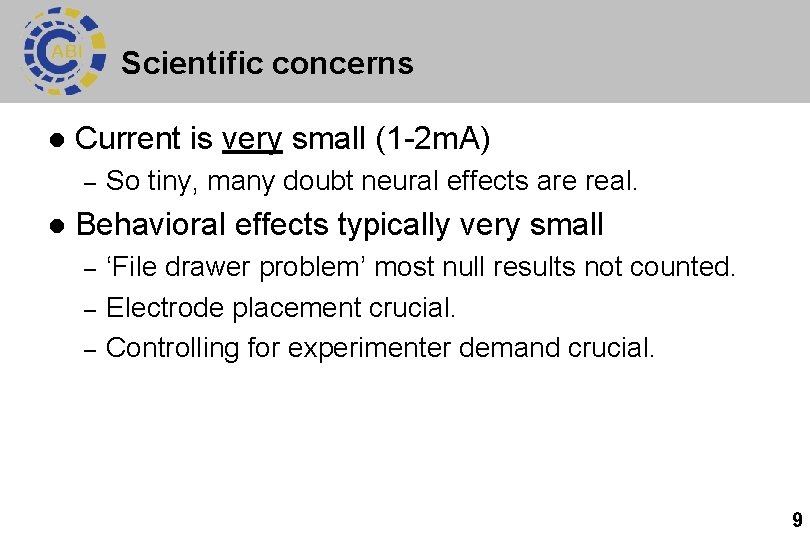
Scientific concerns l Current is very small (1 -2 m. A) – l So tiny, many doubt neural effects are real. Behavioral effects typically very small – – – ‘File drawer problem’ most null results not counted. Electrode placement crucial. Controlling for experimenter demand crucial. 9
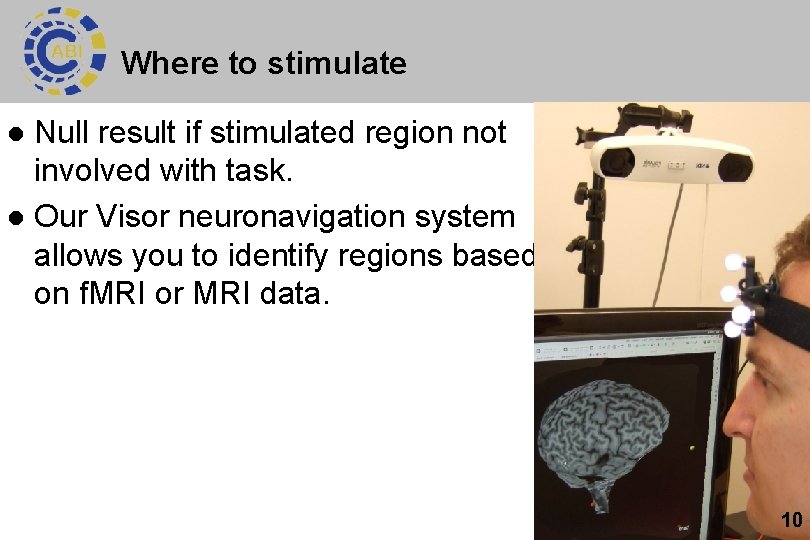
Where to stimulate Null result if stimulated region not involved with task. l Our Visor neuronavigation system allows you to identify regions based on f. MRI or MRI data. l 10
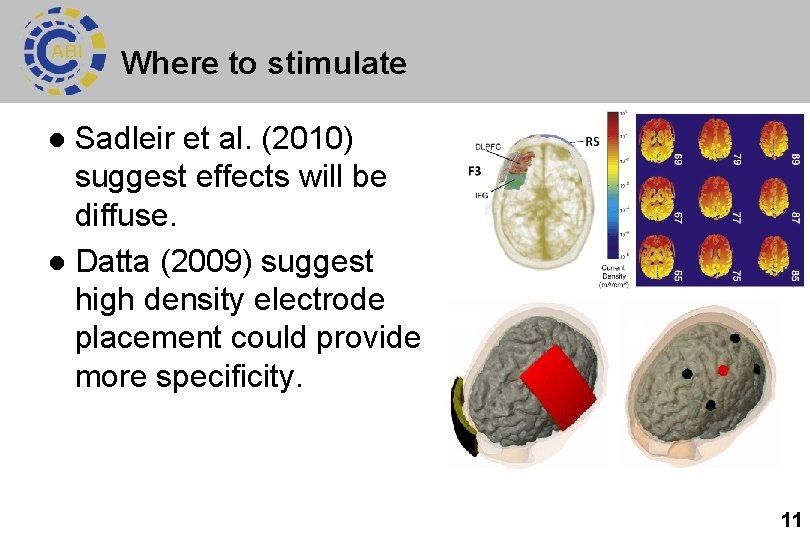
Where to stimulate Sadleir et al. (2010) suggest effects will be diffuse. l Datta (2009) suggest high density electrode placement could provide more specificity. l 11
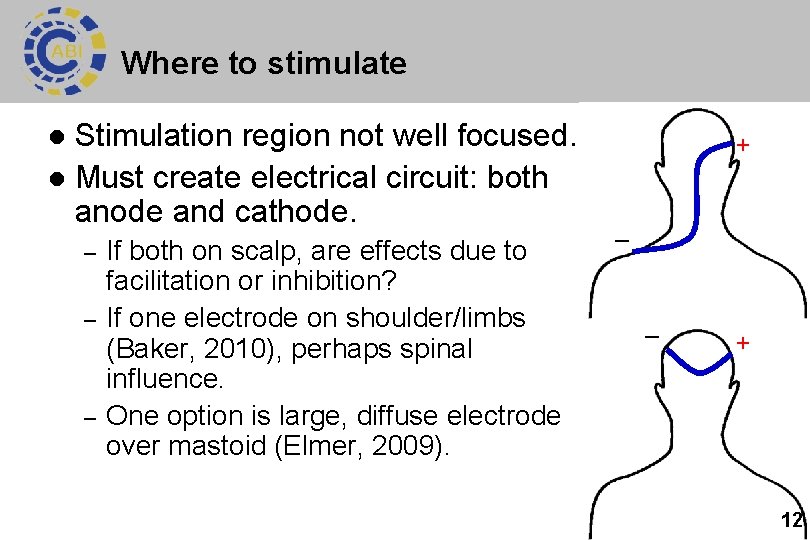
Where to stimulate Stimulation region not well focused. l Must create electrical circuit: both anode and cathode. l – – – If both on scalp, are effects due to facilitation or inhibition? If one electrode on shoulder/limbs (Baker, 2010), perhaps spinal influence. One option is large, diffuse electrode over mastoid (Elmer, 2009). + _ _ + 12
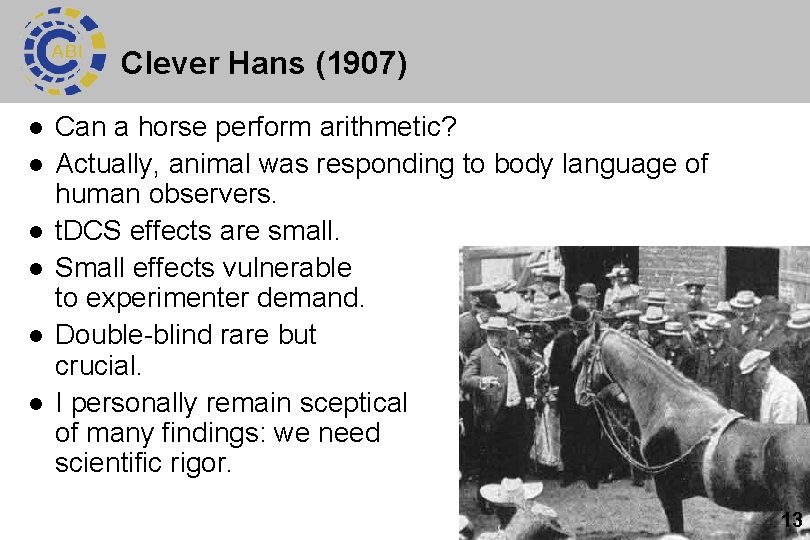
Clever Hans (1907) l l l Can a horse perform arithmetic? Actually, animal was responding to body language of human observers. t. DCS effects are small. Small effects vulnerable to experimenter demand. Double-blind rare but crucial. I personally remain sceptical of many findings: we need scientific rigor. 13
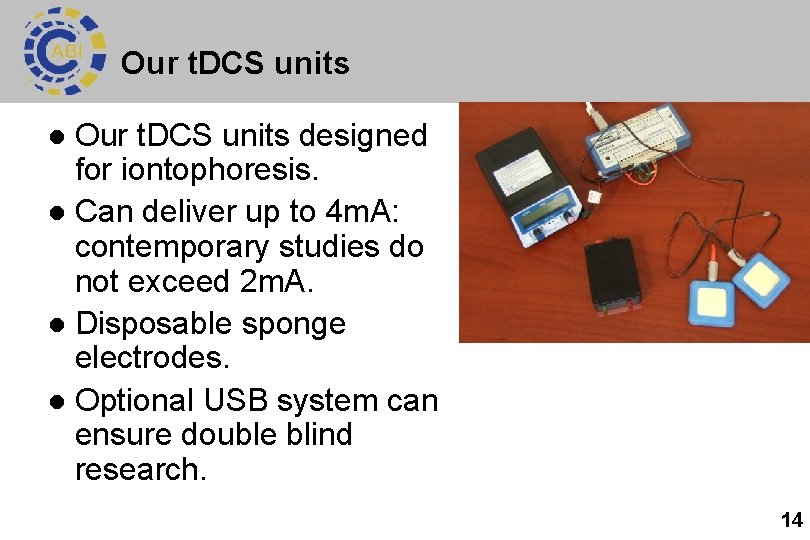
Our t. DCS units designed for iontophoresis. l Can deliver up to 4 m. A: contemporary studies do not exceed 2 m. A. l Disposable sponge electrodes. l Optional USB system can ensure double blind research. l 14
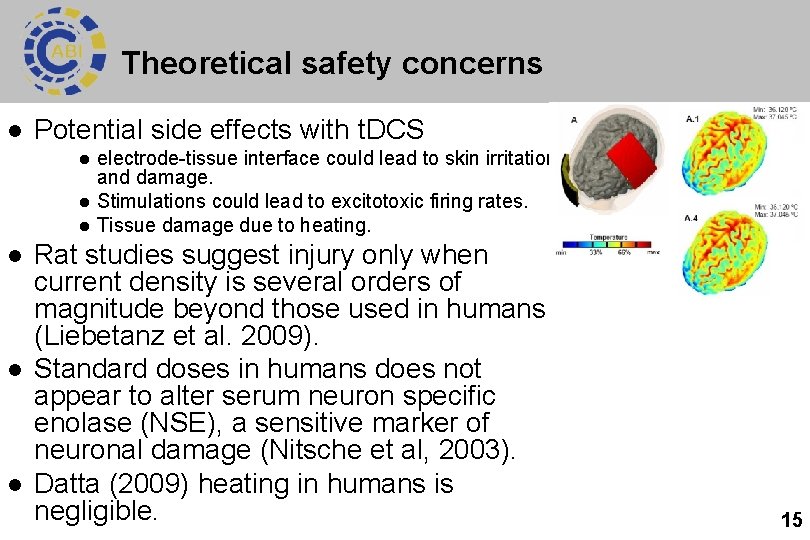
Theoretical safety concerns l Potential side effects with t. DCS l l l electrode-tissue interface could lead to skin irritation and damage. Stimulations could lead to excitotoxic firing rates. Tissue damage due to heating. Rat studies suggest injury only when current density is several orders of magnitude beyond those used in humans (Liebetanz et al. 2009). Standard doses in humans does not appear to alter serum neuron specific enolase (NSE), a sensitive marker of neuronal damage (Nitsche et al, 2003). Datta (2009) heating in humans is negligible. 15
Practical safety concerns l Subtle but common side effects l Nitsche et at. (2003) reports that in more than 500 participants the only side effects are initial scalp tingling or sensation of a light flash. l Some studies suggest that higher current densities can lead to skin irritation. l If cognitive effects are prolonged, perhaps we should warn participants about driving or other hazardous tasks after a treatment session. • Koenigs (2009) note one neurologically healthy participant reported a couple hours dysphoria following cathodal t. DCS. 16