
Transboundary pollution 6 2 Environmental risks Transboundary pollution
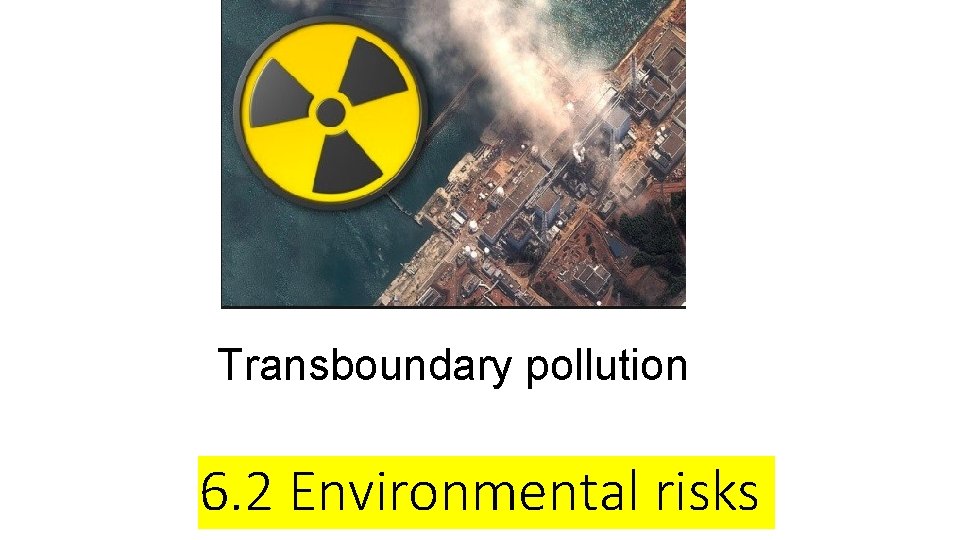
Transboundary pollution 6. 2 Environmental risks
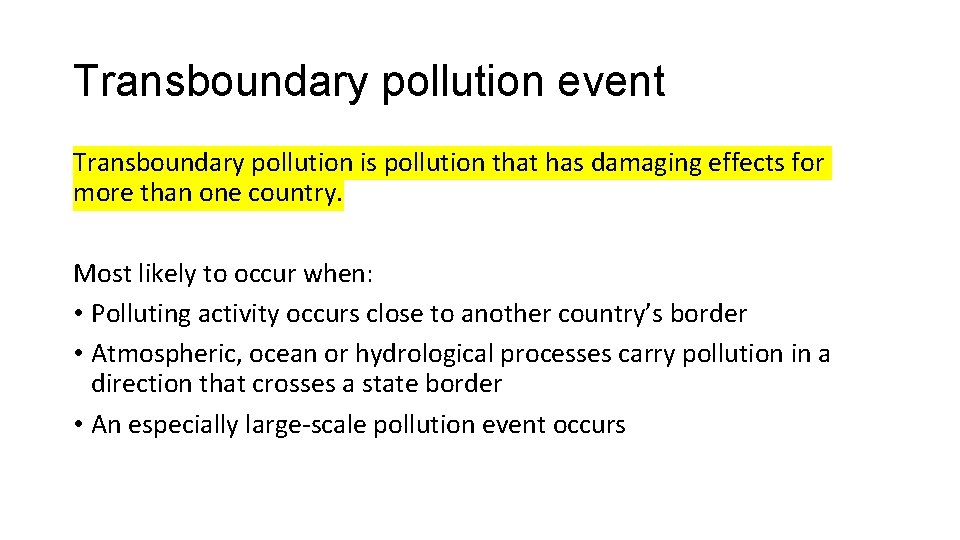
Transboundary pollution event Transboundary pollution is pollution that has damaging effects for more than one country. Most likely to occur when: • Polluting activity occurs close to another country’s border • Atmospheric, ocean or hydrological processes carry pollution in a direction that crosses a state border • An especially large-scale pollution event occurs
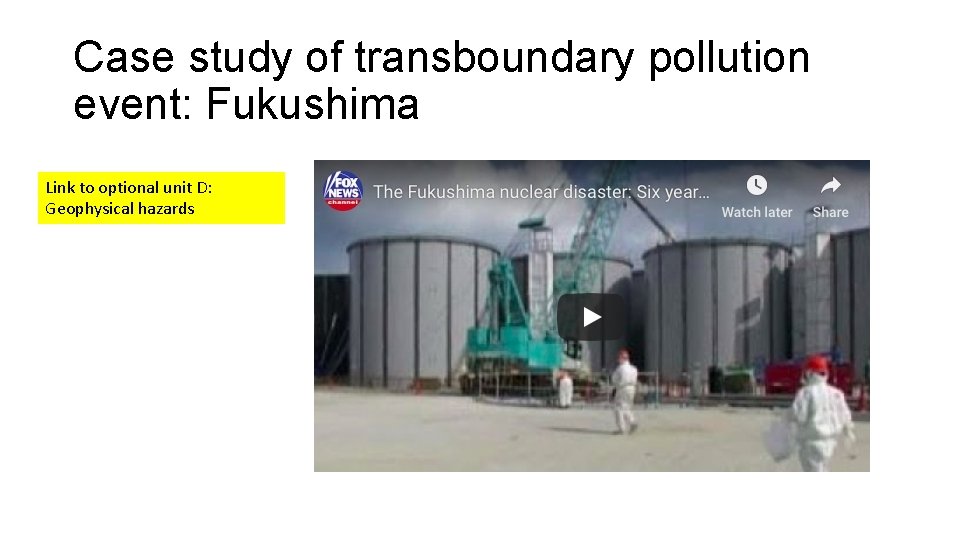
Case study of transboundary pollution event: Fukushima Link to optional unit D: Geophysical hazards
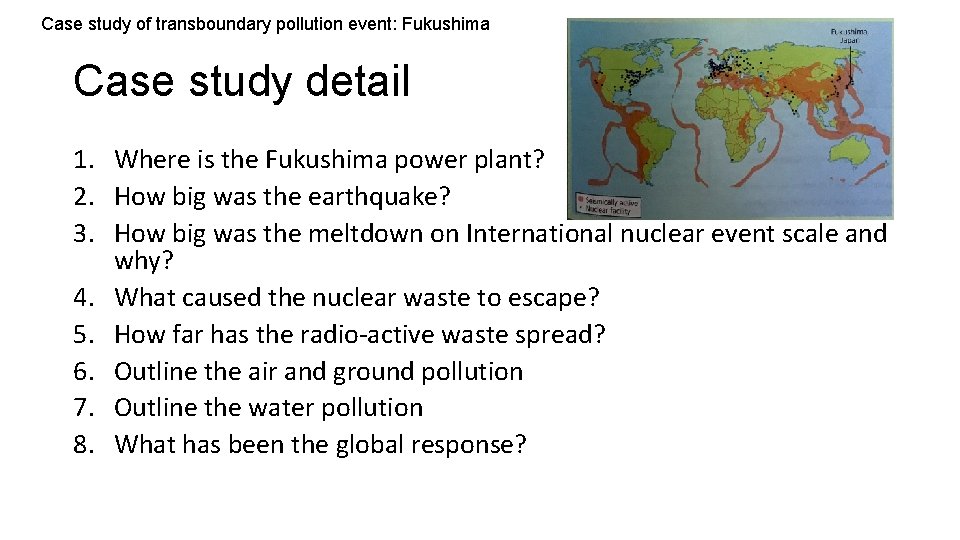
Case study of transboundary pollution event: Fukushima Case study detail 1. Where is the Fukushima power plant? 2. How big was the earthquake? 3. How big was the meltdown on International nuclear event scale and why? 4. What caused the nuclear waste to escape? 5. How far has the radio-active waste spread? 6. Outline the air and ground pollution 7. Outline the water pollution 8. What has been the global response?
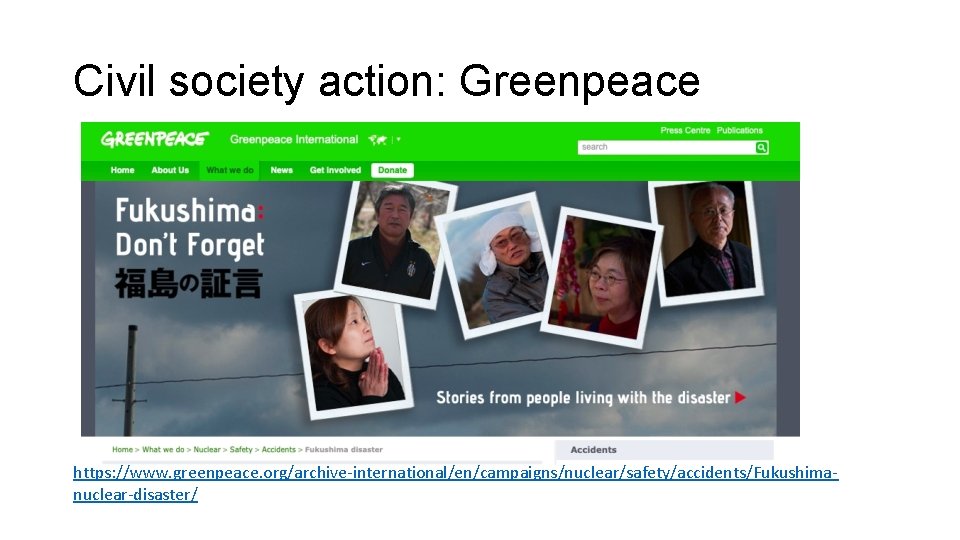
Civil society action: Greenpeace https: //www. greenpeace. org/archive-international/en/campaigns/nuclear/safety/accidents/Fukushimanuclear-disaster/
12 mark question Analyse the consequences of one specific transboundary pollution event.
Mark scheme • A transboundary pollution event is one which has damaging effects for more than one country. It is most likely that candidates will analyse a major oil spill or air pollution event. “Event” strongly suggests a single dated occurrence but some credit should still be given to an account of a more pervasive problem (such as acid rain). Thus, for band E, the account must clearly relate to transboundary pollution (thus the pollution type is named, e. g. sulphur dioxide or crude oil; affected states are clearly identified). Further, the temporal aspect should be addressed: if not a single event (e. g. an oil spill) then a period (year or decade) must be identified (giving us a broad interpretation of “event”). An account of acid rain that is not geographically or historically specific should not move beyond band C. If both are there, band E is possible. • It should be made explicit who is affected and why the event is “transboundary”. The consequences may include: immediate ecological and environmental harm; longer clear-up operations; subsequent changes in national and/or international legislature; implications for the polluter (such as poor publicity and “PR nightmare” for TNCs). • The best answers may have a range of varied consequences (such as political / governance response) and will not simply focus on ecological damage. • Pollution events such as the Bhopal incident are not transboundary but may achieve band C if the concept of transnational has been well-explored (idea of TNCs moving their pollution / unsafe operations overseas). The movement of recycling wastes to China may be marked in the same way (it’s hardly an event, but some limited credit for the transboundary / transnational aspects of the case study could be given idea if it has been well-written). • Marks should be allocated according to the markbands.
12 mark question • “Explain the causes, impacts and responses to one major global pollution incident. ”
- Slides: 9