
TransAtlantic Slave Trade Atlantic System Triangular Trade Why

- Slides: 26
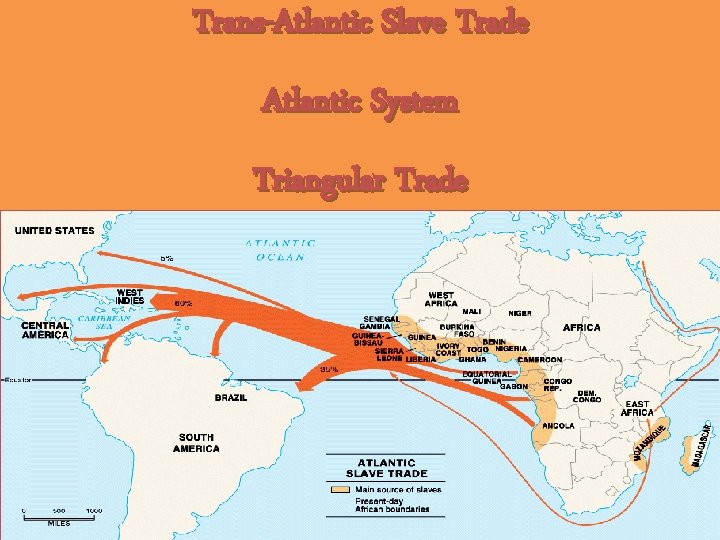
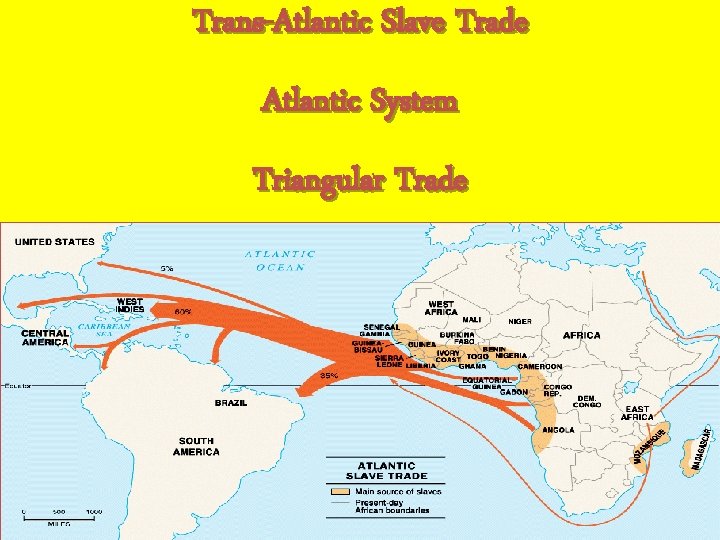
Trans-Atlantic Slave Trade Atlantic System Triangular Trade
Why did European powers eventually turn to African labor? • Labor supply was insufficient. Epidemics reduced the native population by 50% - 90%. • The new world afforded the Europeans great wealth
Slavery and Indentured Servitude…………… Is there a difference?
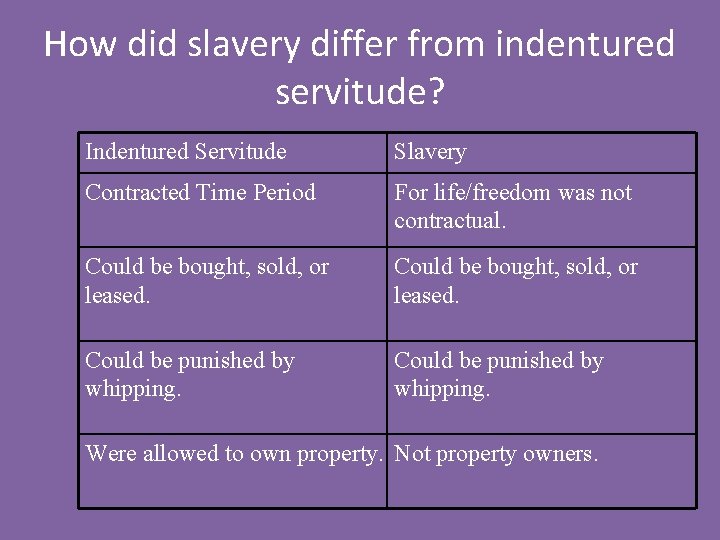
How did slavery differ from indentured servitude? Indentured Servitude Slavery Contracted Time Period For life/freedom was not contractual. Could be bought, sold, or leased. Could be punished by whipping. Were allowed to own property. Not property owners.
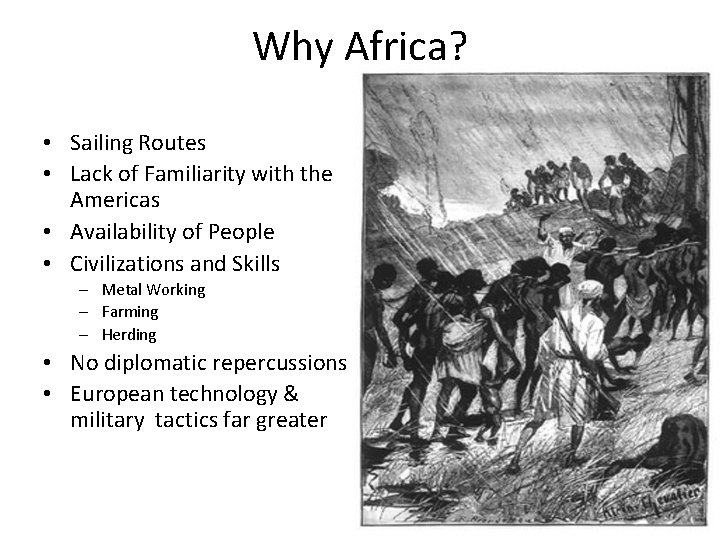
Why Africa? • Sailing Routes • Lack of Familiarity with the Americas • Availability of People • Civilizations and Skills – Metal Working – Farming – Herding • No diplomatic repercussions • European technology & military tactics far greater
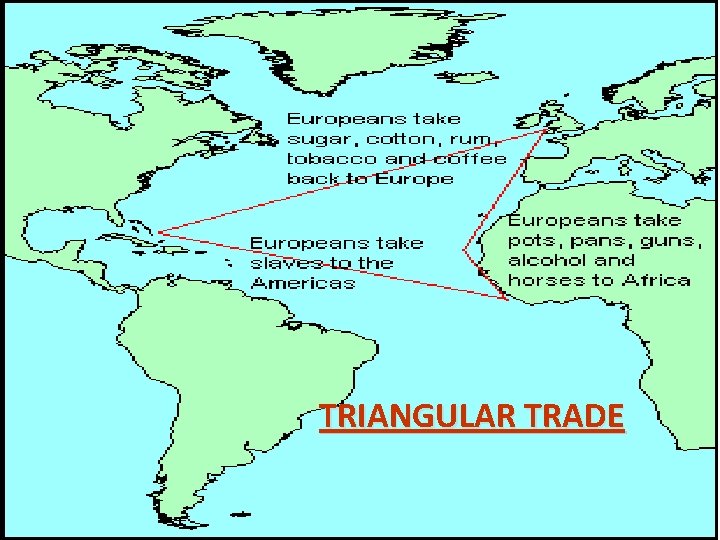
TRIANGULAR TRADE
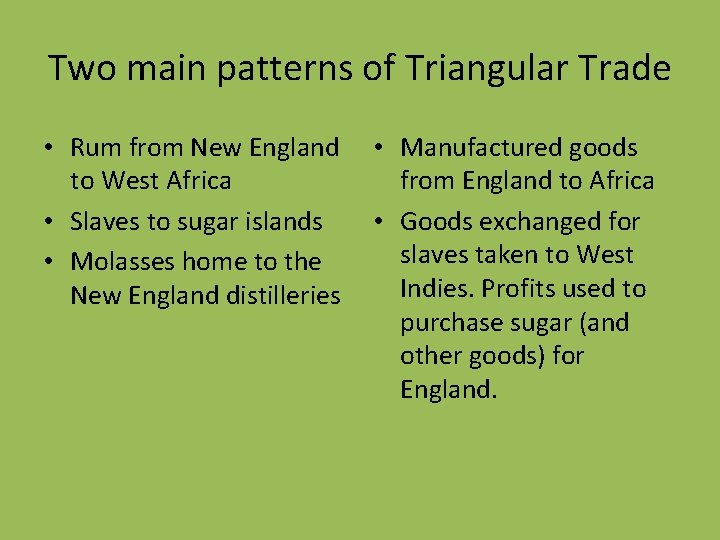
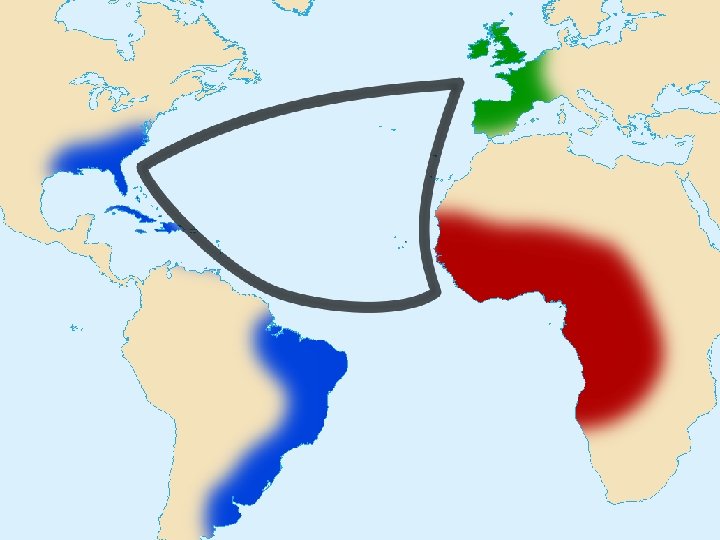
Two main patterns of Triangular Trade • Rum from New England to West Africa • Slaves to sugar islands • Molasses home to the New England distilleries • Manufactured goods from England to Africa • Goods exchanged for slaves taken to West Indies. Profits used to purchase sugar (and other goods) for England.
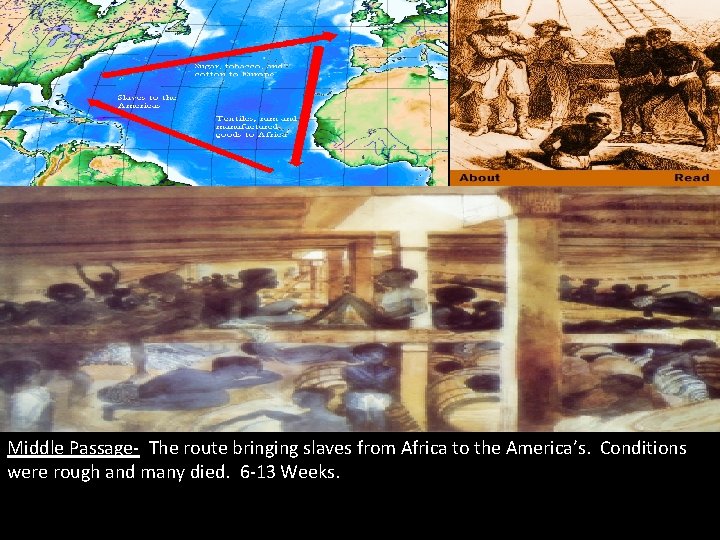
Middle Passage- The route bringing slaves from Africa to the America’s. Conditions were rough and many died. 6 -13 Weeks.
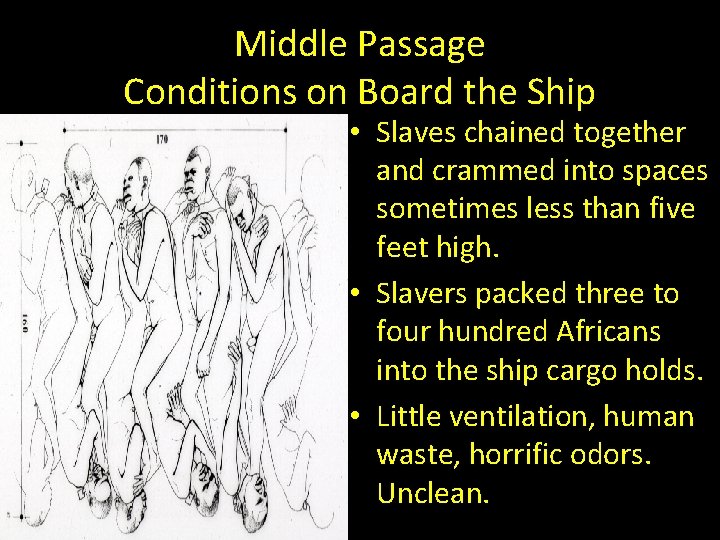
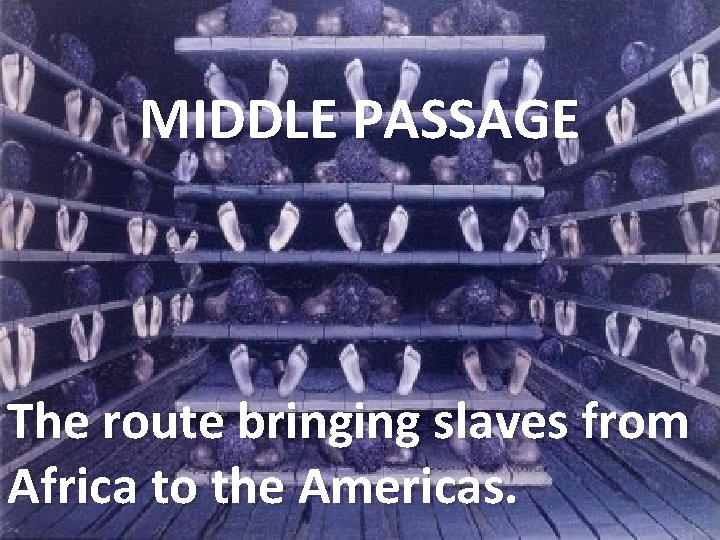
Middle Passage Conditions on Board the Ship • Slaves chained together and crammed into spaces sometimes less than five feet high. • Slavers packed three to four hundred Africans into the ship cargo holds. • Little ventilation, human waste, horrific odors. Unclean.
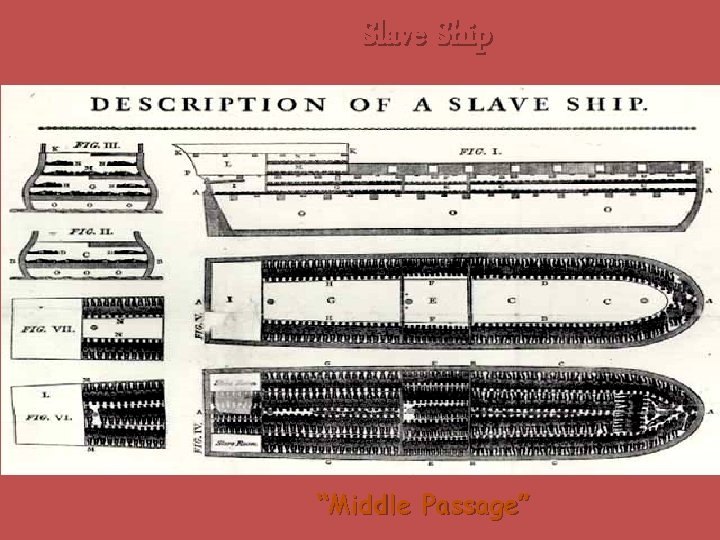
Slave Ship “Middle Passage”
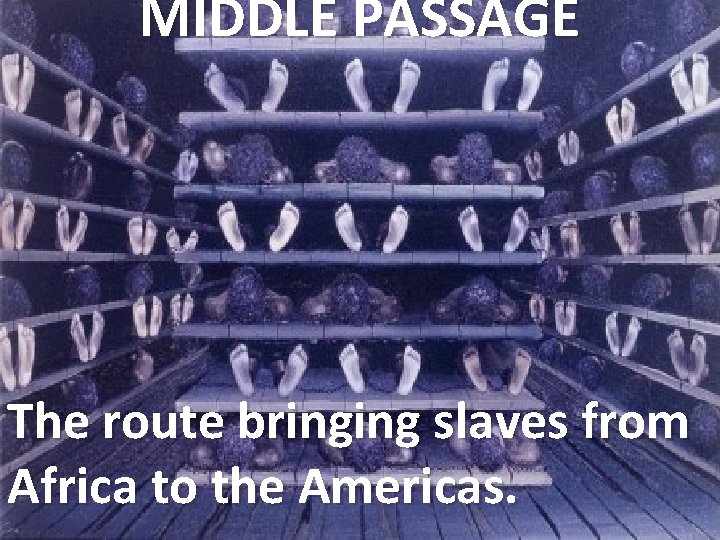
MIDDLE PASSAGE The route bringing slaves from Africa to the Americas.
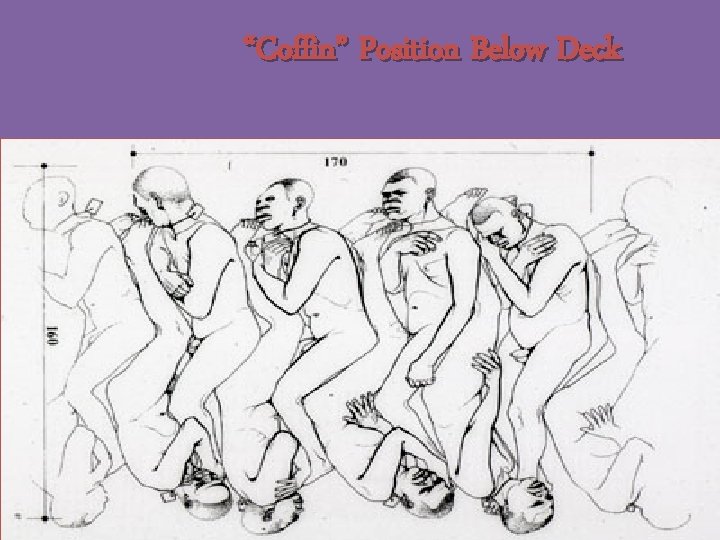
“Coffin” Position Below Deck
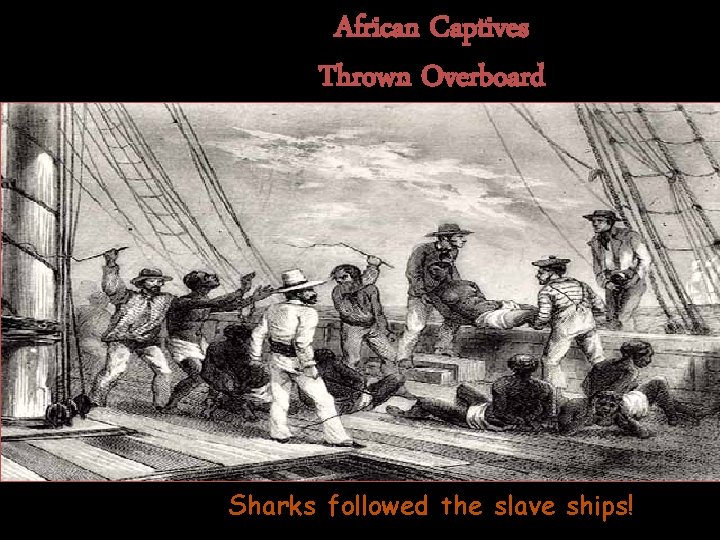
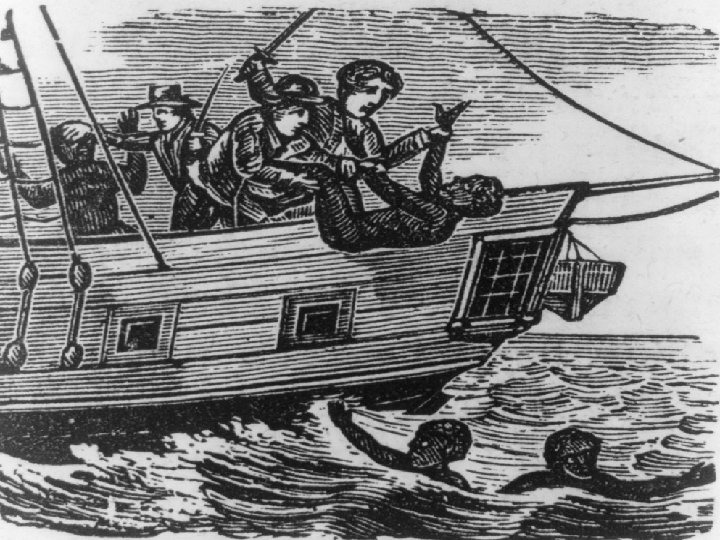
African Captives Thrown Overboard Sharks followed the slave ships!
Middle Passage • Journey lasted 6 -8 weeks. • Due to high mortality rate, cargo was insured (reimbursed for drowning accidents but not for deaths from disease of sickness) • Common to dump your cargo for sickness or food shortages. • Slave mutinies on board ships were common (1 out of every 10 voyages across the Atlantic experience a revolt). • Covert resistance (attempted suicide, jumped overboard, refusal to eat).
Middle Passage Statistics • 16 -20 million Africans forcibly transported across the Atlantic from 1500 -1900. • 2 million died during the Middle Passage (10 -15%) • Another 15 -30% dies during the march to the coast. • For every 100 slaves that reached the New World, another 40 died in Africa or during the Middle Passage.
Where did they take the captives
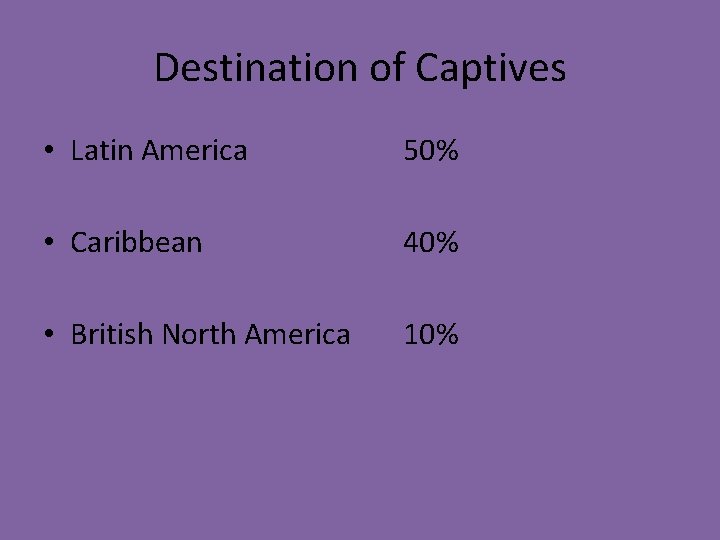
Destination of Captives • Latin America 50% • Caribbean 40% • British North America 10%
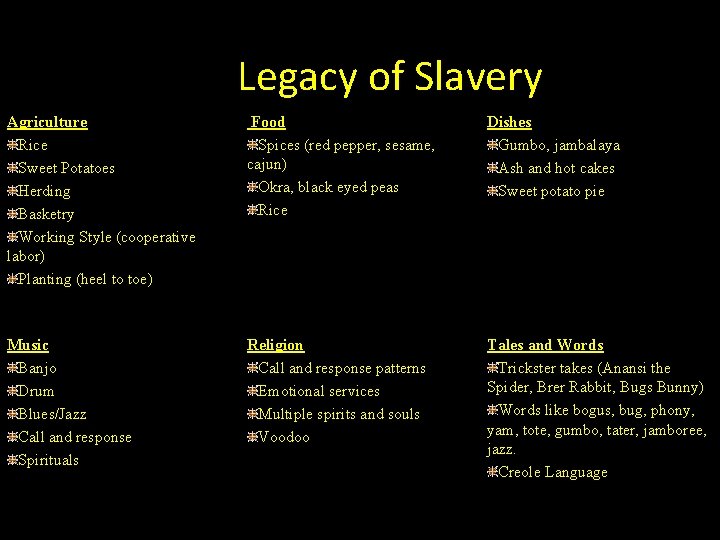
Legacy of Slavery Agriculture Rice Sweet Potatoes Herding Basketry Working Style (cooperative labor) Planting (heel to toe) Food Spices (red pepper, sesame, cajun) Okra, black eyed peas Rice Dishes Gumbo, jambalaya Ash and hot cakes Sweet potato pie Music Banjo Drum Blues/Jazz Call and response Spirituals Religion Call and response patterns Emotional services Multiple spirits and souls Voodoo Tales and Words Trickster takes (Anansi the Spider, Brer Rabbit, Bugs Bunny) Words like bogus, bug, phony, yam, tote, gumbo, tater, jamboree, jazz. Creole Language
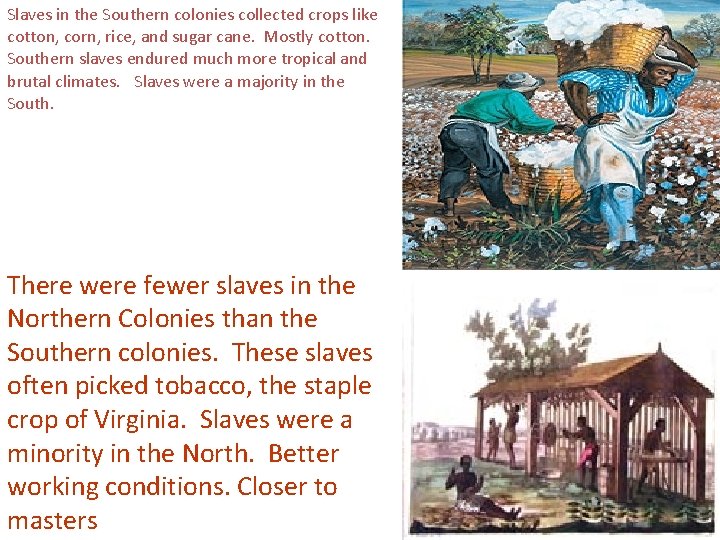
Slaves in the Southern colonies collected crops like cotton, corn, rice, and sugar cane. Mostly cotton. Southern slaves endured much more tropical and brutal climates. Slaves were a majority in the South. There were fewer slaves in the Northern Colonies than the Southern colonies. These slaves often picked tobacco, the staple crop of Virginia. Slaves were a minority in the North. Better working conditions. Closer to masters
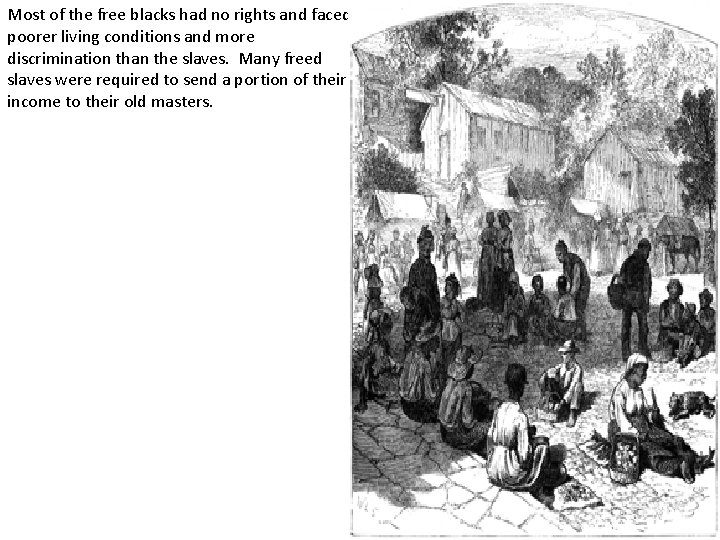
Most of the free blacks had no rights and faced poorer living conditions and more discrimination than the slaves. Many freed slaves were required to send a portion of their income to their old masters.
3 Crops Slaves Grew 2 Things about Mercantilism 1 Favorite Thing You Learned
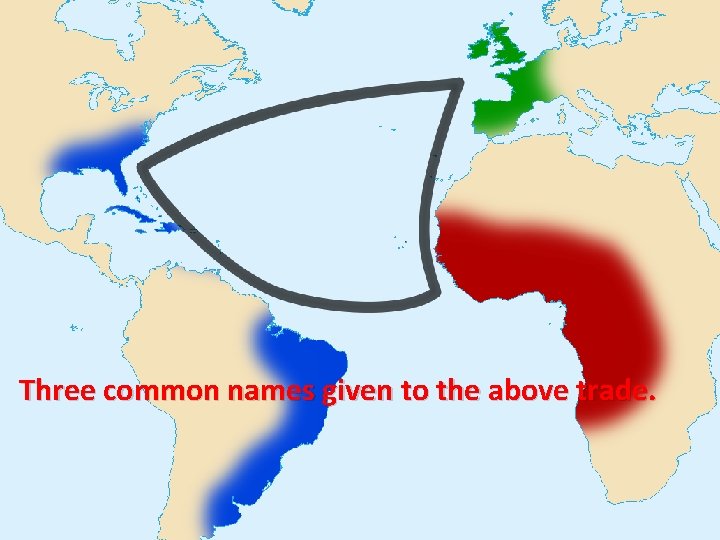
Three common names given to the above trade.
Trans-Atlantic Slave Trade Atlantic System Triangular Trade
MIDDLE PASSAGE The route bringing slaves from Africa to the Americas.