
transamination reaction amino acid amino group keto acid
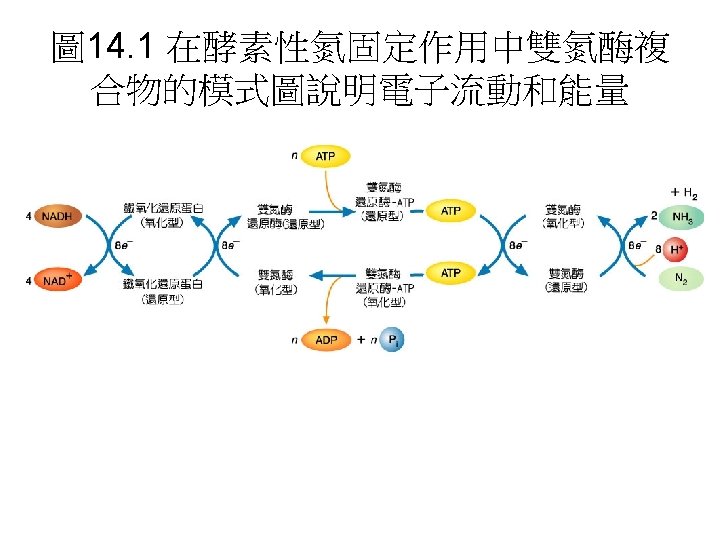
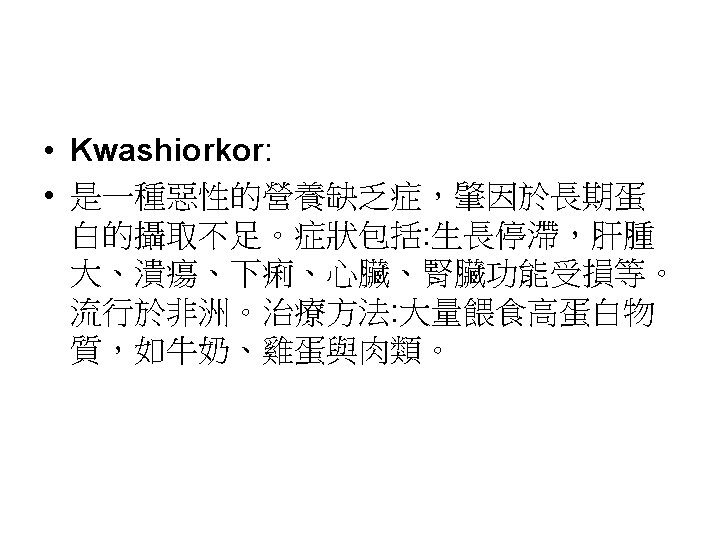
- Slides: 121
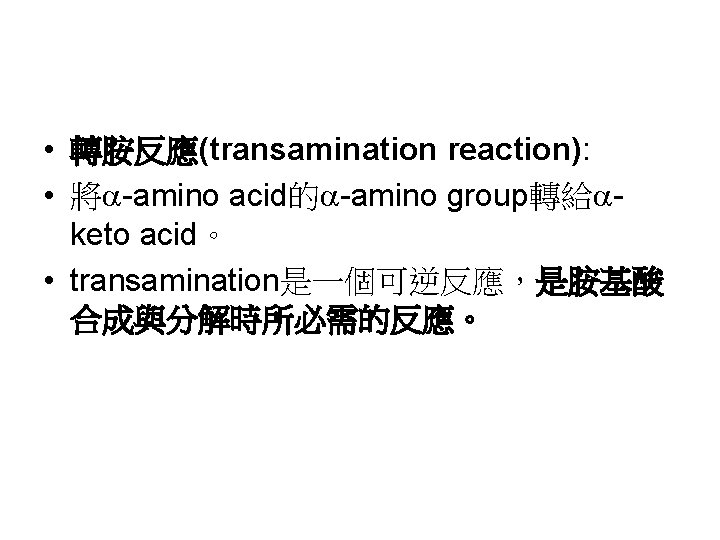
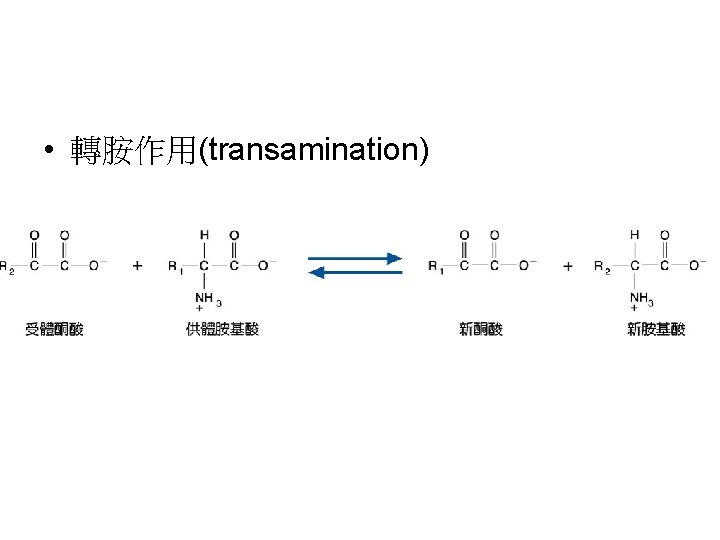
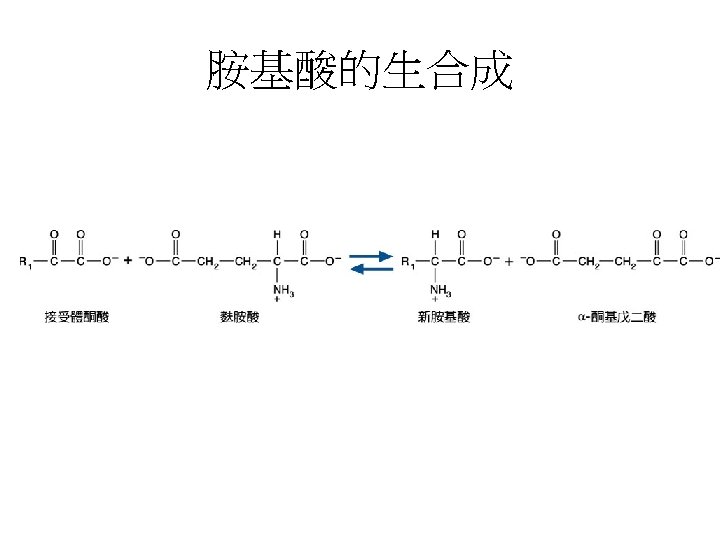
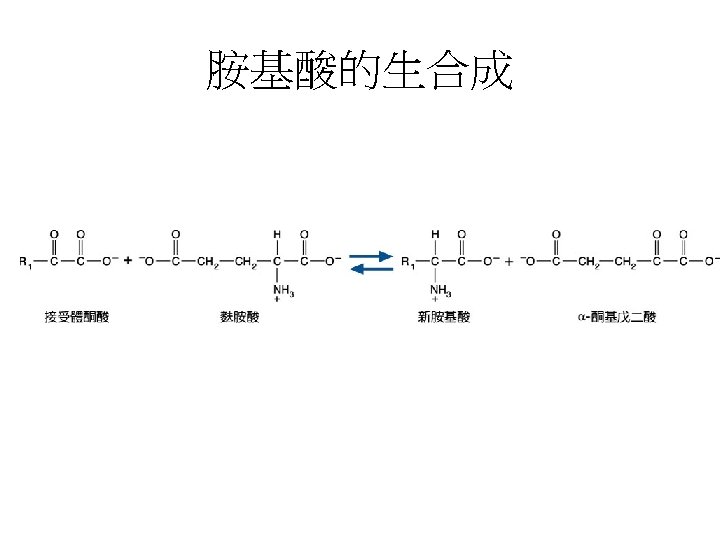
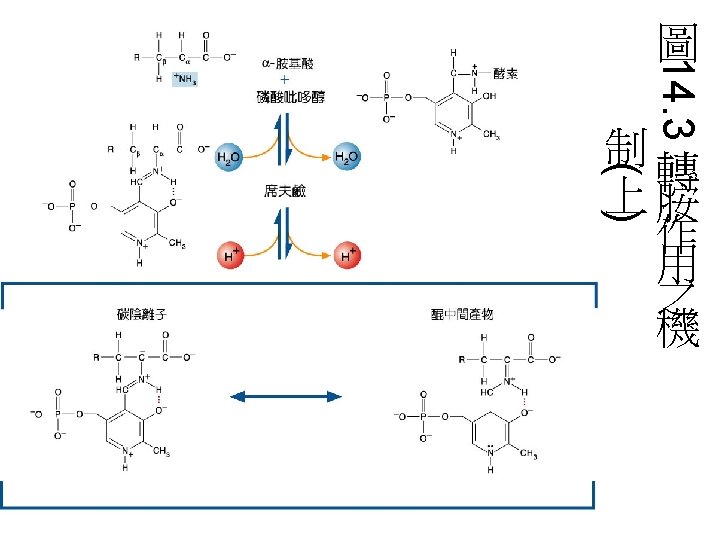
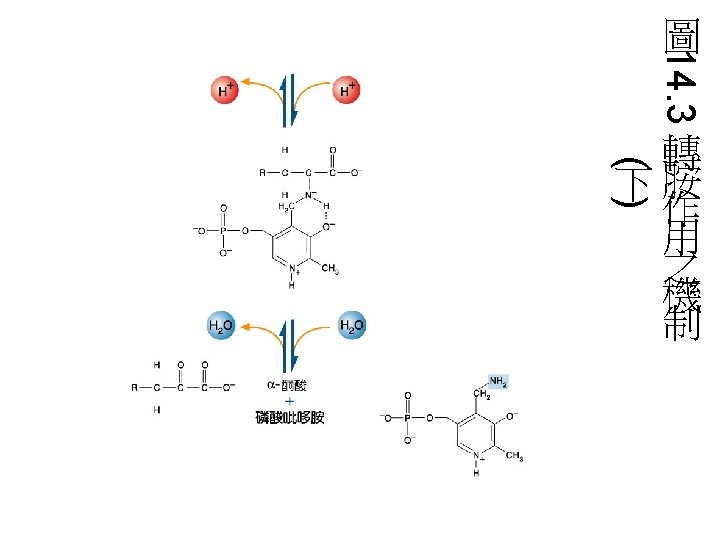
• 轉胺反應(transamination reaction): • 將 -amino acid的 -amino group轉給 keto acid。 • transamination是一個可逆反應,是胺基酸 合成與分解時所必需的反應。
• 轉胺作用(transamination)
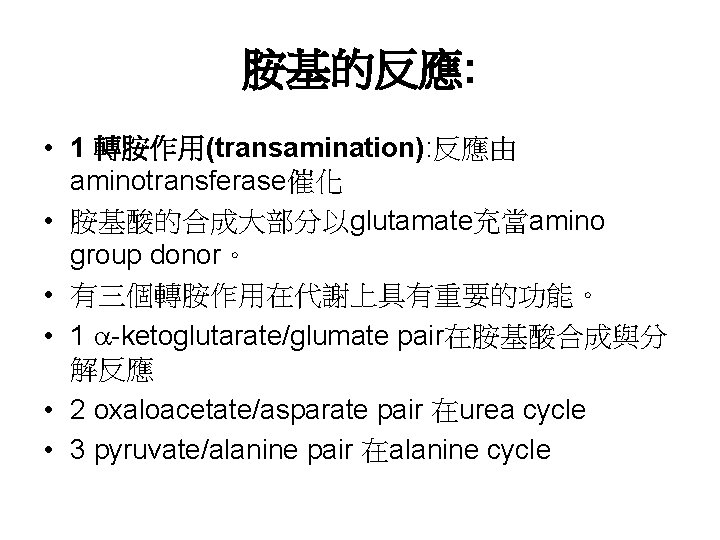
胺基的反應: • 1 轉胺作用(transamination): 反應由 aminotransferase催化 • 胺基酸的合成大部分以glutamate充當amino group donor。 • 有三個轉胺作用在代謝上具有重要的功能。 • 1 -ketoglutarate/glumate pair在胺基酸合成與分 解反應 • 2 oxaloacetate/asparate pair 在urea cycle • 3 pyruvate/alanine pair 在alanine cycle
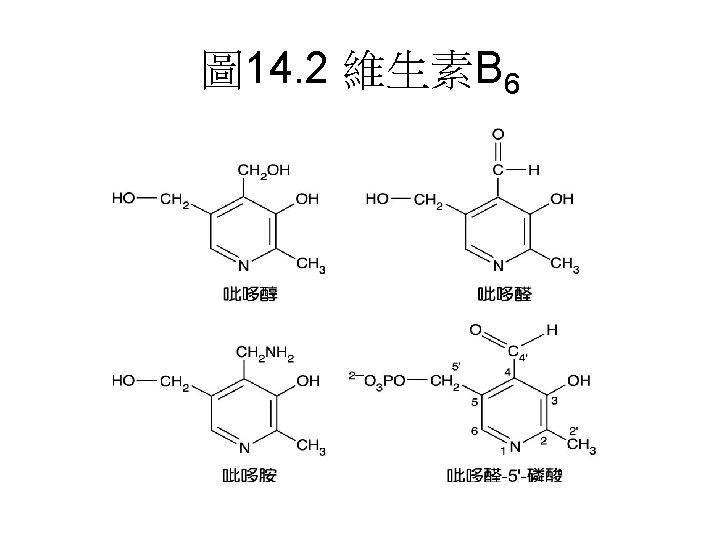
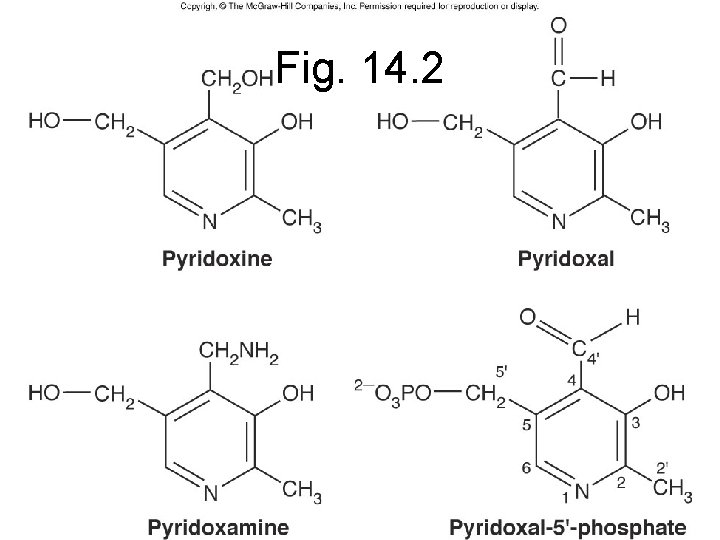
Fig. 14. 2
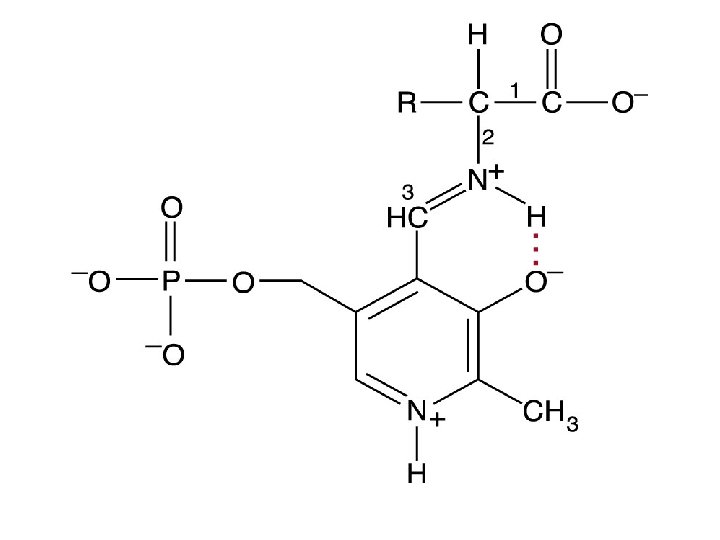
• pyridoxal-5 -phosphate(PLP): • 由pyridoxine(Vitamin B 6)組成是轉胺作用的 coenzyme。需PLP的酵素中,PLP是接在 Lysine residue上。PLP與胺基酸上的 amino group結合形成中間物 (intermediate)(如圖),形成Schiff base
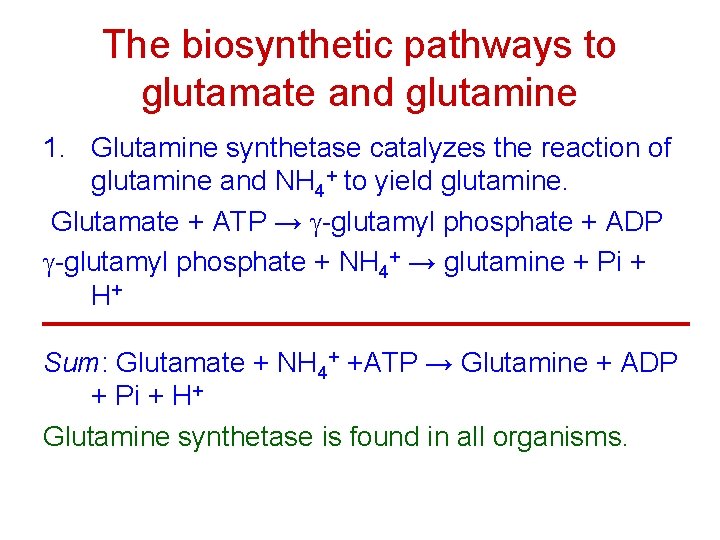
The biosynthetic pathways to glutamate and glutamine 1. Glutamine synthetase catalyzes the reaction of glutamine and NH 4+ to yield glutamine. Glutamate + ATP → -glutamyl phosphate + ADP -glutamyl phosphate + NH 4+ → glutamine + Pi + H+ Sum: Glutamate + NH 4+ +ATP → Glutamine + ADP + Pi + H+ Glutamine synthetase is found in all organisms.
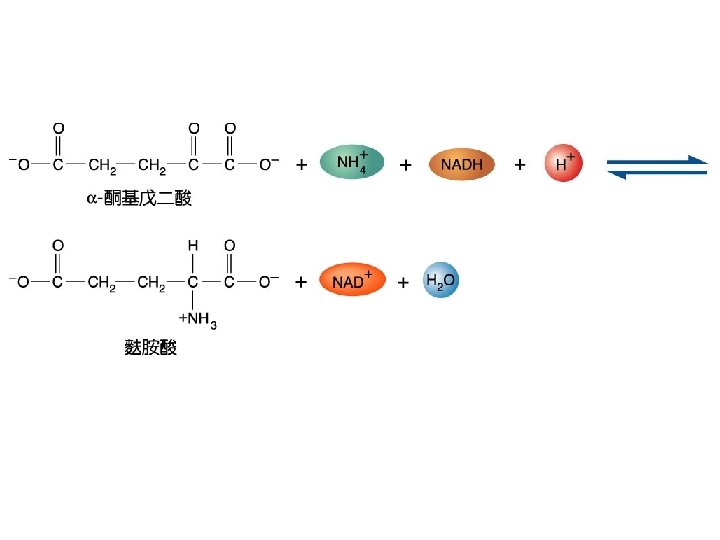
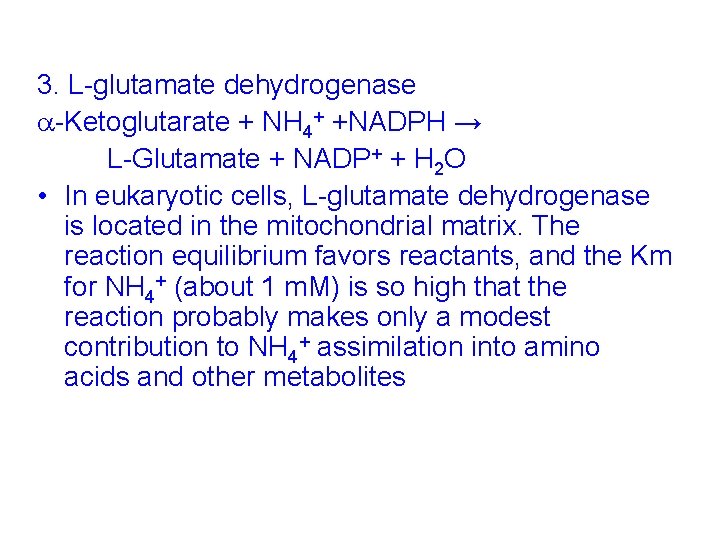
3. L-glutamate dehydrogenase -Ketoglutarate + NH 4+ +NADPH → L-Glutamate + NADP+ + H 2 O • In eukaryotic cells, L-glutamate dehydrogenase is located in the mitochondrial matrix. The reaction equilibrium favors reactants, and the Km for NH 4+ (about 1 m. M) is so high that the reaction probably makes only a modest contribution to NH 4+ assimilation into amino acids and other metabolites
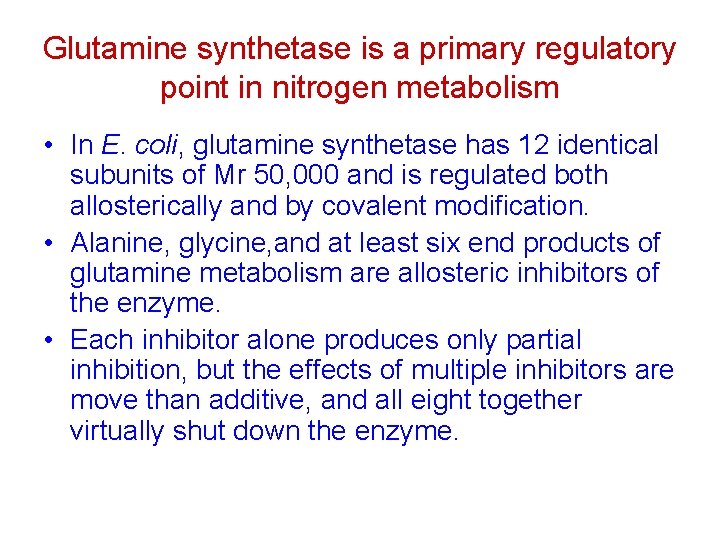
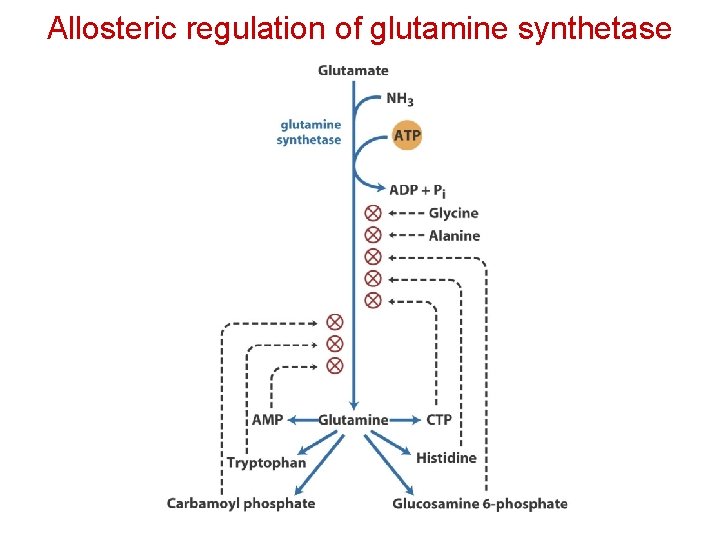
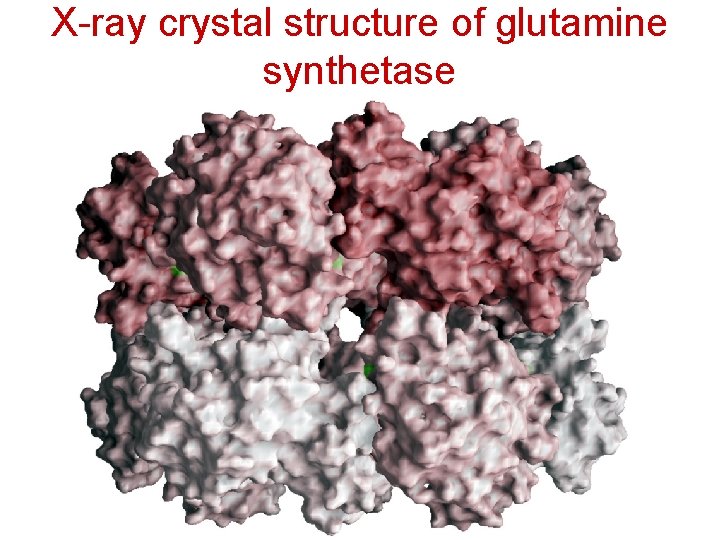
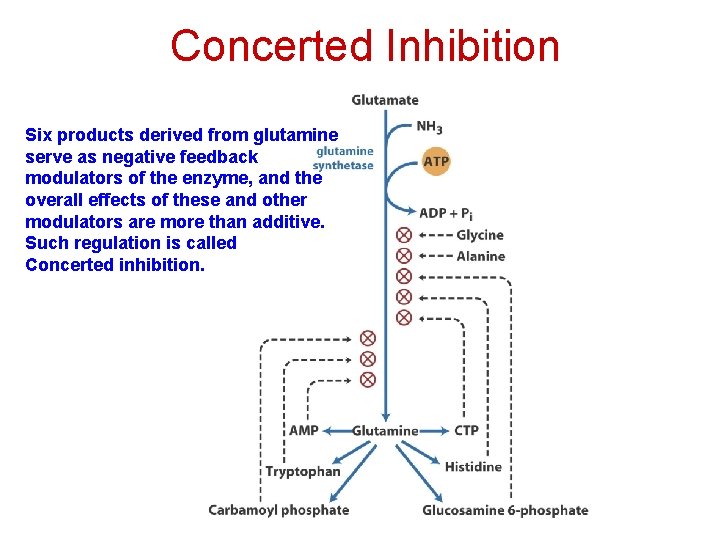
Glutamine synthetase is a primary regulatory point in nitrogen metabolism • In E. coli, glutamine synthetase has 12 identical subunits of Mr 50, 000 and is regulated both allosterically and by covalent modification. • Alanine, glycine, and at least six end products of glutamine metabolism are allosteric inhibitors of the enzyme. • Each inhibitor alone produces only partial inhibition, but the effects of multiple inhibitors are move than additive, and all eight together virtually shut down the enzyme.
Allosteric regulation of glutamine synthetase
X-ray crystal structure of glutamine synthetase
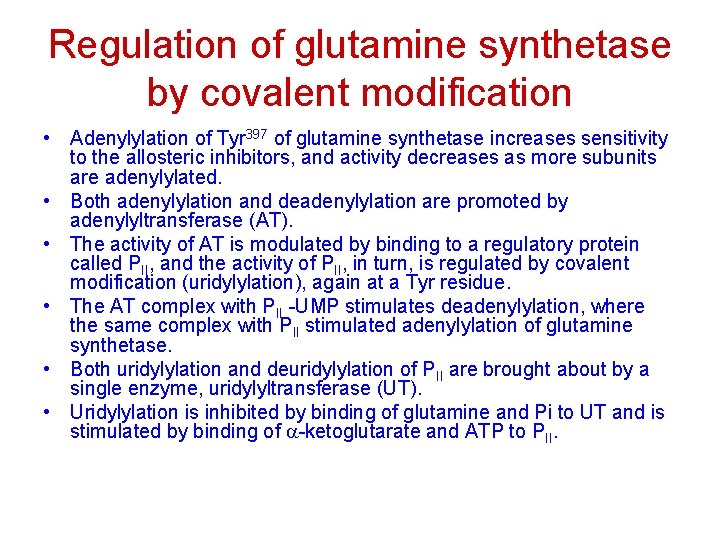
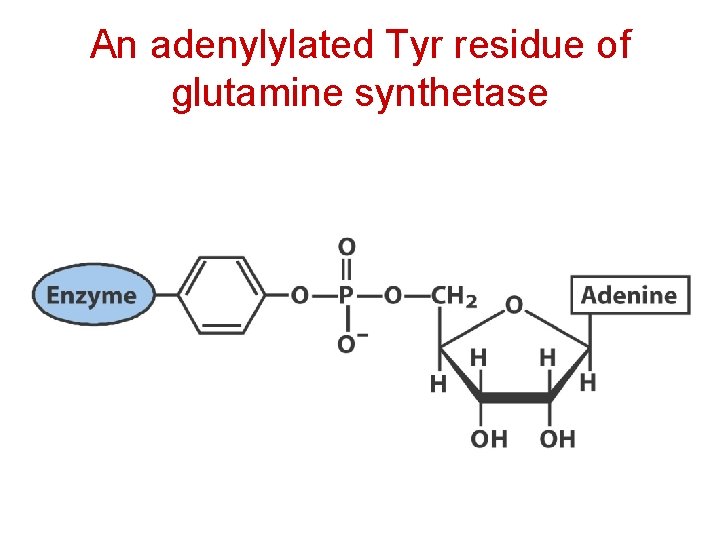
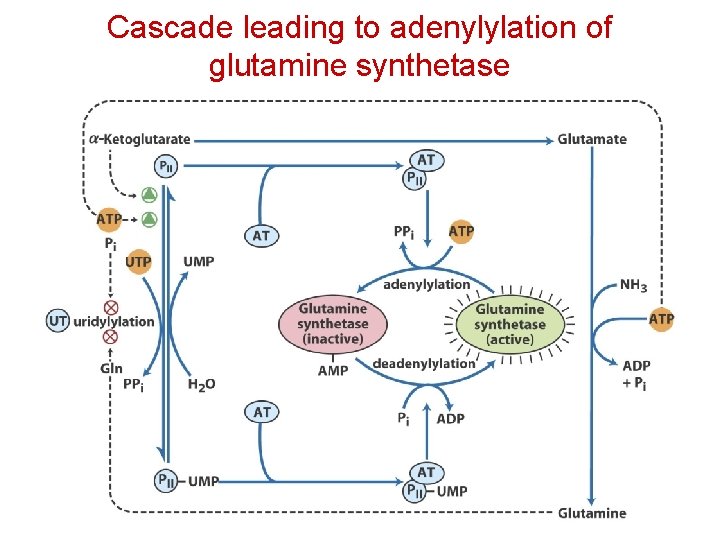
Regulation of glutamine synthetase by covalent modification • Adenylylation of Tyr 397 of glutamine synthetase increases sensitivity to the allosteric inhibitors, and activity decreases as more subunits are adenylylated. • Both adenylylation and deadenylylation are promoted by adenylyltransferase (AT). • The activity of AT is modulated by binding to a regulatory protein called PII, and the activity of PII, in turn, is regulated by covalent modification (uridylylation), again at a Tyr residue. • The AT complex with PII -UMP stimulates deadenylylation, where the same complex with PII stimulated adenylylation of glutamine synthetase. • Both uridylylation and deuridylylation of PII are brought about by a single enzyme, uridylyltransferase (UT). • Uridylylation is inhibited by binding of glutamine and Pi to UT and is stimulated by binding of -ketoglutarate and ATP to PII.
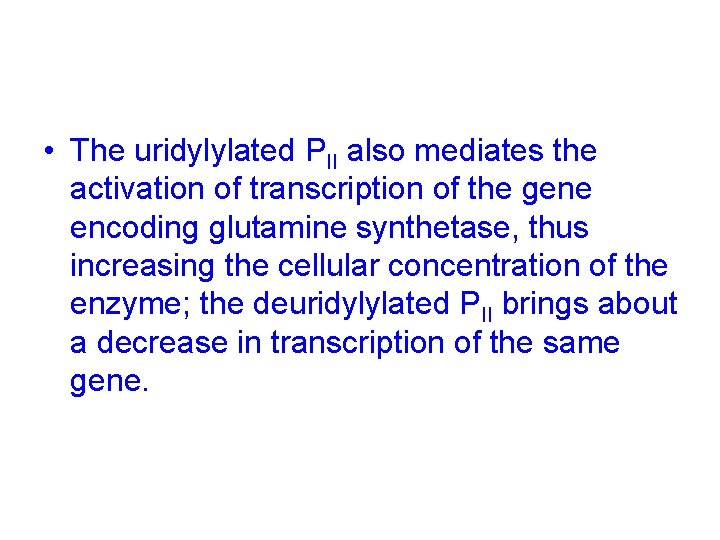
• The uridylylated PII also mediates the activation of transcription of the gene encoding glutamine synthetase, thus increasing the cellular concentration of the enzyme; the deuridylylated PII brings about a decrease in transcription of the same gene.
An adenylylated Tyr residue of glutamine synthetase
Cascade leading to adenylylation of glutamine synthetase
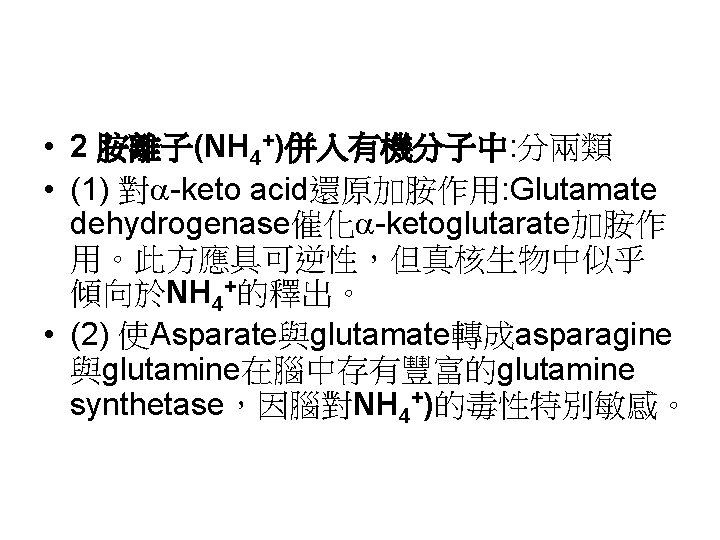
• (2) 使Asparate與glutamate轉成asparagine 與glutamine在腦中存有豐富的glutamine synthetase,因腦對NH 4+)的毒性特別敏感 • glutamine synthetase催化之反應: • glutamate + ATP + NH 4+ glutamine + • ADP + P i • Asparagine的合成,需 Asparagine synthase
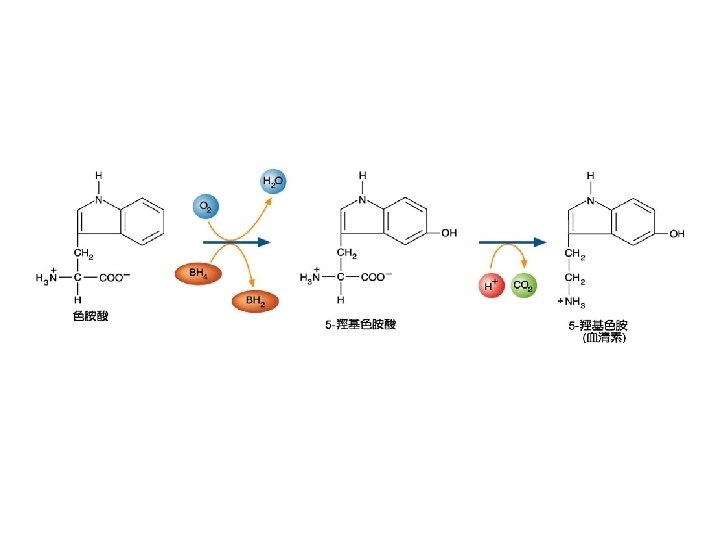
• 胺基酸的合成(synthesis of the amino acid) • 在動物中所有的NAA是由glycerate-3 phosphate、pyruvate、 -ketoglutarate 或oxaloacetate合成而來。另外tyrosine是 由phenylalanine合成而來。
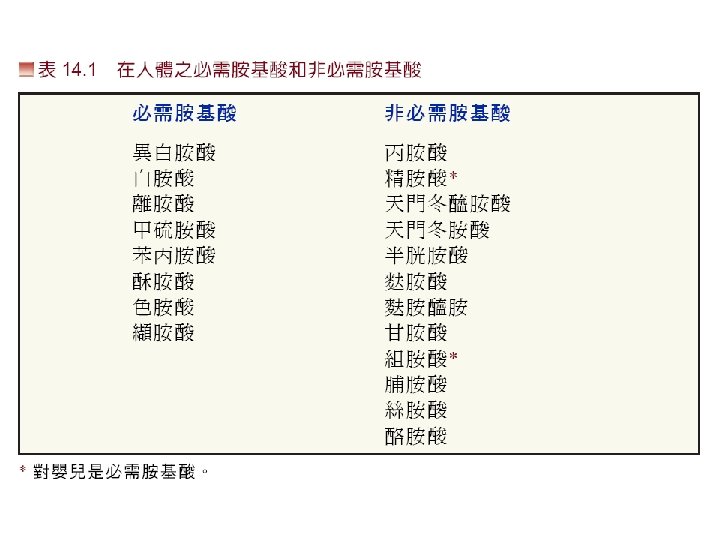
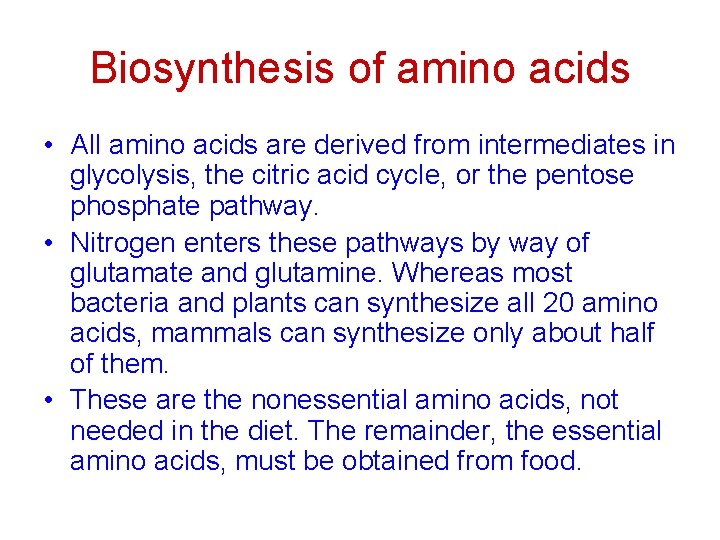
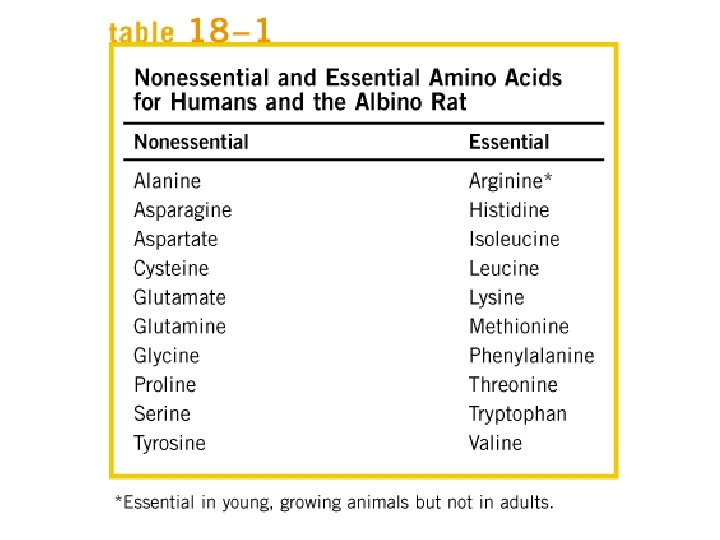
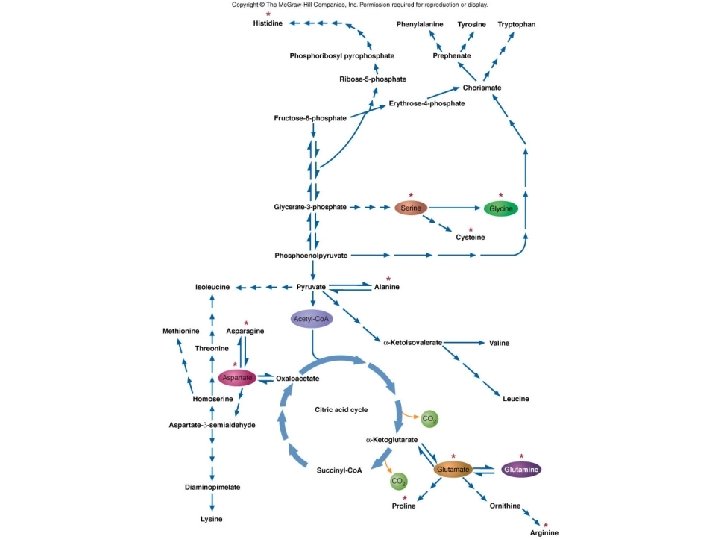
Biosynthesis of amino acids • All amino acids are derived from intermediates in glycolysis, the citric acid cycle, or the pentose phosphate pathway. • Nitrogen enters these pathways by way of glutamate and glutamine. Whereas most bacteria and plants can synthesize all 20 amino acids, mammals can synthesize only about half of them. • These are the nonessential amino acids, not needed in the diet. The remainder, the essential amino acids, must be obtained from food.
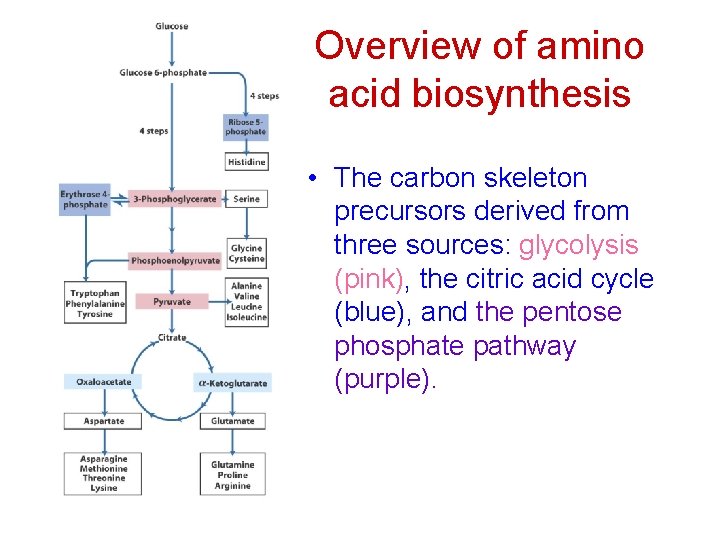
Overview of amino acid biosynthesis • The carbon skeleton precursors derived from three sources: glycolysis (pink), the citric acid cycle (blue), and the pentose phosphate pathway (purple).
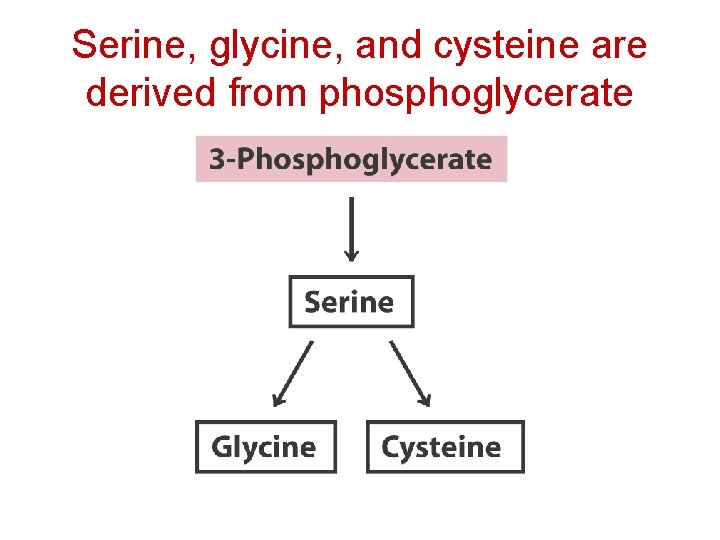
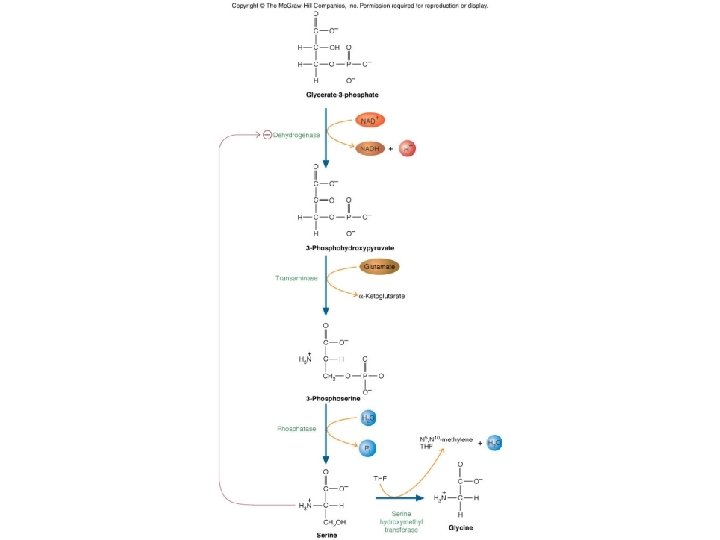
Serine, glycine, and cysteine are derived from phosphoglycerate
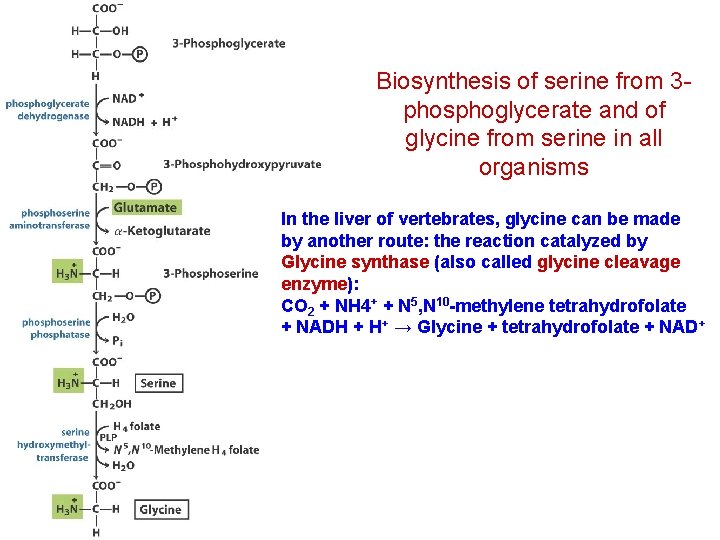
Biosynthesis of serine from 3 phosphoglycerate and of glycine from serine in all organisms In the liver of vertebrates, glycine can be made by another route: the reaction catalyzed by Glycine synthase (also called glycine cleavage enzyme): CO 2 + NH 4+ + N 5, N 10 -methylene tetrahydrofolate + NADH + H+ → Glycine + tetrahydrofolate + NAD+
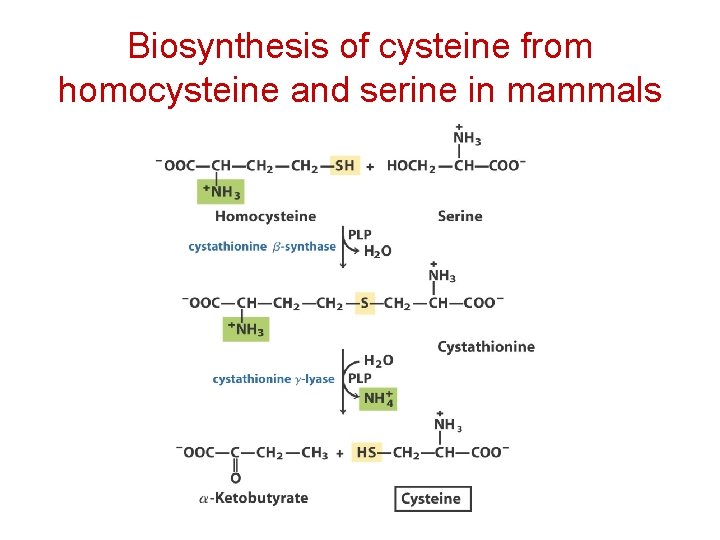
Biosynthesis of cysteine from homocysteine and serine in mammals
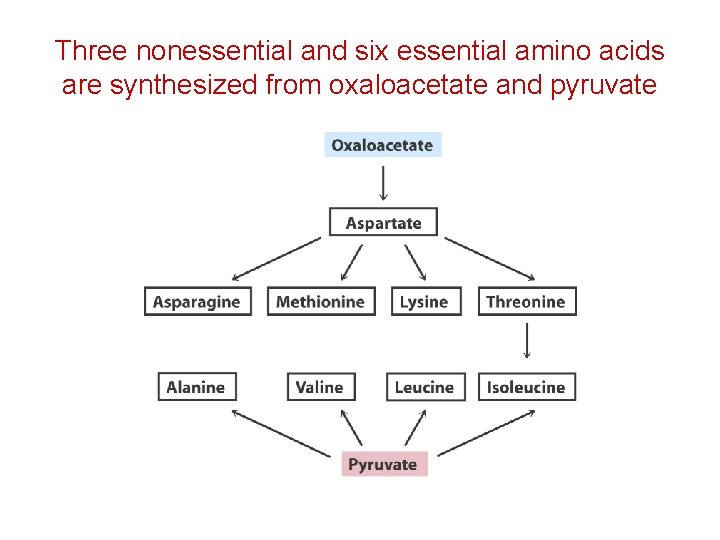
Three nonessential and six essential amino acids are synthesized from oxaloacetate and pyruvate
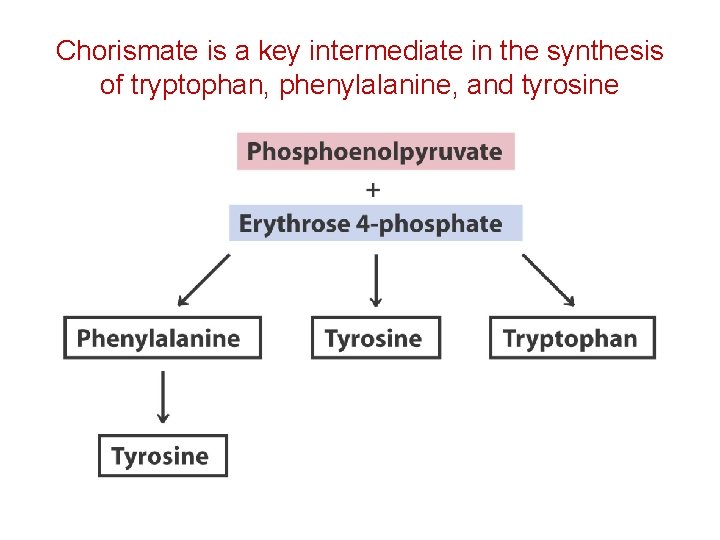
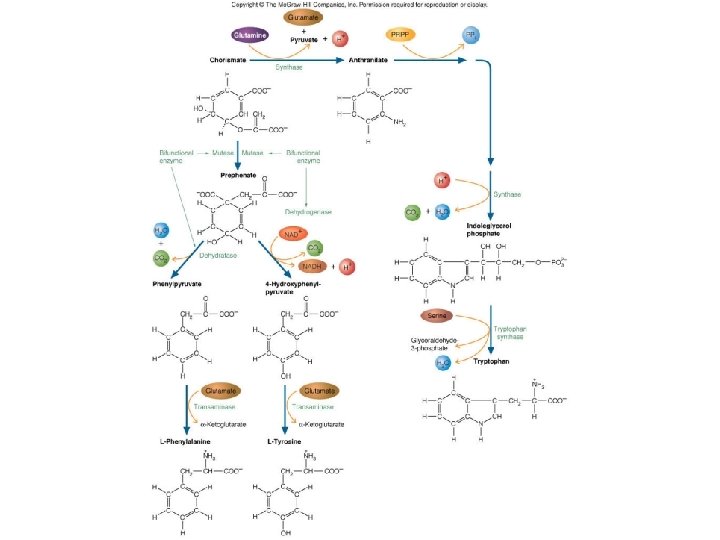
Chorismate is a key intermediate in the synthesis of tryptophan, phenylalanine, and tyrosine
Concerted Inhibition Six products derived from glutamine serve as negative feedback modulators of the enzyme, and the overall effects of these and other modulators are more than additive. Such regulation is called Concerted inhibition.
Fig. 14. 4
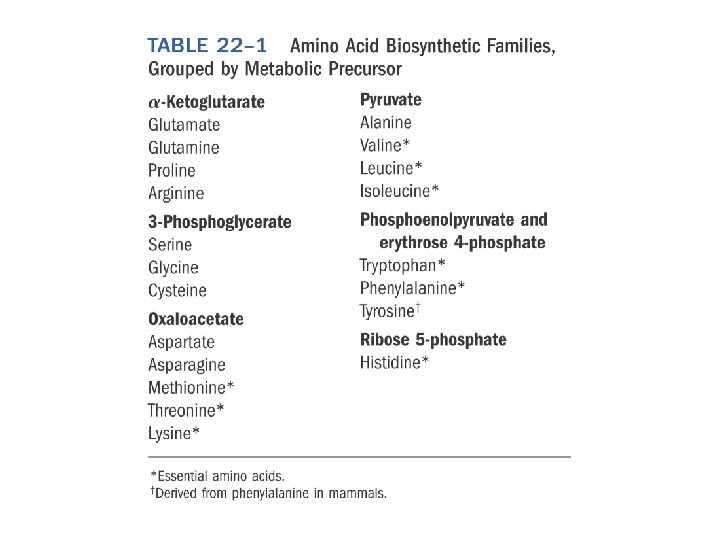
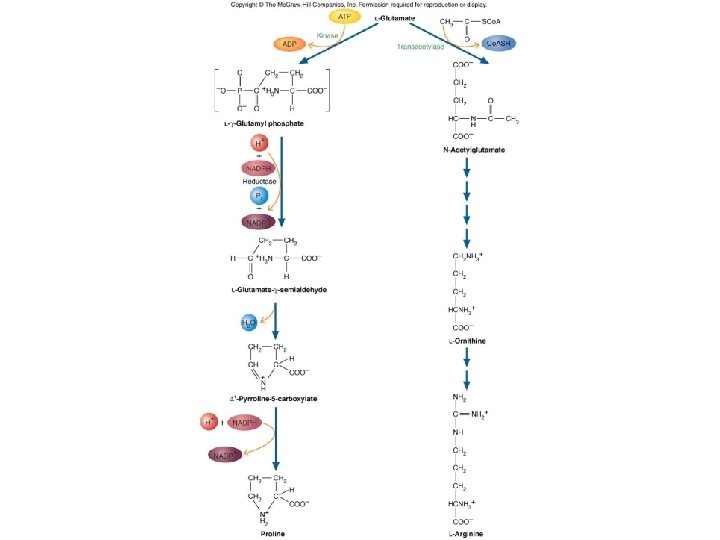
• 胺基酸的生合成途徑有一個共同特性: 它們 的碳骨架是由glycolysis、pentose phosphate pathway與citric acid cycle的中 間產物而來,可分為 6個族群。 • 1 Glutamate family: 以 -ketoglutarate為先 驅物,合成glutamate、glutamine、proline 與arginine。
Fig. 14. 5
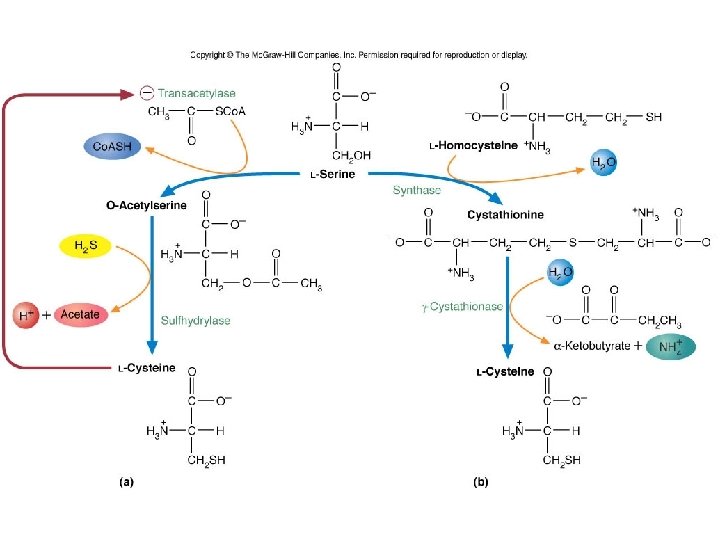
• 2 Serine family: 以glycerate-3 -phosphate 為先驅物,合成serine、glycine與cysteine • 這一族的成員在生合成(anabolism)中扮演 重要的角色。
Fig. 14. 6
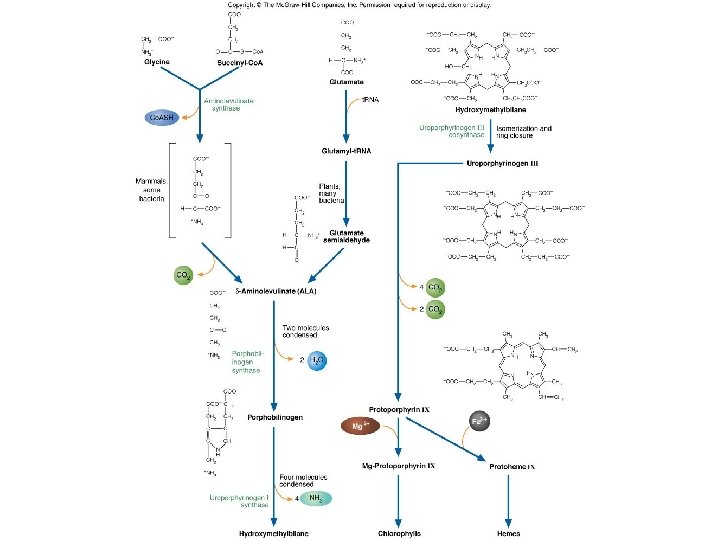
• Glycine是合成嘌呤(purine)、porphyrin(紫 質)、glutathione的先驅物(precursor)。 • Serine是合成ethanolamine與sphingosine 的先驅物。 • cysteine在硫代謝中具重要的角色。
Fig. 14. 7
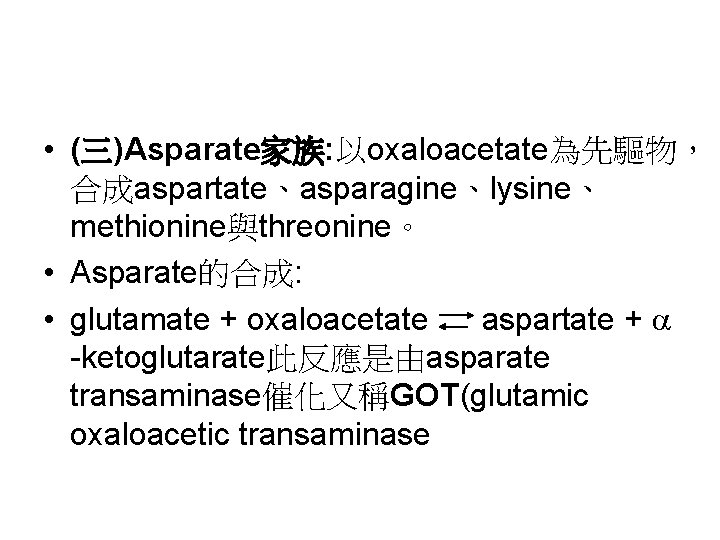
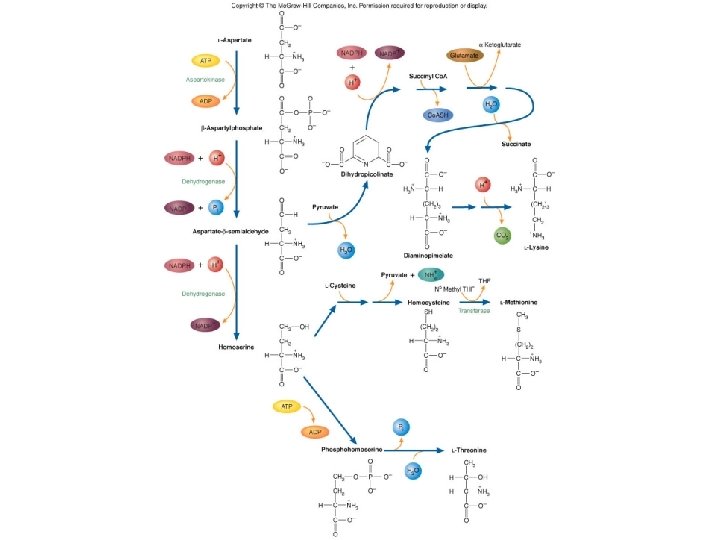
• (三)Asparate家族: 以oxaloacetate為先驅物, 合成aspartate、asparagine、lysine、 methionine與threonine。 • Asparate的合成: • glutamate + oxaloacetate aspartate + -ketoglutarate此反應是由asparate transaminase催化又稱GOT(glutamic oxaloacetic transaminase
Fig. 14. 8
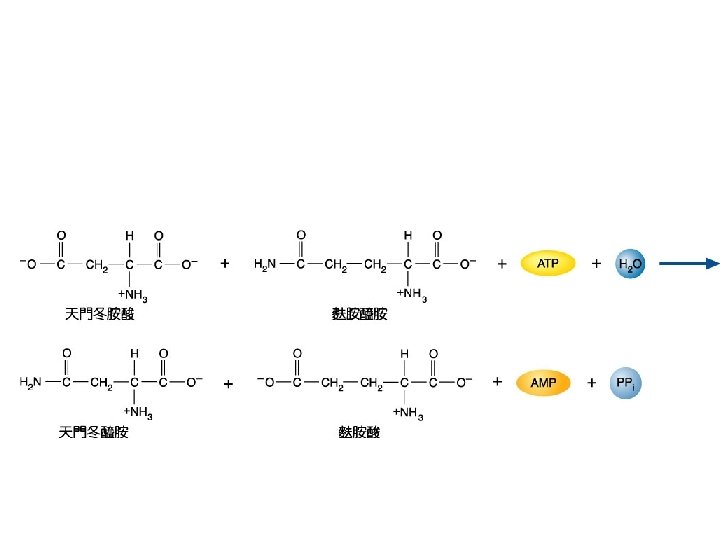
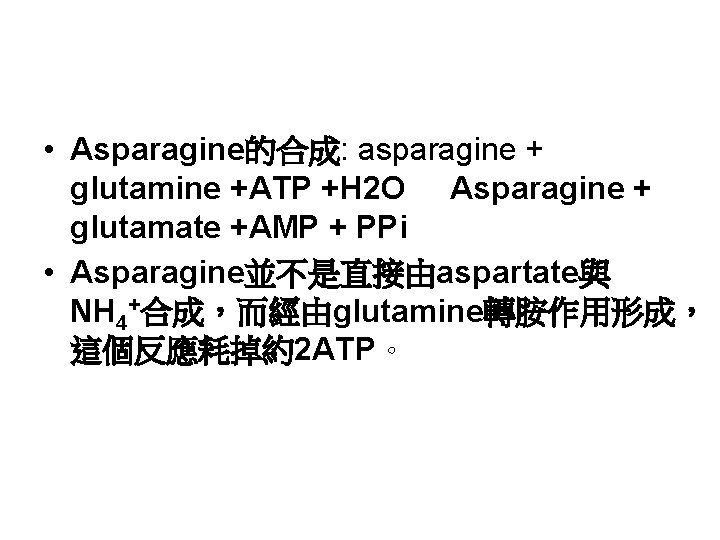
• Asparagine的合成: asparagine + glutamine +ATP +H 2 O Asparagine + glutamate +AMP + PPi • Asparagine並不是直接由aspartate與 NH 4+合成,而經由glutamine轉胺作用形成, 這個反應耗掉約2 ATP。
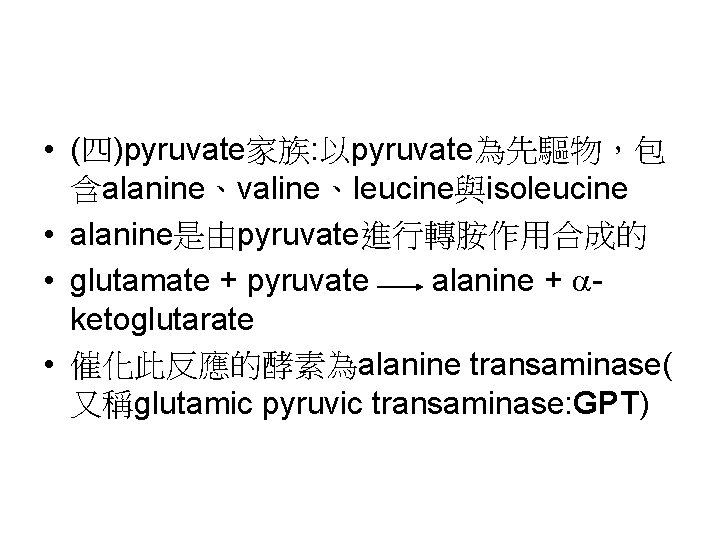
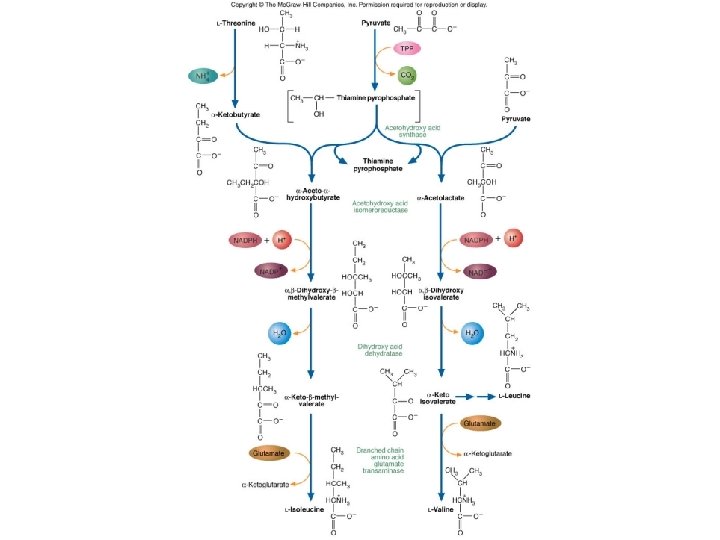
• (四)pyruvate家族: 以pyruvate為先驅物,包 含alanine、valine、leucine與isoleucine • alanine是由pyruvate進行轉胺作用合成的 • glutamate + pyruvate alanine + ketoglutarate • 催化此反應的酵素為alanine transaminase( 又稱glutamic pyruvic transaminase: GPT)
Fig. 14. 9
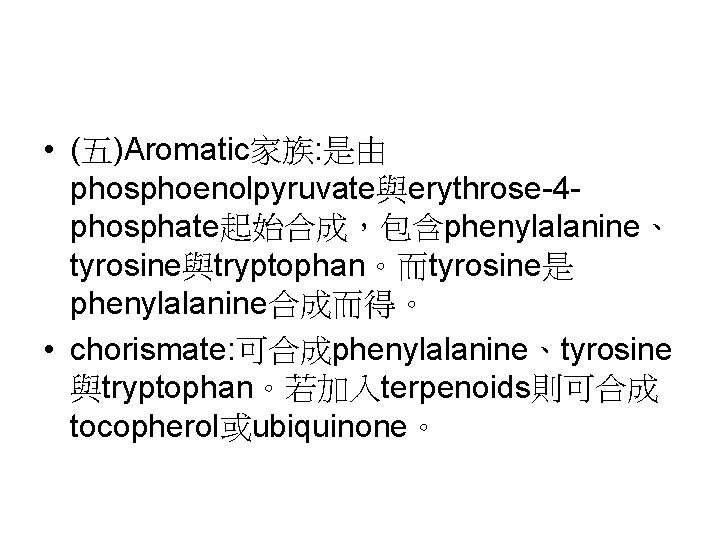
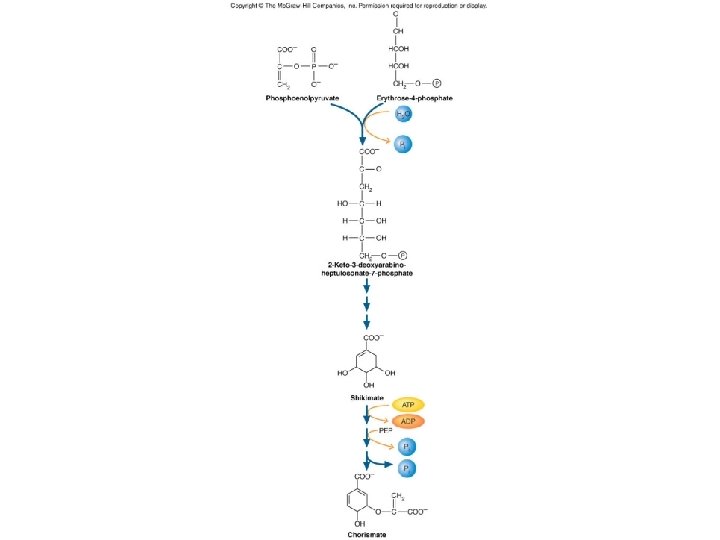
• (五)Aromatic家族: 是由 phosphoenolpyruvate與erythrose-4 phosphate起始合成,包含phenylalanine、 tyrosine與tryptophan。而tyrosine是 phenylalanine合成而得。 • chorismate: 可合成phenylalanine、tyrosine 與tryptophan。若加入terpenoids則可合成 tocopherol或ubiquinone。
Fig. 14. 10
Fig. 14. 11
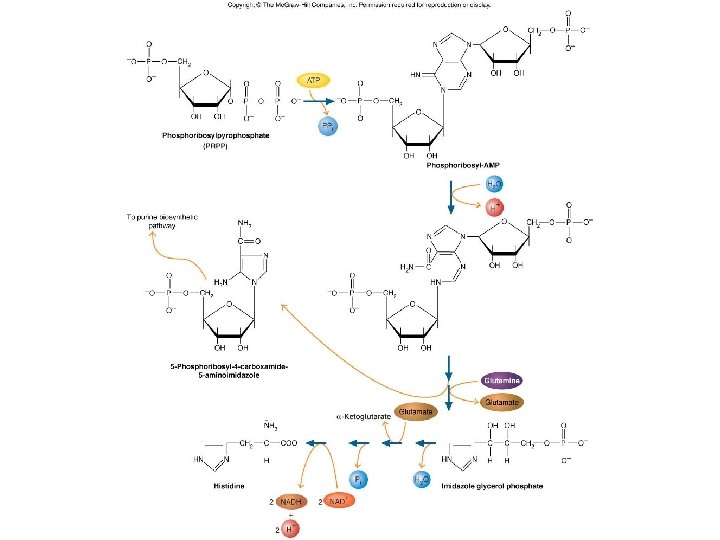
• (六)Histidine: 在健康的成人是屬於NAA, 是由 phosphoribosylpyrophosphate(PRPP), ATP與glutamine所合成。
Fig. 14. 12
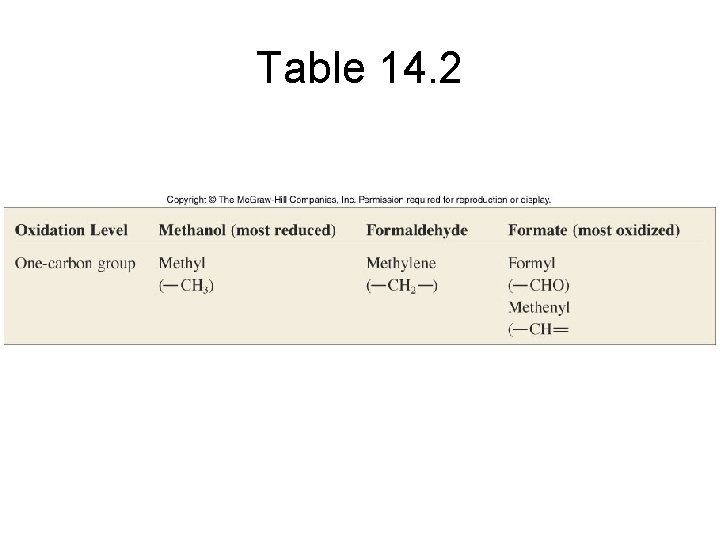
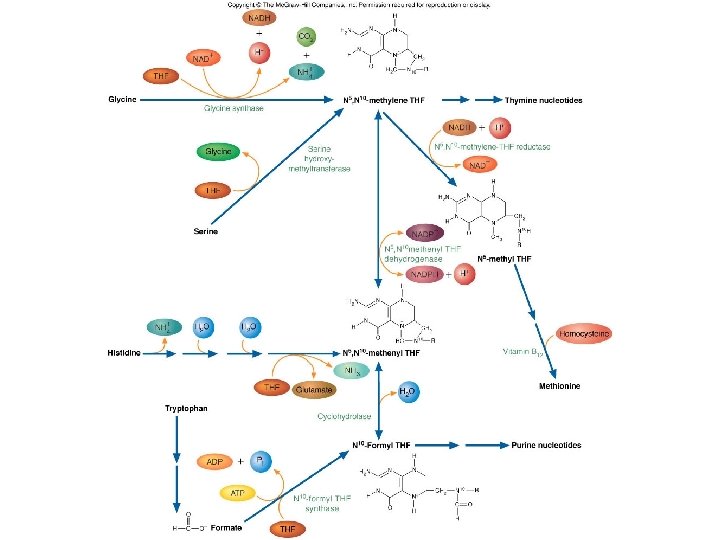
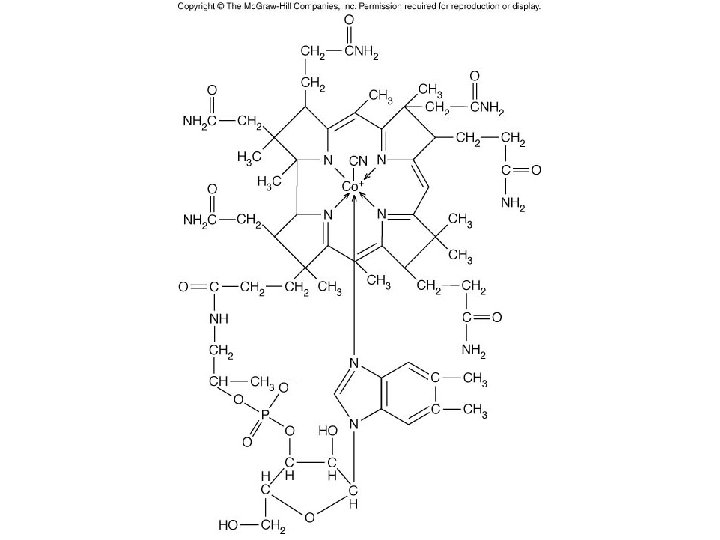
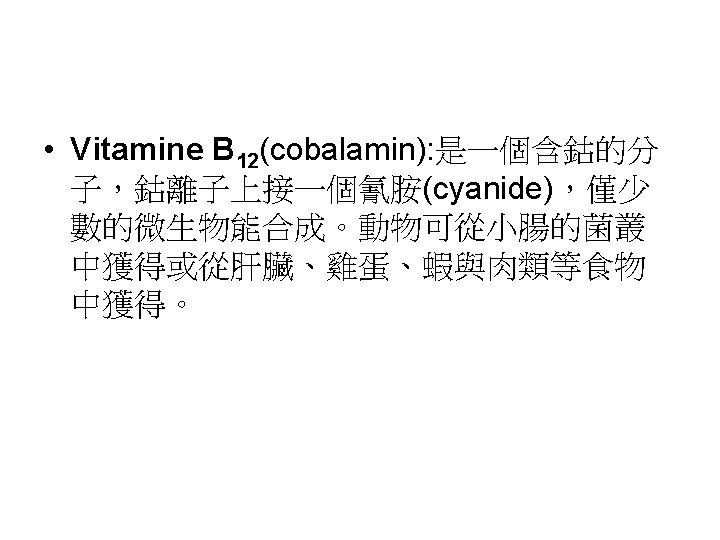
單碳的代謝(one-carbon metabolism): • 在生合成途徑(biosynthetic pathway)中,最 重要單碳的攜帶者(one carbon carrier)包含 (1)葉酸(folic acid) • (2)S-Adenosylmethionine。 • 另外Vit B 12也有此功能。
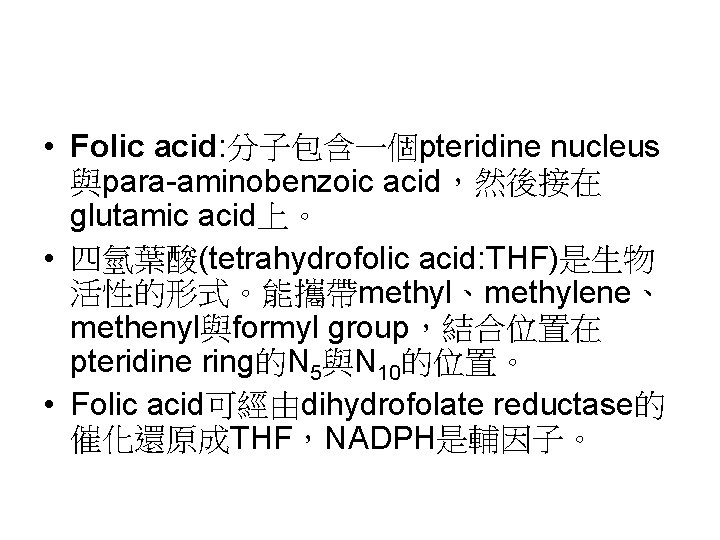
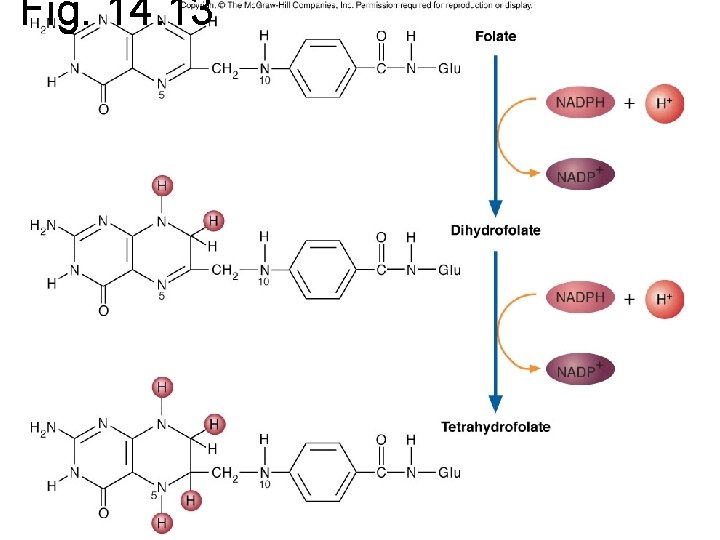
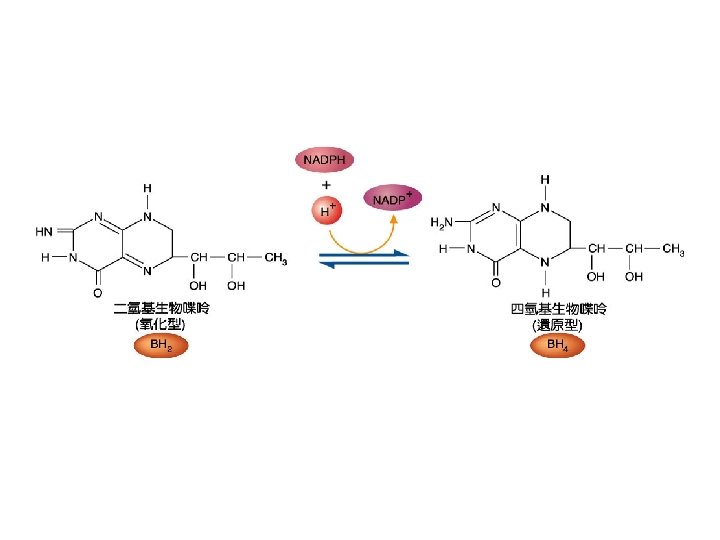
• Folic acid: 分子包含一個pteridine nucleus 與para-aminobenzoic acid,然後接在 glutamic acid上。 • 四氫葉酸(tetrahydrofolic acid: THF)是生物 活性的形式。能攜帶methyl、methylene、 methenyl與formyl group,結合位置在 pteridine ring的N 5與N 10的位置。 • Folic acid可經由dihydrofolate reductase的 催化還原成THF,NADPH是輔因子。
Fig. 14. 13
Table 14. 2
Fig. 14
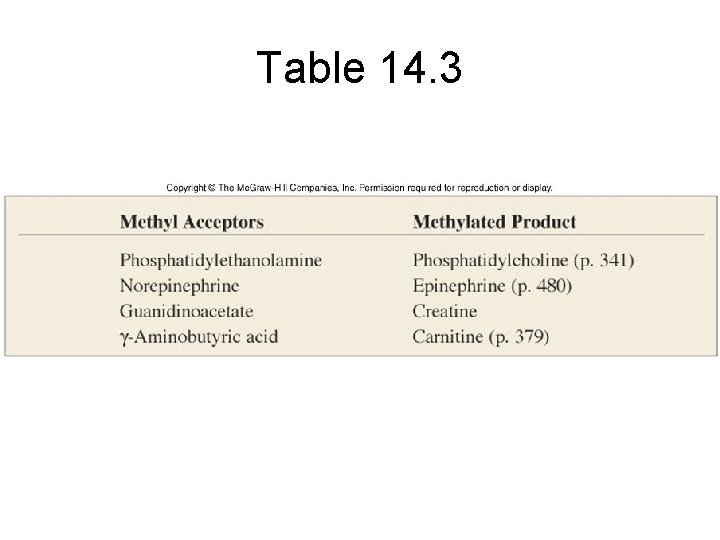
Table 14. 3
Fig. 14. 15
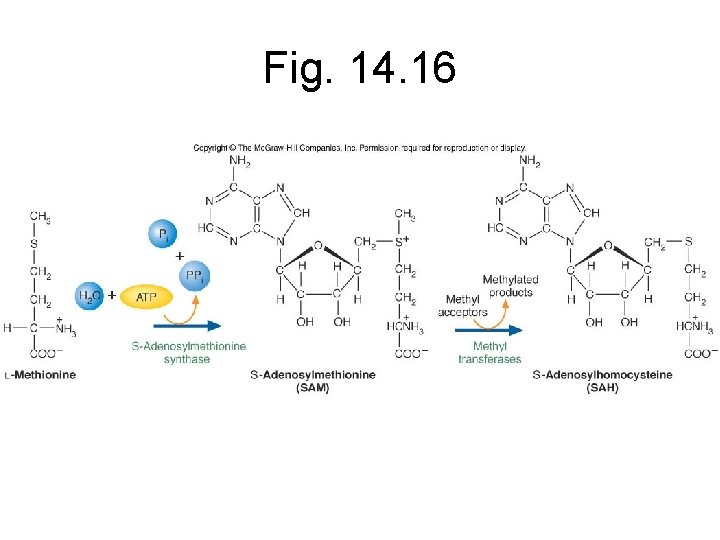
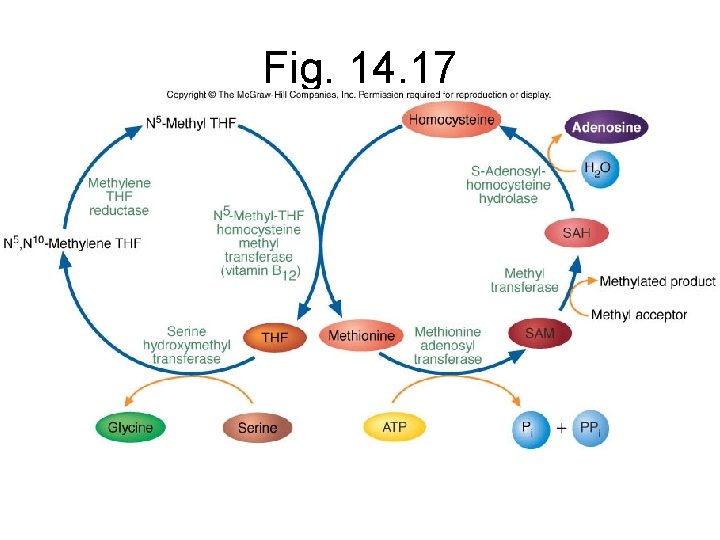
• S-adenosylmethionine(SAM): 單碳的代謝 中,SAM是甲烷基的供應者(methyl group donor)。由ATP與methionine在SAM synthase催化下形成。 • SAM失去一個-CH 3後會形成SAdenosylhomocysteine(SAH),可經由N 5 methyl THF補充。若methionine缺乏時也 可利用choline的甲烷基加入homocysteine 成methionine。
Fig. 14. 16
Fig. 14. 17
Fig. 14. 18
Fig. 14. 19
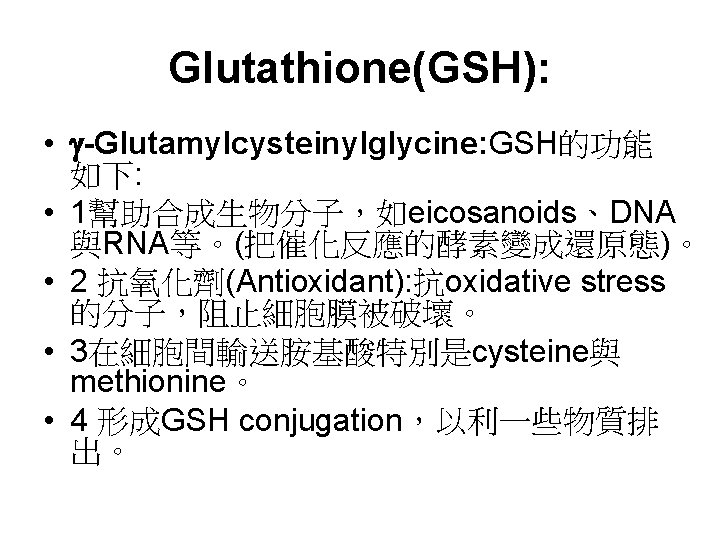
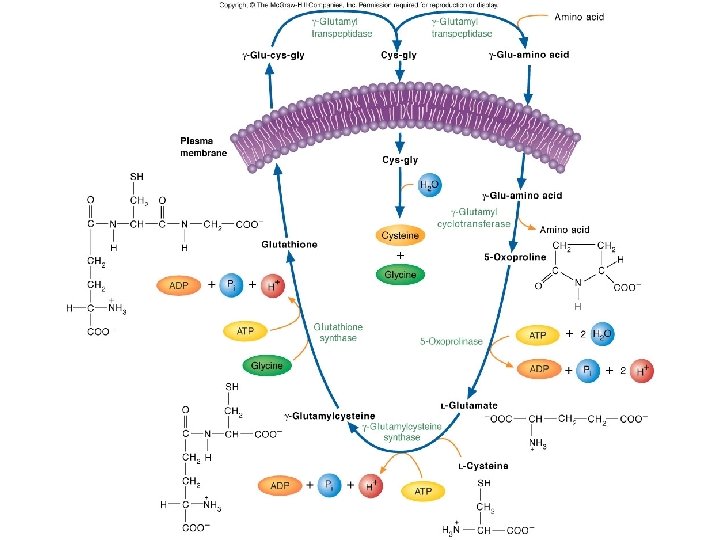
• -Glutamyl cycle: 存在一些組織中,具主 動運輸(active transport)數個胺基的特性(特 別是cysteine與methionine)。
神經傳導物質(neurotransmitters): • 具有激發性(excitatory)與抑制性(inhibitory) 效應: • Excitatory neurotransmitters: 如乙醯膽鹼 (acetylcholine)或glutamate等,能促進被傳 導的細胞膜去極化(depolarization) • ,能增加action potential。 • 足量的去極化反應(即達到action potential 的門檻),能啟動神經傳導物質的釋出。
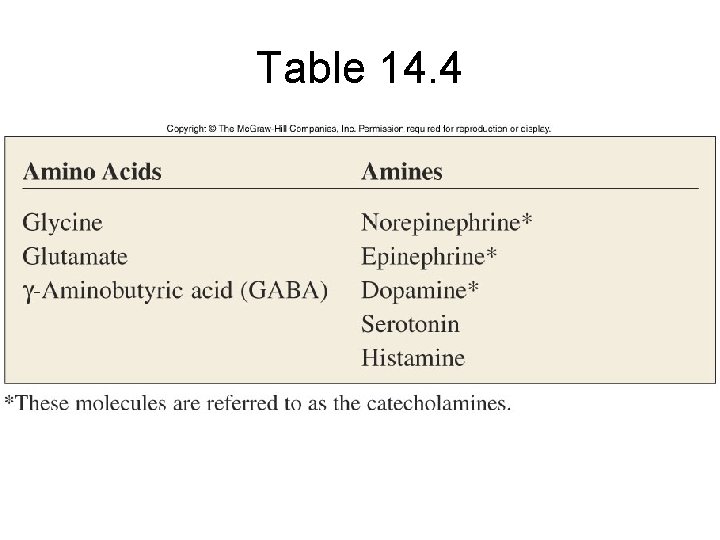
Table 14. 4
• Inhibitory neurotransmitters: 如glycine與 GABA,會造成Repolarization即抑制action potential的形成。 • 許多神經傳導物質胺基酸或其衍生物 (derivatives)後者又稱biogenic amines。
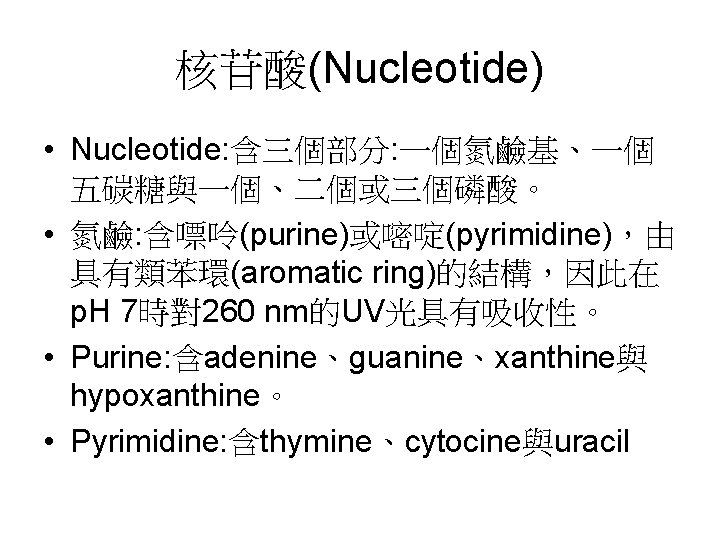
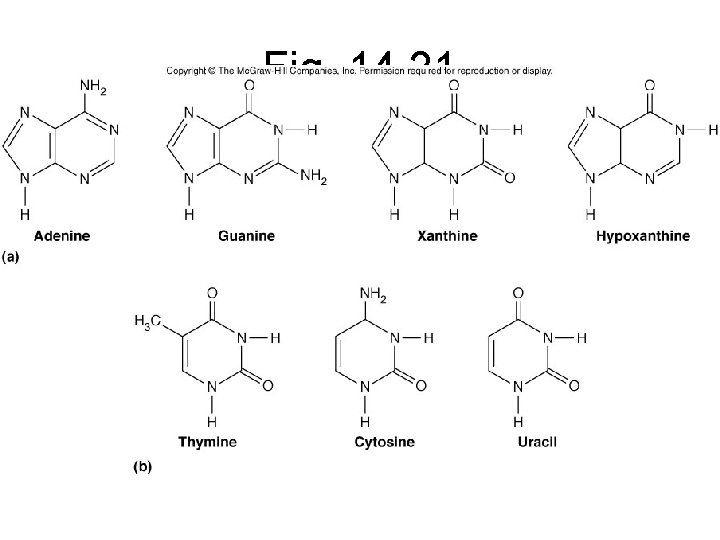
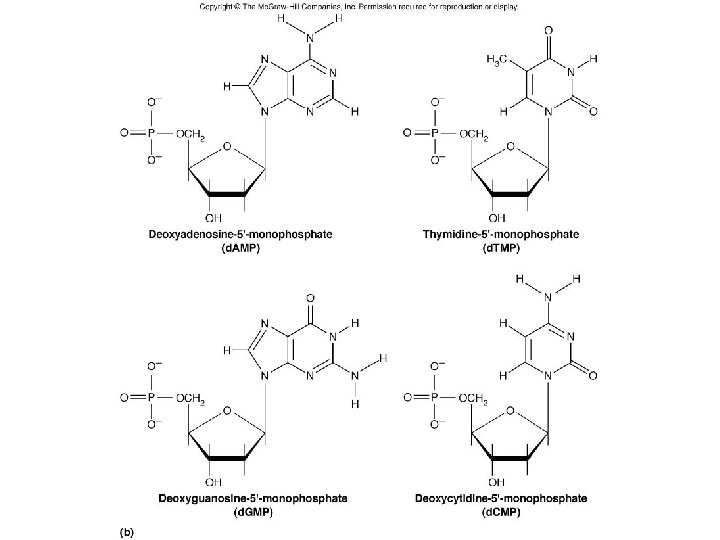
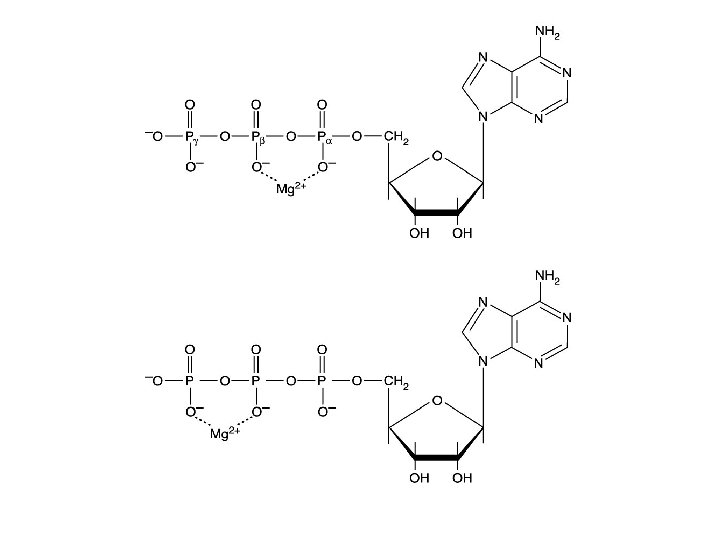
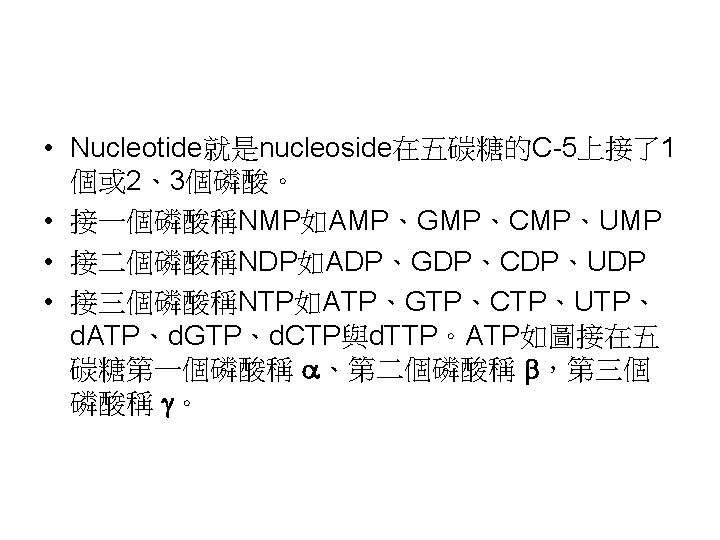
核苷酸(Nucleotide) • Nucleotide: 含三個部分: 一個氮鹼基、一個 五碳糖與一個、二個或三個磷酸。 • 氮鹼: 含嘌呤(purine)或嘧啶(pyrimidine),由 具有類苯環(aromatic ring)的結構,因此在 p. H 7時對260 nm的UV光具有吸收性。 • Purine: 含adenine、guanine、xanthine與 hypoxanthine。 • Pyrimidine: 含thymine、cytocine與uracil
Fig. 14. 20
Fig. 14. 21
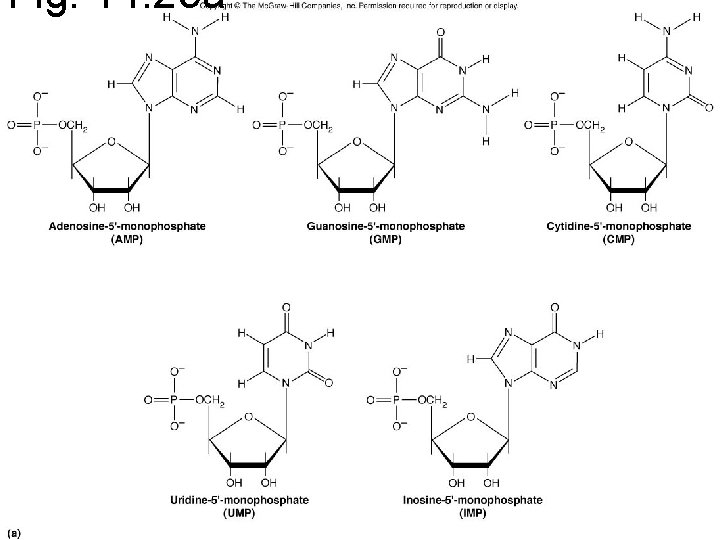
Fig. 14. 23 a
Fig. 14. 23 b
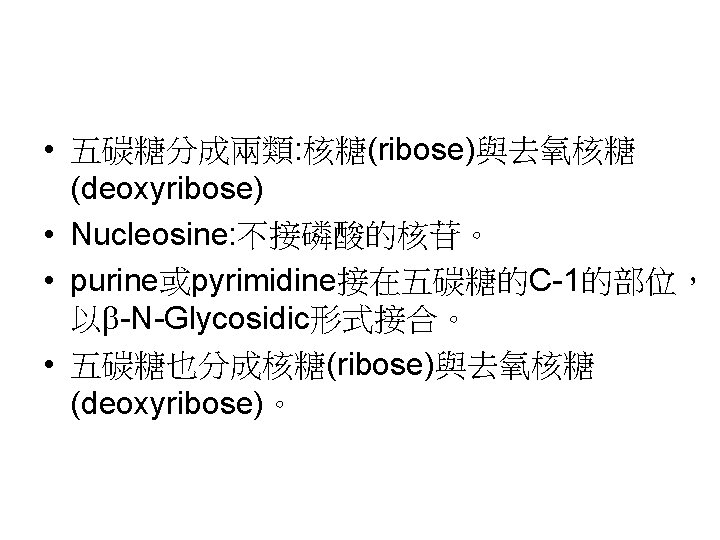
• 含ribose的nucleiside: adenosine、 guanosine、cytosine與uridine。 • 含deoxyribose的nucleoside: deoxyadenosine、deoxyguanosine、 deoxycytosine與deoxythyminosine。
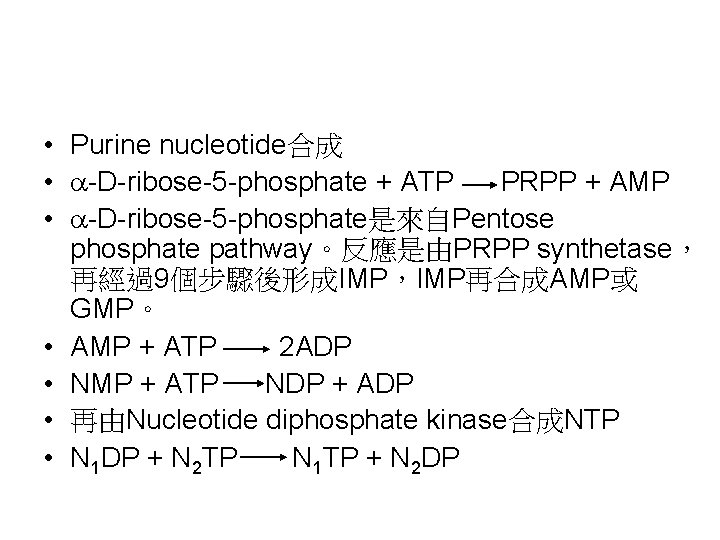
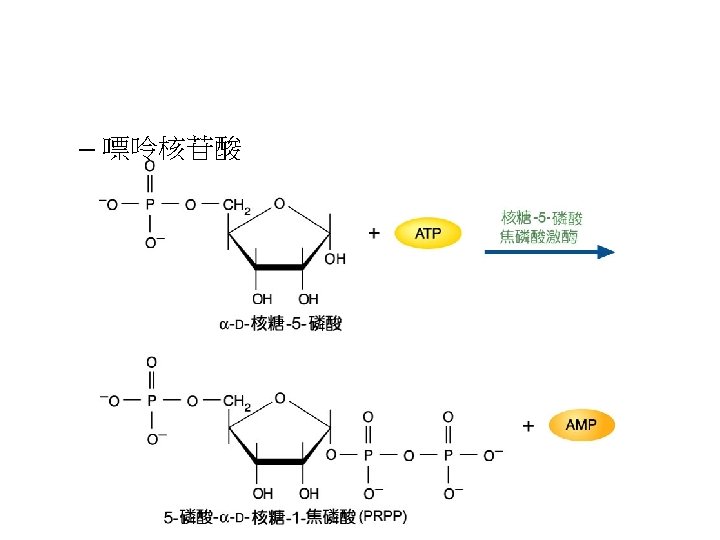
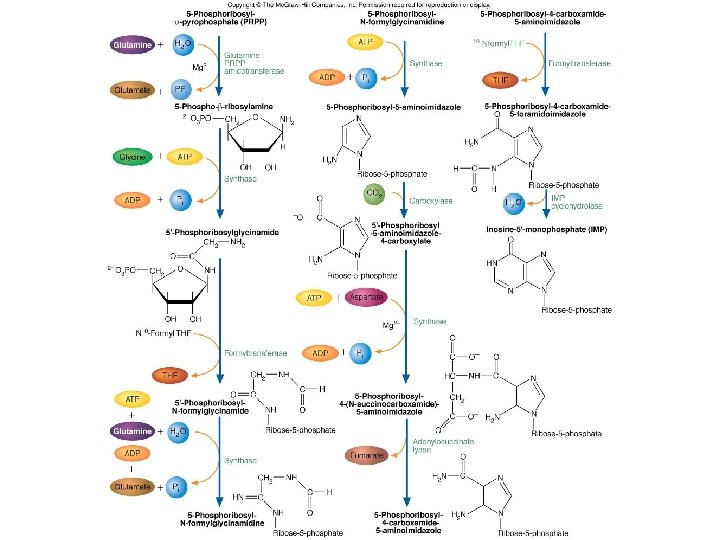
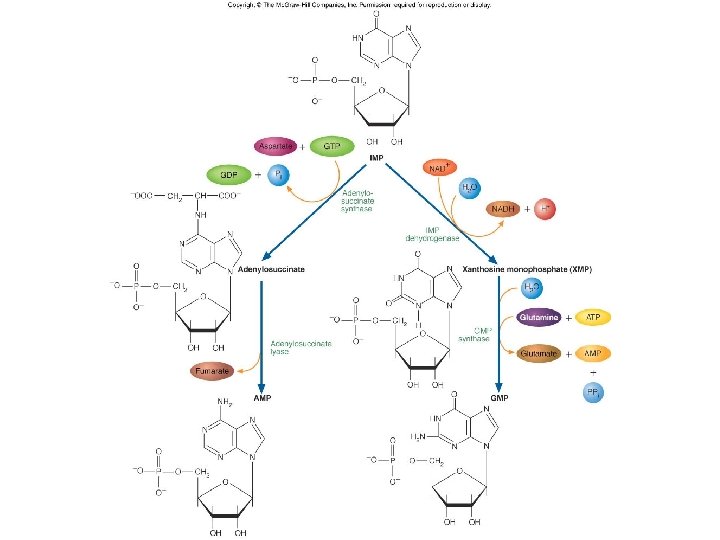
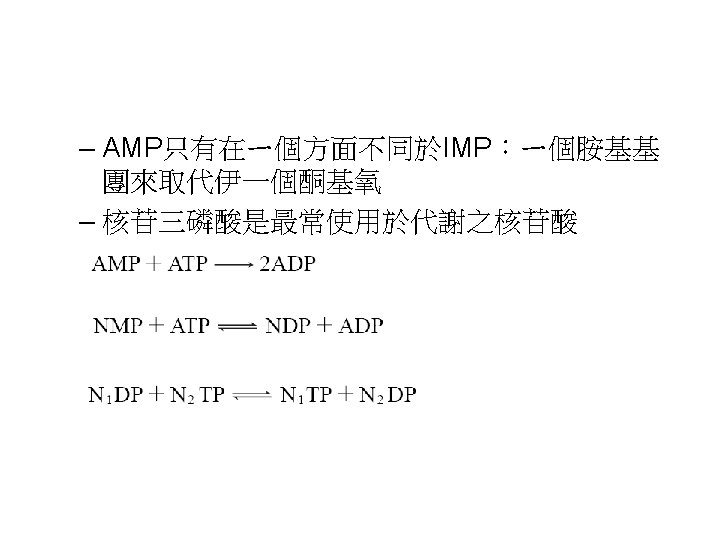
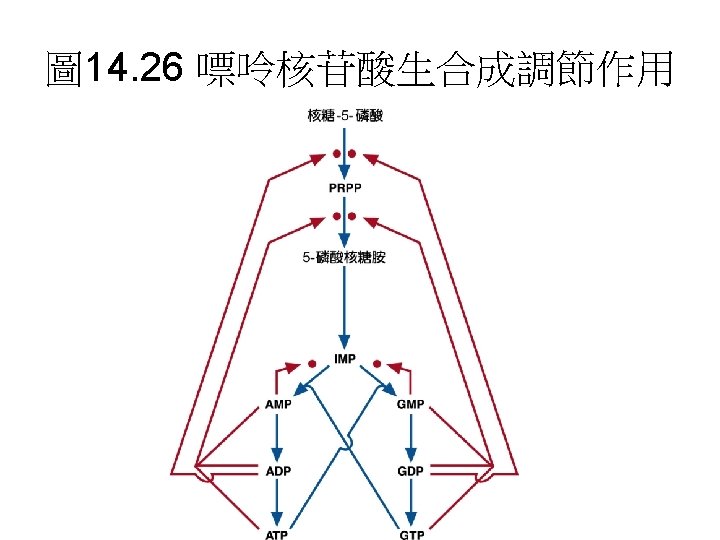
• Purine nucleotide合成 • -D-ribose-5 -phosphate + ATP PRPP + AMP • -D-ribose-5 -phosphate是來自Pentose phosphate pathway。反應是由PRPP synthetase, 再經過9個步驟後形成IMP,IMP再合成AMP或 GMP。 • AMP + ATP 2 ADP • NMP + ATP NDP + ADP • 再由Nucleotide diphosphate kinase合成NTP • N 1 DP + N 2 TP N 1 TP + N 2 DP
Fig. 14. 24
Fig. 14. 25
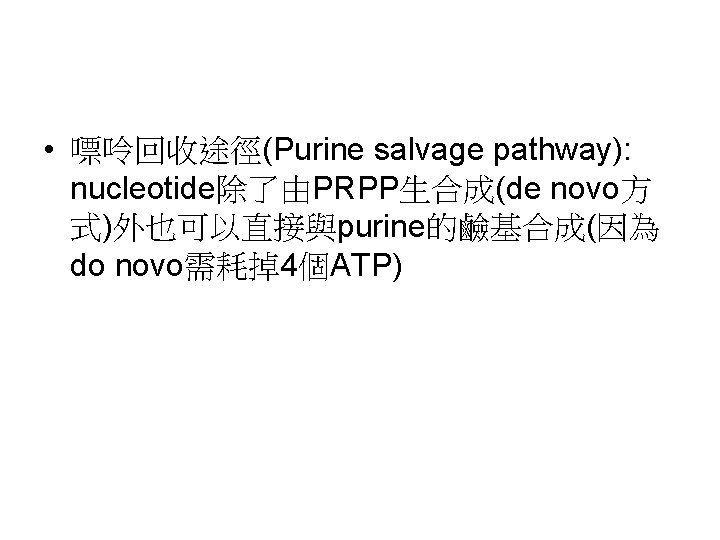
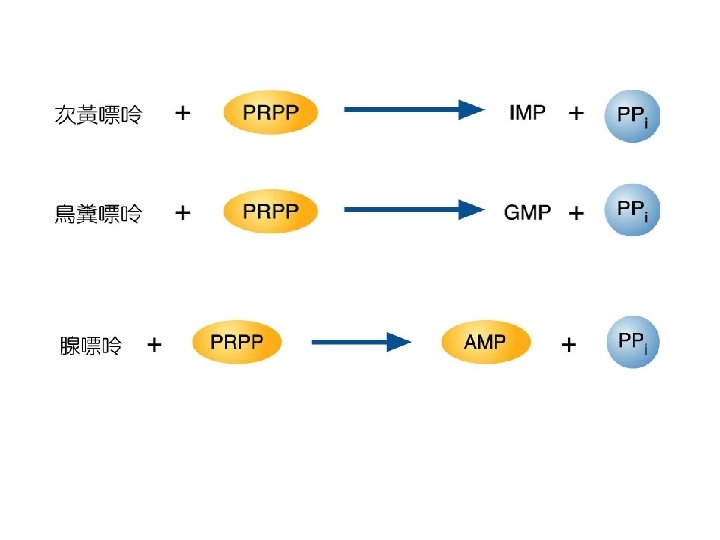
• 嘌呤回收途徑(Purine salvage pathway): nucleotide除了由PRPP生合成(de novo方 式)外也可以直接與purine的鹼基合成(因為 do novo需耗掉4個ATP)
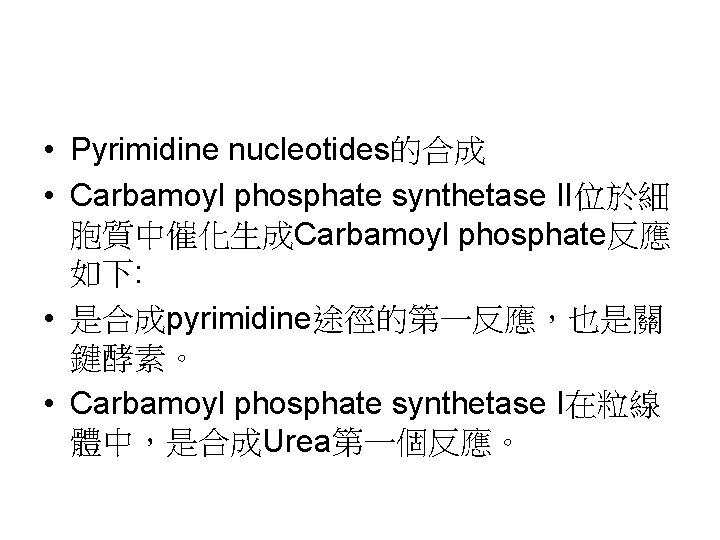
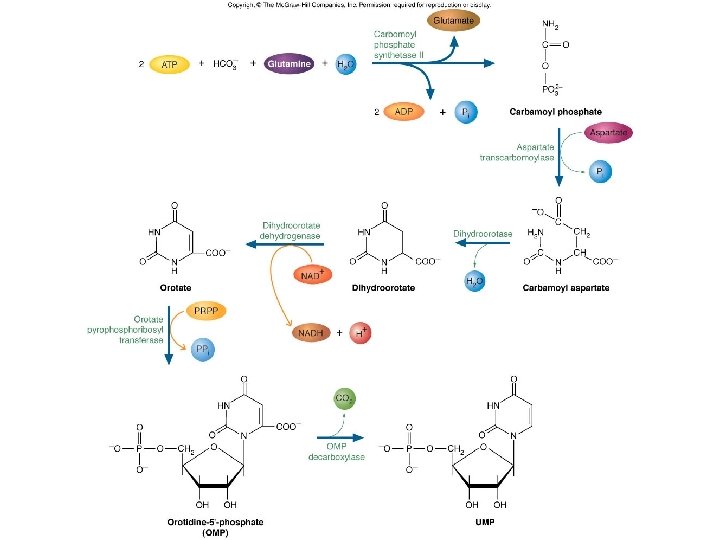
• Pyrimidine nucleotides的合成 • Carbamoyl phosphate synthetase II位於細 胞質中催化生成Carbamoyl phosphate反應 如下: • 是合成pyrimidine途徑的第一反應,也是關 鍵酵素。 • Carbamoyl phosphate synthetase I在粒線 體中,是合成Urea第一個反應。
Fig. 14. 27
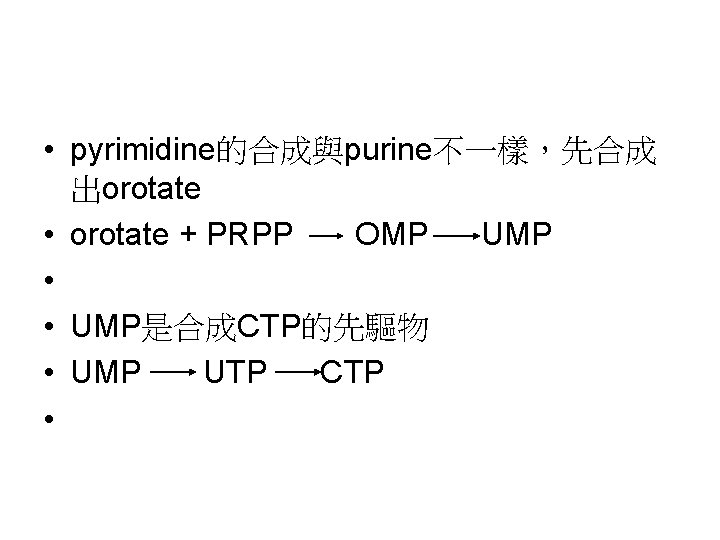
• pyrimidine的合成與purine不一樣,先合成 出orotate • orotate + PRPP OMP UMP • • UMP是合成CTP的先驅物 • UMP UTP CTP •
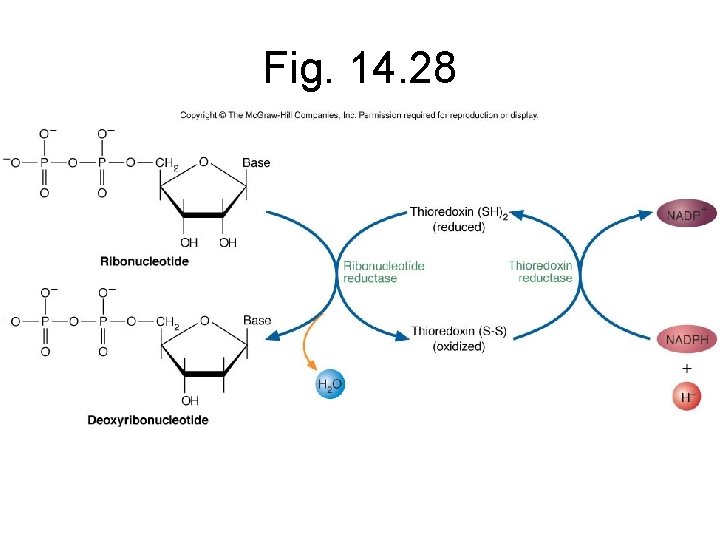
Fig. 14. 28
• Deoxyribonucleotides的合成: • 以上所提及都是ribonucleotide(A、G、U與 C)是組成RNA的建材分子(building block)。 • 而DNA的合成是由 2’deoxyribonucleotide(A、T、C、G)組成。 • 2’-deoxyribonucleotide是由NDP(nucleotide diphosphate)還原合成而來。
• 反應是由還原態的Ribonucleotide reductase催化,Thioredoxin reductase(13 k. Da NADPH是其輔因子)再催化氧化態的 Ribonucleotide reductase成還原態。
Fig. 14. 29
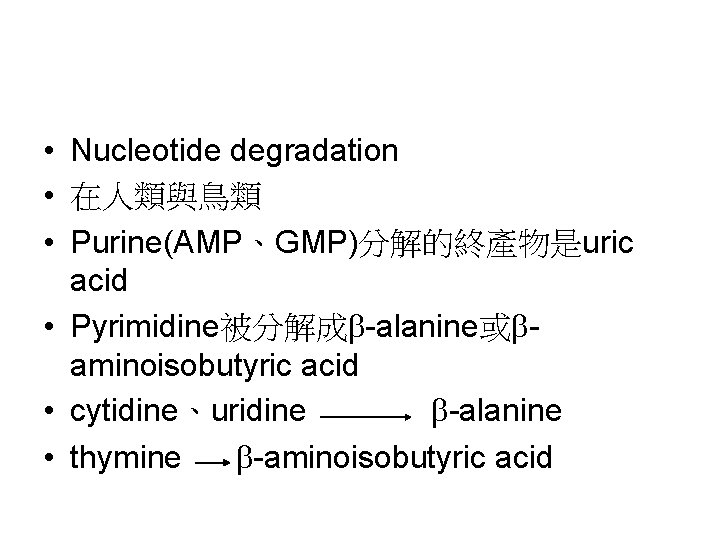
• Nucleotide degradation • 在人類與鳥類 • Purine(AMP、GMP)分解的終產物是uric acid • Pyrimidine被分解成 -alanine或 aminoisobutyric acid • cytidine、uridine -alanine • thymine -aminoisobutyric acid