
TRANSACTION PROCESSING SYSTEM ITS APPLICATIONS Presenters Pankaj Soni

- Slides: 10
TRANSACTION PROCESSING SYSTEM & ITS APPLICATIONS Presenters: Pankaj Soni Karan Bhatia Akhil Saxena Dikshi Jindal Fanish Kumar
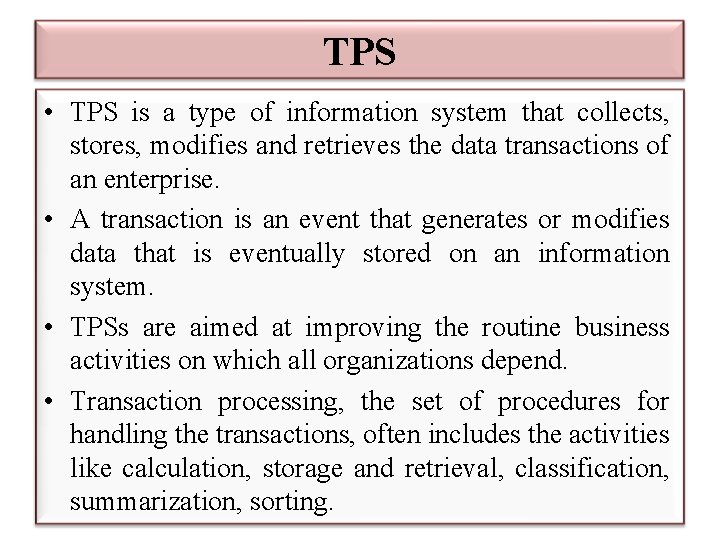
TPS • TPS is a type of information system that collects, stores, modifies and retrieves the data transactions of an enterprise. • A transaction is an event that generates or modifies data that is eventually stored on an information system. • TPSs are aimed at improving the routine business activities on which all organizations depend. • Transaction processing, the set of procedures for handling the transactions, often includes the activities like calculation, storage and retrieval, classification, summarization, sorting.
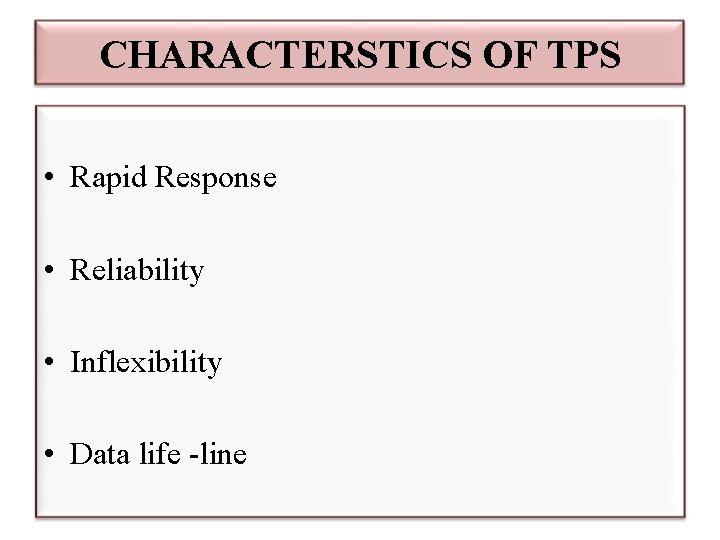
CHARACTERSTICS OF TPS • Rapid Response • Reliability • Inflexibility • Data life -line
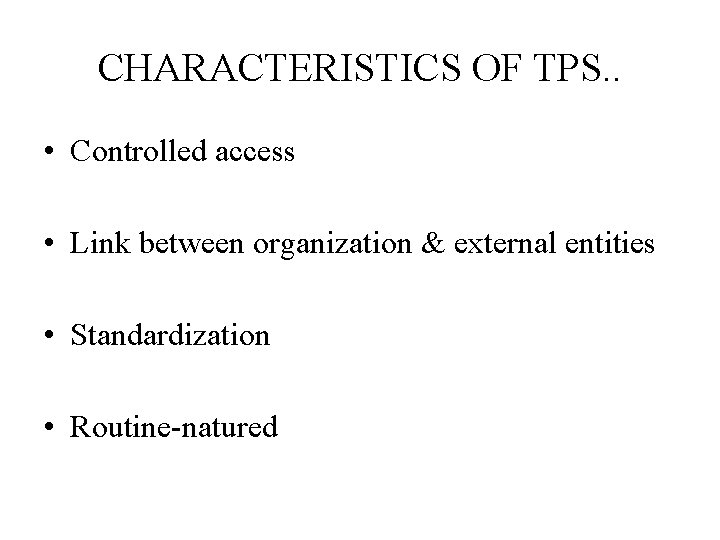
CHARACTERISTICS OF TPS. . • Controlled access • Link between organization & external entities • Standardization • Routine-natured
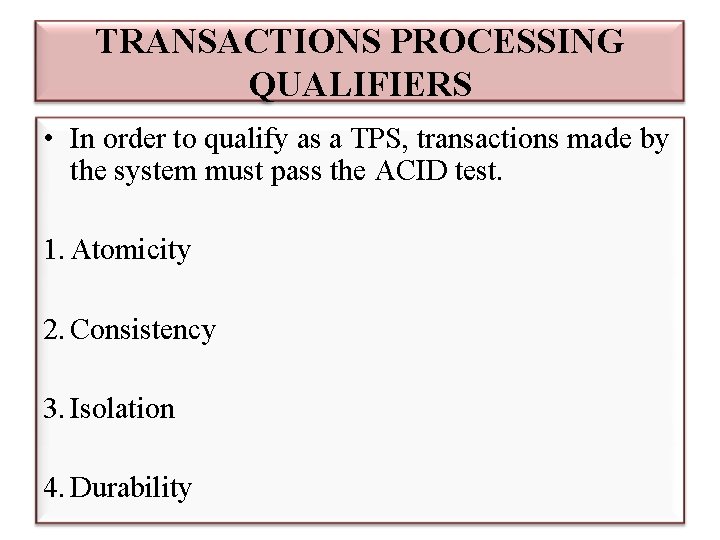
TRANSACTIONS PROCESSING QUALIFIERS • In order to qualify as a TPS, transactions made by the system must pass the ACID test. 1. Atomicity 2. Consistency 3. Isolation 4. Durability
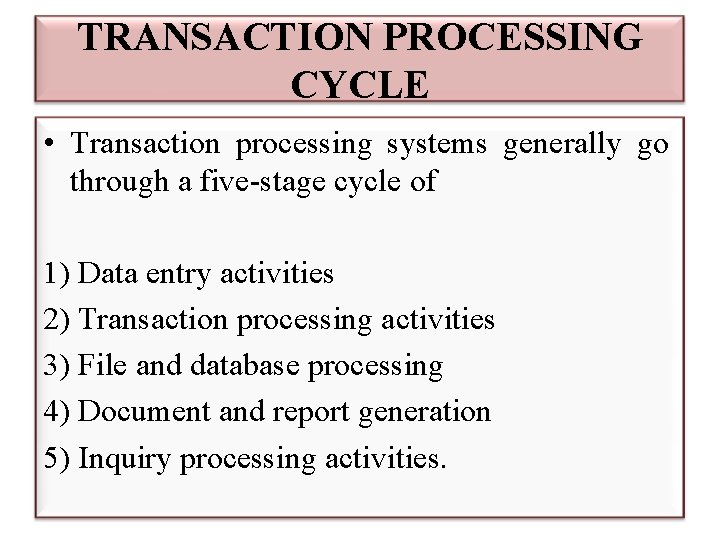
TRANSACTION PROCESSING CYCLE • Transaction processing systems generally go through a five-stage cycle of 1) Data entry activities 2) Transaction processing activities 3) File and database processing 4) Document and report generation 5) Inquiry processing activities.
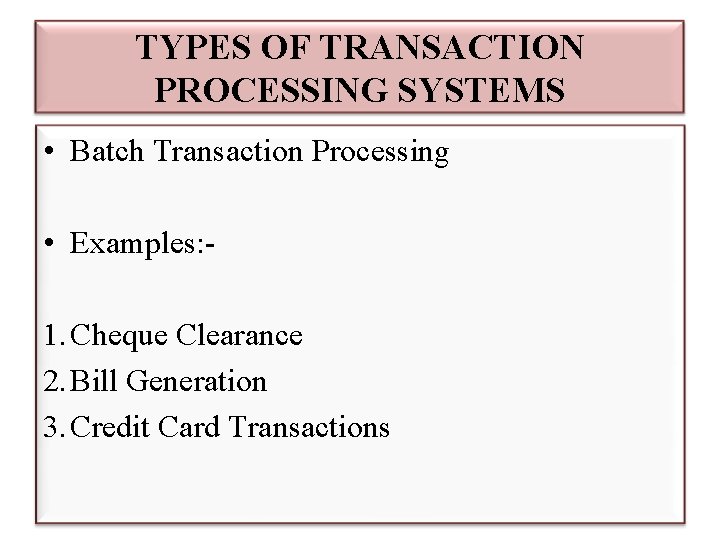
TYPES OF TRANSACTION PROCESSING SYSTEMS • Batch Transaction Processing • Examples: 1. Cheque Clearance 2. Bill Generation 3. Credit Card Transactions
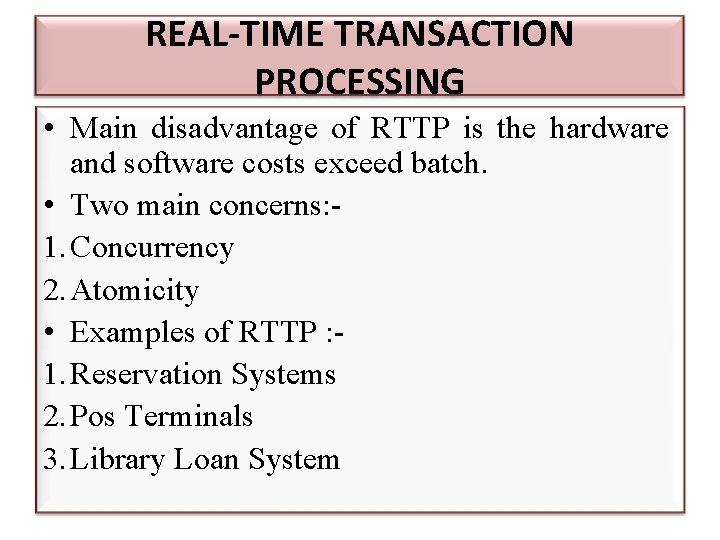
REAL-TIME TRANSACTION PROCESSING • Main disadvantage of RTTP is the hardware and software costs exceed batch. • Two main concerns: 1. Concurrency 2. Atomicity • Examples of RTTP : 1. Reservation Systems 2. Pos Terminals 3. Library Loan System
CASE STUDY
THANK YOU