
TRANSACTION PROCESS SYSTEM Transaction Process System I Definition
- Slides: 32
TRANSACTION PROCESS SYSTEM
Transaction Process System I. Definition II. Characteristics III. Properties/ Qualifiers IV. Types V. TPS Cycle VI. Advantages & Disadvantages
• Transact – To do business with another person • Transaction – Any event that affects the organization which occurs as a part of doing business • Transaction Process – The set of procedures for handling the transactions
I. Definition What is a TPS? It is a type of information system that collects, stores, modifies, and retrieves data.
TPS • Is an information system that processes arising from the occurrence of business transactions. • Used for the processing of everyday transactions that produce large amount of data. • Main process = Collecting & Storage
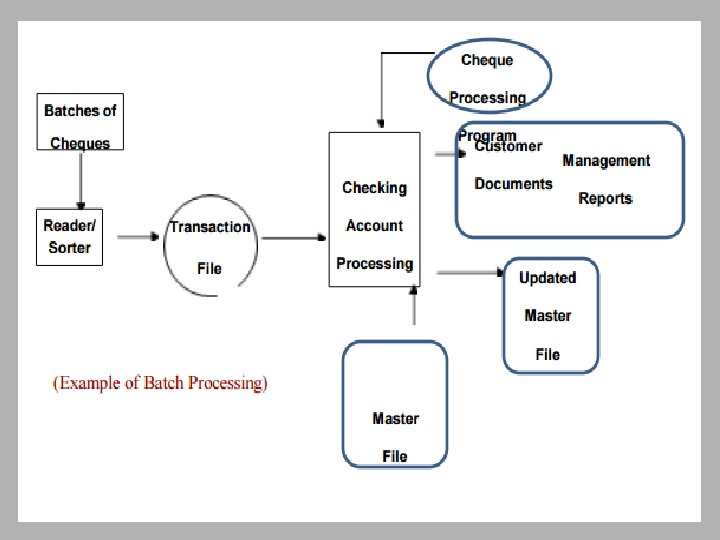
Common transactions include: • Placing orders • Billing customers • Hiring employees • Depositing Cheques
II. Characteristics Rapid Response - fast performance with rapid results
II. Characteristics Reliability -well designed backup and recovery with a low failure rate
II. Characteristics Inflexibility -treat every transaction equally. It may be used many times each day which means it has to be precise
II. Characteristics Controlled processing -maintain specific requirements for the roles and responsibilities of different
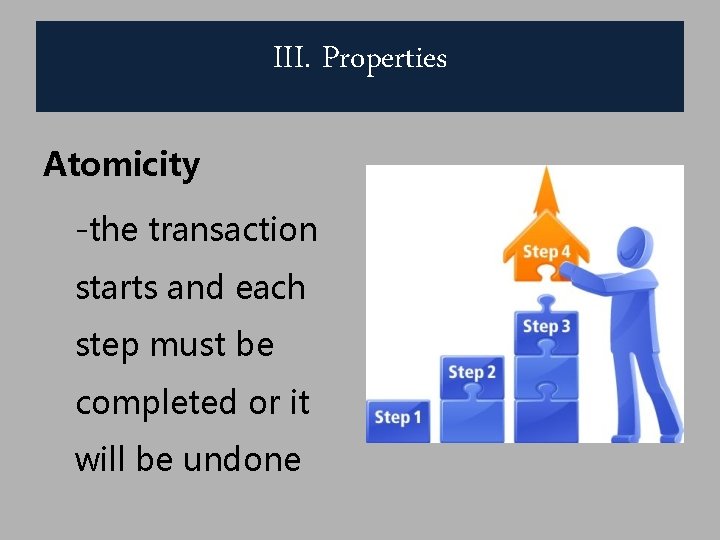
III. Properties Atomicity -the transaction starts and each step must be completed or it will be undone
III. Properties Consistency -data is agreed upon, remains in a consistent state and is accounted for
III. Properties Isolation -treats each transaction separately and keeps data from each transaction separate
III. Properties Durability -the data should continue to exist
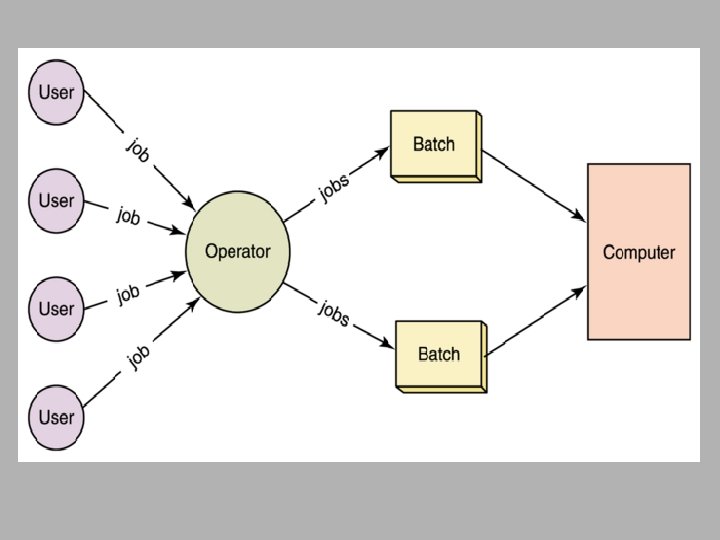
Iv. Types of tps Batch Processing system -is where the information is collected as a batch and then processed later on.
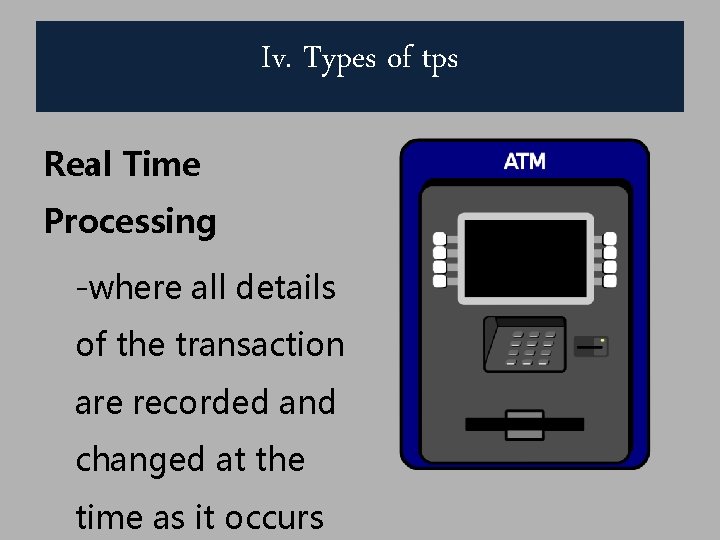
Iv. Types of tps Real Time Processing -where all details of the transaction are recorded and changed at the time as it occurs
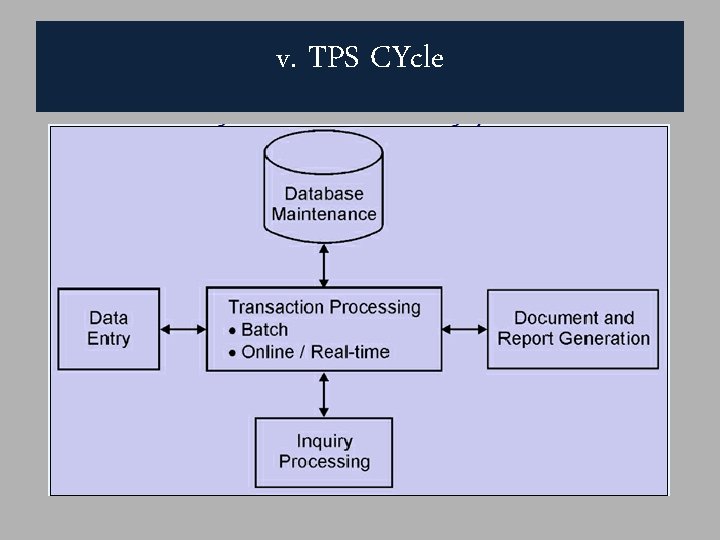
v. TPS CYcle
1. Data entry Data is captured, or collected by recording, coding, and editing activities
2. Transaction Processing Two ways: a. Batch processing b. Real-time processing
2. Transaction Processing Two ways: a. Batch processing b. Real-time processing
Batch processing -transaction data is accumulated over a period of time Involves: Gathering source documents Recording transaction data in an input medium Ex. magnetic disks/tapes Sorting transaction in a transaction file Processing transaction data and creating an updated master file Capturing and storing batches of
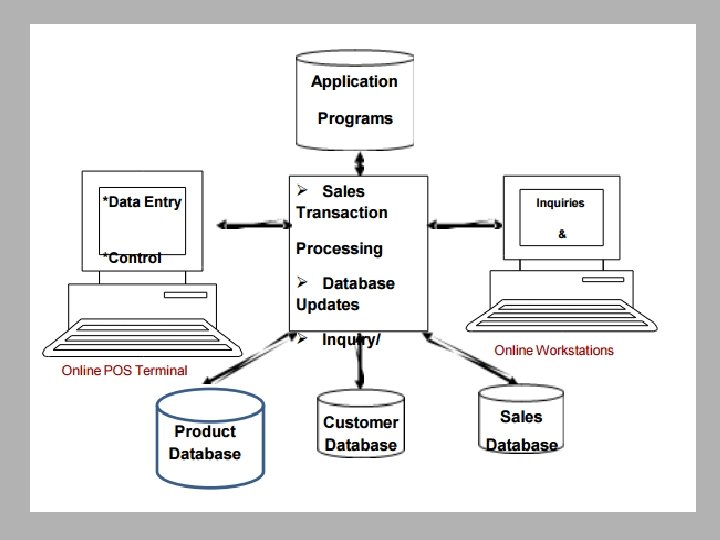
Real-time processing Process transaction data immediately and can provide immediate output Responses to end user's inquiries are immediate It depends on telecommunication networks of online terminals and computers
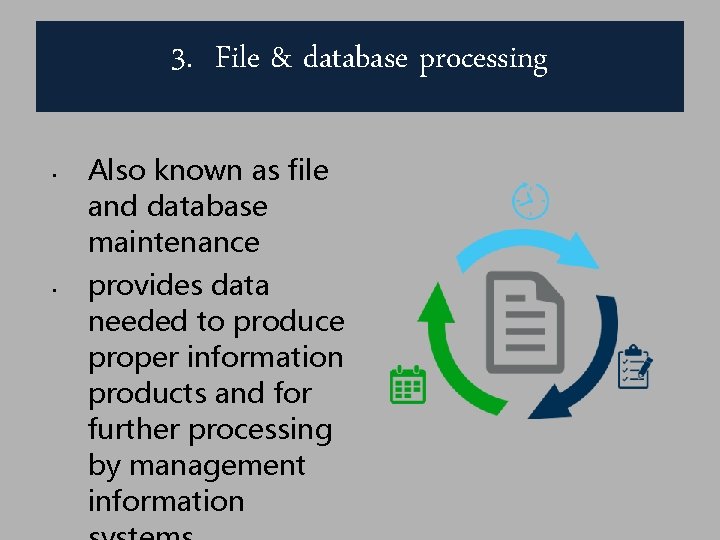
3. File & database processing • • Also known as file and database maintenance provides data needed to produce proper information products and for further processing by management information
4. Document and Report generation Transaction documents Types of documents: >action documents >Information documents >Turnaround
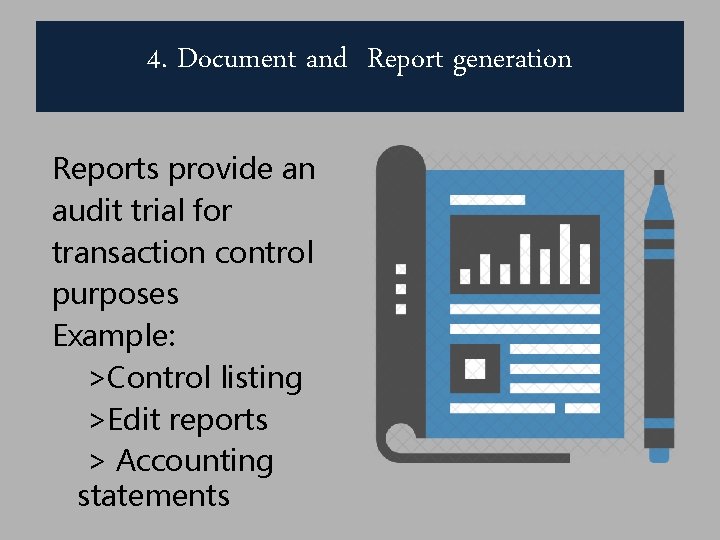
4. Document and Report generation Reports provide an audit trial for transaction control purposes Example: >Control listing >Edit reports > Accounting statements
5. Inquiry processing • To make inquiries and receive responses, - Internet and Web browsers - database
5. Inquiry processing Responses are displayed in a variety of prespecified formats or screens.
VI. Advantages • Can handle • Access to several thousand untapped operations at markets. Allows once people across the world to access and buy a
VI. disadvantages • The handling of • Security and several thousand Hardware operations at Problems once • Too much consolidation is required