
TRAMTRAIN THE 2 ND GENERATION NEW CRITERIA FOR
- Slides: 47
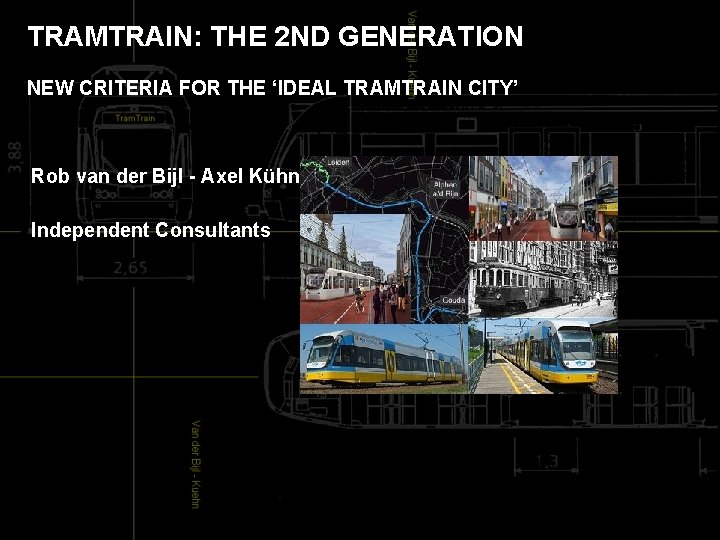
TRAMTRAIN: THE 2 ND GENERATION NEW CRITERIA FOR THE ‘IDEAL TRAMTRAIN CITY’ Rob van der Bijl - Axel Kühn Independent Consultants
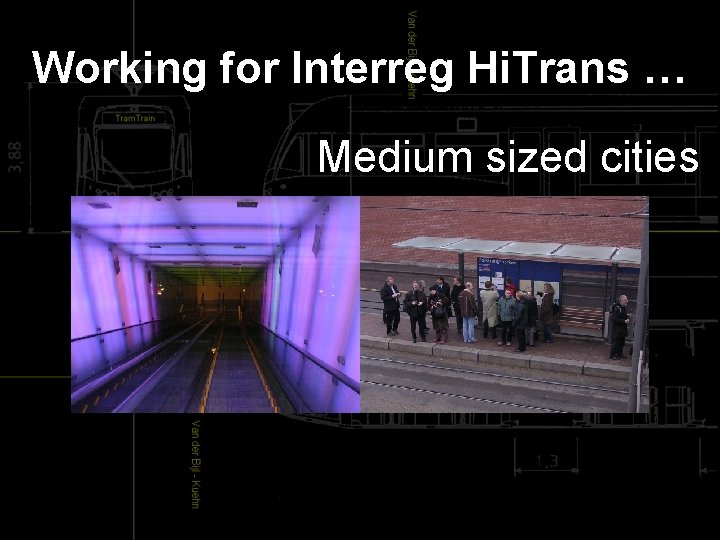
Working for Interreg Hi. Trans … Medium sized cities
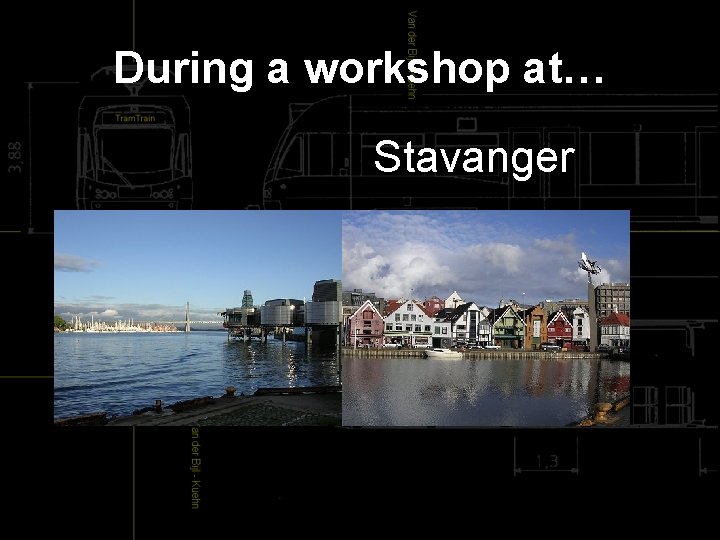
During a workshop at… Stavanger
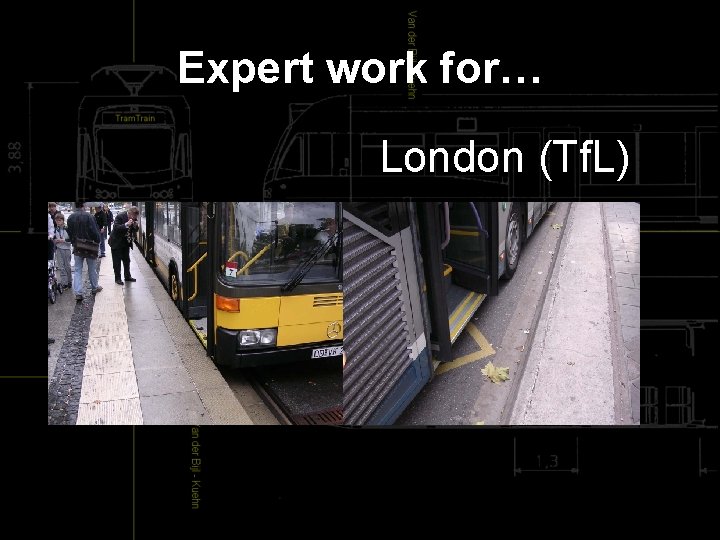
Expert work for… London (Tf. L)
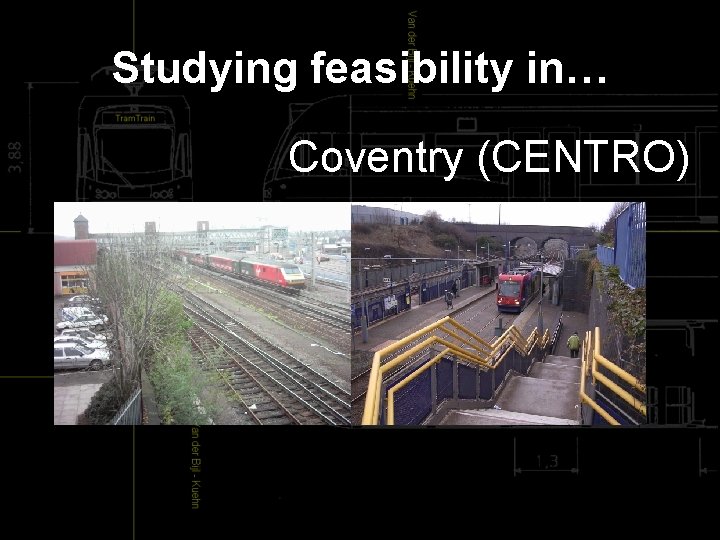
Studying feasibility in… Coventry (CENTRO)
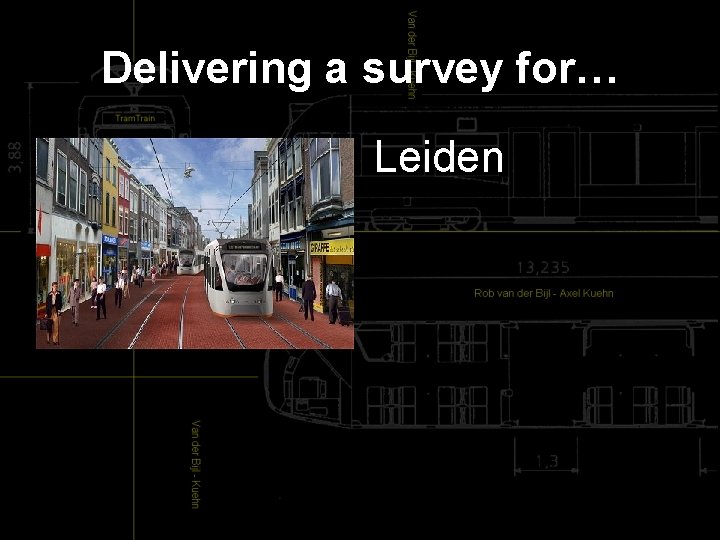
Delivering a survey for… Leiden
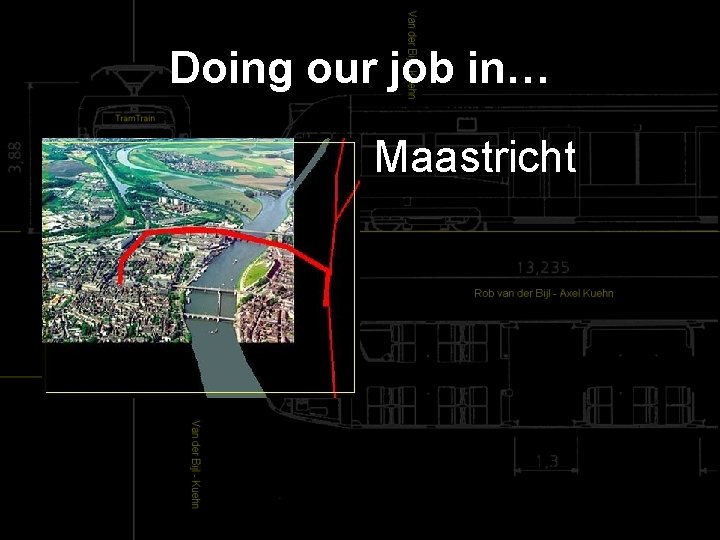
Doing our job in… Maastricht
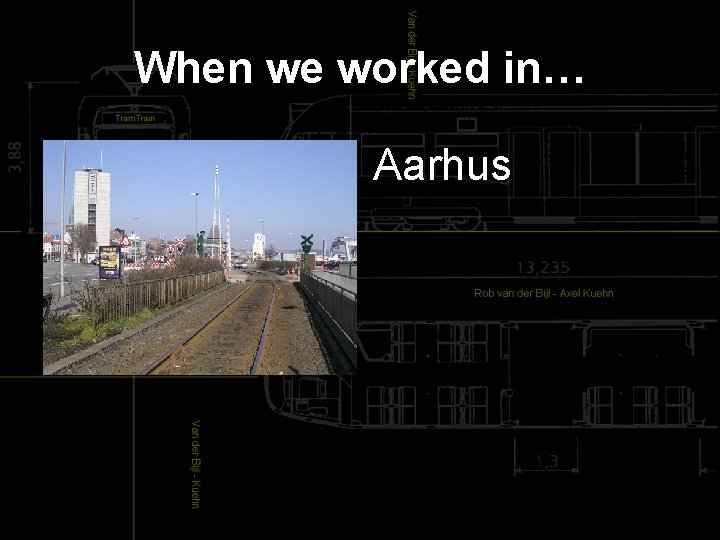
When we worked in… Aarhus
Spending some time in… Sunderland
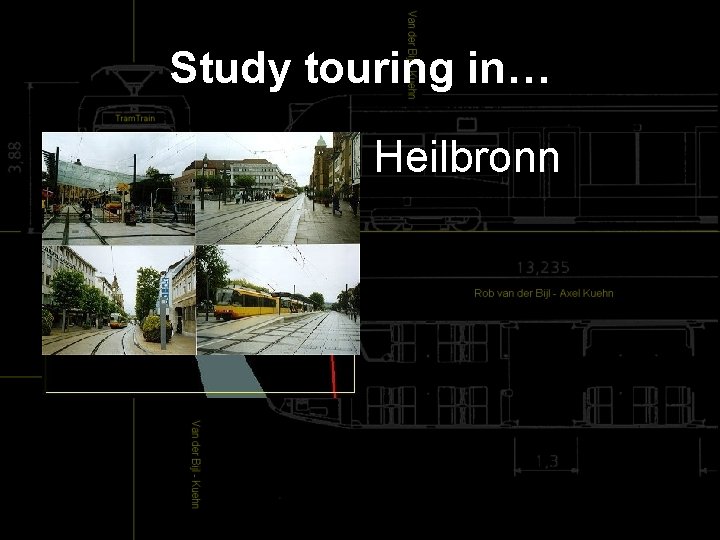
Study touring in… Heilbronn
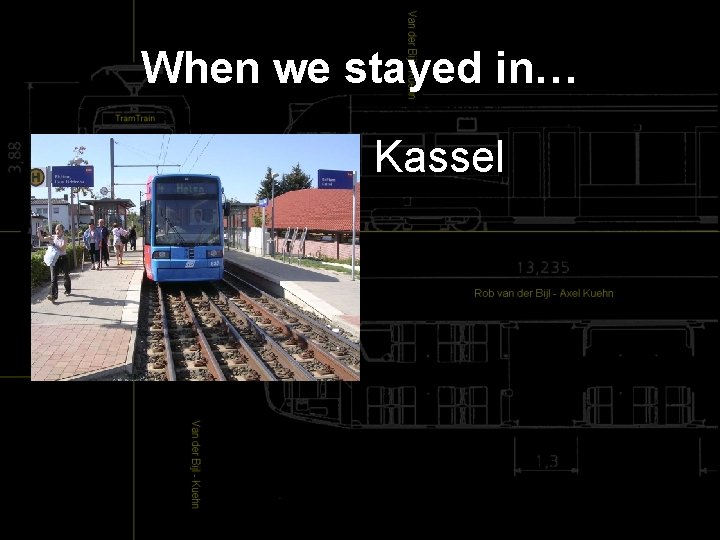
When we stayed in… Kassel
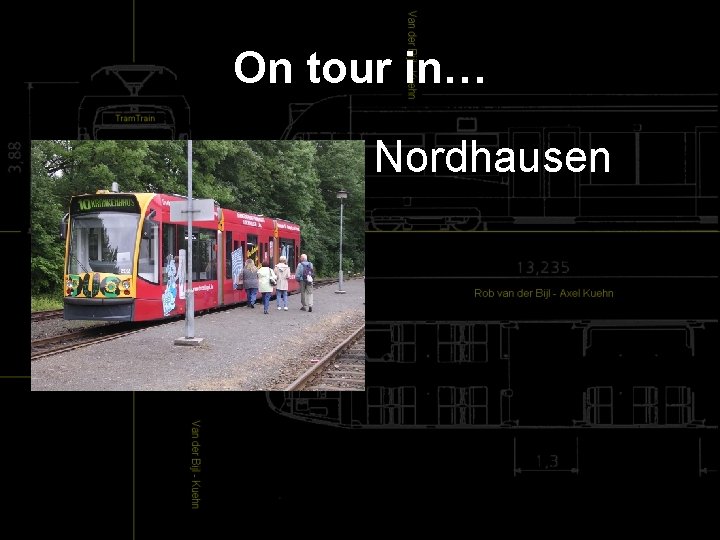
On tour in… Nordhausen
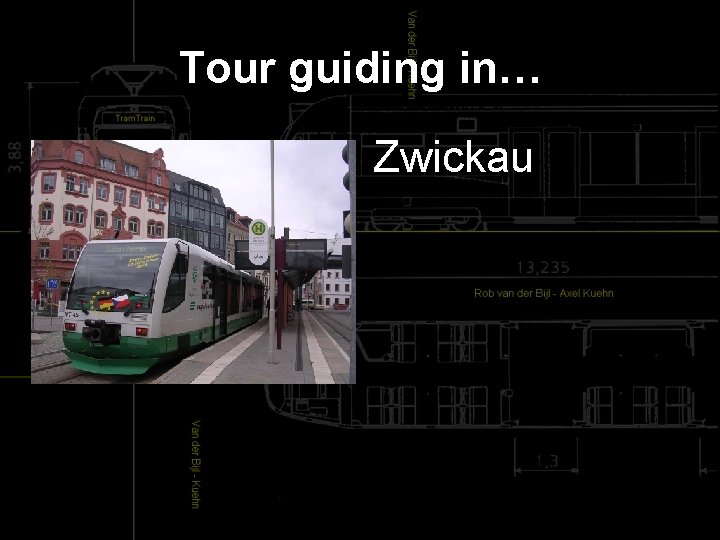
Tour guiding in… Zwickau
Talking in… Mulhouse
Authors: Rob van der Bijl, Amsterdam, Netherlands: Urban planner and founder of www. lightrail. nl. Involvement in Tram. Train research and projects in Holland other European countries. Documentation of Tram. Train systems, projects and features on ‘Light Rail Atlas’. Axel Kühn, Karlsruhe, Germany: Civil engineer and independent consultant. Participation in the Karlsruhe developments from the early stage. Involvement in a considerable number of Tram. Train projects all over Europe.
Contents • • • Introduction Definitions State of the art Checklist‘s criteria Applied criteria – the 50 issues • Conclusion
Introduction • Tram-Train systems link urban tramway infrastructure with the regional heavy rail network around cities • After first generation in Germany (Karlsruhe and Saarbruecken) new systems evolve now • Mid-nineties boom period regarding Tram. Train feasibility studies • Most of projects have not proceeded or at least been heavily delayed and not given high priority • Reasons? • Tram. Train characteristics • Urban context and economic viability of projects
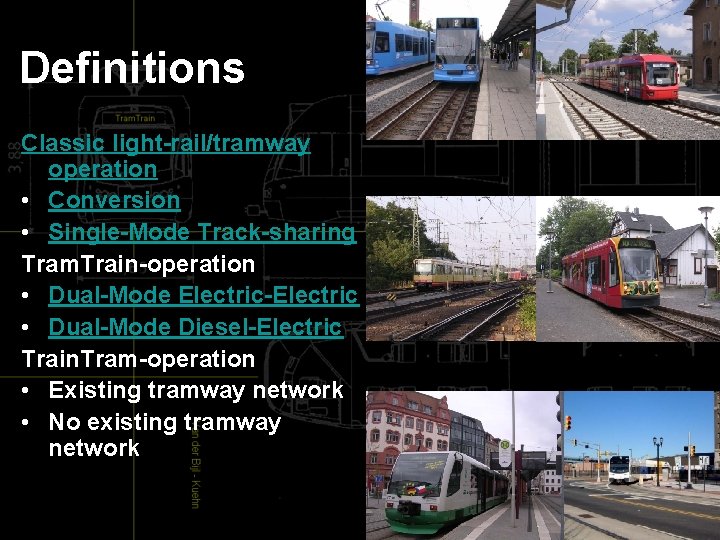
Definitions Classic light-rail/tramway operation • Conversion • Single-Mode Track-sharing Tram. Train-operation • Dual-Mode Electric-Electric • Dual-Mode Diesel-Electric Train. Tram-operation • Existing tramway network • No existing tramway network
State of the art • • • Karlsruhe: Success, Failure and Weaknesses Saarbruecken: First Low-floor Tram. Train Other ‘First Wave’ Cities ‘ 2 nd Generation’ Cities Our Question
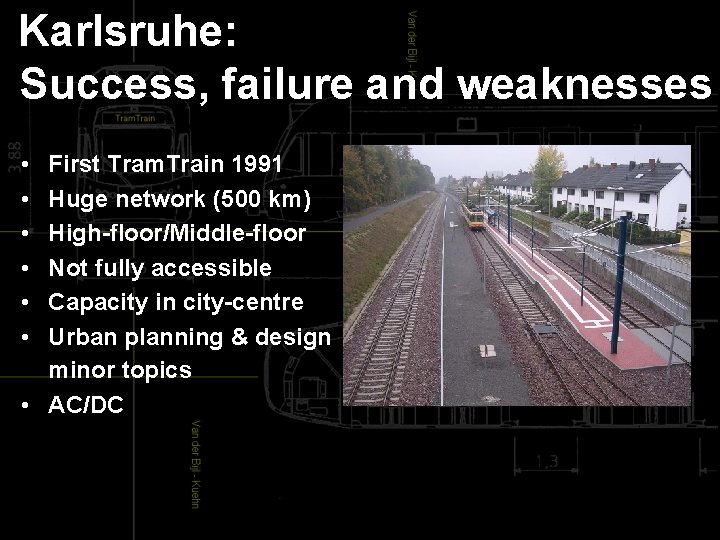
Karlsruhe: Success, failure and weaknesses • • • First Tram. Train 1991 Huge network (500 km) High-floor/Middle-floor Not fully accessible Capacity in city-centre Urban planning & design minor topics • AC/DC
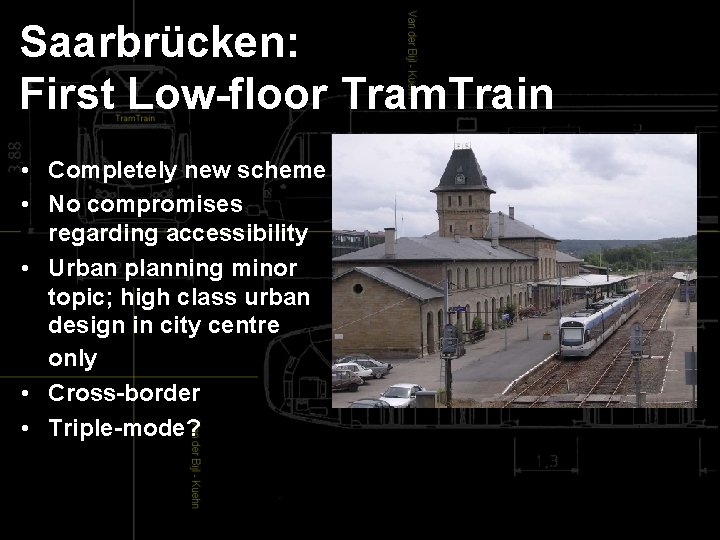
Saarbrücken: First Low-floor Tram. Train • Completely new scheme • No compromises regarding accessibility • Urban planning minor topic; high class urban design in city centre only • Cross-border • Triple-mode?
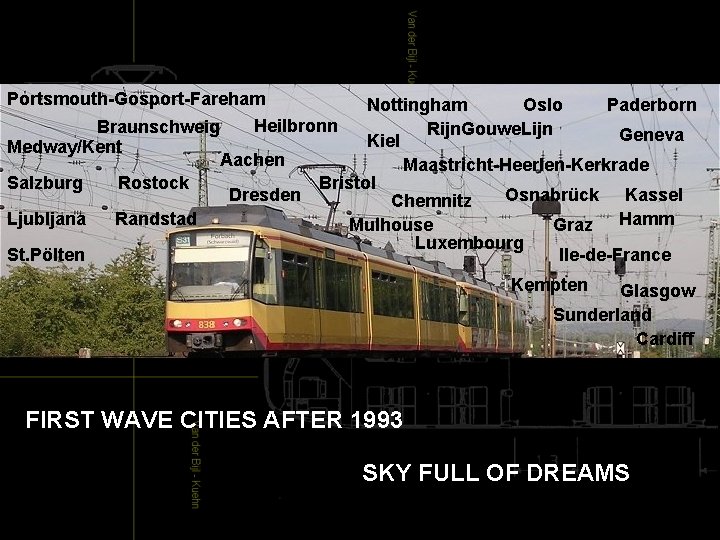
Portsmouth-Gosport-Fareham Nottingham Oslo Paderborn Heilbronn Braunschweig Rijn. Gouwe. Lijn Geneva Kiel Medway/Kent Aachen Maastricht-Heerlen-Kerkrade Bristol Salzburg Rostock Dresden Osnabrück Kassel Chemnitz Ljubljana Randstad Mulhouse Graz Hamm Luxembourg Ile-de-France St. Pölten Kempten Glasgow Sunderland Cardiff FIRST WAVE CITIES AFTER 1993 SKY FULL OF DREAMS
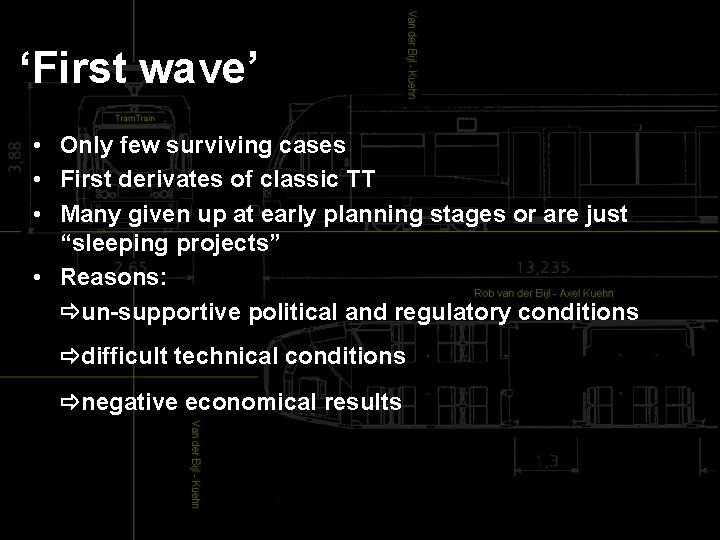
‘First wave’ • Only few surviving cases • First derivates of classic TT • Many given up at early planning stages or are just “sleeping projects” • Reasons: un-supportive political and regulatory conditions difficult technical conditions negative economical results
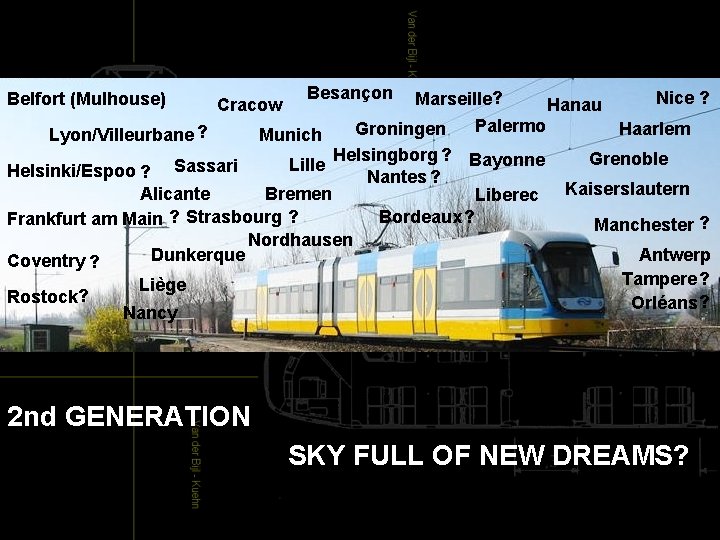
Besançon Nice ? Marseille? Hanau Palermo Haarlem Groningen Munich Lyon/Villeurbane ? Helsingborg ? Bayonne Grenoble Lille Sassari Helsinki/Espoo ? Nantes ? Alicante Bremen Liberec Kaiserslautern Bordeaux ? Frankfurt am Main ? Strasbourg ? Manchester ? Nordhausen Antwerp Dunkerque Coventry ? Tampere? Liège Rostock? Orléans ? Nancy Belfort (Mulhouse) Cracow 2 nd GENERATION SKY FULL OF NEW DREAMS?
‘ 2 nd generation’ • • • Some cases ideas only More tangential schemes Regional projects for smaller corridors More derivates First “second try’s” Too early to know the future of all …
Our question(s)? • Why are there only a few implemented “classic” Tram. Train projects today? • Original Karlsruhe approach too narrow to be successful everywhere? • Tram. Train – the 2 nd generation? • Features of projects which have been developed further from the Karlsruhe origins? • Easy way to identify at the very beginning whether a city may be suited for Tram. Train or its derivates? • What could be criteria to evaluate this?
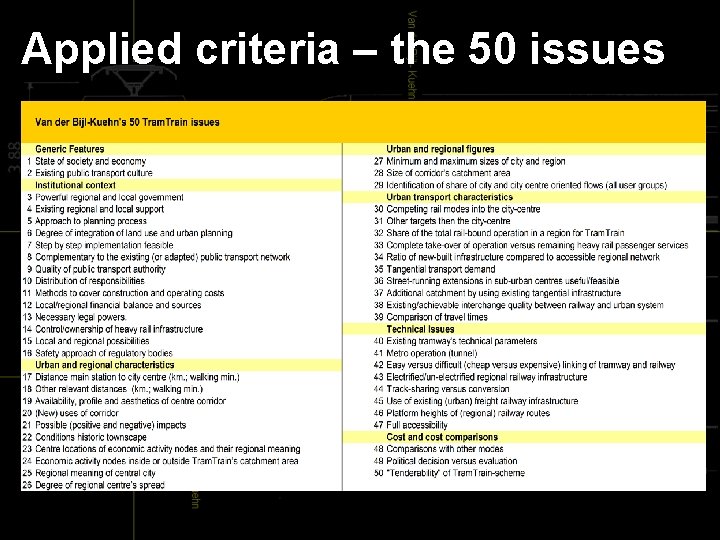
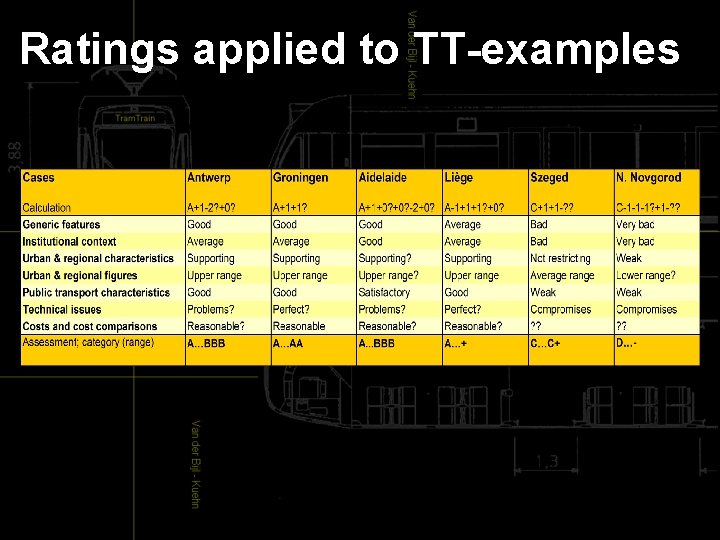
Checklist‘s criteria • Generic Features • Institutional Context • Urban and Regional Characteristics • Urban and Regional Figures • Public Transport Characteristics • Technical Issues • Costs and Cost Comparisons
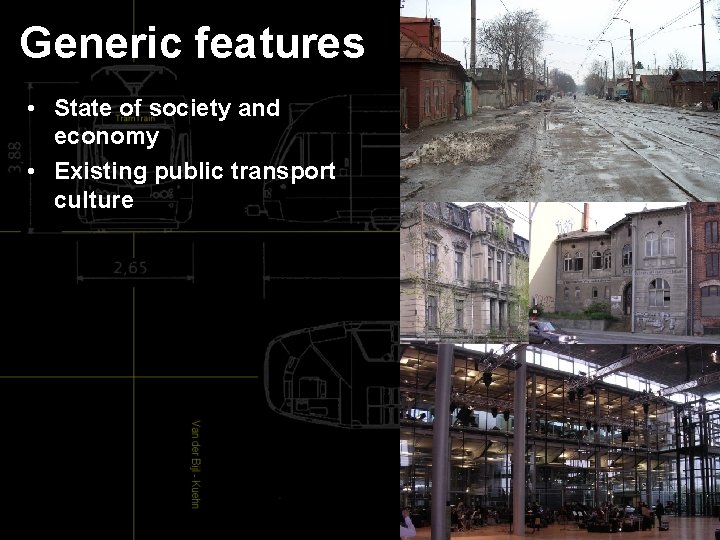
Generic features • State of society and economy • Existing public transport culture
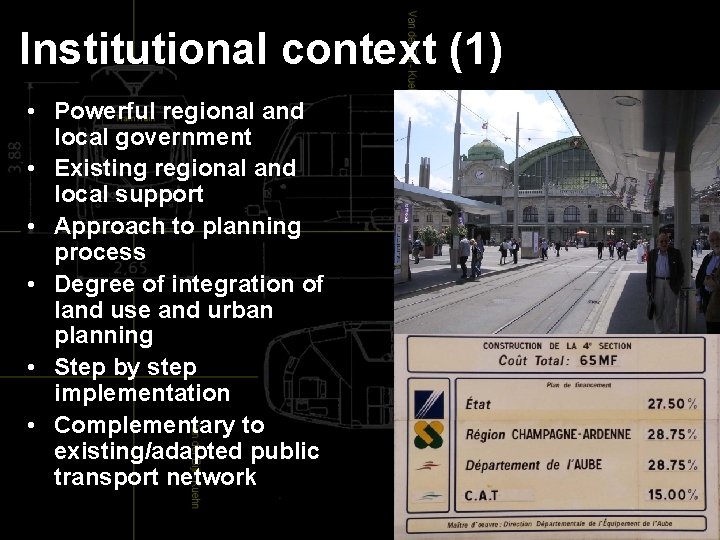
Institutional context (1) • Powerful regional and local government • Existing regional and local support • Approach to planning process • Degree of integration of land use and urban planning • Step by step implementation • Complementary to existing/adapted public transport network
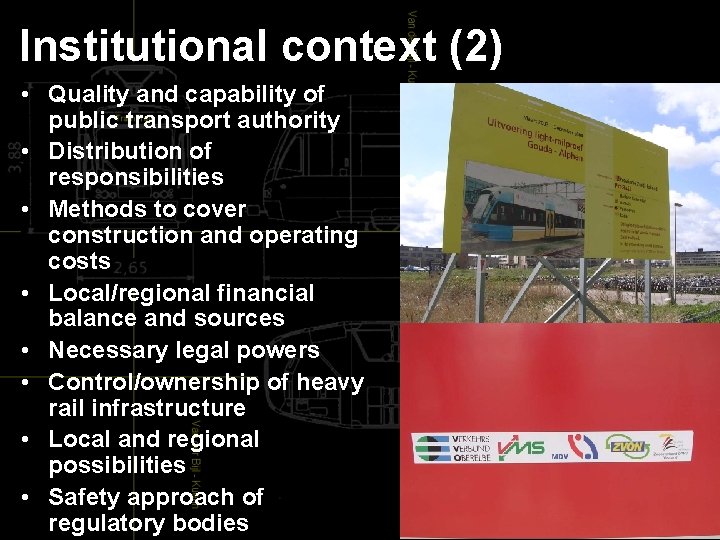
Institutional context (2) • Quality and capability of public transport authority • Distribution of responsibilities • Methods to cover construction and operating costs • Local/regional financial balance and sources • Necessary legal powers • Control/ownership of heavy rail infrastructure • Local and regional possibilities • Safety approach of regulatory bodies
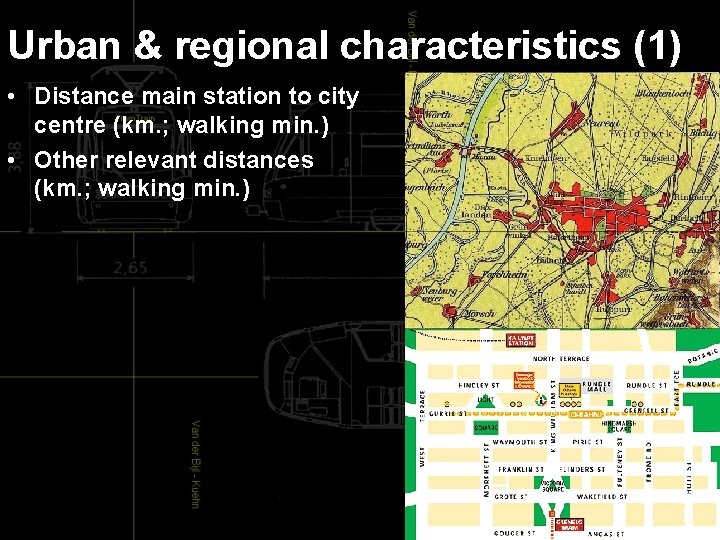
Urban & regional characteristics (1) • Distance main station to city centre (km. ; walking min. ) • Other relevant distances (km. ; walking min. )
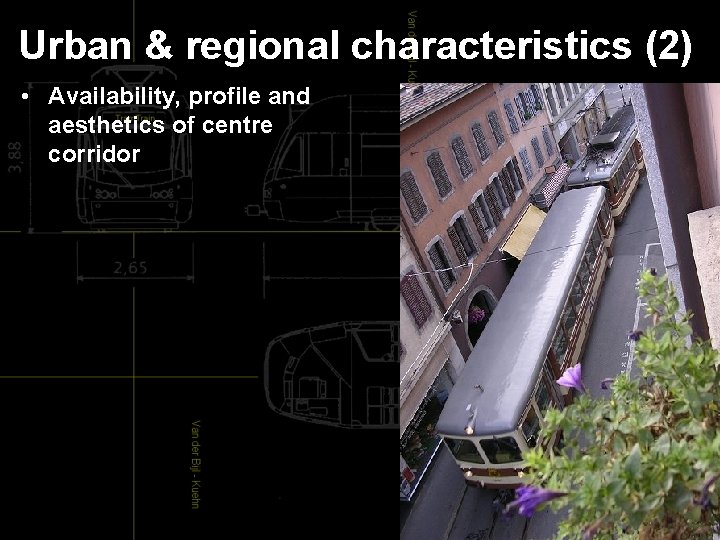
Urban & regional characteristics (2) • Availability, profile and aesthetics of centre corridor
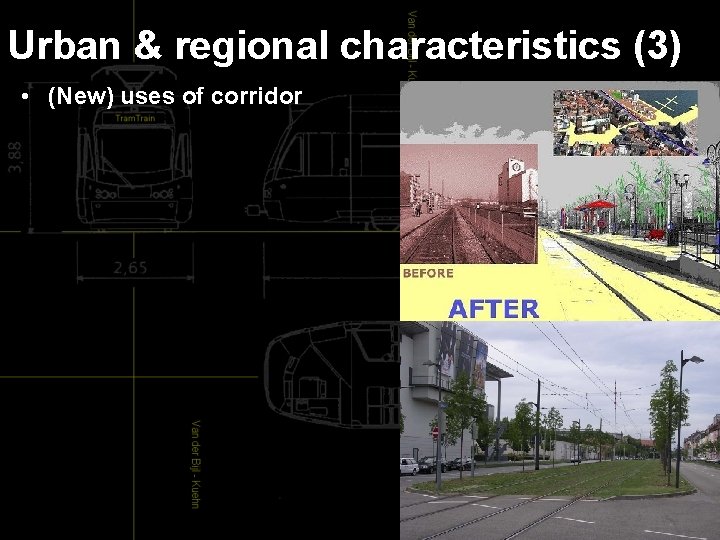
Urban & regional characteristics (3) • (New) uses of corridor
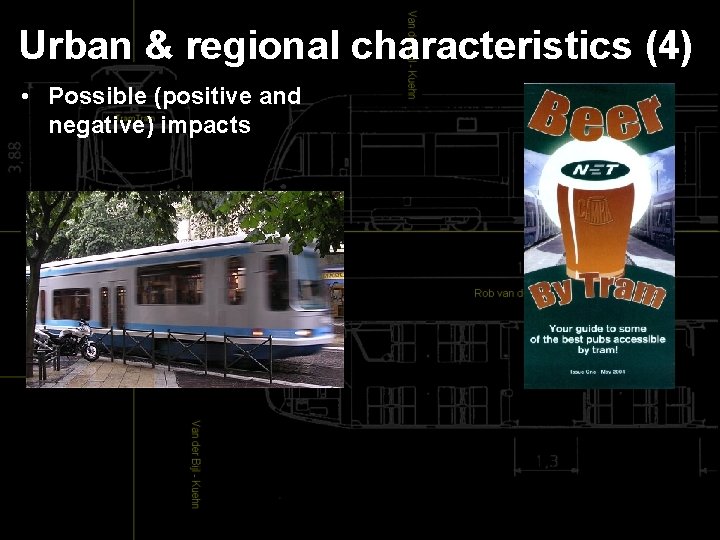
Urban & regional characteristics (4) • Possible (positive and negative) impacts
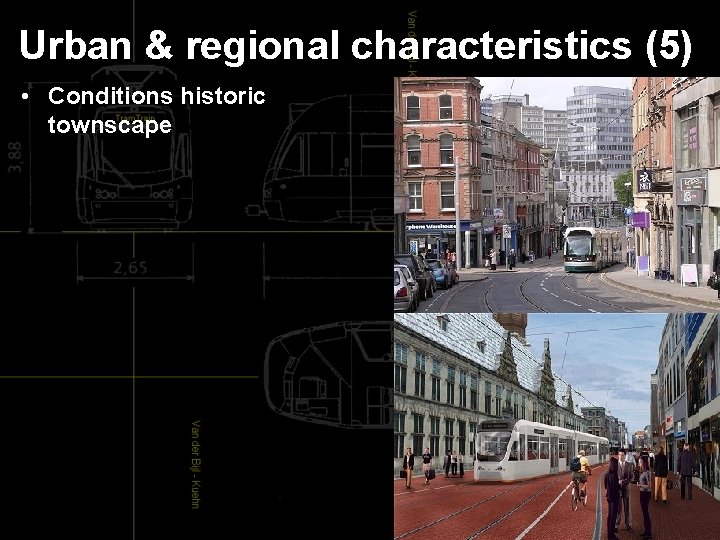
Urban & regional characteristics (5) • Conditions historic townscape
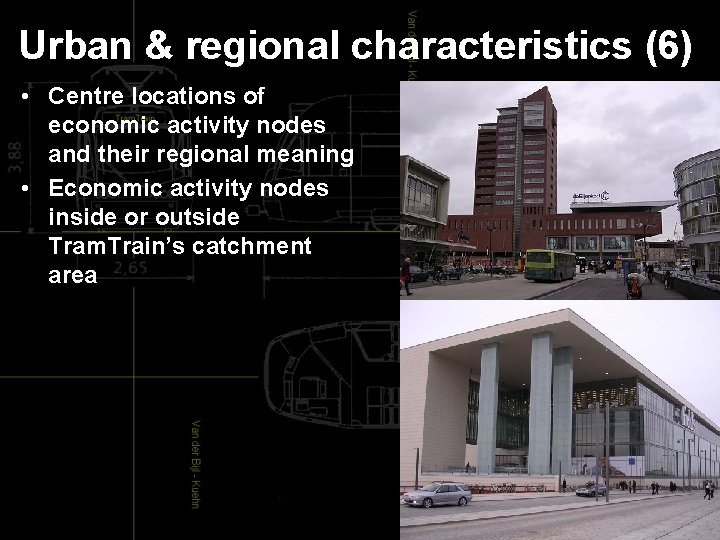
Urban & regional characteristics (6) • Centre locations of economic activity nodes and their regional meaning • Economic activity nodes inside or outside Tram. Train’s catchment area
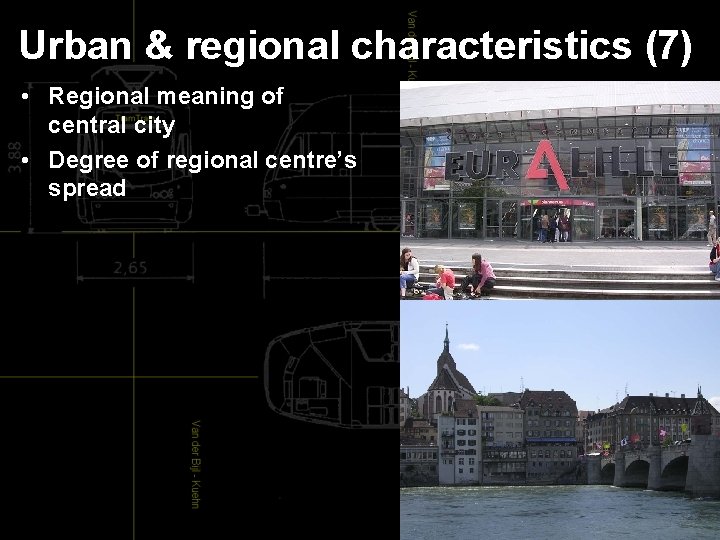
Urban & regional characteristics (7) • Regional meaning of central city • Degree of regional centre’s spread
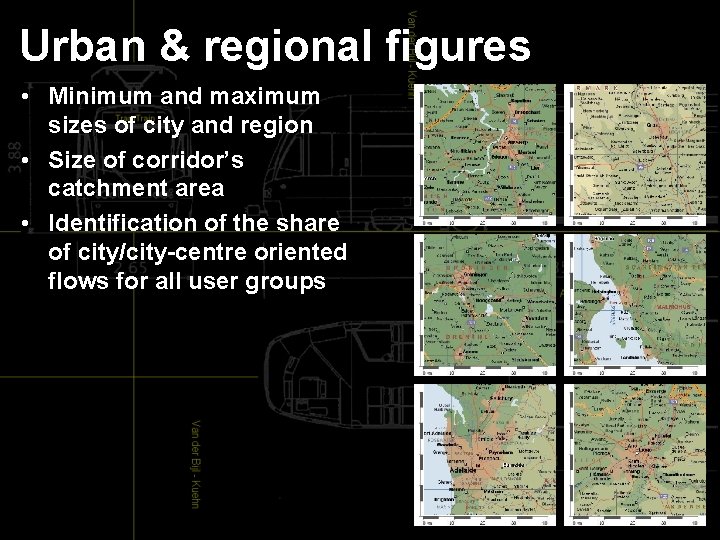
Urban & regional figures • Minimum and maximum sizes of city and region • Size of corridor’s catchment area • Identification of the share of city/city-centre oriented flows for all user groups
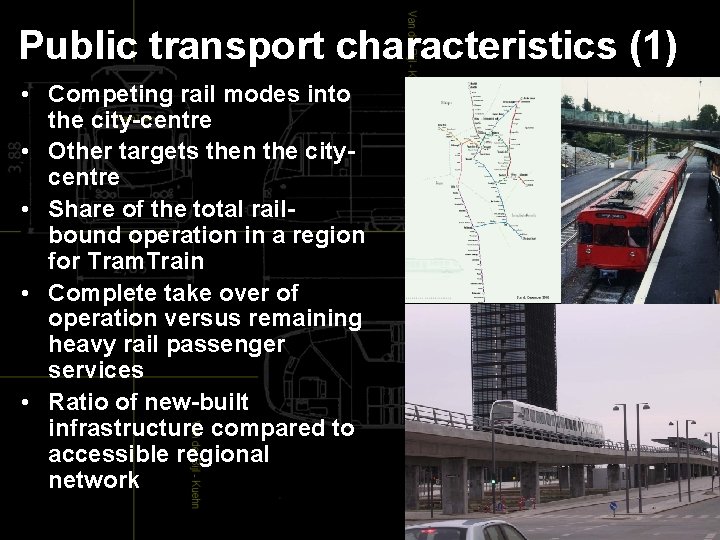
Public transport characteristics (1) • Competing rail modes into the city-centre • Other targets then the citycentre • Share of the total railbound operation in a region for Tram. Train • Complete take over of operation versus remaining heavy rail passenger services • Ratio of new-built infrastructure compared to accessible regional network
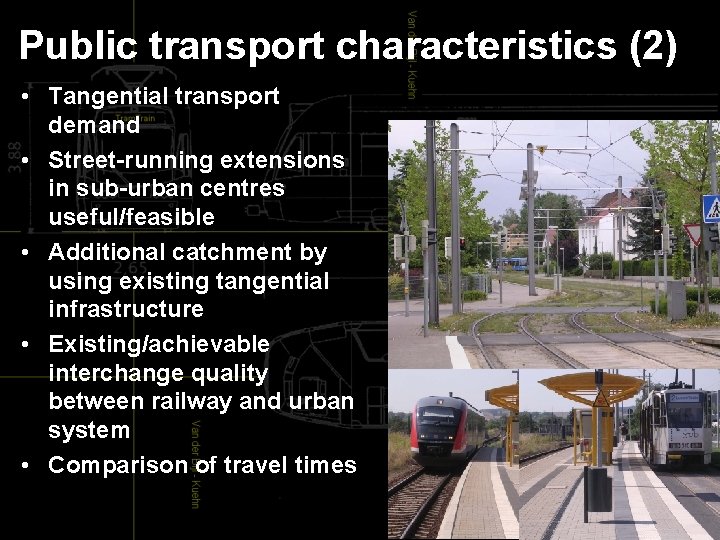
Public transport characteristics (2) • Tangential transport demand • Street-running extensions in sub-urban centres useful/feasible • Additional catchment by using existing tangential infrastructure • Existing/achievable interchange quality between railway and urban system • Comparison of travel times
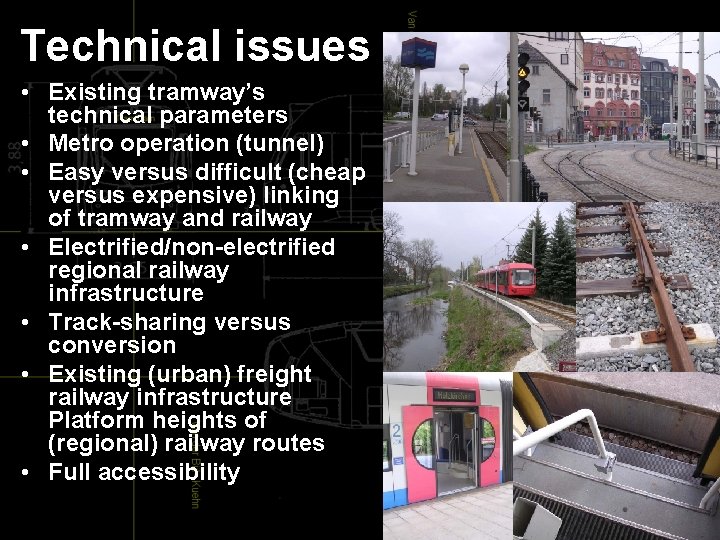
Technical issues • Existing tramway’s technical parameters • Metro operation (tunnel) • Easy versus difficult (cheap versus expensive) linking of tramway and railway • Electrified/non-electrified regional railway infrastructure • Track-sharing versus conversion • Existing (urban) freight railway infrastructure Platform heights of (regional) railway routes • Full accessibility
Applied criteria – the 50 issues
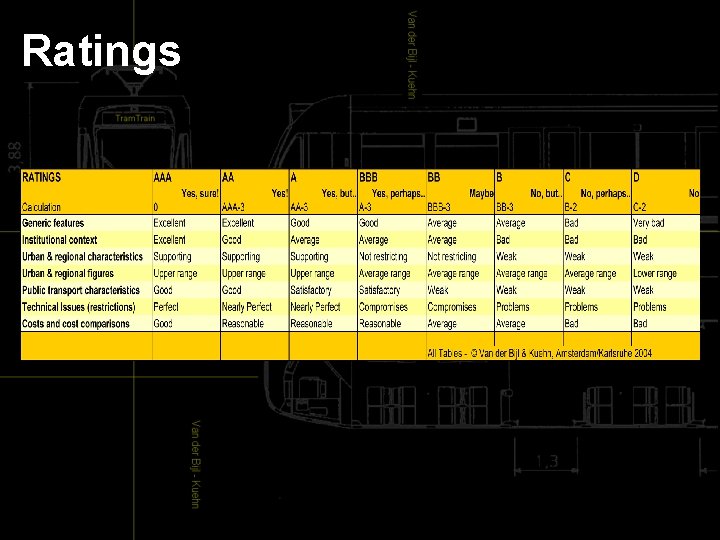
Ratings
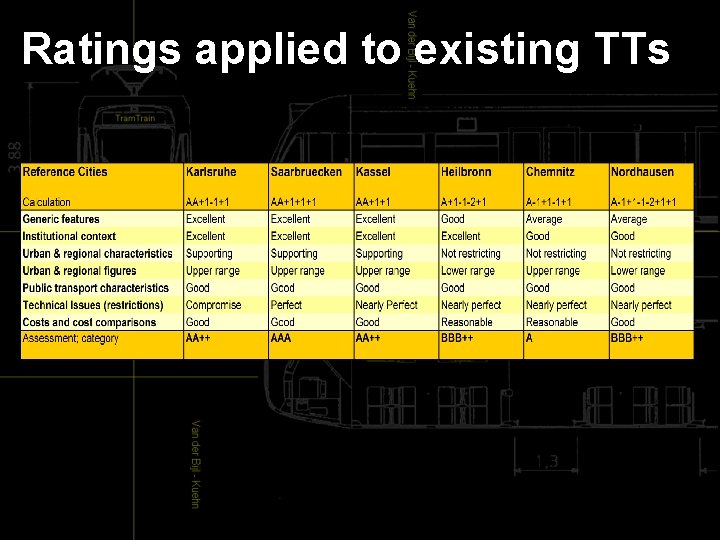
Ratings applied to existing TTs
Ratings applied to TT-examples
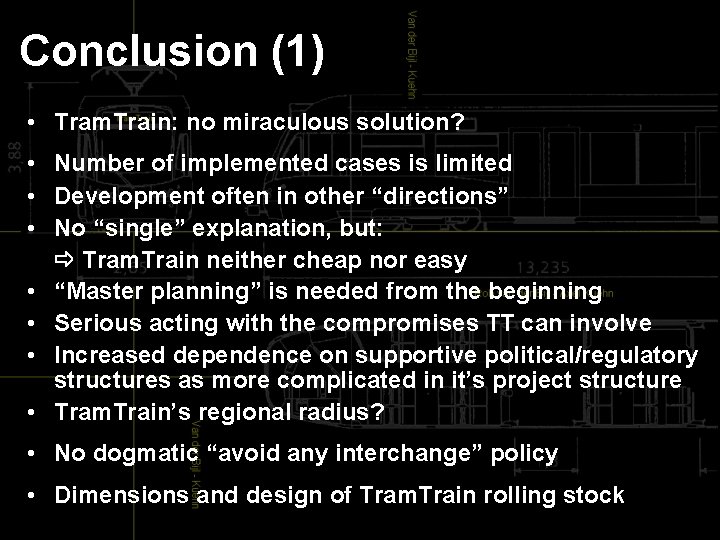
Conclusion (1) • Tram. Train: no miraculous solution? • Number of implemented cases is limited • Development often in other “directions” • No “single” explanation, but: Tram. Train neither cheap nor easy • “Master planning” is needed from the beginning • Serious acting with the compromises TT can involve • Increased dependence on supportive political/regulatory structures as more complicated in it’s project structure • Tram. Train’s regional radius? • No dogmatic “avoid any interchange” policy • Dimensions and design of Tram. Train rolling stock
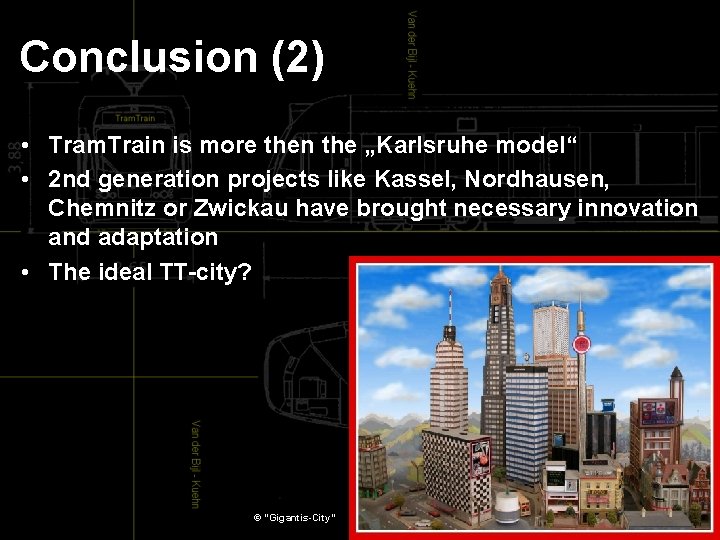
Conclusion (2) • Tram. Train is more then the „Karlsruhe model“ • 2 nd generation projects like Kassel, Nordhausen, Chemnitz or Zwickau have brought necessary innovation and adaptation • The ideal TT-city? © “Gigantis-City”