
Trait TheoryBiological Personality Perspectives Continued Follow the directions
Trait Theory/Biological Personality Perspectives Continued
Follow the directions! You will see pictures of 3 different men. On a piece of paper please respond to the following questions/prompts. 1. 2. 3. Choose a name for the person in the picture. Create a list of 5 personality traits you think may be used to describe the man in the picture. What kind of job might this many have?
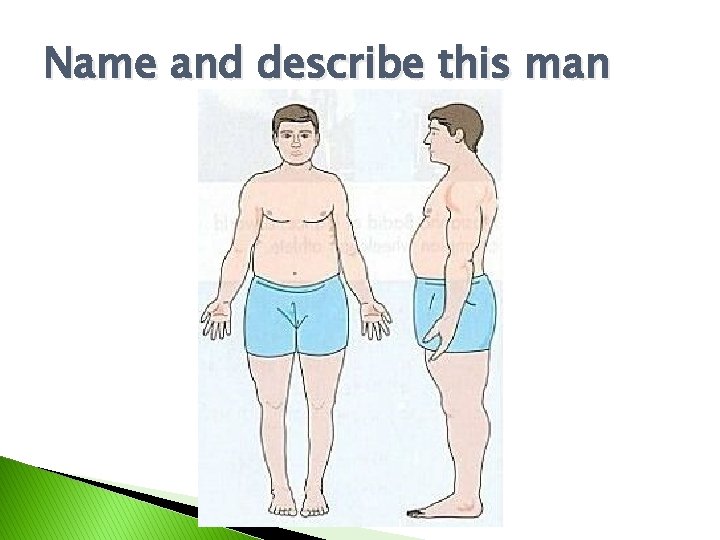
Name and describe this man
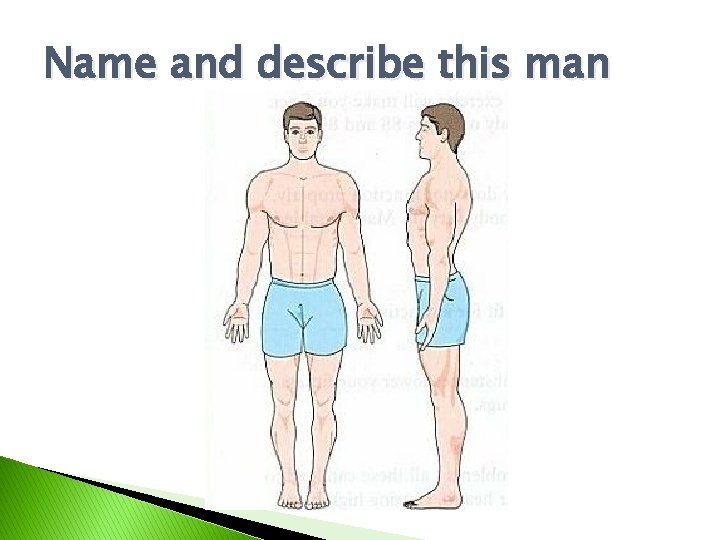
Name and describe this man
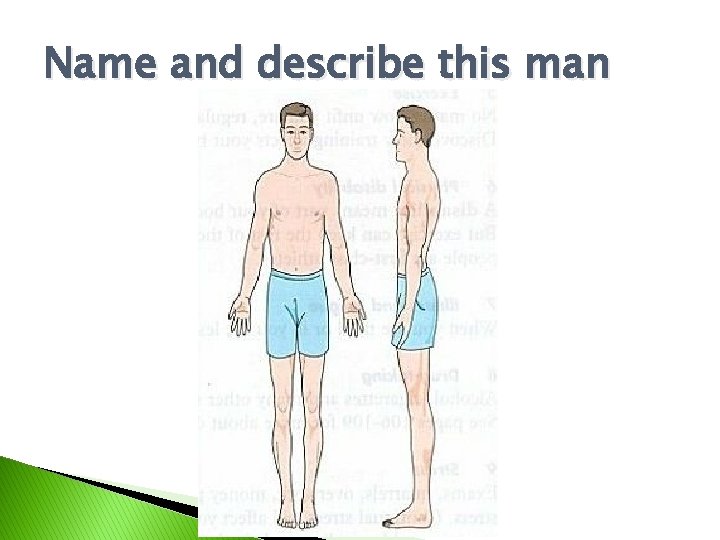
Name and describe this man
William Sheldon-Somatotypes 1940 s’s study of 4, 000 men Developed a theory that there are three basic body types, or somatotypes � Endoderm Mesoderm Ectoderm � Each associated with personality characteristics, representing a correlation between physique and temperament � � According to this view human personality traits are underwritten, as it were, by human physical types. Does this idea seem plausible? Does body type dictate temperament? To what extent does body type influence personality development, if at all?
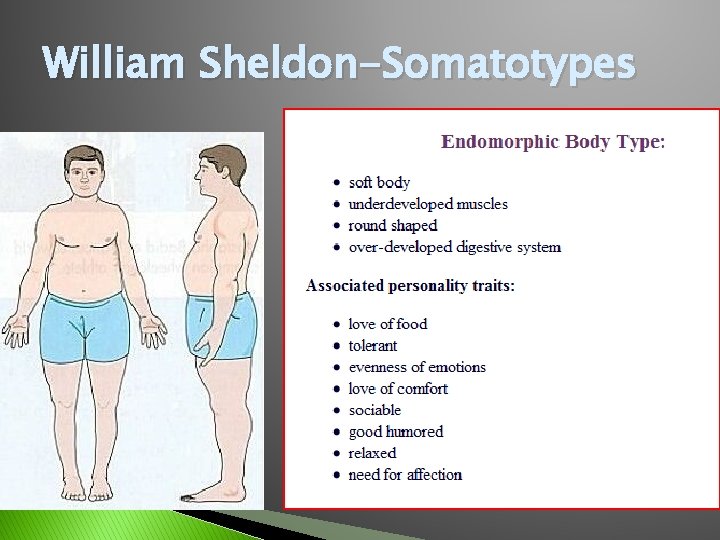
William Sheldon-Somatotypes
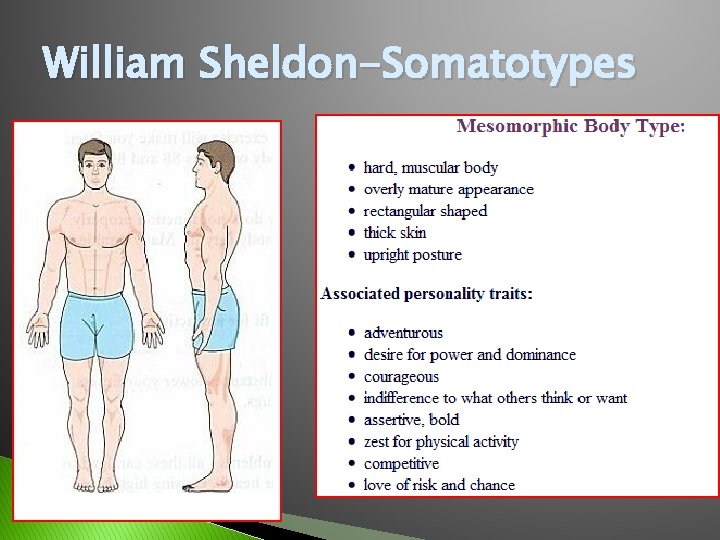
William Sheldon-Somatotypes
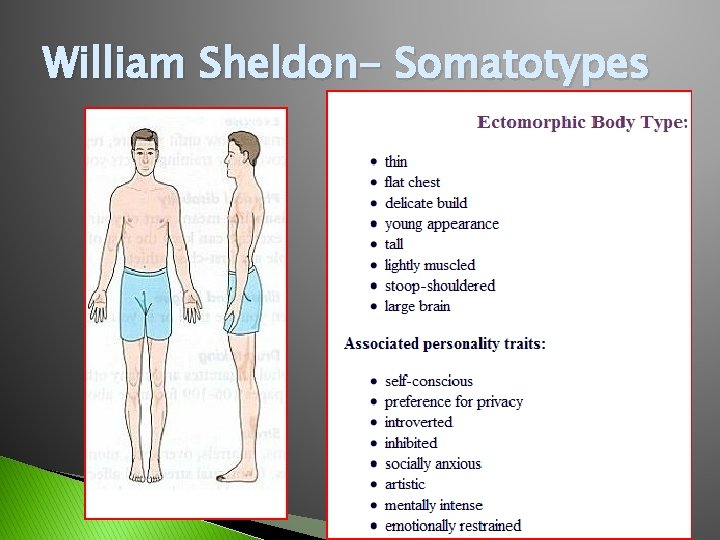
William Sheldon- Somatotypes
Trait Theory Trait theory is focused on identifying and measuring these individual personality characteristics. How many traits are there? Hans Eysenck claimed that any personality can be described by 3 basic factors (trait clusters) which are biologically determined. ◦ Introversion-extroversion In the 1930’s there were 4, 500 traits in 1990 it was been reduced to 5. A trait can be thought of as a relatively stable characteristic that causes individuals to behave in certain ways. Unlike other theories of personality, the trait approach is focused on differences between individuals.
Gordon Allport’s Trait Theory Cardinal, Central, & Secondary � Allport categorized traits. � Cardinal ◦ Traits that dominate an individuals whole life. ◦ Consider the origins of the following terms �Freudian, Don Juan, Christ-like ◦ rare and tend to develop later in life.
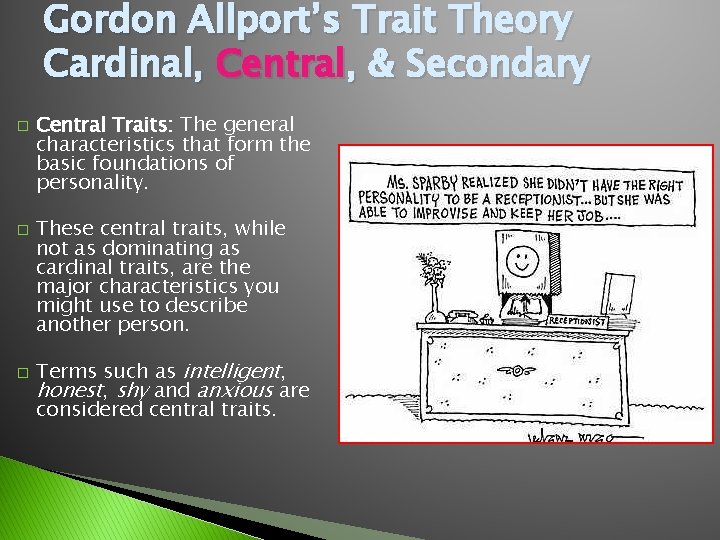
Gordon Allport’s Trait Theory Cardinal, Central, & Secondary � � � Central Traits: The general characteristics that form the basic foundations of personality. These central traits, while not as dominating as cardinal traits, are the major characteristics you might use to describe another person. Terms such as intelligent, honest, shy and anxious are considered central traits.
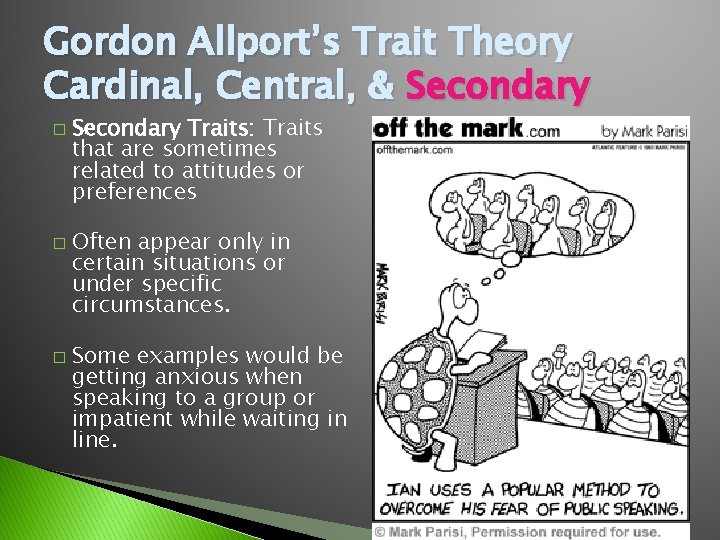
Gordon Allport’s Trait Theory Cardinal, Central, & Secondary � � � Secondary Traits: Traits that are sometimes related to attitudes or preferences Often appear only in certain situations or under specific circumstances. Some examples would be getting anxious when speaking to a group or impatient while waiting in line.
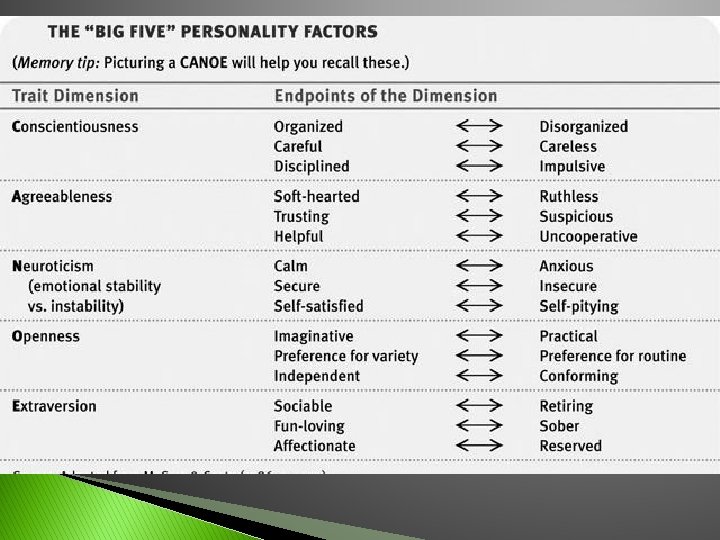
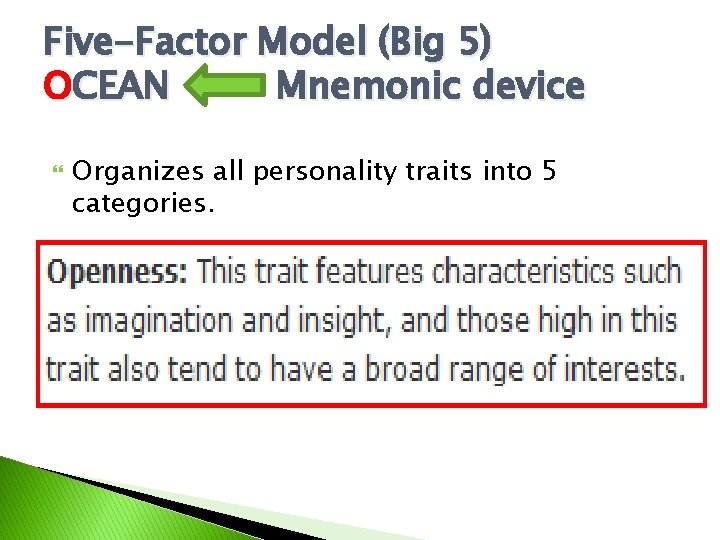
Five-Factor Model (Big 5) OCEAN Mnemonic device Organizes all personality traits into 5 categories.
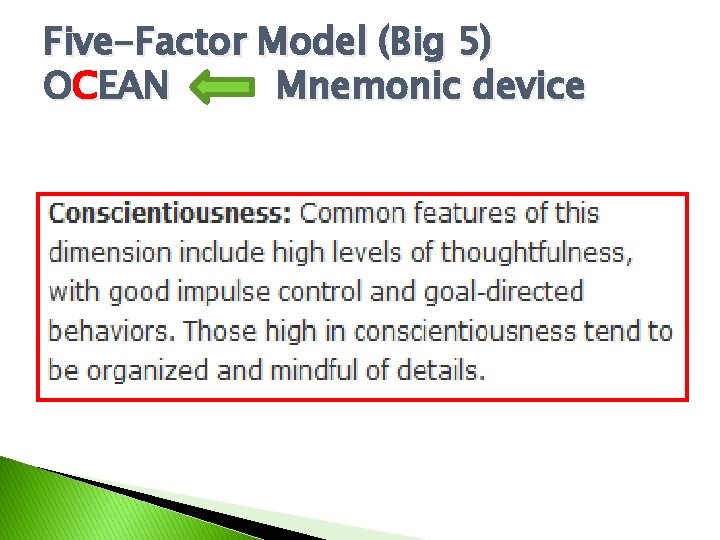
Five-Factor Model (Big 5) OCEAN Mnemonic device
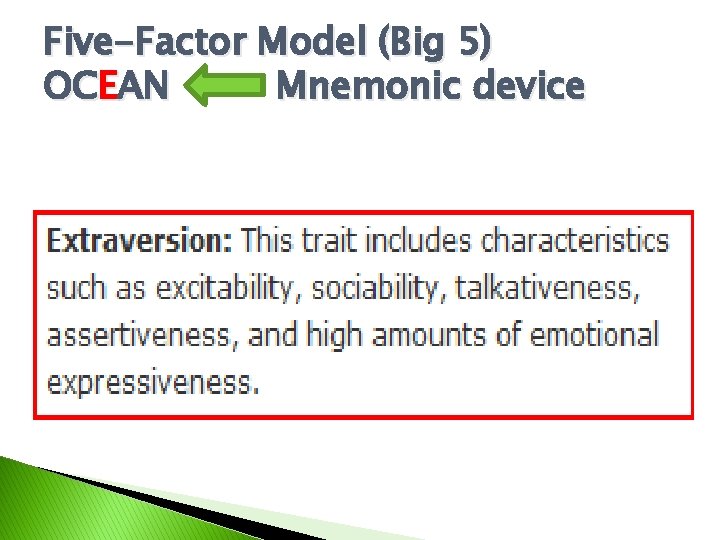
Five-Factor Model (Big 5) OCEAN Mnemonic device
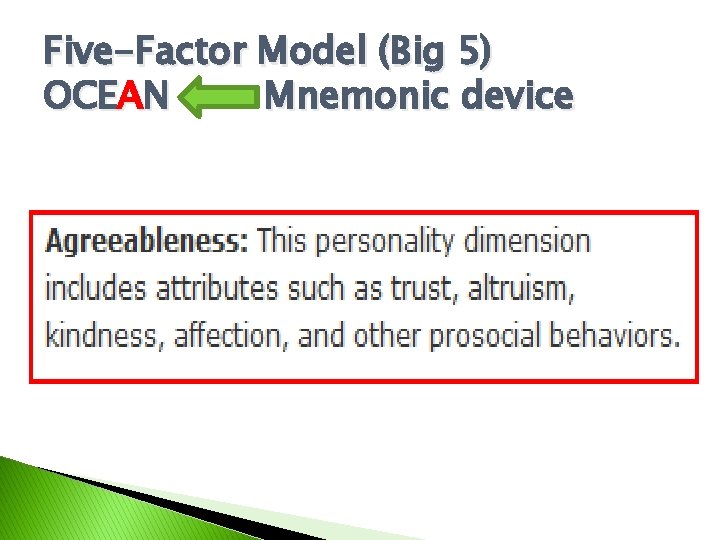
Five-Factor Model (Big 5) OCEAN Mnemonic device
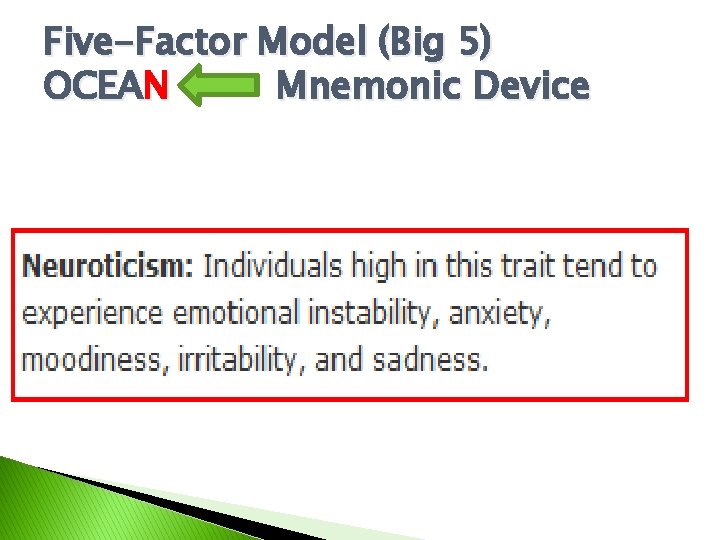
Five-Factor Model (Big 5) OCEAN Mnemonic Device
Big. Big 5 Model Raises 3 Issues 5 Model Raises Issues Although traits are stable tendencies to behave in certain ways, this stability does not necessarily apply across situations ◦ Personality tests reveal stability in traits, but may be a weak predictor of behavior. Conscientiousness? Determined Salesman Determined Computer Programmer ◦ PERSON –SITUATION INTERACTION Personality traits are both changeable and stable. ◦ Most change occurs before age 30 because adolescents and young adults are more willing to adopt new values and attitudes, or revise old ones. ◦ Most stability occurs after age 30, but adults do continue to grow in their ideas, beliefs & attitudes.
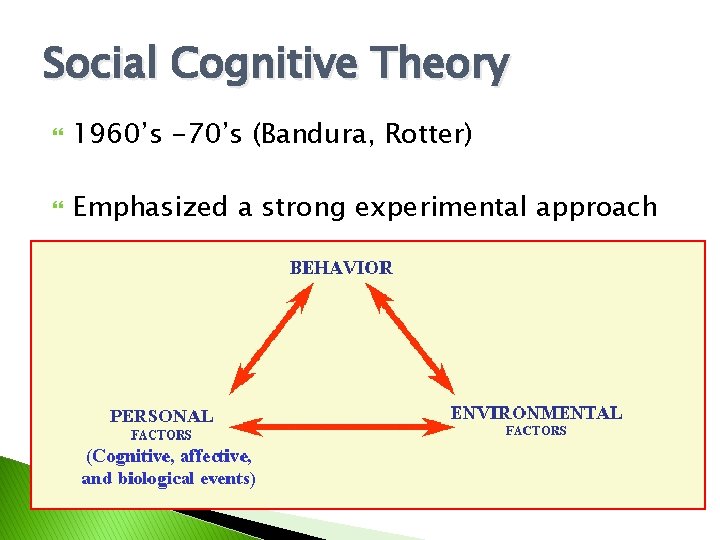
Social Cognitive Theory 1960’s -70’s (Bandura, Rotter) Emphasized a strong experimental approach
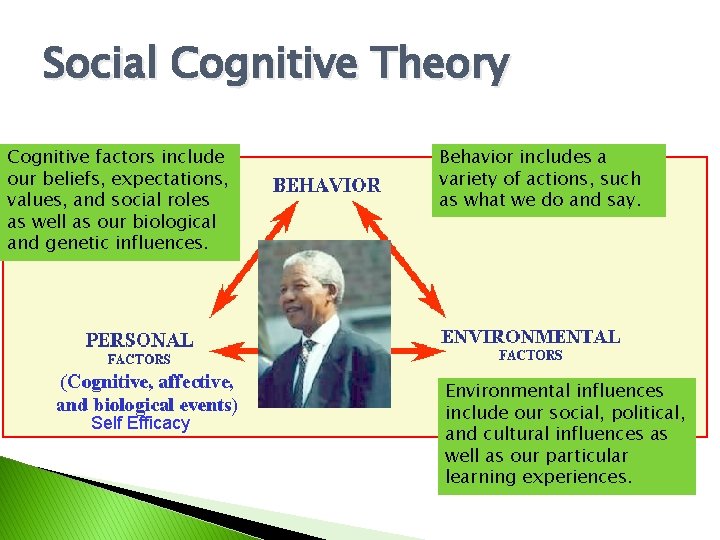
Social Cognitive Theory Cognitive factors include our beliefs, expectations, values, and social roles as well as our biological and genetic influences. Self Efficacy Behavior includes a variety of actions, such as what we do and say. Environmental influences include our social, political, and cultural influences as well as our particular learning experiences.
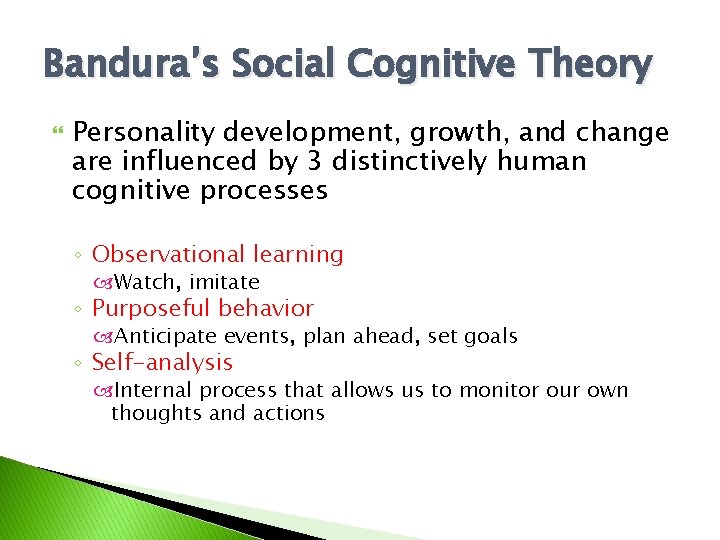
Bandura’s Social Cognitive Theory Personality development, growth, and change are influenced by 3 distinctively human cognitive processes ◦ Observational learning Watch, imitate ◦ Purposeful behavior Anticipate events, plan ahead, set goals ◦ Self-analysis Internal process that allows us to monitor our own thoughts and actions
Locus of Control Julian Rotter: How much control to we have over our situations or rewards? Internal/external Handout Rotter’s findings indicate that a specific belief, such as how much control you believe you have, influences how you perceive your world; and in turn, affects how you behave. (Health, explanatory style) Prisons, Nursing Homes, Work Places

Delay of Gratification-Mischel Refers to not taking an immediate but less desirable reward and instead waiting and pursuing an object or completing a task that promises a better reward in the future. Related to self control, impulsiveness, & will power How long children can wait for marshmallows depended upon what they attended to. ◦ Imagined (15 minutes) ◦ In front of them (6 minutes) Should I take 1 marshmallow now or wait and get 2 later?
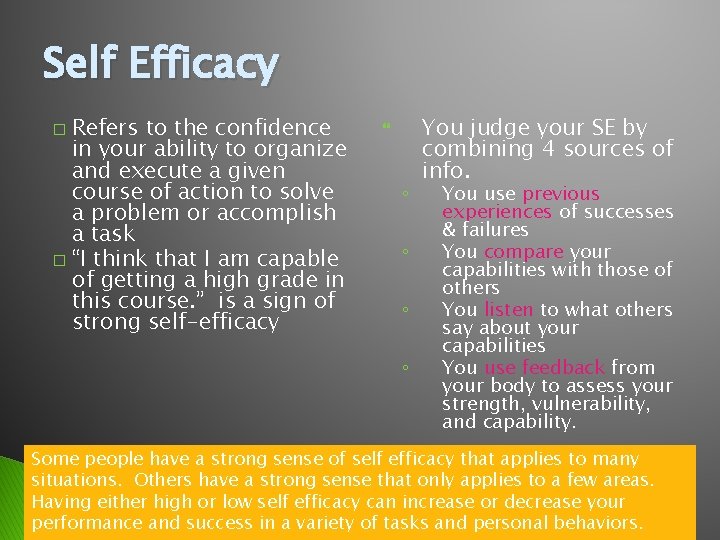
Self Efficacy Refers to the confidence in your ability to organize and execute a given course of action to solve a problem or accomplish a task � “I think that I am capable of getting a high grade in this course. ” is a sign of strong self-efficacy � ◦ ◦ You judge your SE by combining 4 sources of info. You use previous experiences of successes & failures You compare your capabilities with those of others You listen to what others say about your capabilities You use feedback from your body to assess your strength, vulnerability, and capability. Some people have a strong sense of self efficacy that applies to many situations. Others have a strong sense that only applies to a few areas. Having either high or low self efficacy can increase or decrease your performance and success in a variety of tasks and personal behaviors.
- Slides: 26