
TraintheTrainer Unit 3 ADDIE Model Analysis 1 Instructional

- Slides: 9
Train-the-Trainer Unit 3: ADDIE Model – Analysis 1
Instructional Systems Design (ISD) l l 2 The systematic development of high quality instruction in order to produce appropriate learning Part of instructional technology – the systematic application of theory and other organized knowledge to the task of instructional design and development.
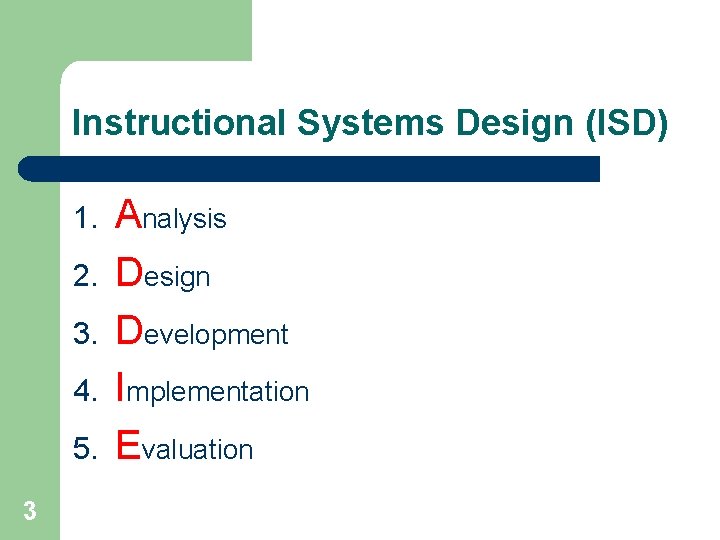
Instructional Systems Design (ISD) 1. 2. 3. 4. 5. 3 Analysis Design Development Implementation Evaluation
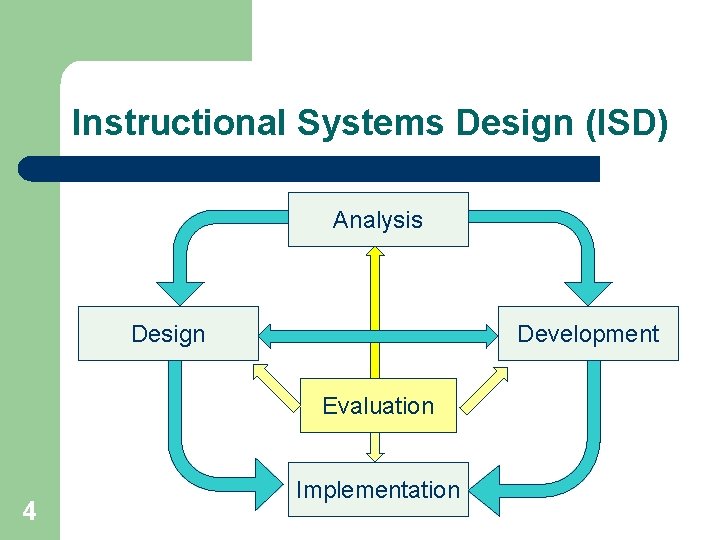
Instructional Systems Design (ISD) Analysis Design Development Evaluation 4 Implementation
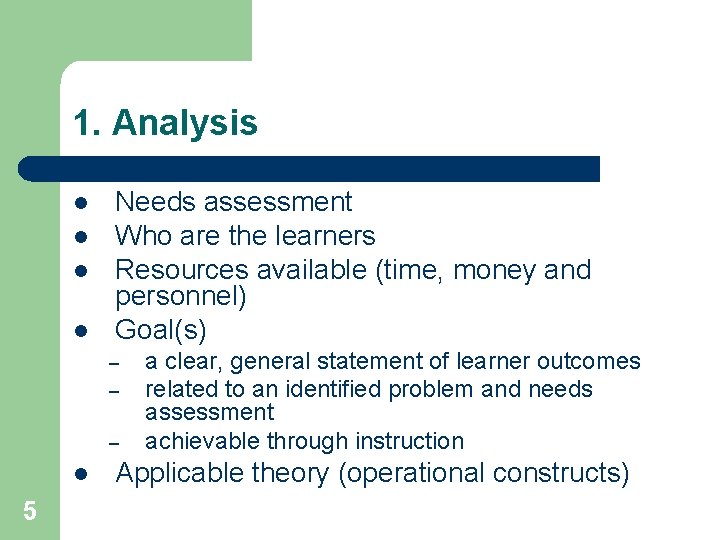
1. Analysis l l Needs assessment Who are the learners Resources available (time, money and personnel) Goal(s) – – – l 5 a clear, general statement of learner outcomes related to an identified problem and needs assessment achievable through instruction Applicable theory (operational constructs)
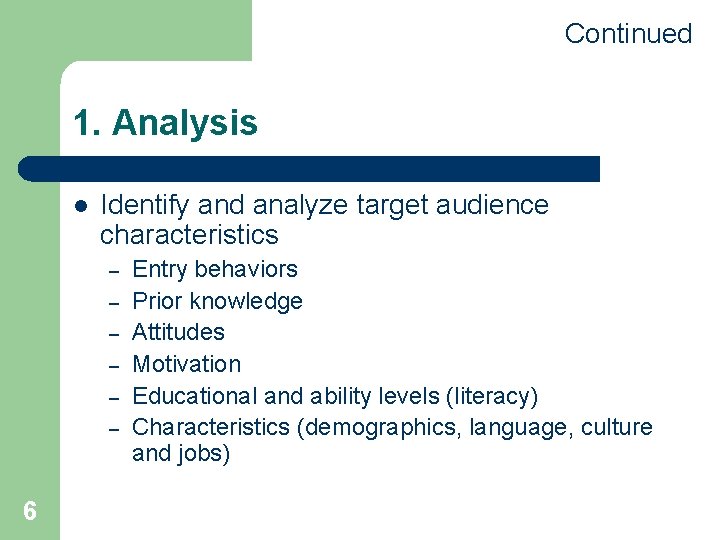
Continued 1. Analysis l Identify and analyze target audience characteristics – – – 6 Entry behaviors Prior knowledge Attitudes Motivation Educational and ability levels (literacy) Characteristics (demographics, language, culture and jobs)
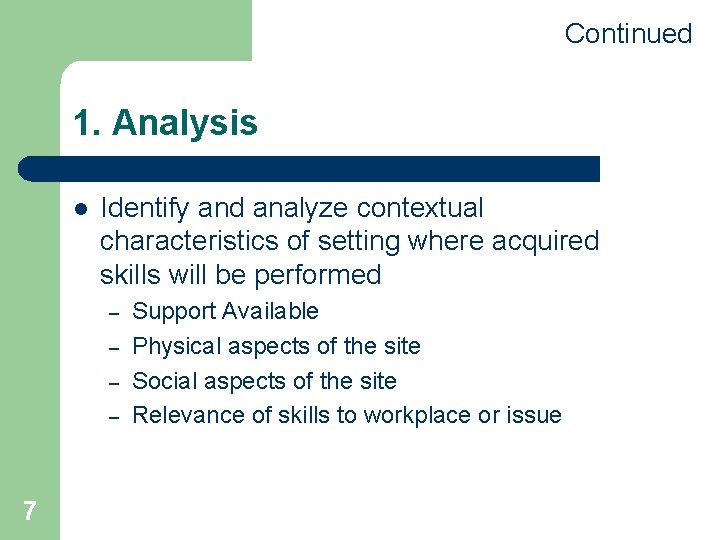
Continued 1. Analysis l Identify and analyze contextual characteristics of setting where acquired skills will be performed – – 7 Support Available Physical aspects of the site Social aspects of the site Relevance of skills to workplace or issue
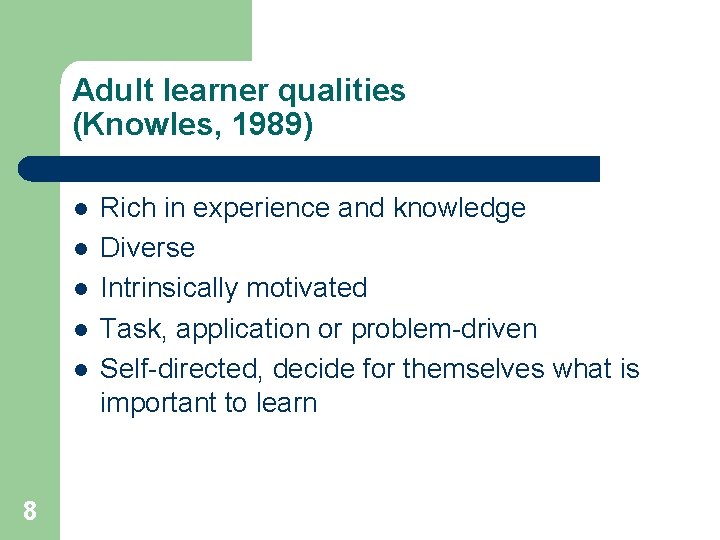
Adult learner qualities (Knowles, 1989) l l l 8 Rich in experience and knowledge Diverse Intrinsically motivated Task, application or problem-driven Self-directed, decide for themselves what is important to learn
Needs Assessment Techniques l l 9 Interviews Surveys (paper and email) Focus groups Nominal group technique