
Training Topics TCCC MSMAID Advanced Airway Induction TCCC

- Slides: 28
Training Topics - TCCC - MSMAID - Advanced Airway Induction
TCCC MARCH/PAWS
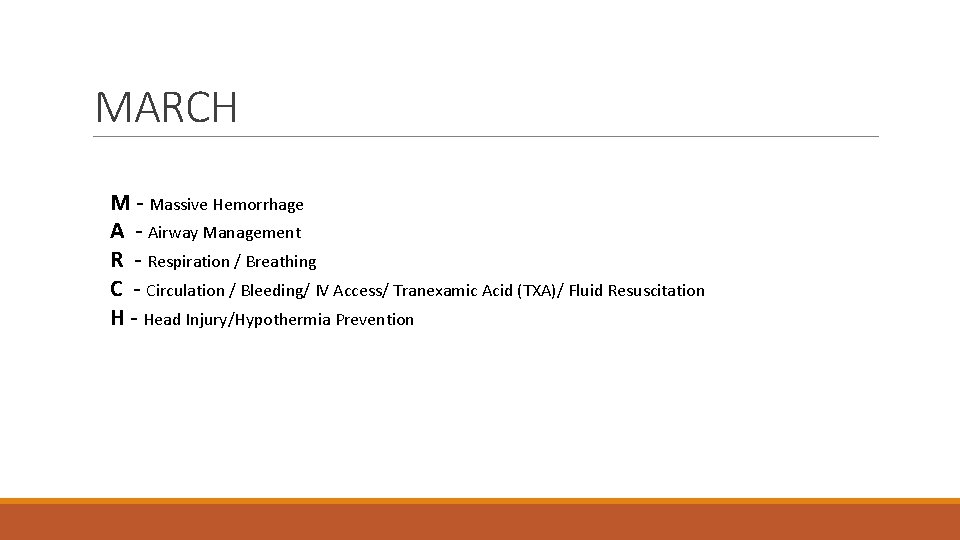
MARCH M - Massive Hemorrhage A - Airway Management R - Respiration / Breathing C - Circulation / Bleeding/ IV Access/ Tranexamic Acid (TXA)/ Fluid Resuscitation H - Head Injury/Hypothermia Prevention
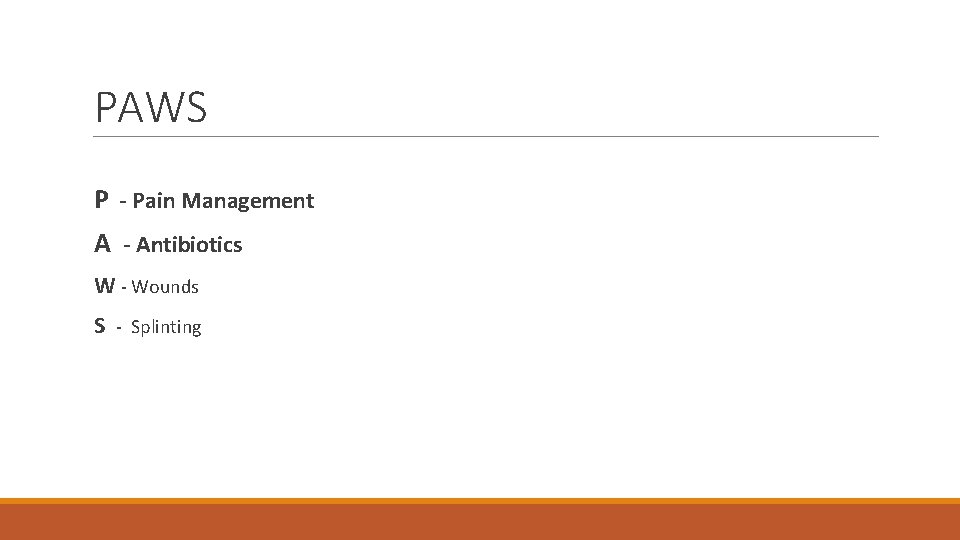
PAWS P - Pain Management A - Antibiotics W - Wounds S - Splinting
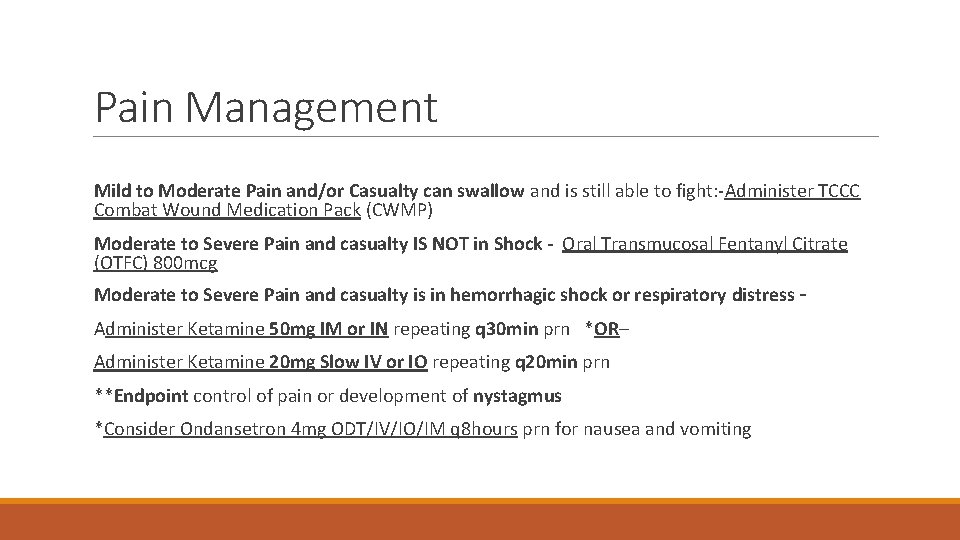
Pain Management Mild to Moderate Pain and/or Casualty can swallow and is still able to fight: -Administer TCCC Combat Wound Medication Pack (CWMP) Moderate to Severe Pain and casualty IS NOT in Shock - Oral Transmucosal Fentanyl Citrate (OTFC) 800 mcg Moderate to Severe Pain and casualty is in hemorrhagic shock or respiratory distress – Administer Ketamine 50 mg IM or IN repeating q 30 min prn *OR– Administer Ketamine 20 mg Slow IV or IO repeating q 20 min prn **Endpoint control of pain or development of nystagmus *Consider Ondansetron 4 mg ODT/IV/IO/IM q 8 hours prn for nausea and vomiting
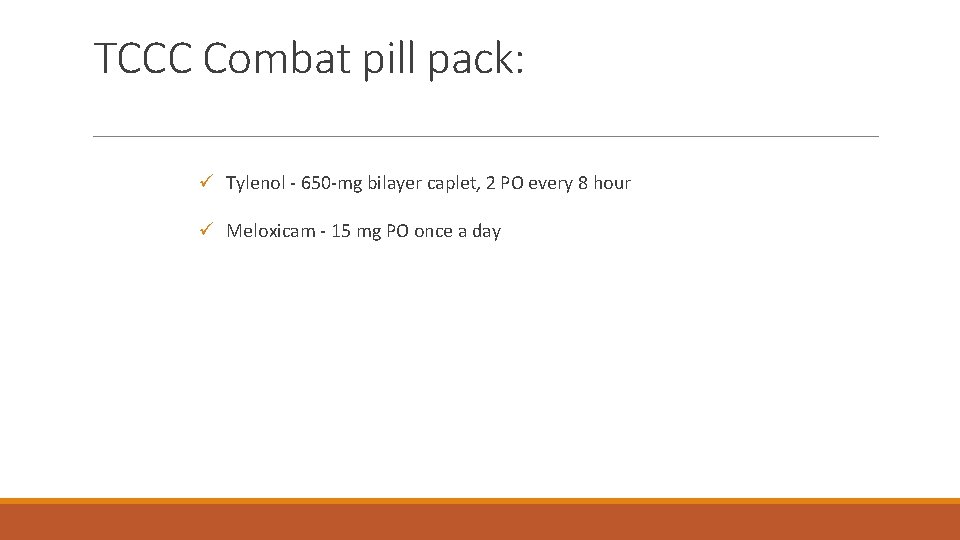
TCCC Combat pill pack: ü Tylenol - 650 -mg bilayer caplet, 2 PO every 8 hour ü Meloxicam - 15 mg PO once a day
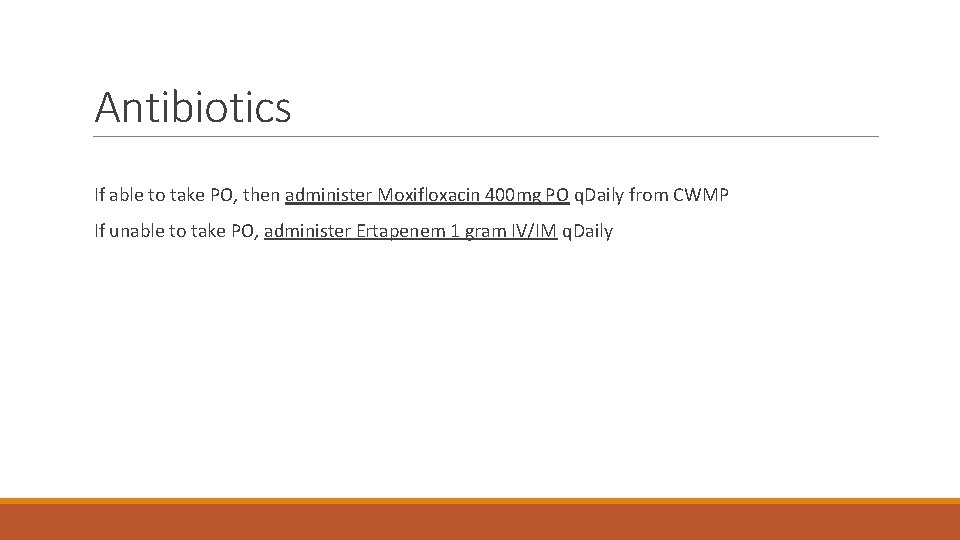
Antibiotics If able to take PO, then administer Moxifloxacin 400 mg PO q. Daily from CWMP If unable to take PO, administer Ertapenem 1 gram IV/IM q. Daily
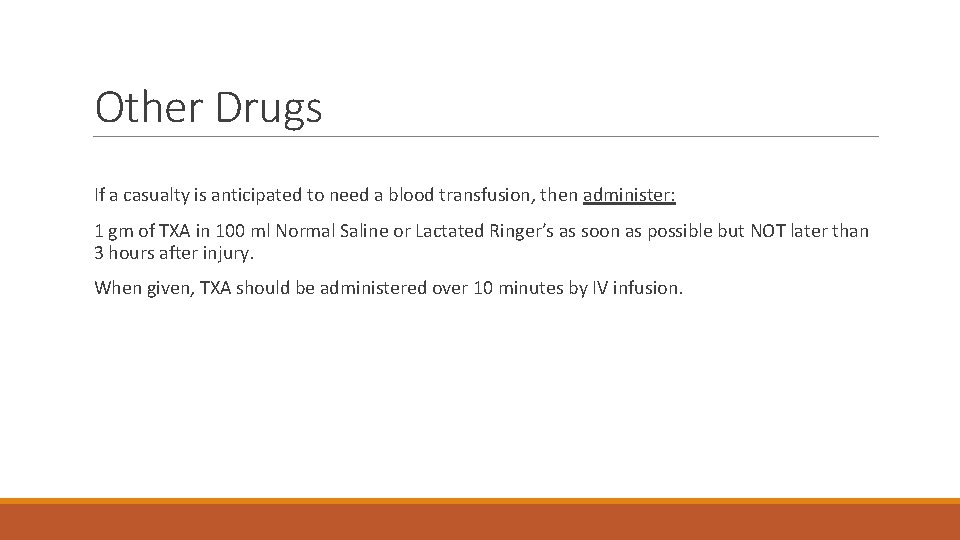
Other Drugs If a casualty is anticipated to need a blood transfusion, then administer: 1 gm of TXA in 100 ml Normal Saline or Lactated Ringer’s as soon as possible but NOT later than 3 hours after injury. When given, TXA should be administered over 10 minutes by IV infusion.
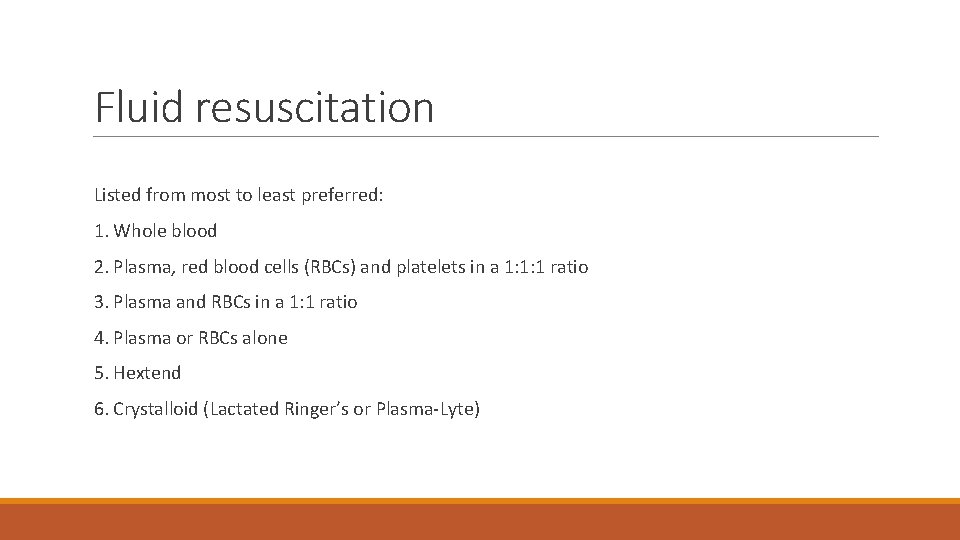
Fluid resuscitation Listed from most to least preferred: 1. Whole blood 2. Plasma, red blood cells (RBCs) and platelets in a 1: 1: 1 ratio 3. Plasma and RBCs in a 1: 1 ratio 4. Plasma or RBCs alone 5. Hextend 6. Crystalloid (Lactated Ringer’s or Plasma-Lyte)
Break
MSMAID APPLYING THE PRE-ANESTHESIA CHECKLIST TO SOF MEDICINE
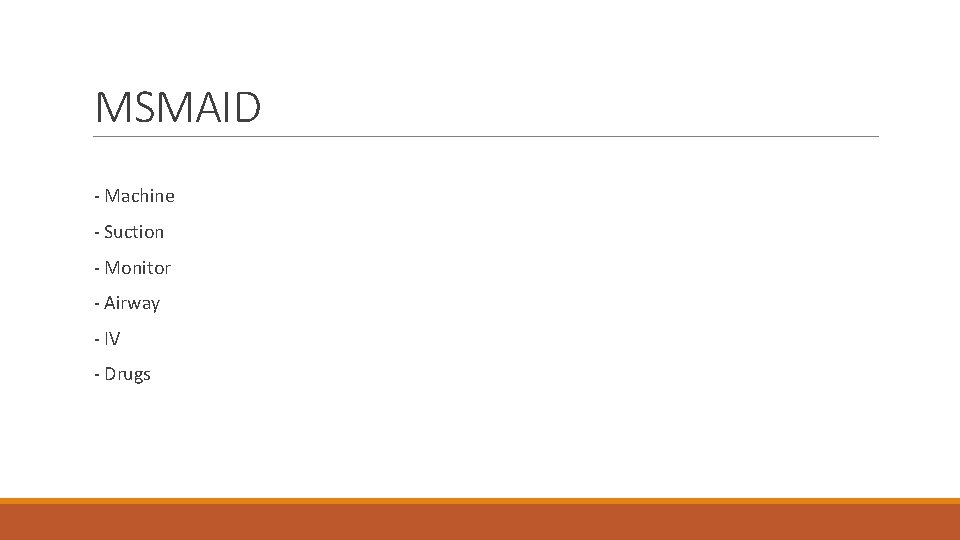
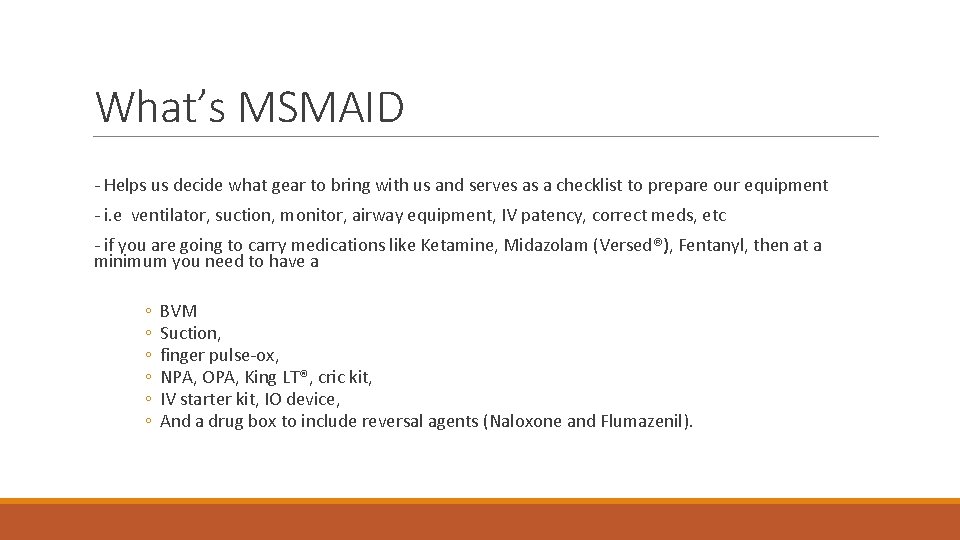
MSMAID - Machine - Suction - Monitor - Airway - IV - Drugs
What’s MSMAID - Helps us decide what gear to bring with us and serves as a checklist to prepare our equipment - i. e ventilator, suction, monitor, airway equipment, IV patency, correct meds, etc - if you are going to carry medications like Ketamine, Midazolam (Versed®), Fentanyl, then at a minimum you need to have a ◦ ◦ ◦ BVM Suction, finger pulse-ox, NPA, OPA, King LT®, cric kit, IV starter kit, IO device, And a drug box to include reversal agents (Naloxone and Flumazenil).
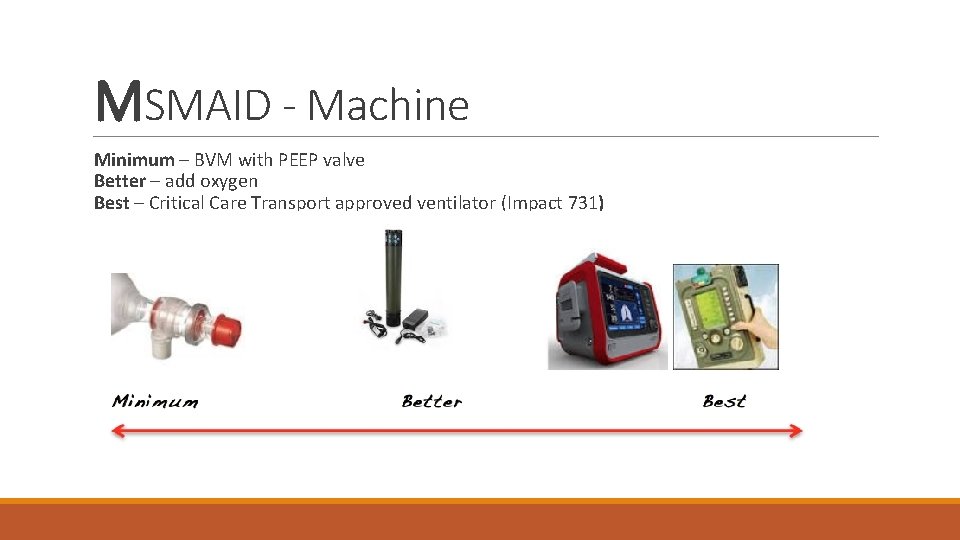
MSMAID - Machine Minimum – BVM with PEEP valve Better – add oxygen Best – Critical Care Transport approved ventilator (Impact 731)
Why PEEP? https: //www. youtube. com/watch? v=gibyod. R 2 W 4 U - SAVe. TM and the SAVe IITM are not true ventilators. They were designed to provide a very short term, “hands free BVM” capability. - You are better off hand ventilating your patient with a BVM and PEEP attachment.
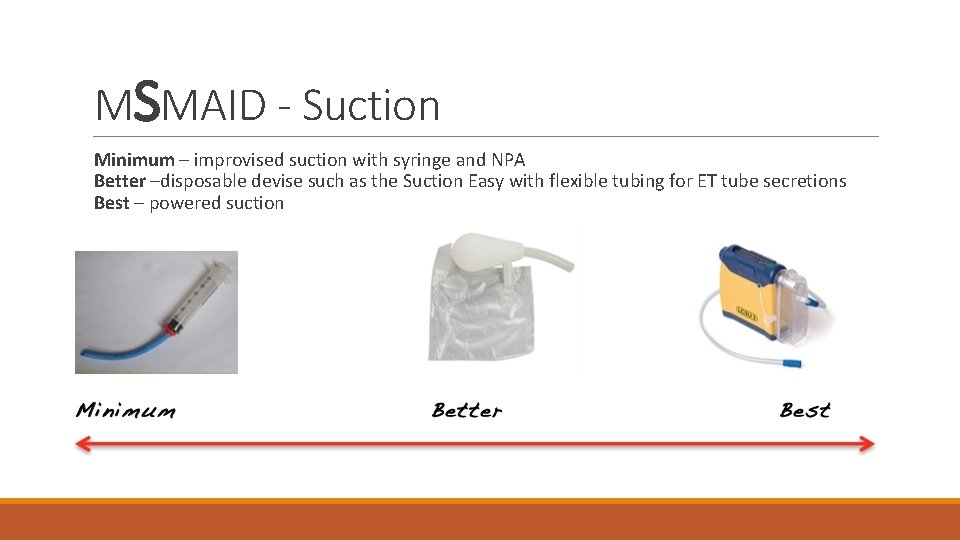
MSMAID - Suction Minimum – improvised suction with syringe and NPA Better –disposable devise such as the Suction Easy with flexible tubing for ET tube secretions Best – powered suction
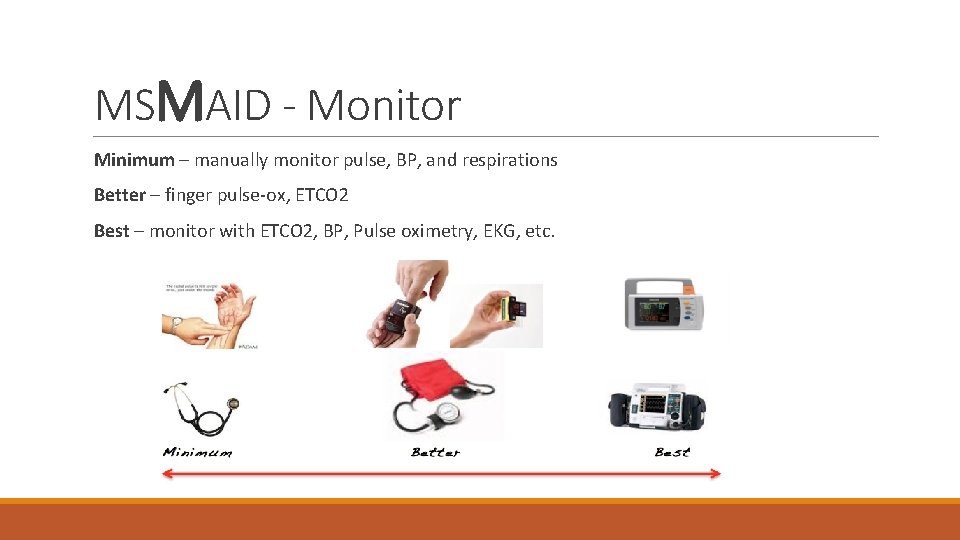
MSMAID - Monitor Minimum – manually monitor pulse, BP, and respirations Better – finger pulse-ox, ETCO 2 Best – monitor with ETCO 2, BP, Pulse oximetry, EKG, etc.
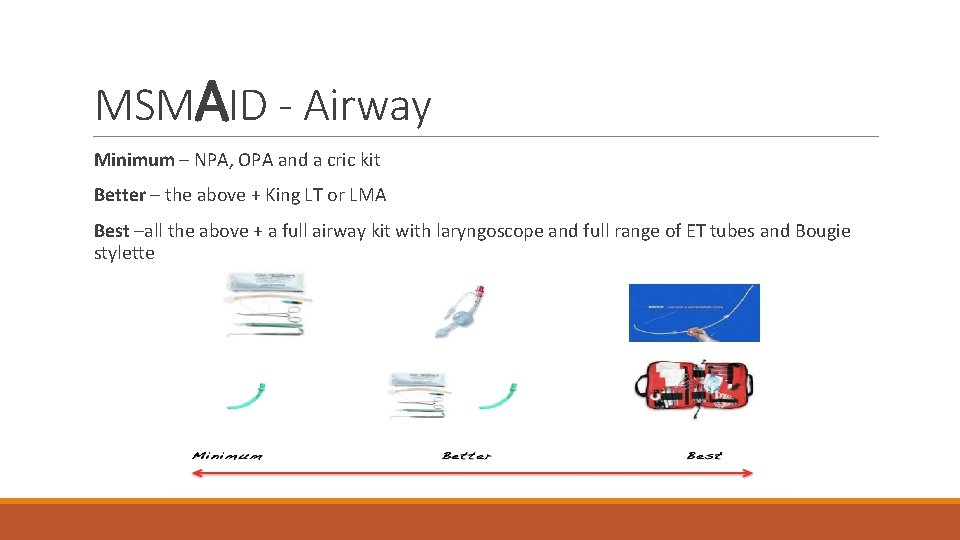
MSMAID - Airway Minimum – NPA, OPA and a cric kit Better – the above + King LT or LMA Best –all the above + a full airway kit with laryngoscope and full range of ET tubes and Bougie stylette
MSMAID – Intravenous access There’s no “minimum-better-best” here; you simply need to have the ability to get IV access if you are going to carry advanced medications, and you need to check patency of the line before pushing your meds.
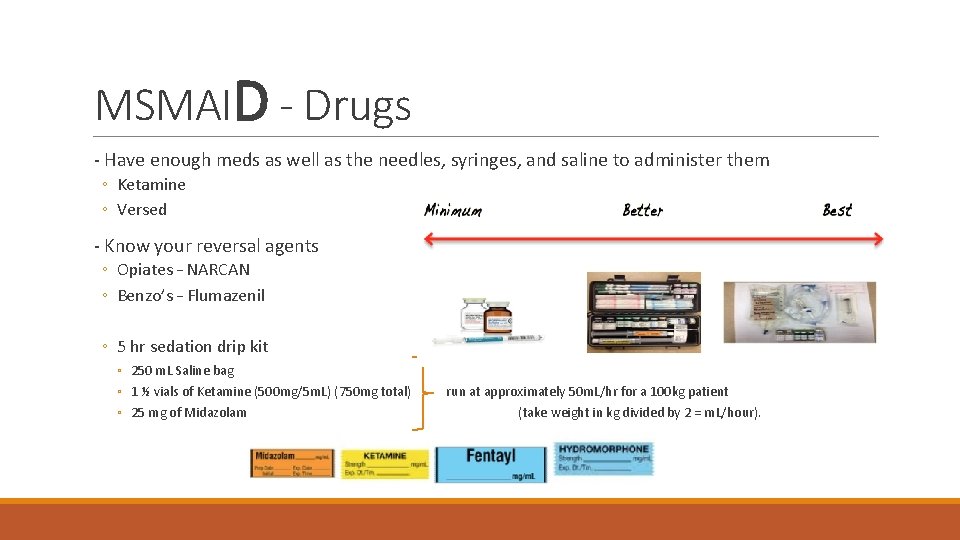
MSMAID - Drugs - Have enough meds as well as the needles, syringes, and saline to administer them ◦ Ketamine ◦ Versed - Know your reversal agents ◦ Opiates – NARCAN ◦ Benzo’s – Flumazenil ◦ 5 hr sedation drip kit ◦ 250 m. L Saline bag ◦ 1 ½ vials of Ketamine (500 mg/5 m. L) (750 mg total) ◦ 25 mg of Midazolam run at approximately 50 m. L/hr for a 100 kg patient (take weight in kg divided by 2 = m. L/hour).
Break
Advanced Airway Induction - CRIC is the preferred definitive airway in a prolonged Field care event - For short term definitive airway consider RSI as an alternative
MSMAID - Machine - Suction - Monitor - Airway - IV - Drugs
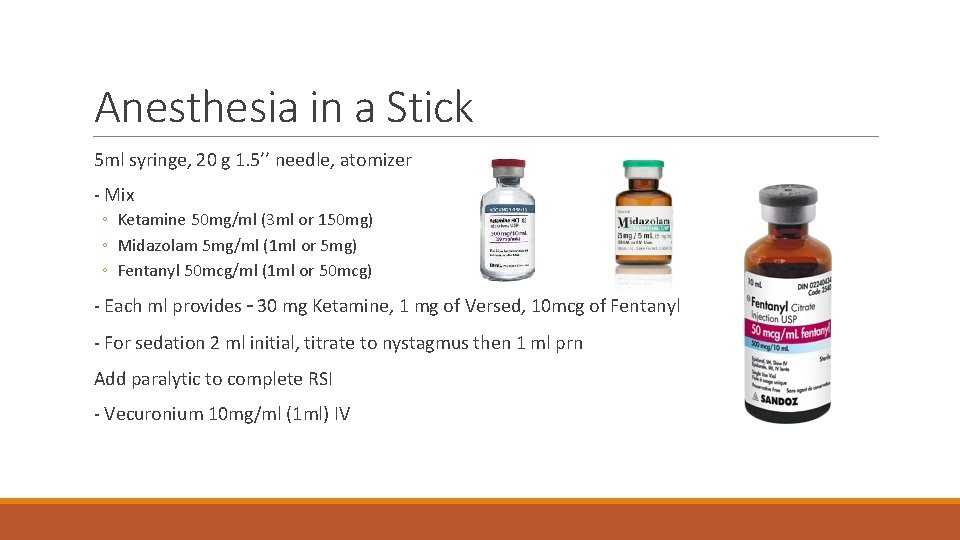
Anesthesia in a Stick 5 ml syringe, 20 g 1. 5’’ needle, atomizer - Mix ◦ Ketamine 50 mg/ml (3 ml or 150 mg) ◦ Midazolam 5 mg/ml (1 ml or 5 mg) ◦ Fentanyl 50 mcg/ml (1 ml or 50 mcg) - Each ml provides – 30 mg Ketamine, 1 mg of Versed, 10 mcg of Fentanyl - For sedation 2 ml initial, titrate to nystagmus then 1 ml prn Add paralytic to complete RSI - Vecuronium 10 mg/ml (1 ml) IV
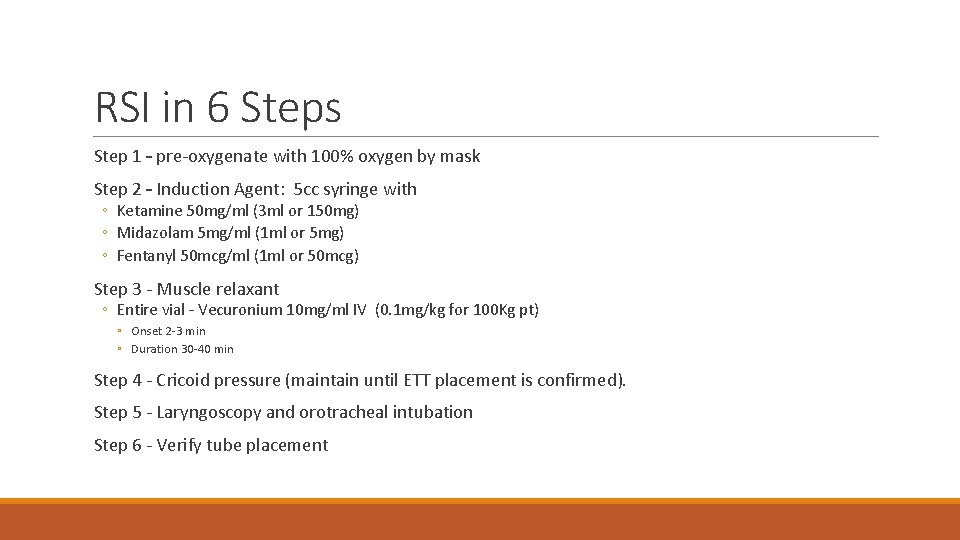
RSI in 6 Steps Step 1 – pre-oxygenate with 100% oxygen by mask Step 2 – Induction Agent: 5 cc syringe with ◦ Ketamine 50 mg/ml (3 ml or 150 mg) ◦ Midazolam 5 mg/ml (1 ml or 5 mg) ◦ Fentanyl 50 mcg/ml (1 ml or 50 mcg) Step 3 - Muscle relaxant ◦ Entire vial – Vecuronium 10 mg/ml IV (0. 1 mg/kg for 100 Kg pt) ◦ Onset 2 -3 min ◦ Duration 30 -40 min Step 4 - Cricoid pressure (maintain until ETT placement is confirmed). Step 5 - Laryngoscopy and orotracheal intubation Step 6 - Verify tube placement
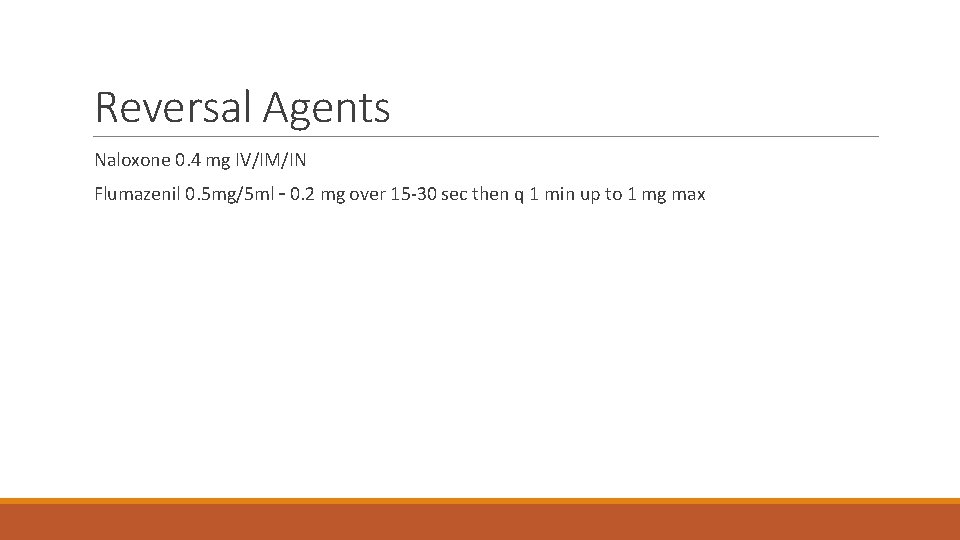
Reversal Agents Naloxone 0. 4 mg IV/IM/IN Flumazenil 0. 5 mg/5 ml – 0. 2 mg over 15 -30 sec then q 1 min up to 1 mg max
Questions?
References - TCCC 9 June 2016) - JTC Clinical Practice Guidelines - Management of Analgesia and Sedation during PFC (Jeremy Pamplin, MD, et al. ) - Emergency War Surgery Manual (3 rd US revision)