
Training Thresholds Progress Indicators Good Progress Recall what
- Slides: 14
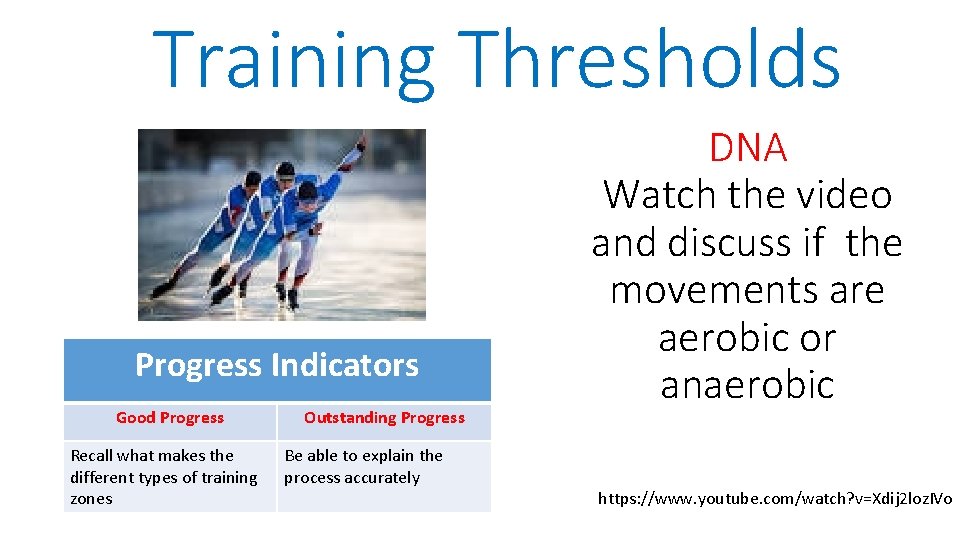
Training Thresholds Progress Indicators Good Progress Recall what makes the different types of training zones Outstanding Progress Be able to explain the process accurately DNA Watch the video and discuss if the movements are aerobic or anaerobic https: //www. youtube. com/watch? v=Xdij 2 loz. IVo
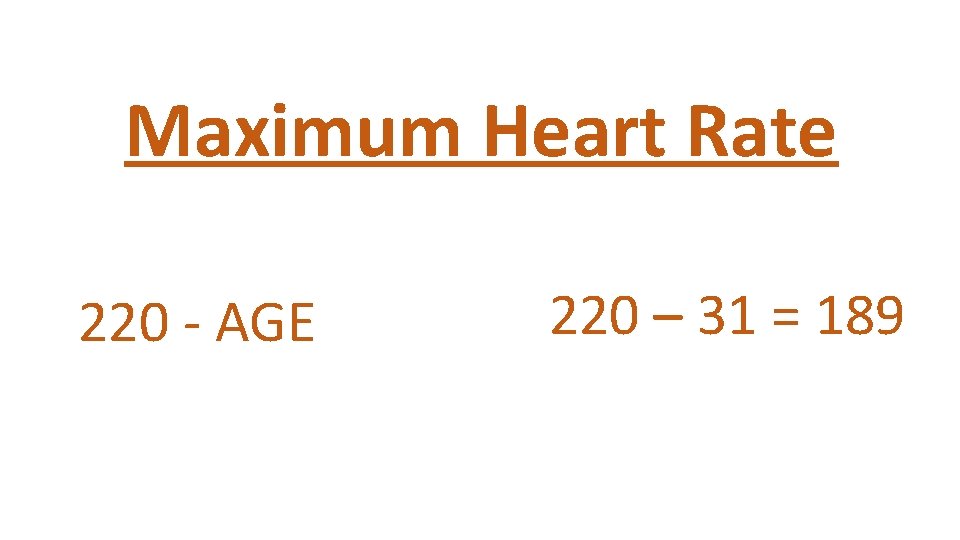
Maximum Heart Rate 220 - AGE 220 – 31 = 189
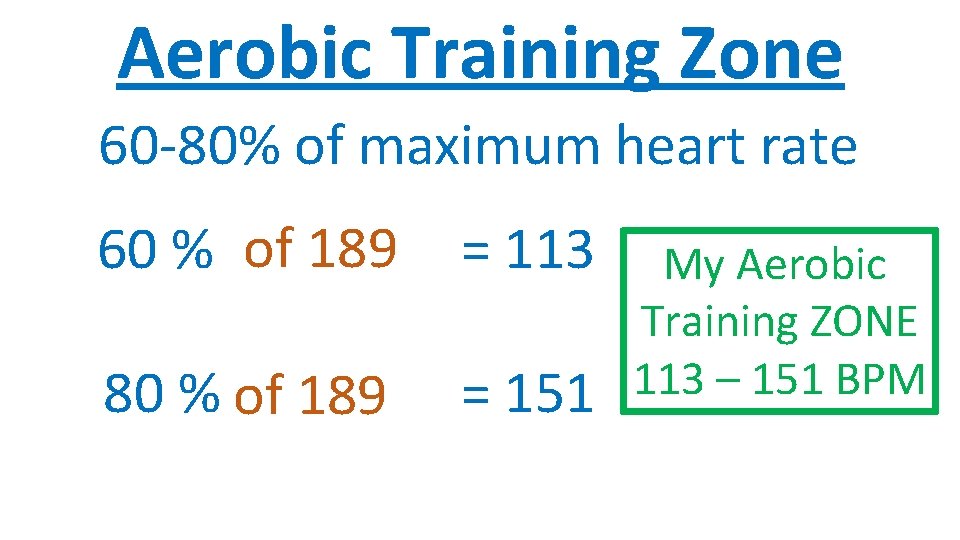
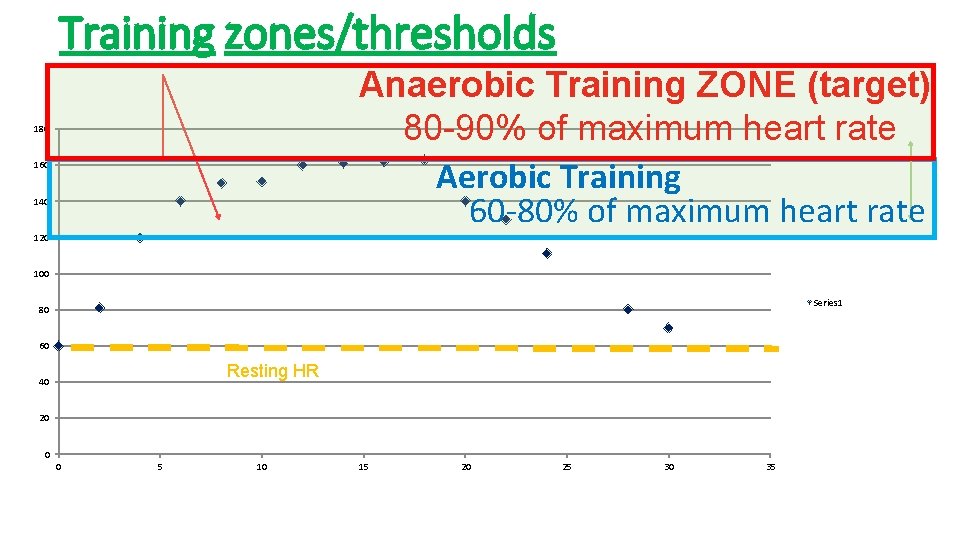
Aerobic Training Zone 60 -80% of maximum heart rate 60 % of 189 = 113 80 % of 189 = 151 My Aerobic Training ZONE 113 – 151 BPM
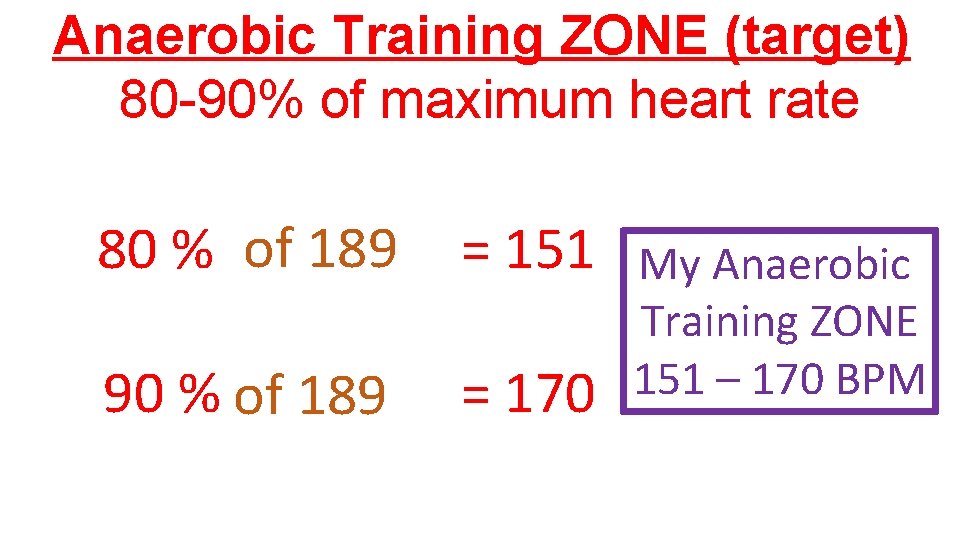
Anaerobic Training ZONE (target) 80 -90% of maximum heart rate 80 % of 189 = 151 90 % of 189 = 170 My Anaerobic Training ZONE 151 – 170 BPM
Training zones/thresholds Anaerobic Training ZONE (target) 80 -90% of maximum heart rate Aerobic Training 60 -80% of maximum heart rate 180 160 140 120 100 Series 1 80 60 Resting HR 40 20 0 0 5 10 15 20 25 30 35
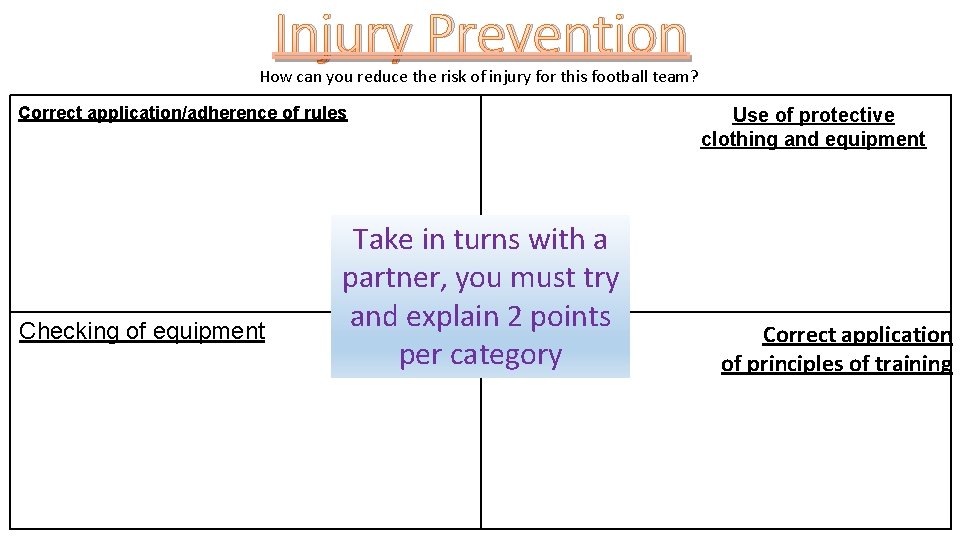
Injury Prevention How can you reduce the risk of injury for this football team? Correct application/adherence of rules Checking of equipment Take in turns with a partner, you must try and explain 2 points per category Use of protective clothing and equipment Correct application of principles of training
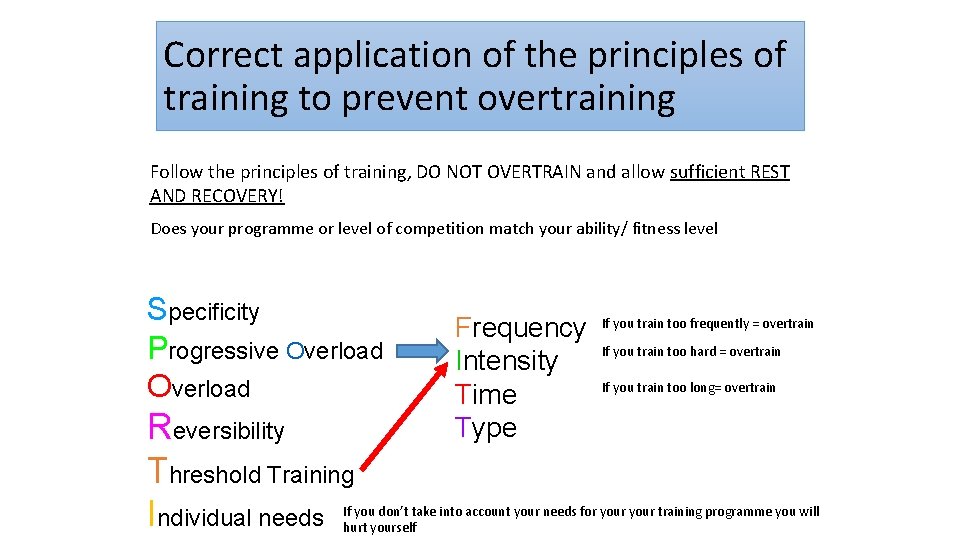
Correct application of the principles of training to prevent overtraining Follow the principles of training, DO NOT OVERTRAIN and allow sufficient REST AND RECOVERY! Does your programme or level of competition match your ability/ fitness level Specificity Progressive Overload Reversibility Threshold Training Individual needs Frequency Intensity Time Type If you train too frequently = overtrain If you train too hard = overtrain If you train too long= overtrain If you don’t take into account your needs for your training programme you will hurt yourself
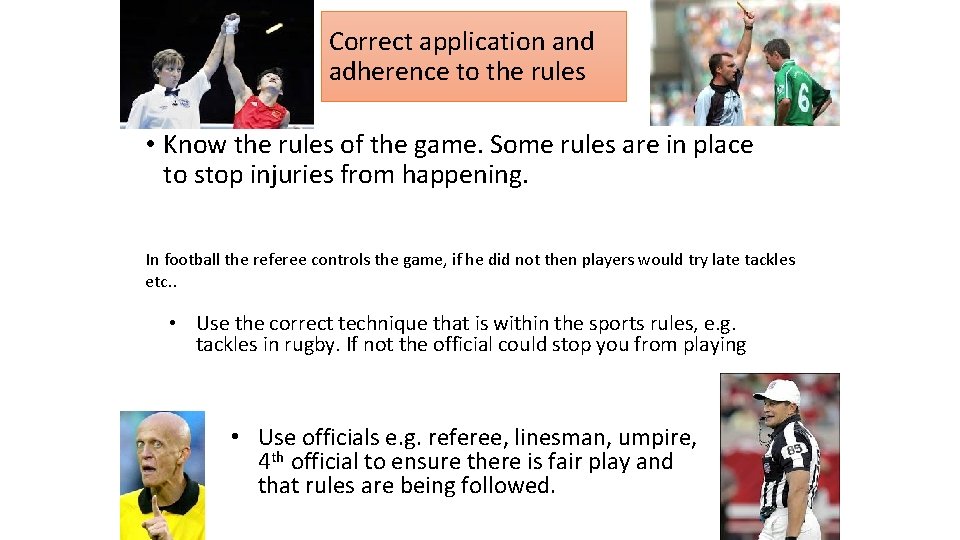
Correct application and adherence to the rules • Know the rules of the game. Some rules are in place to stop injuries from happening. In football the referee controls the game, if he did not then players would try late tackles etc. . • Use the correct technique that is within the sports rules, e. g. tackles in rugby. If not the official could stop you from playing • Use officials e. g. referee, linesman, umpire, 4 th official to ensure there is fair play and that rules are being followed.
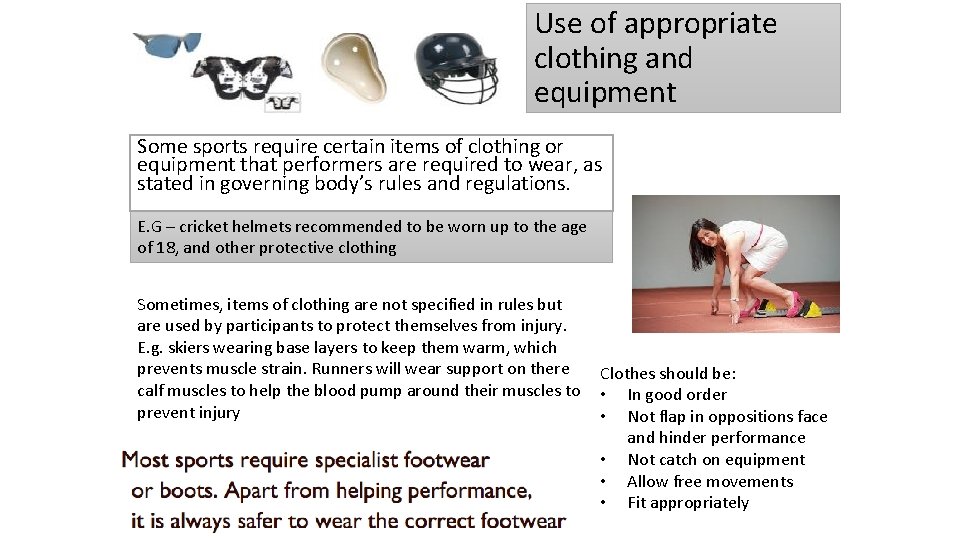
Use of appropriate clothing and equipment Some sports require certain items of clothing or equipment that performers are required to wear, as stated in governing body’s rules and regulations. E. G – cricket helmets recommended to be worn up to the age of 18, and other protective clothing Sometimes, items of clothing are not specified in rules but are used by participants to protect themselves from injury. E. g. skiers wearing base layers to keep them warm, which prevents muscle strain. Runners will wear support on there calf muscles to help the blood pump around their muscles to prevent injury Clothes should be: • In good order • Not flap in oppositions face and hinder performance • Not catch on equipment • Allow free movements • Fit appropriately
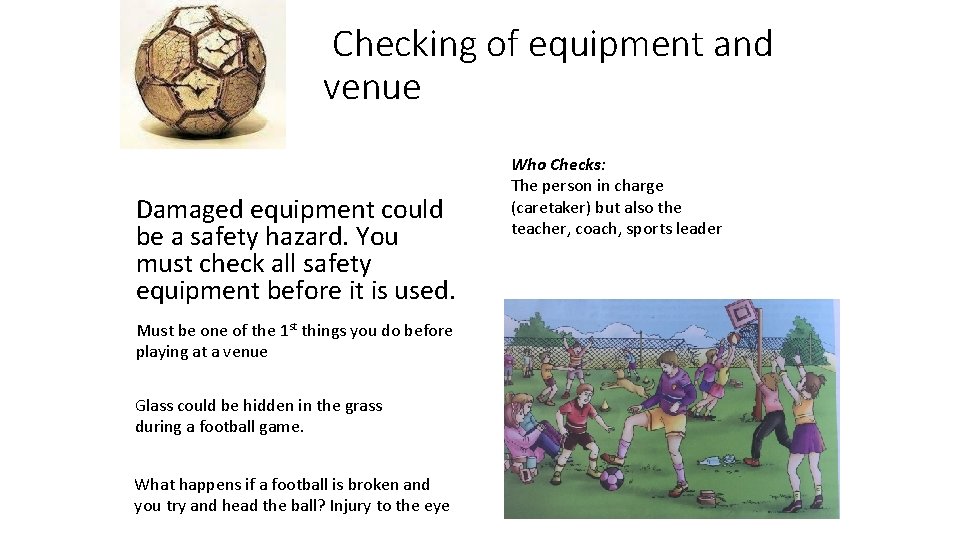
Checking of equipment and venue Damaged equipment could be a safety hazard. You must check all safety equipment before it is used. Must be one of the 1 st things you do before playing at a venue Glass could be hidden in the grass during a football game. What happens if a football is broken and you try and head the ball? Injury to the eye Who Checks: The person in charge (caretaker) but also the teacher, coach, sports leader
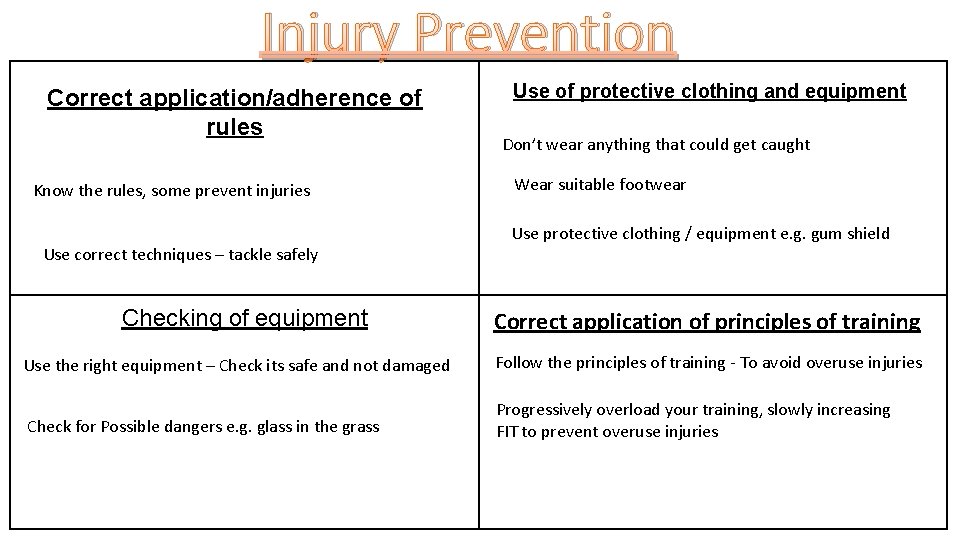
Injury Prevention Correct application/adherence of rules Know the rules, some prevent injuries Use correct techniques – tackle safely Checking of equipment Use of protective clothing and equipment Don’t wear anything that could get caught Wear suitable footwear Use protective clothing / equipment e. g. gum shield Correct application of principles of training Use the right equipment – Check its safe and not damaged Follow the principles of training - To avoid overuse injuries Check for Possible dangers e. g. glass in the grass Progressively overload your training, slowly increasing FIT to prevent overuse injuries
Injury Prevention How can you reduce the risk of injury for this football team? Correct application/adherence of rules Checking of equipment Use of protective clothing and equipment Correct application of principles of training
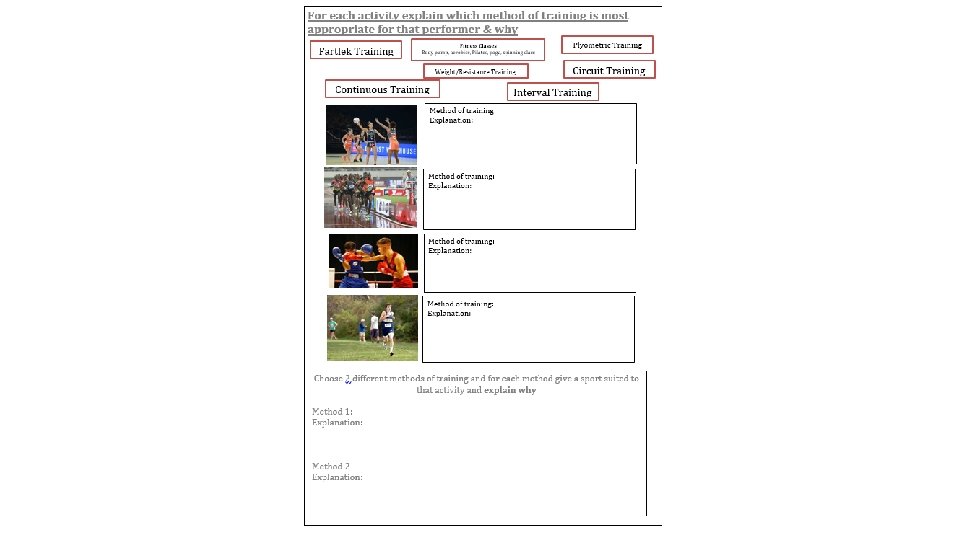
Exam Q Mark scheme on the back