
Training Pack Module Standard Work Element Standard in
- Slides: 11
Training Pack Module: Standard Work Element: Standard in Process Stock
Aims & Objectives Target Audience : Operations, Manufacturing Engineering. Purpose of Module : To gain an understanding of Standard In Process Stock (SIPS) Aims & Objectives : • Define SIPS • To Learn how to calculate SIPS • Gain an understanding of how SIPS fits into Standardised Work • To raise awareness of how SIPS can eliminate Waste and support flow
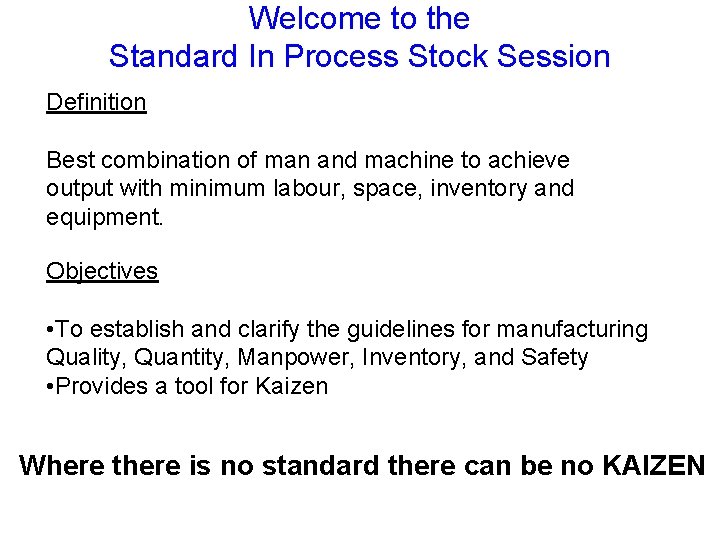
Welcome to the Standard In Process Stock Session Definition Best combination of man and machine to achieve output with minimum labour, space, inventory and equipment. Objectives • To establish and clarify the guidelines for manufacturing Quality, Quantity, Manpower, Inventory, and Safety • Provides a tool for Kaizen Where there is no standard there can be no KAIZEN
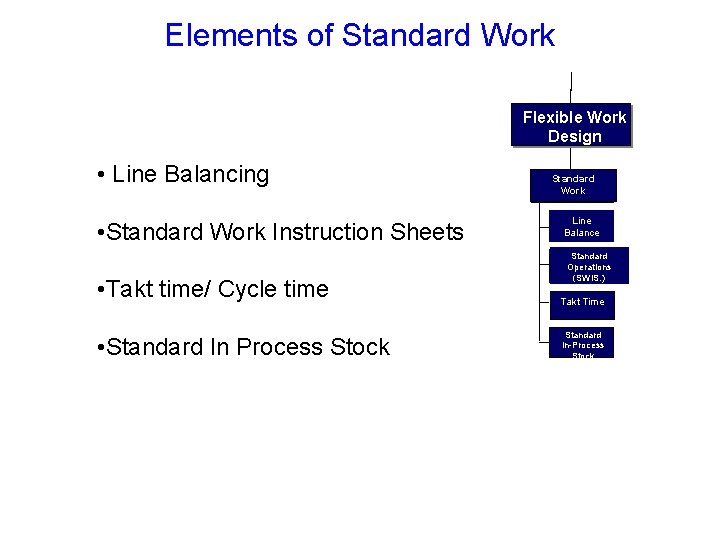
Elements of Standard Work Flexible Work Design • Line Balancing • Standard Work Instruction Sheets Standard Work Line Balance Standard Operations (SWIS. ) • Takt time/ Cycle time Takt Time • Standard In Process Stock Standard In-Process Stock
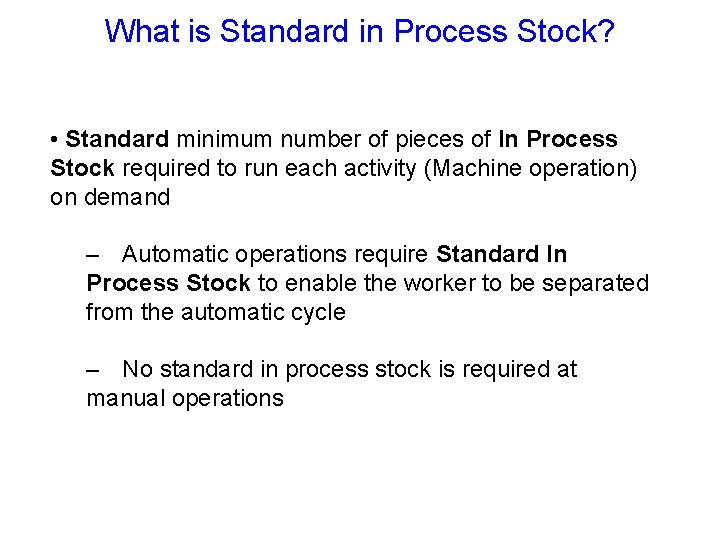
What is Standard in Process Stock? • Standard minimum number of pieces of In Process Stock required to run each activity (Machine operation) on demand – Automatic operations require Standard In Process Stock to enable the worker to be separated from the automatic cycle – No standard in process stock is required at manual operations
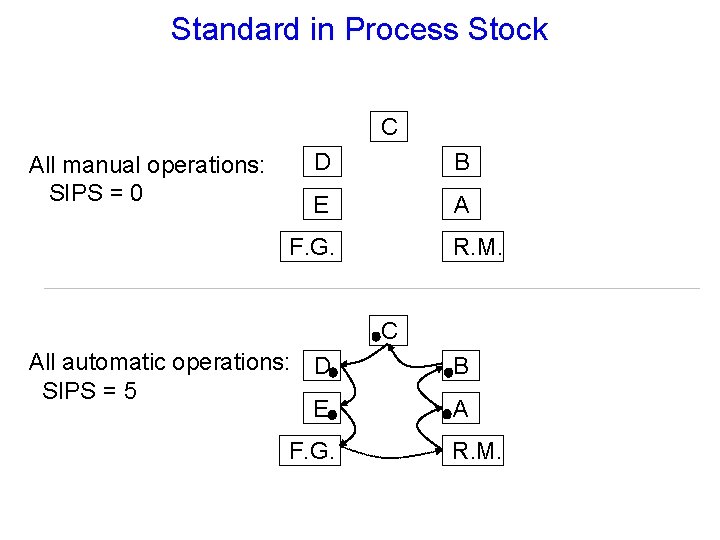
Standard in Process Stock C All manual operations: SIPS = 0 D B E A F. G. R. M. C All automatic operations: D SIPS = 5 E F. G. B A R. M.
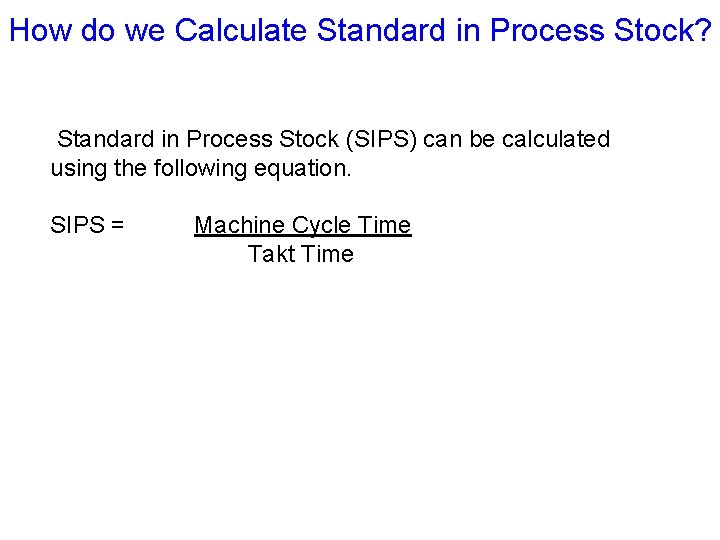
How do we Calculate Standard in Process Stock? Standard in Process Stock (SIPS) can be calculated using the following equation. SIPS = Machine Cycle Time Takt Time
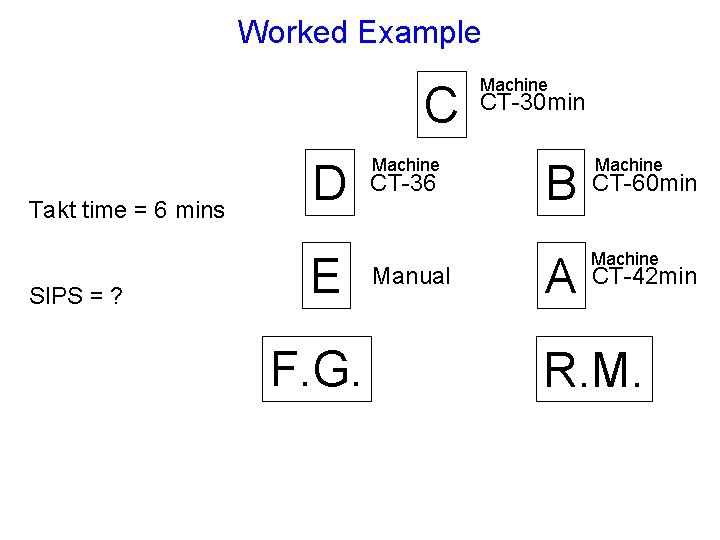
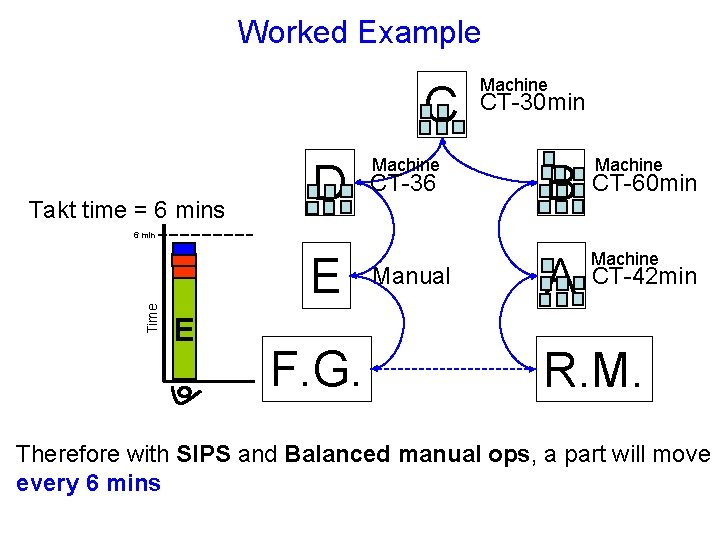
Worked Example C Takt time = 6 mins SIPS = ? D E F. G. Machine CT-36 Manual Machine CT-30 min B A Machine CT-60 min Machine CT-42 min R. M.
Worked Example C Takt time = 6 mins D Machine CT-36 Machine CT-30 min B Machine CT-60 min Time 6 min E E F. G. Manual A Machine CT-42 min R. M. Therefore with SIPS and Balanced manual ops, a part will move every 6 mins
Review of Standard in Process Stock Incorrect Standard In-Process Stock causes waste in the sequence. Key points to review are: • Is the quantity set for standard in-process stock correct? • Is the quantity set for standard in-process stock strictly observed? • Is the stock in the process really necessary? • If the stock is necessary, is it at the minimum quantity? IDEAS: ü Only carry standard in-process stock required ü Locate display board at location requiring standard in-process stock, and display the quantity standard
Aims & Objectives Target Audience : Operations, Manufacturing Engineering. Purpose of Module : To gain an understanding of Standard In Process Stock (SIPS) Aims & Objectives : • Define SIPS • To Learn how to calculate SIPS • Gain an understanding of how SIPS fits into Standardised Work • To raise awareness of how SIPS can eliminate Waste and support flow Did we Succeed ?