
Training older employees are they really so different





- Slides: 21
Training older employees: are they really so different? Veronique Warmoes – Shari De Baets Prof. Dr. Herman van den Broeck – Prof. Dr. Ans de Vos – Veroniek de Schamphelaere –
Project Research questions Literature Data collection: Focus groups Expert interviews Results 2 | © Vlerick Leuven Gent Management School
Research questions Regarding education, what are the specific needs for older employees? Which are the suitable educational practices? Which guidelines can we provide for trainers who educate older learners? 3 | © Vlerick Leuven Gent Management School
“My motivation for taking part in training? ” “Staying up to date, being with the times, and keeping young! - participant focus group white collar workers 4 | © Vlerick Leuven Gent Management School | 00 -00 -0000 | Sample presentation
Literature
1. Literature Employment rate in Belgium of the older workforce: 35, 3% 19, 2% below the European average Employment rate in Sweden of the older workforce: 70, 1% in part explained by the well-established lifelong learning approach in the country (Rix, 2005) 6 | © Vlerick Leuven Gent Management School
Data collection
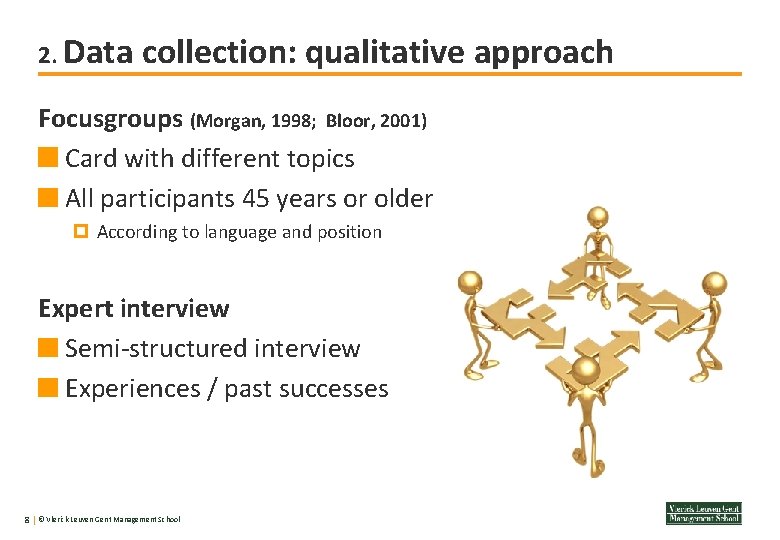
2. Data collection: qualitative approach Focusgroups (Morgan, 1998; Bloor, 2001) Card with different topics All participants 45 years or older According to language and position Expert interview Semi-structured interview Experiences / past successes 8 | © Vlerick Leuven Gent Management School
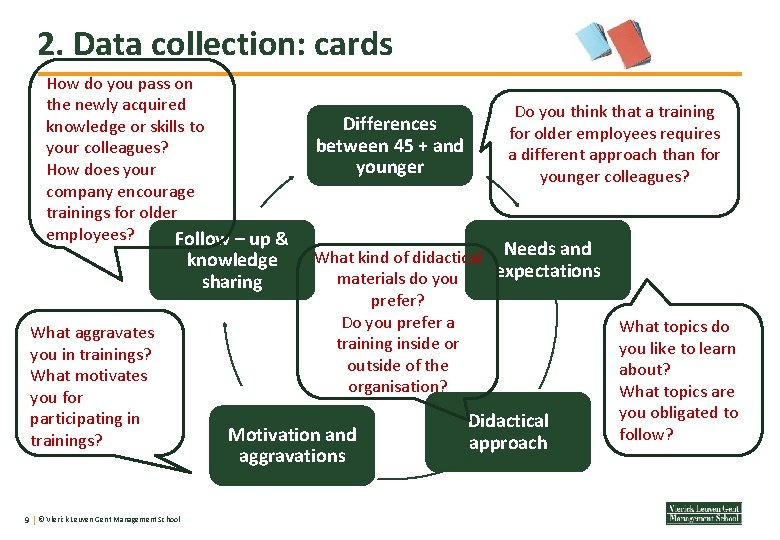
2. Data collection: cards How do you pass on the newly acquired knowledge or skills to your colleagues? How does your company encourage trainings for older employees? Follow – up & knowledge sharing What aggravates you in trainings? What motivates you for participating in trainings? 9 | © Vlerick Leuven Gent Management School Differences between 45 + and younger Do you think that a training for older employees requires a different approach than for younger colleagues? What kind of didactical Needs and expectations materials do you prefer? Do you prefer a training inside or outside of the organisation? Motivation and aggravations Didactical approach What topics do you like to learn about? What topics are you obligated to follow?
Results
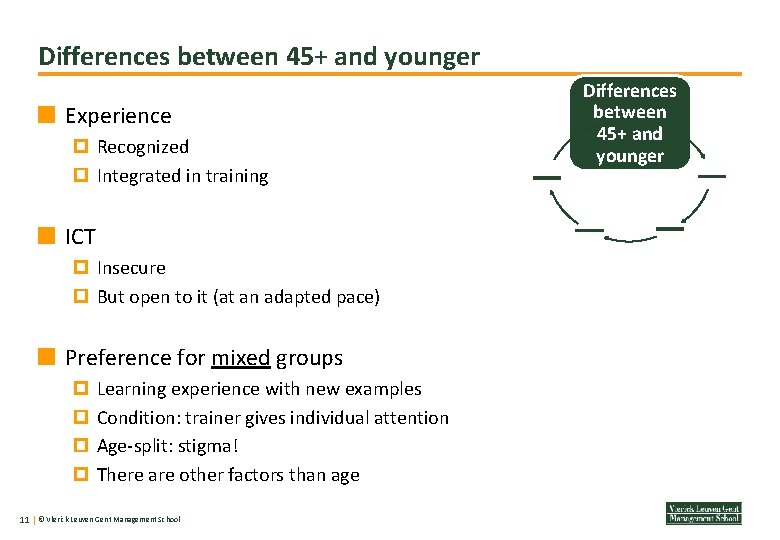
Differences between 45+ and younger Experience Recognized Integrated in training ICT Insecure But open to it (at an adapted pace) Preference for mixed groups Learning experience with new examples Condition: trainer gives individual attention Age-split: stigma! There are other factors than age 11 | © Vlerick Leuven Gent Management School Differences between 45+ and younger
Age is just one factor amongst many. . Is it a good thing to keep stressing agerelated differences? It’s risky to ‘blame’ age for everything. 12 | © Vlerick Leuven Gent Management School
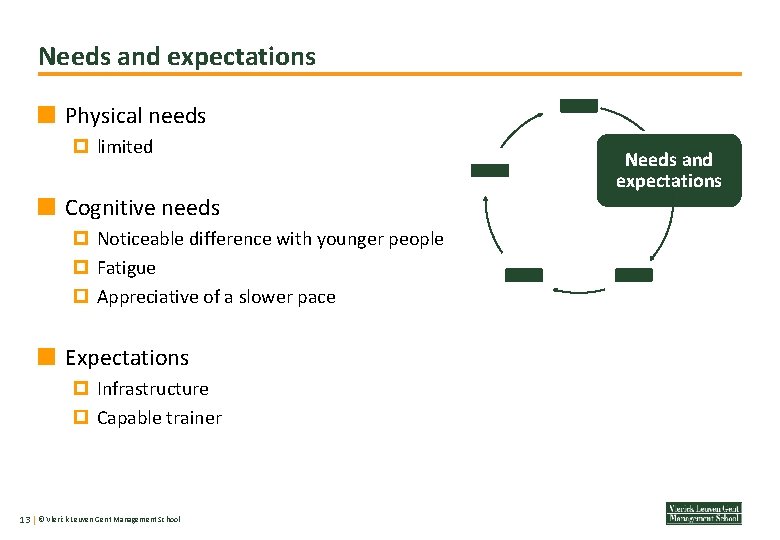
Needs and expectations Physical needs limited Cognitive needs Noticeable difference with younger people Fatigue Appreciative of a slower pace Expectations Infrastructure Capable trainer 13 | © Vlerick Leuven Gent Management School Needs and expectations
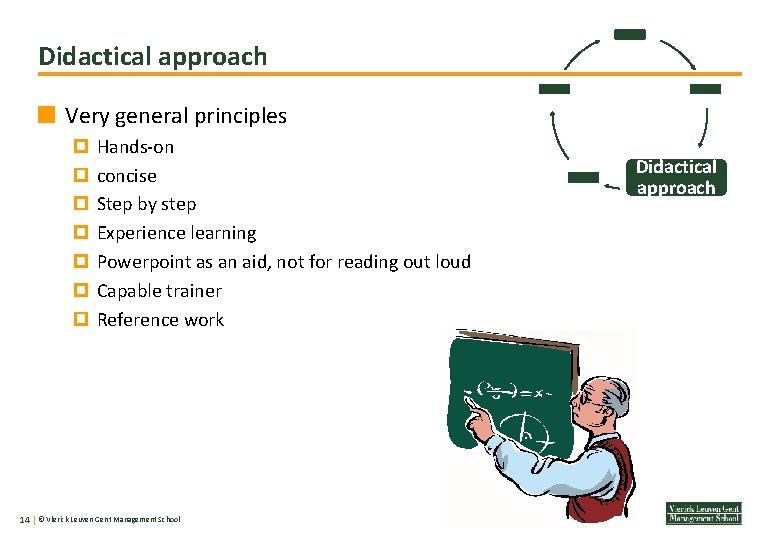
Didactical approach Very general principles Hands-on concise Step by step Experience learning Powerpoint as an aid, not for reading out loud Capable trainer Reference work 14 | © Vlerick Leuven Gent Management School Didactical approach
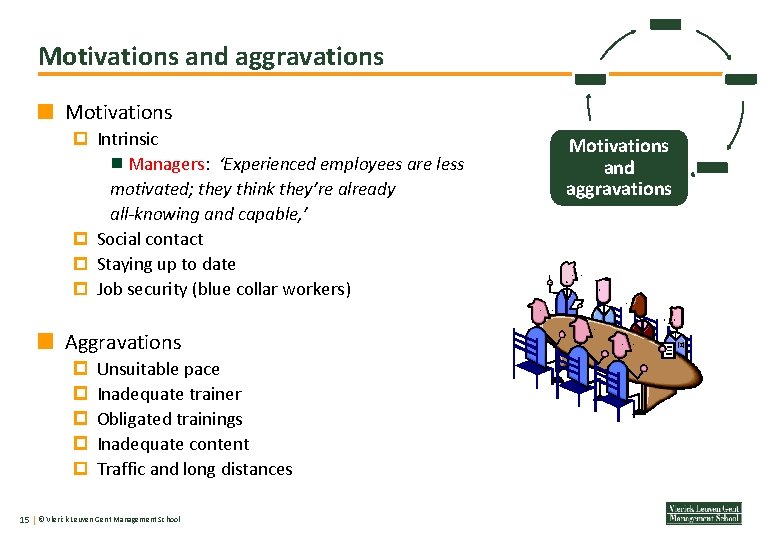
Motivations and aggravations Motivations Intrinsic Managers: ‘Experienced employees are less motivated; they think they’re already all-knowing and capable, ’ Social contact Staying up to date Job security (blue collar workers) Aggravations Unsuitable pace Inadequate trainer Obligated trainings Inadequate content Traffic and long distances 15 | © Vlerick Leuven Gent Management School Motivations and aggravations
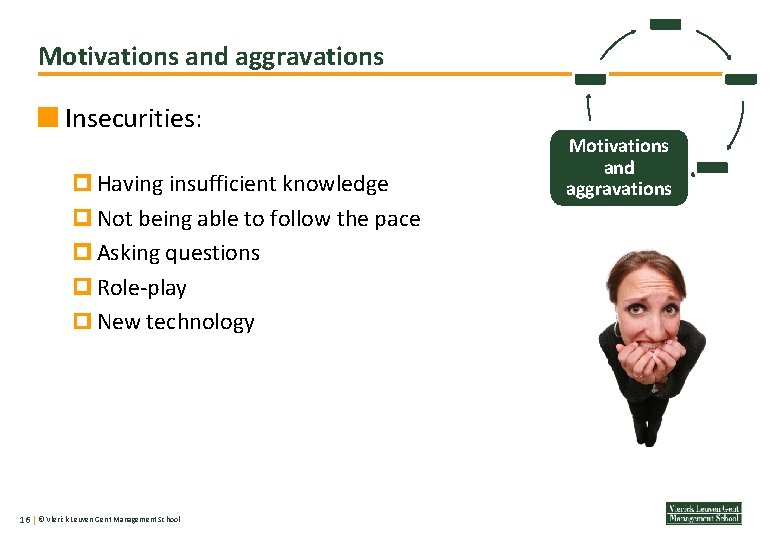
Motivations and aggravations Insecurities: Having insufficient knowledge Not being able to follow the pace Asking questions Role-play New technology 16 | © Vlerick Leuven Gent Management School Motivations and aggravations
Follow-up and knowledge sharing Knowledge sharing is appreciated Follow-up and knowledge sharing Formal ánd informal Not too extensive Depends on employer and sector Fear for endangering own position in case of knowledge sharing (blue collar and white collar workers) 17 | © Vlerick Leuven Gent Management School
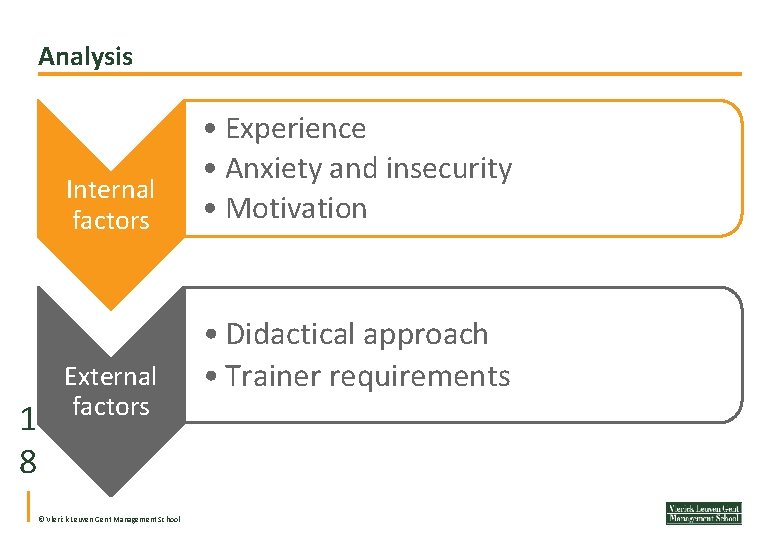
Analysis Internal factors 1 8 | External factors © Vlerick Leuven Gent Management School • Experience • Anxiety and insecurity • Motivation • Didactical approach • Trainer requirements
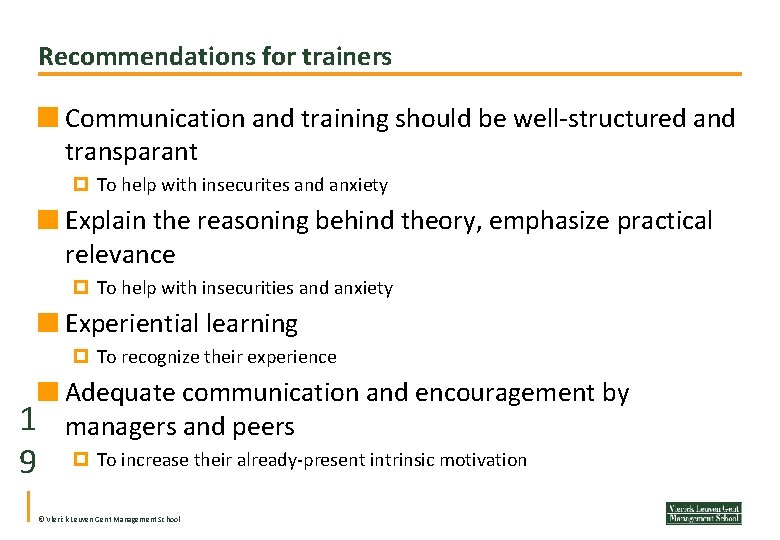
Recommendations for trainers Communication and training should be well-structured and transparant To help with insecurites and anxiety Explain the reasoning behind theory, emphasize practical relevance To help with insecurities and anxiety Experiential learning To recognize their experience 1 9 | Adequate communication and encouragement by managers and peers To increase their already-present intrinsic motivation © Vlerick Leuven Gent Management School
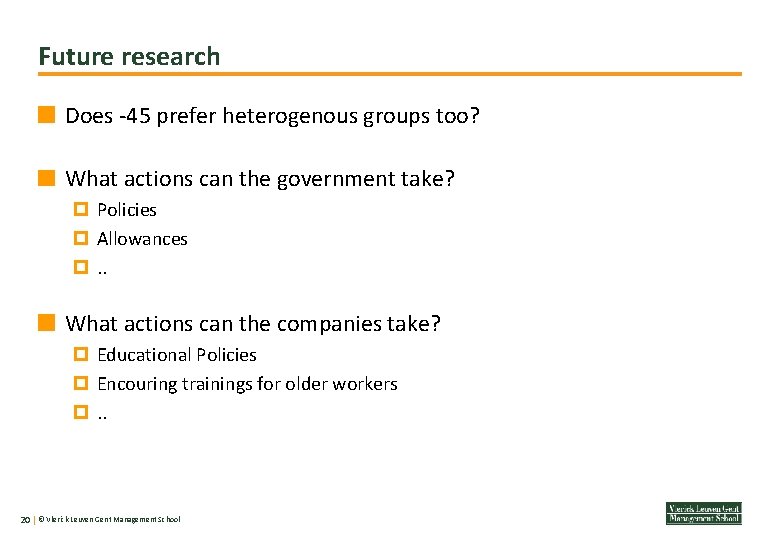
Future research Does -45 prefer heterogenous groups too? What actions can the government take? Policies Allowances. . What actions can the companies take? Educational Policies Encouring trainings for older workers. . 20 | © Vlerick Leuven Gent Management School
Acknowledgements We are grateful to the Federal government, for their financial support to execute this research project. 21 | © Vlerick Leuven Gent Management School