
Training needs related to core capacities at points


- Slides: 28
Training needs related to core capacities at points of entry in Europe, 2014 Despena Andrioti, Carmen Varela Matinez, Francisco Nogareda, Miguel Davila, Barbara Mouchtouri and Christos Hadjichristodoulou for the SHIPSAN partnership
Content • • • Background Objectives Methods Results and Discussion Conclusions EU SHIPSAN ACT Joint Action
BACKGROUND
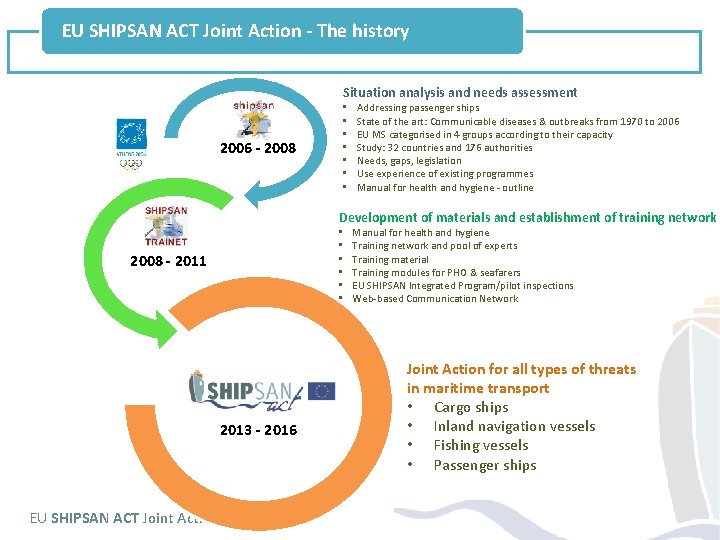
EU SHIPSAN ACT Joint Action - The history Situation analysis and needs assessment • • 2006 - 2008 Addressing passenger ships State of the art: Communicable diseases & outbreaks from 1970 to 2006 EU MS categorised in 4 groups according to their capacity Study: 32 countries and 176 authorities Needs, gaps, legislation Use experience of existing programmes Manual for health and hygiene - outline Development of materials and establishment of training network • • • 2008 - 2011 2013 - 2016 EU SHIPSAN ACT Joint Action Manual for health and hygiene Training network and pool of experts Training material Training modules for PHO & seafarers EU SHIPSAN Integrated Program/pilot inspections Web-based Communication Network Joint Action for all types of threats in maritime transport • Cargo ships • Inland navigation vessels • Fishing vessels • Passenger ships
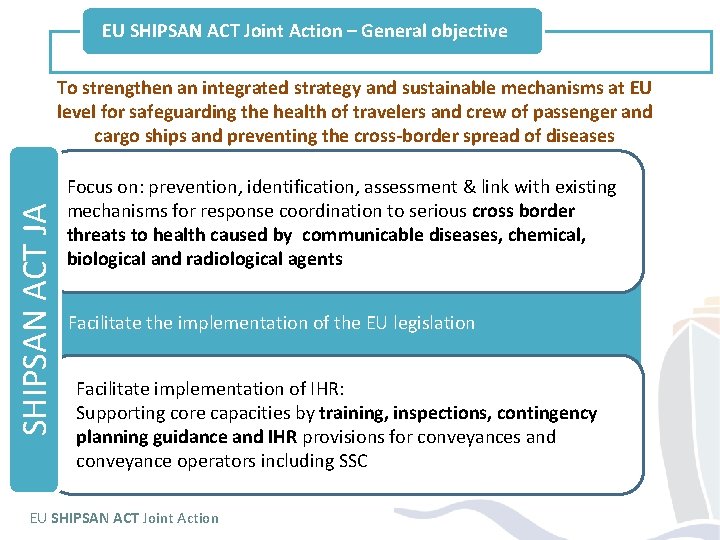
EU SHIPSAN ACT Joint Action – General objective SHIPSAN ACT JA To strengthen an integrated strategy and sustainable mechanisms at EU level for safeguarding the health of travelers and crew of passenger and cargo ships and preventing the cross-border spread of diseases Focus on: prevention, identification, assessment & link with existing mechanisms for response coordination to serious cross border threats to health caused by communicable diseases, chemical, biological and radiological agents Facilitate the implementation of the EU legislation Facilitate implementation of IHR: Supporting core capacities by training, inspections, contingency planning guidance and IHR provisions for conveyances and conveyance operators including SSC EU SHIPSAN ACT Joint Action
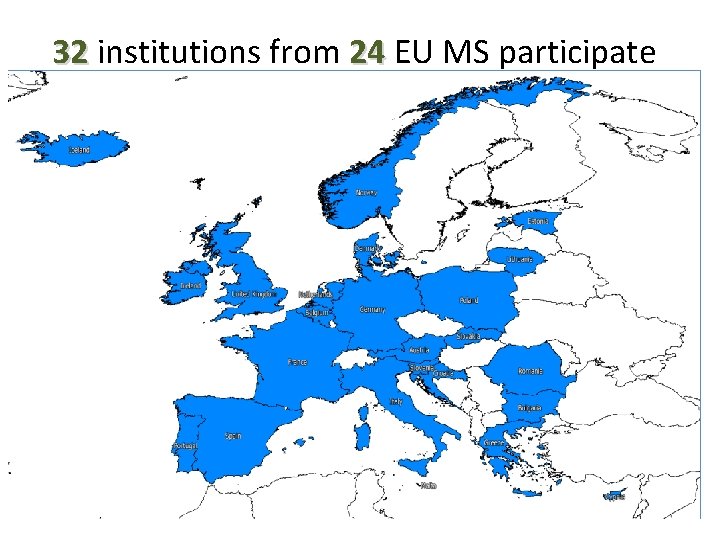
32 institutions from 24 EU MS participate
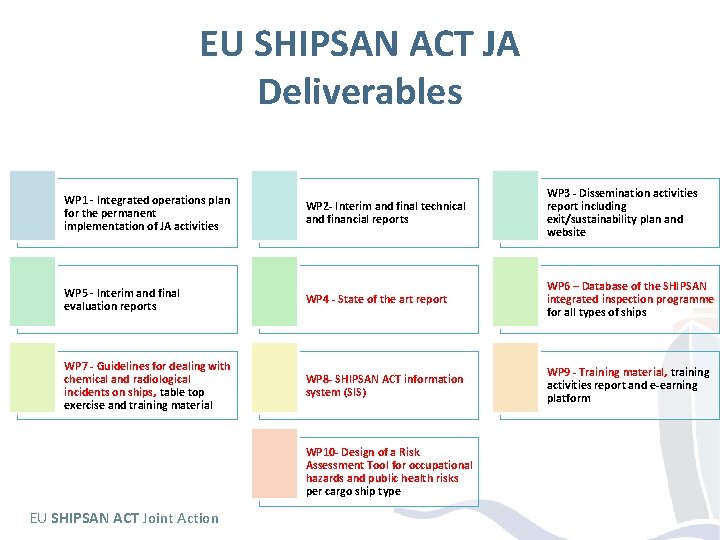
EU SHIPSAN ACT JA Deliverables WP 1 - Integrated operations plan for the permanent implementation of JA activities WP 2 - Interim and final technical and financial reports WP 3 - Dissemination activities report including exit/sustainability plan and website WP 5 - Interim and final evaluation reports WP 4 - State of the art report WP 6 – Database of the SHIPSAN integrated inspection programme for all types of ships WP 7 - Guidelines for dealing with chemical and radiological incidents on ships, table top exercise and training material WP 8 - SHIPSAN ACT information system (SIS) WP 9 - Training material, training activities report and e-earning platform WP 10 - Design of a Risk Assessment Tool for occupational hazards and public health risks per cargo ship type EU SHIPSAN ACT Joint Action
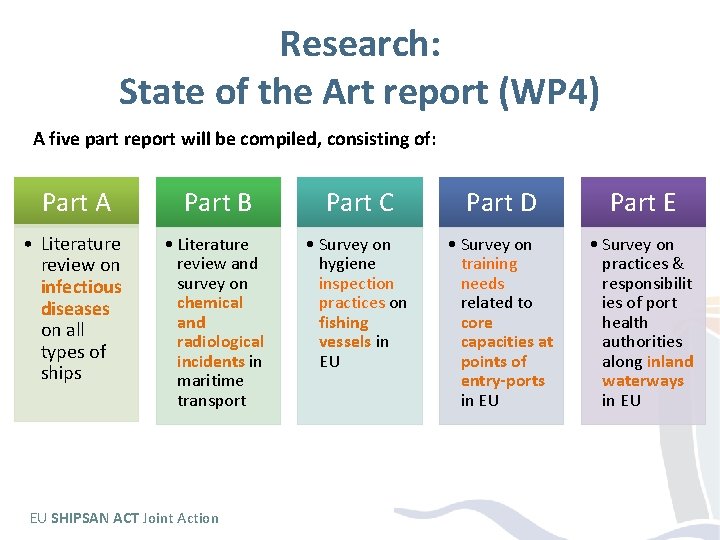
Research: State of the Art report (WP 4) A five part report will be compiled, consisting of: Part A Part B Part C Part D Part E • Literature review on infectious diseases on all types of ships • Literature review and survey on chemical and radiological incidents in maritime transport • Survey on hygiene inspection practices on fishing vessels in EU • Survey on training needs related to core capacities at points of entry-ports in EU • Survey on practices & responsibilit ies of port health authorities along inland waterways in EU EU SHIPSAN ACT Joint Action
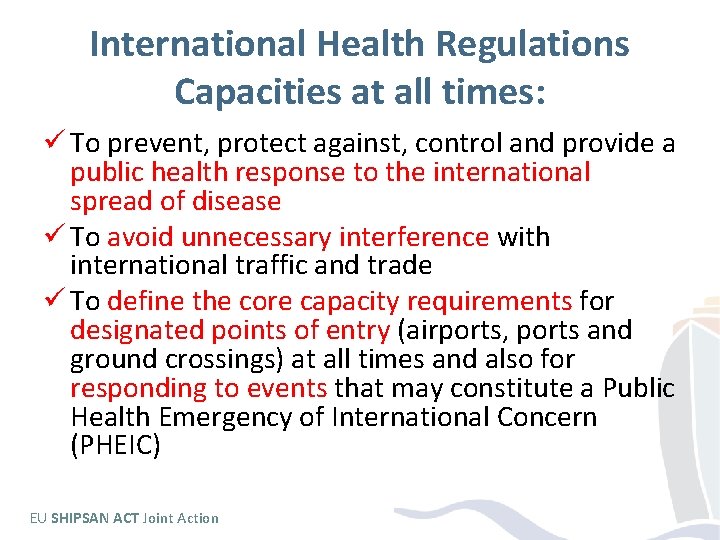
International Health Regulations Capacities at all times: ü To prevent, protect against, control and provide a public health response to the international spread of disease ü To avoid unnecessary interference with international traffic and trade ü To define the core capacity requirements for designated points of entry (airports, ports and ground crossings) at all times and also for responding to events that may constitute a Public Health Emergency of International Concern (PHEIC) EU SHIPSAN ACT Joint Action
Objective • To identify training needs related to core capacities under International Health Regulation at ports among European Union countries EU SHIPSAN ACT Joint Action
Methodology Survey v. Standard questionnaire for EU MS + Iceland Norway. üTraining needs related to core capacities at all times üTraining needs related to core capacities for responding to a Public Health Emergency of International Concern v. The analysis was performed using Epi Info 7 EU SHIPSAN ACT Joint Action
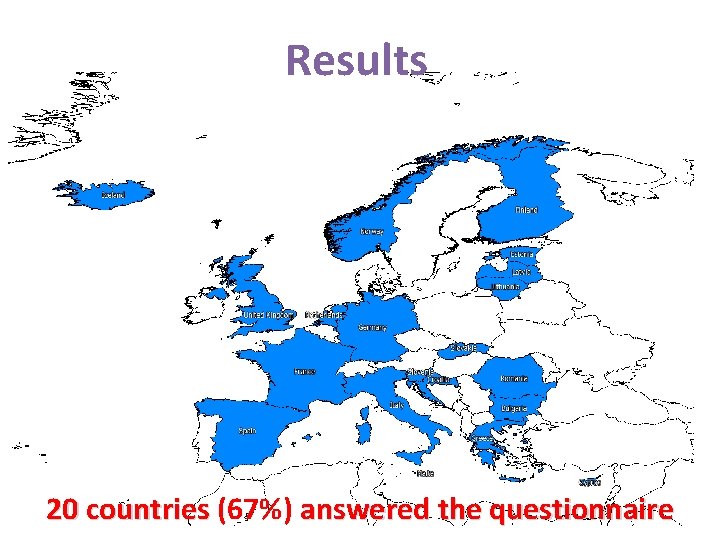
Results 20 countries (67%) answered the questionnaire
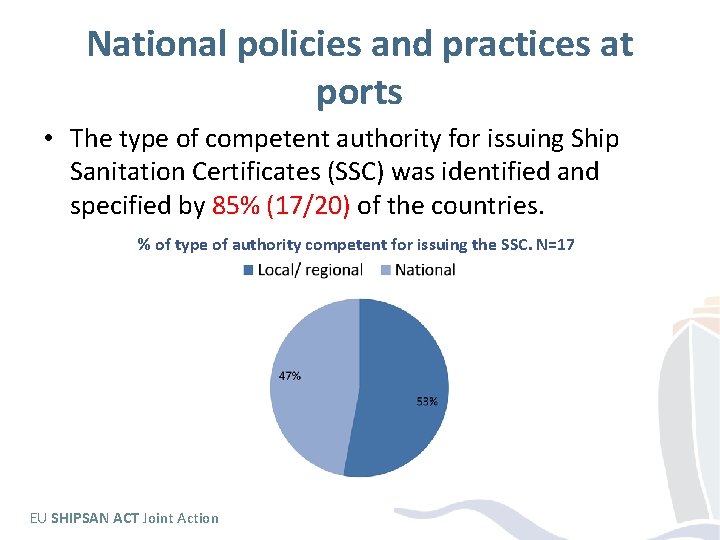
National policies and practices at ports • The type of competent authority for issuing Ship Sanitation Certificates (SSC) was identified and specified by 85% (17/20) of the countries. % of type of authority competent for issuing the SSC. N=17 EU SHIPSAN ACT Joint Action
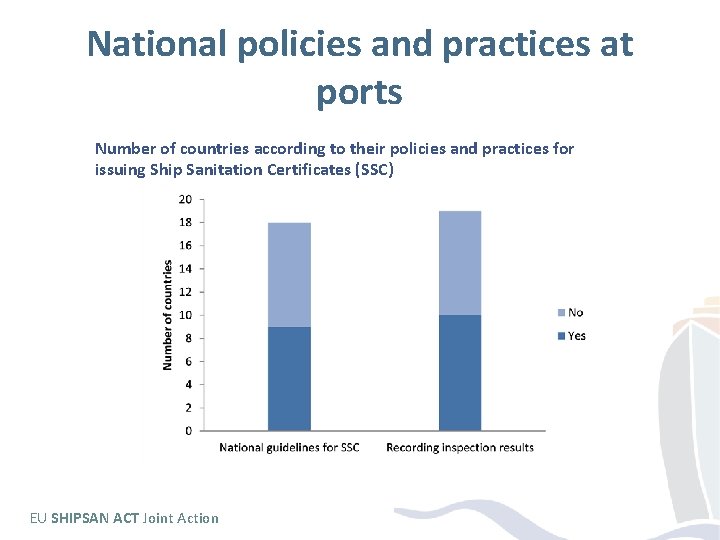
National policies and practices at ports Number of countries according to their policies and practices for issuing Ship Sanitation Certificates (SSC) EU SHIPSAN ACT Joint Action
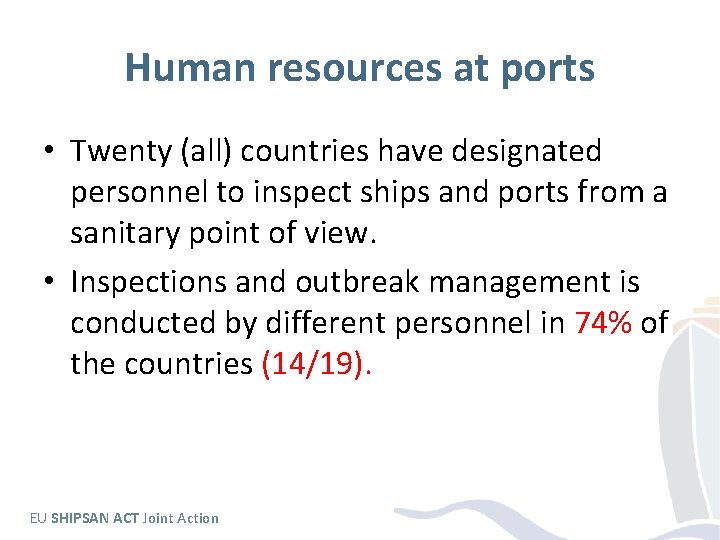
Human resources at ports • Twenty (all) countries have designated personnel to inspect ships and ports from a sanitary point of view. • Inspections and outbreak management is conducted by different personnel in 74% of the countries (14/19). EU SHIPSAN ACT Joint Action
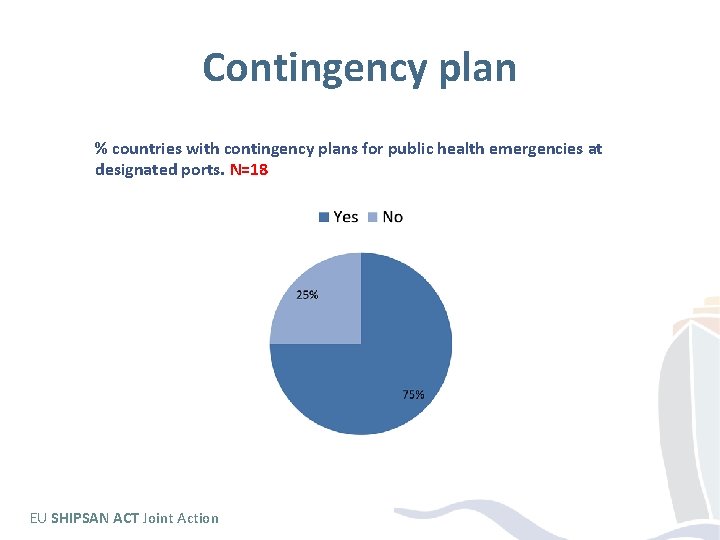
Contingency plan % countries with contingency plans for public health emergencies at designated ports. N=18 EU SHIPSAN ACT Joint Action
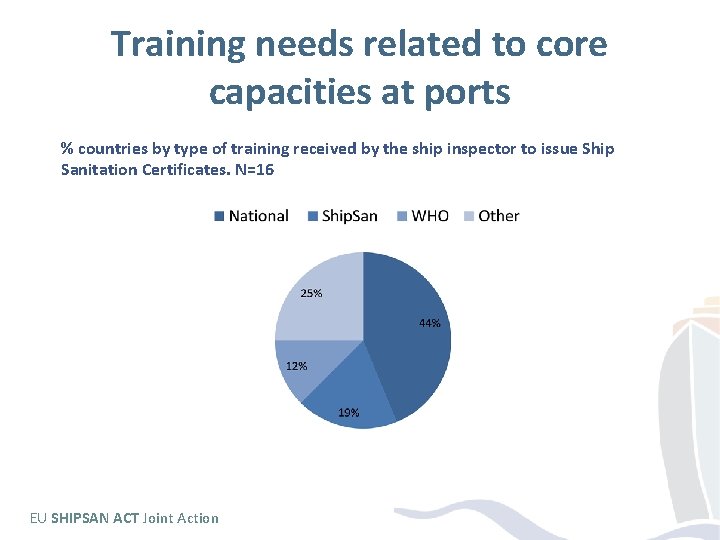
Training needs related to core capacities at ports % countries by type of training received by the ship inspector to issue Ship Sanitation Certificates. N=16 EU SHIPSAN ACT Joint Action
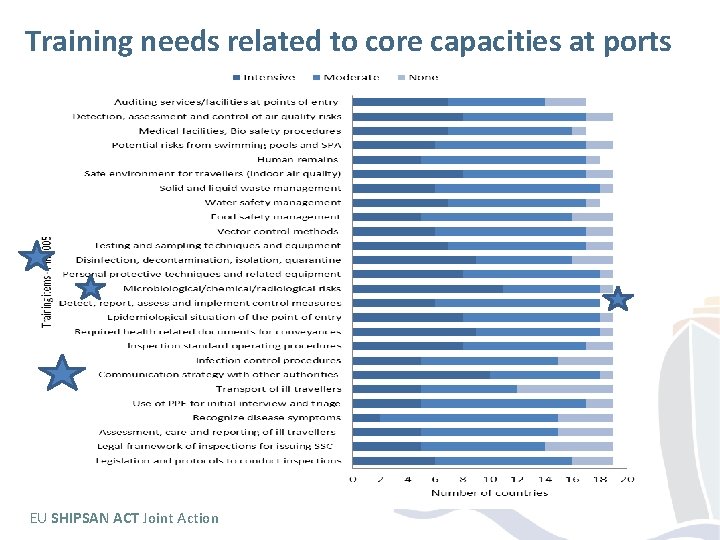
Training needs related to core capacities at ports EU SHIPSAN ACT Joint Action
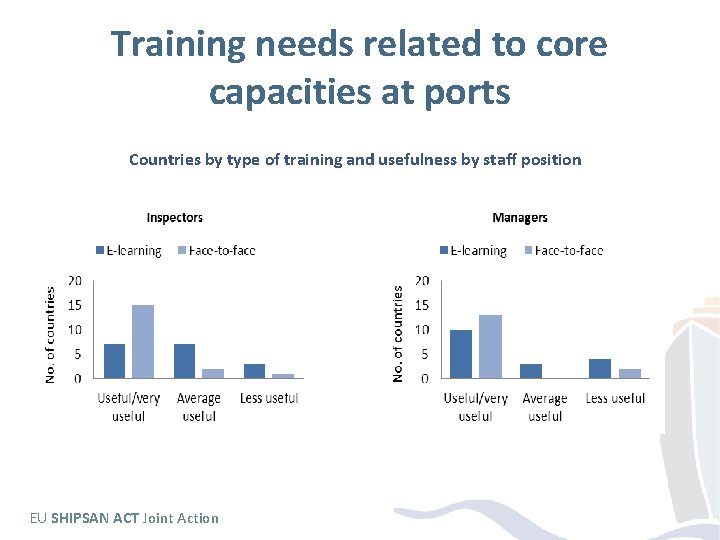
Training needs related to core capacities at ports Countries by type of training and usefulness by staff position EU SHIPSAN ACT Joint Action
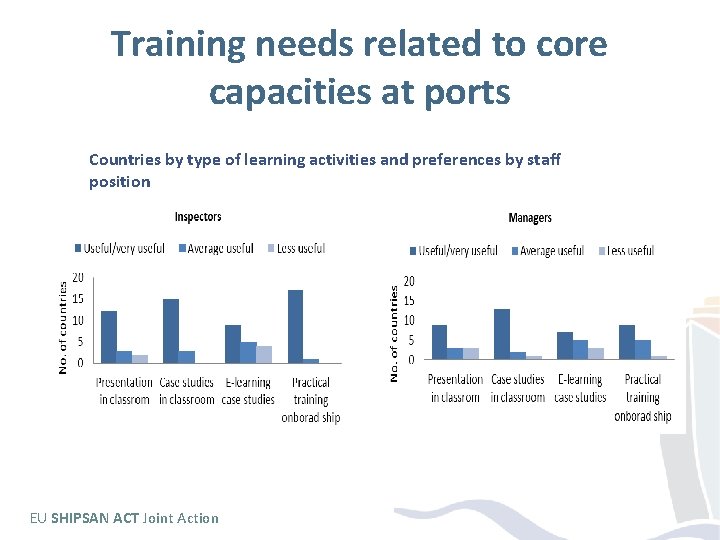
Training needs related to core capacities at ports Countries by type of learning activities and preferences by staff position EU SHIPSAN ACT Joint Action
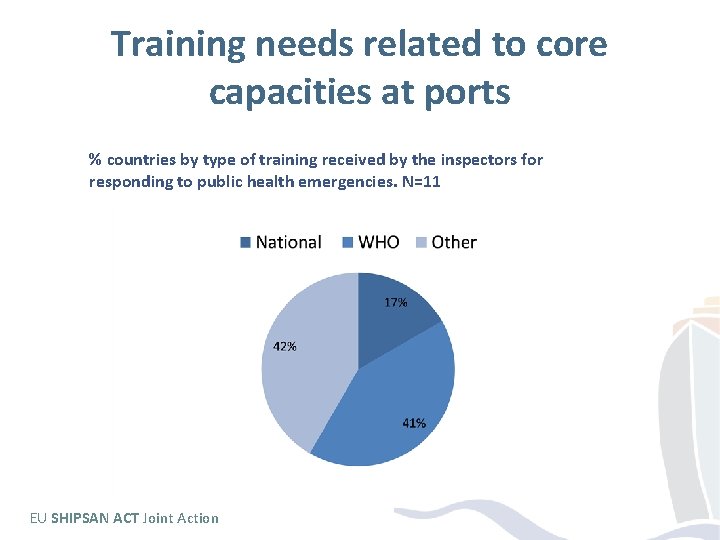
Training needs related to core capacities at ports % countries by type of training received by the inspectors for responding to public health emergencies. N=11 EU SHIPSAN ACT Joint Action
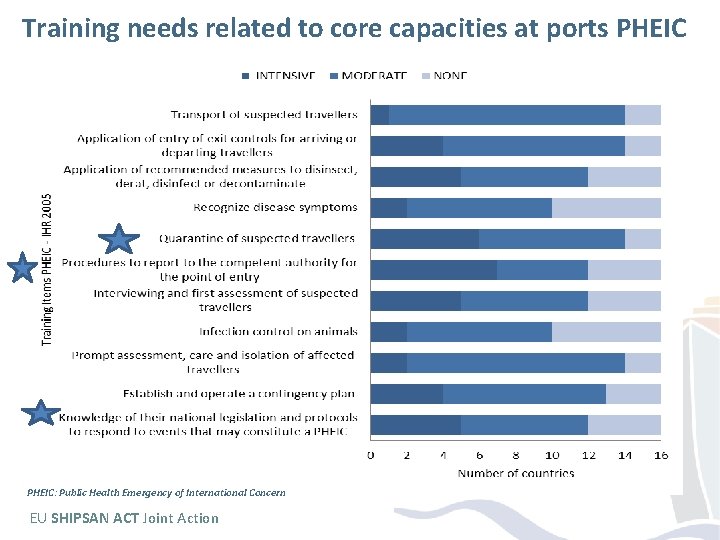
Training needs related to core capacities at ports PHEIC: Public Health Emergency of International Concern EU SHIPSAN ACT Joint Action
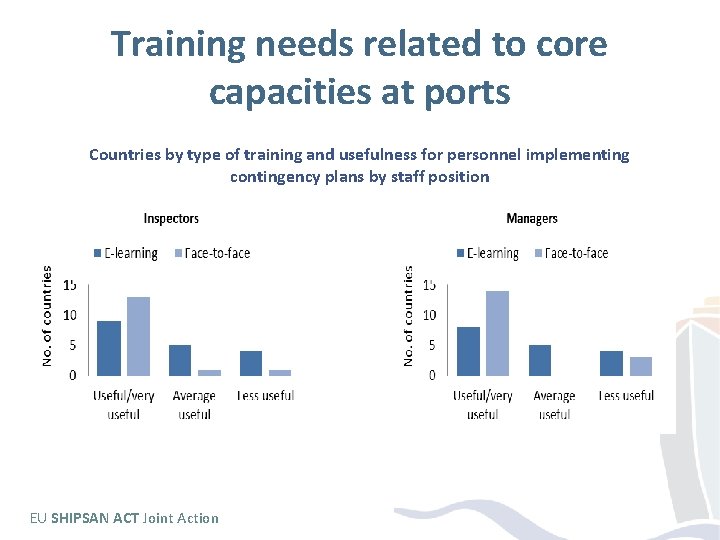
Training needs related to core capacities at ports Countries by type of training and usefulness for personnel implementing contingency plans by staff position EU SHIPSAN ACT Joint Action
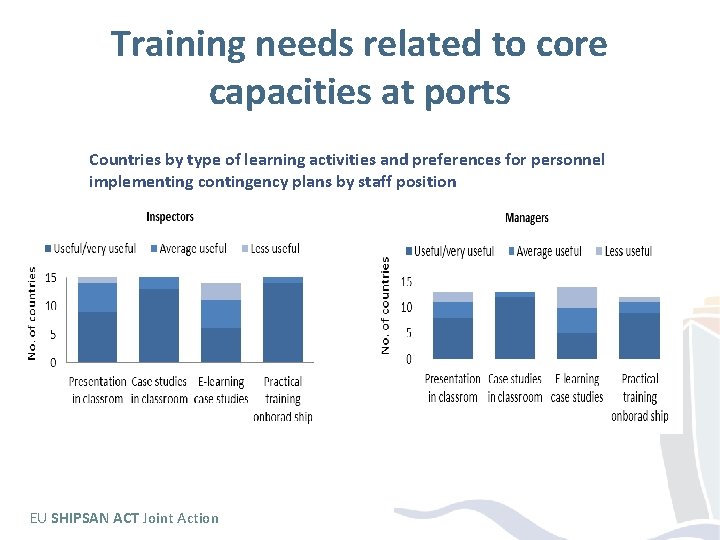
Training needs related to core capacities at ports Countries by type of learning activities and preferences for personnel implementing contingency plans by staff position EU SHIPSAN ACT Joint Action
CONCLUSIONS
Human resources at ports • There is designated personnel for IHR activities but practices are not homogenous. • Collaboration between authorities performing inspections and authorities carrying outbreak investigation should be encouraged. EU SHIPSAN ACT Joint Action
Specific training requirements ü In all topics in line with the International Health Regulations (IHR) requirements at points of entry ü They especially indicate an intensive training need related to public health risks from microbiological, chemical and radiological agents ü Quarantine of suspected travellers ü Proceedings to report to the competent authorities and ü Tool-kit to deal with the above EU SHIPSAN ACT Joint Action
Thank you for your attention!