
Training Module 7 of 10 Social Emotional Learning

- Slides: 21
Training Module 7 of 10: Social Emotional Learning Five Core Competencies
Today’s Goals Academic Goal: ● To become more knowledgeable about Social Emotional Learning. Social Goal: ● To respectfully listen in open dialogue with each other.
WHY SEL? Reason #1
WHY SEL? Reason #2
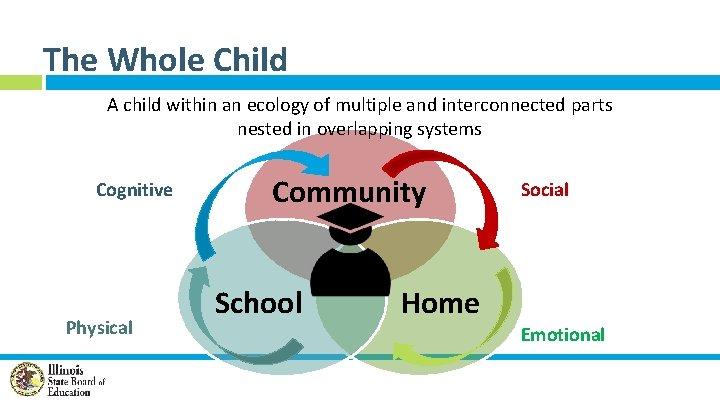
The Whole Child A child within an ecology of multiple and interconnected parts nested in overlapping systems Cognitive Physical Community School Social Home Emotional 5
#186 Board Policy Student social and emotional development shall be incorporated in the District's educational program and shall be consistent with the social and emotional development standards to be contained in the Illinois Learning Standards.
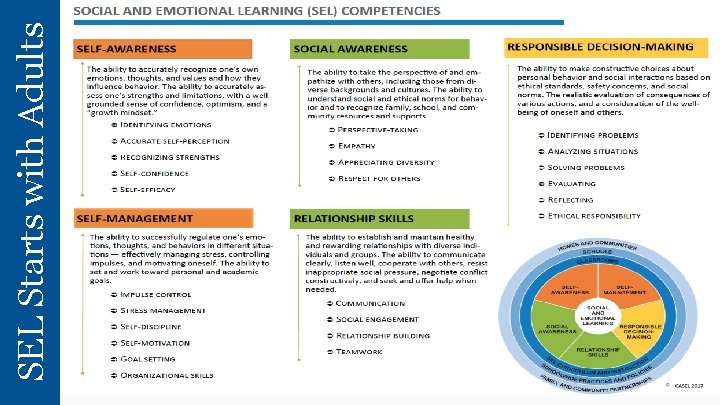
What is SEL? Social and emotional learning (SEL) is the process through which children and adults acquire and effectively apply the knowledge, attitudes, and skills necessary to: ● ● ● Understand manage emotions Set and achieve positive goals Feel and show empathy for others Establish and maintain positive relationships And make responsible decisions.
Adult SEL Competence and Learning Adults who have the ability to recognize, understand, label, express, and regulate emotions are more likely to demonstrate patience and empathy, encourage healthy communication, and create safe learning environments. Brackett, Katella, Kremenitzer, Alster, and Caruso, 2008 In another study however, only 36% of those tested were able to accurately identify their emotions as they happened. Bradberry, Greaves, 2009
SEL Starts with Adults
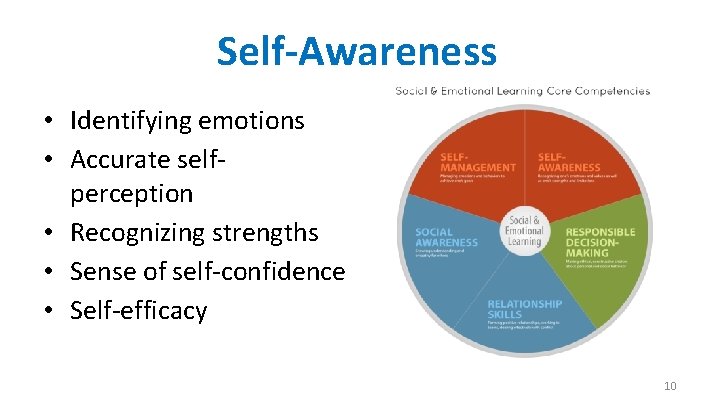
Self-Awareness • Identifying emotions • Accurate selfperception • Recognizing strengths • Sense of self-confidence • Self-efficacy 10
1 st Competency is…. Self-awareness: Know your strengths and limitations, with a well-grounded sense of confidence, optimism, and a “growth mindset. ”
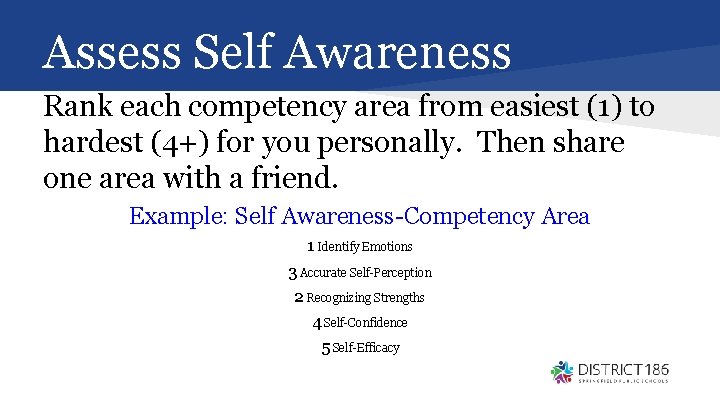
Assess Self Awareness Rank each competency area from easiest (1) to hardest (4+) for you personally. Then share one area with a friend. Example: Self Awareness-Competency Area 1 Identify Emotions 3 Accurate Self-Perception 2 Recognizing Strengths 4 Self-Confidence 5 Self-Efficacy
Tips for Developing Self Awareness 1. Keep an open mind. 2. Be mindful of your strengths and weaknesses. 3. Stay focused. 4. Set boundaries 5. Know your emotional triggers. 6. Embrace your intuition. 7. Practice self-discipline.
Paired Share Reflection ● ● ● Are there any patterns you notice? Do your strengths and/or weaknesses cluster in any one area? Which of your strengths do you rely heavily on in your current work position? Are there any areas you would like to particularly work on and improve upon? What are some things you could do that would support that?
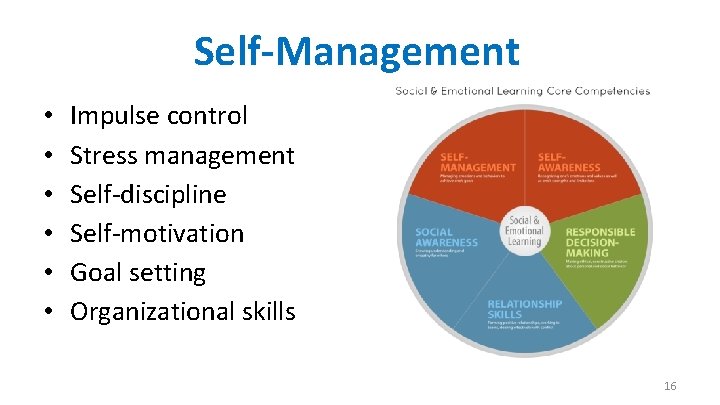
Self-Management • • • Impulse control Stress management Self-discipline Self-motivation Goal setting Organizational skills 16
The Challenge Anyone can become angry – that’s easy but to be angry with the right person, to the right degree, at the right time, for the right purpose, and in the right way –this is not easy. Aristotle, The Nicomachean Ethics
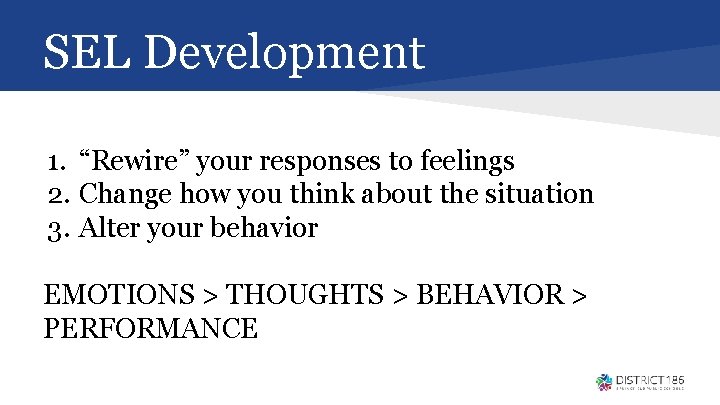
SEL Development 1. “Rewire” your responses to feelings 2. Change how you think about the situation 3. Alter your behavior EMOTIONS > THOUGHTS > BEHAVIOR > PERFORMANCE Emotions Thoughts Behavior Performance
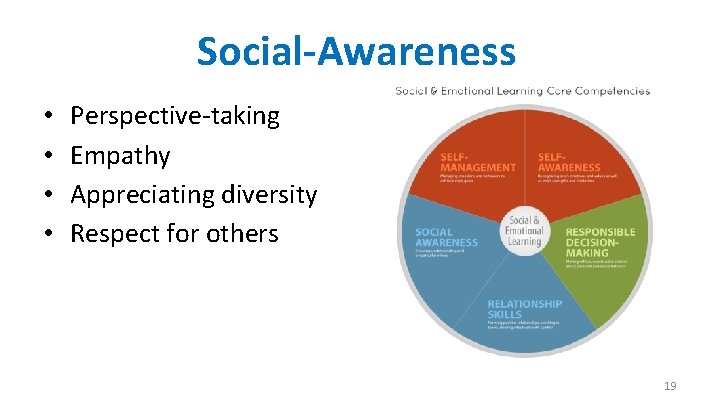
Social-Awareness • • Perspective-taking Empathy Appreciating diversity Respect for others 19
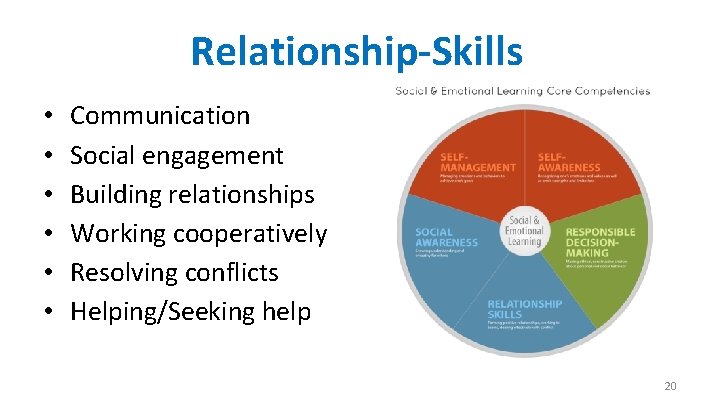
Relationship-Skills • • • Communication Social engagement Building relationships Working cooperatively Resolving conflicts Helping/Seeking help 20
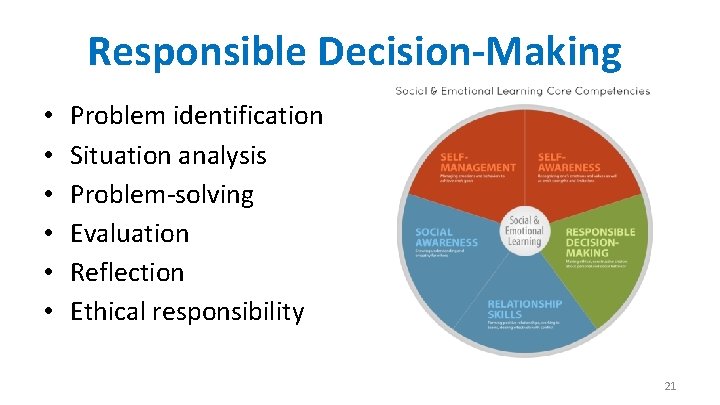
Responsible Decision-Making • • • Problem identification Situation analysis Problem-solving Evaluation Reflection Ethical responsibility 21