
Training Module 18 Nature of inquiry different types


- Slides: 32
Training Module 18 Nature of inquiry: different types of inquiry
Introduction to the CEYS project (use dependent on context) • European Erasmus+ project • Partners in Belgium, Greece, Romania, UK • Continuation of the Creative Little Scientists project http: //www. creative‐little‐scientists. eu • Aims Ø Development of a teacher development course and accompanying materials Ø Promotion of the use of creative approaches in teaching science in preschool and early primary education (up to age of eight)
Rationale for the module • Increasing focus internationally on inquiry‐based approaches to science teaching and learning • Recognition of the role of creativity in science and in science learning and teaching • Growing emphasis on the importance of children developing ideas about the nature of science • Ongoing debate concerning – Different types of inquiry in science – Strategies for introducing young children to the nature of science and the varied ways scientists work – Varied purposes of practical work in science – The role of the adult in supporting children’s decision making and creativity in inquiry.
Aims of the module • Enhance awareness of the varied approaches to inquirybased science education • Distinguish different purposes of practical work – related to the development of skills, processes, concepts or attitudes in science • Examine the role of the teacher in fostering children’s own decision making in investigations and in making connections between questions, planning, evaluating evidence and reflecting on conclusions. • Consider ways in which classroom investigations can help foster children’s understanding of the nature of science and the varied ways in which scientist work.
Links to Content Design Principles and Outcomes 1 2. Teacher education should provide teachers with skills and competences to carry out practical investigations of science in the classroom. 2. 2 Teachers should have a more detailed knowledge about the nature of inquiry and investigations in early years science in order to be able to recognise the opportunities they offer both for creative learning and developing children’s creativity. 3. Teacher education should advance teachers’ understandings about the nature of science and how scientists work, confronting stereotypical images of science and scientists. 3. 1 Teachers should be able to advance children’s understanding about the nature of science and how scientists work, confronting stereotypical images of science and scientists.
Links to Content Design Principles and Outcomes 2 6. Teacher education should provide pedagogical content knowledge to stimulate inquiry and problem solving in science education. 6. 1 Teachers should have knowledge of all essential features of inquiry and problem solving (questioning, designing or planning investigations, gathering evidence, making connections, explaining evidence, communicating and reflecting on explanations), their different purposes, degrees of structure and guidance (including open, guided and structured inquiries), and varied opportunities they offer for creativity. 6. 5 Teachers should be able to foster opportunities for children’s agency and creativity in learning in inquiry and problem solving – in particular the importance of children making their own decisions during inquiry processes, making their own connections between questions, planning and evaluating evidence, and reflecting on outcomes.
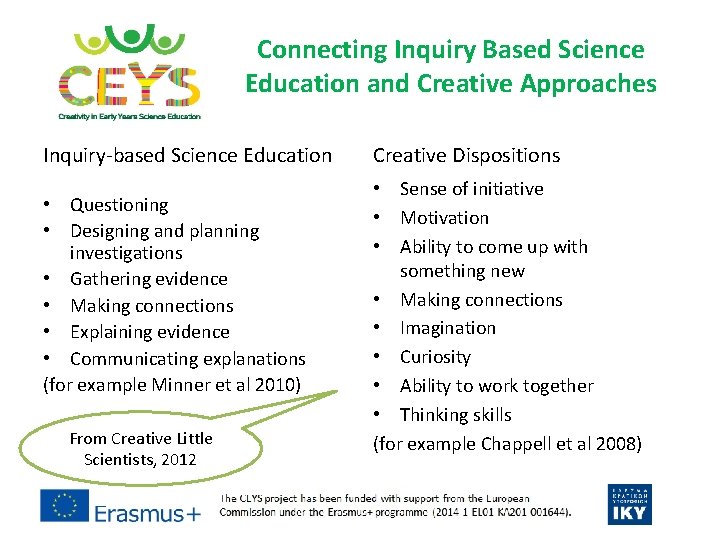
Connecting Inquiry Based Science Education and Creative Approaches Inquiry‐based Science Education • Questioning • Designing and planning investigations • Gathering evidence • Making connections • Explaining evidence • Communicating explanations (for example Minner et al 2010) From Creative Little Scientists, 2012 Creative Dispositions • Sense of initiative • Motivation • Ability to come up with something new • Making connections • Imagination • Curiosity • Ability to work together • Thinking skills (for example Chappell et al 2008)
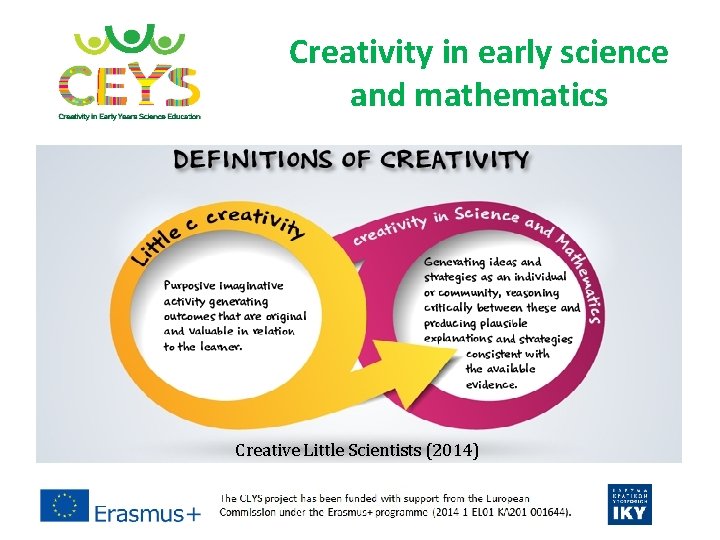
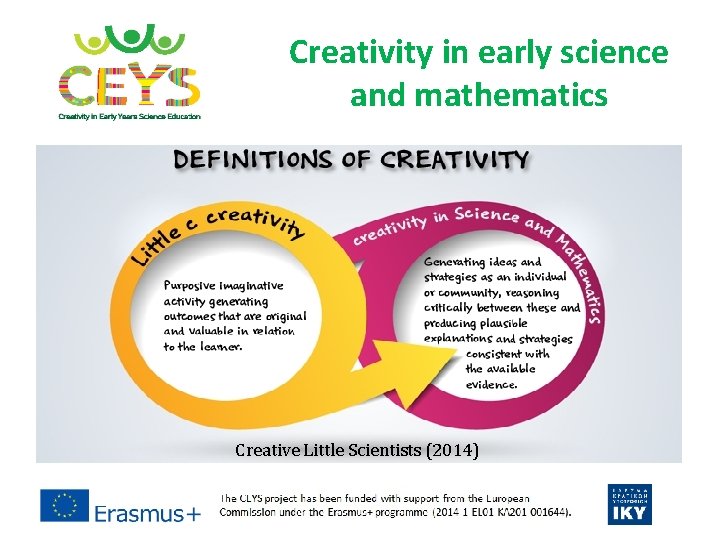
Creativity in early science and mathematics Creative Little Scientists (2014)
Romania: Make bread right now! Greece: Ships England: Skeletons Belgium: Waterproofing Fostering inquiry in different contexts England: Bath bombs
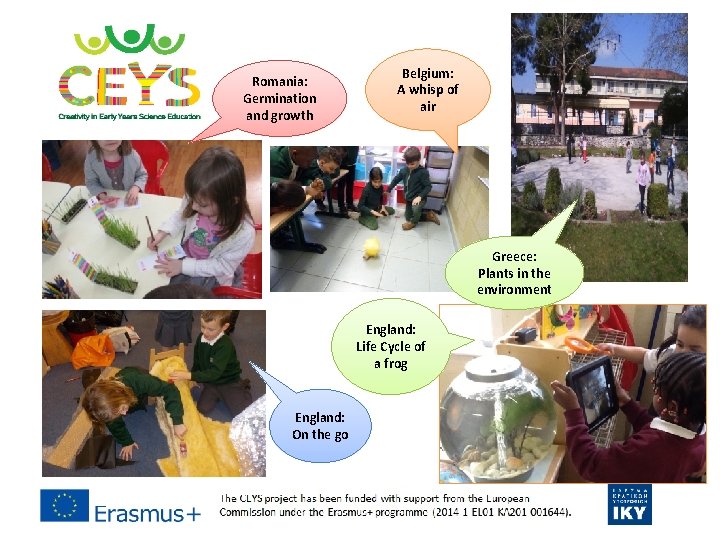
Romania: Germination and growth Belgium: A whisp of air Greece: Plants in the environment England: Life Cycle of a frog England: On the go
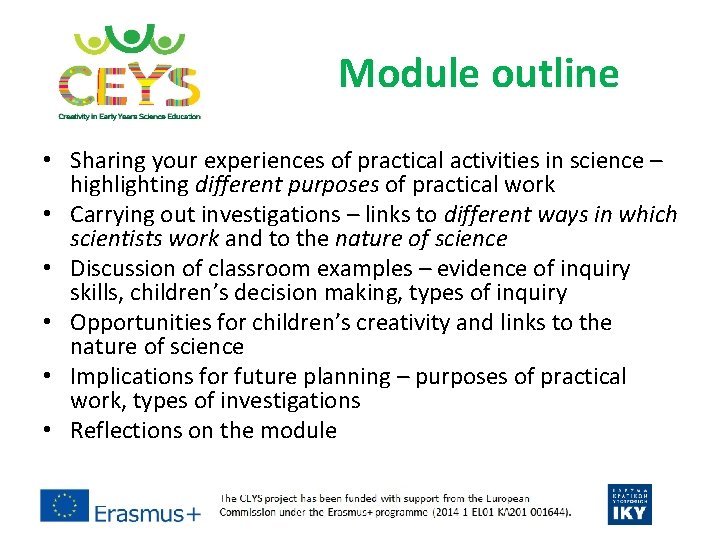
Module outline • Sharing your experiences of practical activities in science – highlighting different purposes of practical work • Carrying out investigations – links to different ways in which scientists work and to the nature of science • Discussion of classroom examples – evidence of inquiry skills, children’s decision making, types of inquiry • Opportunities for children’s creativity and links to the nature of science • Implications for future planning – purposes of practical work, types of investigations • Reflections on the module
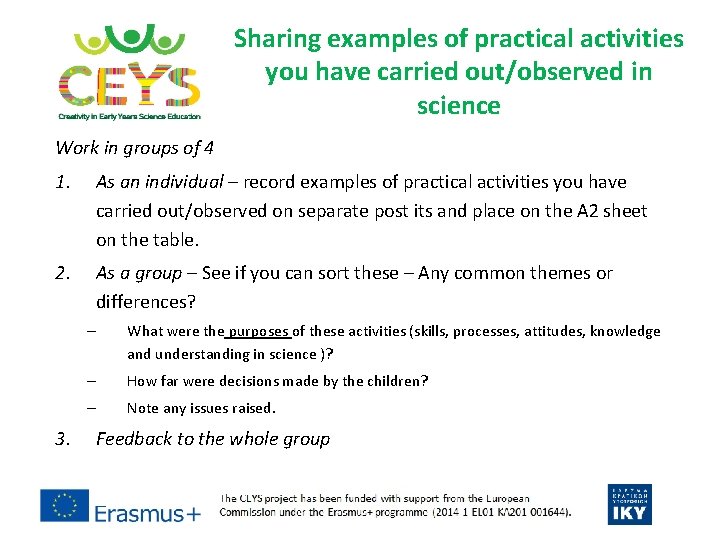
Sharing examples of practical activities you have carried out/observed in science Work in groups of 4 1. As an individual – record examples of practical activities you have carried out/observed on separate post its and place on the A 2 sheet on the table. 2. As a group – See if you can sort these – Any common themes or differences? 3. – What were the purposes of these activities (skills, processes, attitudes, knowledge and understanding in science )? – How far were decisions made by the children? – Note any issues raised. Feedback to the whole group
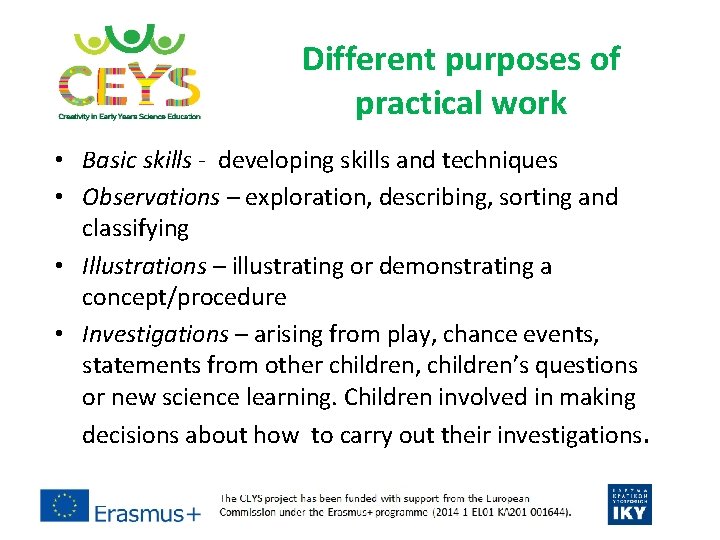
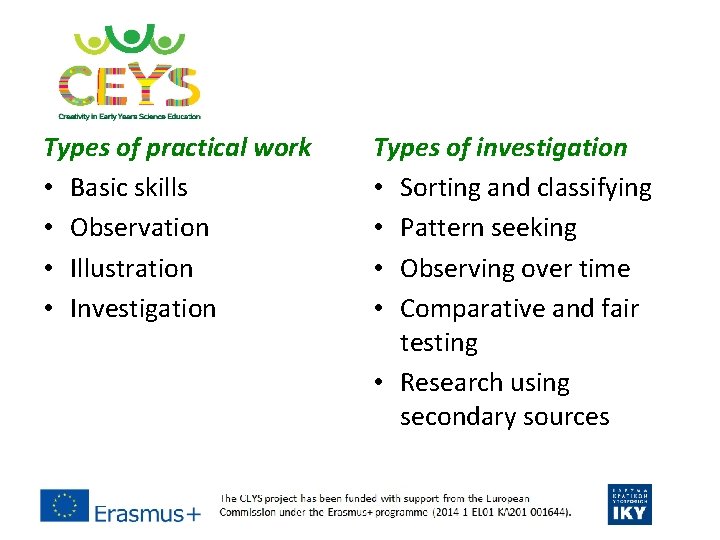
Different purposes of practical work • Basic skills ‐ developing skills and techniques • Observations – exploration, describing, sorting and classifying • Illustrations – illustrating or demonstrating a concept/procedure • Investigations – arising from play, chance events, statements from other children, children’s questions or new science learning. Children involved in making decisions about how to carry out their investigations.
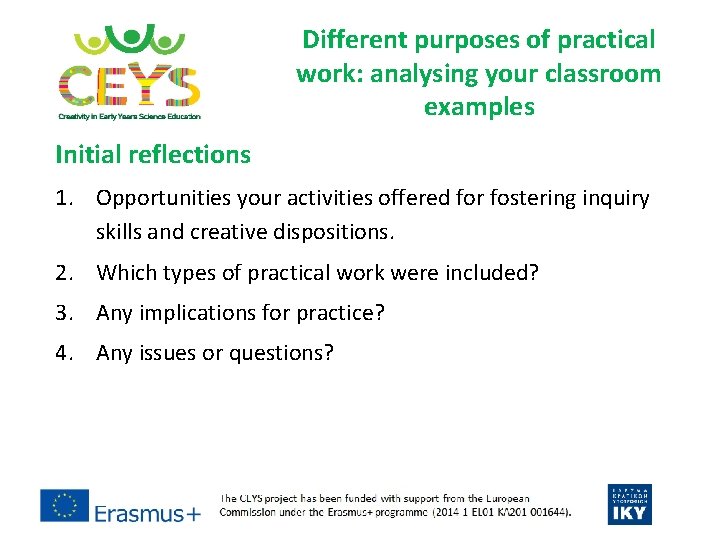
Different purposes of practical work: analysing your classroom examples Initial reflections 1. Opportunities your activities offered for fostering inquiry skills and creative dispositions. 2. Which types of practical work were included? 3. Any implications for practice? 4. Any issues or questions?
Carrying out investigations For example • Do taller people have larger feet? • Which ball is the best bouncer? • Which materials let light through?
Carrying out investigations Working in groups of 4 (about 15 minutes) • Undertake the investigation provided • Keep notes of your progress and record results and conclusions for sharing with another group Feedback and discussion with the whole group: • Approaches to data recording and analysis • Conclusions – comparing findings, evaluating evidence • Range of inquiry skills involved • Fostering inter‐connections between inquiry skills across the investigation
Different types of investigation • Observing over time for example: How do caterpillars develop over time? • Pattern seeking for example: Do people with longer legs jump further? • Identifying, classifying and grouping for example: What is this bird? Which materials are attracted to the magnet? • Comparative and fair testing (controlled investigations) for example: Which is the best material for an umbrella? • Researching using secondary sources for example: What are the different kinds of living things shown in fossils we have found?
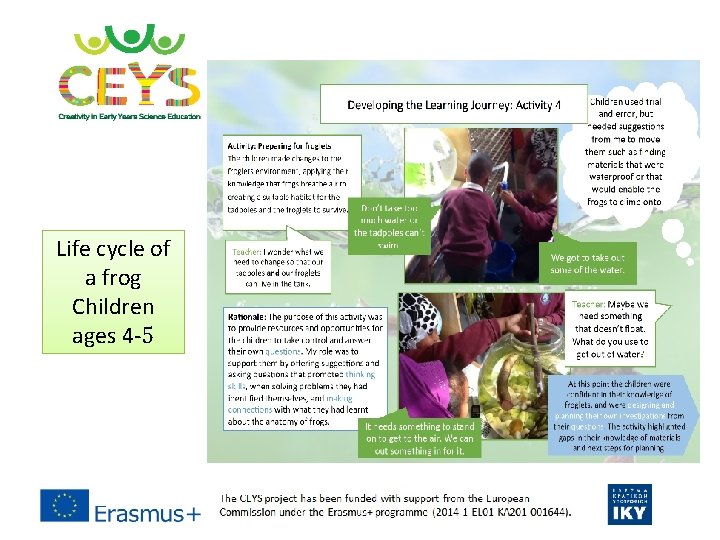
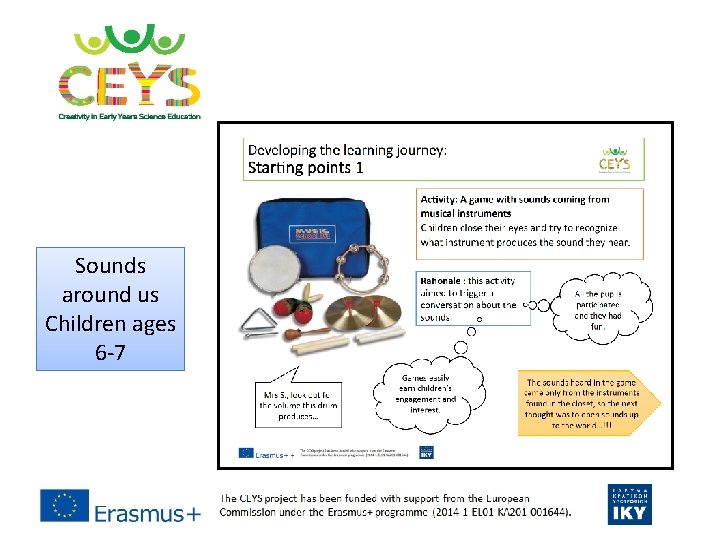
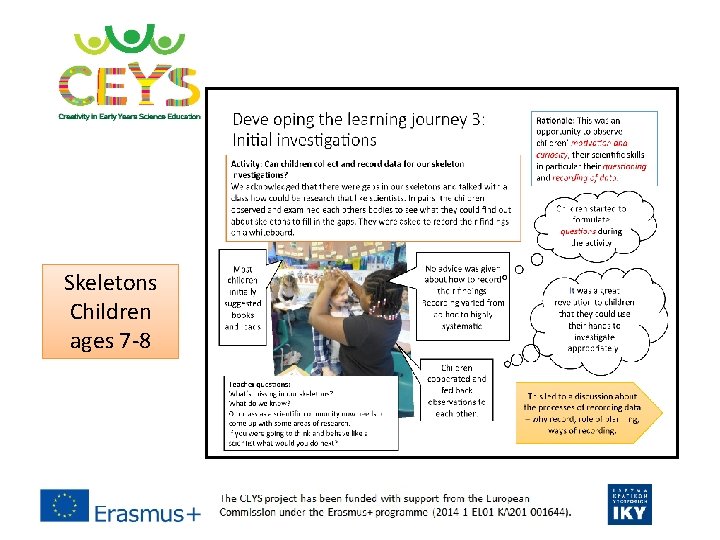
Introduction to classroom examples Framework for the Curriculum Materials • Setting the scene – focus, rationale, background Life Cycle of a Frog Sounds around us Skeletons • Starting points • Developing the learning journey – activities and their rationale, examples of children’s responses, teacher reflections and implications for the next session. • Reflections – children’s progress, teacher role, classroom environment, next steps
Life cycle of a frog Children ages 4‐ 5
Sounds around us Children ages 6‐ 7
Skeletons Children ages 7‐ 8
Discussion of classroom examples Work in groups of 4 ‐ 2 examples for each group Start in pairs with different examples, then swap 1. Read through first to gain an overview of the learning journey. 2. Then consider the following questions: • How did the investigations develop over time? How did they build on children’s responses? • What opportunities were provided for children’s decision making and creativity? • What forms of recording were involved? How did they support learning? • In what ways did the teacher foster connections between different features of inquiry?
Types of practical work • Basic skills • Observation • Illustration • Investigation Types of investigation • Sorting and classifying • Pattern seeking • Observing over time • Comparative and fair testing • Research using secondary sources
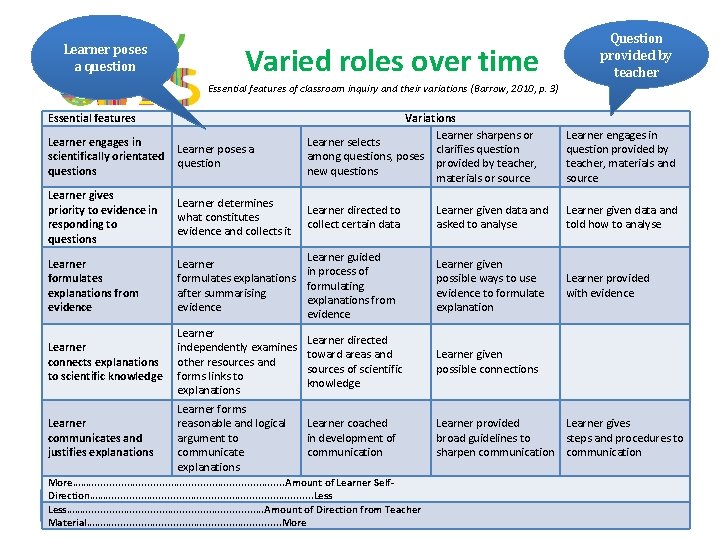
Learner poses a question Question provided by teacher Varied roles over time Essential features of classroom inquiry and their variations (Barrow, 2010, p. 3) Essential features Variations Learner sharpens or Learner selects clarifies question among questions, poses provided by teacher, new questions materials or source Learner engages in question provided by teacher, materials and source Learner directed to collect certain data Learner given data and asked to analyse Learner given data and told how to analyse Learner engages in scientifically orientated questions Learner poses a question Learner gives priority to evidence in responding to questions Learner determines what constitutes evidence and collects it Learner formulates explanations from evidence Learner guided Learner in process of formulates explanations formulating after summarising explanations from evidence Learner given possible ways to use evidence to formulate explanation Learner provided with evidence Learner connects explanations to scientific knowledge Learner independently examines other resources and forms links to explanations Learner directed toward areas and sources of scientific knowledge Learner given possible connections Learner communicates and justifies explanations Learner forms reasonable and logical argument to communicate explanations Learner coached in development of communication Learner provided Learner gives broad guidelines to steps and procedures to sharpen communication More……. . . . . Amount of Learner Self. Direction……. . . . . Less……. . . . Amount of Direction from Teacher Material……. . . . More
Creativity in early science and mathematics Creative Little Scientists (2014)
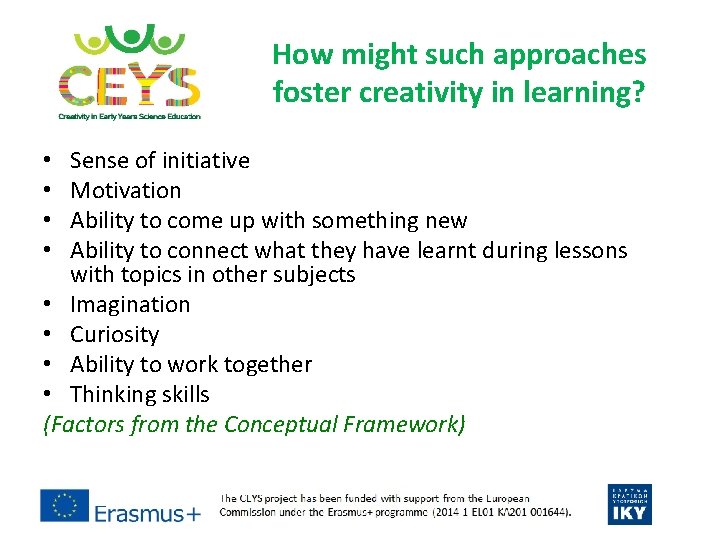
How might such approaches foster creativity in learning? Sense of initiative Motivation Ability to come up with something new Ability to connect what they have learnt during lessons with topics in other subjects • Imagination • Curiosity • Ability to work together • Thinking skills (Factors from the Conceptual Framework) • •
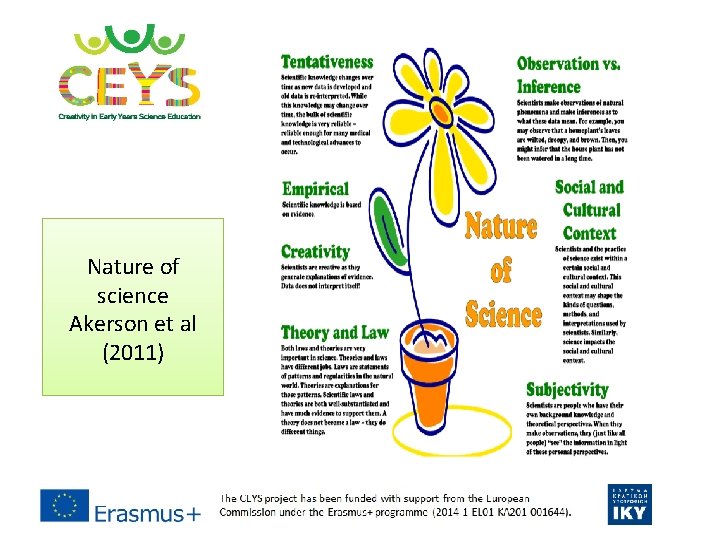
Nature of science Akerson et al (2011)
Implications for future planning In pairs reflect on themes discussed across the module: • Clarifying different purposes of practical work • Recognising different ways of conducting investigations appropriate for different science content • Providing opportunities for children’s creativity and decision making • Role of the teacher in supporting inquiry processes and creative dispositions Identify 2/3 implications for your future practice and any further questions/issues.
Reflection on module content and approaches Think back to the start of the module and the different activities we have undertaken. • In what ways did the different activities support your developing thinking? • How far have the aims of the module been met? • Complete the evaluation form
Further information Creative Little Scientists (FP 7 EU project 2011 – 2014) Design principles and exemplar materials based on fieldwork www. creative‐little‐scientists. eu Creativity in Early Years Science Education (Erasmus+ EU project 2014 – 2017) Curriculum Materials and Training Materials for teacher CPD to promote creative approaches to early years science www. ceys‐project. eu
Thank you!
ACKNOWLEDGEMENTS CREATIVITY IN EARLY YEARS SCIENCE EDUCATION (2014 -2017) WWW. CEYS-PROJECT. EU © 2017 CREATIVITY IN EARLY YEARS SCIENCE EDUCATION Consortium This work is licensed under the Creative Commons Attribution-Non. Commercial-No. Derivatives 4. 0 International License. To view a copy of this license, visit http: //creativecommons. org/licenses/bync-nd/4. 0/.