
Training in NonVerbal Communication Lecture 2 Effective Communications
Training in Non-Verbal Communication Lecture 2: Effective Communications Training
OCULESICS: Gaze & Eye Contact • Gaze is the term used to mean looking at a person • Eye-contact means mutual gaze, where the two look at each other at the same time • Maintaining eye contact signals genuineness • Avoiding eye contact signals shiftiness

OCULESICS: Cultural Differences with Gaze & Eye Contact • Very Direct eye contact: Middle Easterners, Some Latin Americans, French • Moderate eye contact: Americans, Northern European, British • Minimal eye contact: East Asians, Southeast Asians, East Indians, Native Americans

What is Paralanguage or Metacommunication? Voice - 'vibrant', 'thick' or 'flat' Voice Dynamics • Intonation no two intonations are alike • Rhythm accent certain syllables more definitely, lengthen more vowels, shorten unaccented vowels • Continuity of Speech speak brokenly, in uneasy splashes of word groups, speak continuously • Speed of Speech speak above or below certain socialized speeds • Pronunciation • Vocabulary Personality reflected in choice of words • Style
Prosodic features or Types of Intonation • Interrogative: rising pitch when asking • • • question Emotional: wide range of emotions Grammatical: clarity of 'asking' & 'telling' Information structure: convey what is new and what is already known in an utterance Textual: pitch rises at beginning of new item & then gradually fall Psychological: information in 'chunks' more easily perceived and memorized Indexical: marking personal identity by groups
PROXEMICS: Interpersonal Attitude & Physical Contact Attitude: • Hostile vs Friendly • Dominant vs Submissive Physical Contact: • Shaking hands, touching, holding, embracing, pushing, or patting • Reflect an element of intimacy or • Feeling of (or lack of) attraction.

PROXEMICS use of Space, Distance & Proximity • The distance conveys a non-verbal message • In some cultures it is a sign of attraction • In others it may reflect status or the intensity of the exchange Proximity in white Anglo Saxon cultures: • • Intimate Space – less than 18 inches Personal Space – 18 inches to 4 feet Social/Consultative Space – 4 - 12 ft Public Space – more than 12 ft
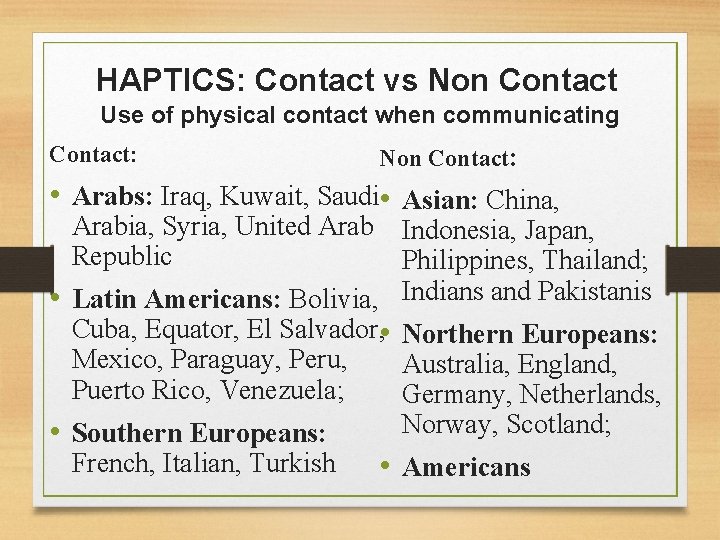
HAPTICS: Contact vs Non Contact Use of physical contact when communicating Contact: Non Contact: • Arabs: Iraq, Kuwait, Saudi • Asian: China, Arabia, Syria, United Arab Indonesia, Japan, Republic Philippines, Thailand; • Latin Americans: Bolivia, Indians and Pakistanis Cuba, Equator, El Salvador, • Northern Europeans: Mexico, Paraguay, Peru, Australia, England, Puerto Rico, Venezuela; Germany, Netherlands, Norway, Scotland; • Southern Europeans: French, Italian, Turkish • Americans
CHRONEMCIS: Time Perception • Americans use M time: • monochromatic time emphasizes schedules, appointments, segmentation, and promptness • Germans & Swiss comment about Americans & time management • Do one thing at a time, concentrate on the job • Middle East & Latin America use P time: • polychromatic time characterized by several things going on at once • Highly distractible • Consider time commitments casually
KINESICS: Body Language • Watching people's actions can bring you a lot closer to the truth than merely listening to what they say (which might be a cover-up) • “Science" of kinesthetics, or "body language" • Can be very revealing • Outward expressions of inner feelings.
KINESICS: Body Language • Openness: Open hands, unbuttoned coat. • Defensiveness: Arms crossed, sideways glance, touching-rubbing nose, rubbing eyes, buttoned coat, drawing away. • Insecurity: Pinching flesh, chewing pen, thumb over thumb, biting fingernail. • Cooperation: Upper body in sprinter's position, open hands, sitting on edge of chair, hand to face gestures, unbuttoning coat.
KINESICS: Body Language • Confidence: Steepled hands, hands behind back, back stiffened, hands in coat pockets with thumb out, hands on lapels of coat. • Nervousness: Clearing throat, "whew" sound, whistling, smoking, pinching flesh, fidgeting, covering mouth, jiggling money or keys, tugging ears, wringing hands. • Frustration: Short breaths, "tsk" sound, tightly clenched hands, wringing hands, fist-like gestures, pointing index finger, rubbing hand through hair, rubbing back of neck.
GESTURES - Hand Shake • Americans use a firm, solid grip • Middle Easterners and Asians prefer a gentle grip a firm grip to them suggests unnecessary aggressiveness
GESTURES – Eye Contact • Americans are taught to look directly • Japanese and Koreans are taught to avoid direct eye contact, direct eye contact to them is considered a weakness, and may indicate sexual overtones
GESTURES – O. K. Gesture Americans, forming a circle with thumb and forefinger to signal O. K. Meaning in other cultures: • "zero" or worthless in France • Money in Japan • Calling someone a very bad name in Germany.
GESTURES: Nodding Yes or No • For Americans, up and down means yes, side to side means no • In Bulgaria, the nods are reversed in meaning
GESTURES: Putting Feet on Table This American gesture is found to be offensive to nearly every other country around the globe
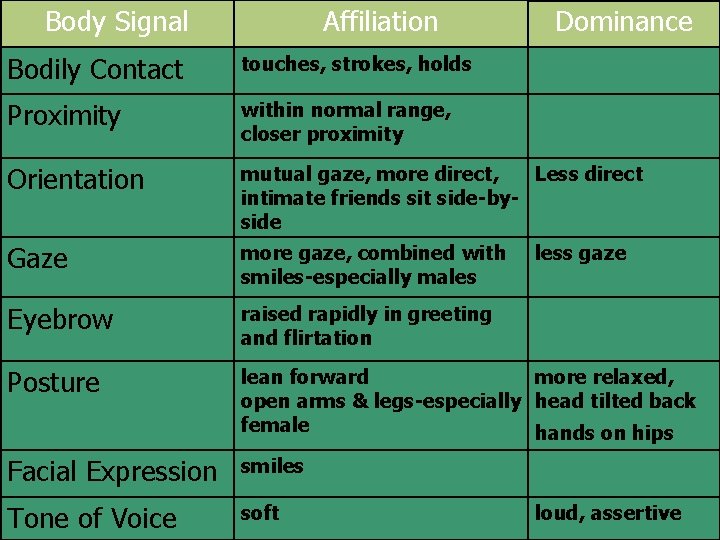
Body Signal Affiliation Dominance Bodily Contact touches, strokes, holds Proximity within normal range, closer proximity Orientation mutual gaze, more direct, Less direct intimate friends sit side-byside Gaze more gaze, combined with smiles-especially males Eyebrow raised rapidly in greeting and flirtation Posture lean forward more relaxed, open arms & legs-especially head tilted back female hands on hips Facial Expression smiles Tone of Voice soft less gaze loud, assertive
Orientation People may present themselves in various ways: • face-to-face • side-to-side • back-to-back • cooperating people are likely to sit sideby-side • competitors frequently face one another.
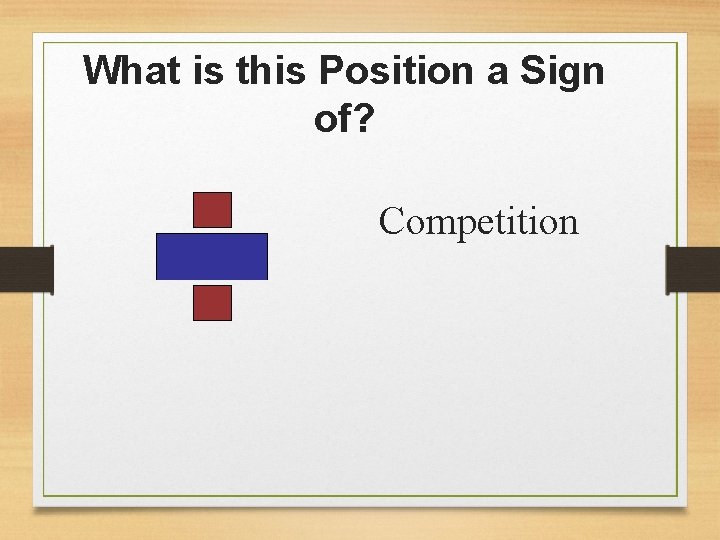
What is this Position a Sign of? Competition
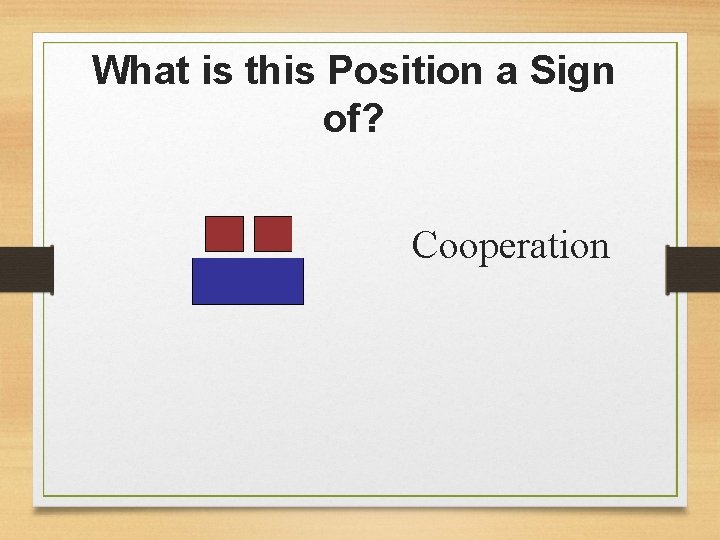
What is this Position a Sign of? Cooperation
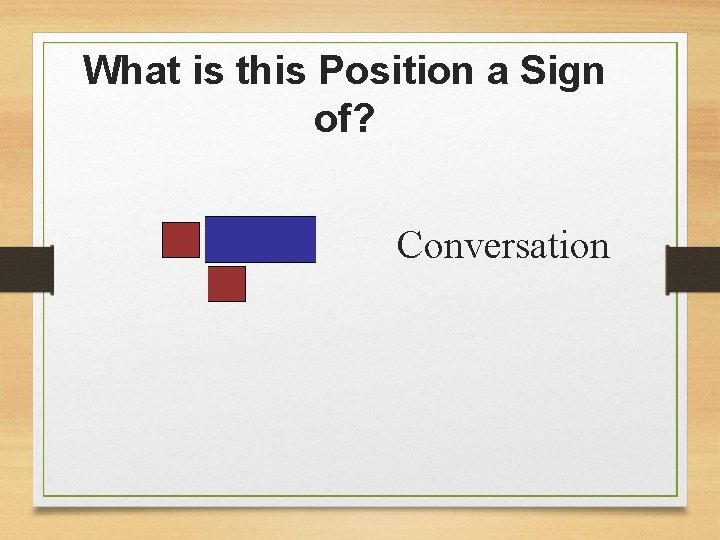
What is this Position a Sign of? Conversation
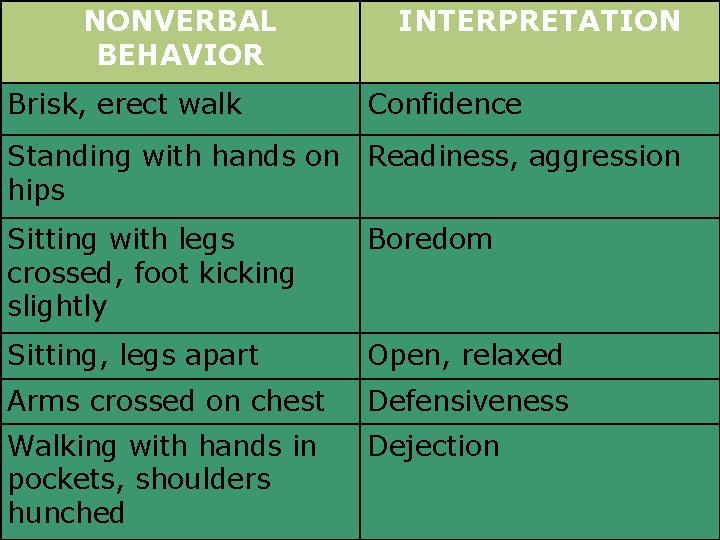
NONVERBAL BEHAVIOR Brisk, erect walk INTERPRETATION Confidence Standing with hands on Readiness, aggression hips Sitting with legs crossed, foot kicking slightly Boredom Sitting, legs apart Open, relaxed Arms crossed on chest Defensiveness Walking with hands in pockets, shoulders hunched Dejection
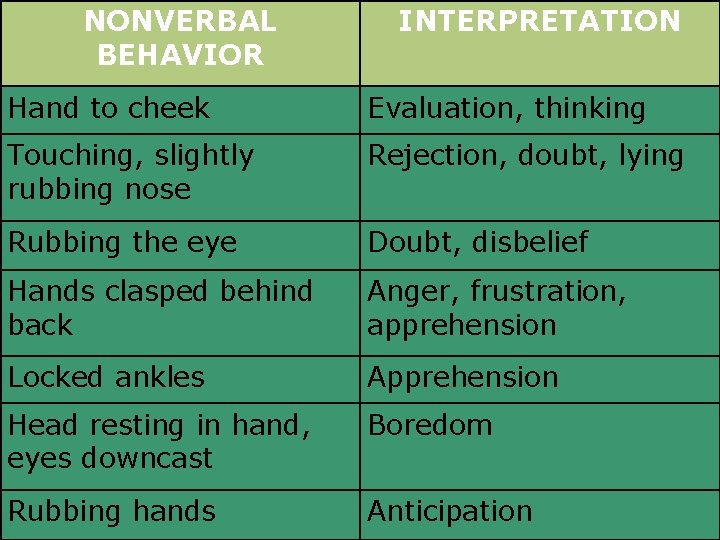
NONVERBAL BEHAVIOR INTERPRETATION Hand to cheek Evaluation, thinking Touching, slightly rubbing nose Rejection, doubt, lying Rubbing the eye Doubt, disbelief Hands clasped behind back Anger, frustration, apprehension Locked ankles Apprehension Head resting in hand, eyes downcast Boredom Rubbing hands Anticipation
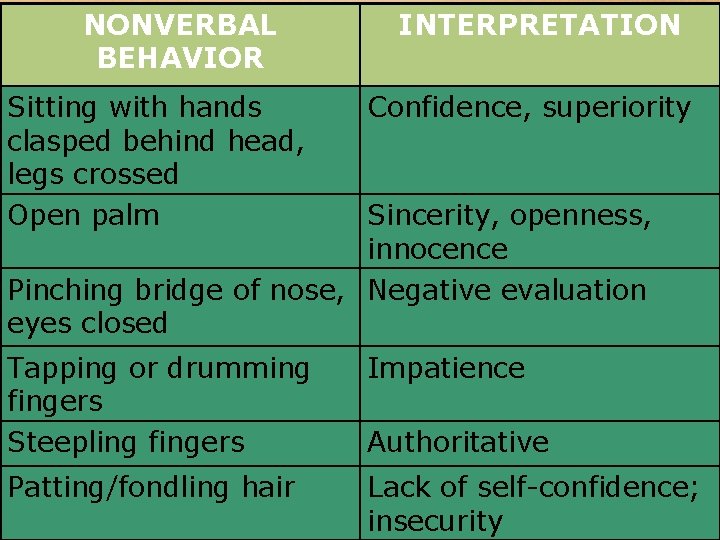
NONVERBAL BEHAVIOR INTERPRETATION Sitting with hands clasped behind head, legs crossed Open palm Confidence, superiority Tapping or drumming fingers Steepling fingers Impatience Patting/fondling hair Lack of self-confidence; insecurity Sincerity, openness, innocence Pinching bridge of nose, Negative evaluation eyes closed Authoritative
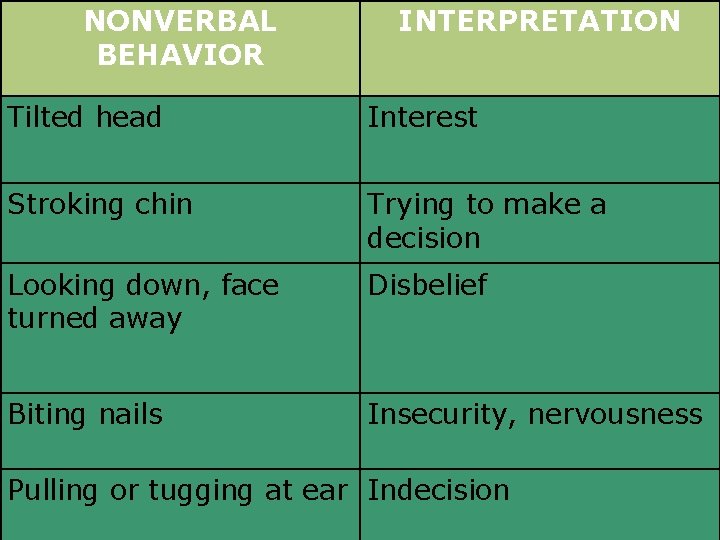
NONVERBAL BEHAVIOR INTERPRETATION Tilted head Interest Stroking chin Trying to make a decision Looking down, face turned away Disbelief Biting nails Insecurity, nervousness Pulling or tugging at ear Indecision

Body Posture • Inclusiveness or non-inclusiveness of posture - defines the space for the activities and delimits access to and within the group • Vis-a-vis or parallel body orientation -gives evidence about the types of social activities • Congruence or non-congruence of stance and positioning of extremities - indicates association, non-association or dissociation of group members
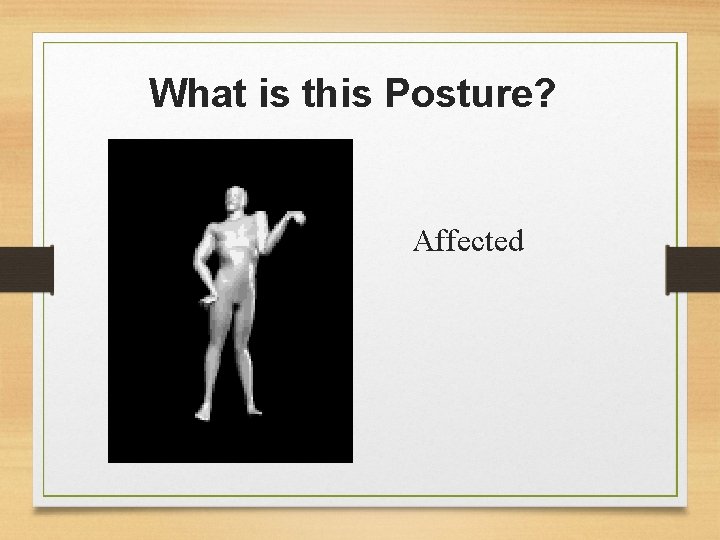
What is this Posture? Affected
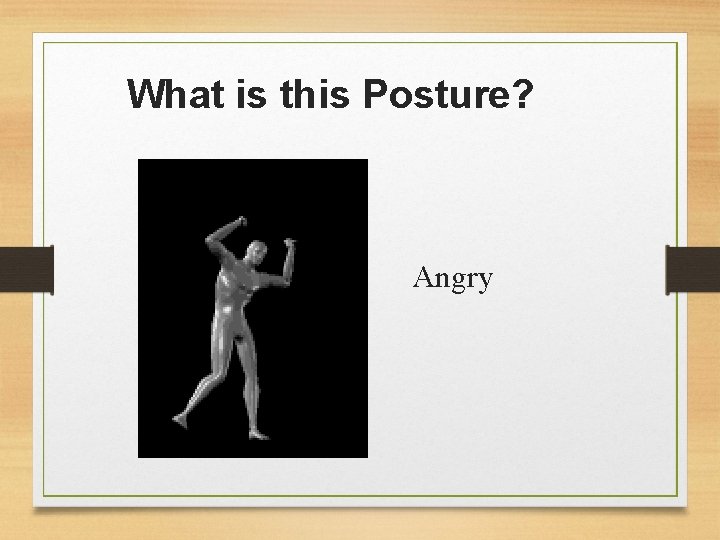
What is this Posture? Angry
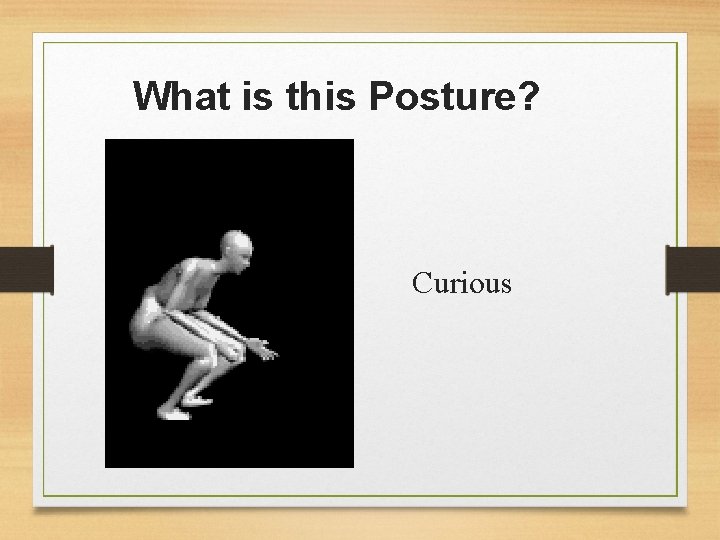
What is this Posture? Curious

What is this Posture? Determined
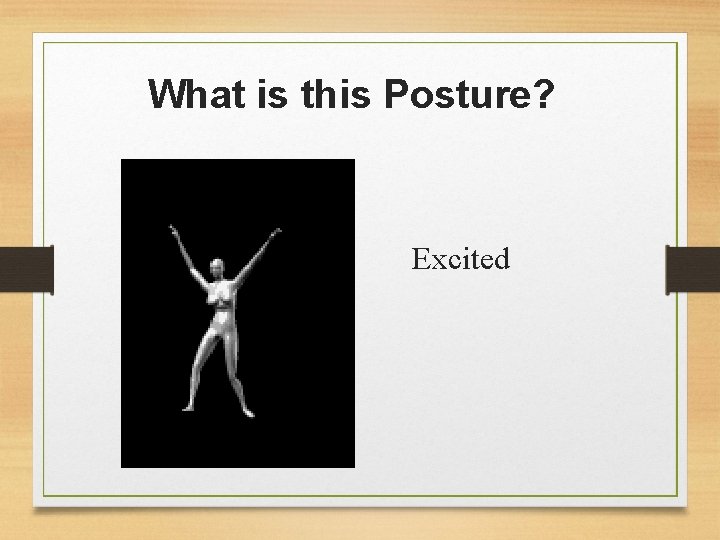
What is this Posture? Excited
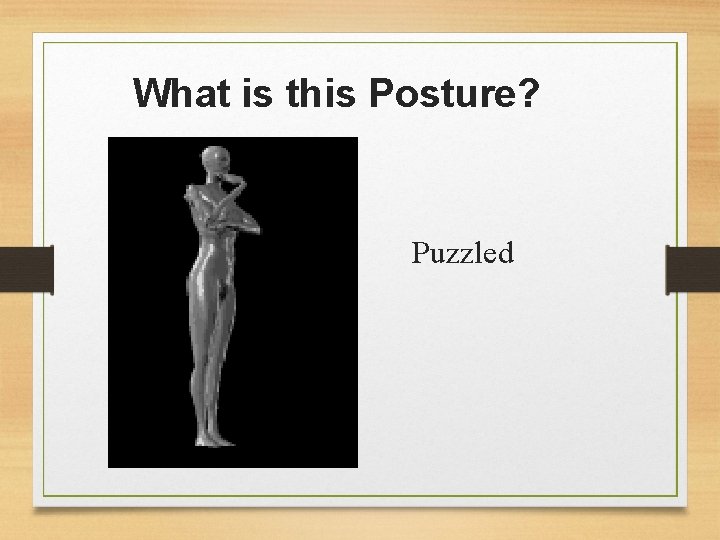
What is this Posture? Puzzled
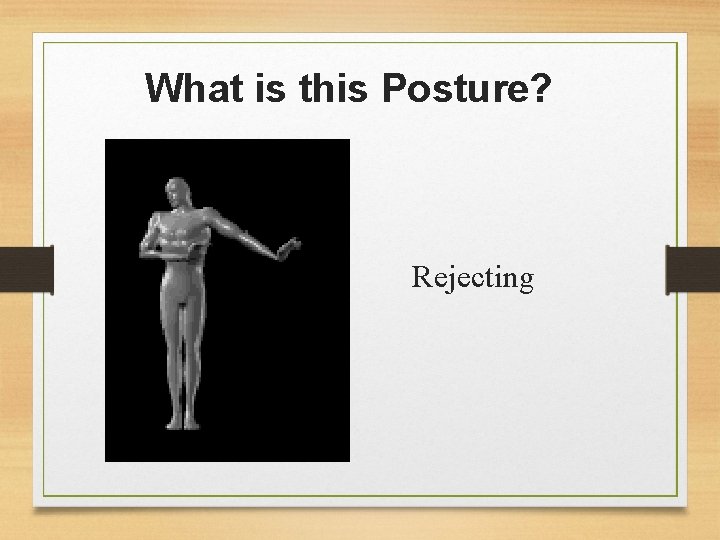
What is this Posture? Rejecting
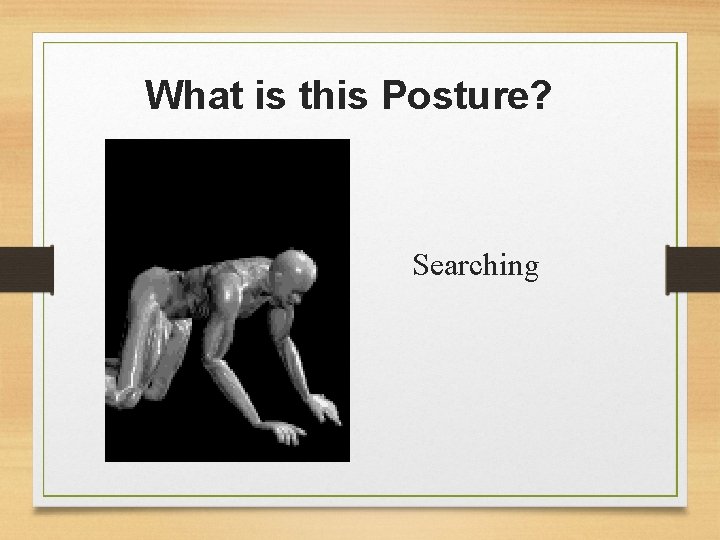
What is this Posture? Searching
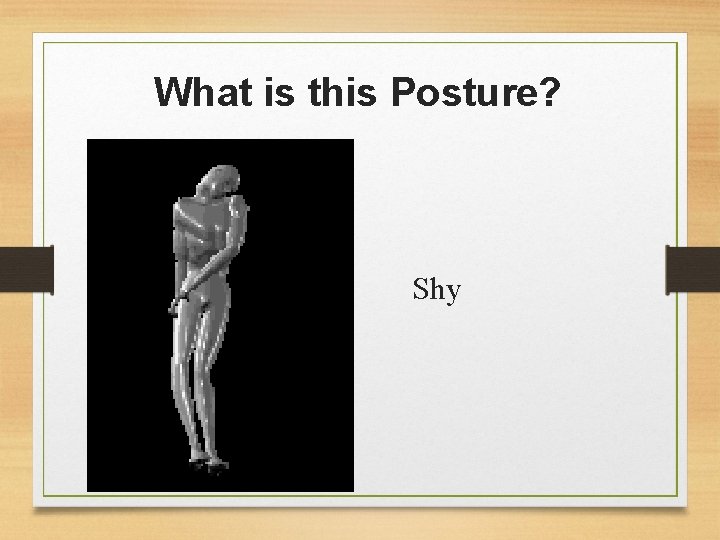
What is this Posture? Shy
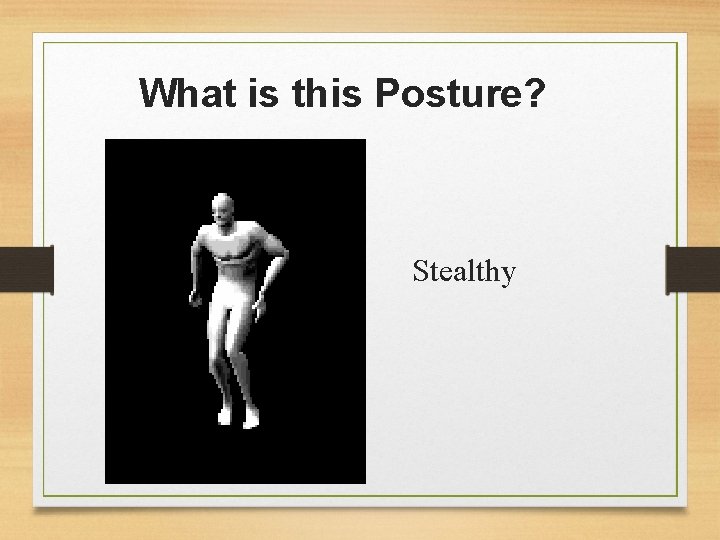
What is this Posture? Stealthy
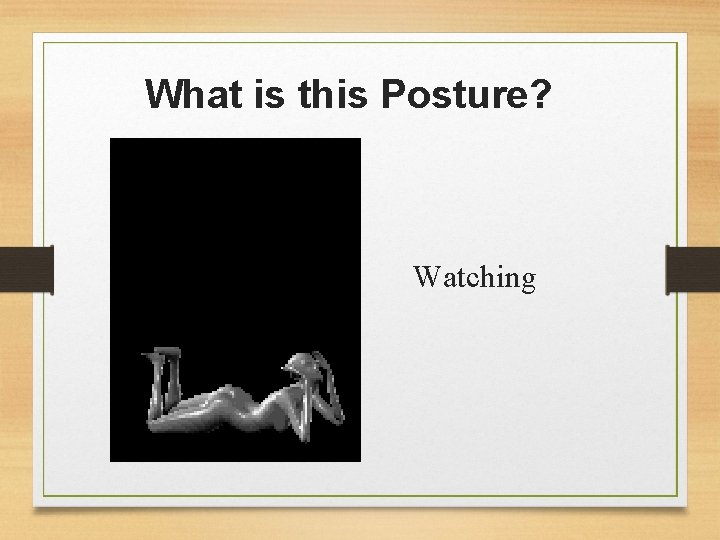
What is this Posture? Watching
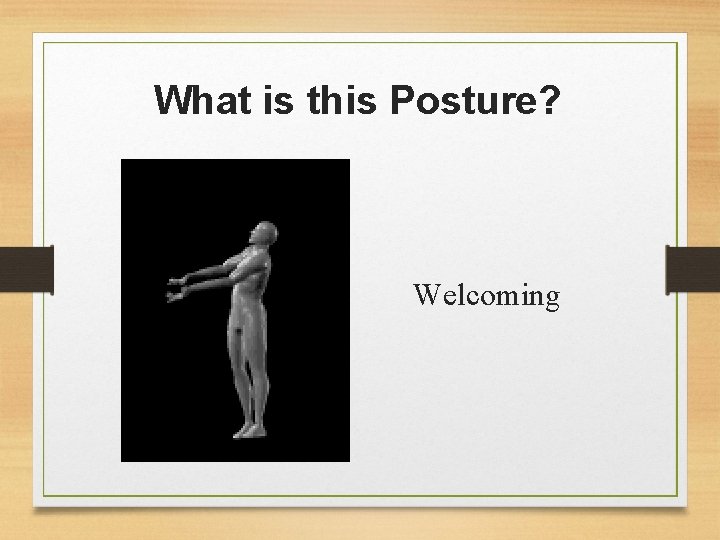
What is this Posture? Welcoming
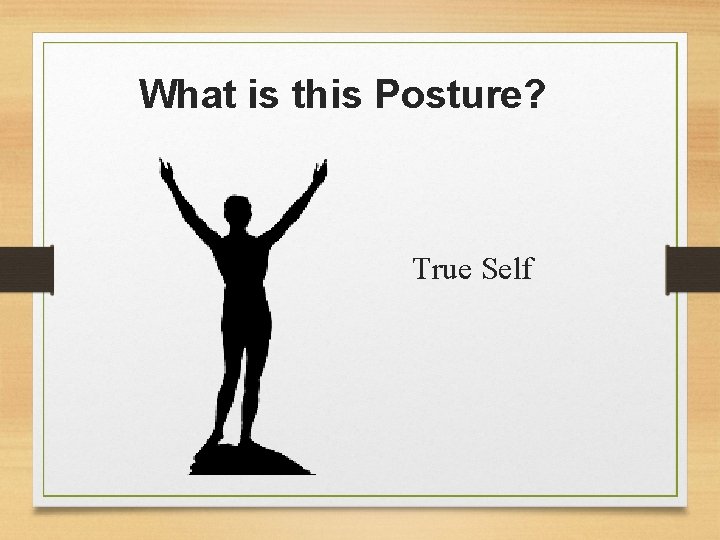
What is this Posture? True Self
What Bodily Communication would you use to: Take the floor A listener can: • actually interrupt; there may be a brief battle, volume being the principal weapon • show impatience, using rapid head-nods, often accompanied by verbal signals such as 'yes', 'but' or 'well'
What Bodily Communication would you use to: Keep the floor A speaker can: • raise the volume when the other interrupts and keep the volume raised if the other continues to try to interrupt • keep a hand in mid- gesture at the end of sentences
What Bodily Communication would you use to: Yield the floor A speaker can: • come to the end of a sentence • end by trailing off, or end with • • something open-ended like 'you know' drawl the final syllable end on a prolonged rising or falling pitch come to the end of some of the hand movements accompanying speech gaze at the other or nod
What Bodily Communication would you use to: Decline an offer of the floor A listener can: • grunt or make 'uh-huh' noises • complete the sentence • briefly request clarification • briefly restate what the speaker said
What Bodily Communication would you use to: Show Emphasis when you are speaking To be persuasive: • • • Gaze more More gestures & head-nods More facial activity Higher speed of delivery Higher volume & louder Hesitate less
What Bodily Communication would you use to: Frame what you are saying To “frame” what you are saying use: • Tone of voice • Speed • Pitch • bodily movements ”quote” or “roll eyes”
What Bodily Communication would you use to: Illustrate a point when you are speaking To illustrate a point use: • variety of movements • hand movements to clarify the verbal message, e. g. 'spiral staircase' or 'over there'
What Bodily Communication would you use to: Provide feedback To give feedback use: to your audience • Encouraging • Head-nods when you are • Smiles speaking • 'uh-huh' sounds etc. • More negative • Frowns • Grimaces • Stares
What Bodily Communication would you use to: To provide To synchronize synchronization so as to use: match style of speech period of with other party adjustment of non-verbal signals to enable adjustment of your styles
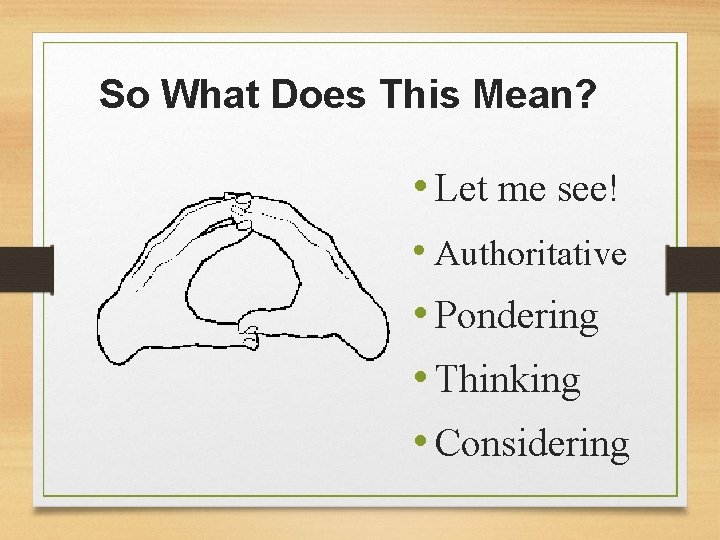
So What Does This Mean? • Let me see! • Authoritative • Pondering • Thinking • Considering
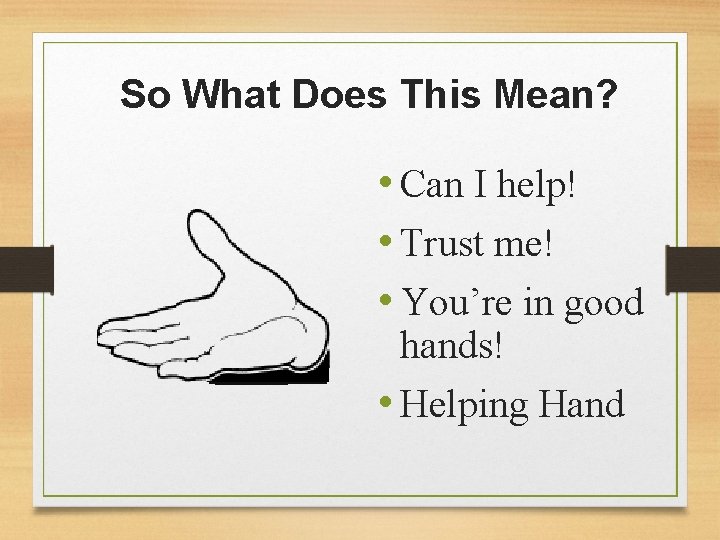
So What Does This Mean? • Can I help! • Trust me! • You’re in good hands! • Helping Hand
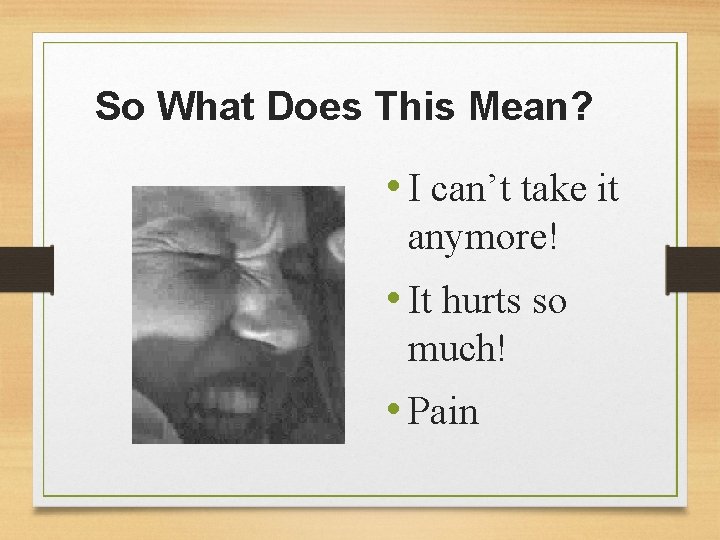
So What Does This Mean? • I can’t take it anymore! • It hurts so much! • Pain
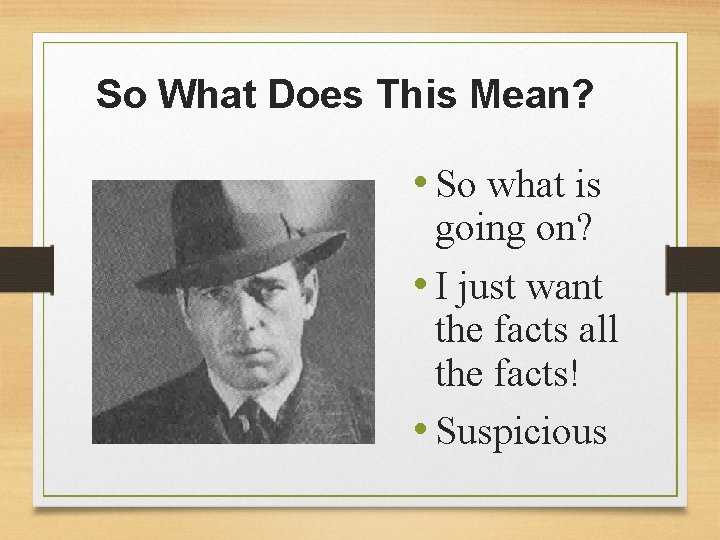
So What Does This Mean? • So what is going on? • I just want the facts all the facts! • Suspicious
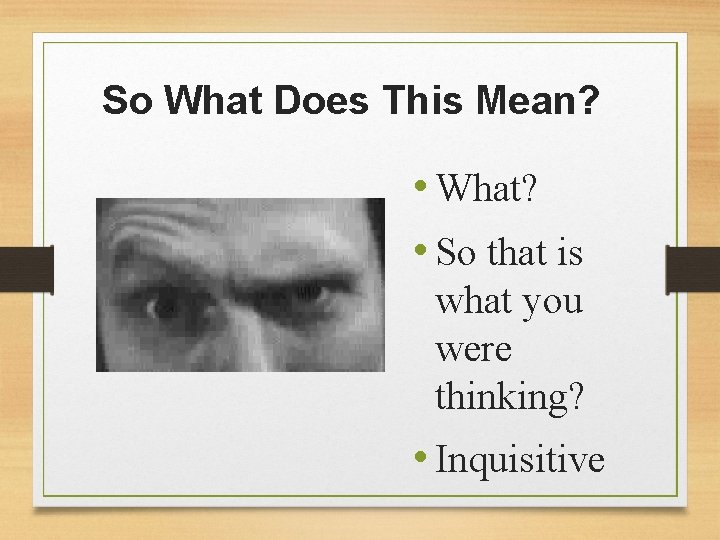
So What Does This Mean? • What? • So that is what you were thinking? • Inquisitive
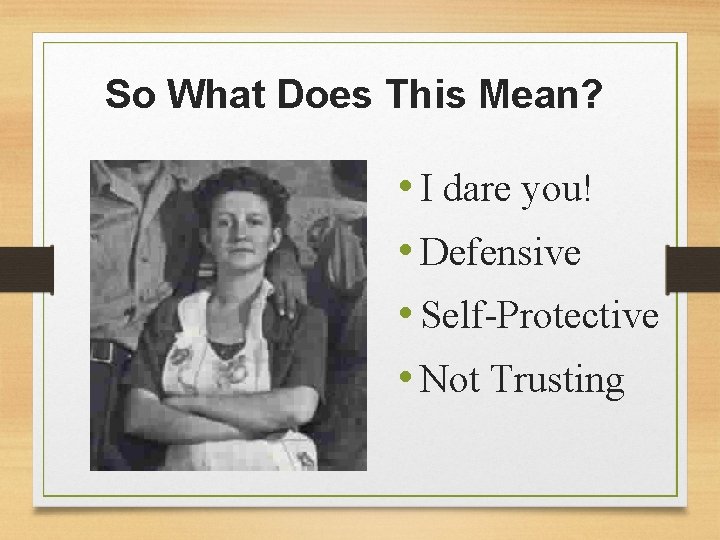
So What Does This Mean? • I dare you! • Defensive • Self-Protective • Not Trusting
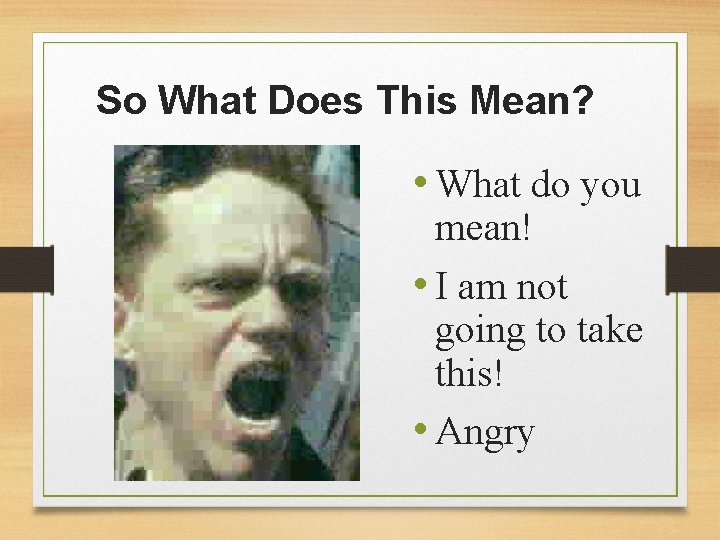
So What Does This Mean? • What do you mean! • I am not going to take this! • Angry
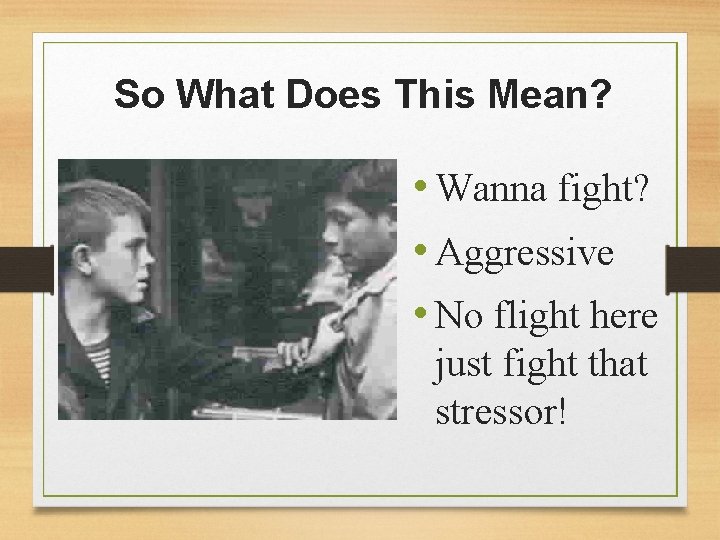
So What Does This Mean? • Wanna fight? • Aggressive • No flight here just fight that stressor!
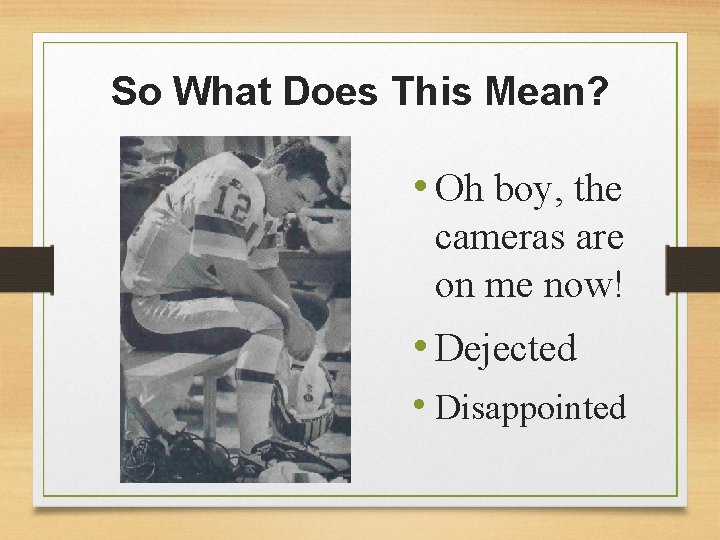
So What Does This Mean? • Oh boy, the cameras are on me now! • Dejected • Disappointed
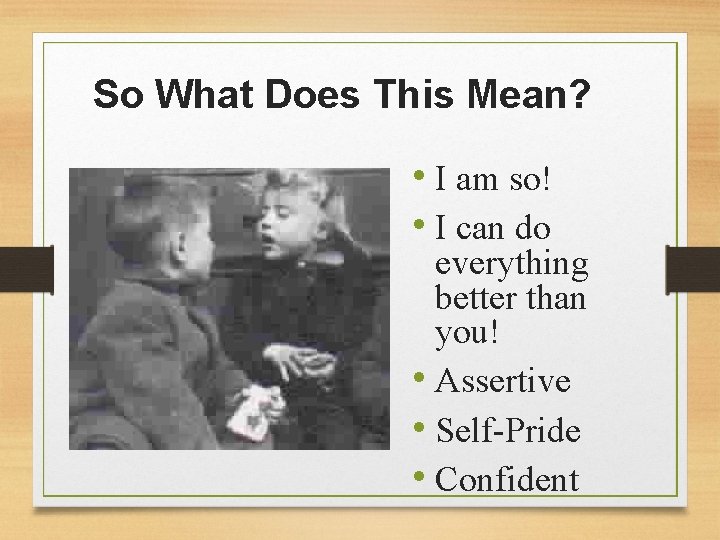
So What Does This Mean? • I am so! • I can do everything better than you! • Assertive • Self-Pride • Confident
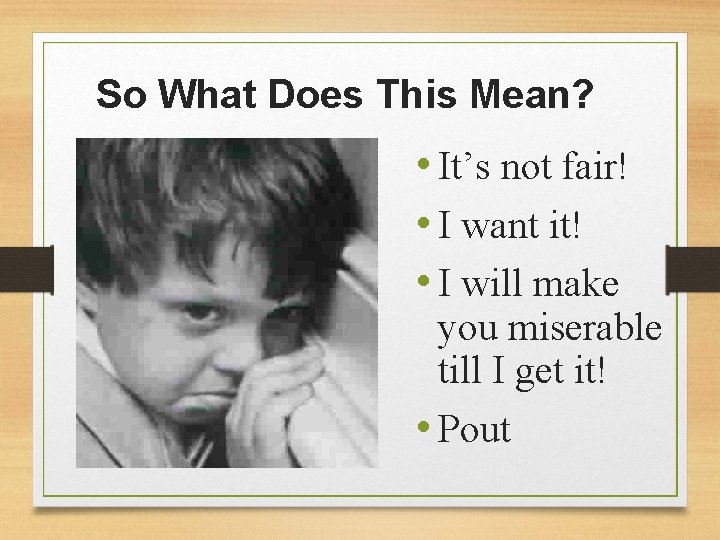
So What Does This Mean? • It’s not fair! • I want it! • I will make you miserable till I get it! • Pout
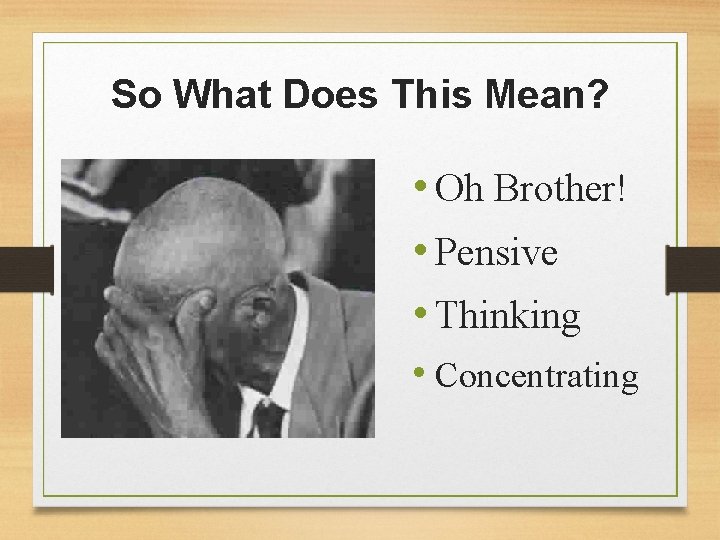
So What Does This Mean? • Oh Brother! • Pensive • Thinking • Concentrating
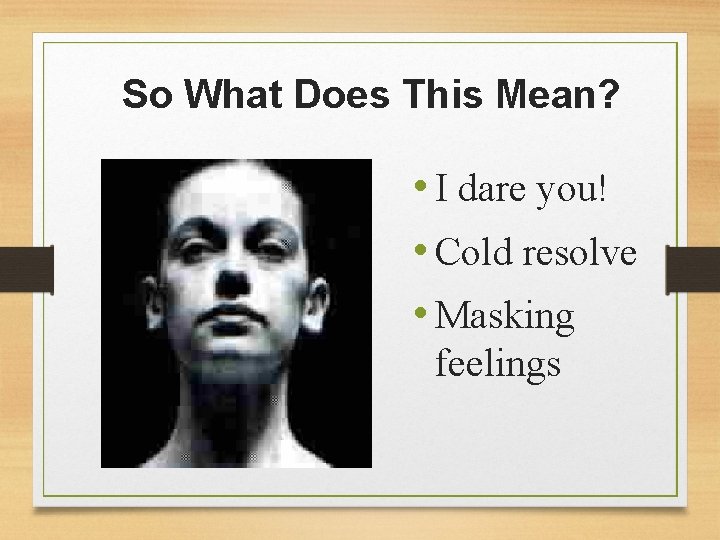
So What Does This Mean? • I dare you! • Cold resolve • Masking feelings
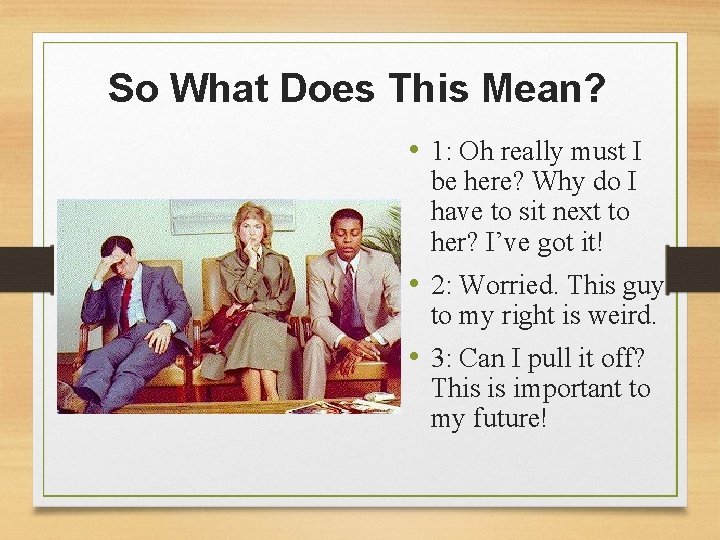
So What Does This Mean? • 1: Oh really must I be here? Why do I have to sit next to her? I’ve got it! • 2: Worried. This guy to my right is weird. • 3: Can I pull it off? This is important to my future!
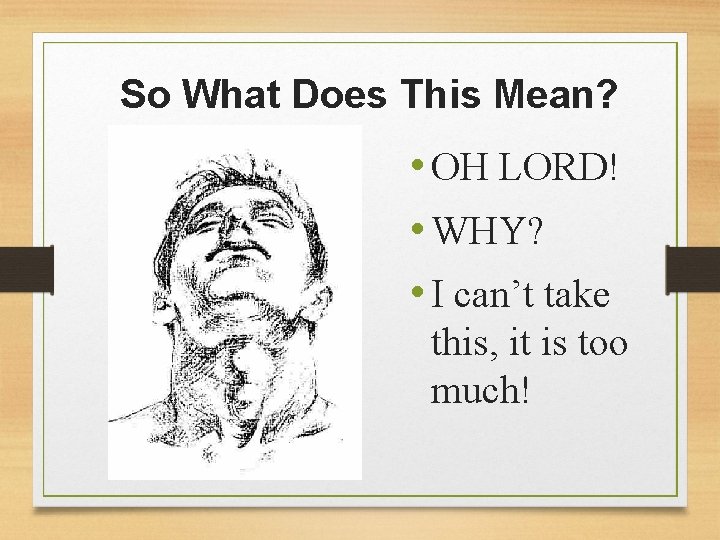
So What Does This Mean? • OH LORD! • WHY? • I can’t take this, it is too much!
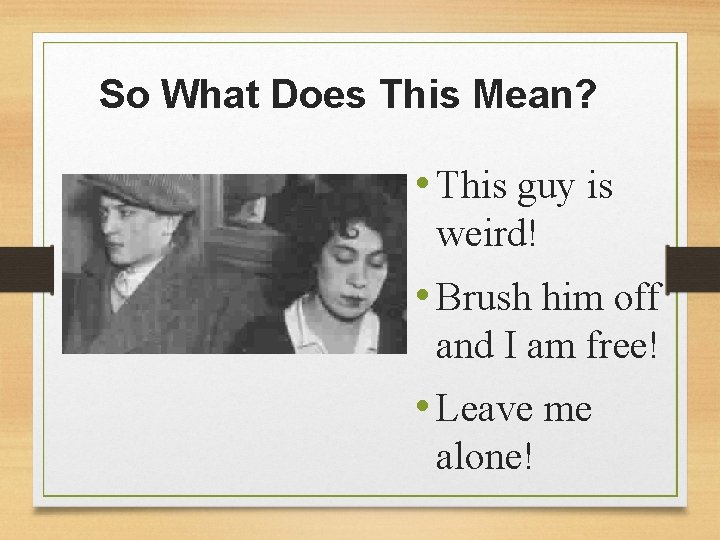
So What Does This Mean? • This guy is weird! • Brush him off and I am free! • Leave me alone!
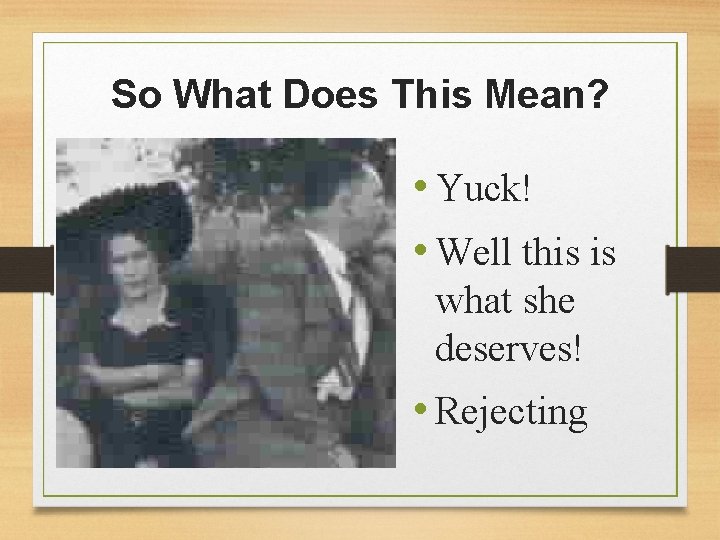
So What Does This Mean? • Yuck! • Well this is what she deserves! • Rejecting
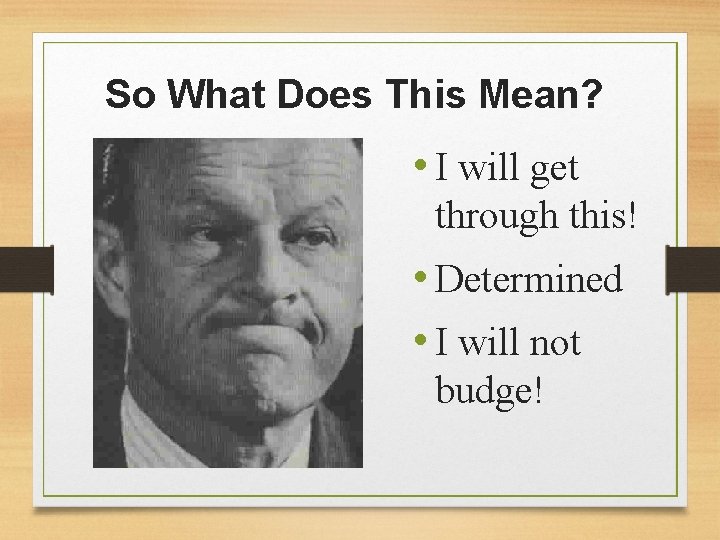
So What Does This Mean? • I will get through this! • Determined • I will not budge!
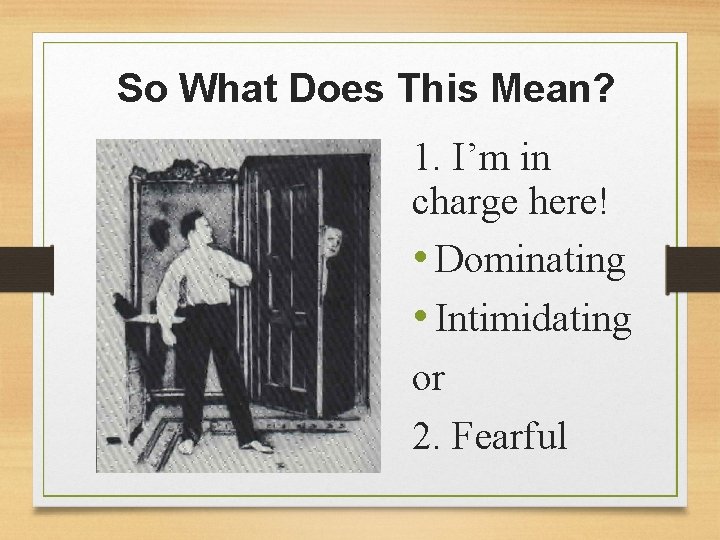
So What Does This Mean? 1. I’m in charge here! • Dominating • Intimidating or 2. Fearful
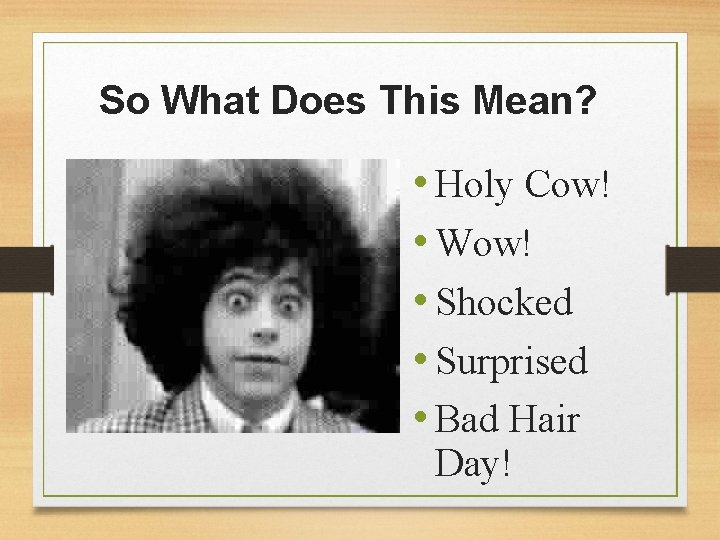
So What Does This Mean? • Holy Cow! • Wow! • Shocked • Surprised • Bad Hair Day!
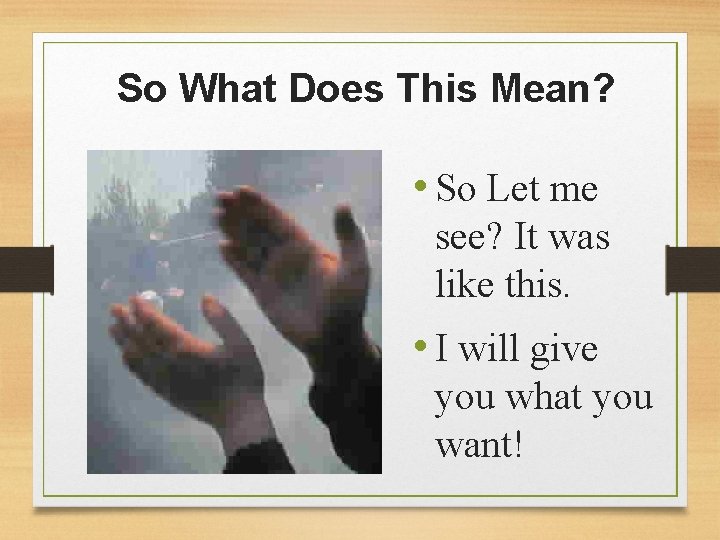
So What Does This Mean? • So Let me see? It was like this. • I will give you what you want!
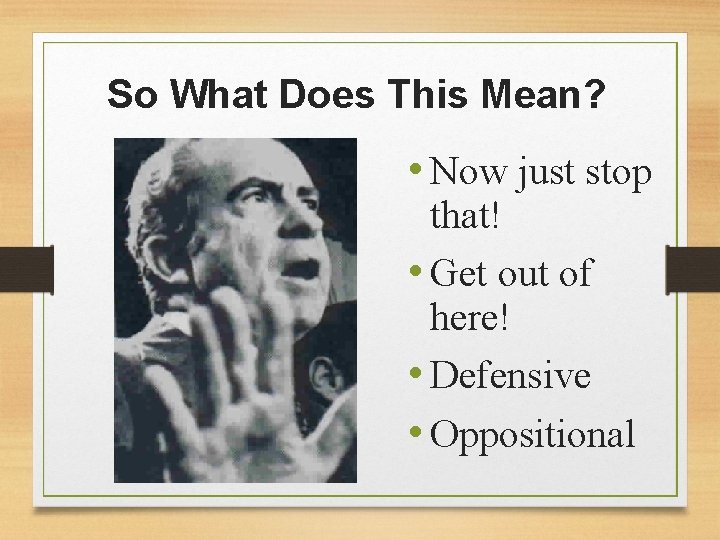
So What Does This Mean? • Now just stop that! • Get out of here! • Defensive • Oppositional
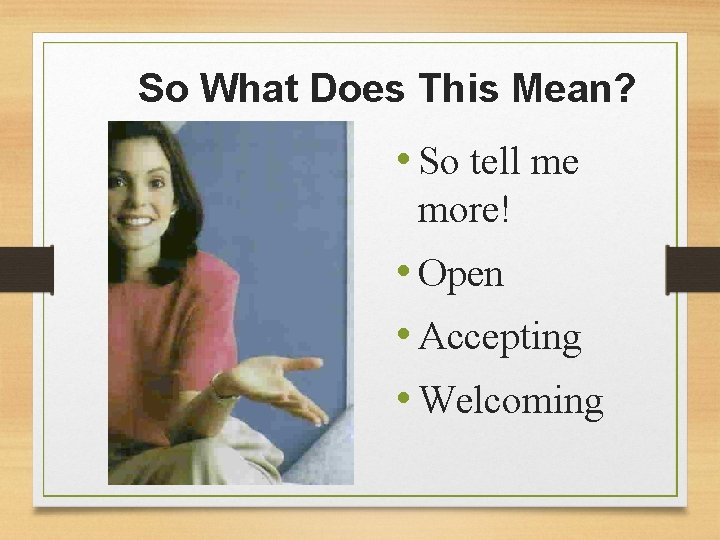
So What Does This Mean? • So tell me more! • Open • Accepting • Welcoming
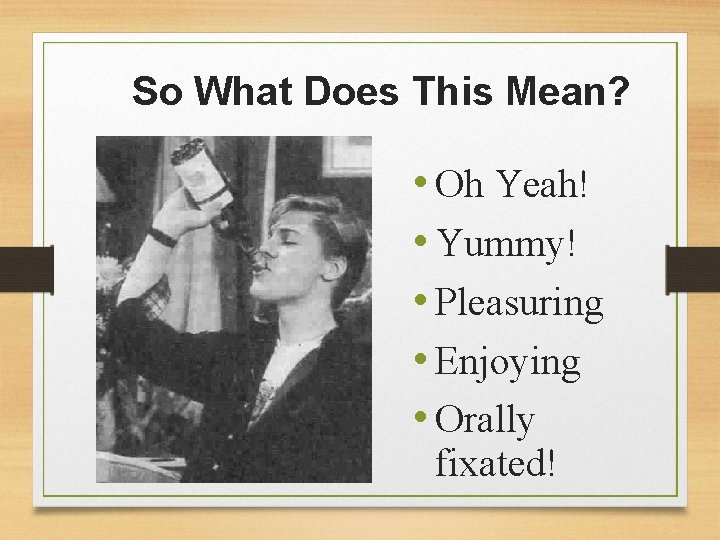
So What Does This Mean? • Oh Yeah! • Yummy! • Pleasuring • Enjoying • Orally fixated!
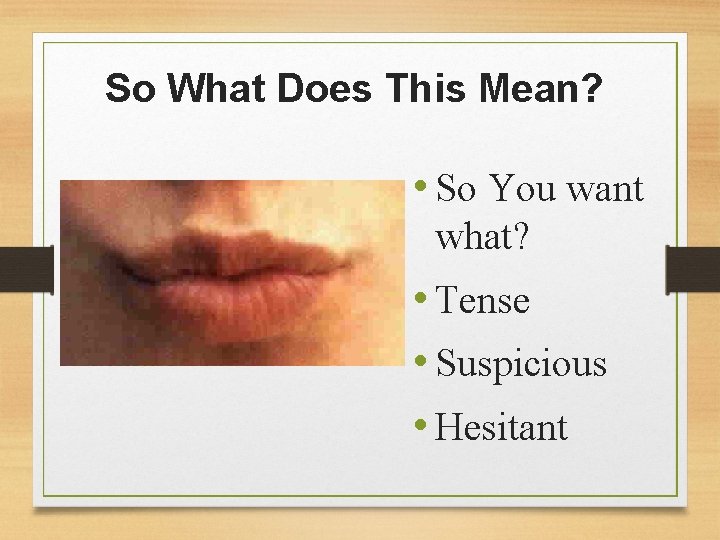
So What Does This Mean? • So You want what? • Tense • Suspicious • Hesitant
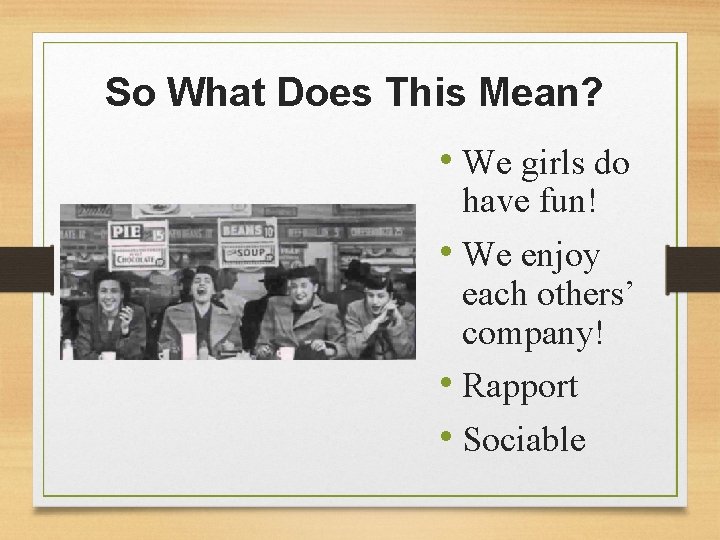
So What Does This Mean? • We girls do have fun! • We enjoy each others’ company! • Rapport • Sociable
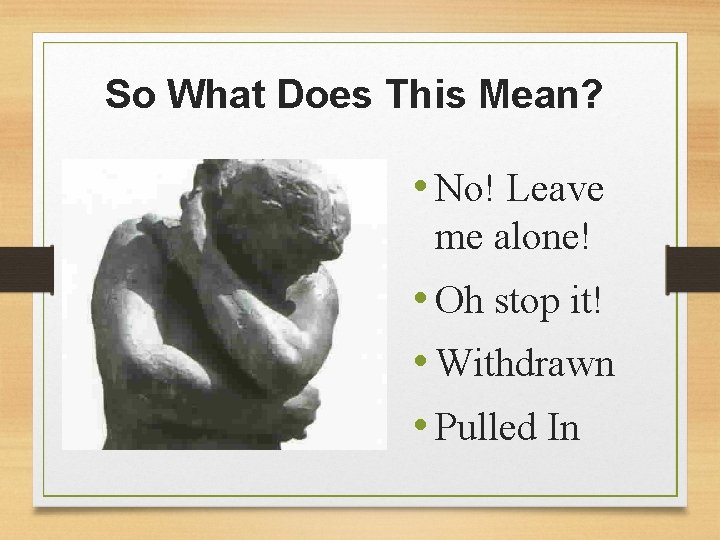
So What Does This Mean? • No! Leave me alone! • Oh stop it! • Withdrawn • Pulled In
So what do you think? • How important is non-verbal communication in your communications with others? • What messages are you sending which you really do not want others to pick up? • How can you improve your effectiveness as a communicator? • What do you need to do so as to improve your ability to “listen” to the non-verbal cues of others?
- Slides: 77