
TRAINING COURSE ON RADIATION DOSIMETRY Instrumentation 1 Gas



- Slides: 54
TRAINING COURSE ON RADIATION DOSIMETRY: Instrumentation 1 – Gas detectors / Part 1 Anthony WAKER, University of Ontario Instutute of Technology Wed. 21/11/2012, 15: 00 – 16: 00 pm, and 16: 30 – 17: 30 pm
GAS-FILLED DETECTORS • One of the oldest and most widely used radiation detectors • Gas-filled detectors sense the direct ionization created by the passage of charged particles caused by the interaction of the radiation with the chamber gas § Ion Chambers § Proportional Counters § Geiger-Mueller Counters
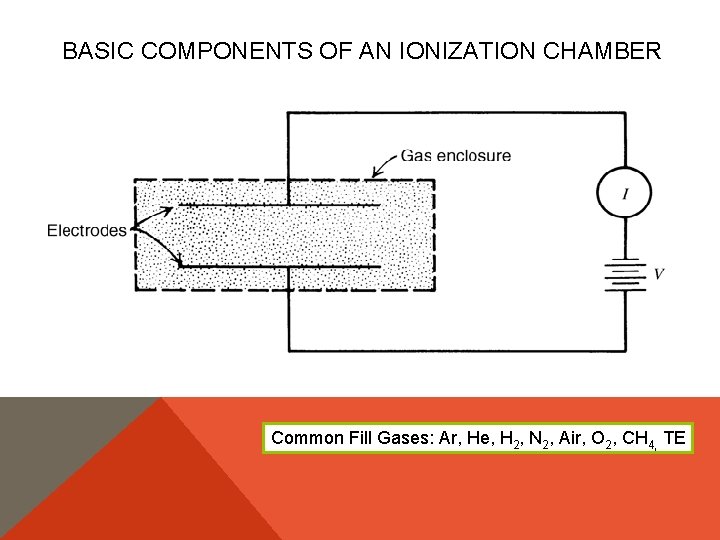
BASIC COMPONENTS OF AN IONIZATION CHAMBER Common Fill Gases: Ar, He, H 2, N 2, Air, O 2, CH 4, TE
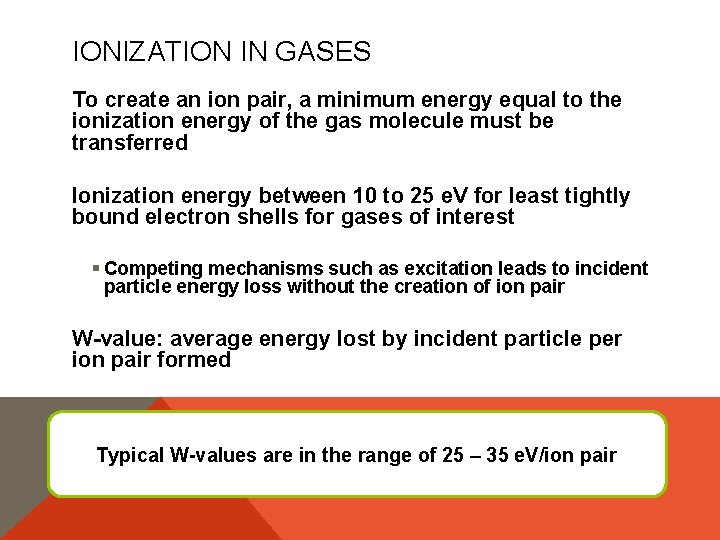
IONIZATION IN GASES To create an ion pair, a minimum energy equal to the ionization energy of the gas molecule must be transferred Ionization energy between 10 to 25 e. V for least tightly bound electron shells for gases of interest § Competing mechanisms such as excitation leads to incident particle energy loss without the creation of ion pair W-value: average energy lost by incident particle per ion pair formed Typical W-values are in the range of 25 – 35 e. V/ion pair
CHARGE COLLECTION Under steady-state irradiation, rate of ion-pair formation is constant § For a small test volume, rate of formation will be exactly balanced by rate at which ion pairs are lost from volume due to recombination, diffusion or migration from the volume.
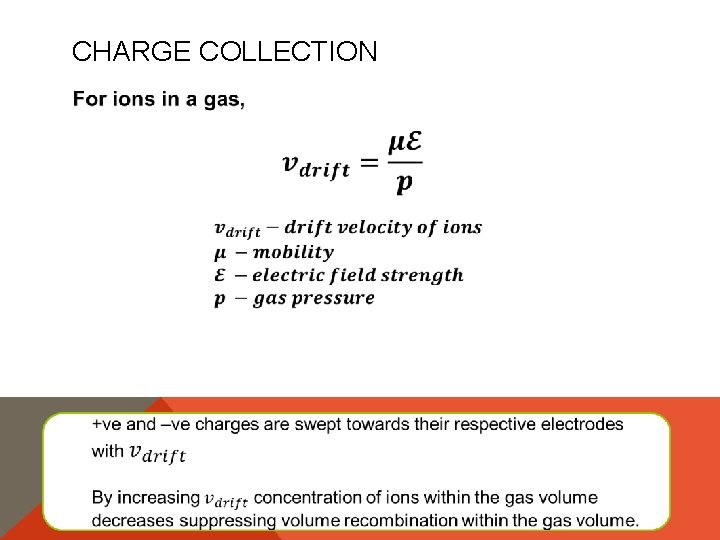
CHARGE COLLECTION
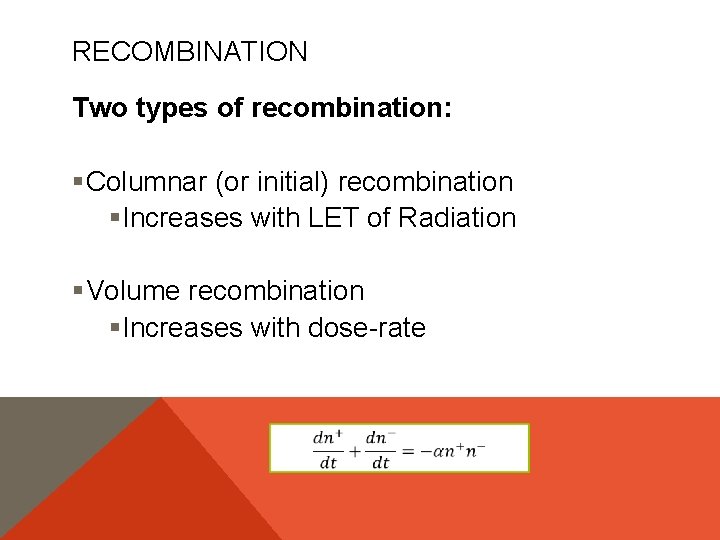
RECOMBINATION Two types of recombination: §Columnar (or initial) recombination §Increases with LET of Radiation §Volume recombination §Increases with dose-rate
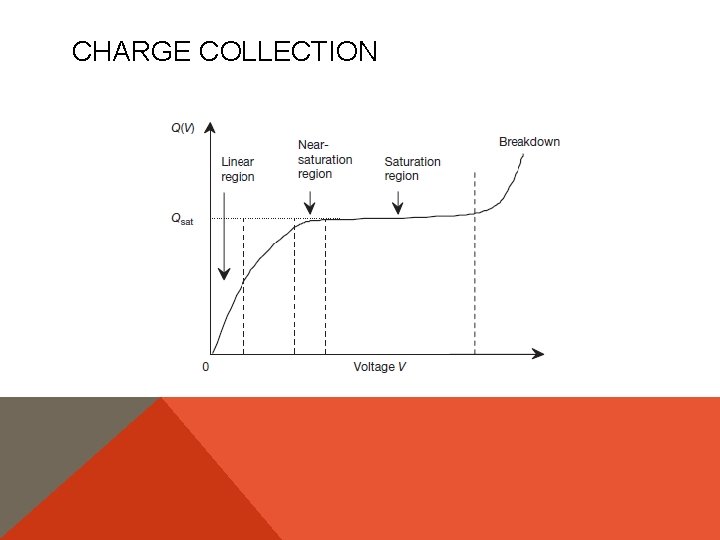
CHARGE COLLECTION
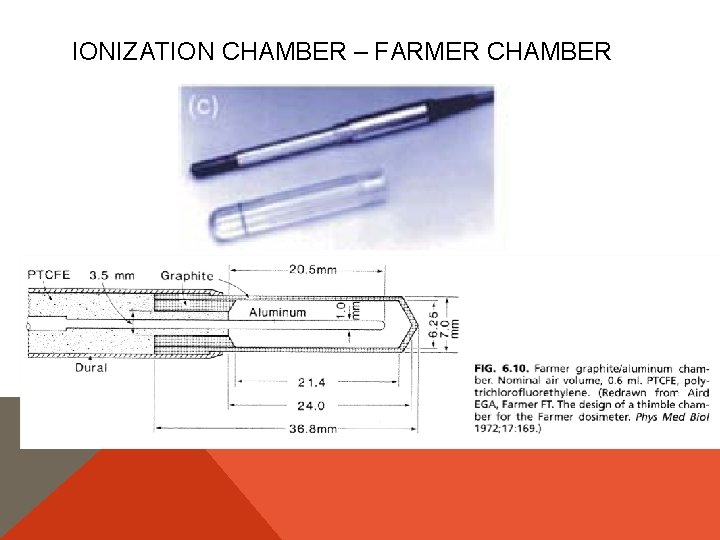
IONIZATION CHAMBER – FARMER CHAMBER
IONIZATION CHAMBERS What ionization current would we expect to measure in a Farmer chamber placed in a high energy photon radiotherapy beam where the dose rate to air is 10 Gy per minute.
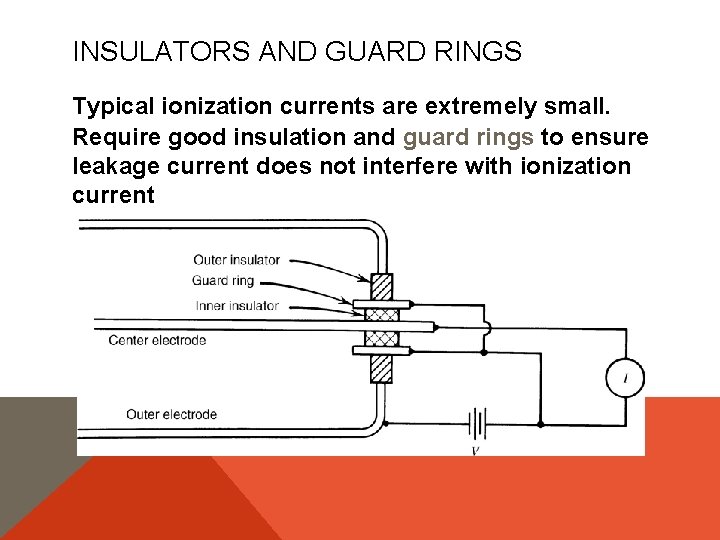
INSULATORS AND GUARD RINGS Typical ionization currents are extremely small. Require good insulation and guard rings to ensure leakage current does not interfere with ionization current
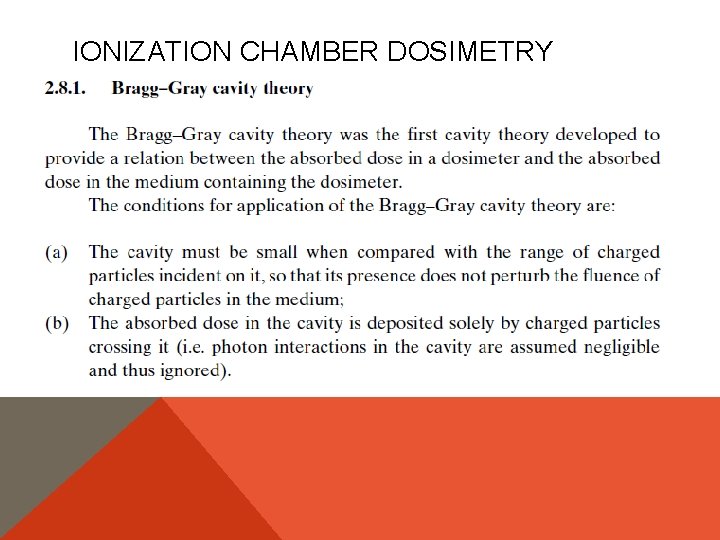
IONIZATION CHAMBER DOSIMETRY
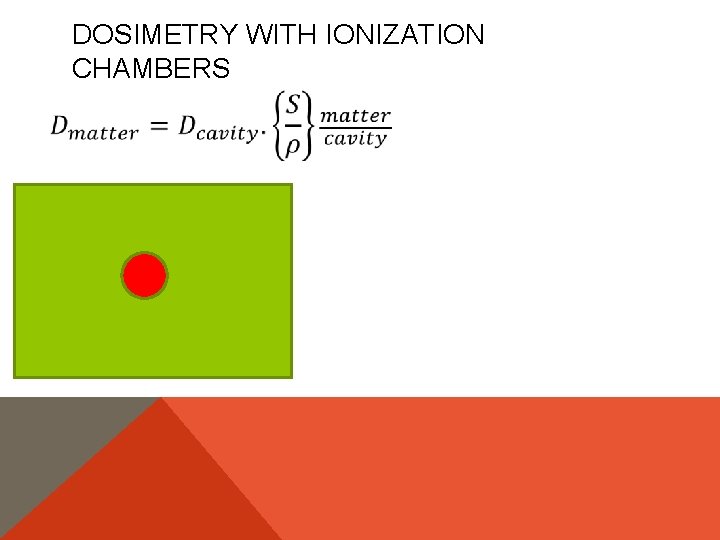
DOSIMETRY WITH IONIZATION CHAMBERS
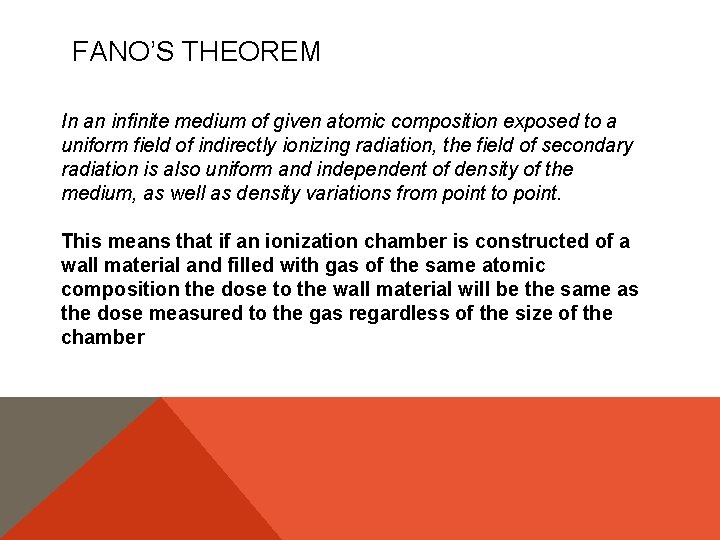
FANO’S THEOREM In an infinite medium of given atomic composition exposed to a uniform field of indirectly ionizing radiation, the field of secondary radiation is also uniform and independent of density of the medium, as well as density variations from point to point. This means that if an ionization chamber is constructed of a wall material and filled with gas of the same atomic composition the dose to the wall material will be the same as the dose measured to the gas regardless of the size of the chamber
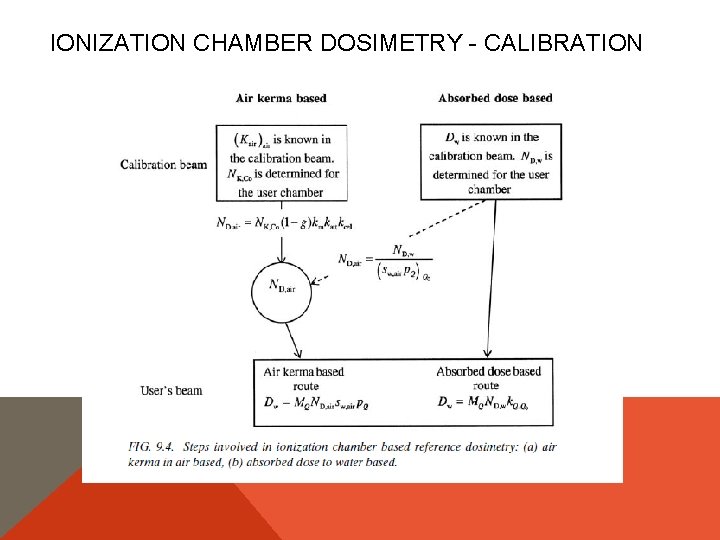
IONIZATION CHAMBER DOSIMETRY - CALIBRATION
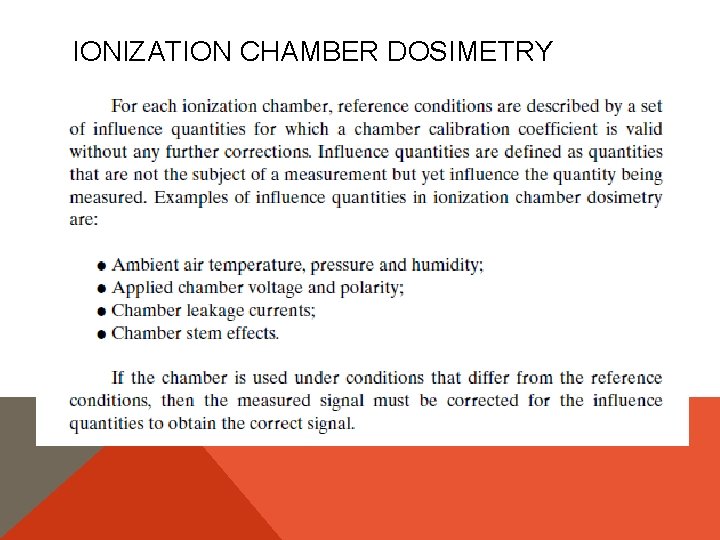
IONIZATION CHAMBER DOSIMETRY
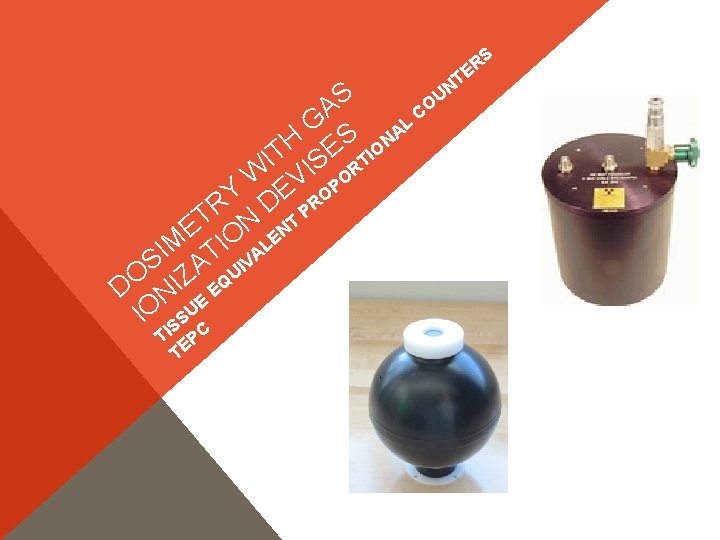
S R E T N U O C S A G AL S ION H E IT IS RT W V PO Y DE RO R P T T E ION EN M T AL I S A UIV DO NIZ E EQ IO ISSUC T P E T
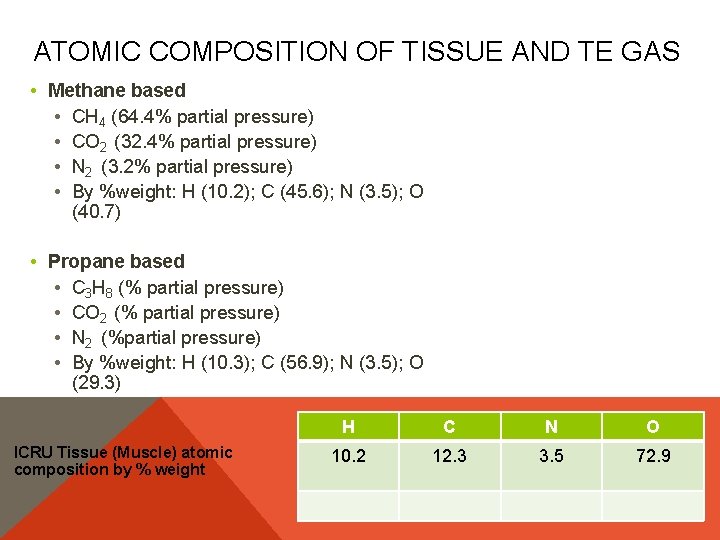
ATOMIC COMPOSITION OF TISSUE AND TE GAS • Methane based • CH 4 (64. 4% partial pressure) • CO 2 (32. 4% partial pressure) • N 2 (3. 2% partial pressure) • By %weight: H (10. 2); C (45. 6); N (3. 5); O (40. 7) • Propane based • C 3 H 8 (% partial pressure) • CO 2 (% partial pressure) • N 2 (%partial pressure) • By %weight: H (10. 3); C (56. 9); N (3. 5); O (29. 3) ICRU Tissue (Muscle) atomic composition by % weight H C N O 10. 2 12. 3 3. 5 72. 9
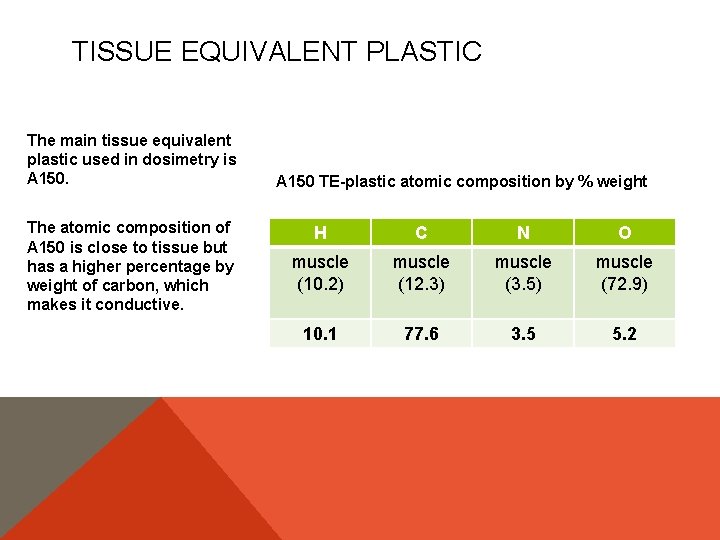
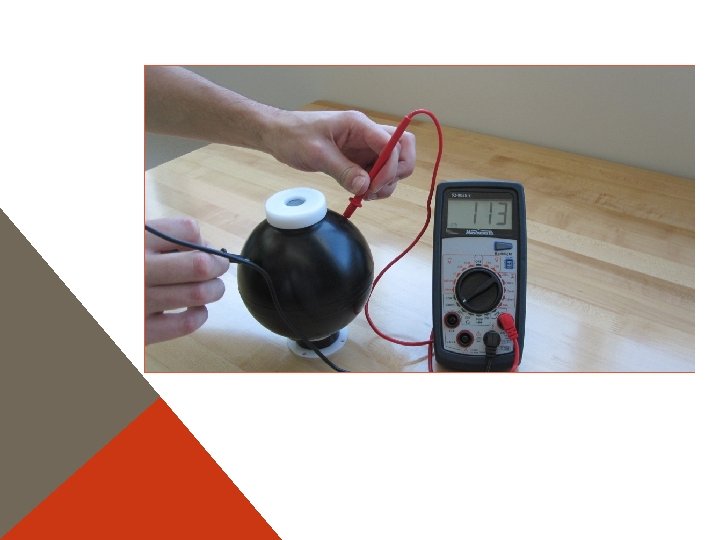
TISSUE EQUIVALENT PLASTIC The main tissue equivalent plastic used in dosimetry is A 150. The atomic composition of A 150 is close to tissue but has a higher percentage by weight of carbon, which makes it conductive. A 150 TE-plastic atomic composition by % weight H C N O muscle (10. 2) muscle (12. 3) muscle (3. 5) muscle (72. 9) 10. 1 77. 6 3. 5 5. 2
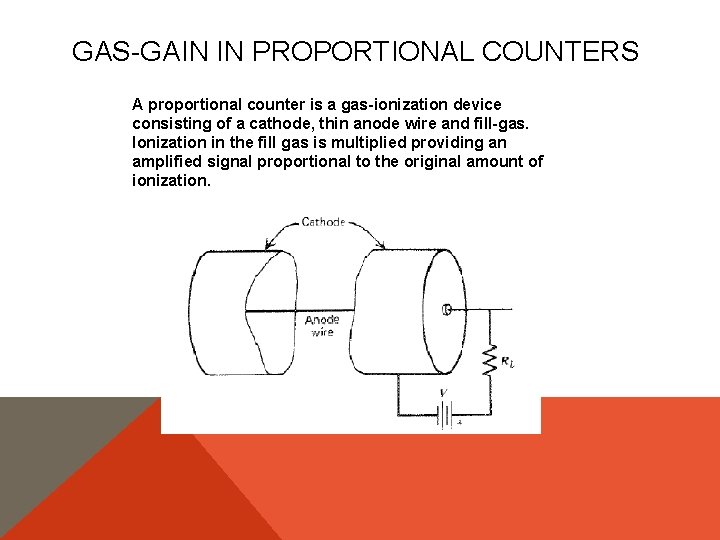
GAS-GAIN IN PROPORTIONAL COUNTERS A proportional counter is a gas-ionization device consisting of a cathode, thin anode wire and fill-gas. Ionization in the fill gas is multiplied providing an amplified signal proportional to the original amount of ionization.
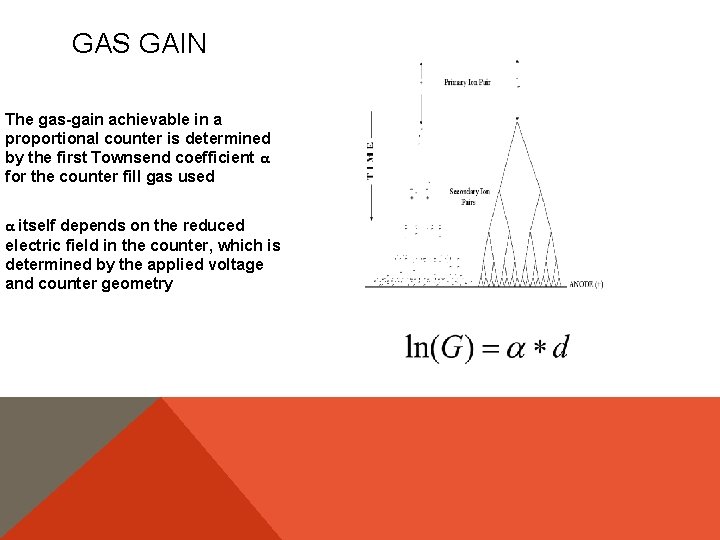
GAS GAIN The gas-gain achievable in a proportional counter is determined by the first Townsend coefficient α for the counter fill gas used α itself depends on the reduced electric field in the counter, which is determined by the applied voltage and counter geometry
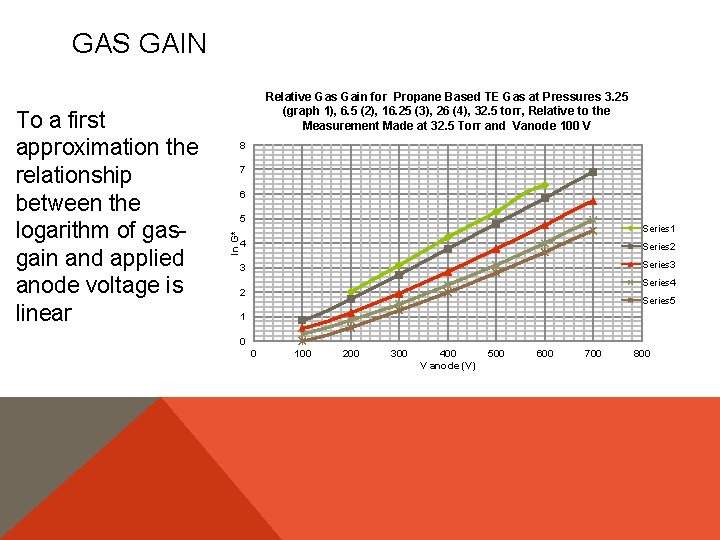
GAS GAIN 8 7 6 5 ln G* To a first approximation the relationship between the logarithm of gasgain and applied anode voltage is linear Relative Gas Gain for Propane Based TE Gas at Pressures 3. 25 (graph 1), 6. 5 (2), 16. 25 (3), 26 (4), 32. 5 torr, Relative to the Measurement Made at 32. 5 Torr and Vanode 100 V Series 1 4 Series 2 3 Series 4 2 Series 5 1 0 0 100 200 300 400 V anode (V) 500 600 700 800
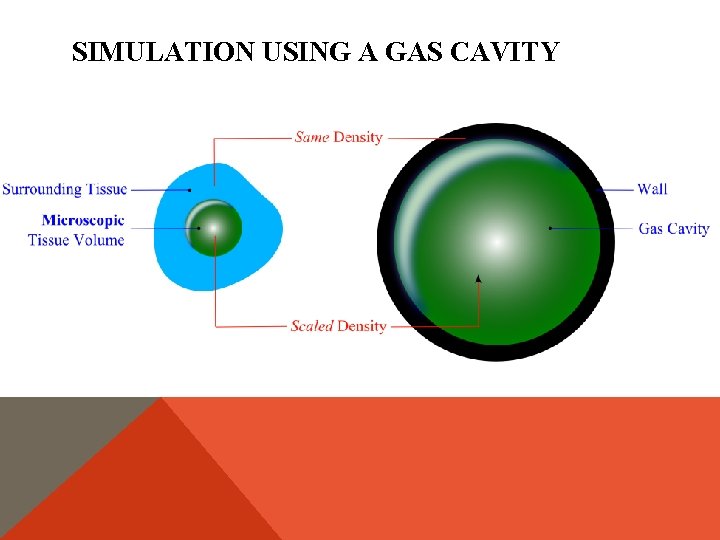
SIMULATION USING A GAS CAVITY
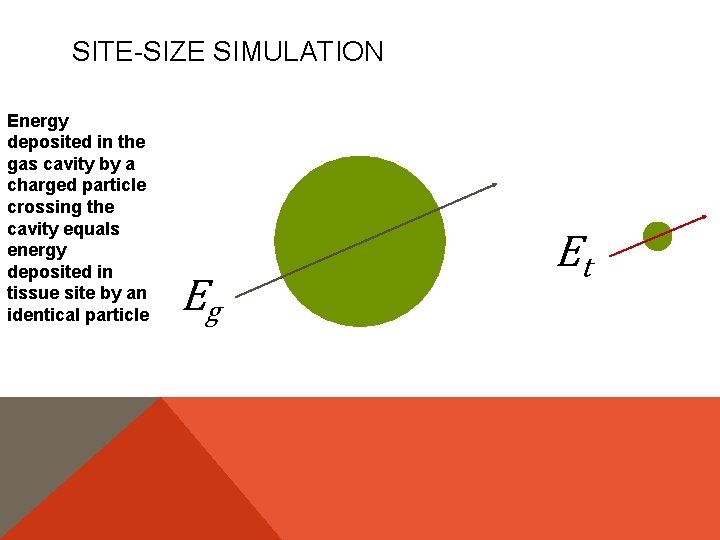
SITE-SIZE SIMULATION Energy deposited in the gas cavity by a charged particle crossing the cavity equals energy deposited in tissue site by an identical particle Eg Et
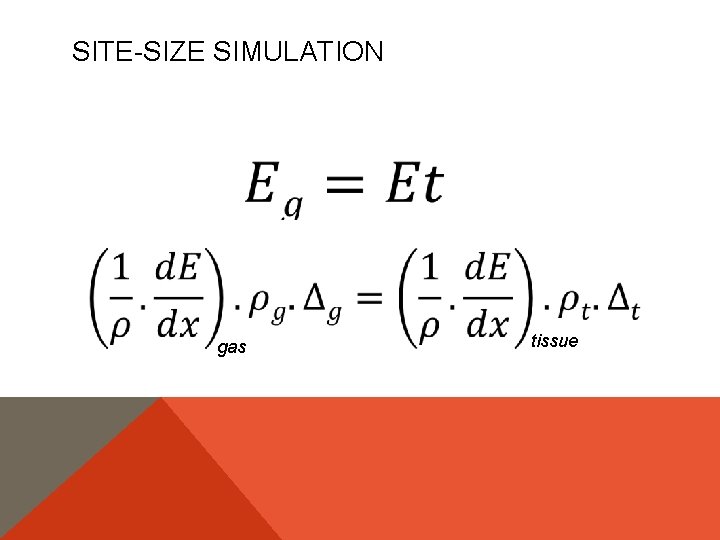
SITE-SIZE SIMULATION gas tissue
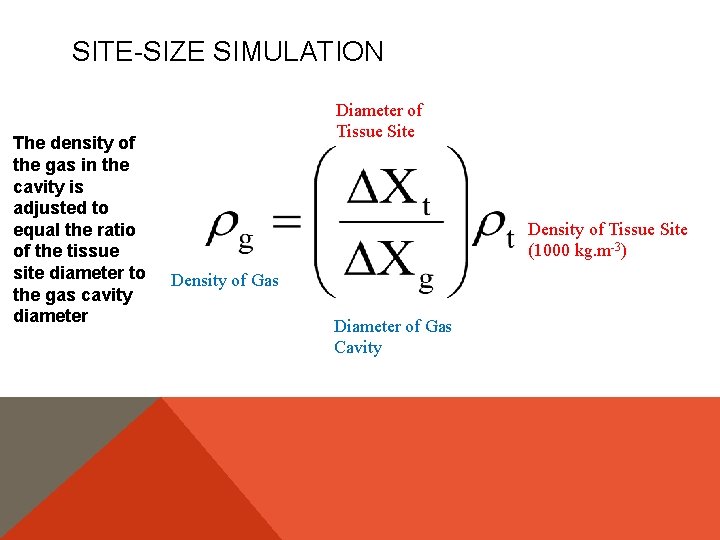
SITE-SIZE SIMULATION The density of the gas in the cavity is adjusted to equal the ratio of the tissue site diameter to the gas cavity diameter Diameter of Tissue Site Density of Tissue Site (1000 kg. m-3) Density of Gas Diameter of Gas Cavity
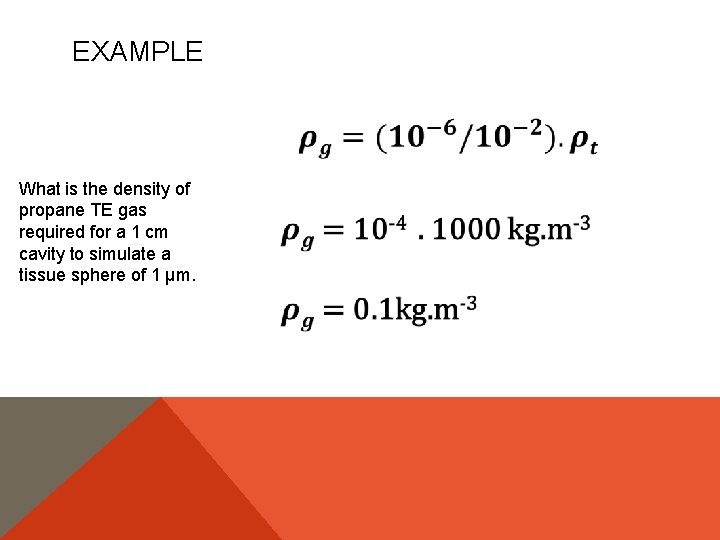
EXAMPLE What is the density of propane TE gas required for a 1 cm cavity to simulate a tissue sphere of 1 µm.
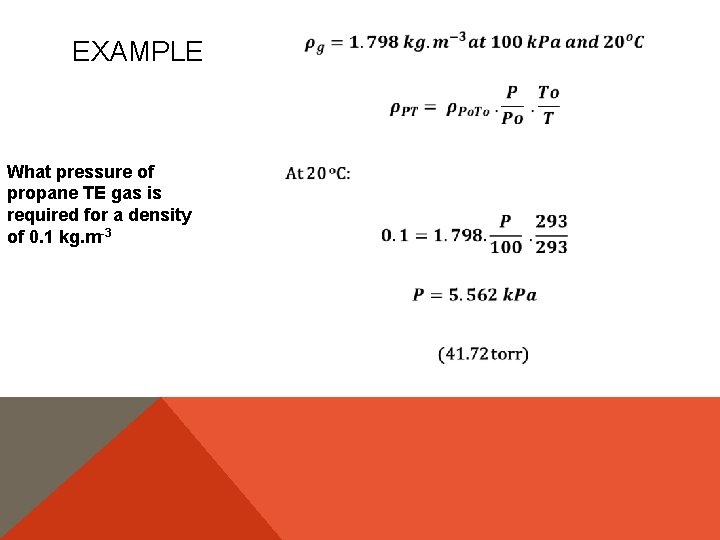
EXAMPLE What pressure of propane TE gas is required for a density of 0. 1 kg. m-3
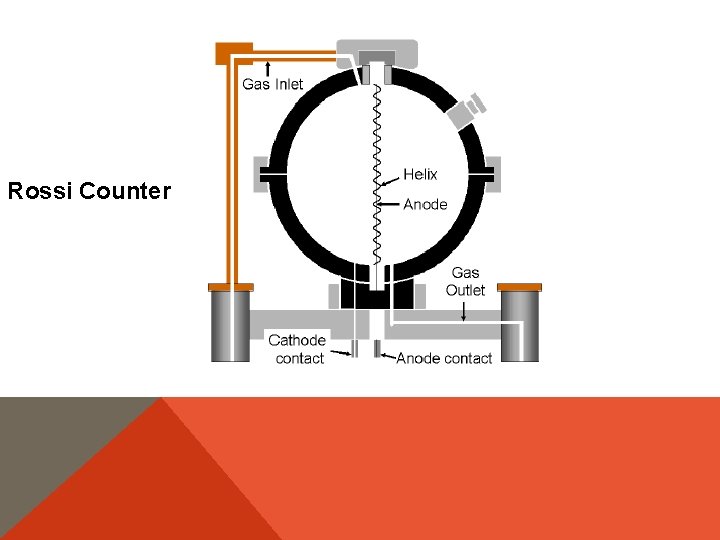
Rossi Counter
N IO S T E C A R R U B O I A S L H A P C A L C AL P E RN T NTE I
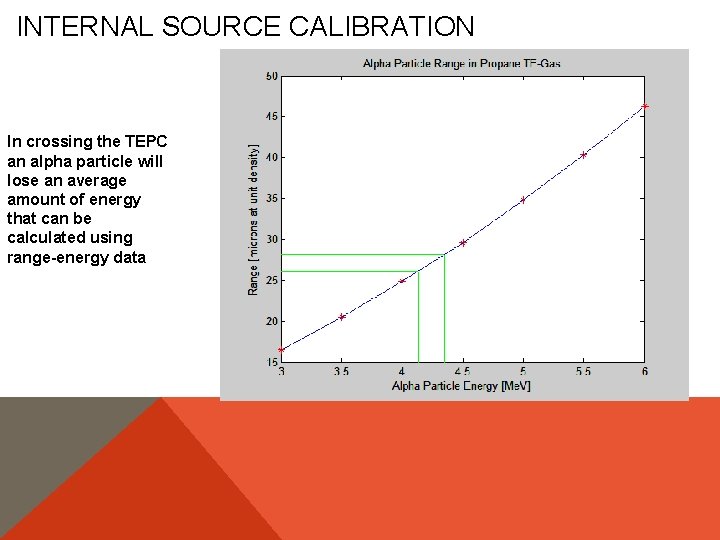
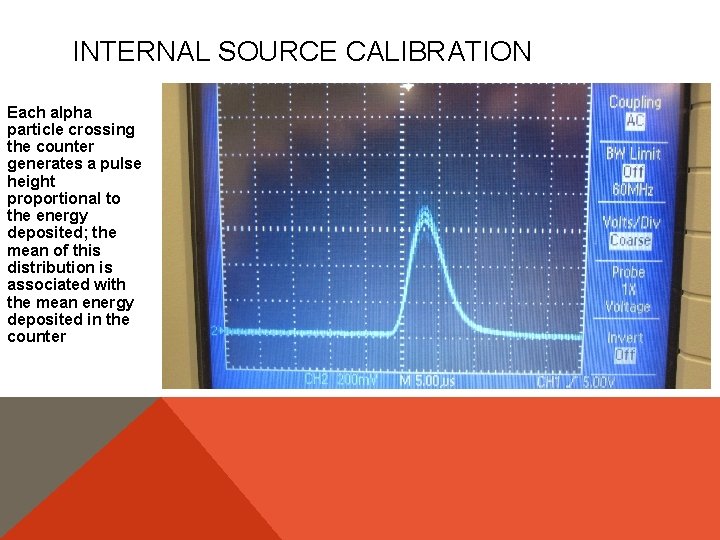
INTERNAL SOURCE CALIBRATION In crossing the TEPC an alpha particle will lose an average amount of energy that can be calculated using range-energy data
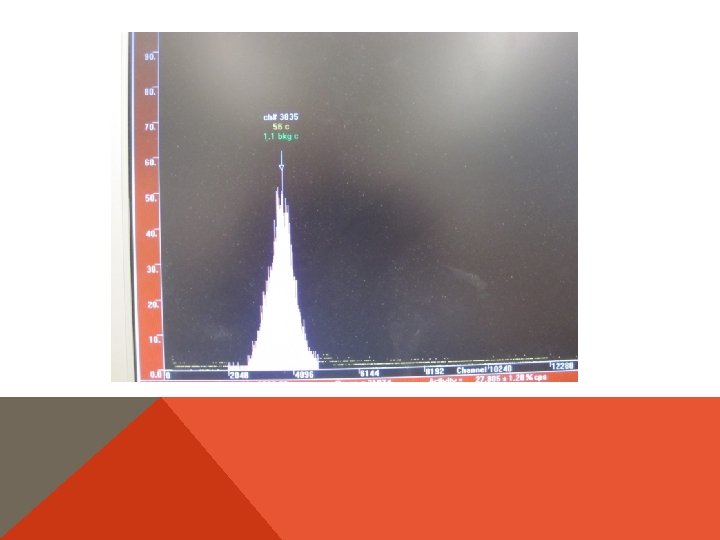
INTERNAL SOURCE CALIBRATION Each alpha particle crossing the counter generates a pulse height proportional to the energy deposited; the mean of this distribution is associated with the mean energy deposited in the counter
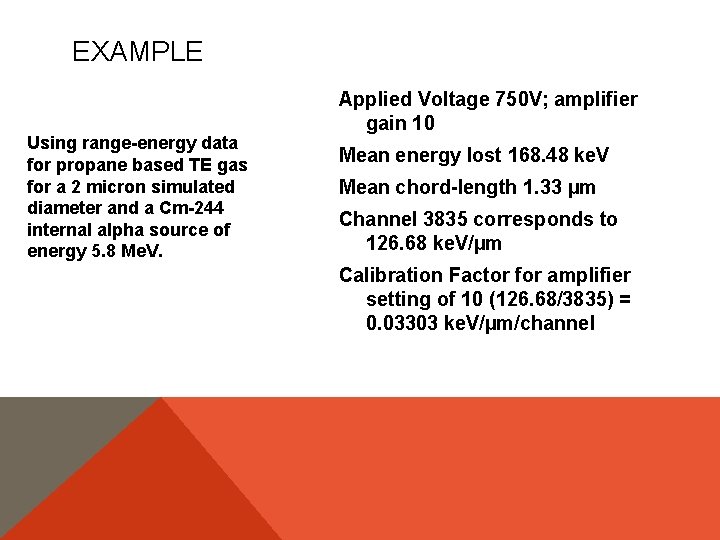
EXAMPLE Using range-energy data for propane based TE gas for a 2 micron simulated diameter and a Cm-244 internal alpha source of energy 5. 8 Me. V. Applied Voltage 750 V; amplifier gain 10 Mean energy lost 168. 48 ke. V Mean chord-length 1. 33 µm Channel 3835 corresponds to 126. 68 ke. V/µm Calibration Factor for amplifier setting of 10 (126. 68/3835) = 0. 03303 ke. V/µm/channel
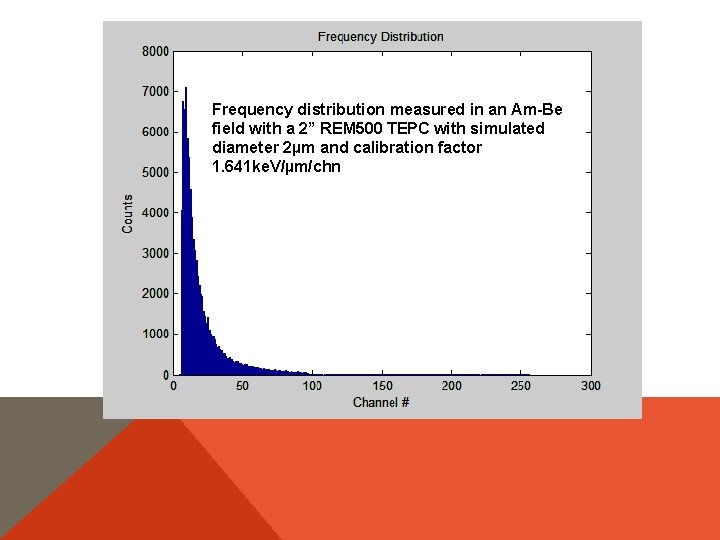
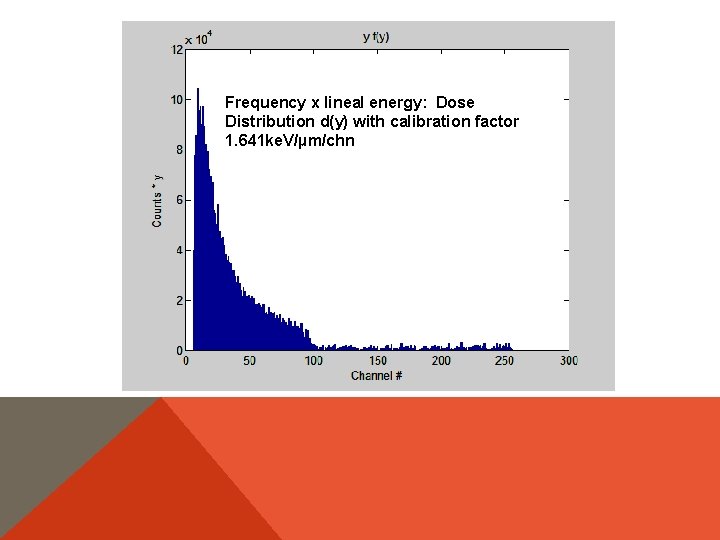
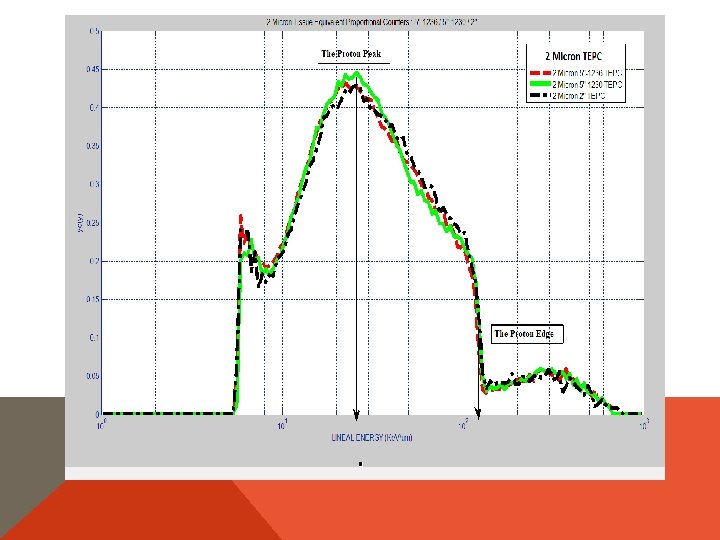
Frequency distribution measured in an Am-Be field with a 2” REM 500 TEPC with simulated diameter 2µm and calibration factor 1. 641 ke. V/µm/chn
Frequency x lineal energy: Dose Distribution d(y) with calibration factor 1. 641 ke. V/µm/chn
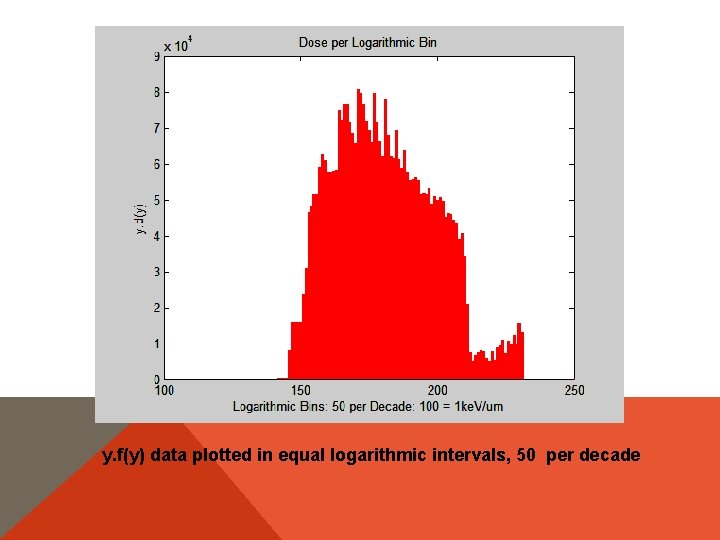
y. f(y) data plotted in equal logarithmic intervals, 50 per decade
B A R U S A S E E M TI I C T P N E A T U Q E L
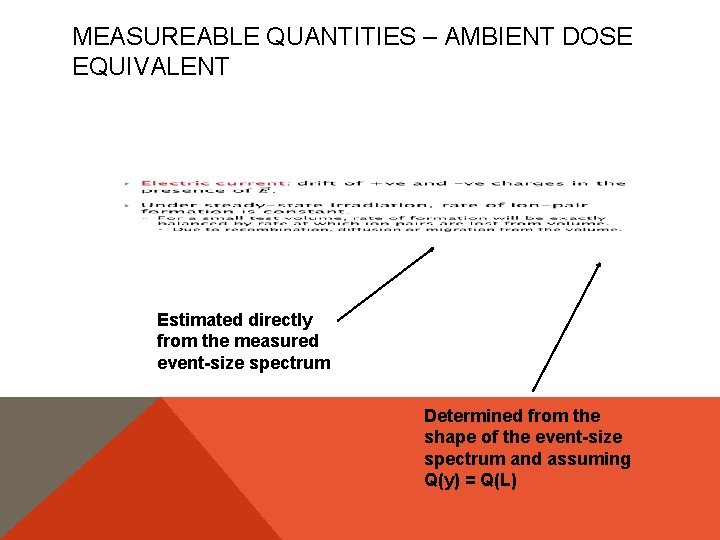
MEASUREABLE QUANTITIES – AMBIENT DOSE EQUIVALENT Estimated directly from the measured event-size spectrum Determined from the shape of the event-size spectrum and assuming Q(y) = Q(L)
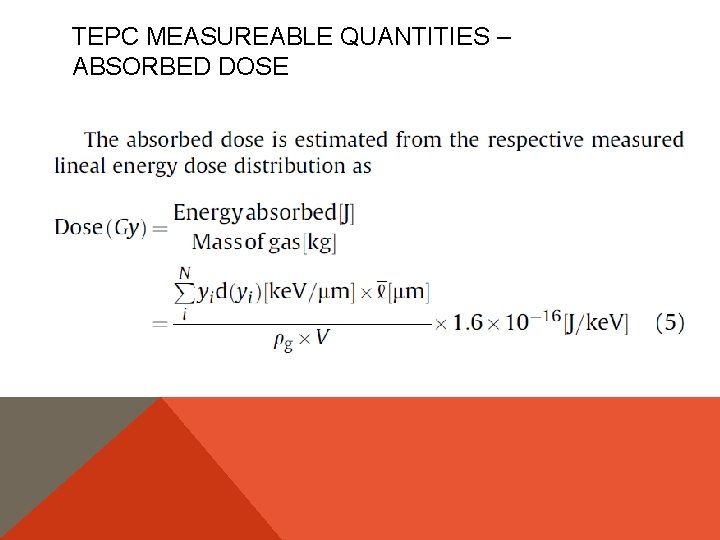
TEPC MEASUREABLE QUANTITIES – ABSORBED DOSE
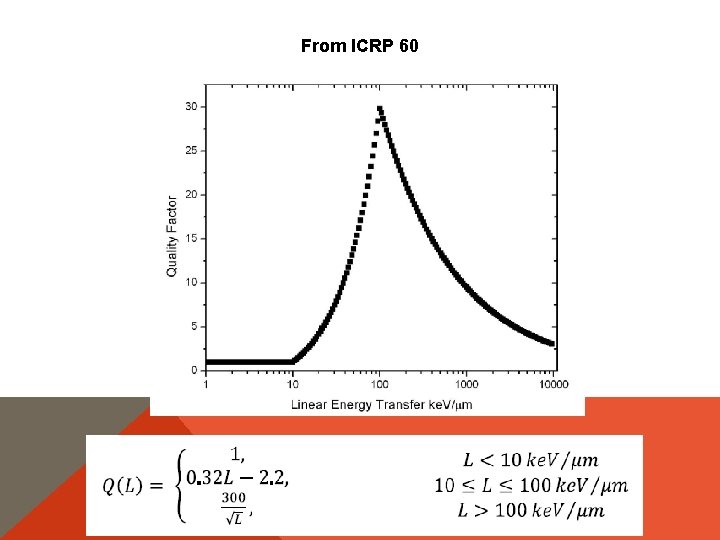
From ICRP 60
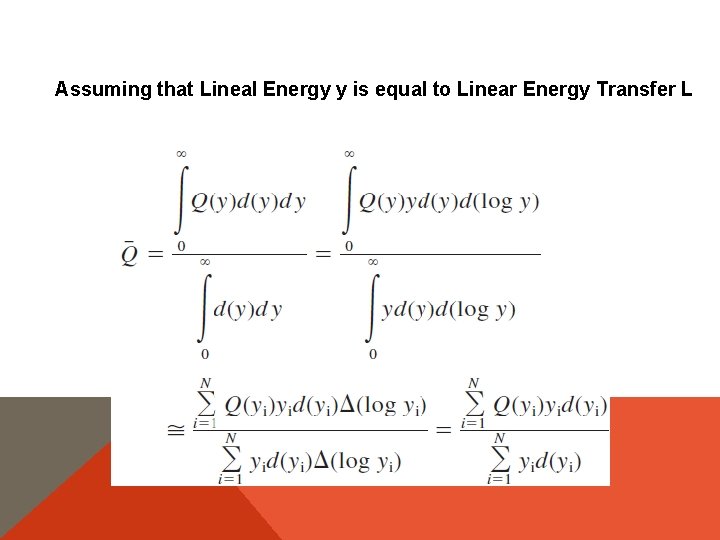
Assuming that Lineal Energy y is equal to Linear Energy Transfer L
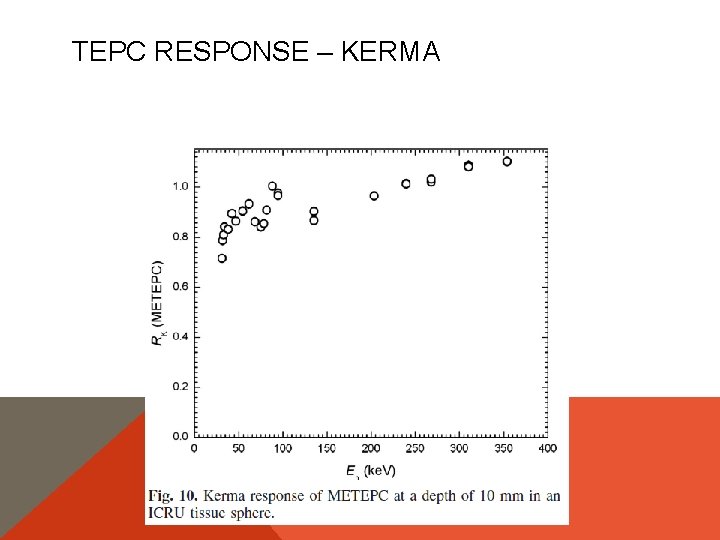
TEPC RESPONSE – KERMA
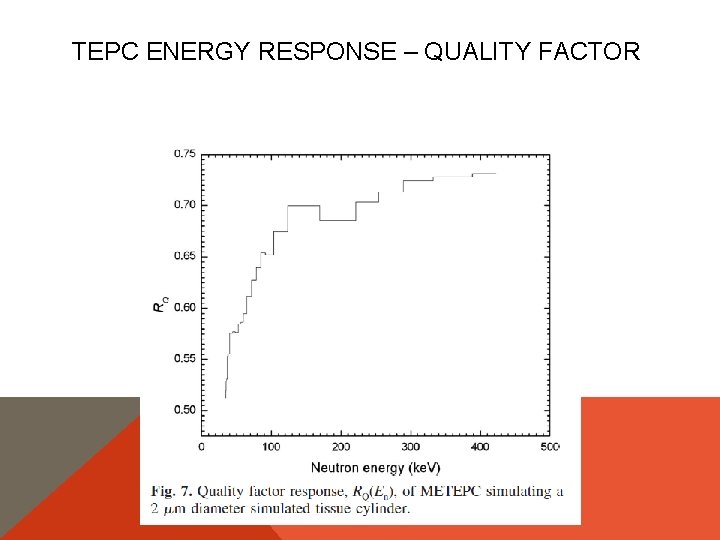
TEPC ENERGY RESPONSE – QUALITY FACTOR
AN H T R O S R E H T T O L T U M C N E O T s R T E C C D P ELE TE S G A IP L IE R S
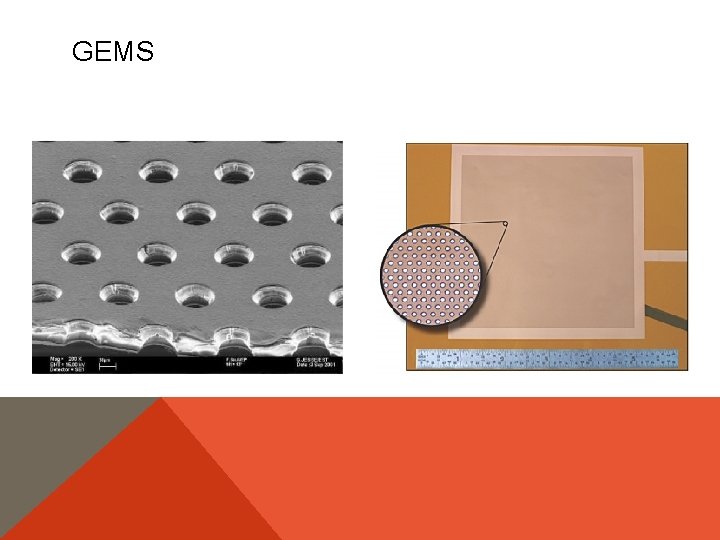
GEMS
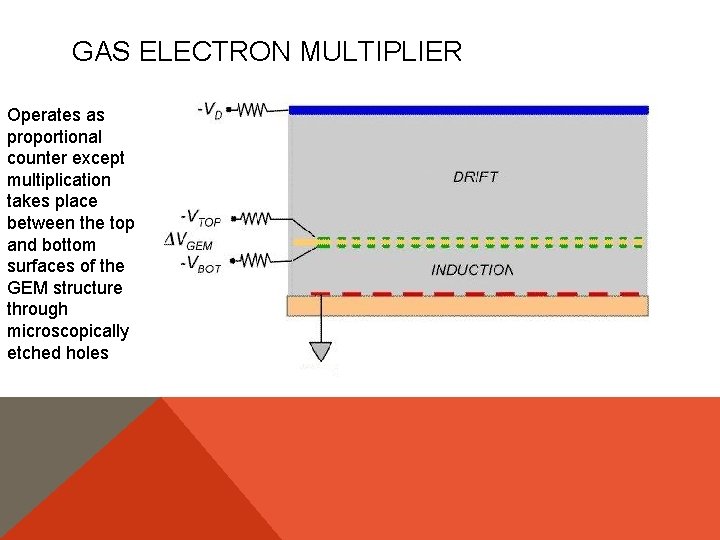
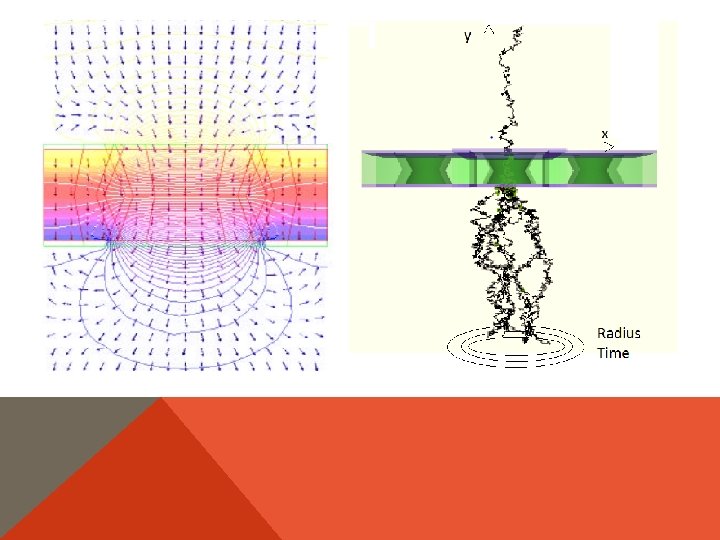
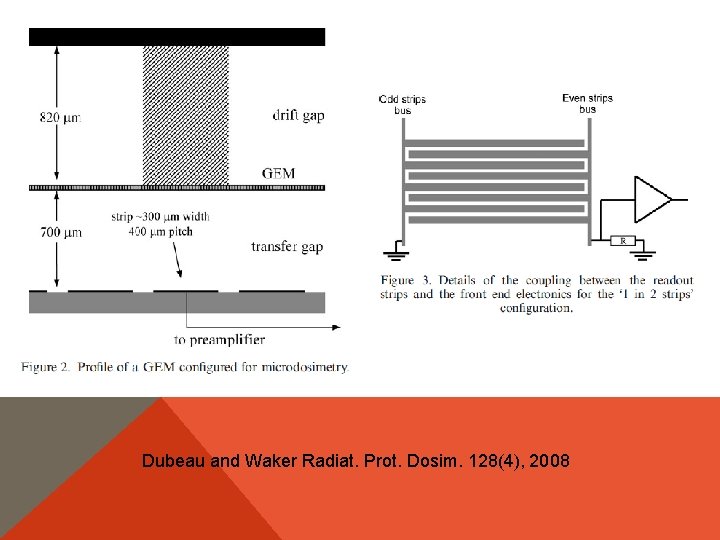
GAS ELECTRON MULTIPLIER Operates as proportional counter except multiplication takes place between the top and bottom surfaces of the GEM structure through microscopically etched holes
Dubeau and Waker Radiat. Prot. Dosim. 128(4), 2008
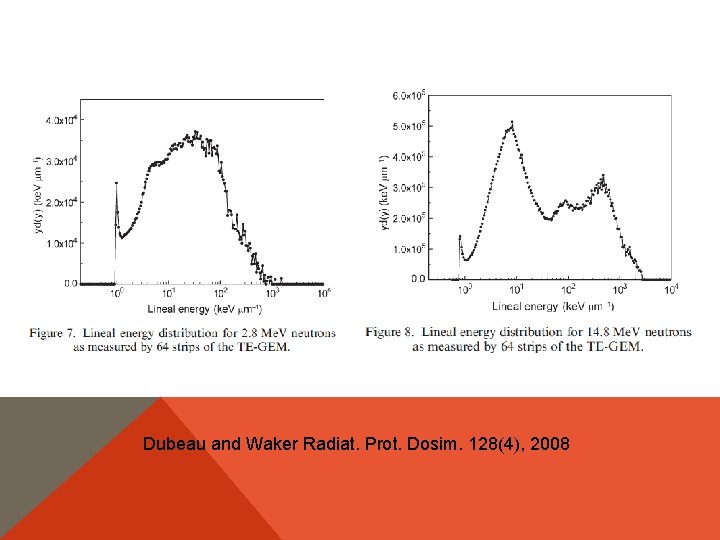
Dubeau and Waker Radiat. Prot. Dosim. 128(4), 2008
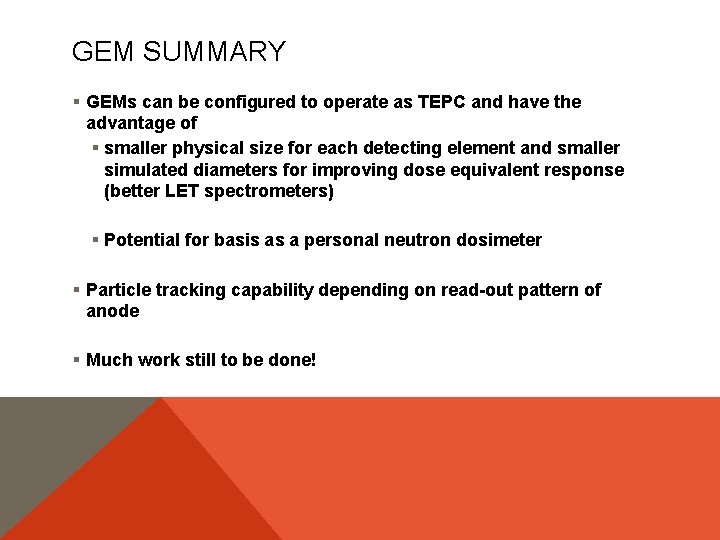
GEM SUMMARY § GEMs can be configured to operate as TEPC and have the advantage of § smaller physical size for each detecting element and smaller simulated diameters for improving dose equivalent response (better LET spectrometers) § Potential for basis as a personal neutron dosimeter § Particle tracking capability depending on read-out pattern of anode § Much work still to be done!