
TRAINING CHANGE MODELS FOR EDRMS Whats passing and




- Slides: 31
TRAINING & CHANGE MODELS FOR EDRMS What’s passing and failing?
Providing Keys to Success
DEMOGRAPHICS
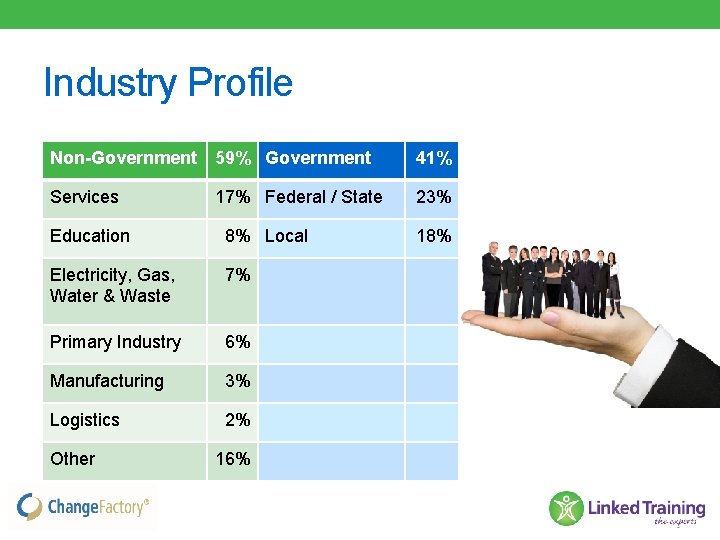
Industry Profile Non-Government 59% Government 41% Services 17% Federal / State 23% Education 8% Local Electricity, Gas, Water & Waste 7% Primary Industry 6% Manufacturing 3% Logistics 2% Other 16% 18%
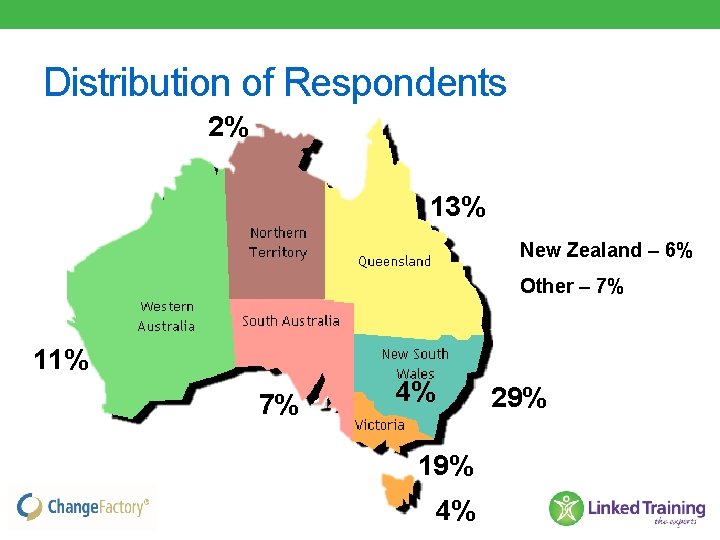
Distribution of Respondents 2% 13% New Zealand – 6% Other – 7% 11% 7% 4% 19% 4% 29%
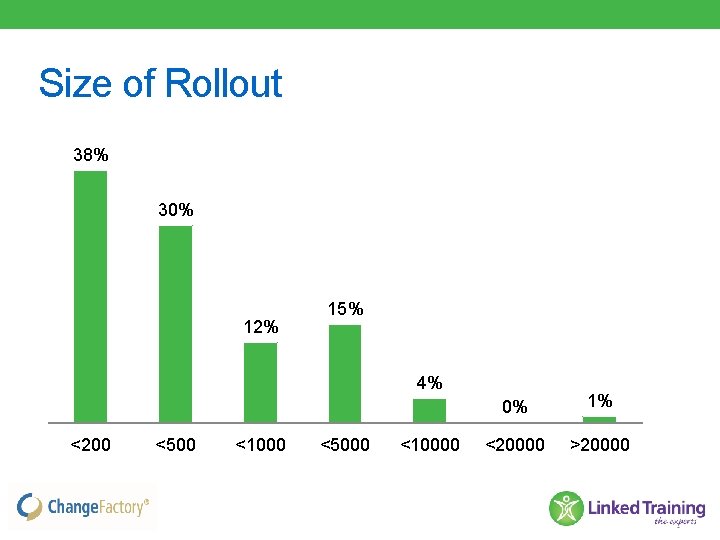
Size of Rollout 38% 30% 12% 15% 4% <200 <500 <1000 <5000 <10000 0% 1% <20000 >20000
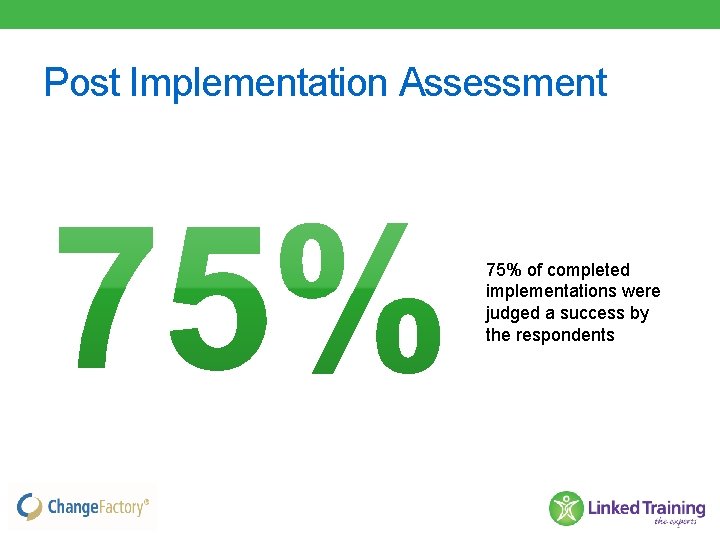
Post Implementation Assessment 75% of completed implementations were judged a success by the respondents
THE SIMPLE FACTS
Organisations with: • Larger training & change budgets • A previous history of EDRMS attempts • Mature recordkeeping practices pre-implementation Achieved Superior Success Rates
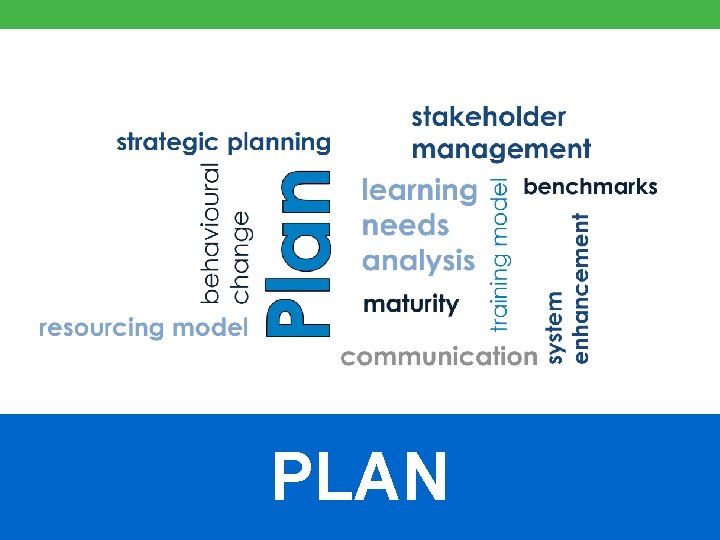
PLAN
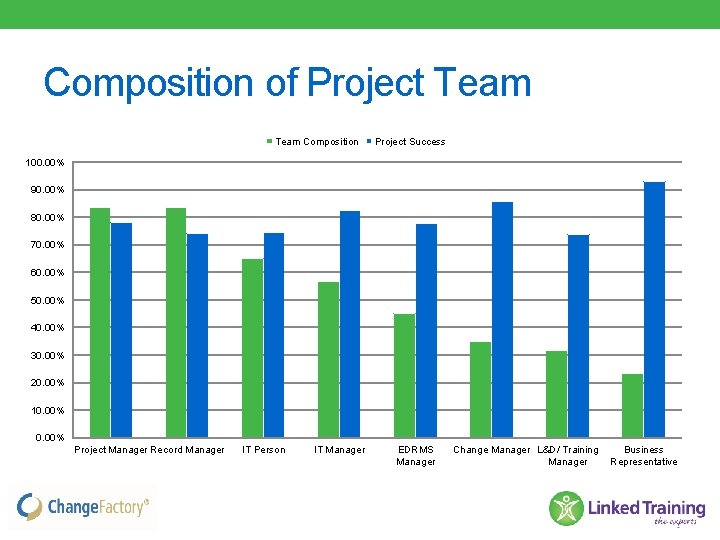
Composition of Project Team Composition Project Success 100. 00% 90. 00% 80. 00% 70. 00% 60. 00% 50. 00% 40. 00% 30. 00% 20. 00% 10. 00% Project Manager Record Manager IT Person IT Manager EDRMS Manager Change Manager L&D/ Training Manager Business Representative
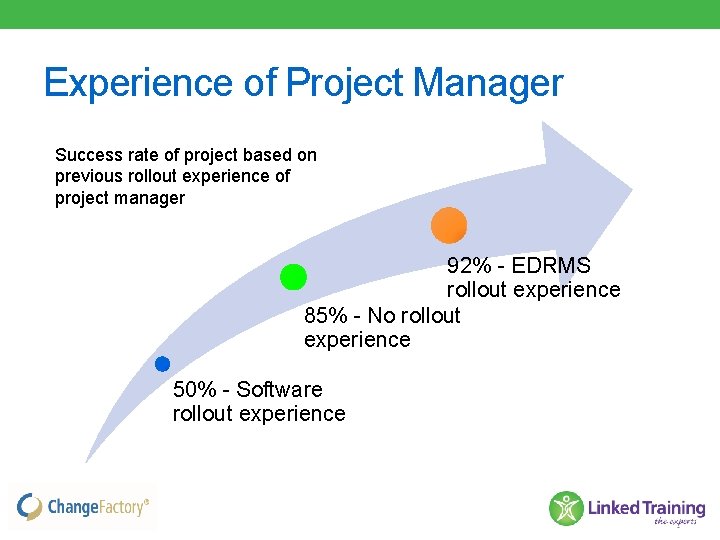
Experience of Project Manager Success rate of project based on previous rollout experience of project manager 92% - EDRMS rollout experience 85% - No rollout experience 50% - Software rollout experience
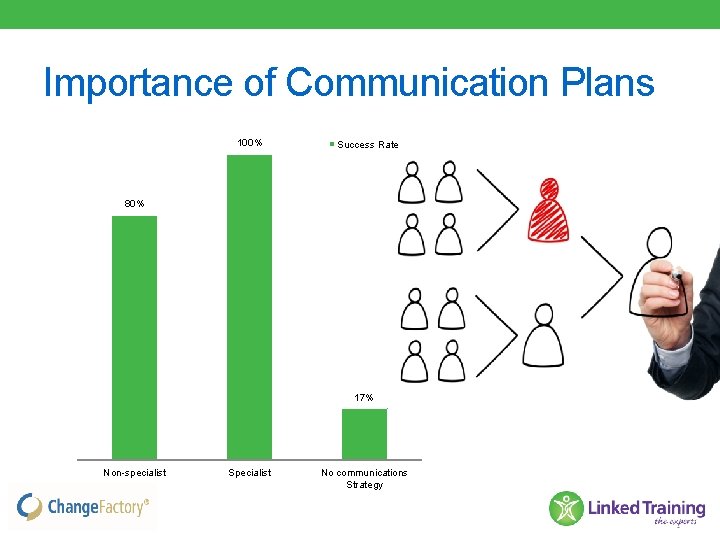
Importance of Communication Plans 100% Success Rate 80% 17% Non-specialist Specialist No communications Strategy
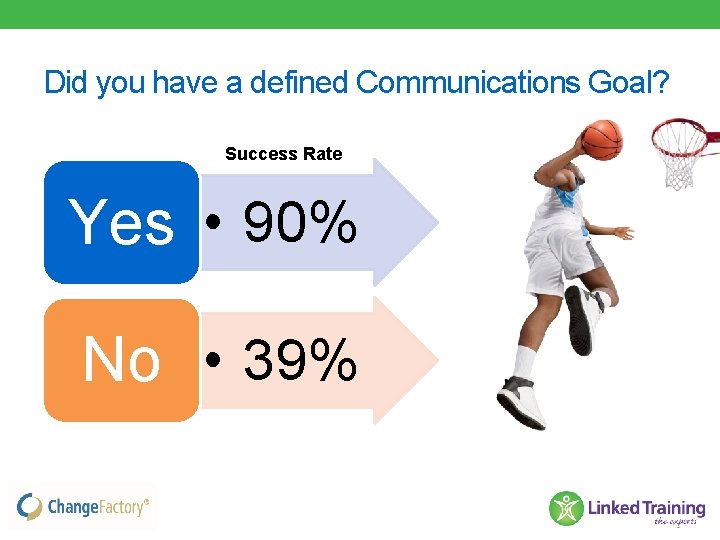
Did you have a defined Communications Goal? Success Rate Yes • 90% No • 39%
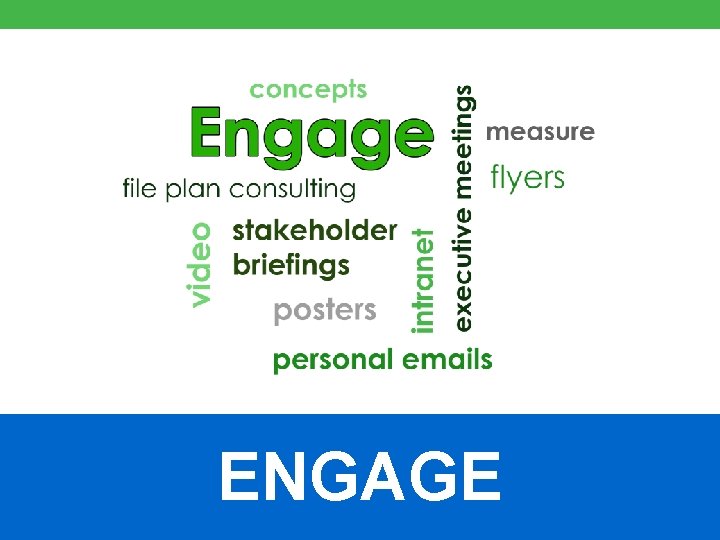
ENGAGE
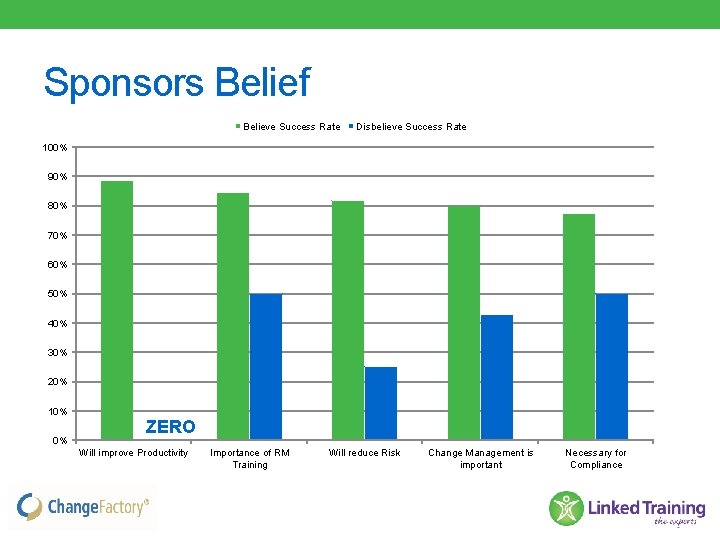
Sponsors Belief Believe Success Rate Disbelieve Success Rate 100% 90% 80% 70% 60% 50% 40% 30% 20% 10% 0% ZERO Will improve Productivity Importance of RM Training Will reduce Risk Change Management is important Necessary for Compliance
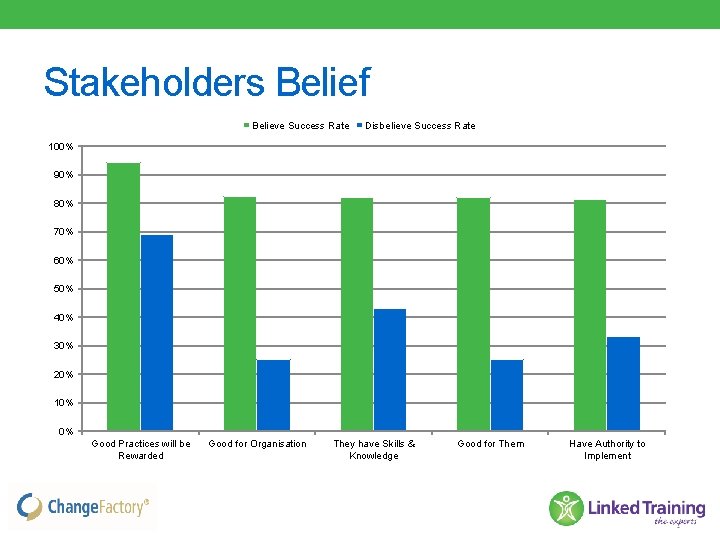
Stakeholders Belief Believe Success Rate Disbelieve Success Rate 100% 90% 80% 70% 60% 50% 40% 30% 20% 10% 0% Good Practices will be Rewarded Good for Organisation They have Skills & Knowledge Good for Them Have Authority to Implement
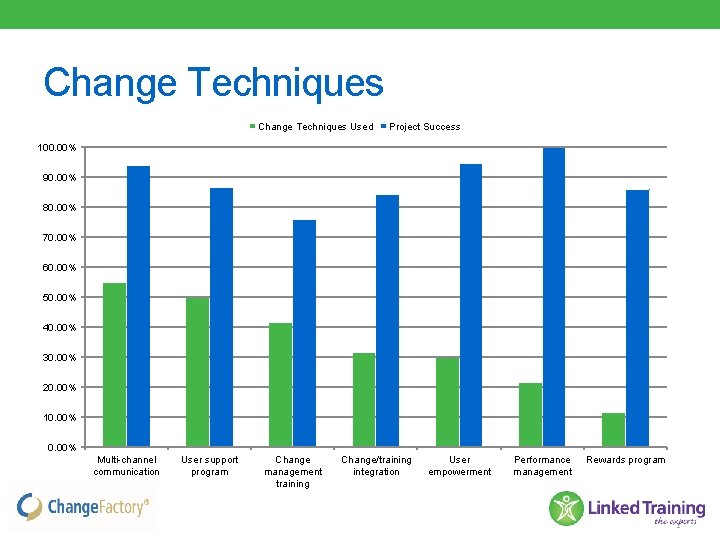
Change Techniques Used Project Success 100. 00% 90. 00% 80. 00% 70. 00% 60. 00% 50. 00% 40. 00% 30. 00% 20. 00% 10. 00% Multi-channel communication User support program Change management training Change/training integration User empowerment Performance management Rewards program
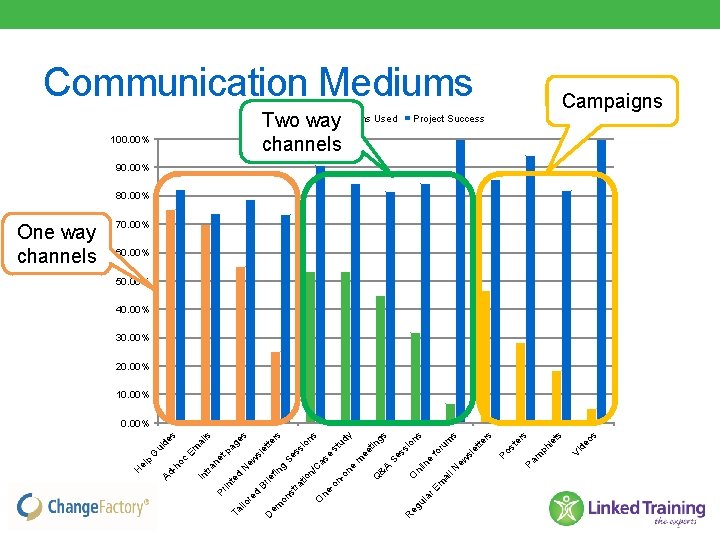
s os et s de Vi ph l m Pa st er rs et te Po sl m s ns io ru fo ss gs tin y ud Two way channels l. N ew e in nl O Se rs ns io st m ee e as ss Se et te sl es Communications Mediums Used ai m r. E eg ul a R &A Q e on ne -o n- O n/ C tio ie fin g Br ra on st em d N ew ag 100. 00% D d in te Pr re Ta ilo ls ai Em s de ui G ne tp tra In oc -h Ad p el One way channels H Communication Mediums Project Success Campaigns 90. 00% 80. 00% 70. 00% 60. 00% 50. 00% 40. 00% 30. 00% 20. 00% 10. 00%
TEACH
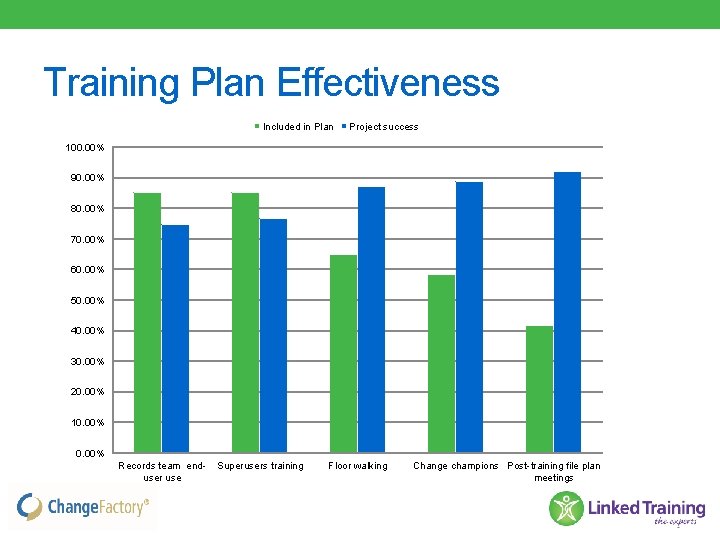
Training Plan Effectiveness Included in Plan Project success 100. 00% 90. 00% 80. 00% 70. 00% 60. 00% 50. 00% 40. 00% 30. 00% 20. 00% 10. 00% Records team enduser use Superusers training Floor walking Change champions Post-training file plan meetings
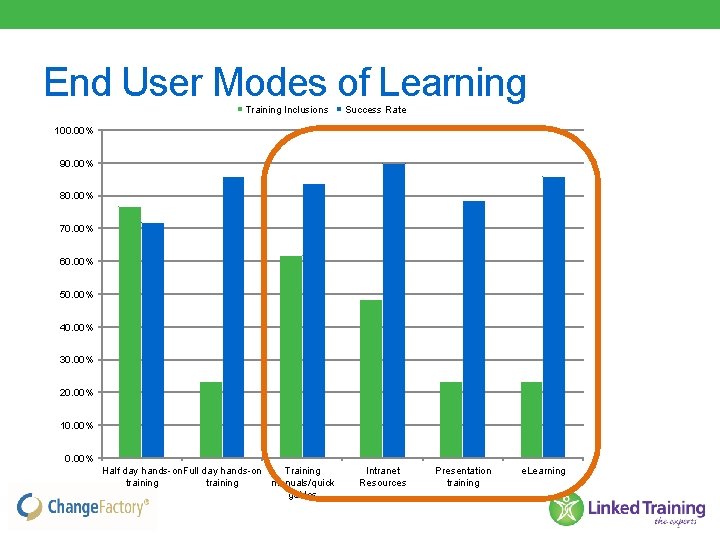
End User Modes of Learning Training Inclusions Success Rate 100. 00% 90. 00% 80. 00% 70. 00% 60. 00% 50. 00% 40. 00% 30. 00% 20. 00% 10. 00% Half day hands-on. Full day hands-on Training training manuals/quick guides Intranet Resources Presentation training e. Learning
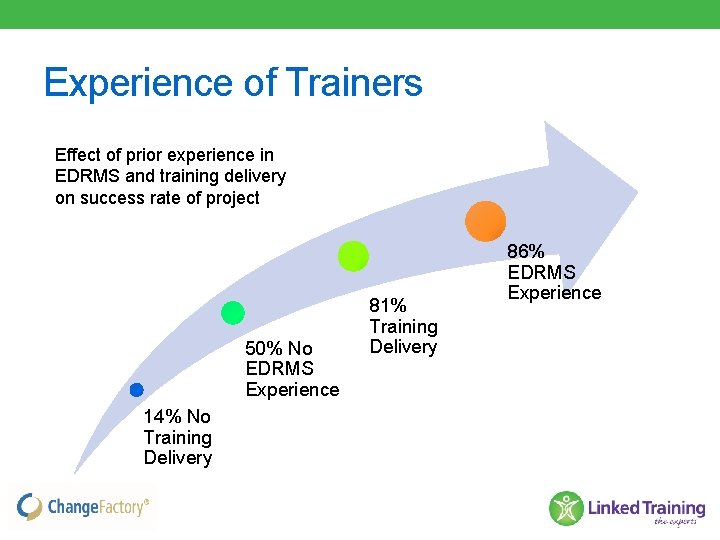
Experience of Trainers Effect of prior experience in EDRMS and training delivery on success rate of project 50% No EDRMS Experience 14% No Training Delivery 81% Training Delivery 86% EDRMS Experience
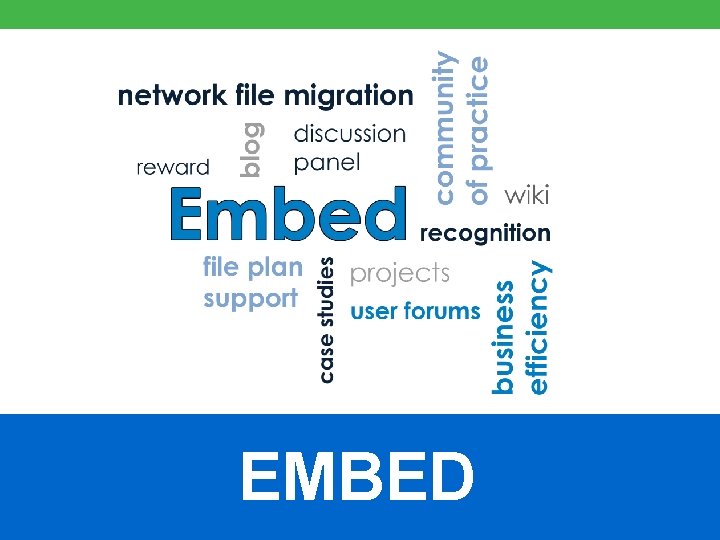
EMBED
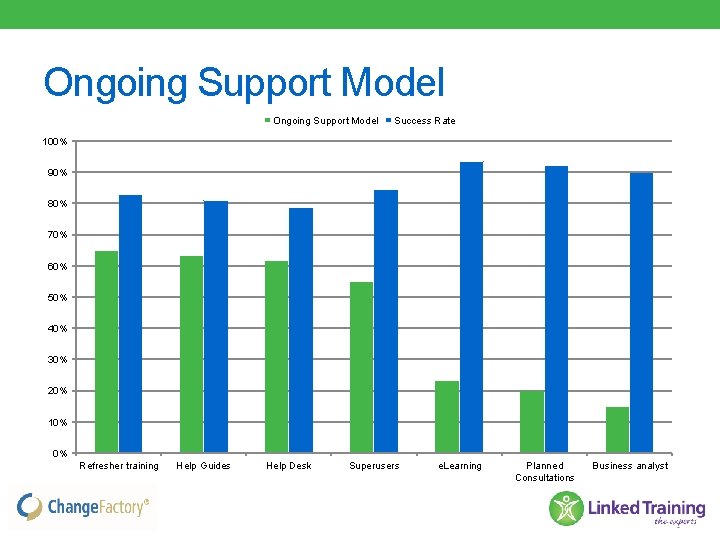
Ongoing Support Model Success Rate 100% 90% 80% 70% 60% 50% 40% 30% 20% 10% 0% Refresher training Help Guides Help Desk Superusers e. Learning Planned Consultations Business analyst
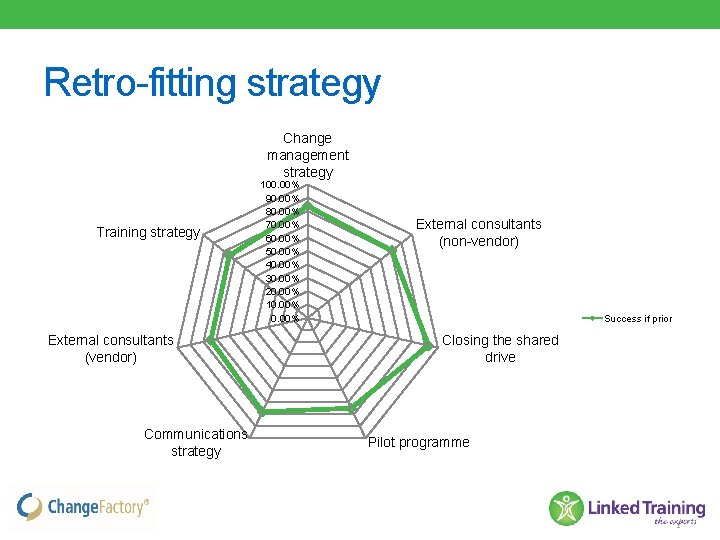
Retro-fitting strategy Change management strategy Training strategy External consultants (vendor) Communications strategy 100. 00% 90. 00% 80. 00% 70. 00% 60. 00% 50. 00% 40. 00% 30. 00% 20. 00% 10. 00% External consultants (non-vendor) Success if prior Closing the shared drive Pilot programme
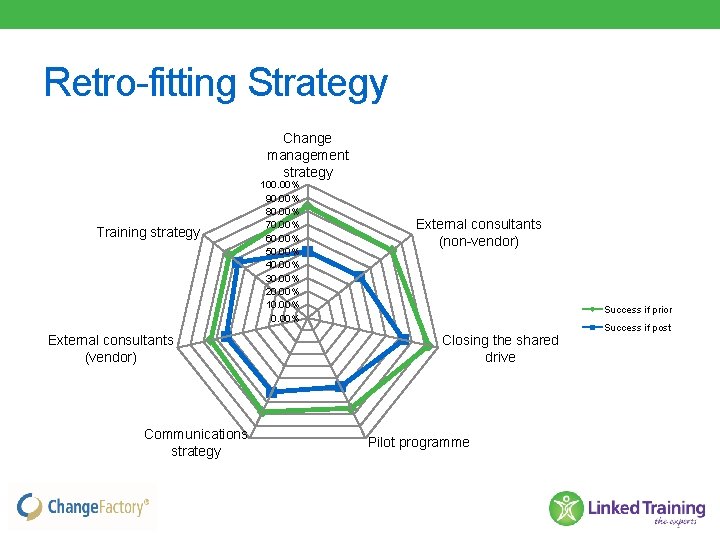
Retro-fitting Strategy Change management strategy Training strategy External consultants (vendor) Communications strategy 100. 00% 90. 00% 80. 00% 70. 00% 60. 00% 50. 00% 40. 00% 30. 00% 20. 00% 10. 00% External consultants (non-vendor) Success if prior Closing the shared drive Pilot programme Success if post
MEASURE
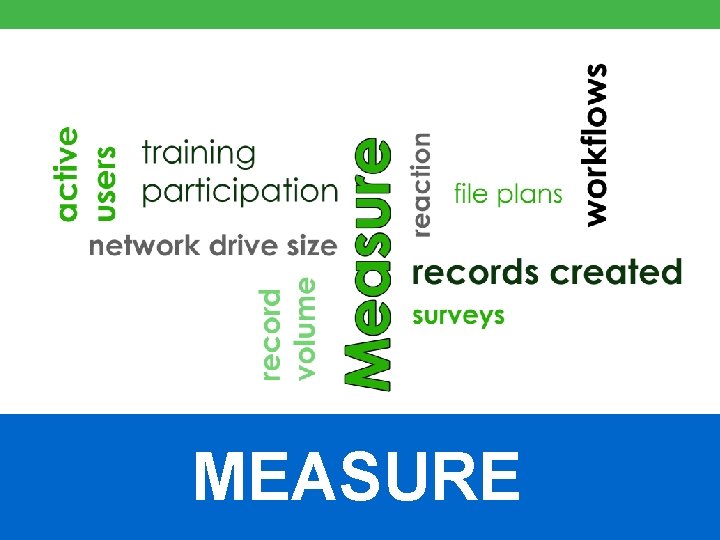
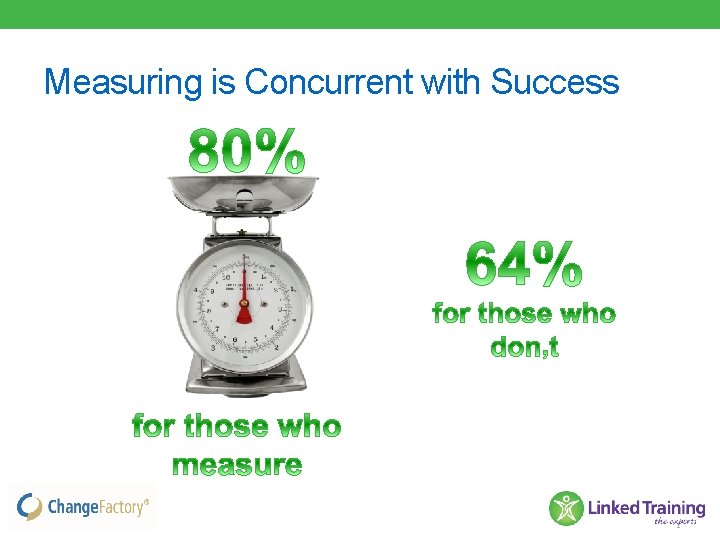
Measuring is Concurrent with Success
Key Findings 1. Experience makes a difference 2. Disbelief foretells doom 3. Success demands business involvement 4. User options underpin success 5. Have purpose, Design in detail
The Presenters • Kevin Dwyer is a Change Management professional with • Michelle Linton is a Learning & Development Manager with more than 30 years’ experience in the planning, design and 24 years’ experience in the planning, design and delivery of change management programs. Since the training programs. Michelle has developed and delivered establishment of Change Factory in 2001 he has been innovative, outcome focused EDRMS training for over 30 involved in a diverse range of projects ranging from re- government and private organisations since 2005. engineering processes to reduce risk to creating and Michelle’s pragmatic approach to learning strategies revising performance management systems. He leading to application adoption has been enthusiastically commenced working in EDRMS projects in 2009 as a welcomed by the industry. Linked Training is the training partner in the REX project which was awarded the J. Eddis Linton Award for Excellence – Most Outstanding Group in 2010. • Kevin can be contacted on: • Michelle can be contacted on: • 0408 508 490 or Kevin. Dwyer@Change. Factory. com. au • 02 8824 4677 or Michelle@Linked. Training. com. au • www. Change. Factory. com. au • www. Linked. Training. com. au