
Training Assessment Design Development Key Learning Points Course


- Slides: 6
Training & Assessment Design & Development
Key Learning Points
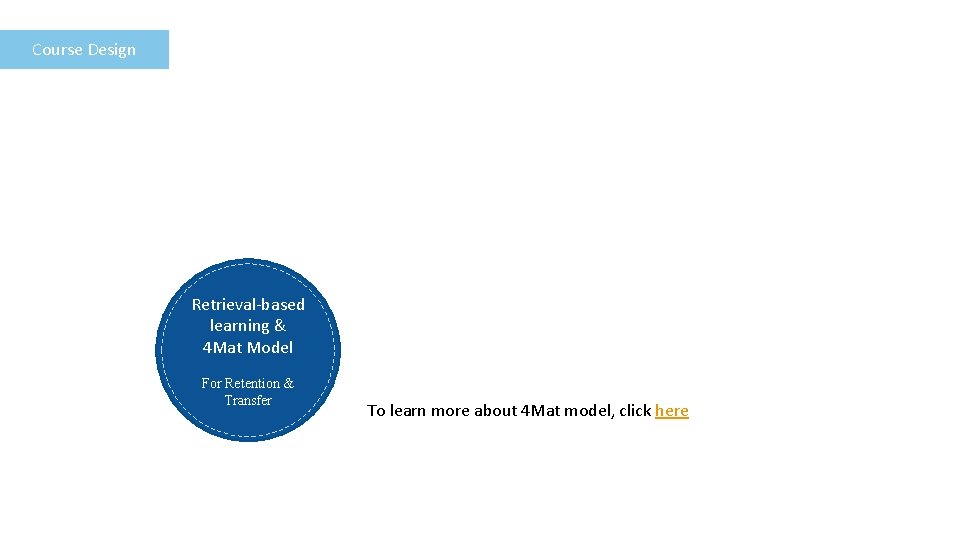
Course Design Retrieval-based learning & 4 Mat Model For Retention & Transfer To learn more about 4 Mat model, click here
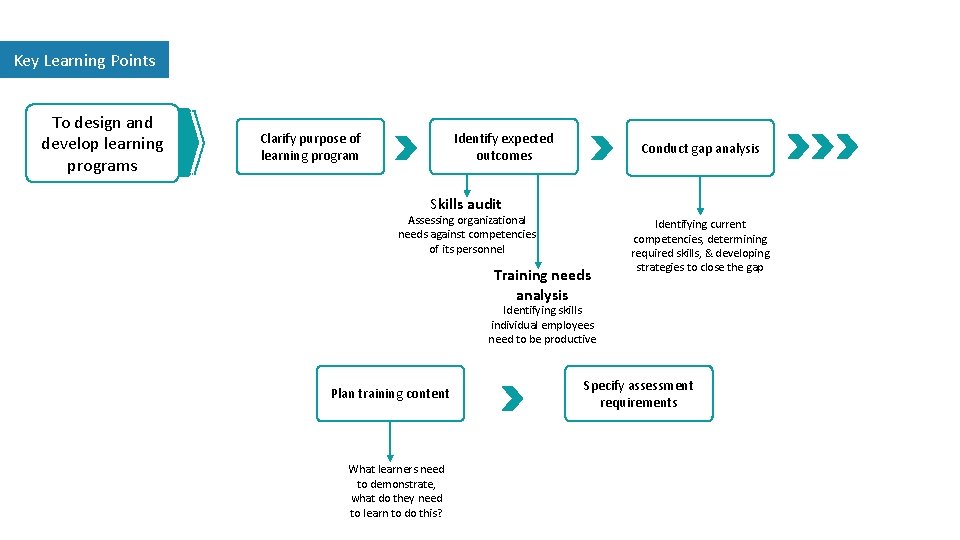
Key Learning Points To design and develop learning programs Clarify purpose of learning program Identify expected outcomes Conduct gap analysis Skills audit Assessing organizational needs against competencies of its personnel Training needs analysis Identifying current competencies, determining required skills, & developing strategies to close the gap Identifying skills individual employees need to be productive Plan training content What learners need to demonstrate, what do they need to learn to do this? Specify assessment requirements
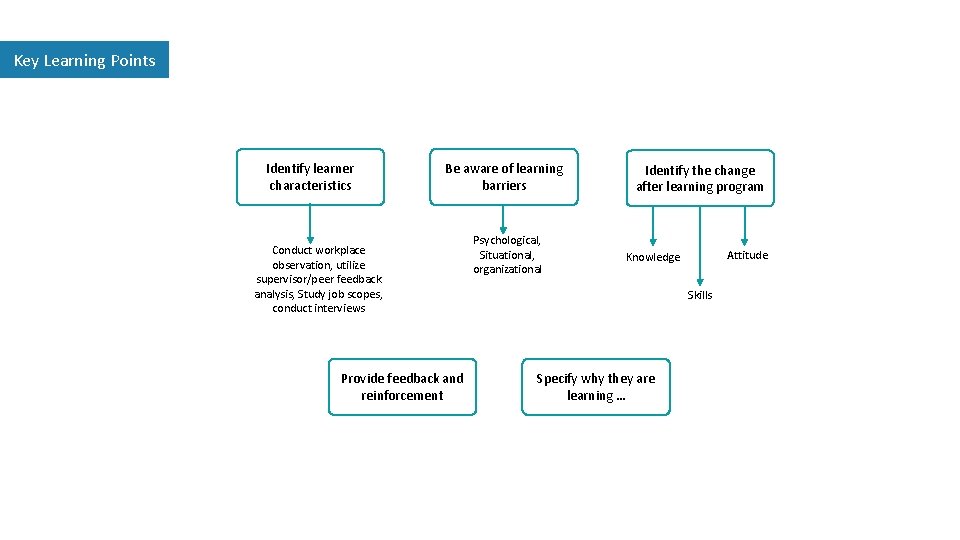
Key Learning Points Identify learner characteristics Be aware of learning barriers Conduct workplace observation, utilize supervisor/peer feedback analysis, Study job scopes, conduct interviews Provide feedback and reinforcement Psychological, Situational, organizational Identify the change after learning program Attitude Knowledge Skills Specify why they are learning …
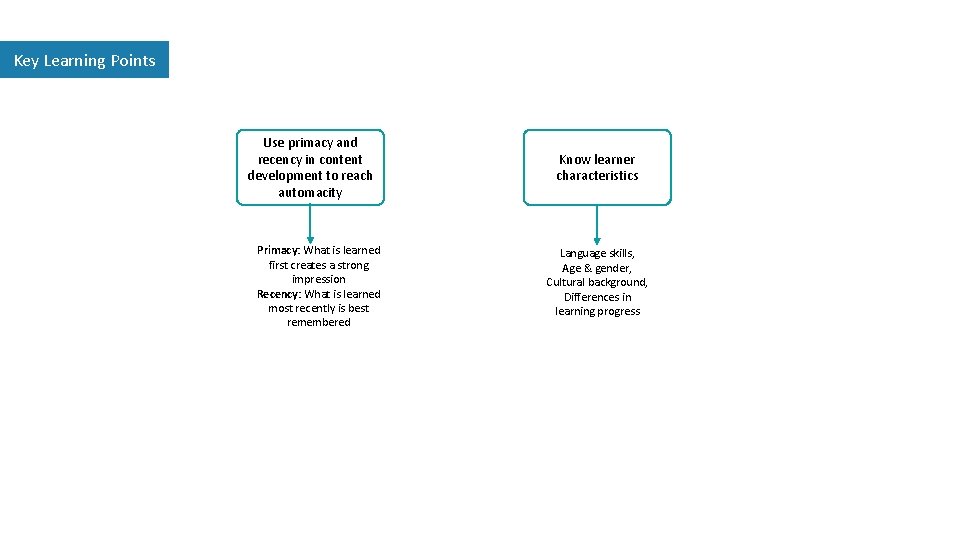
Key Learning Points Use primacy and recency in content development to reach automacity Primacy: What is learned first creates a strong impression Recency: What is learned most recently is best remembered Know learner characteristics Language skills, Age & gender, Cultural background, Differences in learning progress