
Training and Supervising Your Paraeducators Tips and Tricks
- Slides: 40
Training and Supervising Your Paraeducators: Tips and Tricks from the Field Drs. Jessica Nelson, Reesha Adamson, & Felicity Post Presented at TECBD Conference 10. 26. 19
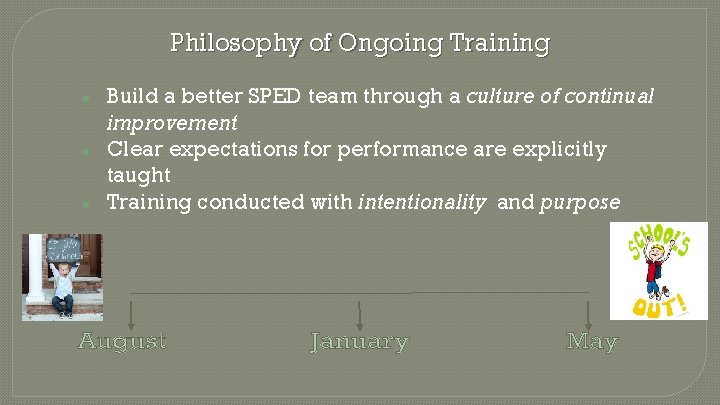
Philosophy of Ongoing Training ● ● ● Build a better SPED team through a culture of continual improvement Clear expectations for performance are explicitly taught Training conducted with intentionality and purpose
A Framework for Continual Training ● ● ● Initial Training ○ Para Handbook ○ Rules and procedures ○ Classroom- and school-level tasks Scheduled Para Meetings ○ Ongoing problem solving ○ Regular performance feedback Frequent Trainings on Behavioral Principles Explicit Instruction on Individual Behavior Plans Effective Day-to-Day Supervision
Objectives ● Gain an understanding of how to train paraeducators in evidence based practices and implementing those practices with students. ● Gain knowledge and skills on implementing strategies to maximize the fidelity of interventions such as self-monitoring strategies. ● Understand how to provide active and effective supervision to paraeducators.
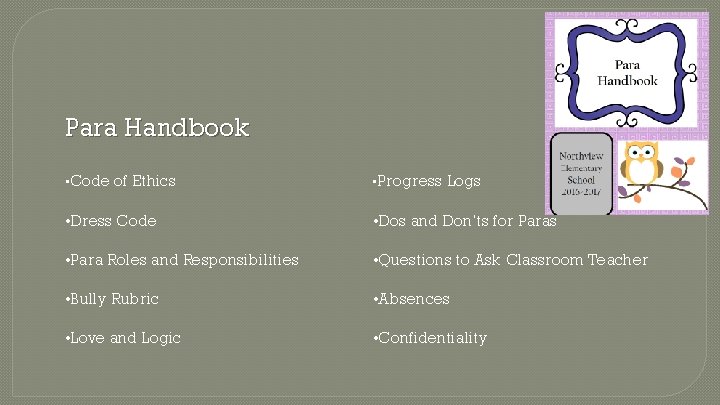
Para Handbook • Code of Ethics • Progress Logs • Dress Code • Dos and Don’ts for Paras • Para Roles and Responsibilities • Questions to Ask Classroom Teacher • Bully Rubric • Absences • Love and Logic • Confidentiality
Para Handbook • Exceptionalities • IEP • Dealing with Behaviors • Modifications and Accommodations • Communication • Reflection Sheets • Curriculum and Program Information • Incident Reports • Service Models • ABCF
Para Handbook • Seclusion and Restraint • Classified Evaluation • Daily Report • Internet Resources • MANDT • Emergency Plans • Chain of Command • Suicidal Thoughts/Suspected Abuse • Paraeducator Evaluations • What do you want to know more about?
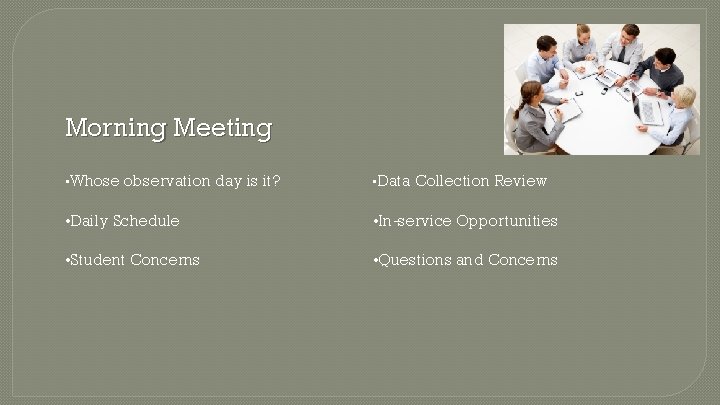
Morning Meeting • Whose observation day is it? • Data Collection Review • Daily Schedule • In-service Opportunities • Student Concerns • Questions and Concerns
Ideas for Morning Meetings CEC has a set of preparation standards for paraprofessionals. These would make great morning meeting and professional development topics. https: //www. cec. sped. org/~/media/Files/Standards/Paraeduca tor%20 Sets/Specialty%20 Set%20%20 Special%20 Education%20 Paraeducator. pdf
What Should I Teach my Paraprofessionals? Creating Effective and Ongoing Professional Development
Training your paraprofessionals in behavior basics: Antecedent -->Behavior -->Consequences A: What happens before the behavior B: specific details of the behavior C: What occurs immediately following the behavior
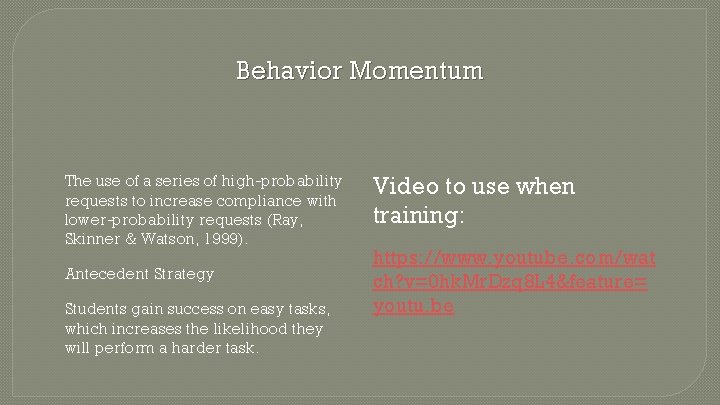
Behavior Momentum The use of a series of high-probability requests to increase compliance with lower-probability requests (Ray, Skinner & Watson, 1999). Antecedent Strategy Students gain success on easy tasks, which increases the likelihood they will perform a harder task. Video to use when training: https: //www. youtube. com/wat ch? v=0 hk. Mr. Dzq 8 L 4&feature= youtu. be
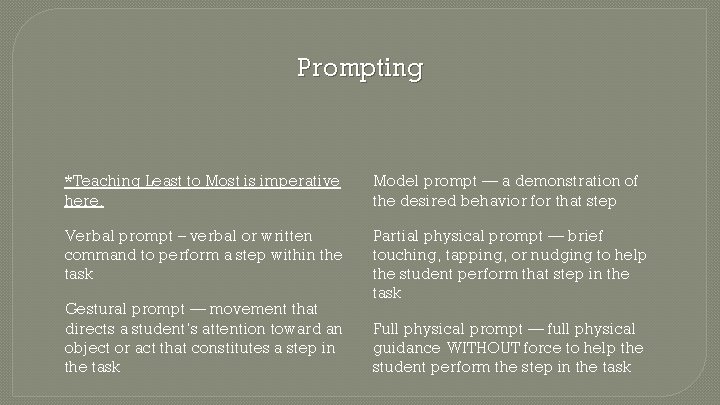
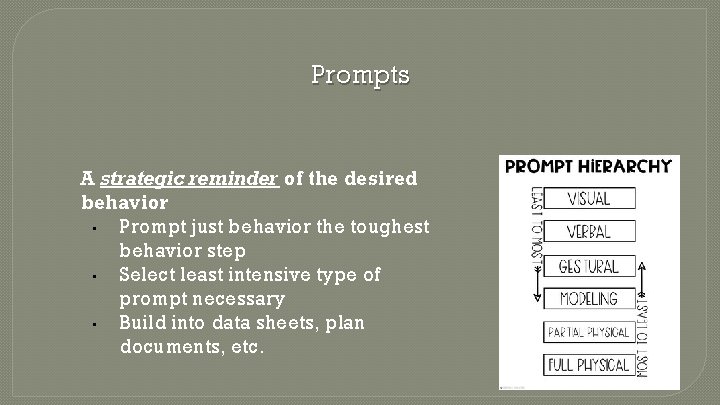
Prompting *Teaching Least to Most is imperative here. Model prompt — a demonstration of the desired behavior for that step Verbal prompt – verbal or written command to perform a step within the task Partial physical prompt — brief touching, tapping, or nudging to help the student perform that step in the task Gestural prompt — movement that directs a student’s attention toward an object or act that constitutes a step in the task Full physical prompt — full physical guidance WITHOUT force to help the student perform the step in the task
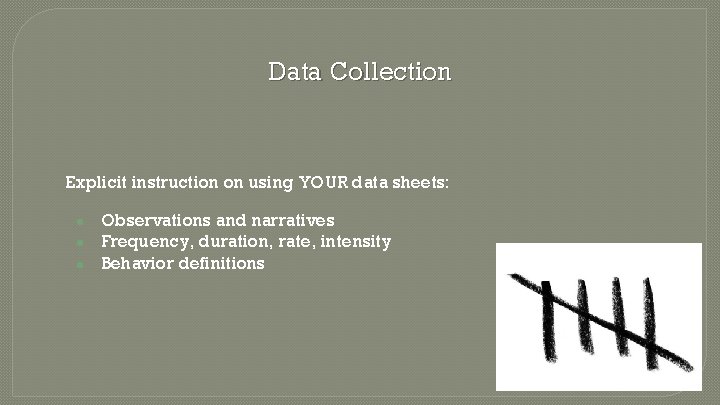
Data Collection Explicit instruction on using YOUR data sheets: ● ● ● Observations and narratives Frequency, duration, rate, intensity Behavior definitions
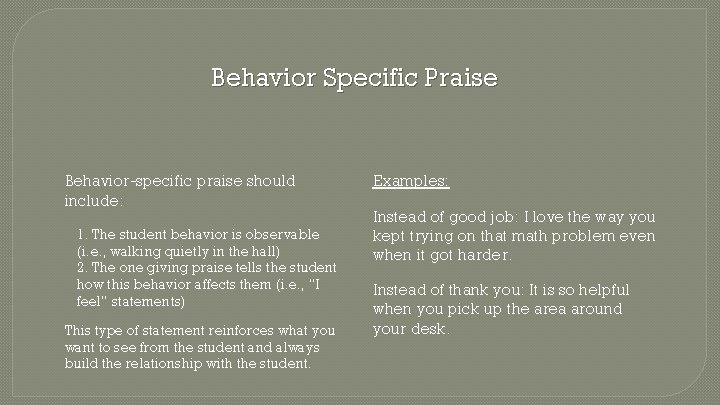
Behavior Specific Praise Behavior-specific praise should include: 1. The student behavior is observable (i. e. , walking quietly in the hall) 2. The one giving praise tells the student how this behavior affects them (i. e. , “I feel” statements) This type of statement reinforces what you want to see from the student and always build the relationship with the student. Examples: Instead of good job: I love the way you kept trying on that math problem even when it got harder. Instead of thank you: It is so helpful when you pick up the area around your desk.
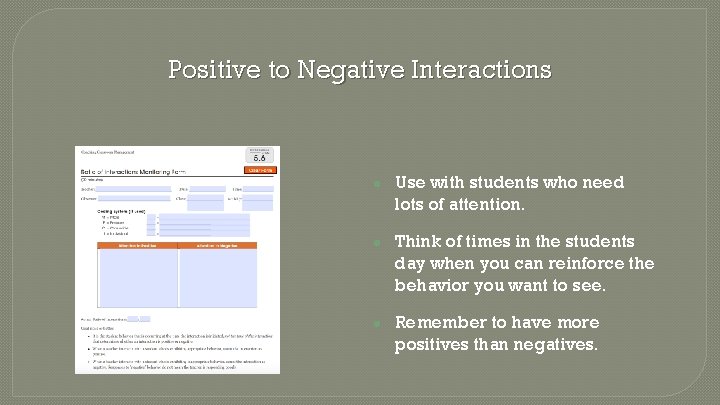
Positive to Negative Interactions ● Use with students who need lots of attention. ● Think of times in the students day when you can reinforce the behavior you want to see. ● Remember to have more positives than negatives.
Purposeful Reflection ● ● Choose most challenging student Video record self with student for 15 -20 minutes ● Make a T-chart to record positive and negative interactions ● Watch video ● Discuss and share if requested ● Set Goal ● How can we support you?
How to Teach your Team to Follow the Plan Training Paraprofessionals to Implement Behavior Plans With High Fidelity
Paras Have it Tough ● ● Challenging students with challenging plans Plans can change frequently Inconsistency leads to plan failure Plans interrupted by crisis calls It is a tough job, and it isour responsibilityto set them up for success!
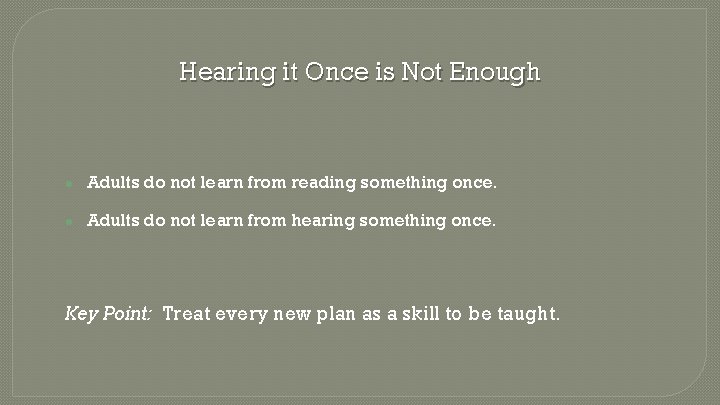
Hearing it Once is Not Enough ● Adults do not learn from reading something once. ● Adults do not learn from hearing something once. Key Point: Treat every new plan as a skill to be taught.
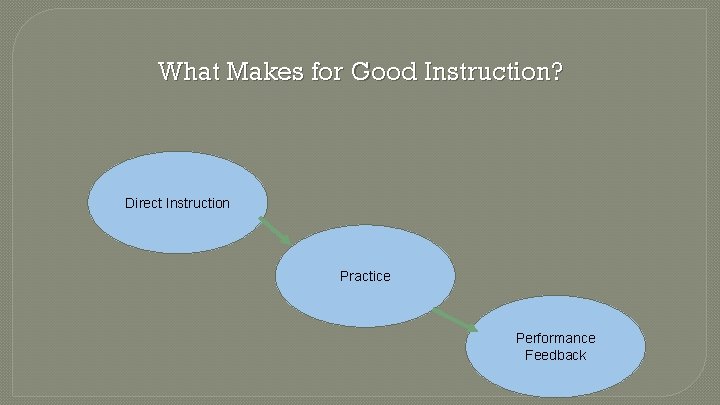
What Makes for Good Instruction? Direct Instruction Practice Performance Feedback
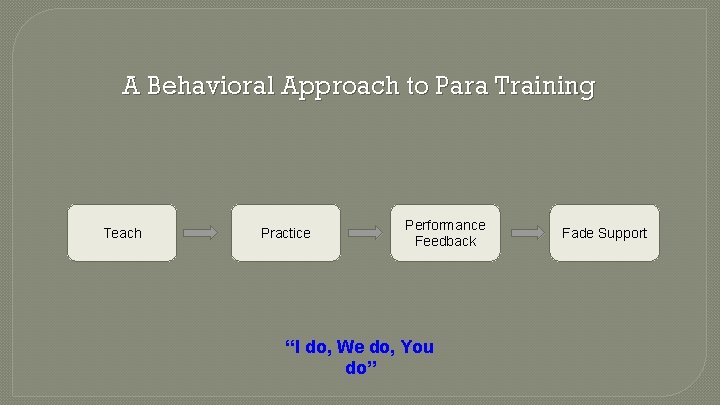
A Behavioral Approach to Para Training Teach Practice Performance Feedback “I do, We do, You do” Fade Support
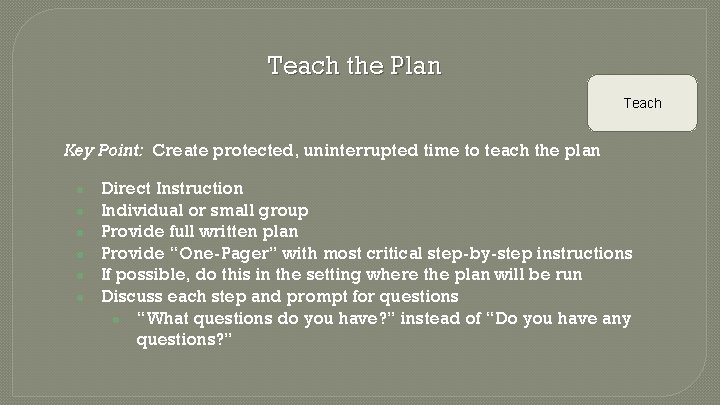
Teach the Plan Teach Key Point: Create protected, uninterrupted time to teach the plan ● ● ● Direct Instruction Individual or small group Provide full written plan Provide “One-Pager” with most critical step-by-step instructions If possible, do this in the setting where the plan will be run Discuss each step and prompt for questions ● “What questions do you have? ” instead of “Do you have any questions? ”
Practice the Plan Practice
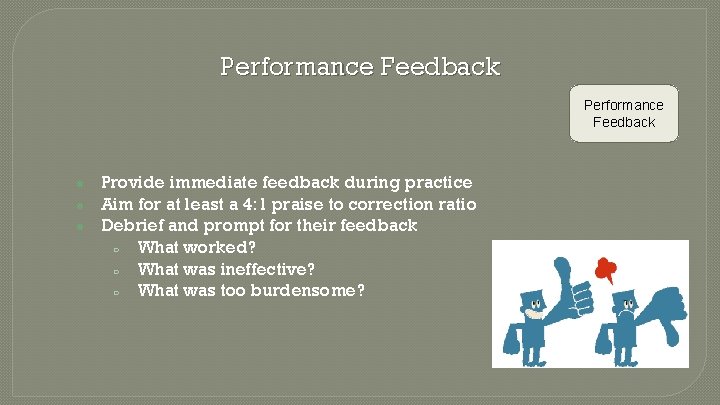
Performance Feedback ● ● ● Provide immediate feedback during practice Aim for at least a 4: 1 praise to correction ratio Debrief and prompt for their feedback ○ What worked? ○ What was ineffective? ○ What was too burdensome?
Fade Support ● ● ● Fade yourself off, allowing for increasing independence Continue spot checks on the plan Time can now be spent on other parts of your job!
Classroom Culture
Ways to Create a Positive Classroom Culture ● ● ● Have high expectations of work and behavior Be fair and consistent Focus on building positive relationships Be a role model Effectively communicate- talk and listen Celebrate success
Supervision Toolkit
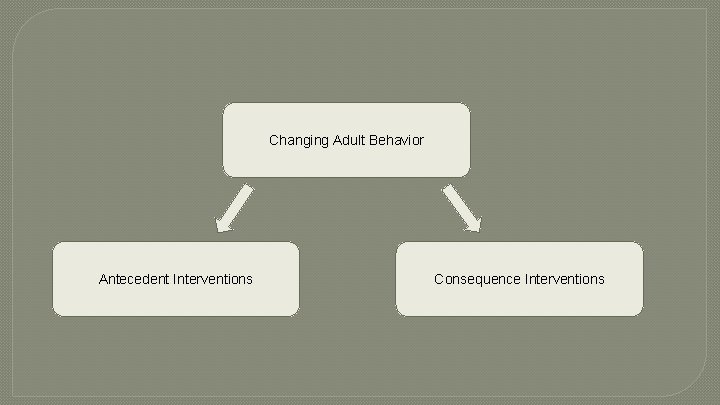
Changing Adult Behavior Antecedent Interventions Consequence Interventions
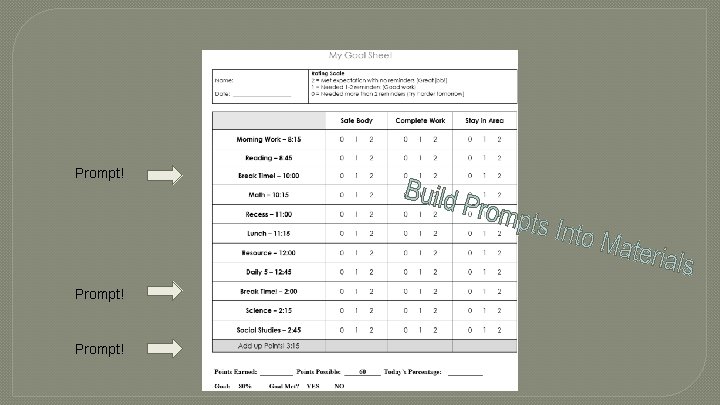
Prompts A strategic reminder of the desired behavior • Prompt just behavior the toughest behavior step • Select least intensive type of prompt necessary • Build into data sheets, plan documents, etc.
Prompt!
Supervise by Moving Around Don’t think of yourself as a patrolling boss, but…. ● ● Paras are human, and humans do better when supervised Positive and supportive Surprise pop-ins Random and unpredictable
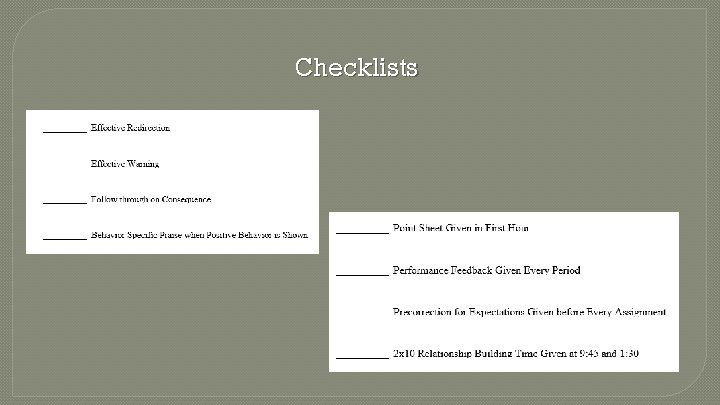
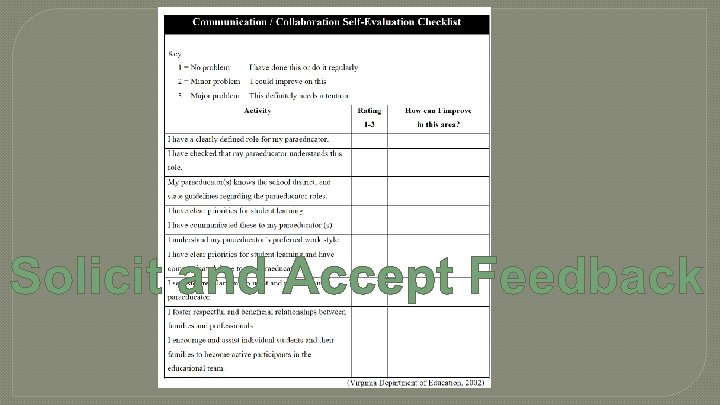
Checklists
Re-Teaching Accept that you will need time for this, and plan to have that time ● ● Scheduled formal re-teaching during para meetings In-the-moment, informal re-teaching through performance feedback Paras teach one another One-on-one, intensive re-teaching when needed
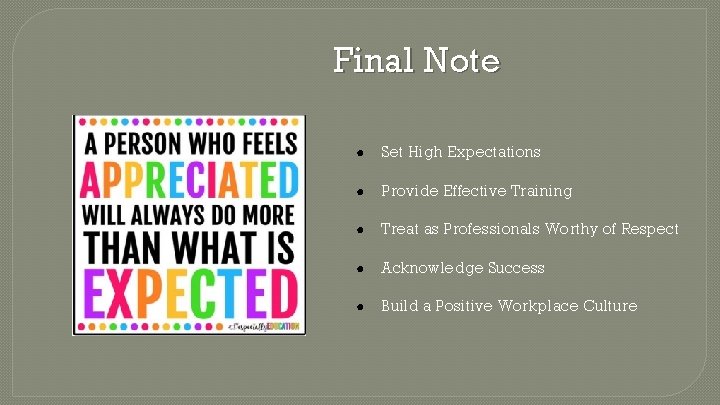
Final Note ● Set High Expectations ● Provide Effective Training ● Treat as Professionals Worthy of Respect ● Acknowledge Success ● Build a Positive Workplace Culture
Resources CEC Guidelines: https: //www. cec. sped. org/Sta ndards/Paraeducator. Preparation-Guidelines National Education Association: http: //www. nea. org/hom e/51550. htm
Questions? Contact: Jessica Nelson: jessicanelson@missouristate. edu Reesha Adamson: radamson@missouristate. edu Felicity Post: fpost@peru. edu