
Training and Instructional Design Unit 3 Creating a


- Slides: 35
Training and Instructional Design Unit 3: Creating a Lesson Plan This material (Comp 20_Unit 3) was developed by Columbia University, funded by the Department of Health and Human Services, Office of the National Coordinator for Health Information Technology under Award Number 1 U 24 OC 000003. This material was updated by Columbia University under Award Number 90 WT 0004. This work is licensed under the Creative Commons Attribution-Non. Commercial-Share. Alike 4. 0 International License. To view a copy of this license, visit http: //creativecommons. org/licenses/by-nc-sa/4. 0/.
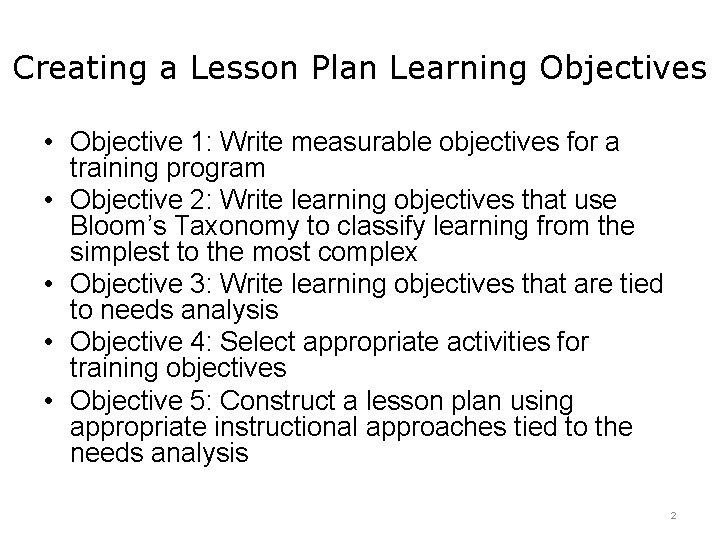
Creating a Lesson Plan Learning Objectives • Objective 1: Write measurable objectives for a training program • Objective 2: Write learning objectives that use Bloom’s Taxonomy to classify learning from the simplest to the most complex • Objective 3: Write learning objectives that are tied to needs analysis • Objective 4: Select appropriate activities for training objectives • Objective 5: Construct a lesson plan using appropriate instructional approaches tied to the needs analysis 2
Why write lesson plans • Core skill for trainers • Aids in organization and delivery of lessons • Guide for managing the learning environment • Leads to more creative lessons 3
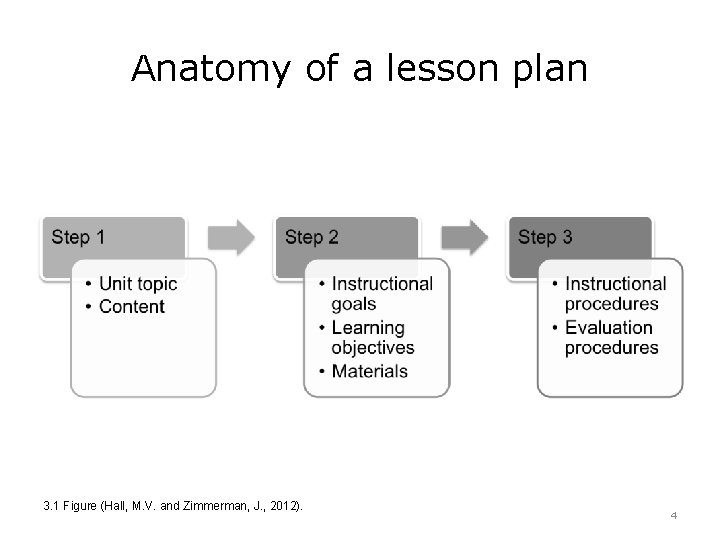
Anatomy of a lesson plan 3. 1 Figure (Hall, M. V. and Zimmerman, J. , 2012). 4
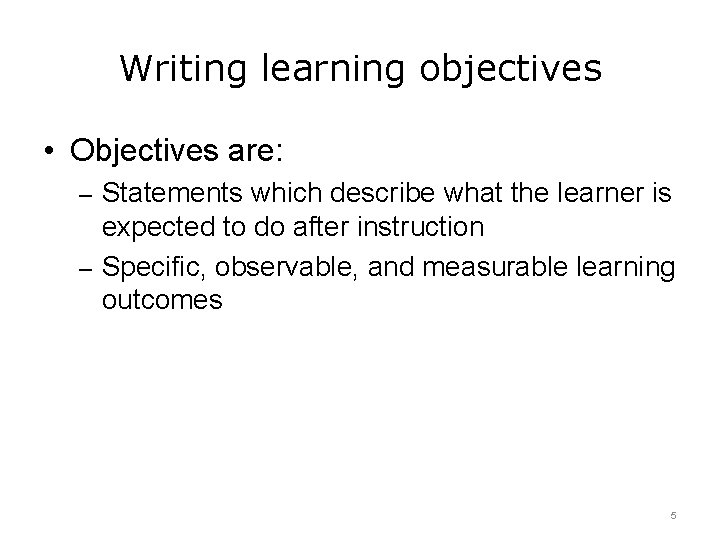
Writing learning objectives • Objectives are: – Statements which describe what the learner is expected to do after instruction – Specific, observable, and measurable learning outcomes 5
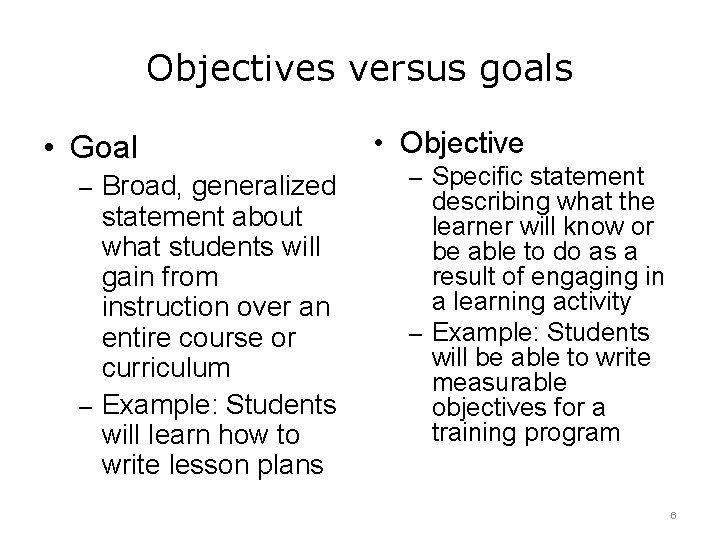
Objectives versus goals • Goal – Broad, generalized statement about what students will gain from instruction over an entire course or curriculum – Example: Students will learn how to write lesson plans • Objective – Specific statement describing what the learner will know or be able to do as a result of engaging in a learning activity – Example: Students will be able to write measurable objectives for a training program 6
Purpose of objectives • By knowing where you intend to go, you increase the chances of you and the learner ending up there • Guides the teacher relative to the planning of instruction, delivery of instruction, and evaluation of student achievement • Guides the learner; helps him / her focus and set priorities • Allows for analysis in terms of the levels of teaching and learning 7
Anatomy of an objective • A well – written objective statement provides a clear picture of the outcome or performance expected as a result of the lesson • It should be specific, concise, and, measurable 8
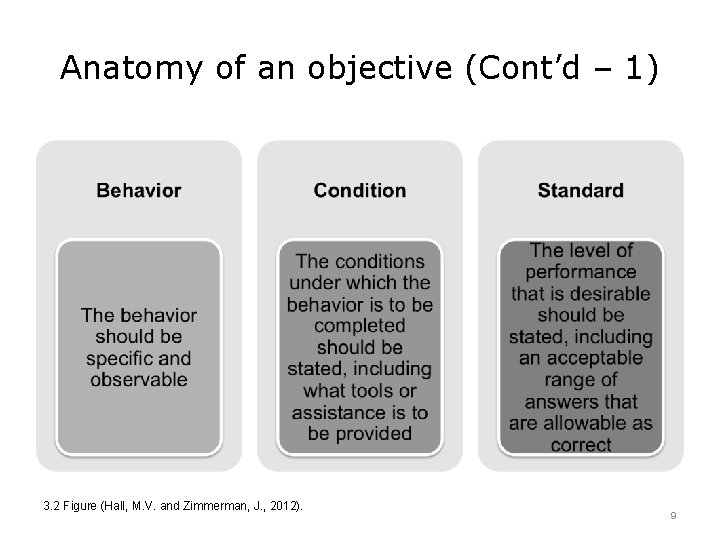
Anatomy of an objective (Cont’d – 1) 3. 2 Figure (Hall, M. V. and Zimmerman, J. , 2012). 9
Objective example • Given a normal clinical environment and using the new EHR, intake staff will be able to accurately create an electronic chart for all new patients • This example describes the observable behavior (create electronic chart), the conditions (clinical environment and the new EHR), and the standard (all new patients) 10
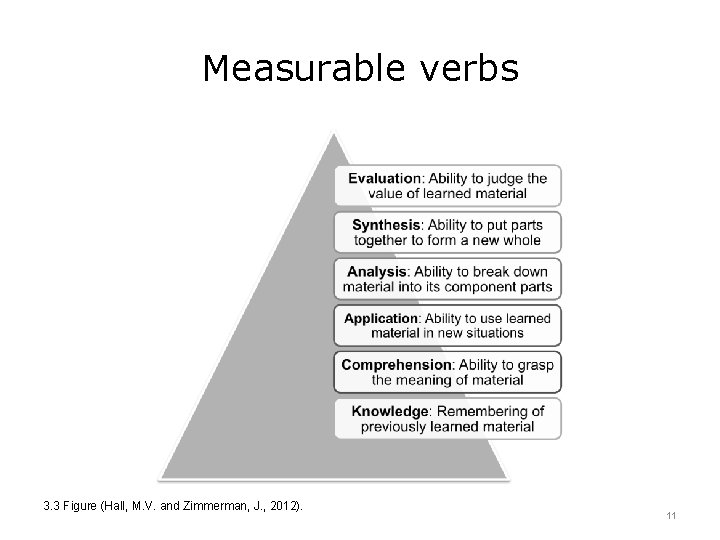
Measurable verbs 3. 3 Figure (Hall, M. V. and Zimmerman, J. , 2012). 11
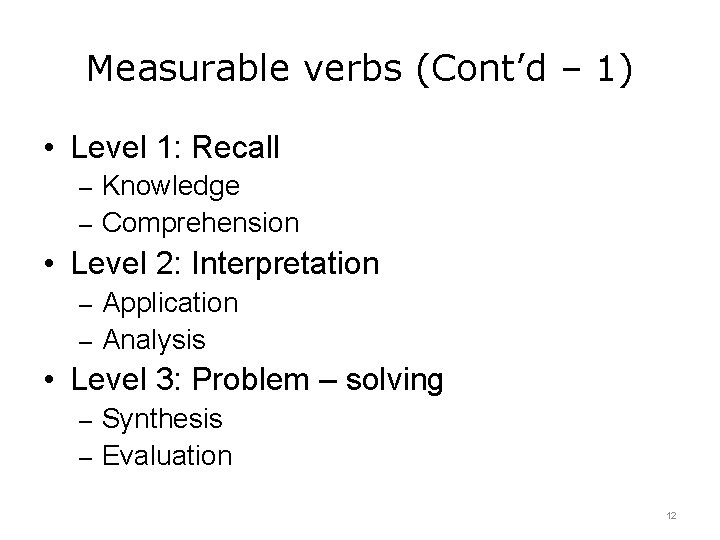
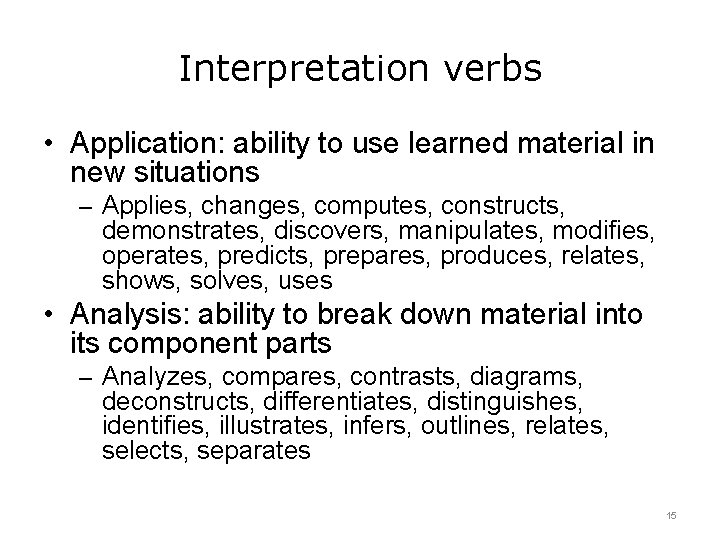
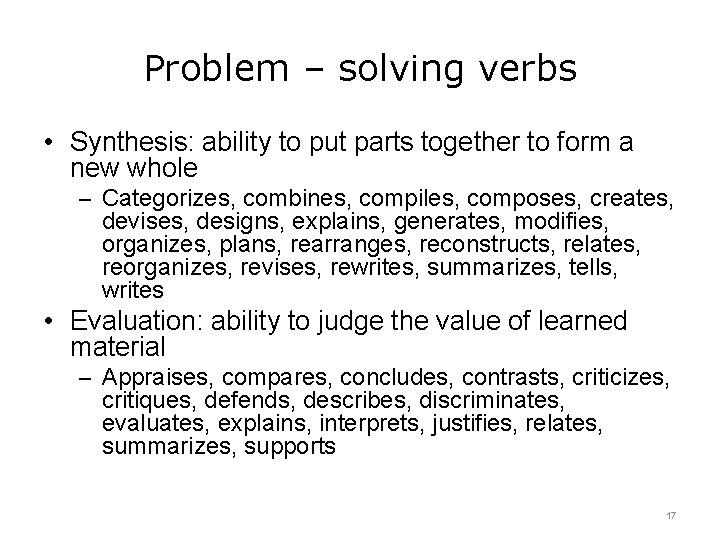
Measurable verbs (Cont’d – 1) • Level 1: Recall – Knowledge – Comprehension • Level 2: Interpretation – Application – Analysis • Level 3: Problem – solving – Synthesis – Evaluation 12
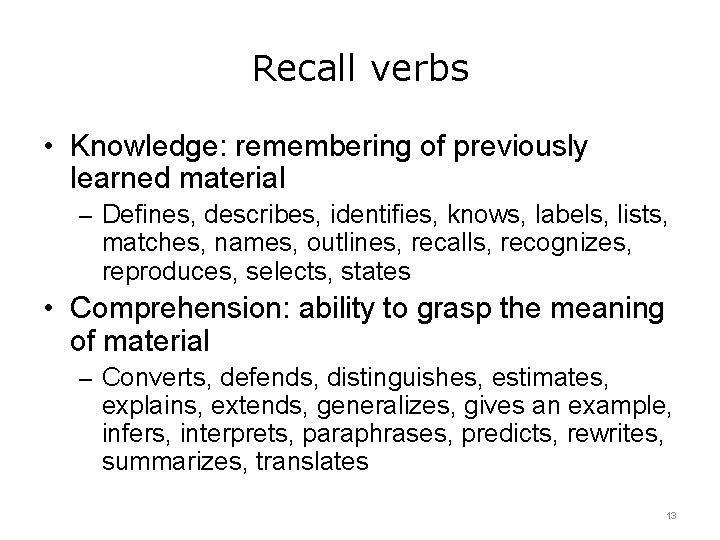
Recall verbs • Knowledge: remembering of previously learned material – Defines, describes, identifies, knows, labels, lists, matches, names, outlines, recalls, recognizes, reproduces, selects, states • Comprehension: ability to grasp the meaning of material – Converts, defends, distinguishes, estimates, explains, extends, generalizes, gives an example, infers, interprets, paraphrases, predicts, rewrites, summarizes, translates 13
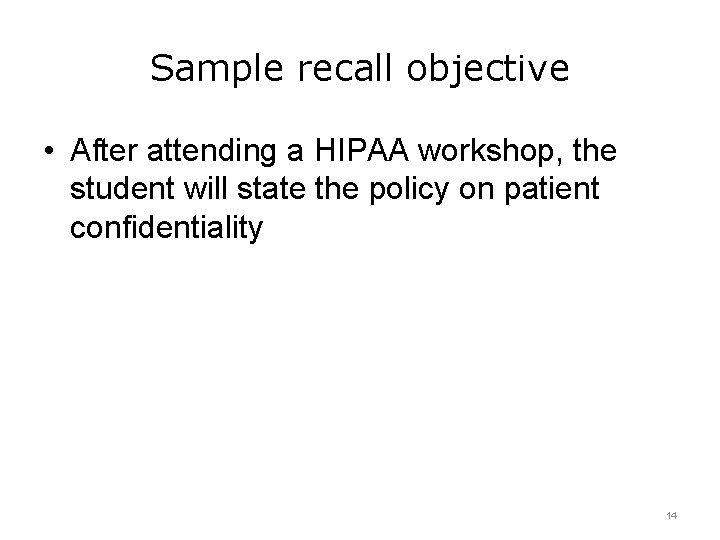
Sample recall objective • After attending a HIPAA workshop, the student will state the policy on patient confidentiality 14
Interpretation verbs • Application: ability to use learned material in new situations – Applies, changes, computes, constructs, demonstrates, discovers, manipulates, modifies, operates, predicts, prepares, produces, relates, shows, solves, uses • Analysis: ability to break down material into its component parts – Analyzes, compares, contrasts, diagrams, deconstructs, differentiates, distinguishes, identifies, illustrates, infers, outlines, relates, selects, separates 15
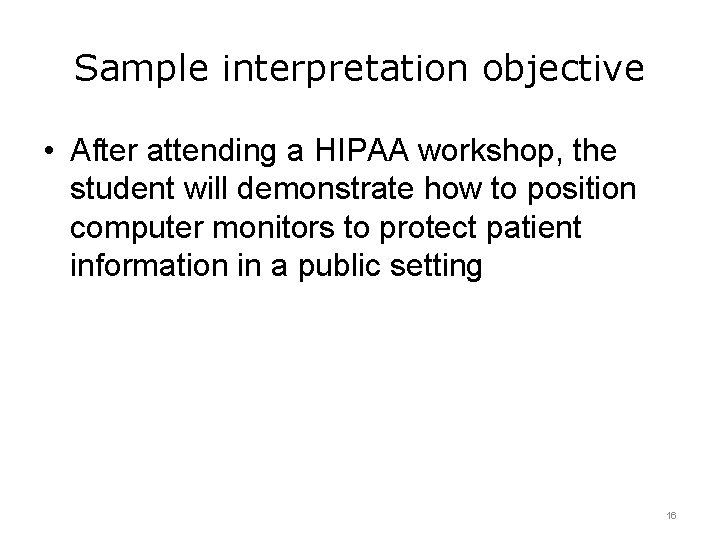
Sample interpretation objective • After attending a HIPAA workshop, the student will demonstrate how to position computer monitors to protect patient information in a public setting 16
Problem – solving verbs • Synthesis: ability to put parts together to form a new whole – Categorizes, combines, compiles, composes, creates, devises, designs, explains, generates, modifies, organizes, plans, rearranges, reconstructs, relates, reorganizes, revises, rewrites, summarizes, tells, writes • Evaluation: ability to judge the value of learned material – Appraises, compares, concludes, contrasts, criticizes, critiques, defends, describes, discriminates, evaluates, explains, interprets, justifies, relates, summarizes, supports 17
Sample problem – solving objective • After attending the new EHR training, the student will modify procedures to accommodate a patient without insurance 18
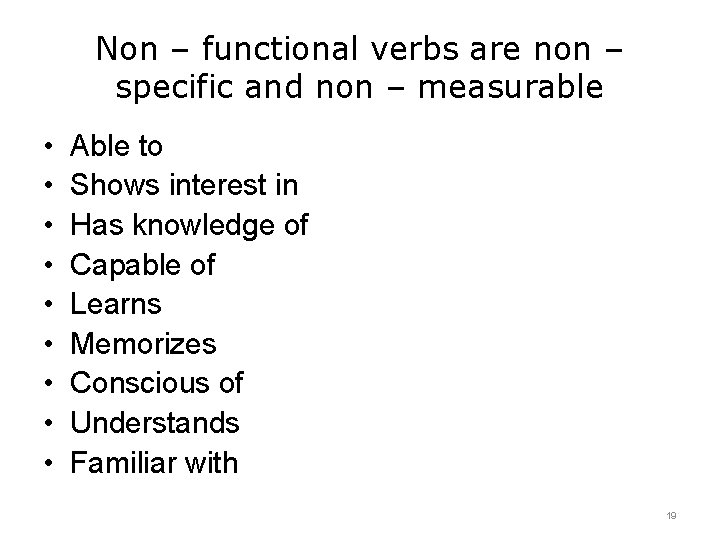
Non – functional verbs are non – specific and non – measurable • • • Able to Shows interest in Has knowledge of Capable of Learns Memorizes Conscious of Understands Familiar with 19
Objective checklist 3. 4 Figure (Hall, M. V. and Zimmerman, J. , 2012). 20
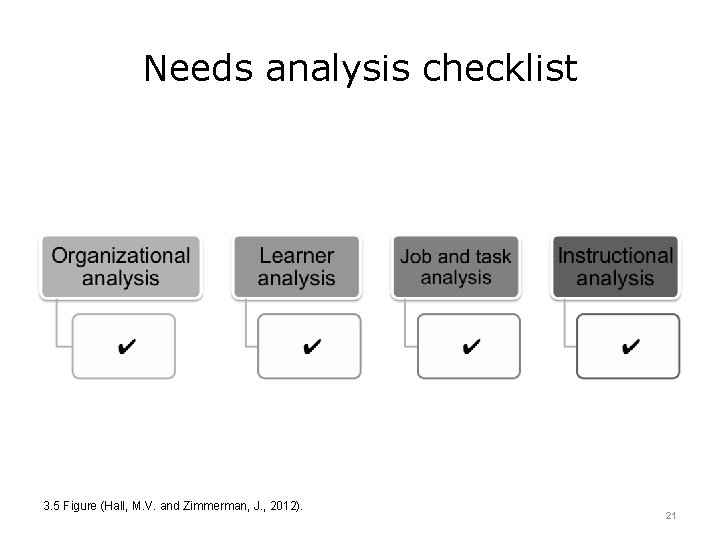
Needs analysis checklist 3. 5 Figure (Hall, M. V. and Zimmerman, J. , 2012). 21
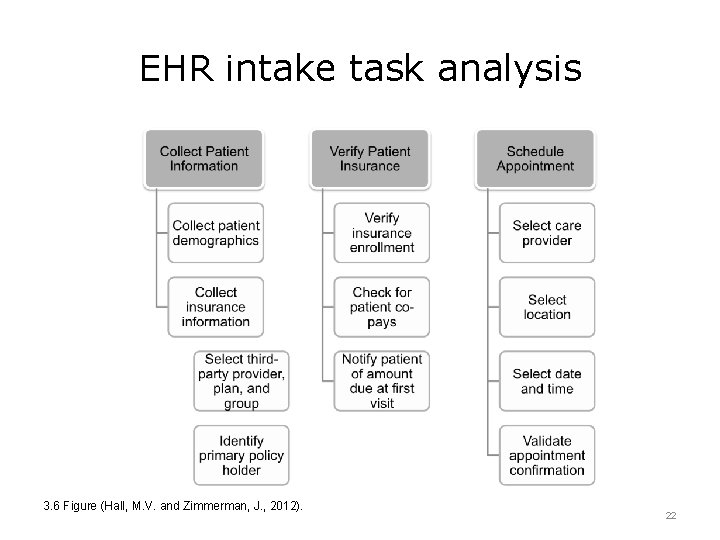
EHR intake task analysis 3. 6 Figure (Hall, M. V. and Zimmerman, J. , 2012). 22
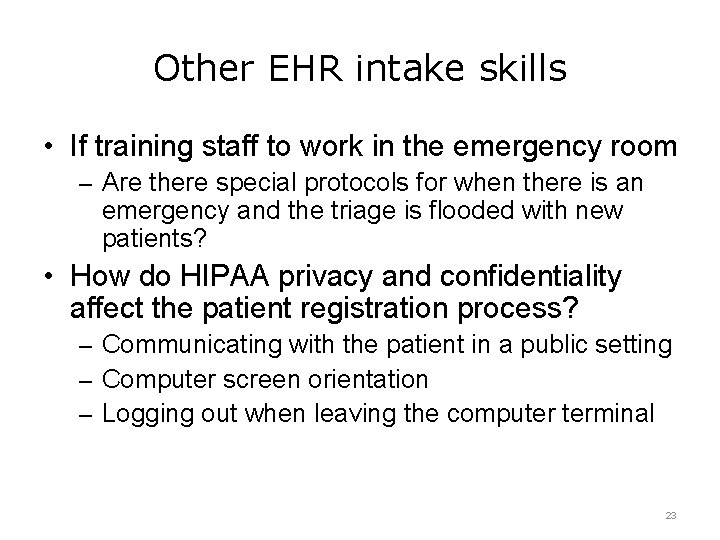
Other EHR intake skills • If training staff to work in the emergency room – Are there special protocols for when there is an emergency and the triage is flooded with new patients? • How do HIPAA privacy and confidentiality affect the patient registration process? – Communicating with the patient in a public setting – Computer screen orientation – Logging out when leaving the computer terminal 23
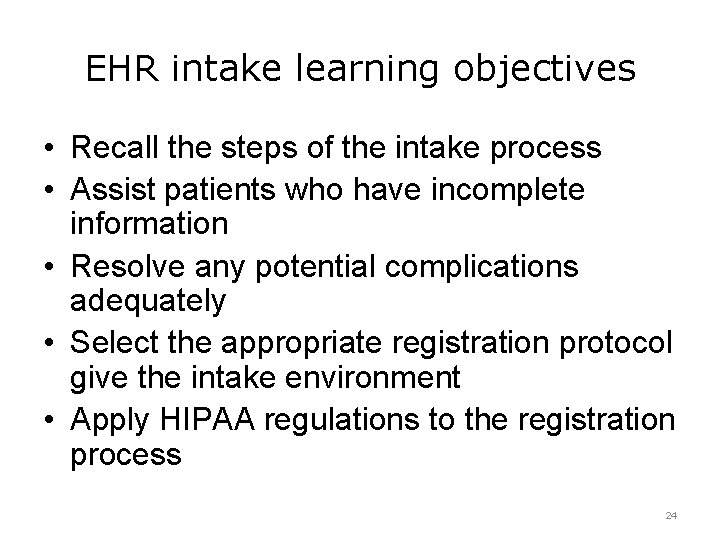
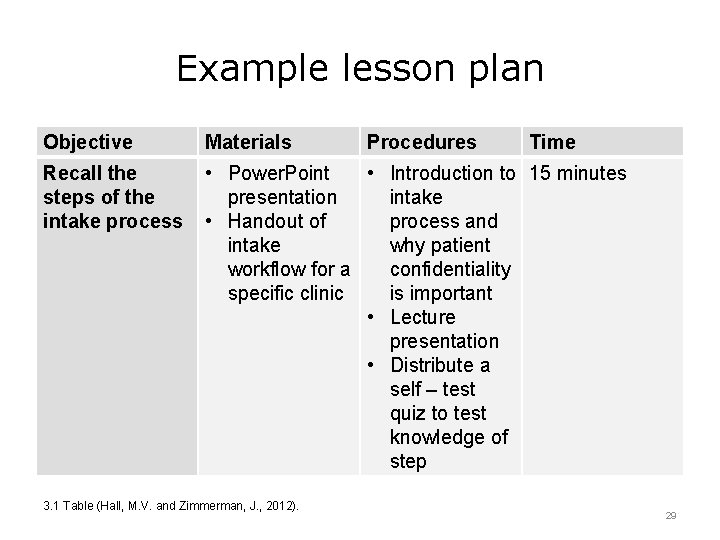
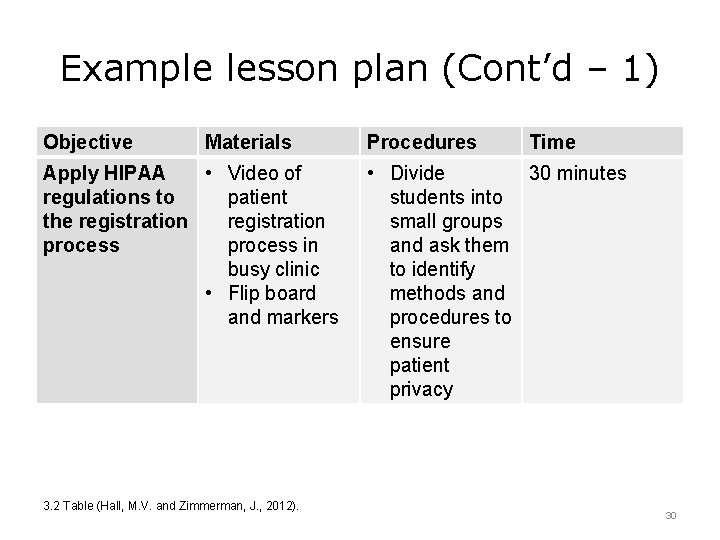
EHR intake learning objectives • Recall the steps of the intake process • Assist patients who have incomplete information • Resolve any potential complications adequately • Select the appropriate registration protocol give the intake environment • Apply HIPAA regulations to the registration process 24
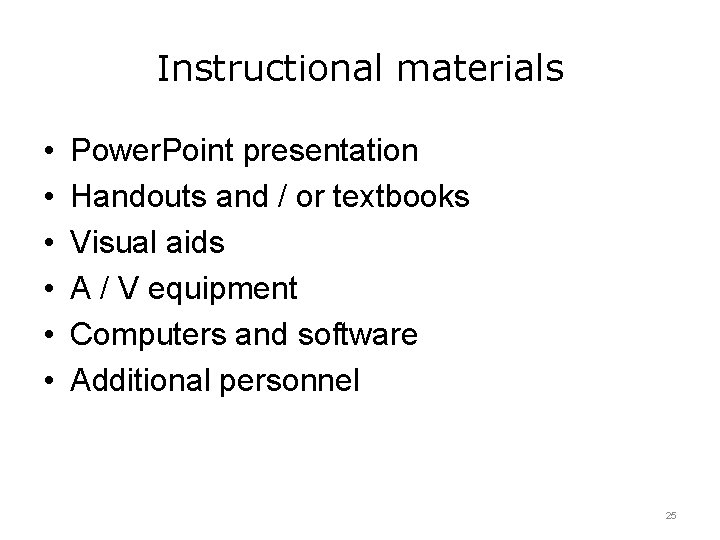
Instructional materials • • • Power. Point presentation Handouts and / or textbooks Visual aids A / V equipment Computers and software Additional personnel 25
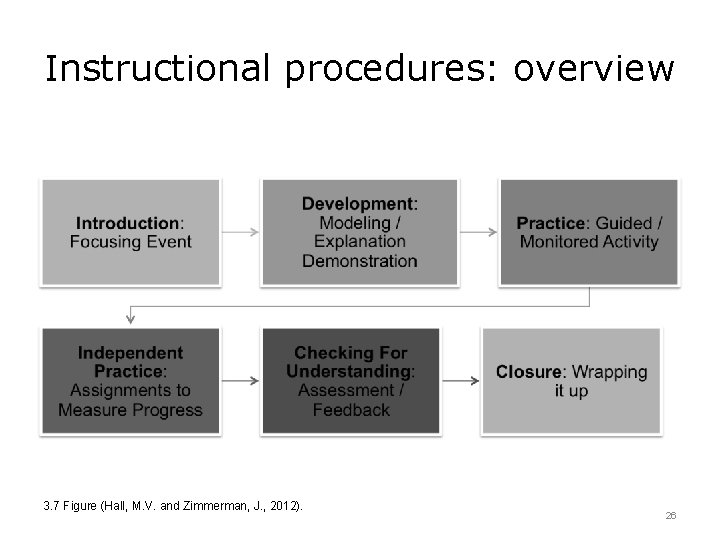
Instructional procedures: overview 3. 7 Figure (Hall, M. V. and Zimmerman, J. , 2012). 26
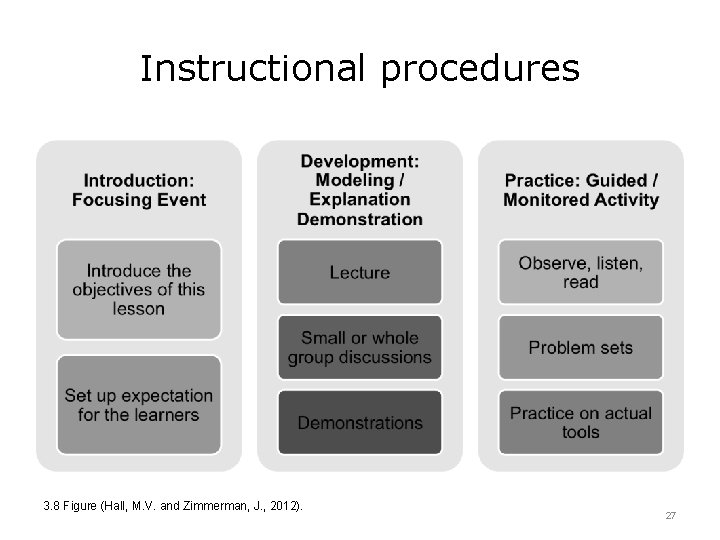
Instructional procedures 3. 8 Figure (Hall, M. V. and Zimmerman, J. , 2012). 27
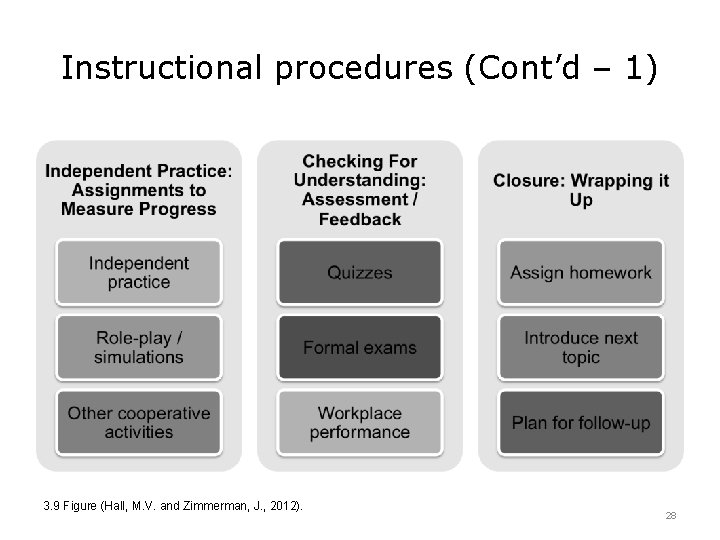
Instructional procedures (Cont’d – 1) 3. 9 Figure (Hall, M. V. and Zimmerman, J. , 2012). 28
Example lesson plan Objective Materials Recall the steps of the intake process • Power. Point • Introduction to 15 minutes presentation intake • Handout of process and intake why patient workflow for a confidentiality specific clinic is important • Lecture presentation • Distribute a self – test quiz to test knowledge of step 3. 1 Table (Hall, M. V. and Zimmerman, J. , 2012). Procedures Time 29
Example lesson plan (Cont’d – 1) Objective Materials Apply HIPAA • Video of regulations to patient the registration process in busy clinic • Flip board and markers 3. 2 Table (Hall, M. V. and Zimmerman, J. , 2012). Procedures Time • Divide 30 minutes students into small groups and ask them to identify methods and procedures to ensure patient privacy 30
Unit 3: Creating a Lesson Plan, Summary • Develop lesson plans, but be flexible enough to adapt to changes as they occur • Respond to changes and use to use them to your learner’s benefit 31
Creating a Lesson Plan References: Bloom, B. S. , Engelhart, M. D. , Furst, E. J. , Hill, W. H. , & Krathwohl, D. R. (1956). Taxonomy of educational objectives: the classification of educational goals Carkhuff RR, Fisher SG. (1984). Instructional systems design: volumes I & II. Amherst, MA: Human Resource Development Press. Carliner S. Training Design. (2003). Danvers, MA: American Society for Training and Development. Clark DR. Bloom’s Taxonomy [monograph on the Internet]. Big Dog & Little Dog’s Performance Juxtaposition; c 2004 [cited 2010 Jun 21. Available from: http: //www. nwlink. com/~donclark/hrd/sat. html Gagne RM, Wager WW, & Golas K. (2004) Principles of Instructional Design (5 th ed. ). California: Wadsworth Publishing. Fleming M, Levie WH. Instructional Message Design. Englewood Cliffs, NJ: Educational Technology Publications, Inc. ; 1978. Handbook I: Cognitive Domain New York, Longmans, Green, 1956. 32
Creating a Lesson Plan References (Cont’d – 1) References: Molenda, M. (2003). In search of the elusive Addie model. Performance improvement, 42(5), 34. Reigeluth CM. (1999). Instructional-design Theories and Models: A new paradigm of instructional theory. New Jersey: Lawrence Erlbaum Associates, Inc. Charts, Tables, and Figures: 3. 1 Figure: Hall, M. V. and Zimmerman, J. , 2012 3. 2 Figure: Hall, M. V. and Zimmerman, J. , 2012 3. 3 Figure: Hall, M. V. and Zimmerman, J. , 2012 3. 4 Figure: Hall, M. V. and Zimmerman, J. , 2012 3. 5 Figure: Hall, M. V. and Zimmerman, J. , 2012 3. 6 Figure: Hall, M. V. and Zimmerman, J. , 2012 3. 7 Figure: Hall, M. V. and Zimmerman, J. , 2012 3. 8 Figure: Hall, M. V. and Zimmerman, J. , 2012 3. 9 Figure: Hall, M. V. and Zimmerman, J. , 2012 33
Creating a Lesson Plan References (Cont’d – 2) Charts, Tables, and Figures: 3. 1 Table: Zimmerman, J. (2010). Example lesson plan. Department of Biomedical Informatics, Columbia University Medical Center, New York, NY. 3. 2 Table: Zimmerman, J. (2010). Example lesson plan. Department of Biomedical Informatics, Columbia University Medical Center, New York, NY. 34
Unit 3: Creating a Lesson Plan This material (Comp 20 Unit 3) was developed by Columbia University, funded by the Department of Health and Human Services, Office of the National Coordinator for Health Information Technology under Award Number IU 24 OC 000013. This material was updated in 2016 by Columbia University under Award Number 90 WT 0005. 35