
Training and Coaching Capacity Susan Barrett Lucille Eber
Training and Coaching Capacity Susan Barrett Lucille Eber May 28, 2015
Remember…. • As grantees you implement based on your funded proposal. • As members of the PBIS TA-Center we offer guidance based on our experience from working with states, districts and schools implementing multi-tiered behavior support frameworks. We do NOT speak for Safe and Healthy Students or OSEP. • The information provided today designed to help you be successful – it is not mandatory.
Poll #1 • What is your role/function: 1. 2. 3. 4. 5. 6. SEA LEA Administrator District-based PBIS Coach School-based Administrator Evaluator Other
Today: Training and Coaching Capacity – Assessing Current Status – Developing a Data Based Training Plan – Identifying Curriculum – Developing Ongoing Training Process – Selecting and Training Coaches – Professional Development Plan
BIG MESSAGE Invest in Trainers and Coaches as you are setting up Team Training
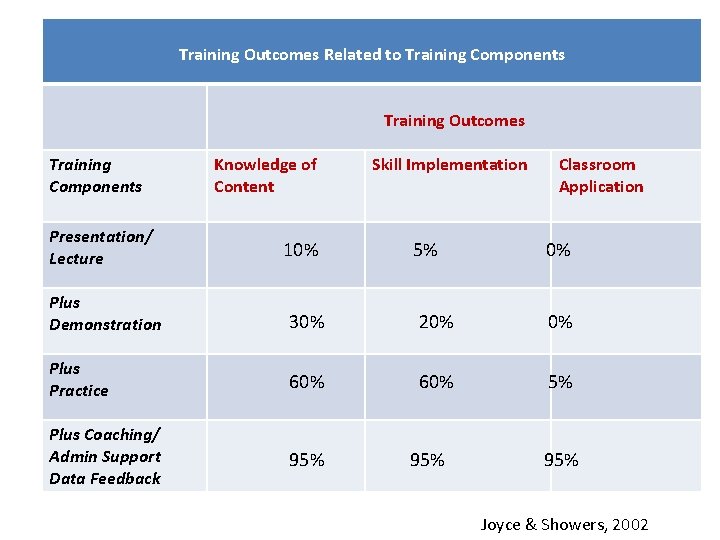
Training Outcomes Related to Training Components Training Outcomes Training Components Knowledge of Content Skill Implementation Classroom Application Presentation/ Lecture 10% 5% 0% Plus Demonstration 30% 20% 0% Plus Practice 60% 5% Plus Coaching/ Admin Support Data Feedback 95% 95% Joyce & Showers, 2002
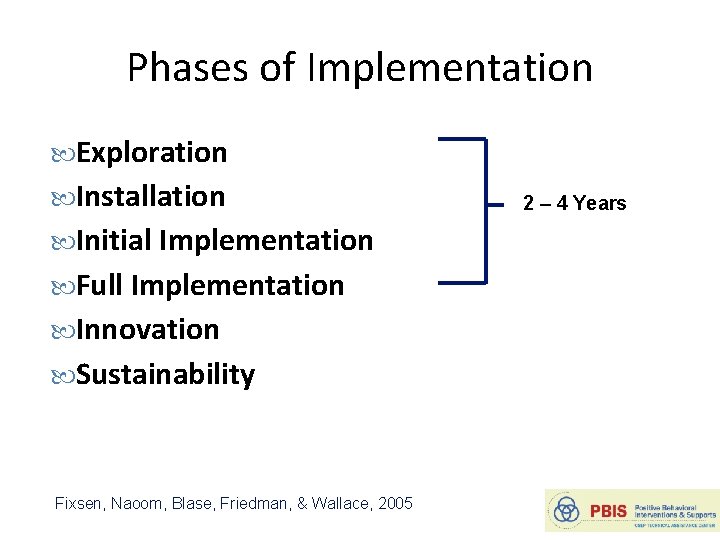
Phases of Implementation Exploration Installation Initial Implementation Full Implementation Innovation Sustainability Fixsen, Naoom, Blase, Friedman, & Wallace, 2005 2 – 4 Years
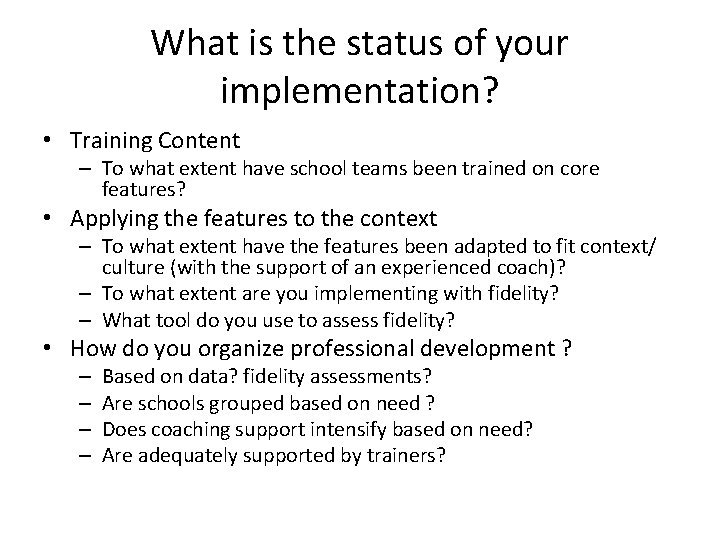
What is the status of your implementation? • Training Content – To what extent have school teams been trained on core features? • Applying the features to the context – To what extent have the features been adapted to fit context/ culture (with the support of an experienced coach)? – To what extent are you implementing with fidelity? – What tool do you use to assess fidelity? • How do you organize professional development ? – – Based on data? fidelity assessments? Are schools grouped based on need ? Does coaching support intensify based on need? Are adequately supported by trainers?
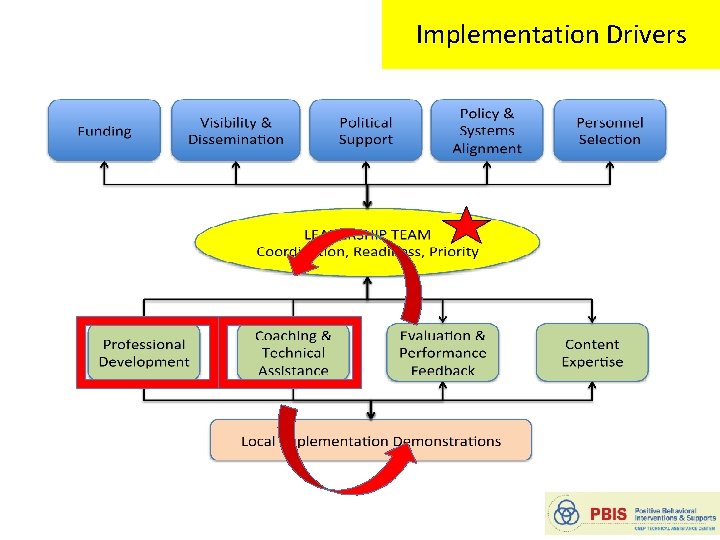
Implementation Drivers
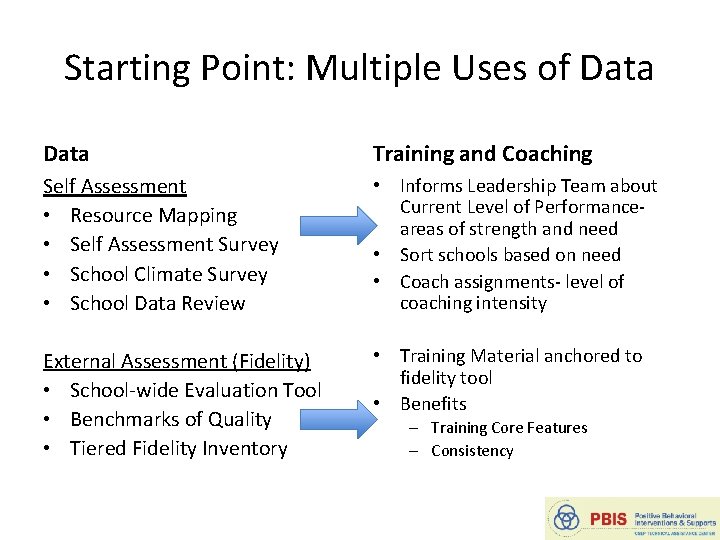
Starting Point: Multiple Uses of Data Training and Coaching Self Assessment • Resource Mapping • Self Assessment Survey • School Climate Survey • School Data Review • Informs Leadership Team about Current Level of Performance- areas of strength and need • Sort schools based on need • Coach assignments- level of coaching intensity External Assessment (Fidelity) • School-wide Evaluation Tool • Benchmarks of Quality • Tiered Fidelity Inventory • Training Material anchored to fidelity tool • Benefits – Training Core Features – Consistency
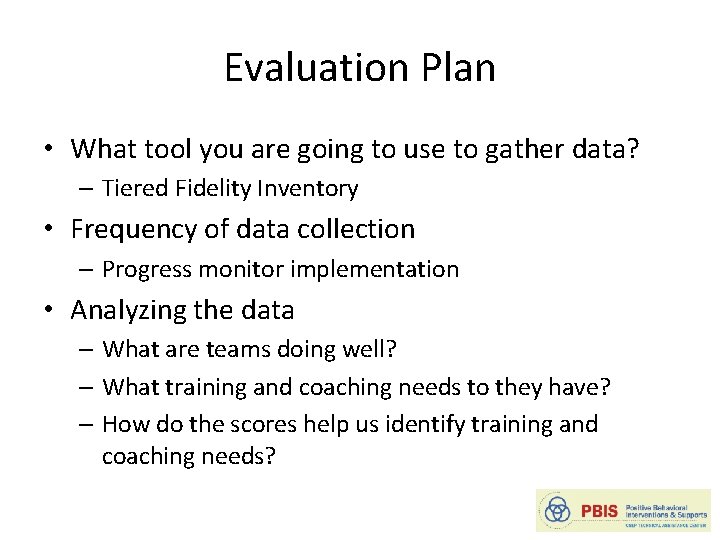
Evaluation Plan • What tool you are going to use to gather data? – Tiered Fidelity Inventory • Frequency of data collection – Progress monitor implementation • Analyzing the data – What are teams doing well? – What training and coaching needs to they have? – How do the scores help us identify training and coaching needs?
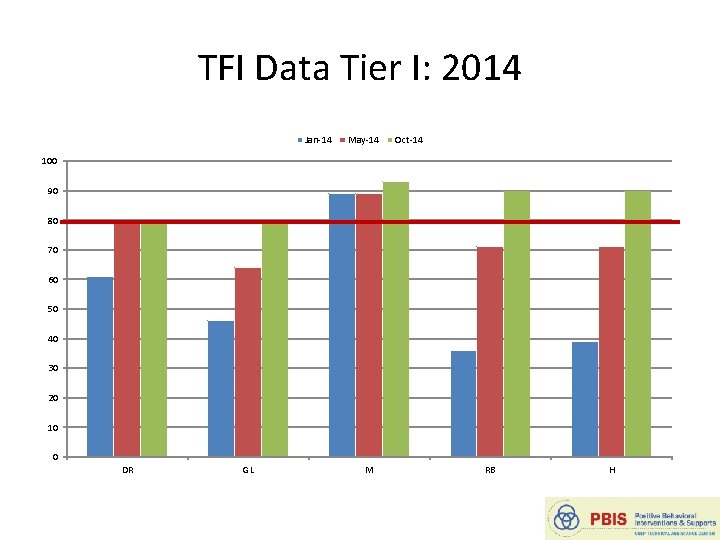
TFI Data Tier I: 2014 Jan-14 May-14 Oct-14 100 90 80 70 60 50 40 30 20 10 0 DR GL M RB H
Chat Room Prompt: 1. What data do you have already available to guide your implementation plan for 2015 -16? 2. What data do you want to pursue in 2015 -16 to inform your capacity building?
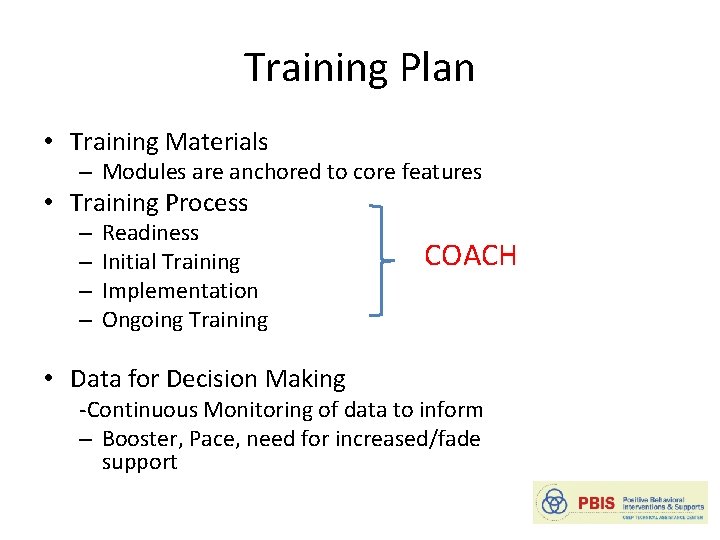
Training Plan • Training Materials – Modules are anchored to core features • Training Process – – Readiness Initial Training Implementation Ongoing Training • Data for Decision Making COACH -Continuous Monitoring of data to inform – Booster, Pace, need for increased/fade support
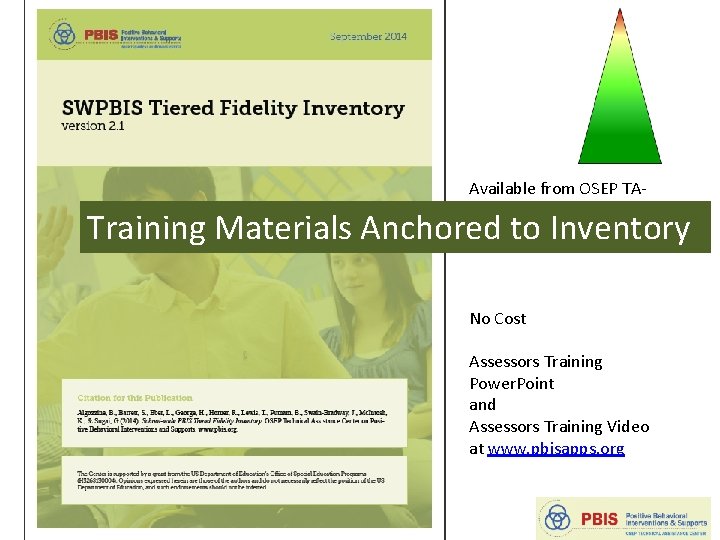
Available from OSEP TACenter www. pbis. org www. pbisapps. org Training Materials Anchored to Inventory No Cost Assessors Training Power. Point and Assessors Training Video at www. pbisapps. org
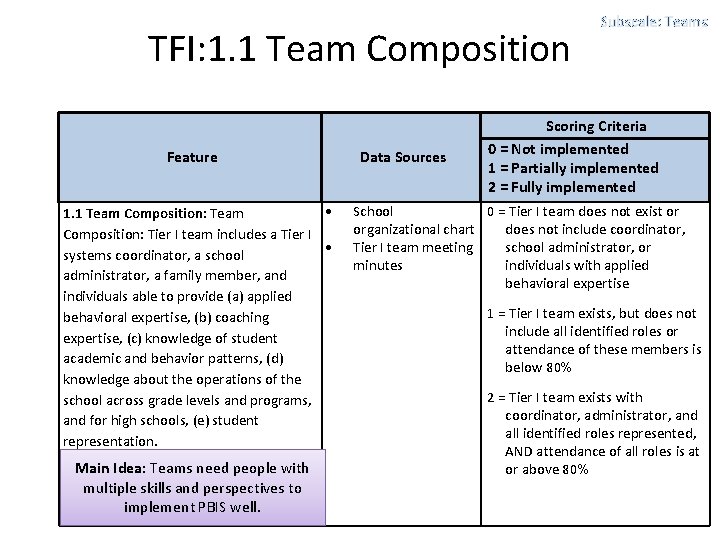
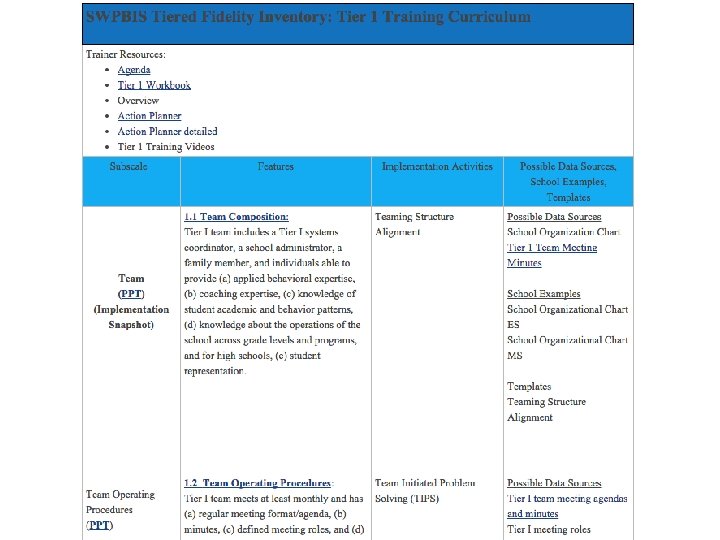
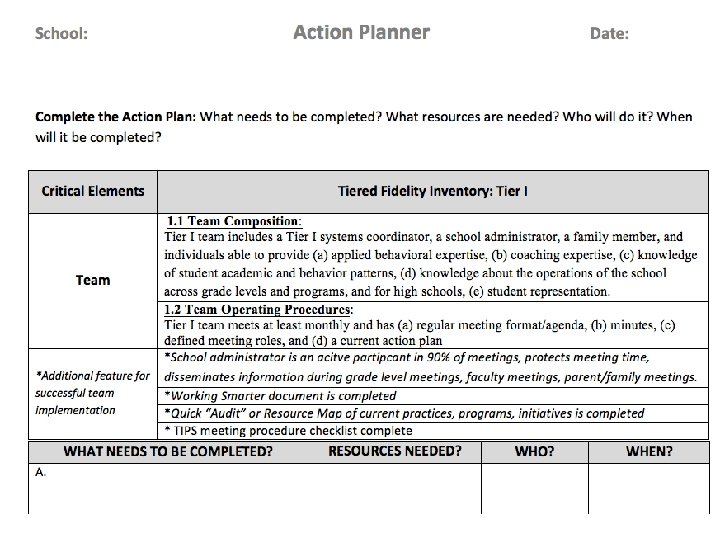
TFI: 1. 1 Team Composition Feature 1. 1 Team Composition: Tier I team includes a Tier I systems coordinator, a school administrator, a family member, and individuals able to provide (a) applied behavioral expertise, (b) coaching expertise, (c) knowledge of student academic and behavior patterns, (d) knowledge about the operations of the school across grade levels and programs, and for high schools, (e) student representation. Main Idea: Teams need people with multiple skills and perspectives to implement PBIS well. Data Sources Subscale: Teams Scoring Criteria 0 = Not implemented 1 = Partially implemented 2 = Fully implemented School 0 = Tier I team does not exist or organizational chart does not include coordinator, Tier I team meeting school administrator, or minutes individuals with applied behavioral expertise 1 = Tier I team exists, but does not include all identified roles or attendance of these members is below 80% 2 = Tier I team exists with coordinator, administrator, and all identified roles represented, AND attendance of all roles is at or above 80%
Professional Development Event • Prepared Teams with Administrators, Data and Coach • Trainer facilitates action planning process – Content fluent – Application of content in context • Activity Based – Resource Mapping – Working Smarter – Re-thinking Discipline
Professional Development Across the Year • Delivered in a variety of ways – In person training – Video conferencing, webinars, phone conferences – Onsite and Distal Technical Assistance • Varied audiences – District leaders – Coaches – Building Teams
Targeted Professional Development • Additional training and skill building for buildings that exhibit a higher level of need • Intensive use of data and fidelity tools to identify, provide technical assistance, and support these buildings
Poll #2 Our professional development plan/events is based on an ongoing review of implementation data (both fidelity and outcome data) – Strongly agree – Somewhat disagree – Disagree
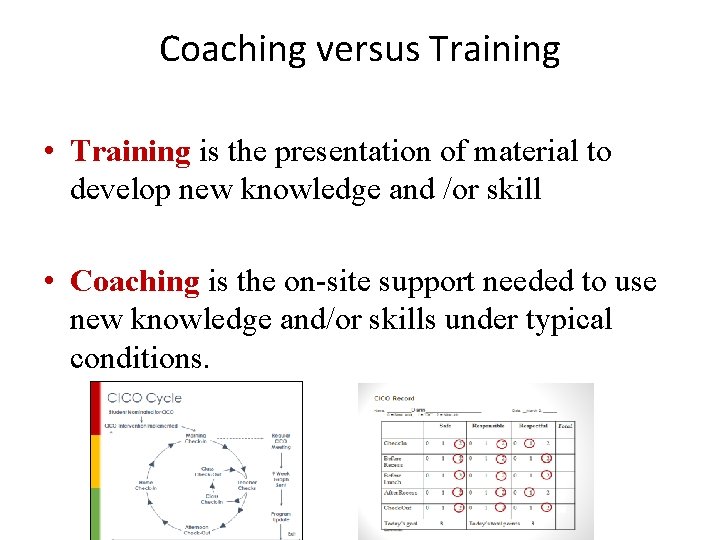
Coaching versus Training • Training is the presentation of material to develop new knowledge and /or skill • Coaching is the on-site support needed to use new knowledge and/or skills under typical conditions.
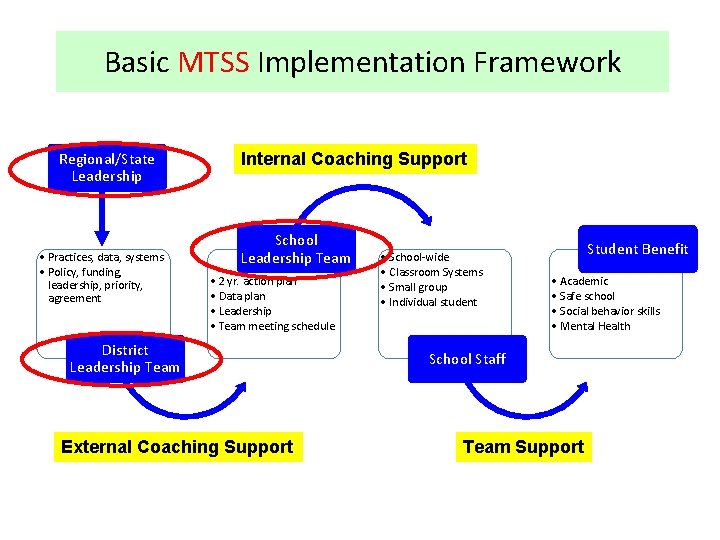
Basic MTSS Implementation Framework Regional/State Leadership • Practices, data, systems • Policy, funding, leadership, priority, agreement Internal Coaching Support School Leadership Team • 2 yr. action plan • Data plan • Leadership • Team meeting schedule District Leadership Team External Coaching Support • School-wide • Classroom Systems • Small group • Individual student Student Benefit • Academic • Safe school • Social behavior skills • Mental Health School Staff Team Support
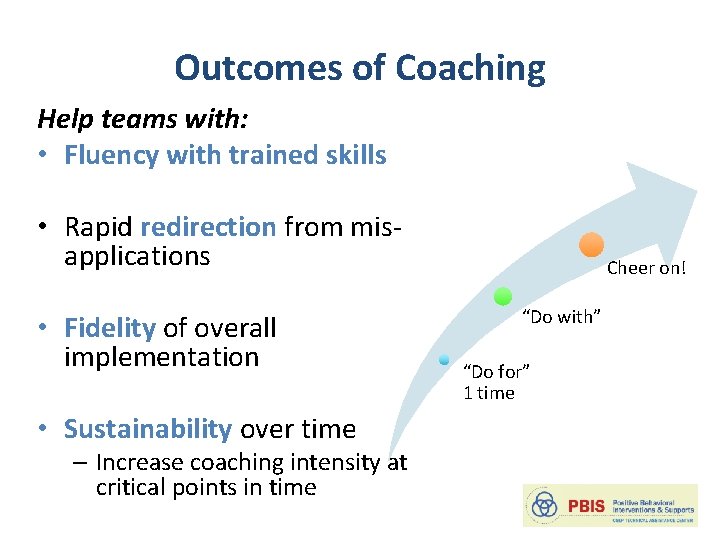
Outcomes of Coaching Help teams with: • Fluency with trained skills • Rapid redirection from misapplications • Fidelity of overall implementation • Sustainability over time – Increase coaching intensity at critical points in time Cheer on! “Do with” “Do for” 1 time
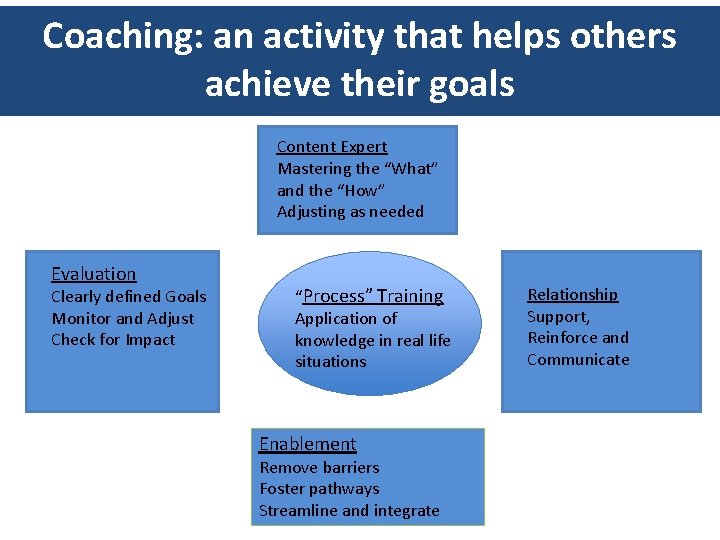
Coaching: an activity that helps others achieve their goals Content Expert Mastering the “What” and the “How” Adjusting as needed Evaluation Clearly defined Goals Monitor and Adjust Check for Impact “Process” Training Application of knowledge in real life situations Enablement Remove barriers Foster pathways Streamline and integrate Relationship Support, Reinforce and Communicate
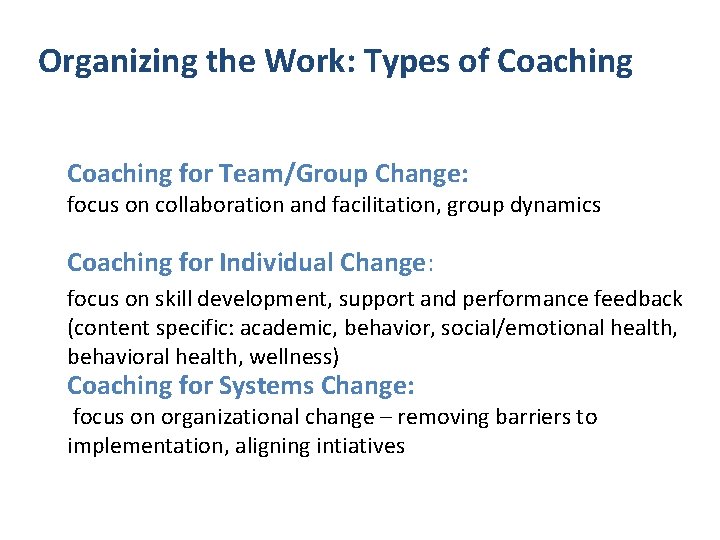
Organizing the Work: Types of Coaching for Team/Group Change: focus on collaboration and facilitation, group dynamics Coaching for Individual Change: focus on skill development, support and performance feedback (content specific: academic, behavior, social/emotional health, behavioral health, wellness) Coaching for Systems Change: focus on organizational change – removing barriers to implementation, aligning intiatives
Coaching Plan • • Coaching Training Support for Coaching Tracking Behaviors of Coaches Linking effort to Outcomes
Poll #3 Our District-based Coaches have ongoing contact with and feedback from an experienced Technical Assistance provider – Strongly agree – Somewhat disagree – Disagree

PROFESSIONAL DEVELOPMENT PLAN
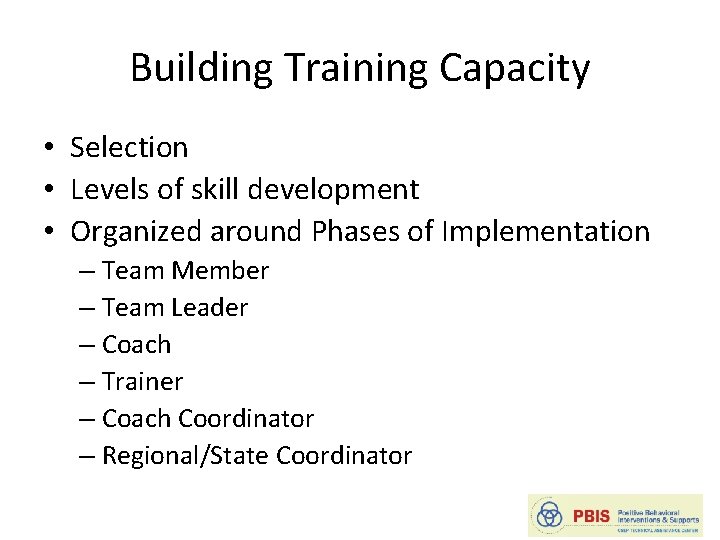
Building Training Capacity • Selection • Levels of skill development • Organized around Phases of Implementation – Team Member – Team Leader – Coach – Trainer – Coach Coordinator – Regional/State Coordinator
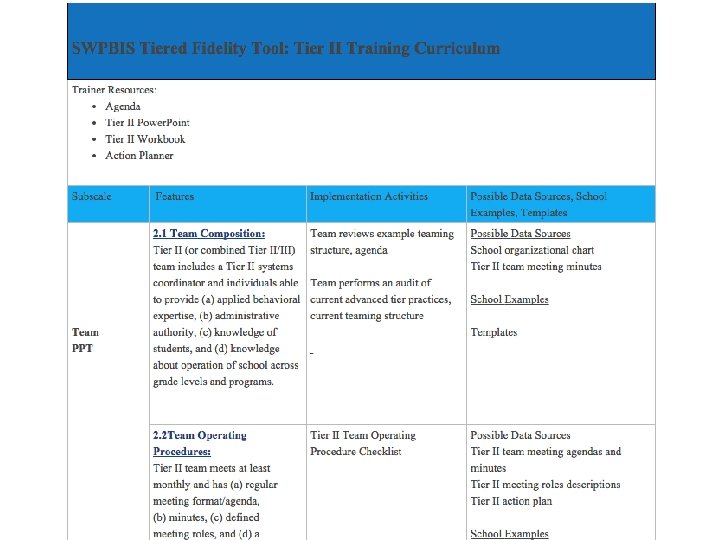
A Working Example for Tier 2 • A Tier 2 professional development plan for a district that has spent two years installing Tier 1 in 15 schools • A key feature of this sample plan: – Install the basic foundations of Tier 2 before selecting and training on additional interventions
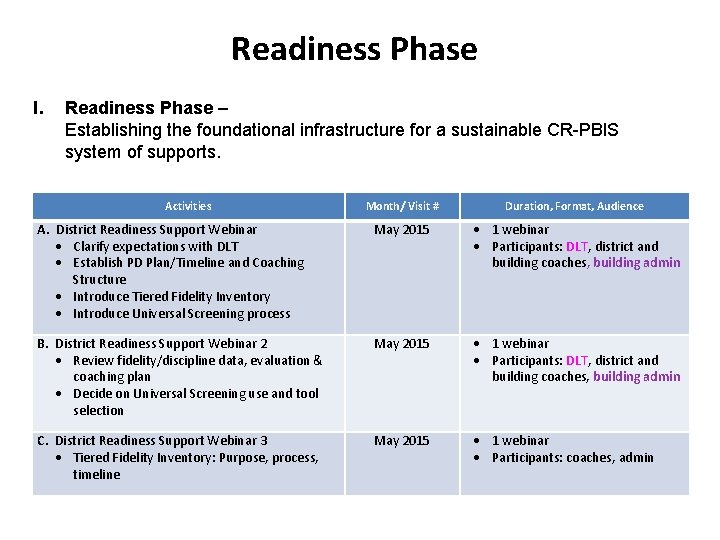
Readiness Phase I. Readiness Phase – Establishing the foundational infrastructure for a sustainable CR-PBIS system of supports. Activities Month/ Visit # Duration, Format, Audience A. District Readiness Support Webinar Clarify expectations with DLT Establish PD Plan/Timeline and Coaching Structure Introduce Tiered Fidelity Inventory Introduce Universal Screening process May 2015 1 webinar Participants: DLT, district and building coaches, building admin B. District Readiness Support Webinar 2 Review fidelity/discipline data, evaluation & coaching plan Decide on Universal Screening use and tool selection May 2015 1 webinar Participants: DLT, district and building coaches, building admin C. District Readiness Support Webinar 3 Tiered Fidelity Inventory: Purpose, process, timeline May 2015 1 webinar Participants: coaches, admin
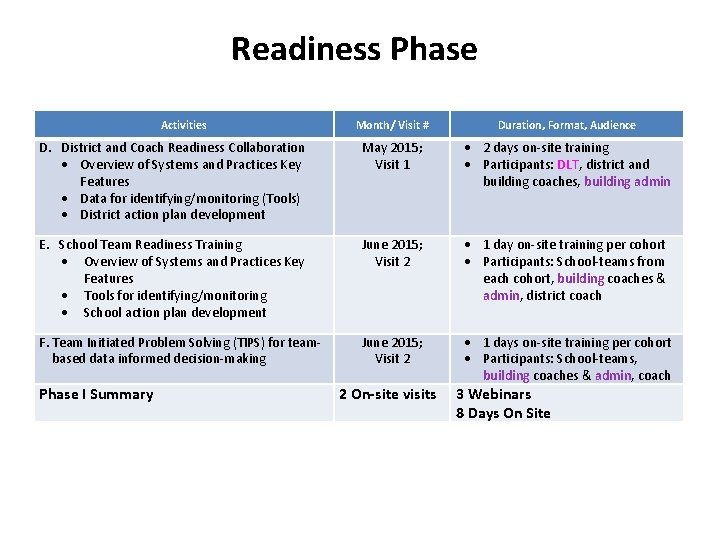
Readiness Phase Activities Month/ Visit # Duration, Format, Audience D. District and Coach Readiness Collaboration Overview of Systems and Practices Key Features Data for identifying/monitoring (Tools) District action plan development May 2015; Visit 1 2 days on-site training Participants: DLT, district and building coaches, building admin E. School Team Readiness Training Overview of Systems and Practices Key Features Tools for identifying/monitoring School action plan development June 2015; Visit 2 1 day on-site training per cohort Participants: School-teams from each cohort, building coaches & admin, district coach F. Team Initiated Problem Solving (TIPS) for teambased data informed decision-making June 2015; Visit 2 1 days on-site training per cohort Participants: School-teams, building coaches & admin, coach Phase I Summary 2 On-site visits 3 Webinars 8 Days On Site
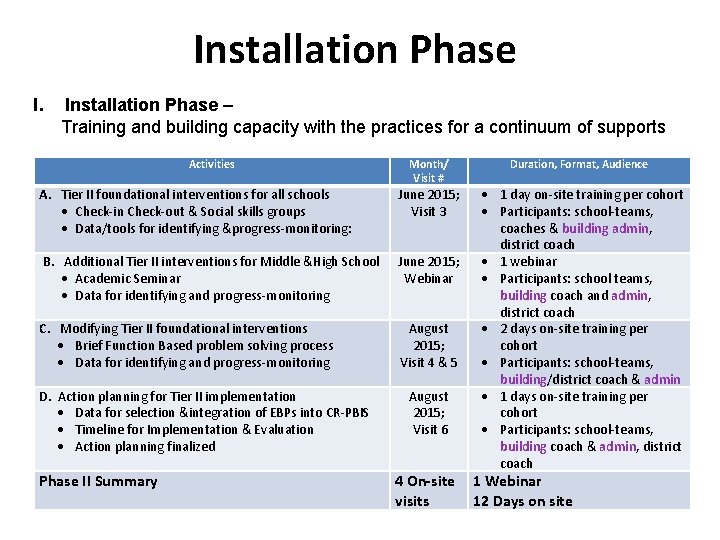
Installation Phase I. Installation Phase – Training and building capacity with the practices for a continuum of supports Activities Month/ Visit # A. Tier II foundational interventions for all schools Check-in Check-out & Social skills groups Data/tools for identifying &progress-monitoring: June 2015; Visit 3 B. Additional Tier II interventions for Middle &High School Academic Seminar Data for identifying and progress-monitoring June 2015; Webinar C. Modifying Tier II foundational interventions Brief Function Based problem solving process Data for identifying and progress-monitoring August 2015; Visit 4 & 5 D. Action planning for Tier II implementation Data for selection &integration of EBPs into CR-PBIS Timeline for Implementation & Evaluation Action planning finalized Phase II Summary August 2015; Visit 6 4 On-site visits Duration, Format, Audience 1 day on-site training per cohort Participants: school-teams, coaches & building admin, district coach 1 webinar Participants: school teams, building coach and admin, district coach 2 days on-site training per cohort Participants: school-teams, building/district coach & admin 1 days on-site training per cohort Participants: school-teams, building coach & admin, district coach 1 Webinar 12 Days on site
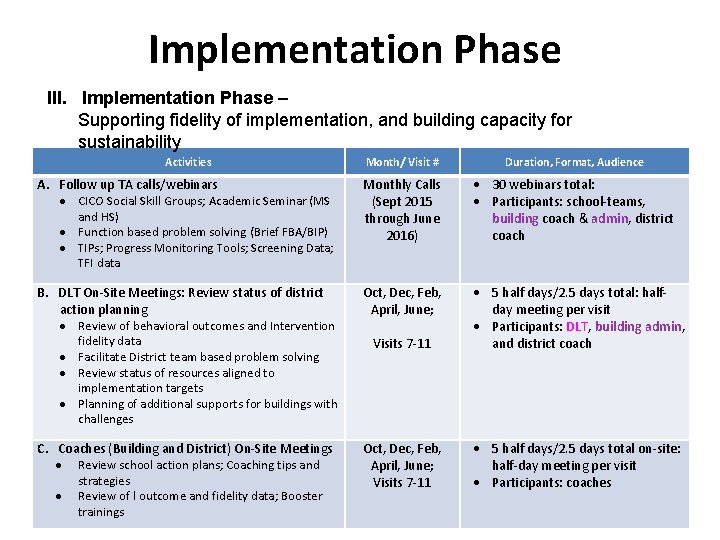
Implementation Phase III. Implementation Phase – Supporting fidelity of implementation, and building capacity for sustainability Activities Month/ Visit # Duration, Format, Audience A. Follow up TA calls/webinars CICO Social Skill Groups; Academic Seminar (MS Monthly Calls (Sept 2015 through June 2016) 30 webinars total: Participants: school-teams, building coach & admin, district coach B. DLT On-Site Meetings: Review status of district action planning Review of behavioral outcomes and Intervention Oct, Dec, Feb, April, June; Visits 7 -11 5 half days/2. 5 days total: halfday meeting per visit Participants: DLT, building admin, and district coach C. Coaches (Building and District) On-Site Meetings Review school action plans; Coaching tips and Oct, Dec, Feb, April, June; Visits 7 -11 5 half days/2. 5 days total on-site: half-day meeting per visit Participants: coaches and HS) Function based problem solving (Brief FBA/BIP) TIPs; Progress Monitoring Tools; Screening Data; TFI data fidelity data Facilitate District team based problem solving Review status of resources aligned to implementation targets Planning of additional supports for buildings with challenges strategies Review of l outcome and fidelity data; Booster trainings
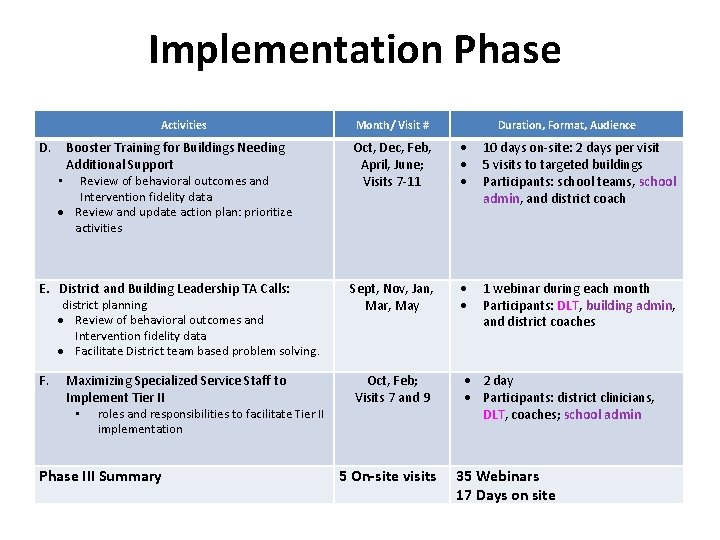
Implementation Phase Activities Month/ Visit # Duration, Format, Audience D. Booster Training for Buildings Needing Additional Support Oct, Dec, Feb, April, June; Visits 7 -11 10 days on-site: 2 days per visit 5 visits to targeted buildings Participants: school teams, school admin, and district coach E. District and Building Leadership TA Calls: Sept, Nov, Jan, Mar, May 1 webinar during each month Participants: DLT, building admin, and district coaches Review of behavioral outcomes and Intervention fidelity data Review and update action plan: prioritize activities • district planning Review of behavioral outcomes and Intervention fidelity data Facilitate District team based problem solving. F. Maximizing Specialized Service Staff to Implement Tier II • roles and responsibilities to facilitate Tier II Oct, Feb; Visits 7 and 9 implementation Phase III Summary 5 On-site visits 2 day Participants: district clinicians, DLT, coaches; school admin 35 Webinars 17 Days on site
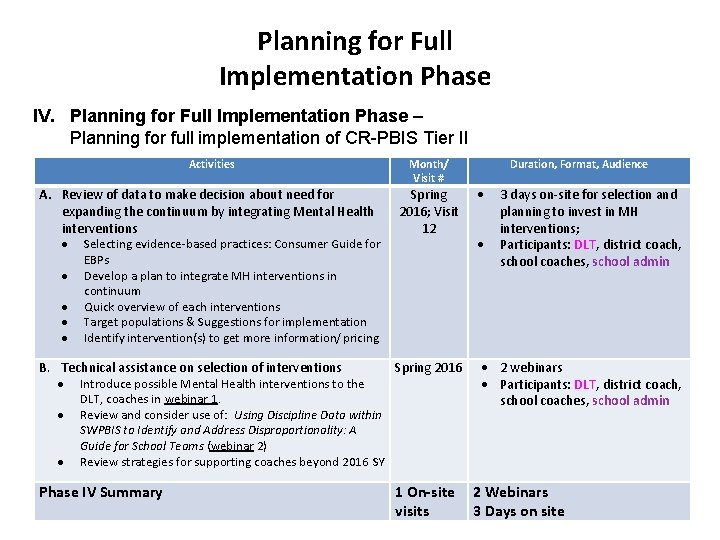
Planning for Full Implementation Phase IV. Planning for Full Implementation Phase – Planning for full implementation of CR-PBIS Tier II Activities Month/ Visit # A. Review of data to make decision about need for expanding the continuum by integrating Mental Health interventions Selecting evidence-based practices: Consumer Guide for Spring 2016; Visit 12 Spring 2016 2 webinars Participants: DLT, district coach, school coaches, school admin EBPs Develop a plan to integrate MH interventions in continuum Quick overview of each interventions Target populations & Suggestions for implementation Identify intervention(s) to get more information/ pricing B. Technical assistance on selection of interventions Introduce possible Mental Health interventions to the DLT, coaches in webinar 1. Review and consider use of: Using Discipline Data within SWPBIS to Identify and Address Disproportionality: A Guide for School Teams (webinar 2) Review strategies for supporting coaches beyond 2016 SY Phase IV Summary 1 On-site visits Duration, Format, Audience 3 days on-site for selection and planning to invest in MH interventions; Participants: DLT, district coach, school coaches, school admin 2 Webinars 3 Days on site
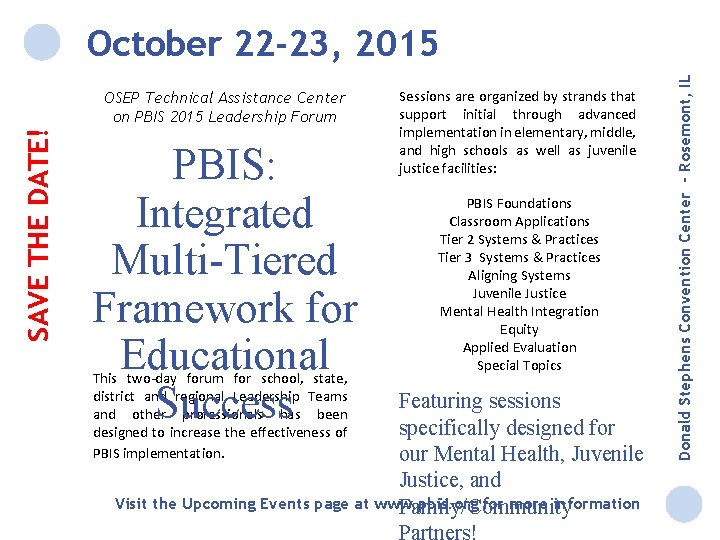
SAVE THE DATE! OSEP Technical Assistance Center on PBIS 2015 Leadership Forum PBIS: Integrated Multi-Tiered Framework for Educational Success This two-day forum for school, state, district and regional Leadership Teams and other professionals has been designed to increase the effectiveness of PBIS implementation. Sessions are organized by strands that support initial through advanced implementation in elementary, middle, and high schools as well as juvenile justice facilities: PBIS Foundations Classroom Applications Tier 2 Systems & Practices Tier 3 Systems & Practices Aligning Systems Juvenile Justice Mental Health Integration Equity Applied Evaluation Special Topics Featuring sessions specifically designed for our Mental Health, Juvenile Justice, and Visit the Upcoming Events page at www. pbis. org for more information Family/Community Donald Stephens Convention Center - Rosemont, IL October 22 -23, 2015
Chat Room Prompt: What suggestions/requests do you have for webinars for 2015 -16?
- Slides: 41