
Training Agenda Welcome and Overview Why Food Safety
- Slides: 62
Training Agenda Welcome and Overview Why Food Safety Is Important Good Personal Hygiene Receiving and Storing Food Safely Evaluating, Repacking, and Transporting Food Safely Cleaning and Sanitizing
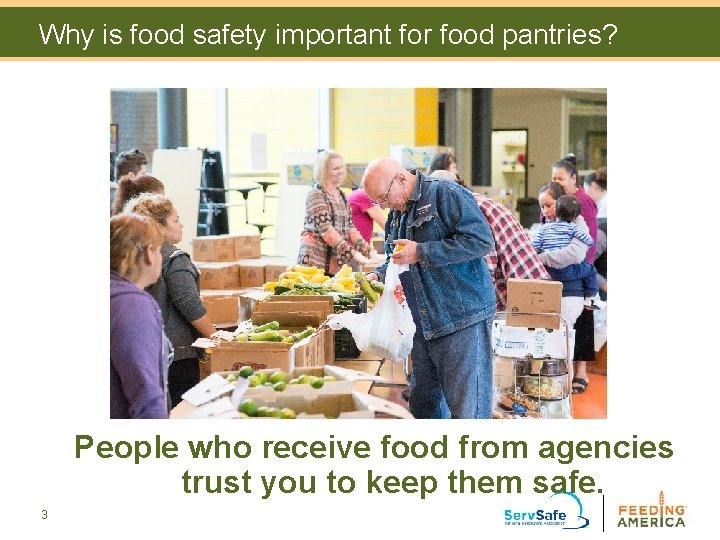
Why is food safety important for food pantries? People who receive food from agencies trust you to keep them safe. 3
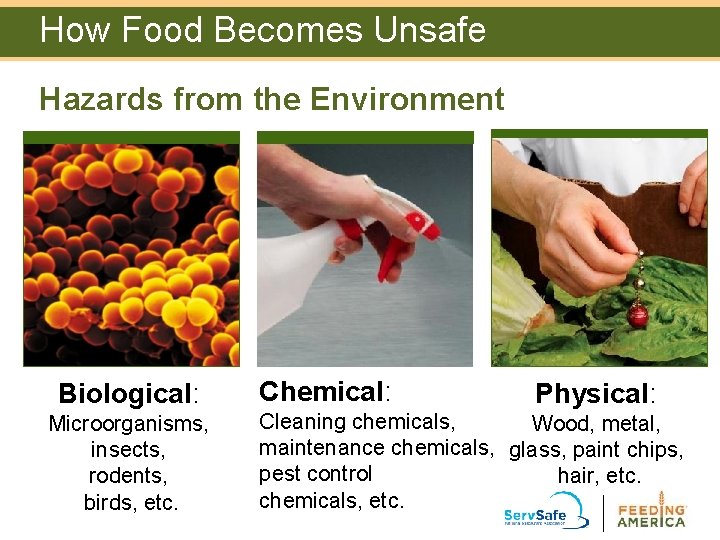
How Food Becomes Unsafe Hazards from the Environment Biological: Microorganisms, insects, rodents, birds, etc. Chemical: Physical: Cleaning chemicals, Wood, metal, maintenance chemicals, glass, paint chips, pest control hair, etc. chemicals, etc.
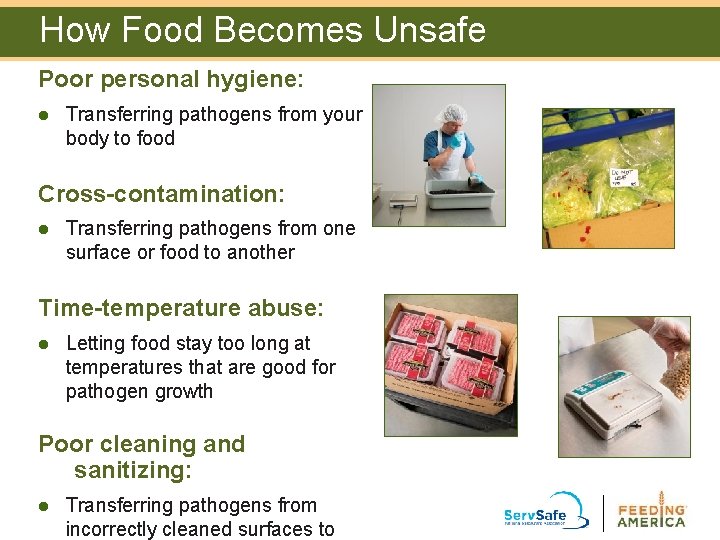
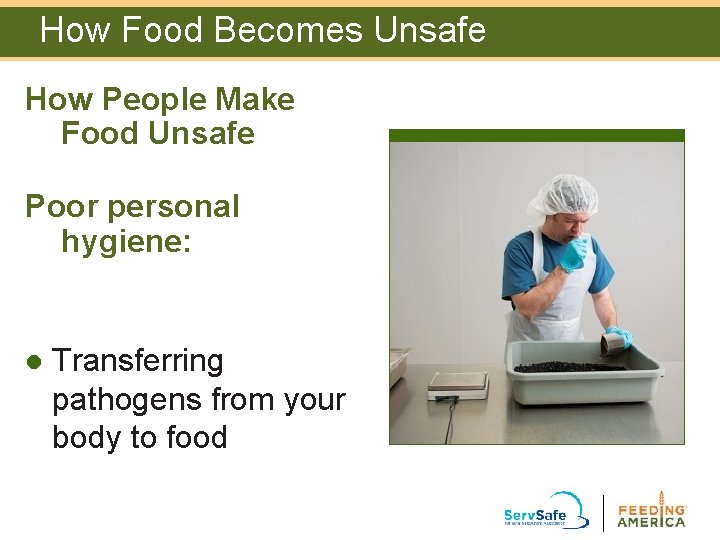
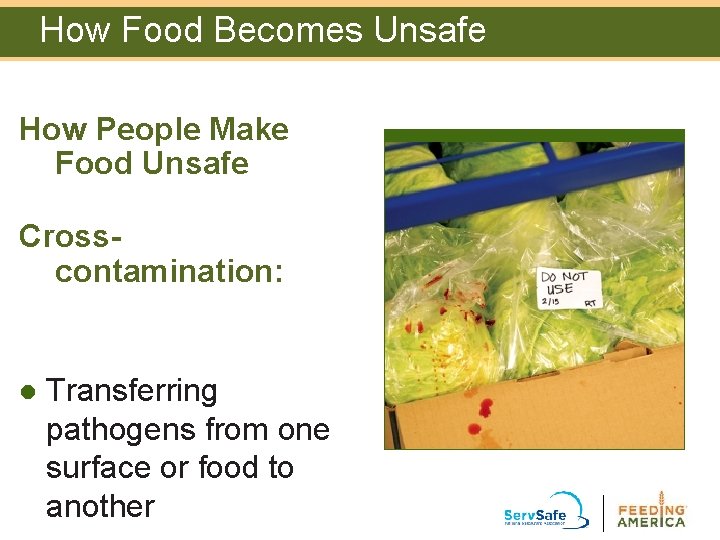
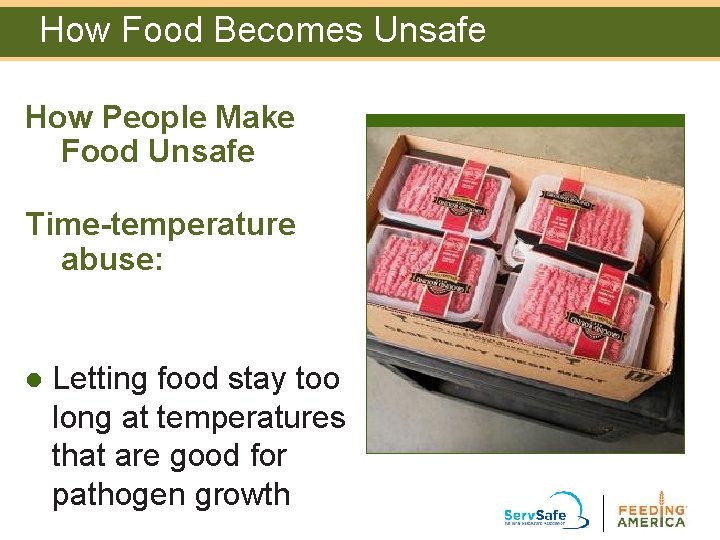
How Food Becomes Unsafe Poor personal hygiene: l Transferring pathogens from your body to food Cross-contamination: l Transferring pathogens from one surface or food to another Time-temperature abuse: l Letting food stay too long at temperatures that are good for pathogen growth Poor cleaning and sanitizing: l Transferring pathogens from incorrectly cleaned surfaces to
How Food Becomes Unsafe How People Make Food Unsafe Poor personal hygiene: l Transferring pathogens from your body to food
How Food Becomes Unsafe How People Make Food Unsafe Crosscontamination: l Transferring pathogens from one surface or food to another
How Food Becomes Unsafe How People Make Food Unsafe Time-temperature abuse: l Letting food stay too long at temperatures that are good for pathogen growth
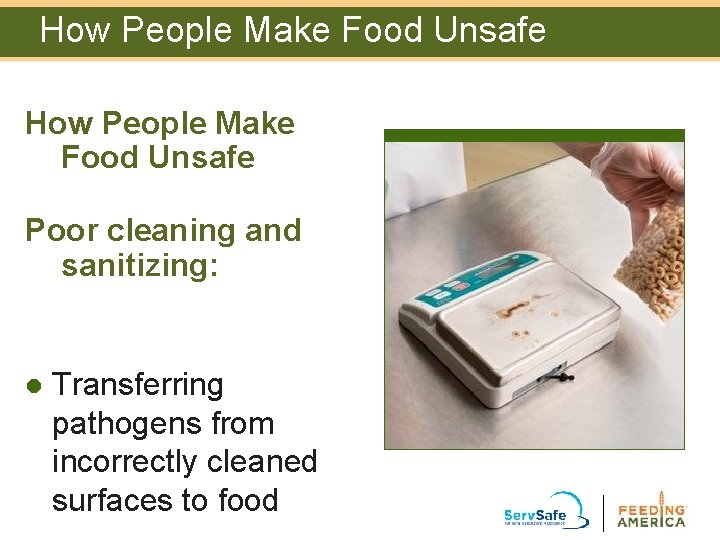
How People Make Food Unsafe Poor cleaning and sanitizing: l Transferring pathogens from incorrectly cleaned surfaces to food
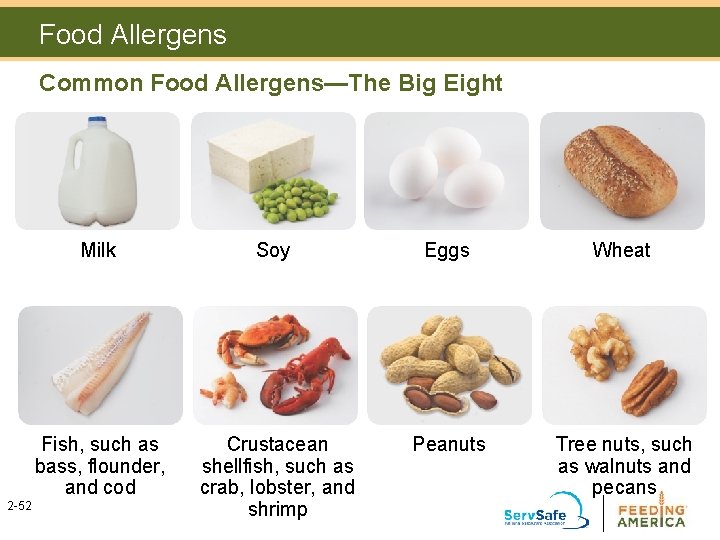
Food Allergens Common Food Allergens—The Big Eight 2 -52 Milk Soy Eggs Wheat Fish, such as bass, flounder, and cod Crustacean shellfish, such as crab, lobster, and shrimp Peanuts Tree nuts, such as walnuts and pecans
Contamination Prevent Cross-Contact: • • Store food with allergens Clean and sanitize separately from allergensurfaces that have come in contact with an allergen. free products. • Inspect food packaging for • DO NOT store food containing allergens leaks or spills that can above allergen-free food. cause cross-contact. • Wash hands and change gloves after handling allergens and before handling allergen-free food • Use dedicated pallets and bins for products containing allergens.
Good Personal Hygiene Concepts You Will Learn: • How and when to wash your hands • Where to wash your hands • Other hand-care guidelines • What to wear • Other important practices
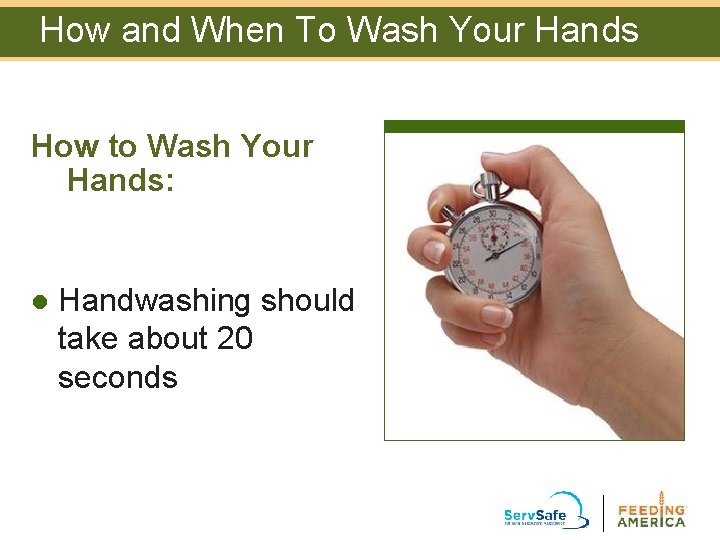
How and When To Wash Your Hands How to Wash Your Hands: l Handwashing should take about 20 seconds
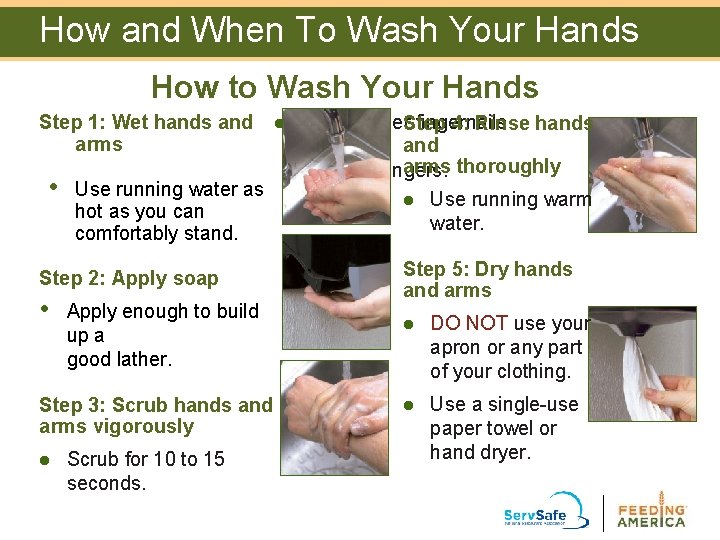
How and When To Wash Your Hands How to Wash Your Hands Step 1: Wet hands and arms • Use running water as hot as you can comfortably stand. Step 2: Apply soap • Apply enough to build up a good lather. Step 3: Scrub hands and arms vigorously l Scrub for 10 to 15 seconds. l Clean under. Step fingernails 4: Rinse hands and arms thoroughly between fingers. l Use running warm water. Step 5: Dry hands and arms l DO NOT use your apron or any part of your clothing. l Use a single-use paper towel or hand dryer.
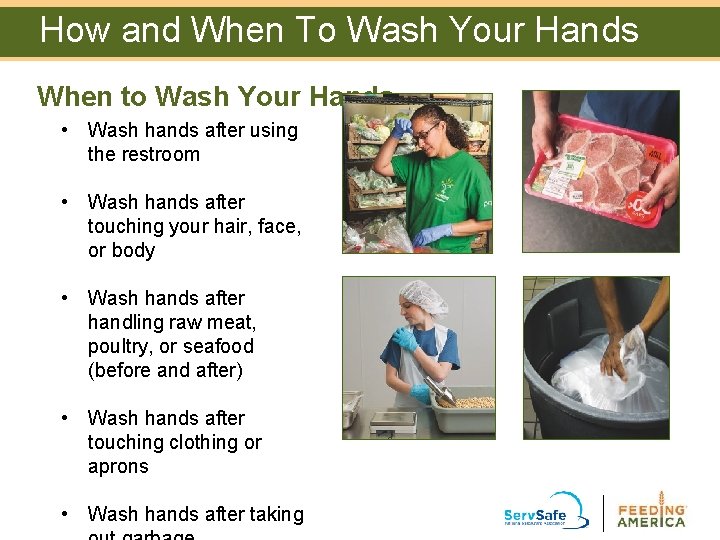
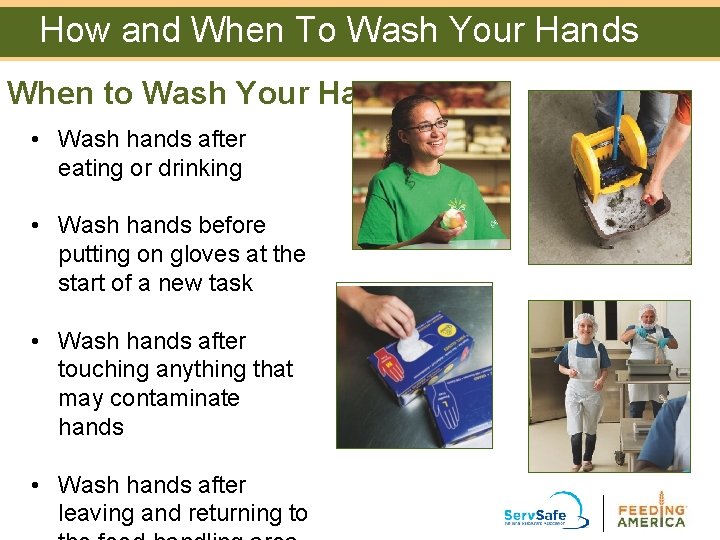
How and When To Wash Your Hands When to Wash Your Hands • Wash hands after using the restroom • Wash hands after touching your hair, face, or body • Wash hands after handling raw meat, poultry, or seafood (before and after) • Wash hands after touching clothing or aprons • Wash hands after taking
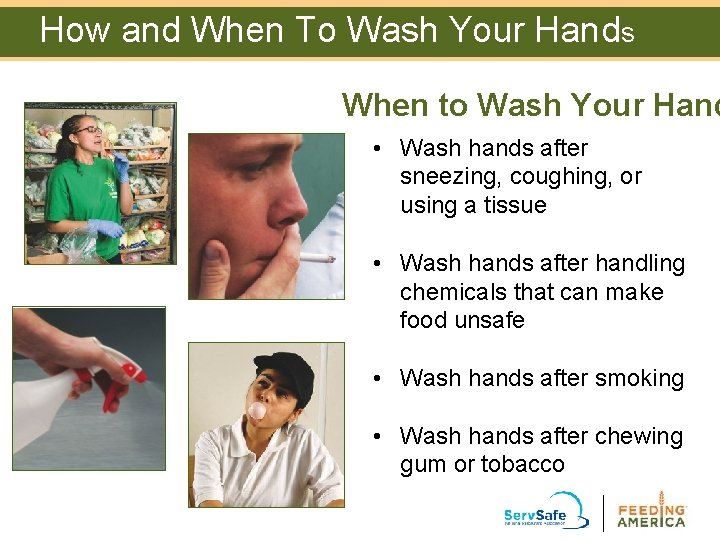
How and When To Wash Your Hands When to Wash Your Hand • Wash hands after sneezing, coughing, or using a tissue • Wash hands after handling chemicals that can make food unsafe • Wash hands after smoking • Wash hands after chewing gum or tobacco
How and When To Wash Your Hands When to Wash Your Hands • Wash hands after eating or drinking • Wash hands before putting on gloves at the start of a new task • Wash hands after touching anything that may contaminate hands • Wash hands after leaving and returning to
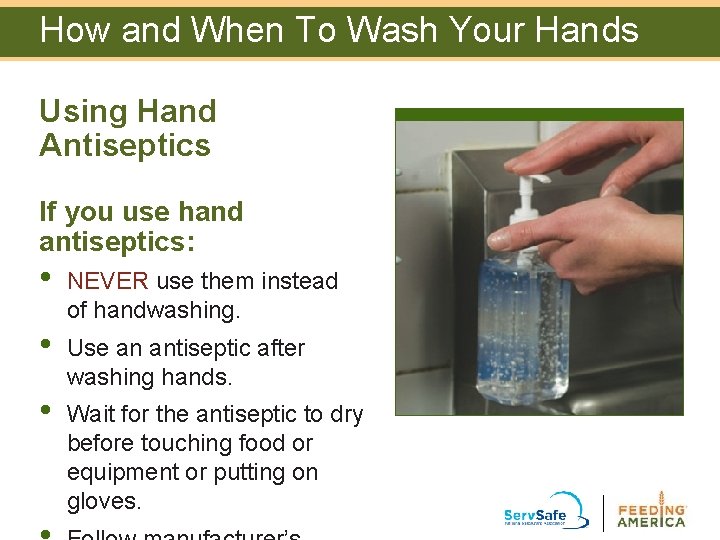
How and When To Wash Your Hands Using Hand Antiseptics If you use hand antiseptics: • • • NEVER use them instead of handwashing. Use an antiseptic after washing hands. Wait for the antiseptic to dry before touching food or equipment or putting on gloves.
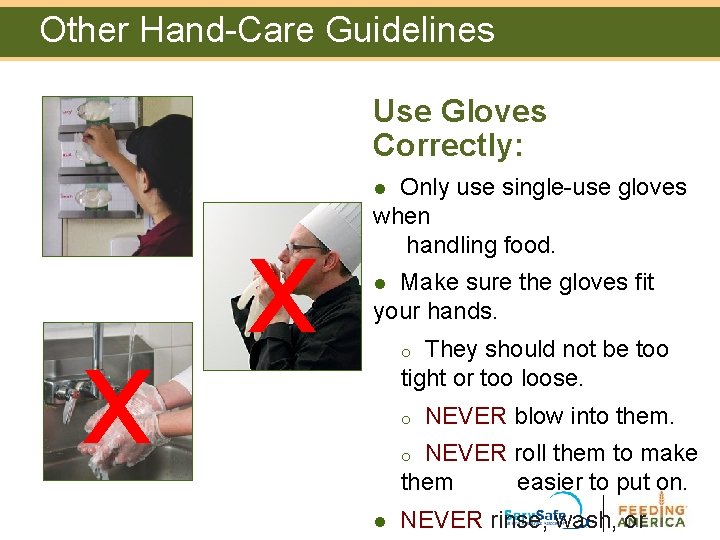
Other Hand-Care Guidelines Use Gloves Correctly: Only use single-use gloves when handling food. l x x Make sure the gloves fit your hands. l They should not be too tight or too loose. o o NEVER blow into them. NEVER roll them to make them easier to put on. o l NEVER rinse, wash, or
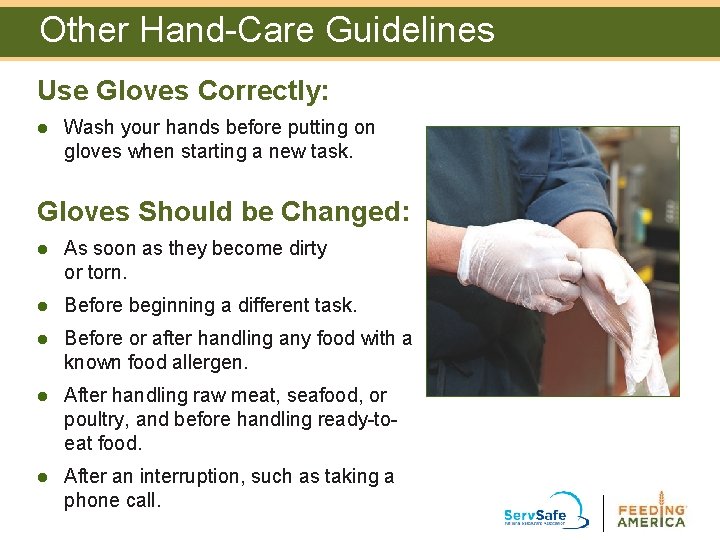
Other Hand-Care Guidelines Use Gloves Correctly: l Wash your hands before putting on gloves when starting a new task. Gloves Should be Changed: l As soon as they become dirty or torn. l Before beginning a different task. l Before or after handling any food with a known food allergen. l After handling raw meat, seafood, or poultry, and before handling ready-toeat food. l After an interruption, such as taking a phone call.
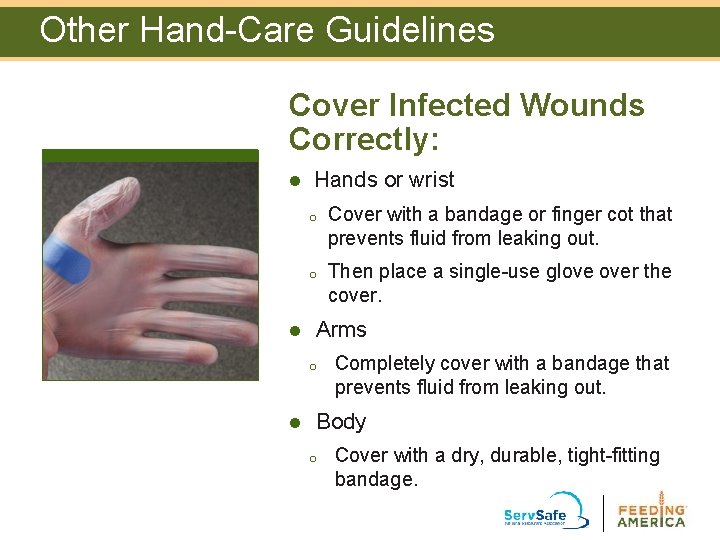
Other Hand-Care Guidelines Cover Infected Wounds Correctly: l l Hands or wrist o Cover with a bandage or finger cot that prevents fluid from leaking out. o Then place a single-use glove over the cover. Arms o l Completely cover with a bandage that prevents fluid from leaking out. Body o Cover with a dry, durable, tight-fitting bandage.
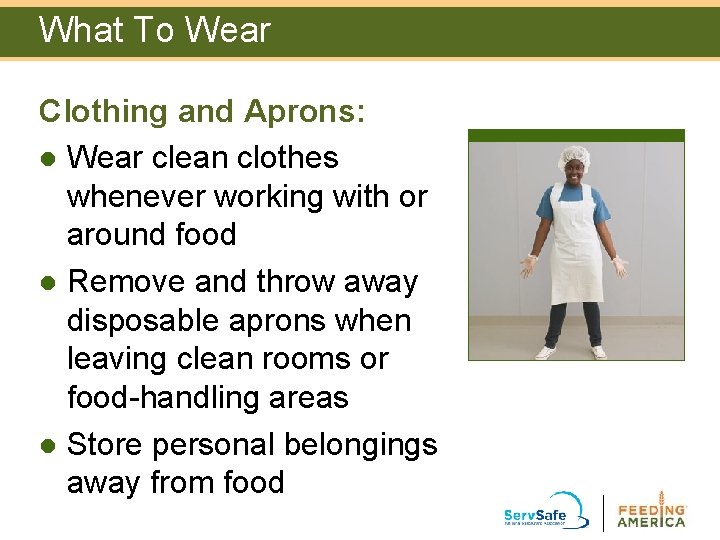
What To Wear Clothing and Aprons: l Wear clean clothes whenever working with or around food l Remove and throw away disposable aprons when leaving clean rooms or food-handling areas l Store personal belongings away from food
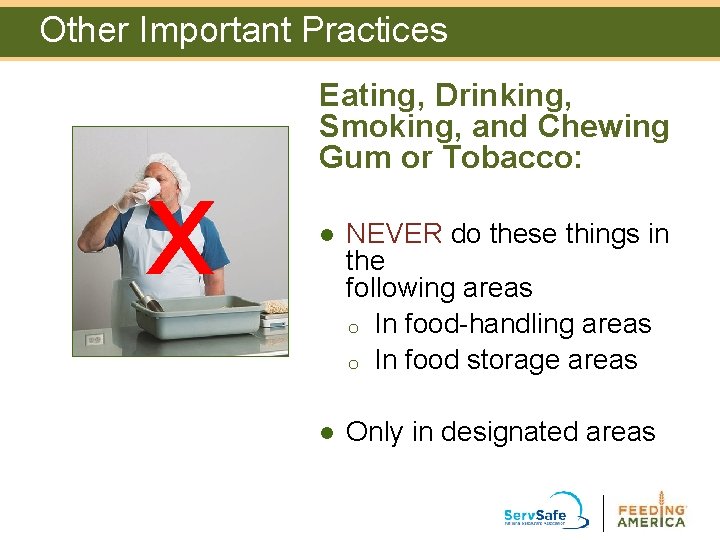
Other Important Practices x Eating, Drinking, Smoking, and Chewing Gum or Tobacco: l NEVER do these things in the following areas o In food-handling areas o In food storage areas l Only in designated areas
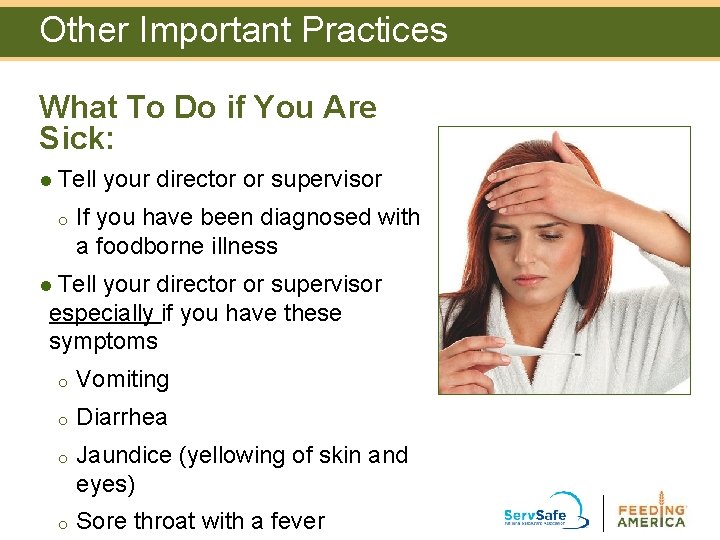
Other Important Practices What To Do if You Are Sick: l Tell o your director or supervisor If you have been diagnosed with a foodborne illness l Tell your director or supervisor especially if you have these symptoms o Vomiting o Diarrhea o Jaundice (yellowing of skin and eyes) o Sore throat with a fever
Receiving and Storing Food Safely Concepts You Will Learn: Controlling time and temperature during receiving l Inspecting food during receiving to make sure it is safe l l Storing food safely
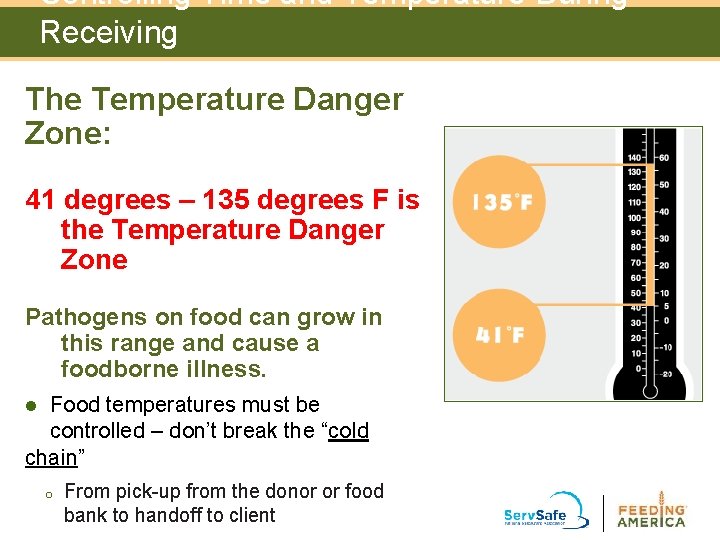
Controlling Time and Temperature During Receiving The Temperature Danger Zone: 41 degrees – 135 degrees F is the Temperature Danger Zone Pathogens on food can grow in this range and cause a foodborne illness. Food temperatures must be controlled – don’t break the “cold chain” l o From pick-up from the donor or food bank to handoff to client
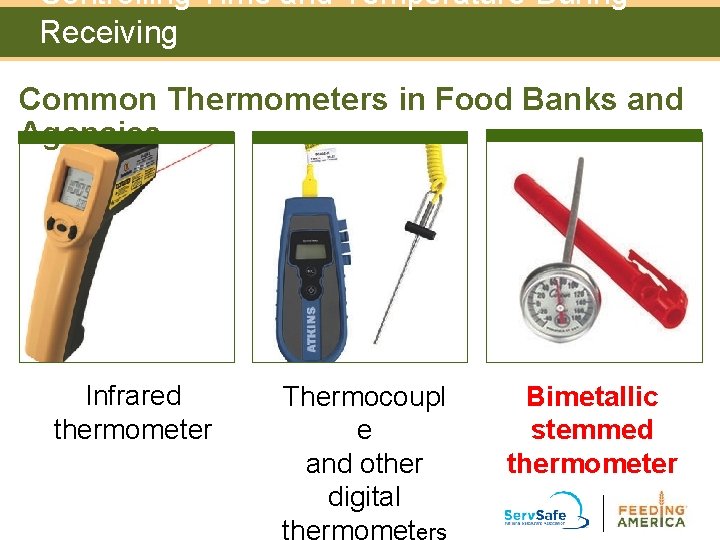
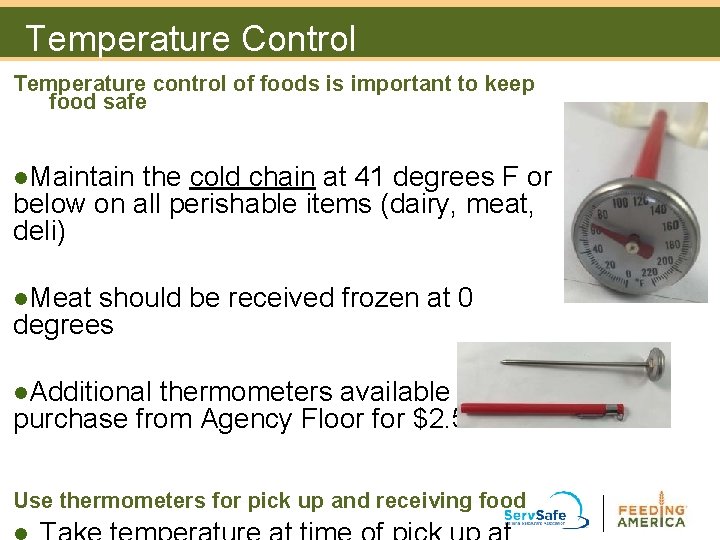
Controlling Time and Temperature During Receiving Common Thermometers in Food Banks and Agencies Infrared thermometer Thermocoupl e and other digital thermometers Bimetallic stemmed thermometer
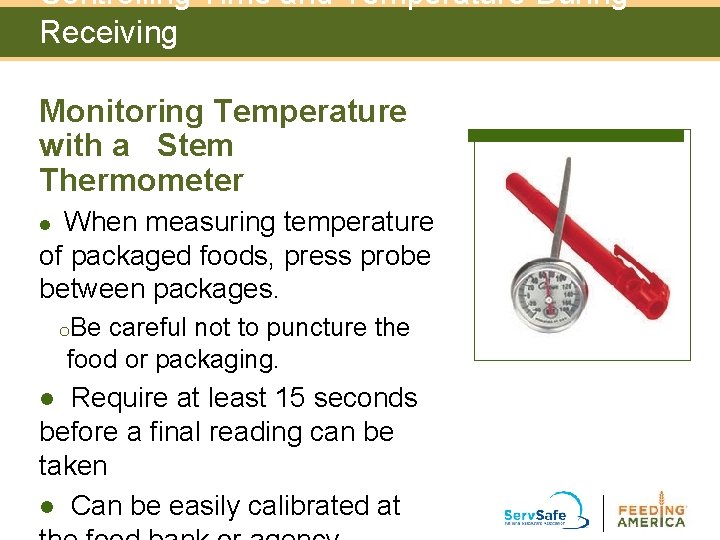
Controlling Time and Temperature During Receiving Monitoring Temperature with a Stem Thermometer When measuring temperature of packaged foods, press probe between packages. l o. Be careful not to puncture the food or packaging. Require at least 15 seconds before a final reading can be taken l Can be easily calibrated at l
Temperature Control Temperature control of foods is important to keep food safe l. Maintain the cold chain at 41 degrees F or below on all perishable items (dairy, meat, deli) l. Meat should be received frozen at 0 degrees l. Additional thermometers available for purchase from Agency Floor for $2. 50 Use thermometers for pick up and receiving food
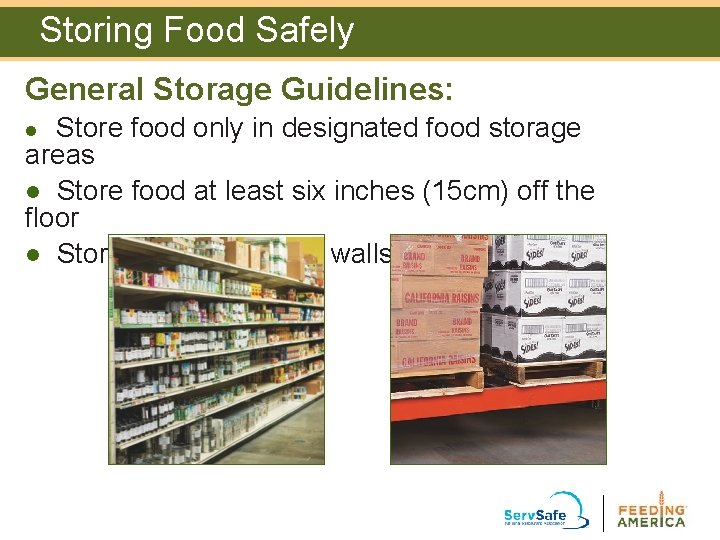
Storing Food Safely General Storage Guidelines: Store food only in designated food storage areas l Store food at least six inches (15 cm) off the floor l Store food away from walls l
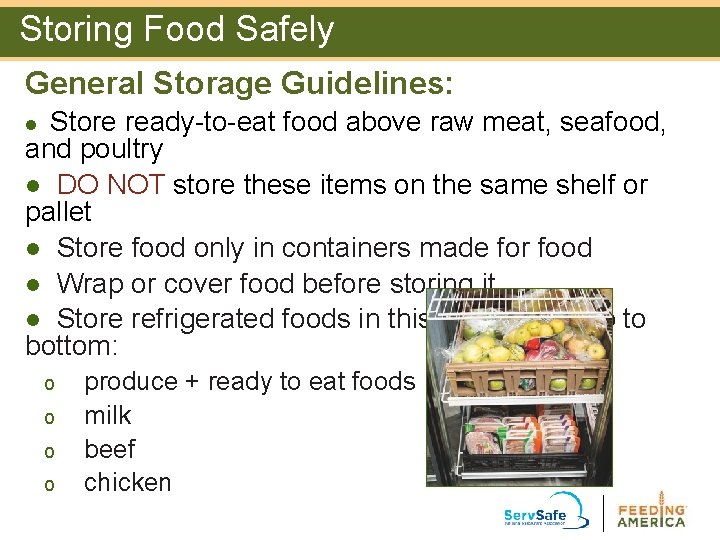
Storing Food Safely General Storage Guidelines: Store ready-to-eat food above raw meat, seafood, and poultry l DO NOT store these items on the same shelf or pallet l Store food only in containers made for food l Wrap or cover food before storing it l Store refrigerated foods in this order from top to bottom: l o o produce + ready to eat foods milk beef chicken
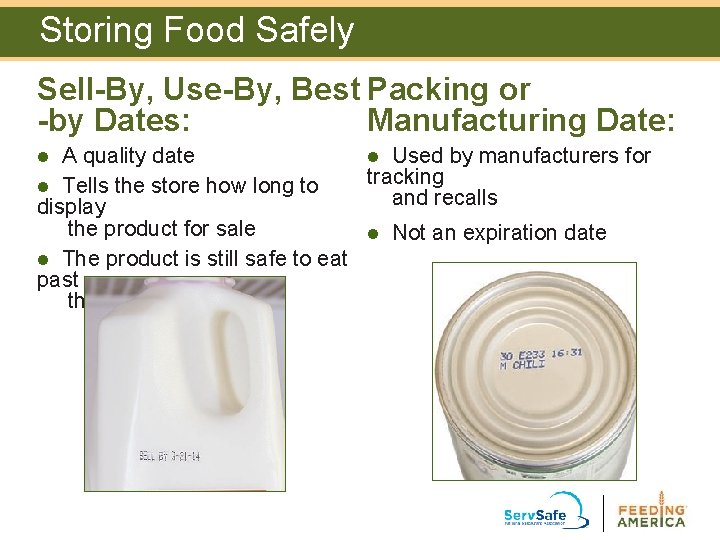
Storing Food Safely Sell-By, Use-By, Best Packing or -by Dates: Manufacturing Date: A quality date l Used by manufacturers for tracking l Tells the store how long to and recalls display the product for sale l Not an expiration date l The product is still safe to eat past this date l
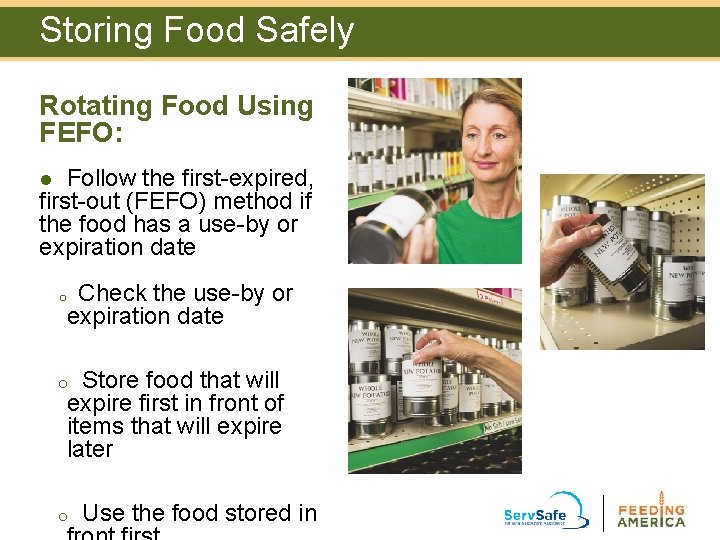
Storing Food Safely Rotating Food Using FEFO: Follow the first-expired, first-out (FEFO) method if the food has a use-by or expiration date l Check the use-by or expiration date o Store food that will expire first in front of items that will expire later o o Use the food stored in
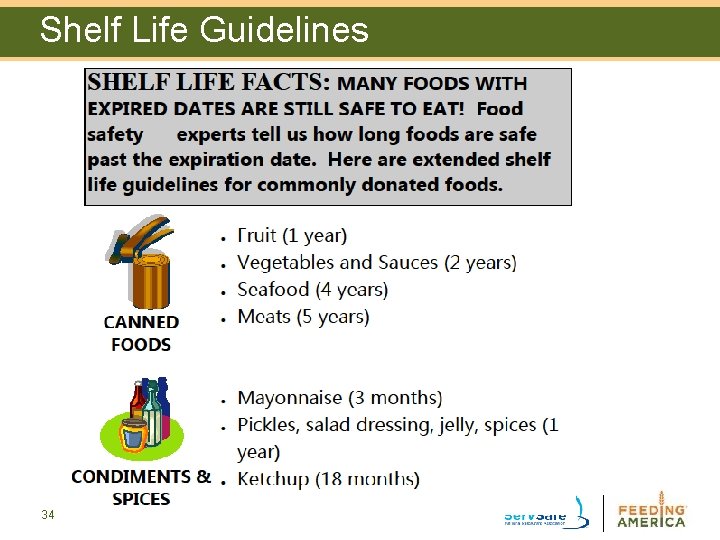
Shelf Life Guidelines 34
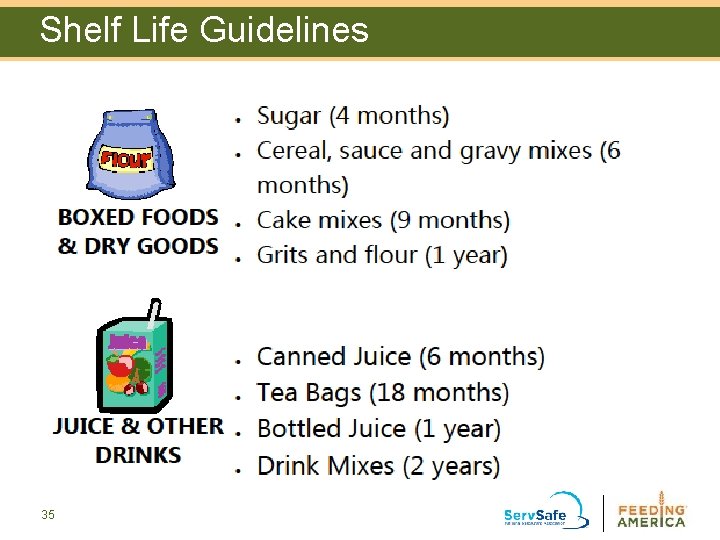
Shelf Life Guidelines 35
Evaluating, Repacking, and Transporting Food Safely Concepts You Will Learn: l l Evaluating the condition of food Loading and distributing food safely
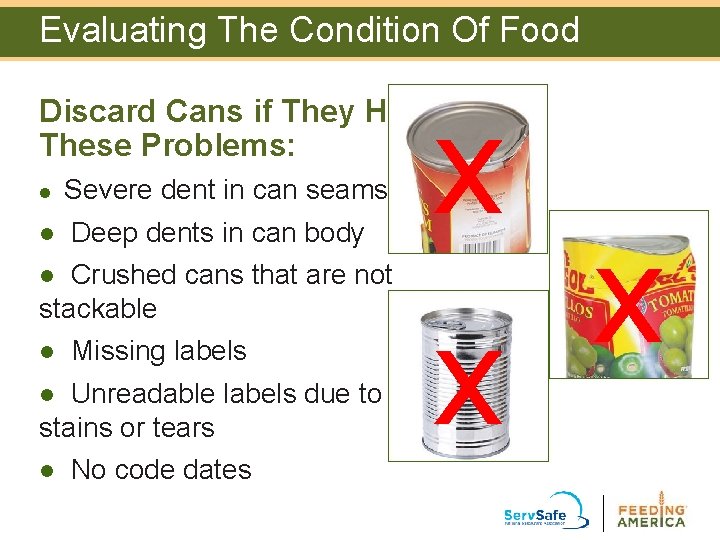
Evaluating The Condition Of Food x Discard Cans if They Have These Problems: l l Severe dent in can seams Deep dents in can body Crushed cans that are not stackable l l Missing labels Unreadable labels due to stains or tears l l No code dates x x
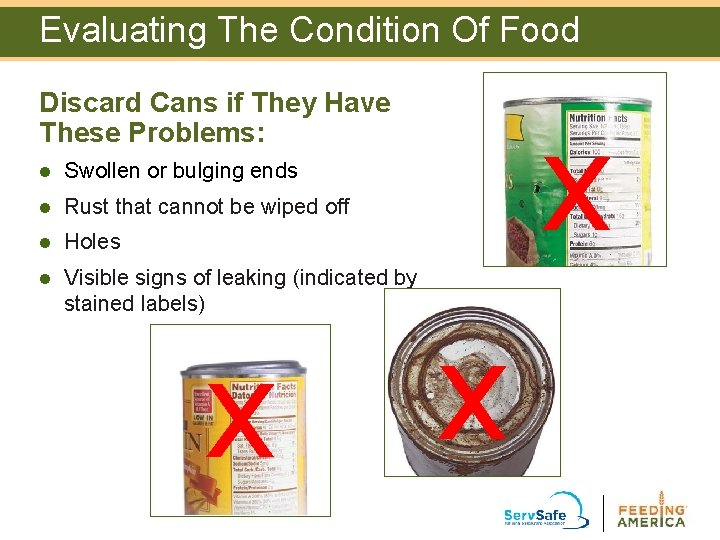
Evaluating The Condition Of Food Discard Cans if They Have These Problems: l Swollen or bulging ends l Rust that cannot be wiped off l Holes l Visible signs of leaking (indicated by stained labels) x x x
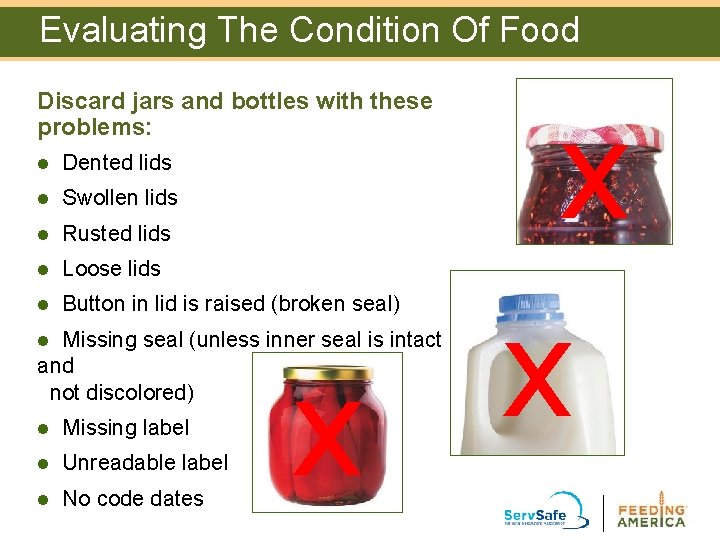
Evaluating The Condition Of Food Discard jars and bottles with these problems: l Dented lids l Swollen lids l Rusted lids l Loose lids l Button in lid is raised (broken seal) Missing seal (unless inner seal is intact and not discolored) l l Missing label l Unreadable label l No code dates x x x
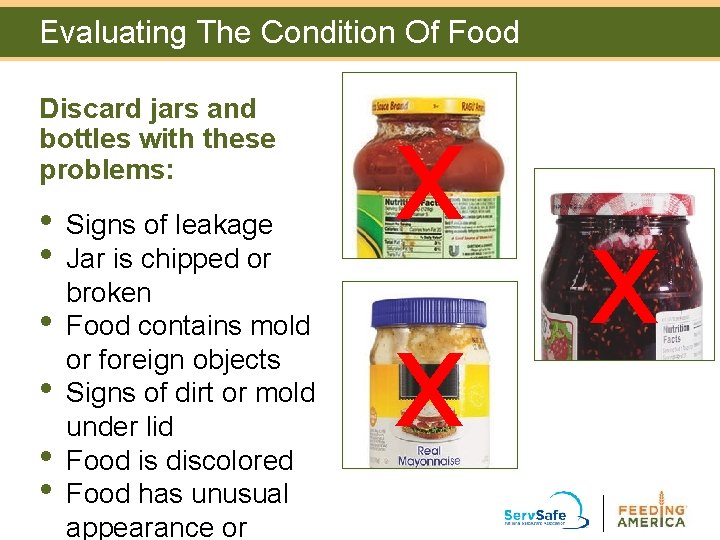
Evaluating The Condition Of Food Discard jars and bottles with these problems: • • • Signs of leakage Jar is chipped or broken Food contains mold or foreign objects Signs of dirt or mold under lid Food is discolored Food has unusual appearance or x x x
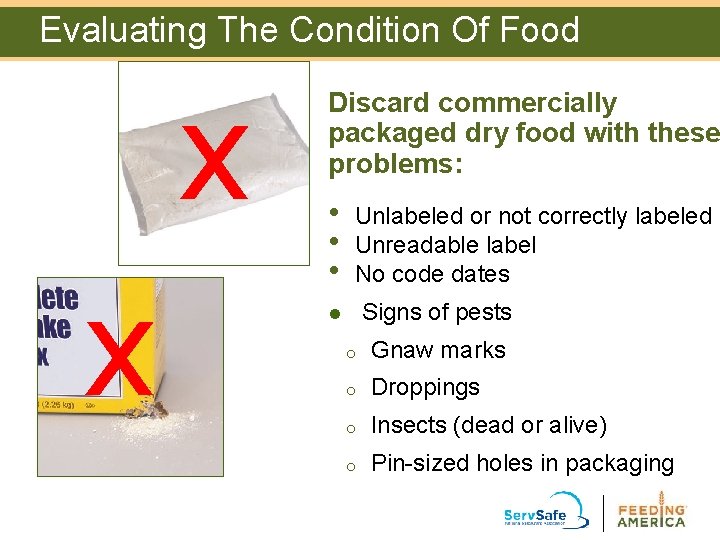
Evaluating The Condition Of Food x x Discard commercially packaged dry food with these problems: • • • Unlabeled or not correctly labeled Unreadable label No code dates Signs of pests l o Gnaw marks o Droppings o Insects (dead or alive) o Pin-sized holes in packaging
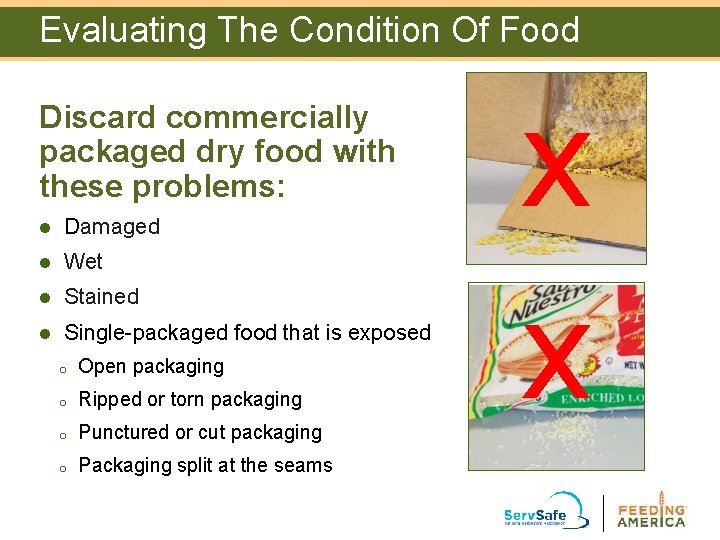
Evaluating The Condition Of Food Discard commercially packaged dry food with these problems: l Damaged l Wet l Stained l Single-packaged food that is exposed o Open packaging o Ripped or torn packaging o Punctured or cut packaging o Packaging split at the seams x x
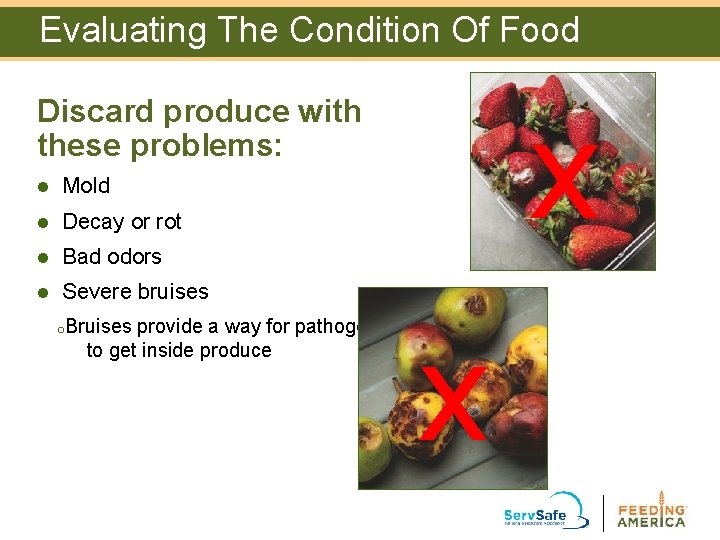
Evaluating The Condition Of Food x Discard produce with these problems: l Mold l Decay or rot l Bad odors l Severe bruises o. Bruises provide a way for pathogens to get inside produce x
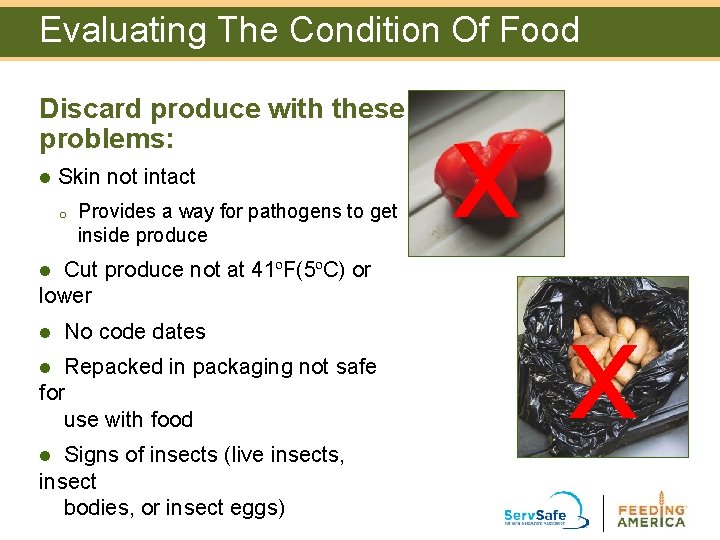
Evaluating The Condition Of Food Discard produce with these problems: l Skin not intact o Provides a way for pathogens to get inside produce Cut produce not at 41ºF(5ºC) or lower x l l No code dates Repacked in packaging not safe for use with food l Signs of insects (live insects, insect bodies, or insect eggs) l x
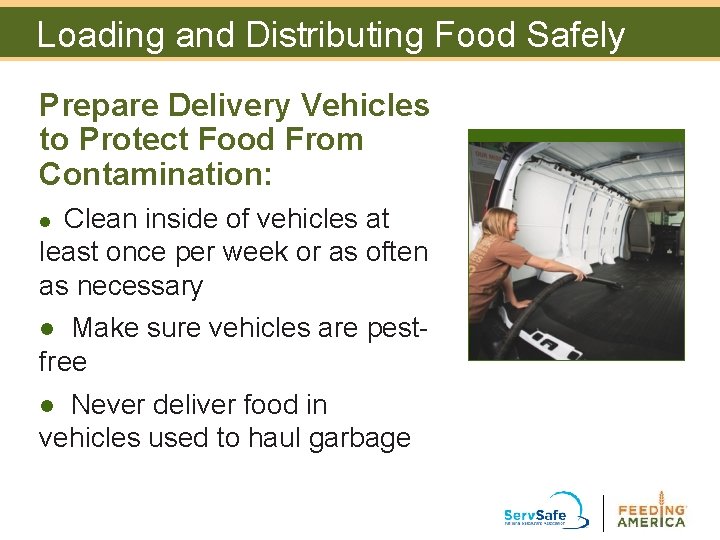
Loading and Distributing Food Safely Prepare Delivery Vehicles to Protect Food From Contamination: Clean inside of vehicles at least once per week or as often as necessary l Make sure vehicles are pestfree l Never deliver food in vehicles used to haul garbage l
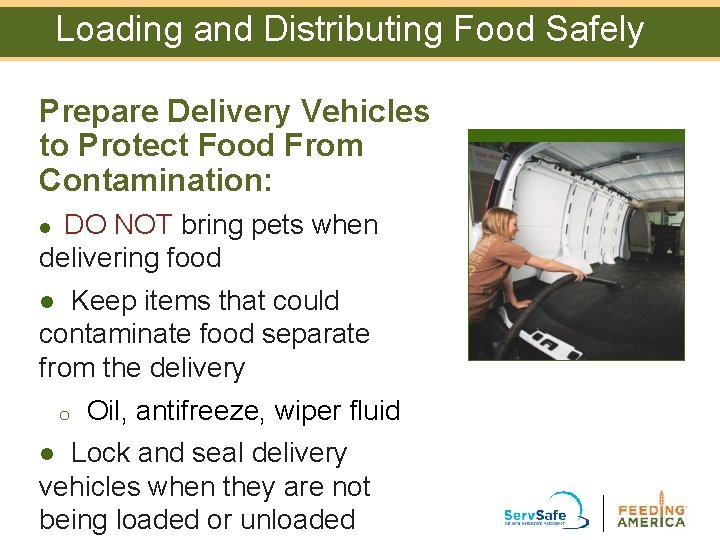
Loading and Distributing Food Safely Prepare Delivery Vehicles to Protect Food From Contamination: DO NOT bring pets when delivering food l Keep items that could contaminate food separate from the delivery l o Oil, antifreeze, wiper fluid Lock and seal delivery vehicles when they are not being loaded or unloaded l
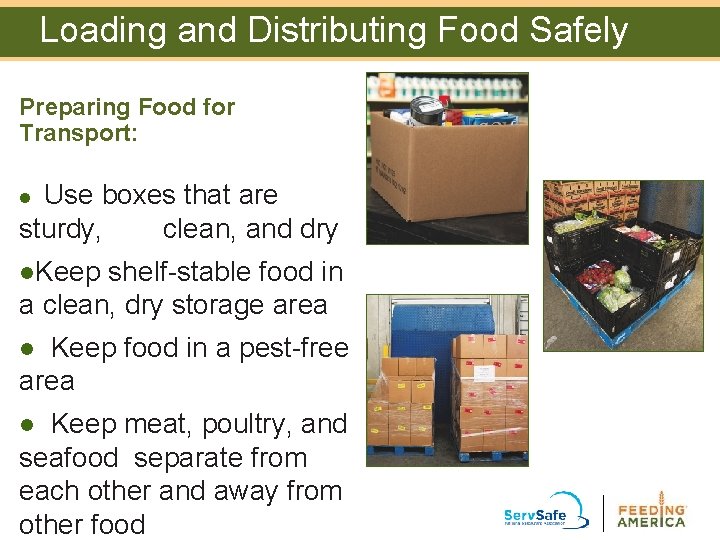
Loading and Distributing Food Safely Preparing Food for Transport: Use boxes that are sturdy, clean, and dry l l. Keep shelf-stable food in a clean, dry storage area Keep food in a pest-free area l Keep meat, poultry, and seafood separate from each other and away from other food l
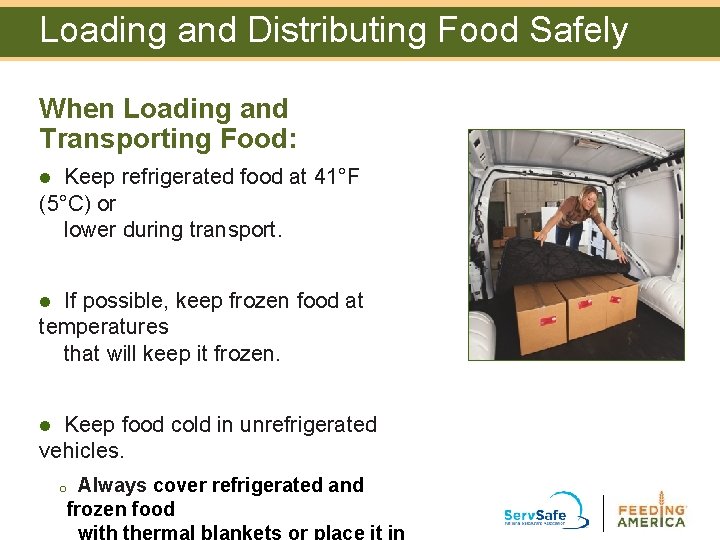
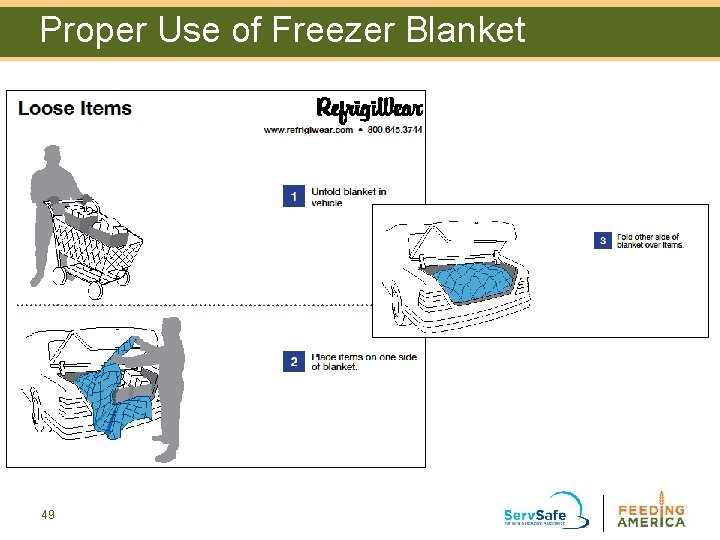
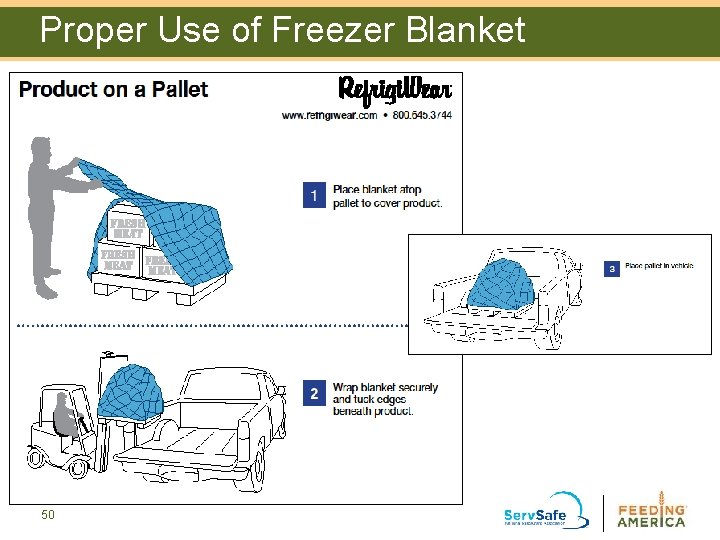
Loading and Distributing Food Safely When Loading and Transporting Food: Keep refrigerated food at 41°F (5°C) or lower during transport. l If possible, keep frozen food at temperatures that will keep it frozen. l Keep food cold in unrefrigerated vehicles. l Always cover refrigerated and frozen food with thermal blankets or place it in o
Proper Use of Freezer Blanket 49
Proper Use of Freezer Blanket 50
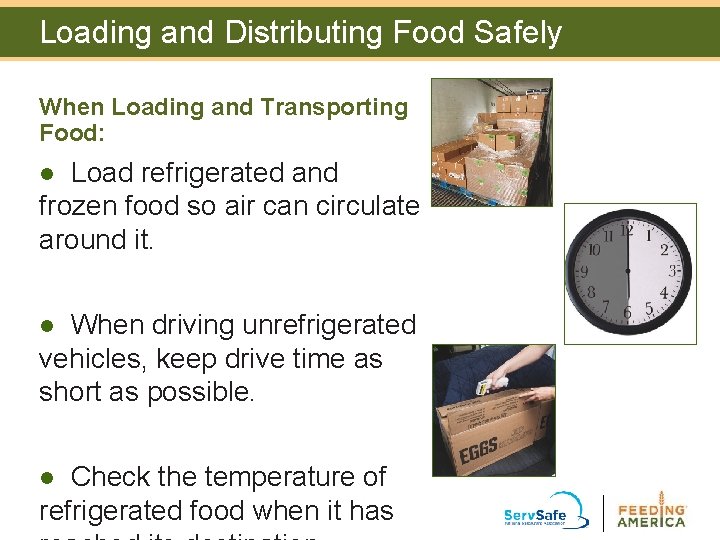
Loading and Distributing Food Safely When Loading and Transporting Food: Load refrigerated and frozen food so air can circulate around it. l When driving unrefrigerated vehicles, keep drive time as short as possible. l Check the temperature of refrigerated food when it has l
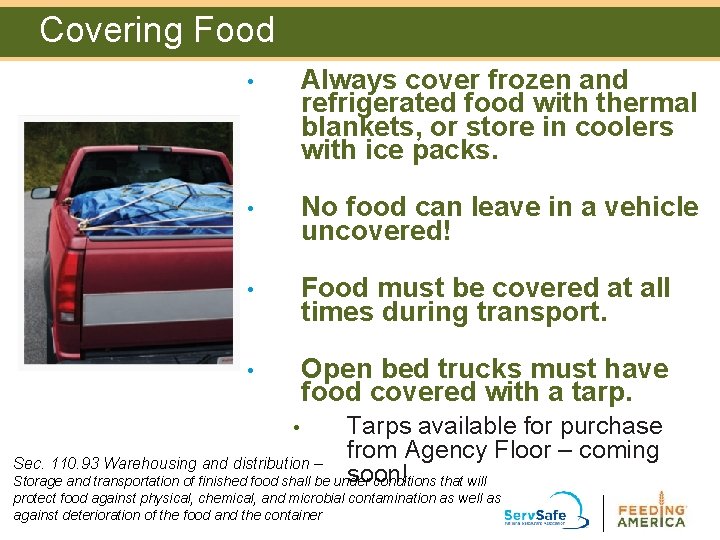
Covering Food • Always cover frozen and refrigerated food with thermal blankets, or store in coolers with ice packs. • No food can leave in a vehicle uncovered! • Food must be covered at all times during transport. • Open bed trucks must have food covered with a tarp. Tarps available for purchase from Agency Floor – coming Sec. 110. 93 Warehousing and distribution – soon! Storage and transportation of finished food shall be under conditions that will • protect food against physical, chemical, and microbial contamination as well as against deterioration of the food and the container
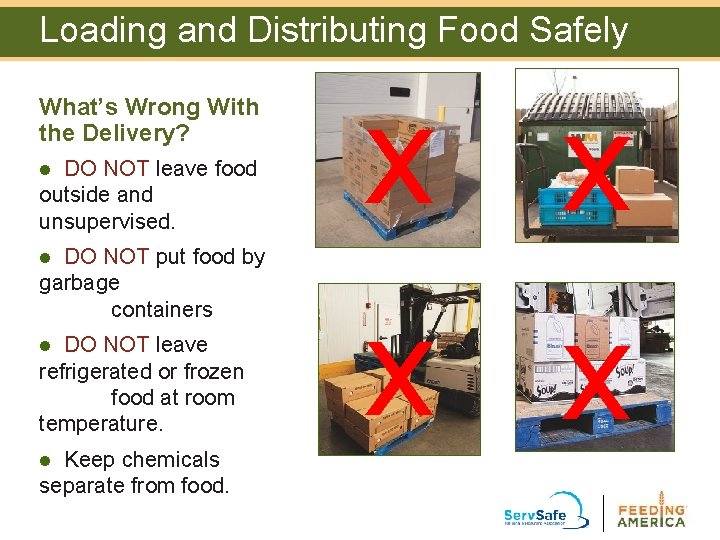
Loading and Distributing Food Safely What’s Wrong With the Delivery? DO NOT leave food outside and unsupervised. l DO NOT put food by garbage containers l DO NOT leave refrigerated or frozen food at room temperature. l Keep chemicals separate from food. l x x
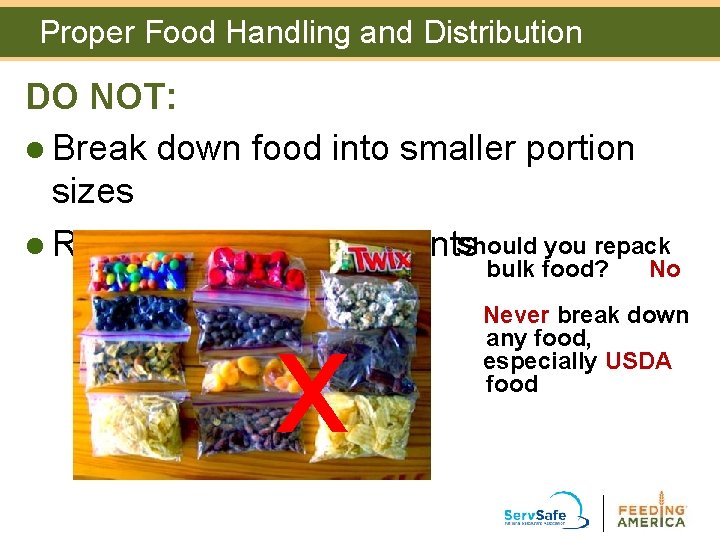
Proper Food Handling and Distribution DO NOT: l Break down food into smaller portion sizes Should you repack l Repackage food for clients bulk food? x No Never break down any food, especially USDA food
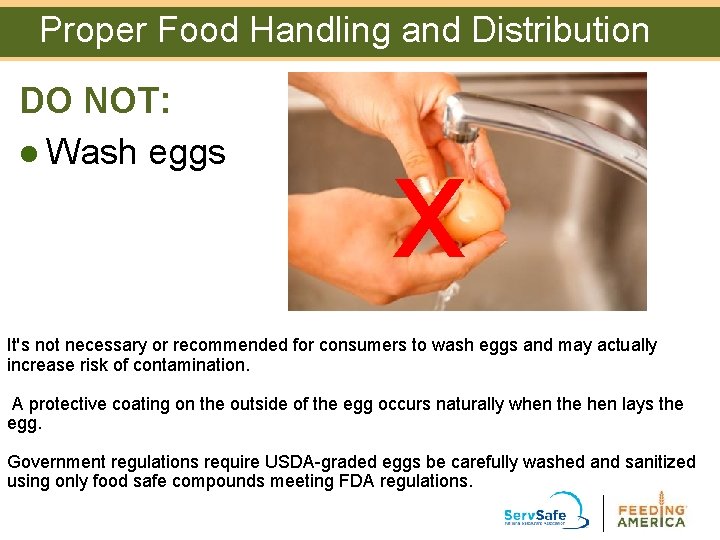
Proper Food Handling and Distribution DO NOT: l Wash eggs x It's not necessary or recommended for consumers to wash eggs and may actually increase risk of contamination. A protective coating on the outside of the egg occurs naturally when the hen lays the egg. Government regulations require USDA-graded eggs be carefully washed and sanitized using only food safe compounds meeting FDA regulations.
Cleaning and Sanitizing Concepts You Will Learn: l How and when to clean and sanitize l How to manually clean and sanitize tools and utensils l Handling garbage l Spotting pests
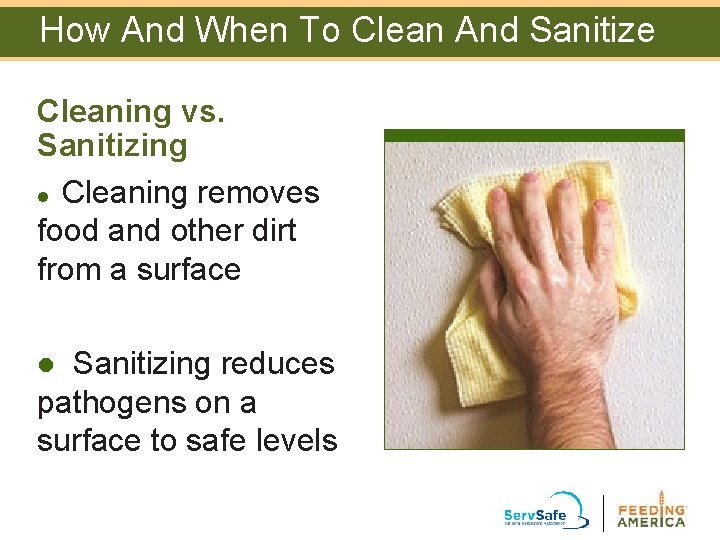
How And When To Clean And Sanitize Cleaning vs. Sanitizing l Cleaning removes food and other dirt from a surface Sanitizing reduces pathogens on a surface to safe levels l
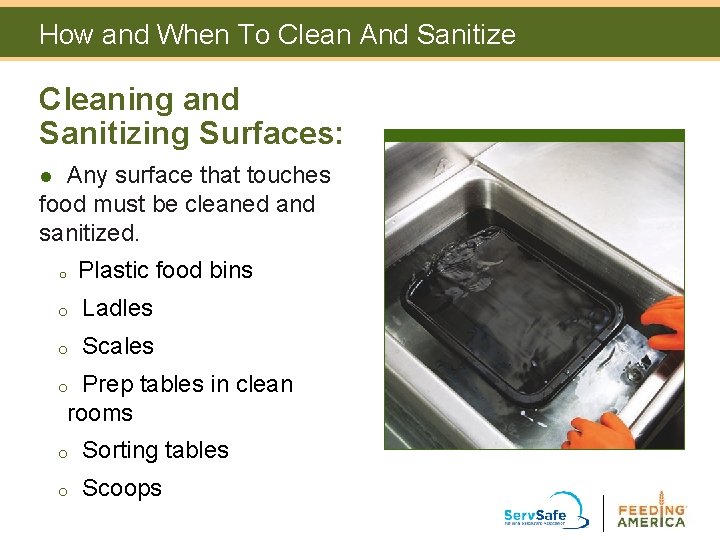
How and When To Clean And Sanitize Cleaning and Sanitizing Surfaces: Any surface that touches food must be cleaned and sanitized. l o Plastic food bins o Ladles o Scales Prep tables in clean rooms o o Sorting tables o Scoops
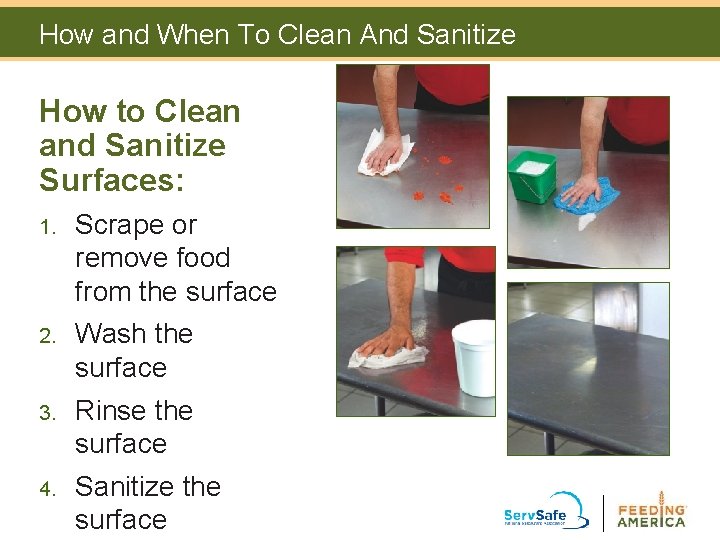
How and When To Clean And Sanitize How to Clean and Sanitize Surfaces: 1. Scrape or remove food from the surface 2. Wash the surface 3. Rinse the surface 4. Sanitize the surface
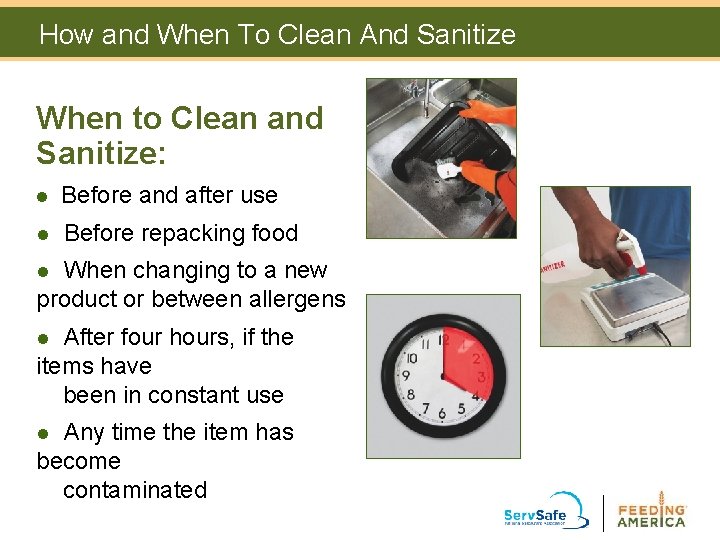
How and When To Clean And Sanitize When to Clean and Sanitize: l Before and after use l Before repacking food When changing to a new product or between allergens l After four hours, if the items have been in constant use l Any time the item has become contaminated l
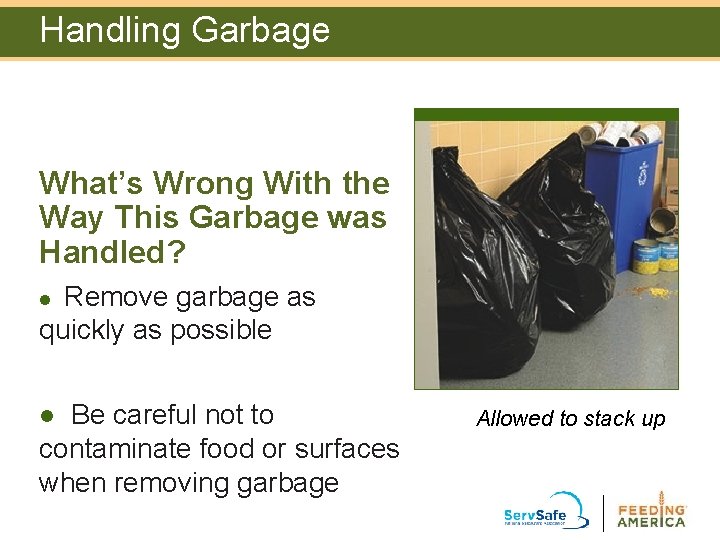
Handling Garbage What’s Wrong With the Way This Garbage was Handled? Remove garbage as quickly as possible l Be careful not to contaminate food or surfaces when removing garbage l Allowed to stack up
Questions?