
Trail of breadcr umbs Discovering the molecular mechanisms
Trail of breadcr umbs Discovering the molecular mechanisms of nanotoxicity in fish Christopher Anthony Dieni Department of Chemistry and Biochemistry Mount Allison University UNB Biology Seminar Series Friday, March 28 th, 2014 Michael Owens
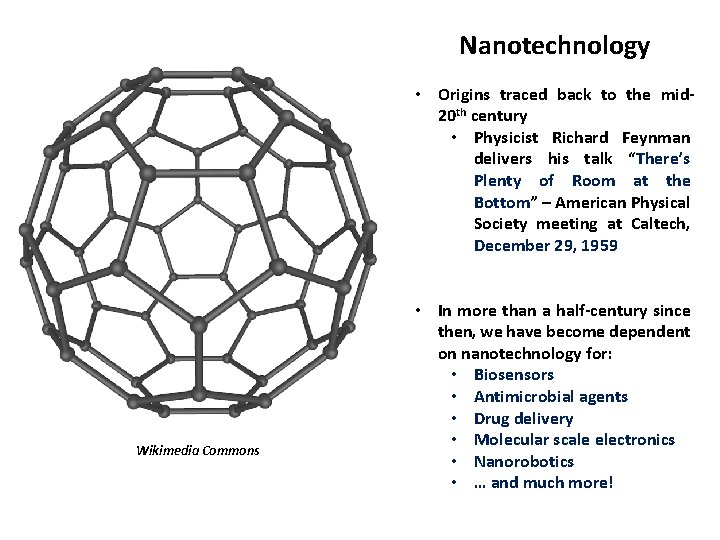
Nanotechnology • Origins traced back to the mid 20 th century • Physicist Richard Feynman delivers his talk “There’s Plenty of Room at the Bottom” – American Physical Society meeting at Caltech, December 29, 1959 Wikimedia Commons • In more than a half-century since then, we have become dependent on nanotechnology for: • Biosensors • Antimicrobial agents • Drug delivery • Molecular scale electronics • Nanorobotics • … and much more!
Today’s talk Design of nanomaterials and constituent materials Synthesis/engineering of nanomaterials Functionalization/conjugation of nanomaterials for specific purposes (e. g. drug delivery)
Today’s talk Design of nanomaterials and constituent materials Synthesis/engineering of nanomaterials Functionalization/conjugation of nanomaterials for specific purposes (e. g. drug delivery) ü Release of nanomaterials in the environment and interaction with indigenous organisms
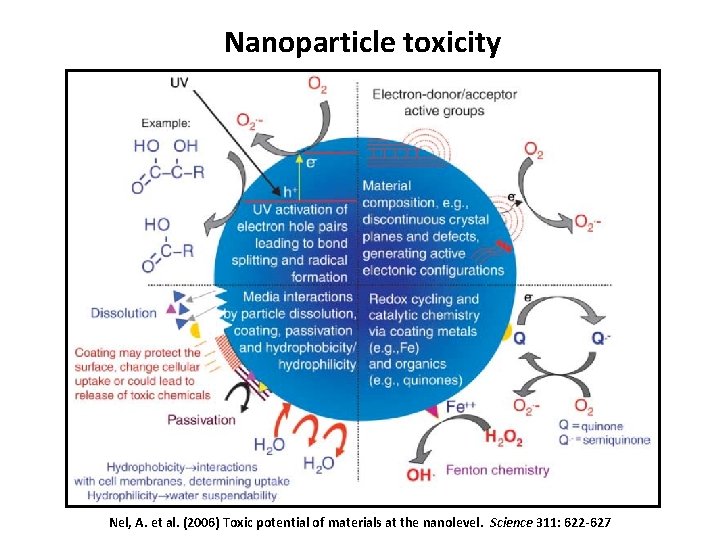
Nanoparticle toxicity Nel, A. et al. (2006) Toxic potential of materials at the nanolevel. Science 311: 622 -627
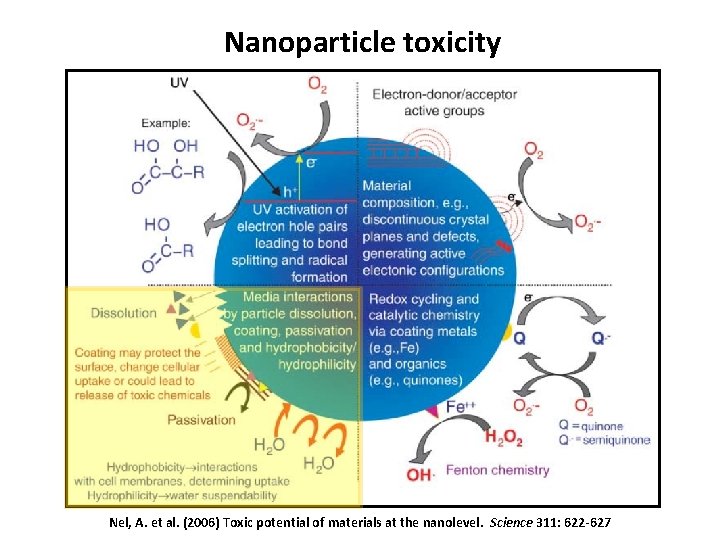
Nanoparticle toxicity Nel, A. et al. (2006) Toxic potential of materials at the nanolevel. Science 311: 622 -627
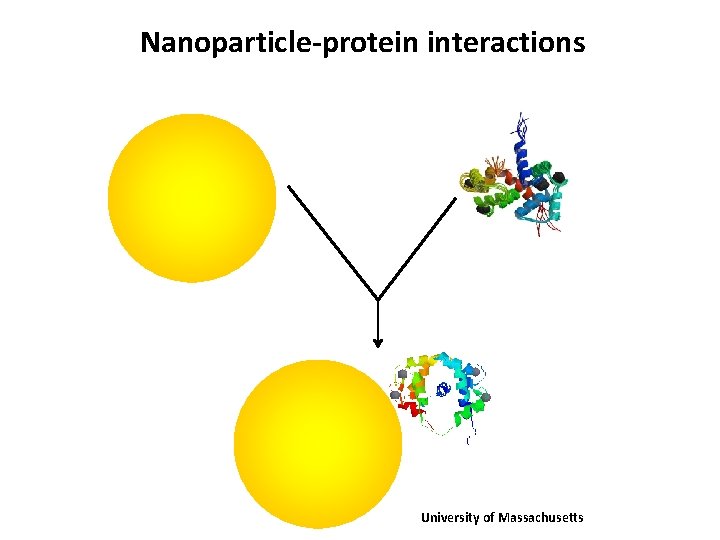
Nanoparticle-protein interactions University of Massachusetts
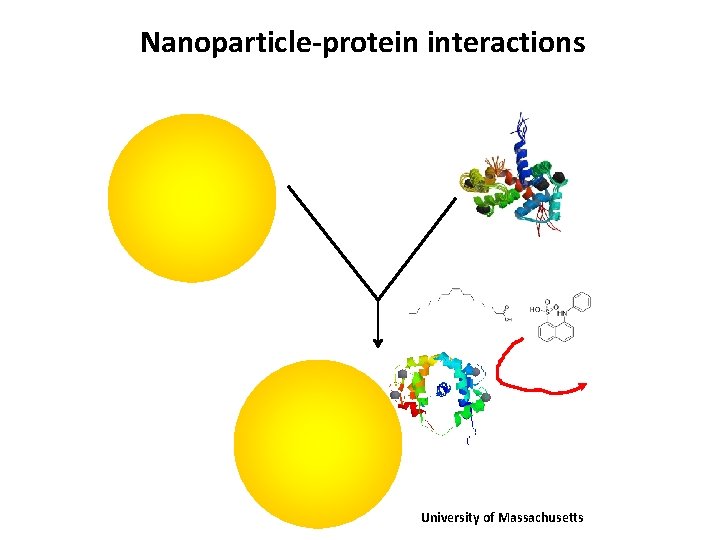
Nanoparticle-protein interactions University of Massachusetts
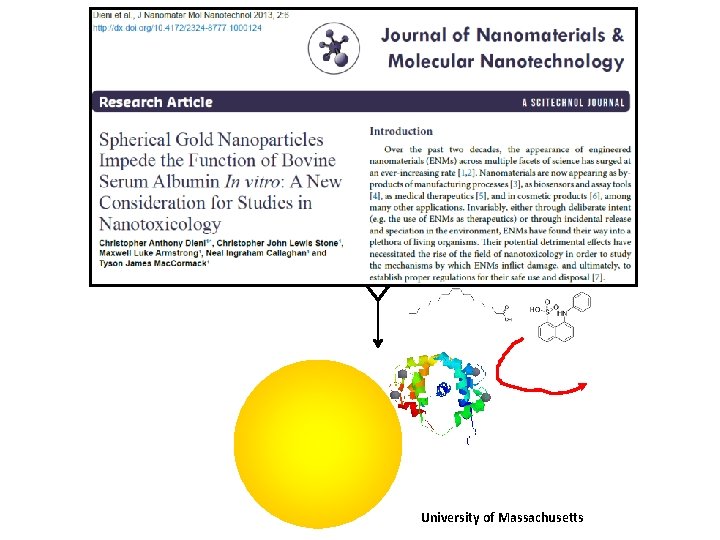
Nanoparticle-protein interactions University of Massachusetts
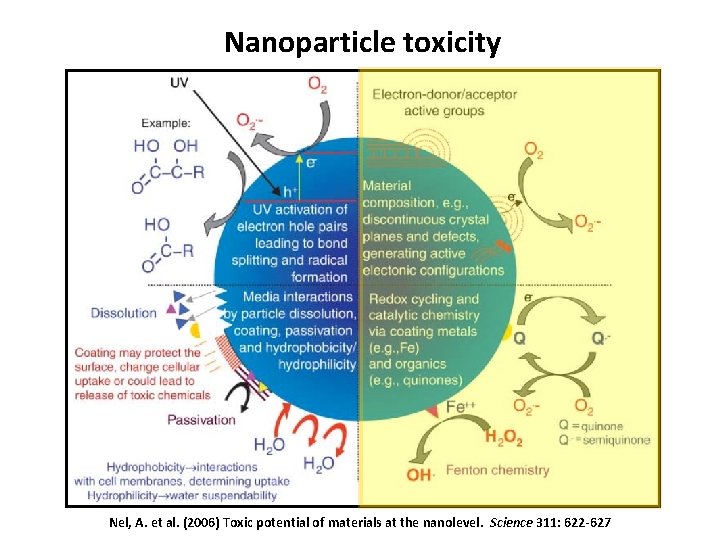
Nanoparticle toxicity Nel, A. et al. (2006) Toxic potential of materials at the nanolevel. Science 311: 622 -627
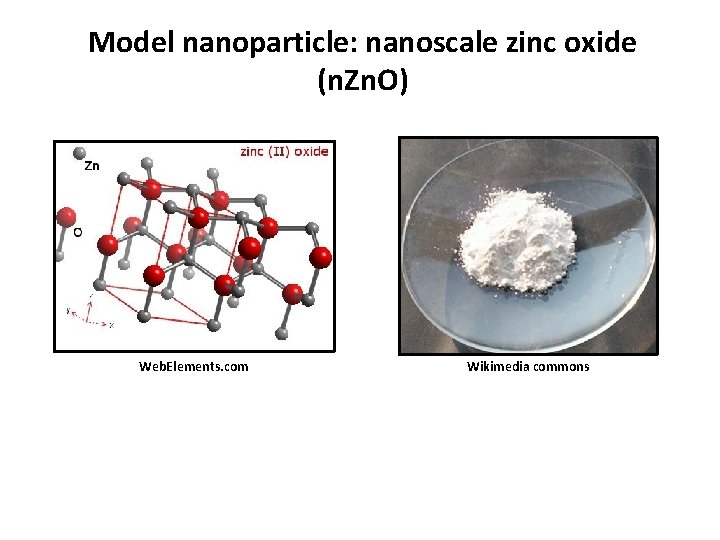
Model nanoparticle: nanoscale zinc oxide (n. Zn. O) Web. Elements. com Wikimedia commons
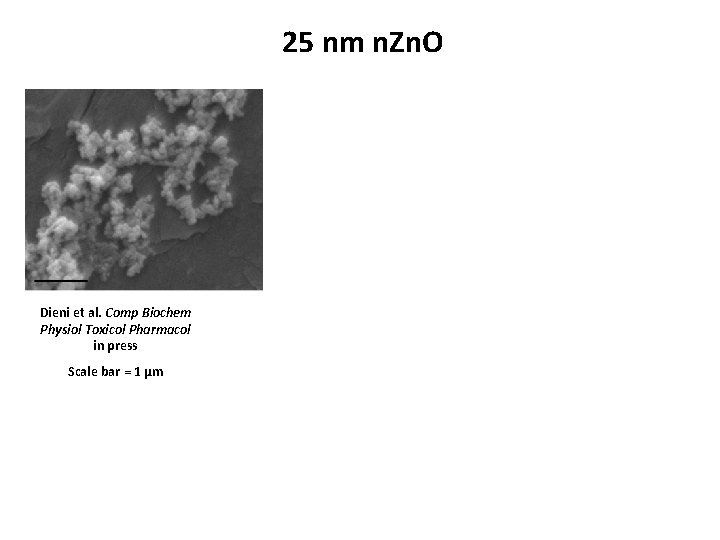
25 nm n. Zn. O Dieni et al. Comp Biochem Physiol Toxicol Pharmacol in press Scale bar = 1 µm
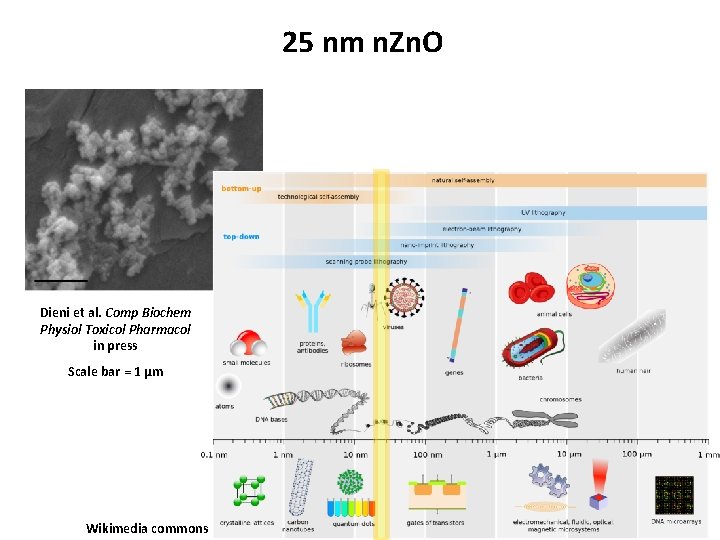
25 nm n. Zn. O Dieni et al. Comp Biochem Physiol Toxicol Pharmacol in press Scale bar = 1 µm Wikimedia commons
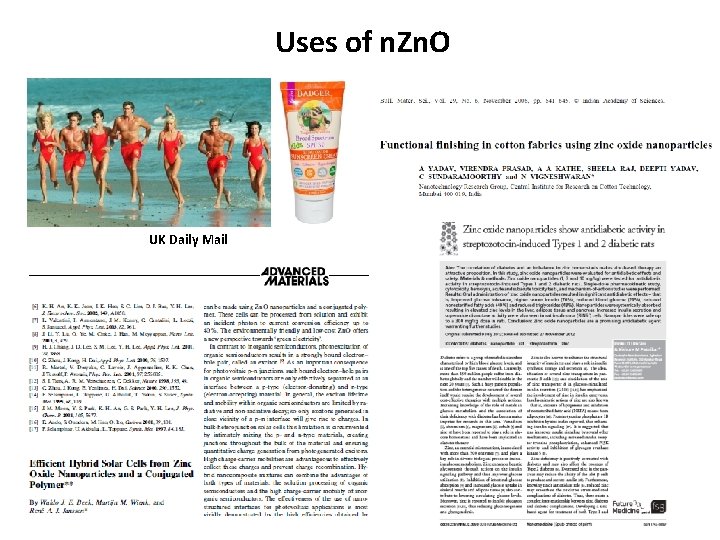
Uses of n. Zn. O UK Daily Mail
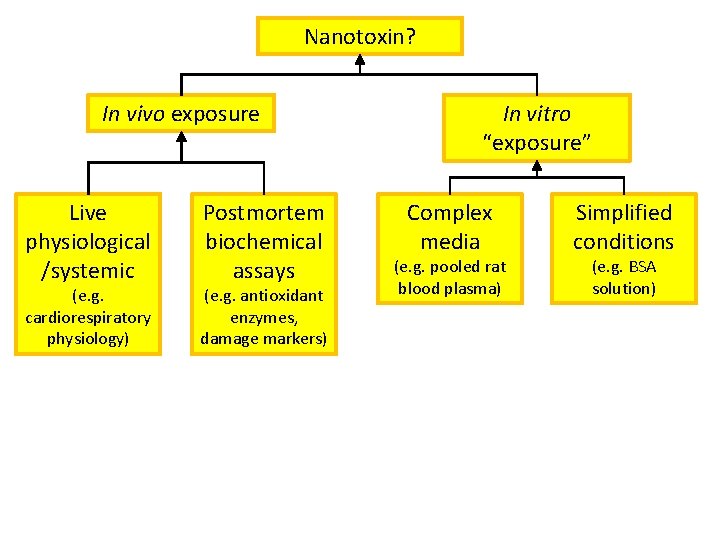
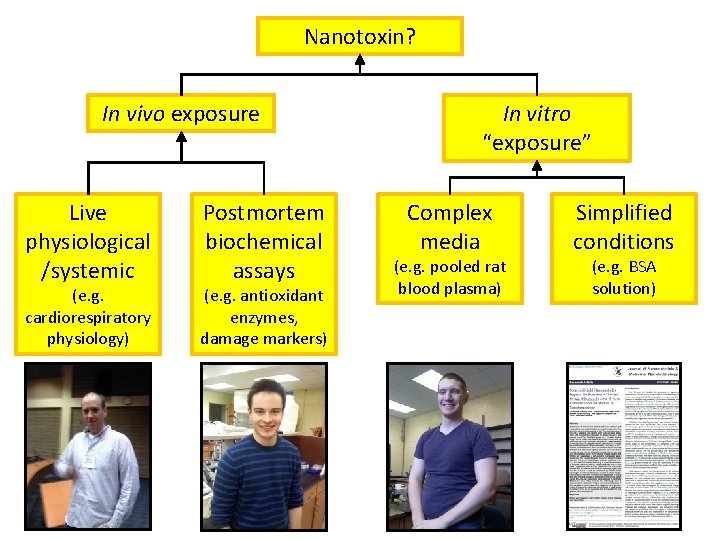
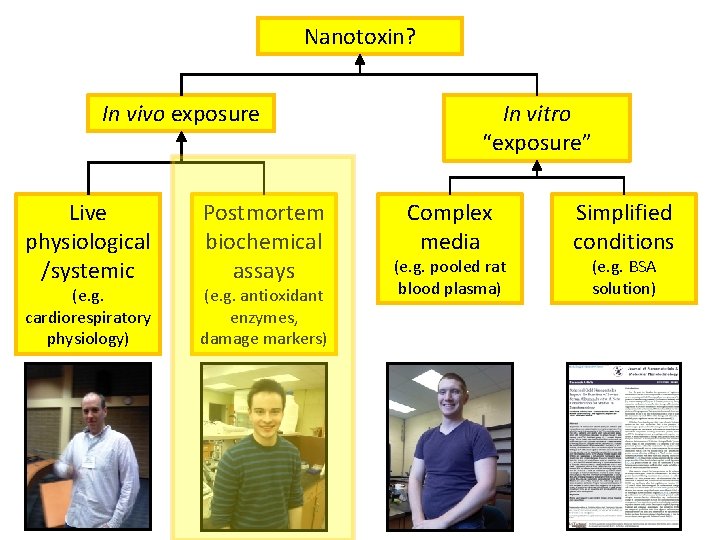
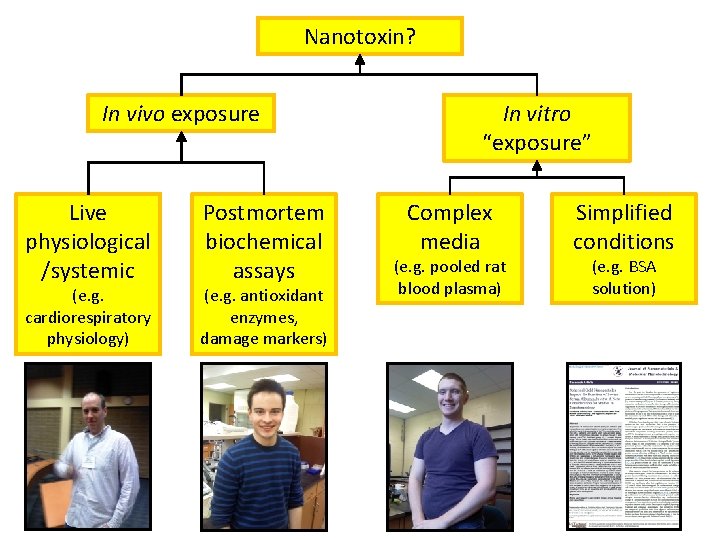
Nanotoxin? In vivo exposure Live physiological /systemic (e. g. cardiorespiratory physiology) Postmortem biochemical assays (e. g. antioxidant enzymes, damage markers) In vitro “exposure” Complex media (e. g. pooled rat blood plasma) Simplified conditions (e. g. BSA solution)
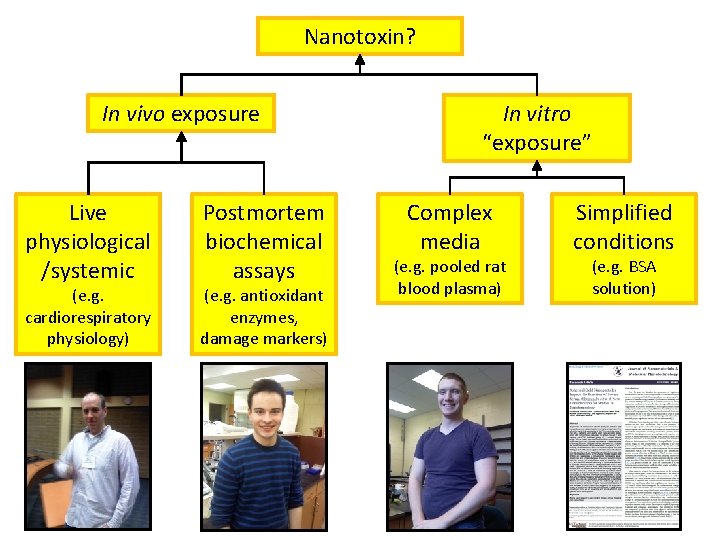
Nanotoxin? In vivo exposure Live physiological /systemic (e. g. cardiorespiratory physiology) Postmortem biochemical assays (e. g. antioxidant enzymes, damage markers) In vitro “exposure” Complex media (e. g. pooled rat blood plasma) Simplified conditions (e. g. BSA solution)
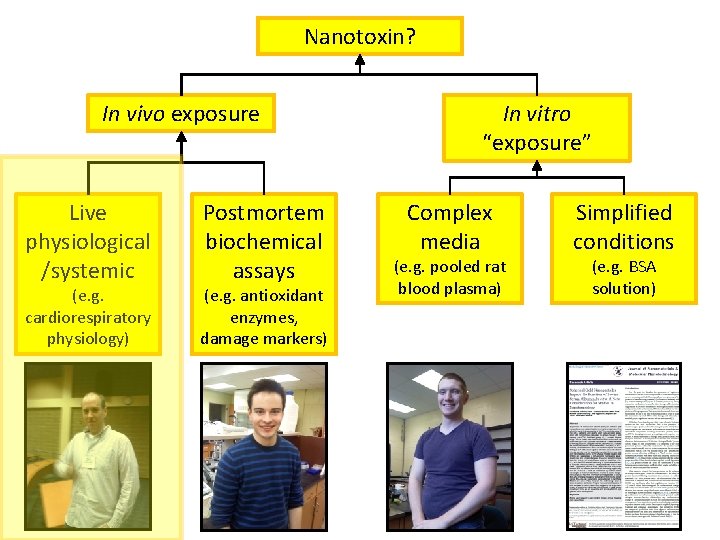
Nanotoxin? In vivo exposure Live physiological /systemic (e. g. cardiorespiratory physiology) Postmortem biochemical assays (e. g. antioxidant enzymes, damage markers) In vitro “exposure” Complex media (e. g. pooled rat blood plasma) Simplified conditions (e. g. BSA solution)
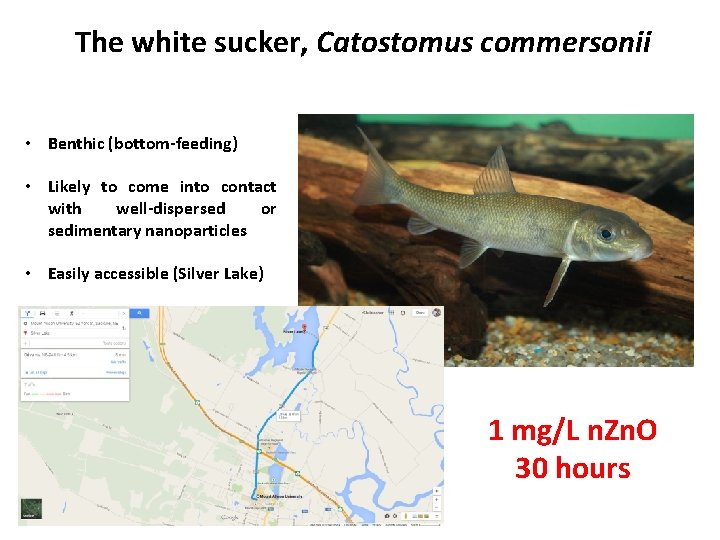
The white sucker, Catostomus commersonii • Benthic (bottom-feeding) • Likely to come into contact with well-dispersed or sedimentary nanoparticles • Easily accessible (Silver Lake) 1 mg/L n. Zn. O 30 hours
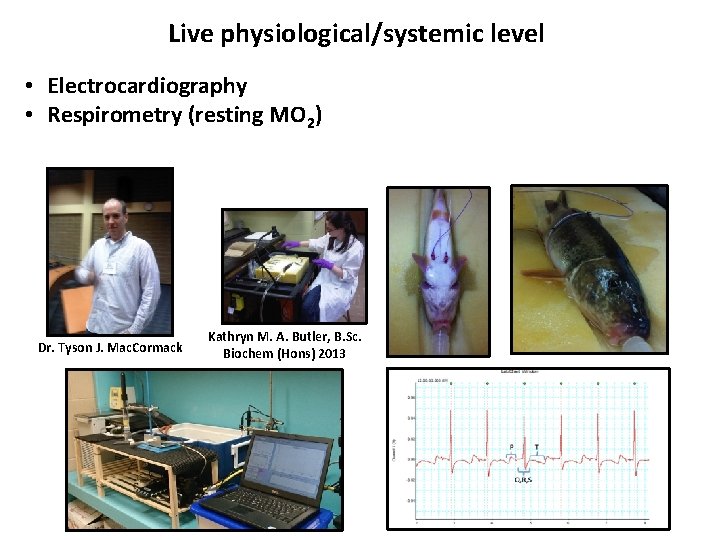
Live physiological/systemic level • Electrocardiography • Respirometry (resting MO 2) Dr. Tyson J. Mac. Cormack Kathryn M. A. Butler, B. Sc. Biochem (Hons) 2013
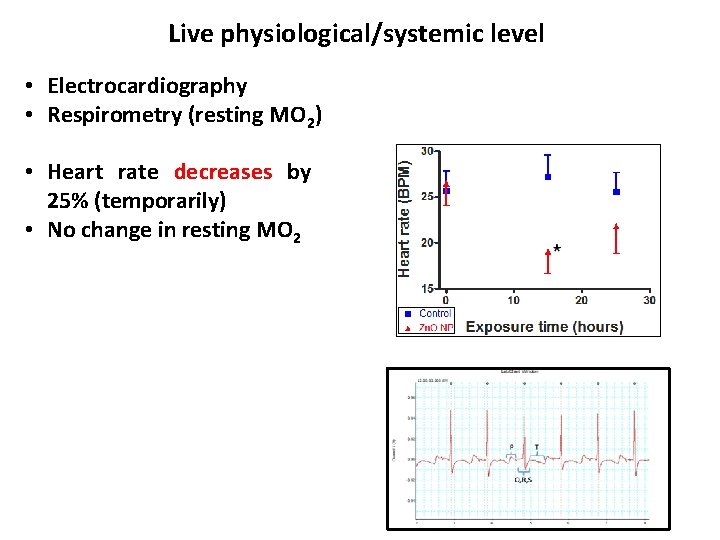
Live physiological/systemic level • Electrocardiography • Respirometry (resting MO 2) • Heart rate decreases by 25% (temporarily) • No change in resting MO 2
Live physiological/systemic level Two schools of thought: • Physiological changes overt enough to affect a whole, live organism are “most meaningful” • Is a toxic or pathologic response “grave enough? ” • Is a therapeutic “good enough? ”
Live physiological/systemic level Two schools of thought: • Physiological changes overt enough to affect a whole, live organism are “most meaningful” • Is a toxic or pathologic response “grave enough? ” • Is a therapeutic “good enough? ” • Changes at the biochemical level may not reveal themselves at the systemic level… yet • Incubation period of an infectious disease before virulence and immune response • Initial mutations leading to cancer • Etc…
Nanotoxin? In vivo exposure Live physiological /systemic (e. g. cardiorespiratory physiology) Postmortem biochemical assays (e. g. antioxidant enzymes, damage markers) In vitro “exposure” Complex media (e. g. pooled rat blood plasma) Simplified conditions (e. g. BSA solution)
Nanotoxin? In vivo exposure Live physiological /systemic (e. g. cardiorespiratory physiology) Postmortem biochemical assays (e. g. antioxidant enzymes, damage markers) In vitro “exposure” Complex media (e. g. pooled rat blood plasma) Simplified conditions (e. g. BSA solution)
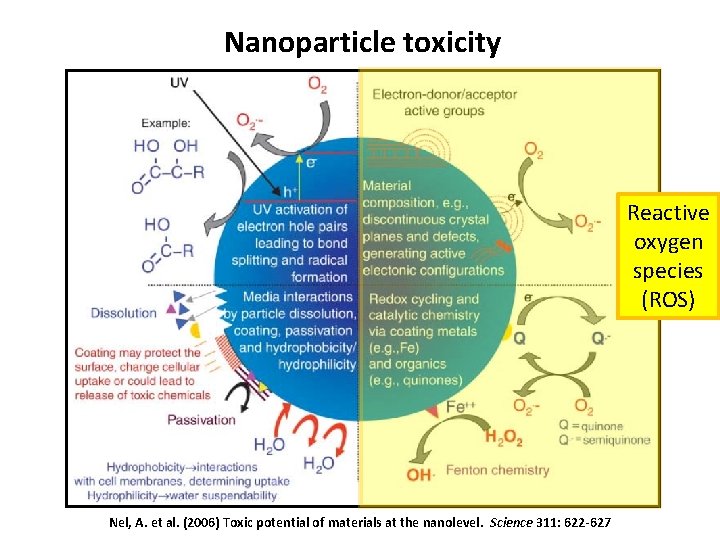
Nanoparticle toxicity Reactive oxygen species (ROS) Nel, A. et al. (2006) Toxic potential of materials at the nanolevel. Science 311: 622 -627
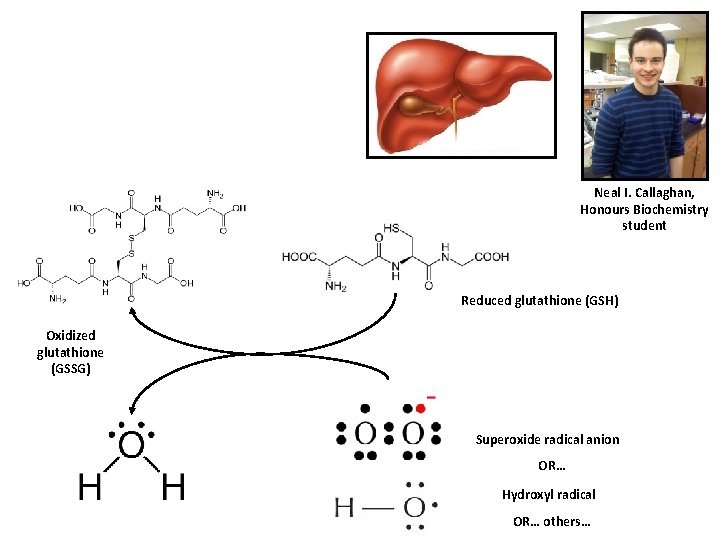
Neal I. Callaghan, Honours Biochemistry student Reduced glutathione (GSH) Oxidized glutathione (GSSG) Superoxide radical anion OR… Hydroxyl radical OR… others…
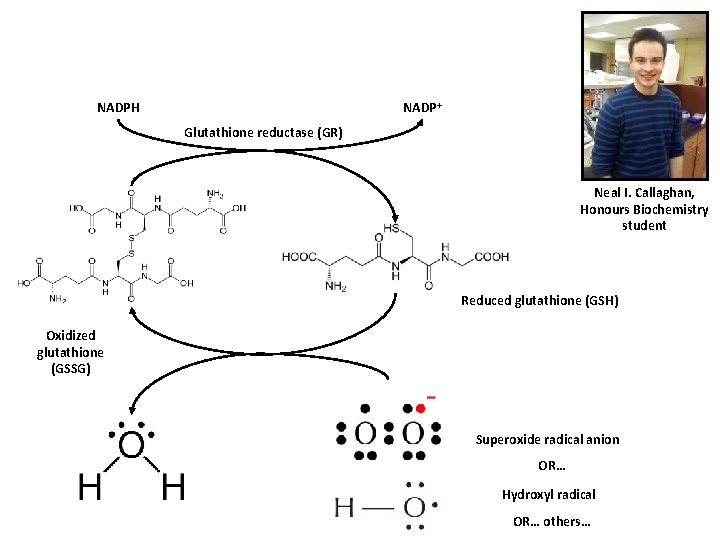
NADP+ NADPH Glutathione reductase (GR) Neal I. Callaghan, Honours Biochemistry student Reduced glutathione (GSH) Oxidized glutathione (GSSG) Superoxide radical anion OR… Hydroxyl radical OR… others…
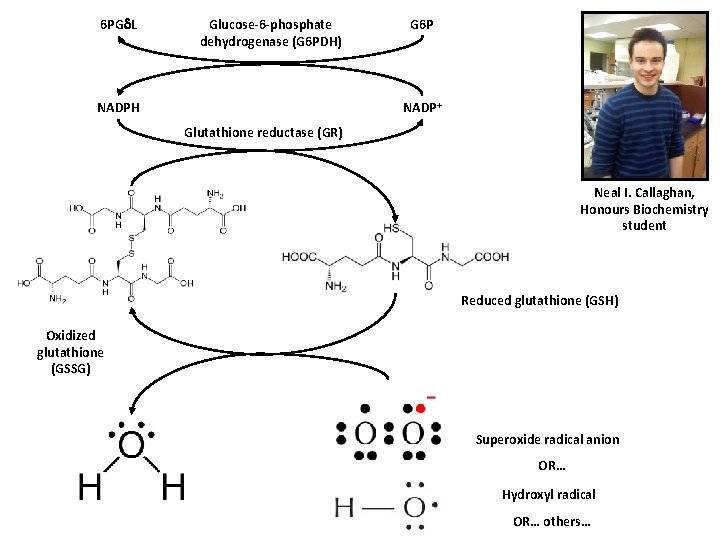
6 PG L Glucose-6 -phosphate dehydrogenase (G 6 PDH) G 6 P NADP+ NADPH Glutathione reductase (GR) Neal I. Callaghan, Honours Biochemistry student Reduced glutathione (GSH) Oxidized glutathione (GSSG) Superoxide radical anion OR… Hydroxyl radical OR… others…
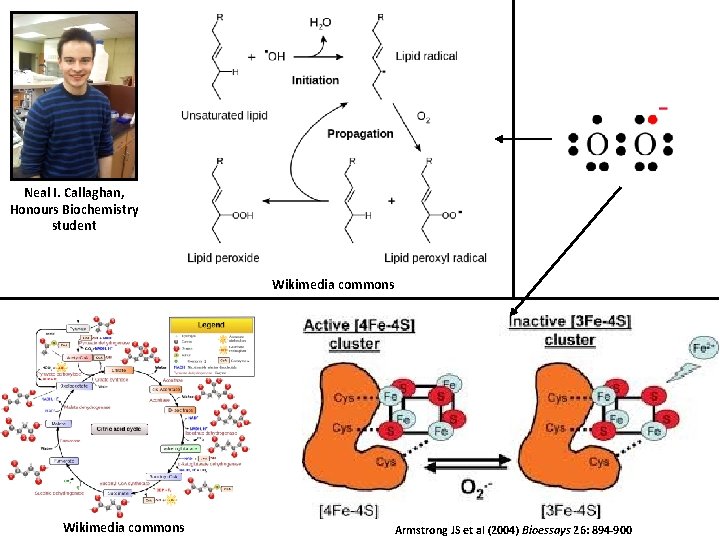
Neal I. Callaghan, Honours Biochemistry student Wikimedia commons Armstrong JS et al (2004) Bioessays 26: 894 -900
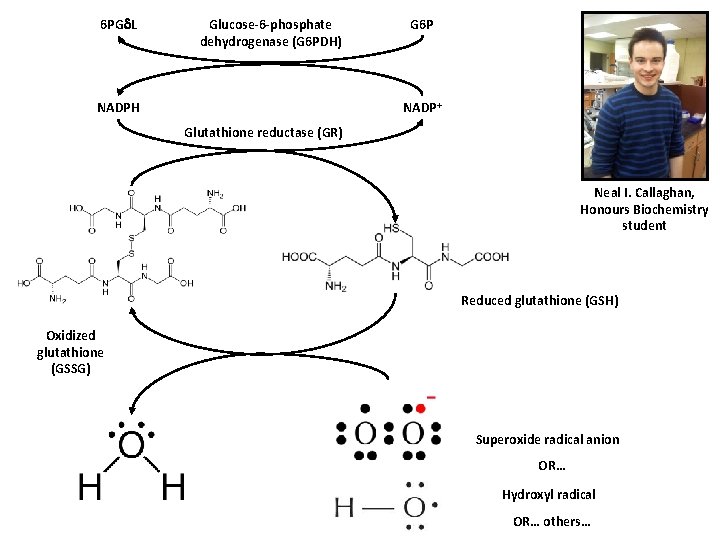
6 PG L Glucose-6 -phosphate dehydrogenase (G 6 PDH) G 6 P NADP+ NADPH Glutathione reductase (GR) Neal I. Callaghan, Honours Biochemistry student Reduced glutathione (GSH) Oxidized glutathione (GSSG) Superoxide radical anion OR… Hydroxyl radical OR… others…
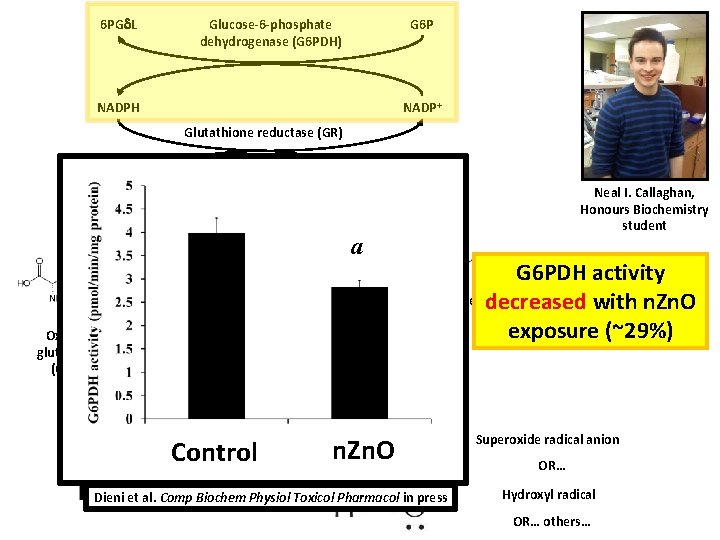
6 PG L G 6 P Glucose-6 -phosphate dehydrogenase (G 6 PDH) NADP+ NADPH Glutathione reductase (GR) a Oxidized glutathione (GSSG) Control n. Zn. O Dieni et al. Comp Biochem Physiol Toxicol Pharmacol in press Neal I. Callaghan, Honours Biochemistry student G 6 PDH activity Reduced glutathione (GSH) decreased with n. Zn. O exposure (~29%) Superoxide radical anion OR… Hydroxyl radical OR… others…
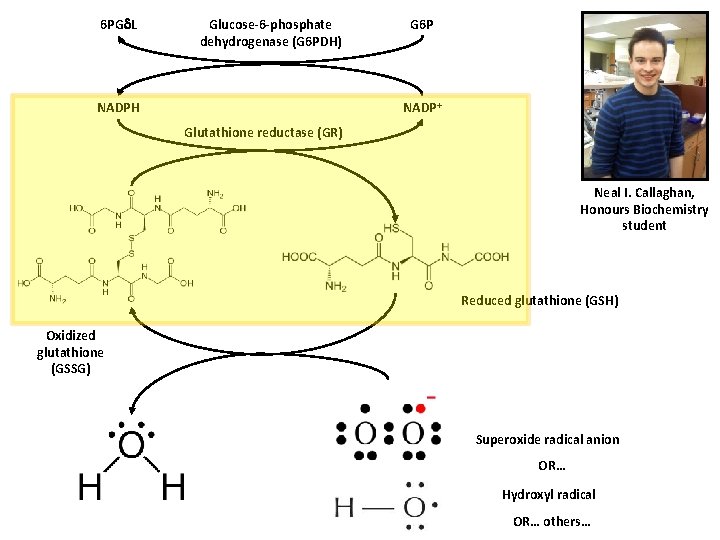
6 PG L Glucose-6 -phosphate dehydrogenase (G 6 PDH) G 6 P NADP+ NADPH Glutathione reductase (GR) Neal I. Callaghan, Honours Biochemistry student Reduced glutathione (GSH) Oxidized glutathione (GSSG) Superoxide radical anion OR… Hydroxyl radical OR… others…
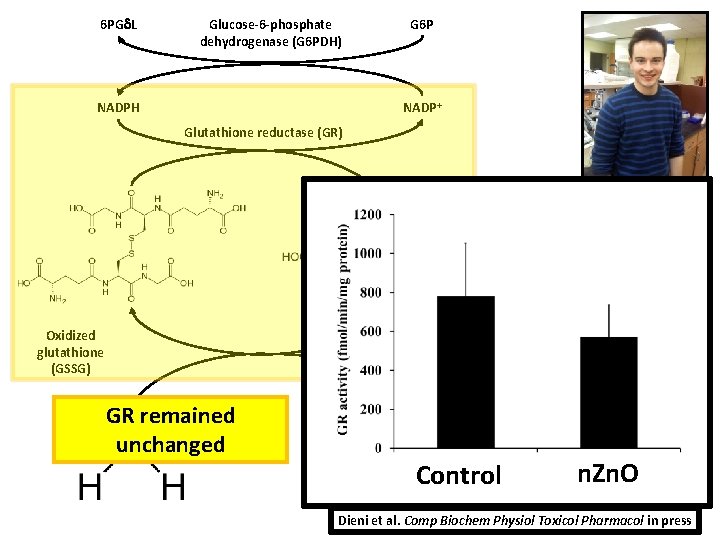
6 PG L Glucose-6 -phosphate dehydrogenase (G 6 PDH) G 6 P NADP+ NADPH Glutathione reductase (GR) Neal I. Callaghan, Honours Biochemistry student Reduced glutathione (GSH) Oxidized glutathione (GSSG) GR remained unchanged Superoxide radical anion Control OR… n. Zn. O Hydroxyl radical Dieni et al. Comp Biochem Physiol Pharmacol in press OR…Toxicol others…
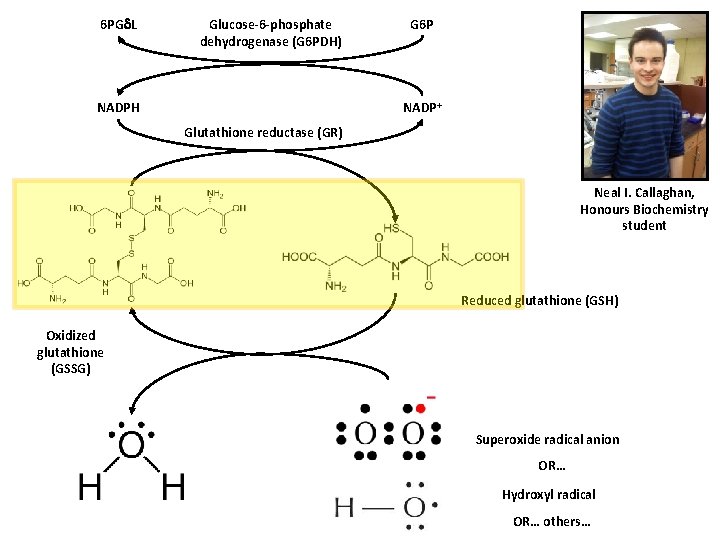
6 PG L Glucose-6 -phosphate dehydrogenase (G 6 PDH) G 6 P NADP+ NADPH Glutathione reductase (GR) Neal I. Callaghan, Honours Biochemistry student Reduced glutathione (GSH) Oxidized glutathione (GSSG) Superoxide radical anion OR… Hydroxyl radical OR… others…
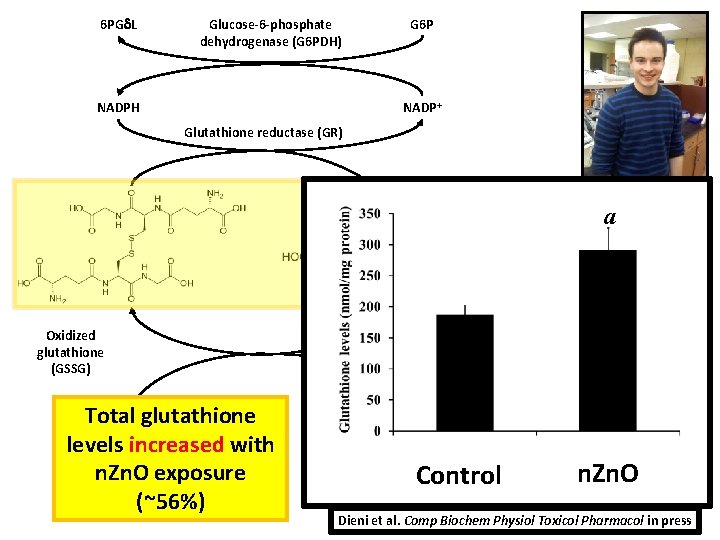
6 PG L Glucose-6 -phosphate dehydrogenase (G 6 PDH) G 6 P NADP+ NADPH Glutathione reductase (GR) Neal I. Callaghan, Honours Biochemistry student a Reduced glutathione (GSH) Oxidized glutathione (GSSG) Total glutathione levels increased with n. Zn. O exposure (~56%) Superoxide radical anion Control OR… n. Zn. O Hydroxyl radical Dieni et al. Comp Biochem Physiol Pharmacol in press OR…Toxicol others…
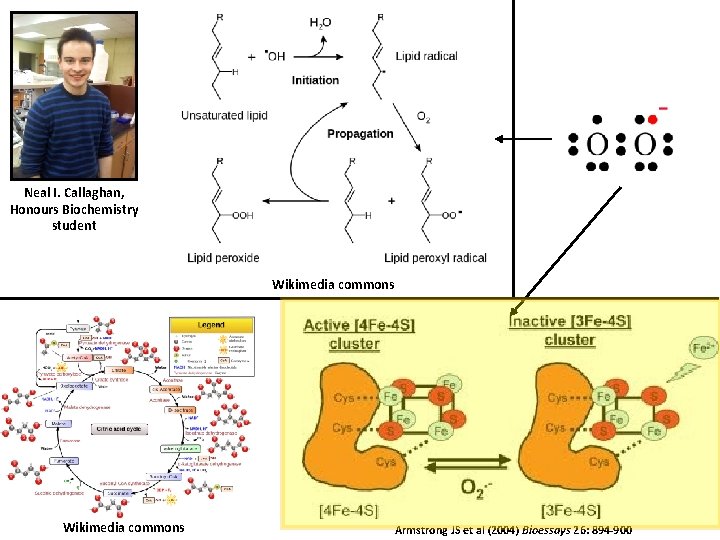
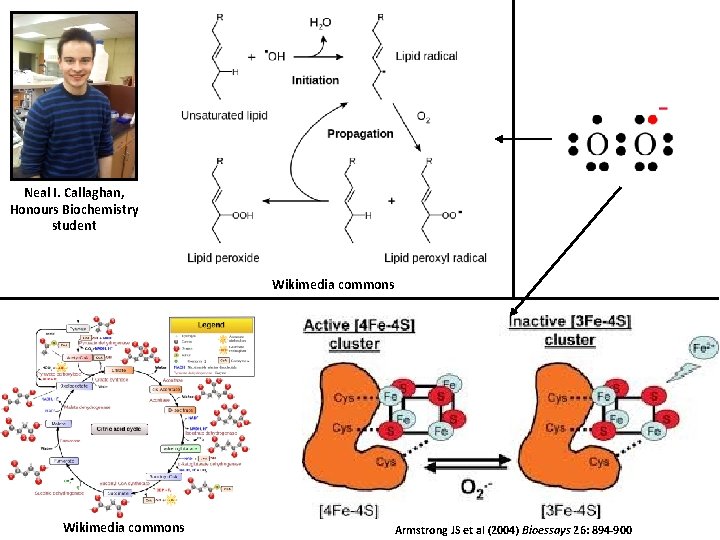
Neal I. Callaghan, Honours Biochemistry student Wikimedia commons Armstrong JS et al (2004) Bioessays 26: 894 -900
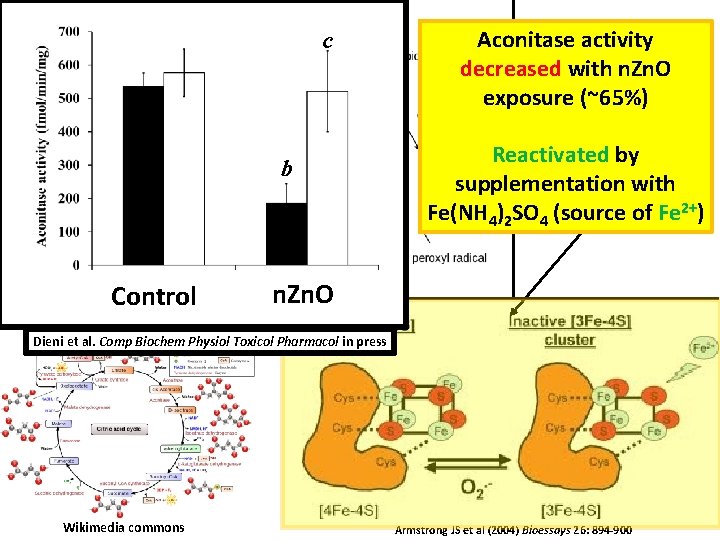
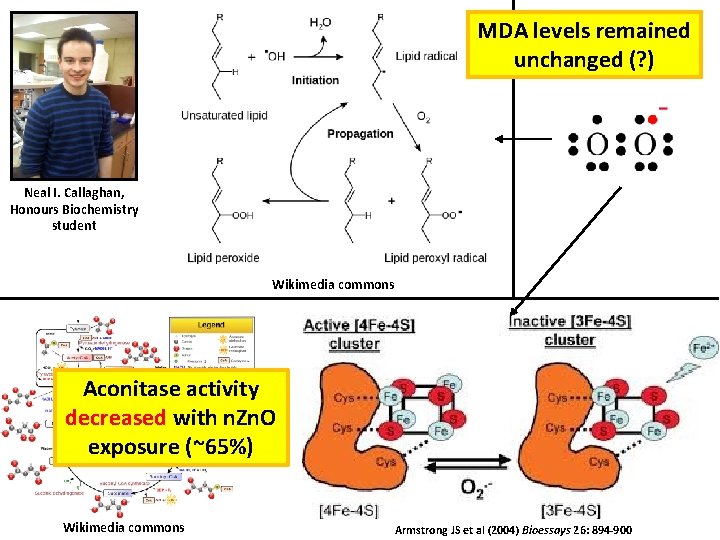
c b Neal I. Callaghan, Honours Biochemistry student Control Aconitase activity decreased with n. Zn. O exposure (~65%) Reactivated by supplementation with Fe(NH 4)2 SO 4 (source of Fe 2+) Wikimedia commons n. Zn. O Dieni et al. Comp Biochem Physiol Toxicol Pharmacol in press Wikimedia commons Armstrong JS et al (2004) Bioessays 26: 894 -900
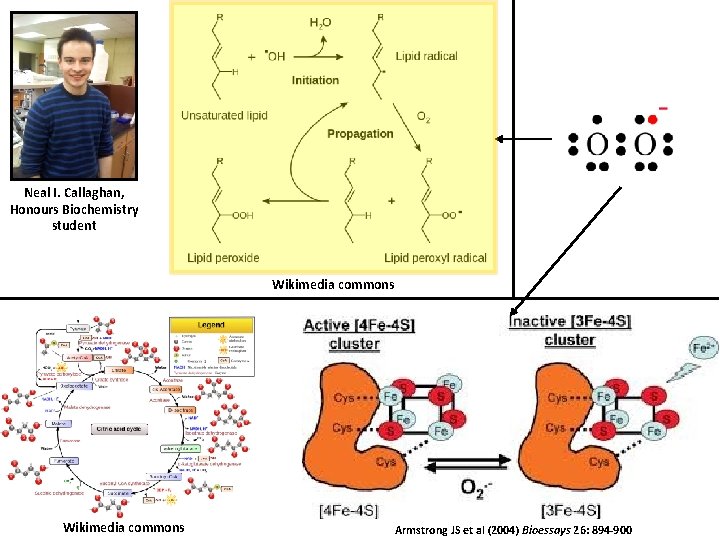
Neal I. Callaghan, Honours Biochemistry student Wikimedia commons Armstrong JS et al (2004) Bioessays 26: 894 -900
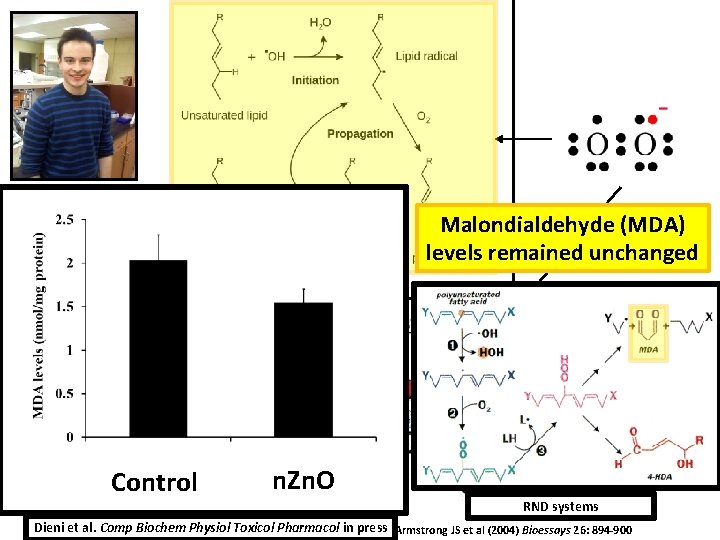
Neal I. Callaghan, Honours Biochemistry student Malondialdehyde (MDA) levels remained unchanged Wikimedia commons Control n. Zn. O RND systems Dieni. Wikimedia et al. Compcommons Biochem Physiol Toxicol Pharmacol in press Armstrong JS et al (2004) Bioessays 26: 894 -900
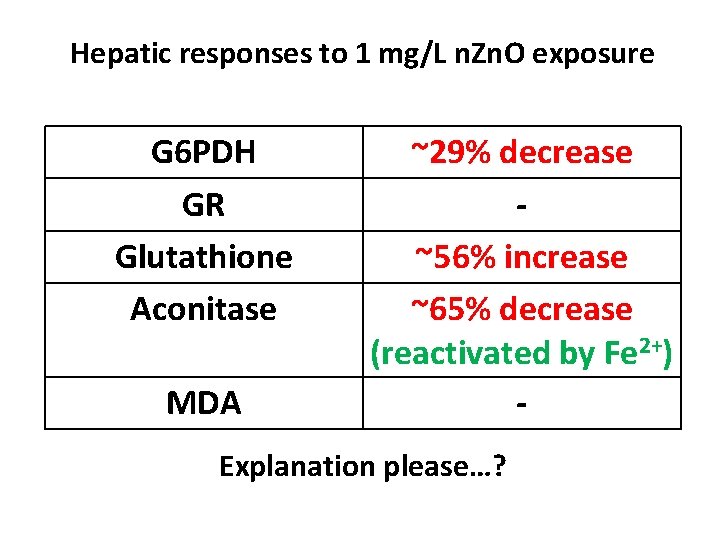
Hepatic responses to 1 mg/L n. Zn. O exposure G 6 PDH GR Glutathione Aconitase MDA ~29% decrease ~56% increase ~65% decrease (reactivated by Fe 2+) - Explanation please…?
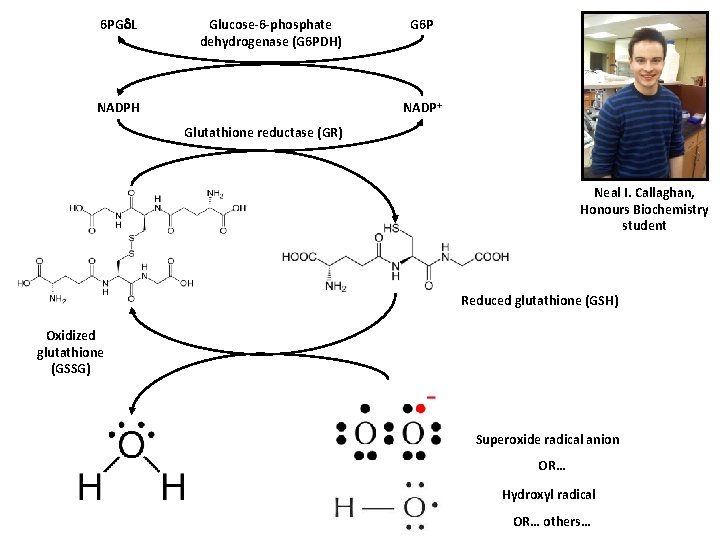
6 PG L Glucose-6 -phosphate dehydrogenase (G 6 PDH) G 6 P NADP+ NADPH Glutathione reductase (GR) Neal I. Callaghan, Honours Biochemistry student Reduced glutathione (GSH) Oxidized glutathione (GSSG) Superoxide radical anion OR… Hydroxyl radical OR… others…
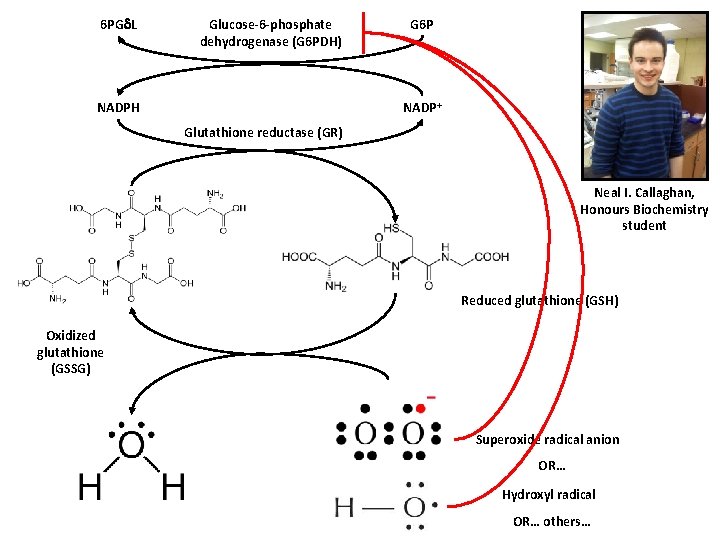
6 PG L Glucose-6 -phosphate dehydrogenase (G 6 PDH) G 6 P NADP+ NADPH Glutathione reductase (GR) Neal I. Callaghan, Honours Biochemistry student Reduced glutathione (GSH) Oxidized glutathione (GSSG) Superoxide radical anion OR… Hydroxyl radical OR… others…
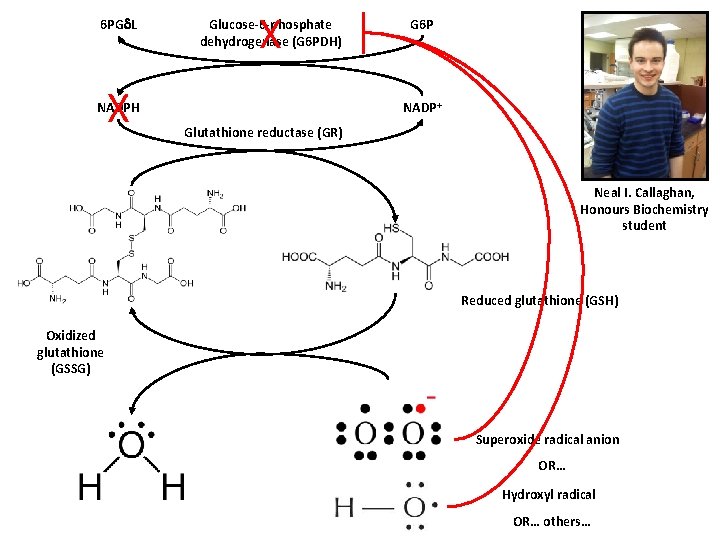
6 PG L X X Glucose-6 -phosphate dehydrogenase (G 6 PDH) G 6 P NADP+ NADPH Glutathione reductase (GR) Neal I. Callaghan, Honours Biochemistry student Reduced glutathione (GSH) Oxidized glutathione (GSSG) Superoxide radical anion OR… Hydroxyl radical OR… others…
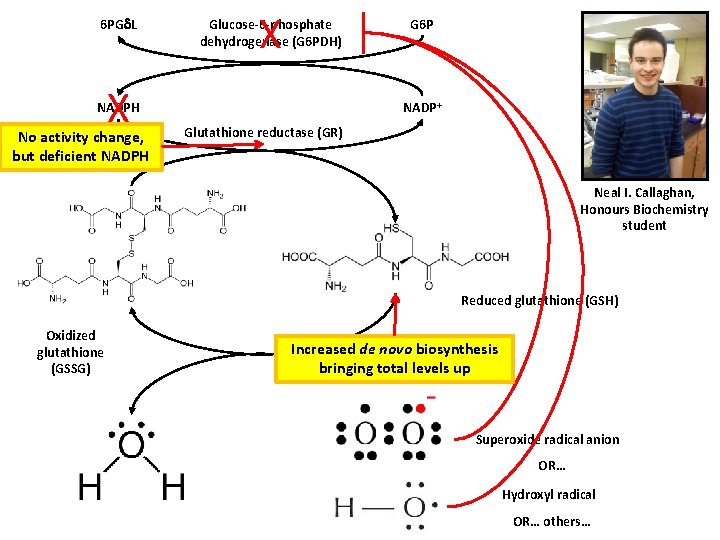
6 PG L X X Glucose-6 -phosphate dehydrogenase (G 6 PDH) NADP+ NADPH No activity change, but deficient NADPH G 6 P Glutathione reductase (GR) Neal I. Callaghan, Honours Biochemistry student Reduced glutathione (GSH) Oxidized glutathione (GSSG) Increased de novo biosynthesis bringing total levels up Superoxide radical anion OR… Hydroxyl radical OR… others…
Neal I. Callaghan, Honours Biochemistry student Wikimedia commons Armstrong JS et al (2004) Bioessays 26: 894 -900
MDA levels remained unchanged (? ) Neal I. Callaghan, Honours Biochemistry student Wikimedia commons Aconitase activity decreased with n. Zn. O exposure (~65%) Wikimedia commons Armstrong JS et al (2004) Bioessays 26: 894 -900
Nanotoxin? In vivo exposure Live physiological /systemic (e. g. cardiorespiratory physiology) Postmortem biochemical assays (e. g. antioxidant enzymes, damage markers) In vitro “exposure” Complex media (e. g. pooled rat blood plasma) Simplified conditions (e. g. BSA solution)
Nanotoxin? In vivo exposure Live physiological /systemic (e. g. cardiorespiratory physiology) Postmortem biochemical assays (e. g. antioxidant enzymes, damage markers) In vitro “exposure” Complex media (e. g. pooled rat blood plasma) Simplified conditions (e. g. BSA solution)
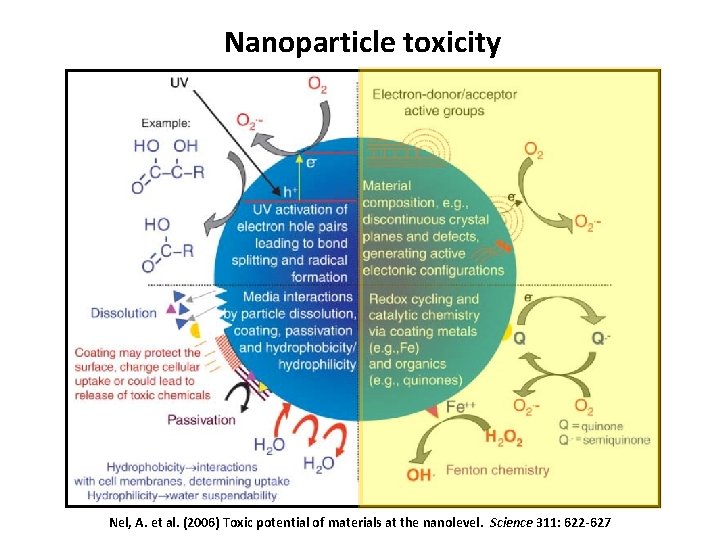
Nanoparticle toxicity Nel, A. et al. (2006) Toxic potential of materials at the nanolevel. Science 311: 622 -627
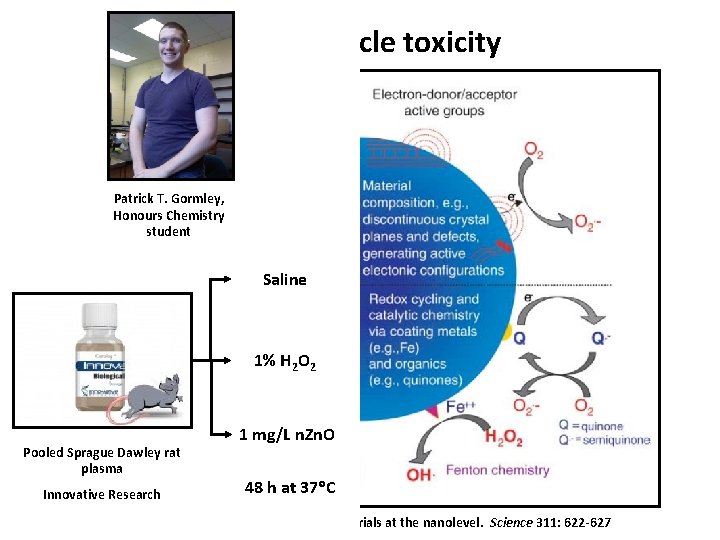
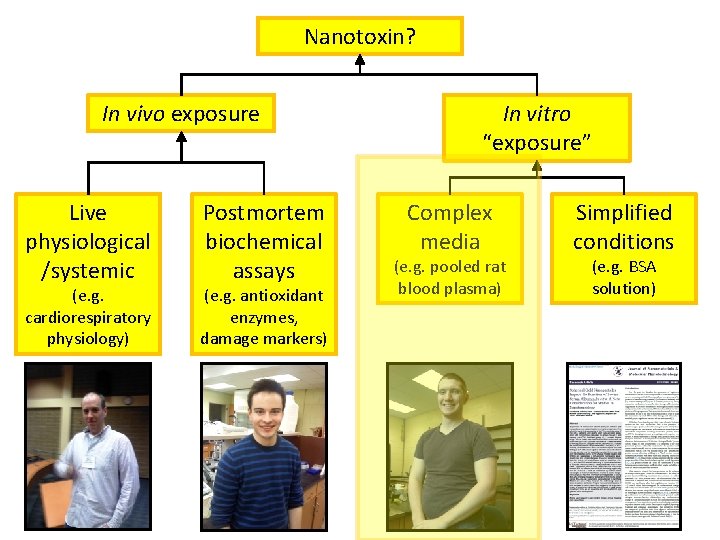
Nanoparticle toxicity Patrick T. Gormley, Honours Chemistry student Saline 1% H 2 O 2 Pooled Sprague Dawley rat plasma Innovative Research 1 mg/L n. Zn. O 48 h at 37 C Nel, A. et al. (2006) Toxic potential of materials at the nanolevel. Science 311: 622 -627
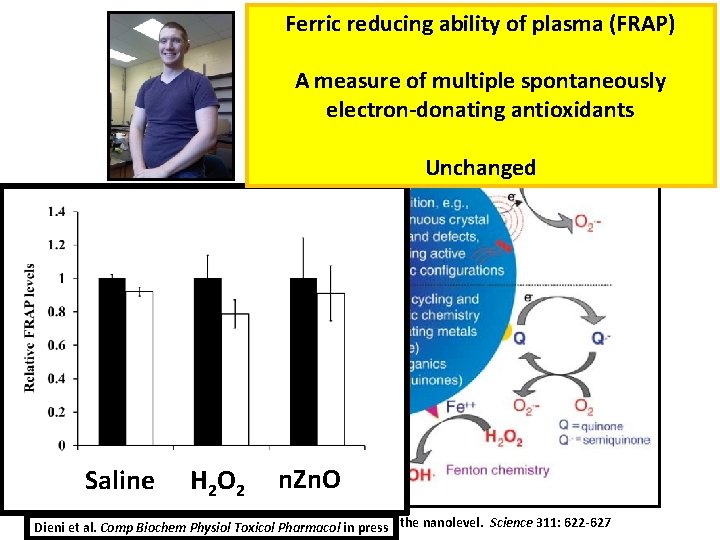
Ferric reducing ability of plasma (FRAP) Nanoparticle toxicity A measure of multiple spontaneously electron-donating antioxidants Unchanged Patrick T. Gormley, Honours Chemistry student Saline 1% H 2 O 2 Pooled Sprague Dawley rat plasma Saline Innovative Research 1 mg/L n. Zn. O H 2 O 248 h n. Zn. O at 37 C Nel, A. et al. (2006) Toxic potential of materials Dieni et al. Comp Biochem Physiol Toxicol Pharmacol in pressat the nanolevel. Science 311: 622 -627
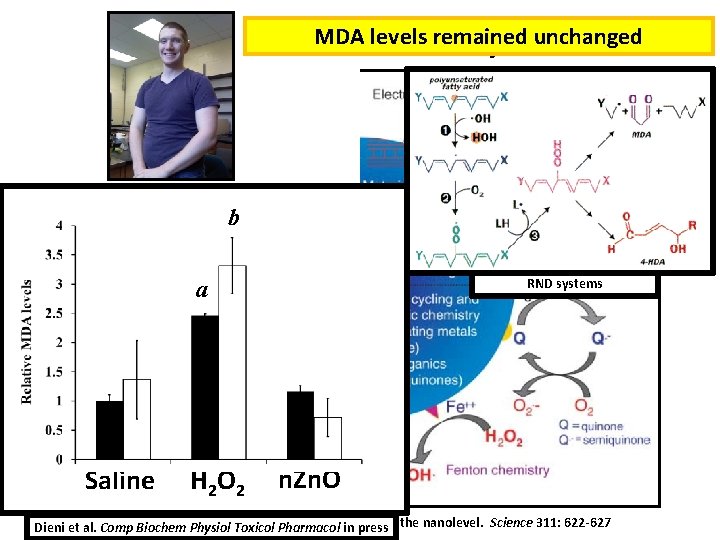
MDA levels remained unchanged Nanoparticle toxicity Patrick T. Gormley, Honours Chemistry student a b Saline RND systems 1% H 2 O 2 Pooled Sprague Dawley rat plasma Saline Innovative Research 1 mg/L n. Zn. O H 2 O 248 h n. Zn. O at 37 C Nel, A. et al. (2006) Toxic potential of materials Dieni et al. Comp Biochem Physiol Toxicol Pharmacol in pressat the nanolevel. Science 311: 622 -627
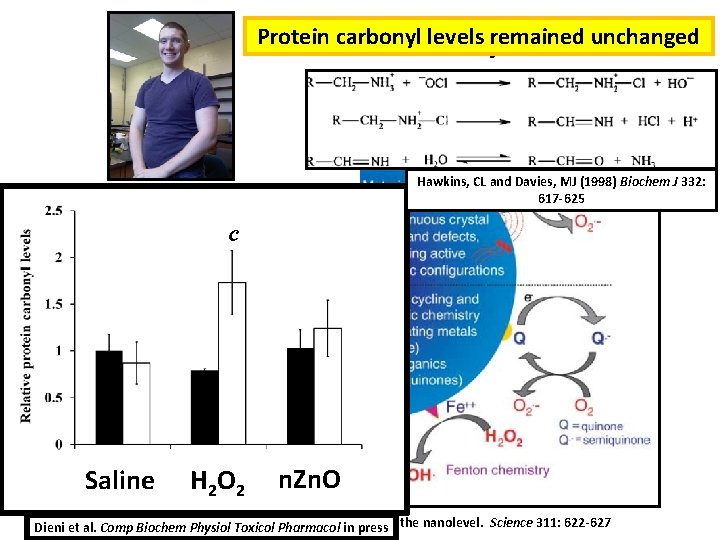
Protein carbonyl levels remained unchanged Nanoparticle toxicity Patrick T. Gormley, Honours Chemistry student Hawkins, CL and Davies, MJ (1998) Biochem J 332: 617 -625 c Saline 1% H 2 O 2 Pooled Sprague Dawley rat plasma Saline Innovative Research 1 mg/L n. Zn. O H 2 O 248 h n. Zn. O at 37 C Nel, A. et al. (2006) Toxic potential of materials Dieni et al. Comp Biochem Physiol Toxicol Pharmacol in pressat the nanolevel. Science 311: 622 -627
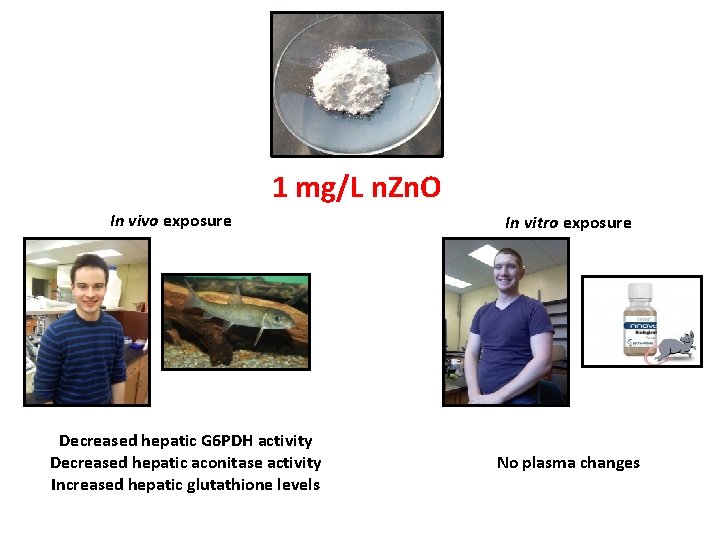
1 mg/L n. Zn. O In vivo exposure Decreased hepatic G 6 PDH activity Decreased hepatic aconitase activity Increased hepatic glutathione levels In vitro exposure No plasma changes
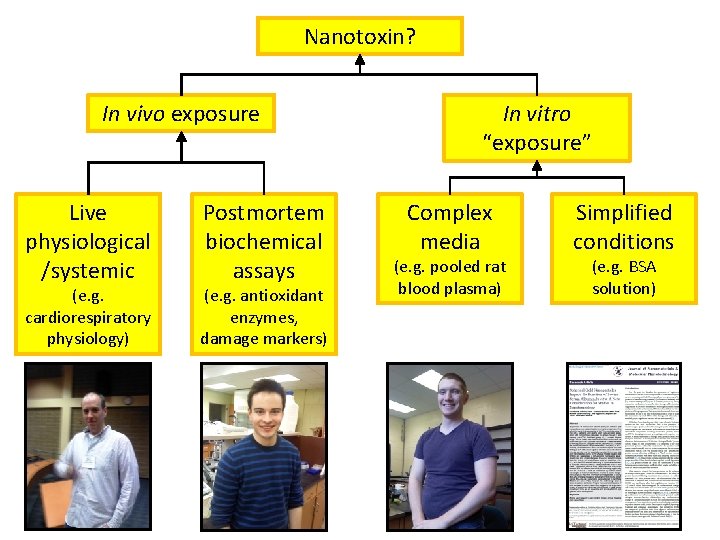
Nanotoxin? In vivo exposure Live physiological /systemic (e. g. cardiorespiratory physiology) Postmortem biochemical assays (e. g. antioxidant enzymes, damage markers) In vitro “exposure” Complex media (e. g. pooled rat blood plasma) Simplified conditions (e. g. BSA solution)
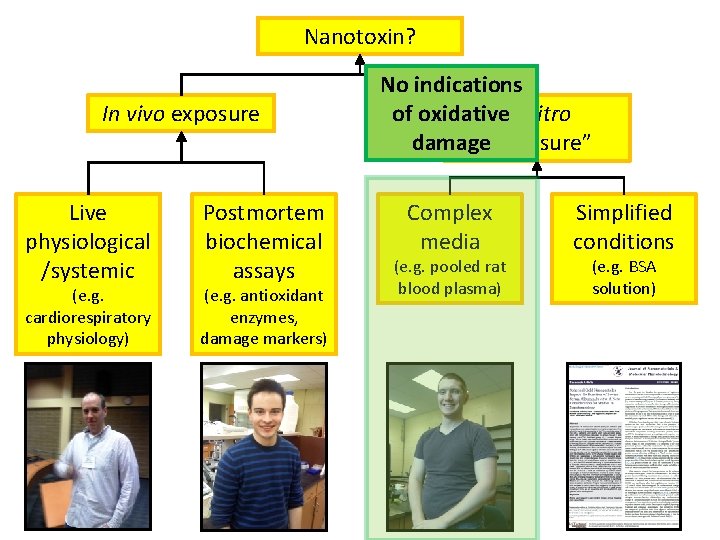
Nanotoxin? In vivo exposure Live physiological /systemic (e. g. cardiorespiratory physiology) Postmortem biochemical assays (e. g. antioxidant enzymes, damage markers) No indications of oxidative. In vitro damage“exposure” Complex media (e. g. pooled rat blood plasma) Simplified conditions (e. g. BSA solution)
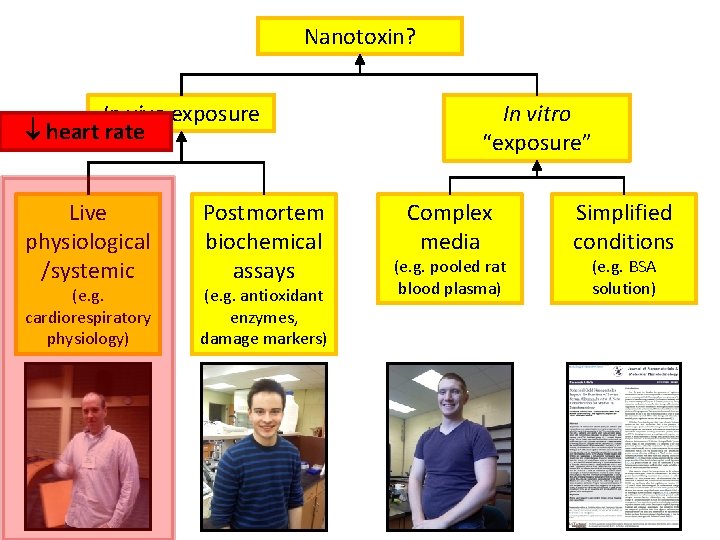
Nanotoxin? In vivo exposure heart rate Live physiological /systemic (e. g. cardiorespiratory physiology) Postmortem biochemical assays (e. g. antioxidant enzymes, damage markers) In vitro “exposure” Complex media (e. g. pooled rat blood plasma) Simplified conditions (e. g. BSA solution)
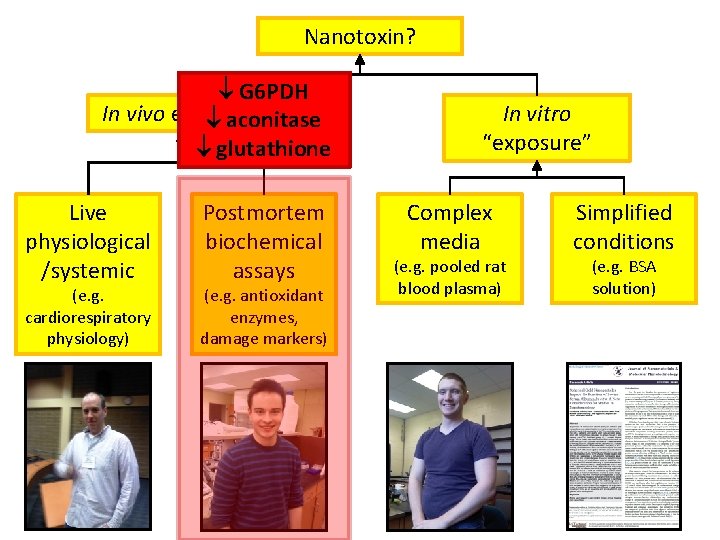
Nanotoxin? G 6 PDH In vivo exposure aconitase glutathione Live physiological /systemic (e. g. cardiorespiratory physiology) Postmortem biochemical assays (e. g. antioxidant enzymes, damage markers) In vitro “exposure” Complex media (e. g. pooled rat blood plasma) Simplified conditions (e. g. BSA solution)
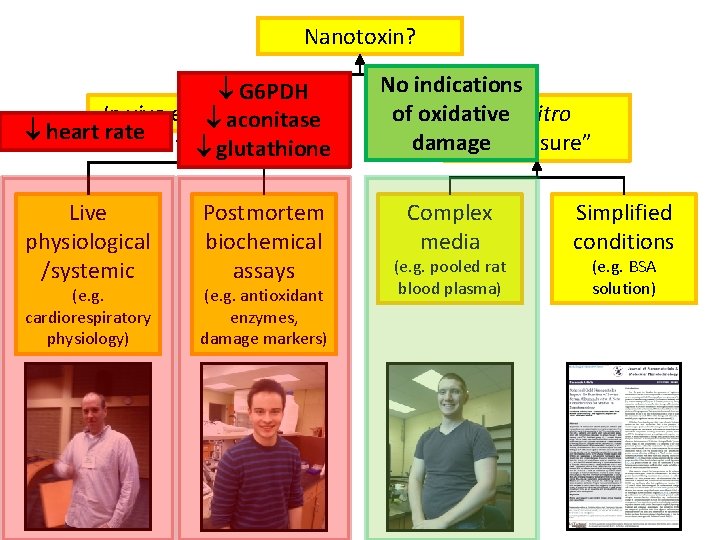
Nanotoxin? G 6 PDH In vivo exposure aconitase heart rate glutathione Live physiological /systemic (e. g. cardiorespiratory physiology) Postmortem biochemical assays (e. g. antioxidant enzymes, damage markers) No indications of oxidative. In vitro damage“exposure” Complex media (e. g. pooled rat blood plasma) Simplified conditions (e. g. BSA solution)
Thank you! Dieni Research Group Mac. Cormack Lab Neal I. Callaghan Patrick T. Gormley Dr. Tyson J. Mac. Cormack Kathryn M. A. Butler Wayne Anderson – Harold Crabtree Aqualab James Ehrman – Mount Allison University Digital Microscopy Facility Dr. Terry Belke and Jackie Jacob-Vogels – Belke Lab rat blood plasma (initial plasma trials) Maria Thistle – biostatistics (revisions of latest manuscript) Marjorie Young Bell Fund Goodridge Summer Research Scholarship Universitas Summer Undergraduate Award
Questions? Dieni CA, Callaghan NI, Gormley PT, Butler KMA, Mac. Cormack TJ. Physiological hepatic response to zinc oxide nanoparticle exposure in the white sucker, Catostomus commersonii. Comp Biochem Physiol Toxicol Pharmacol in press Dieni CA, Stone CJL, Armstrong ML, Callaghan NI, Mac. Cormack TJ. 2013. Spherical gold nanoparticles impede the function of bovine serum albumin in vitro: a new consideration for studies in nanotoxicology. J Nanomater Mol Nanotechnol 2: 6 cdieni@mta. ca http: //chrisdieni. com http: //www. facebook. com/Dieni. Research. Group
- Slides: 61