
Traffic Management Introduction Traffic management is used to
- Slides: 17
Traffic Management
Introduction § § § Traffic management is used to describe the process of adjusting or adapting the use of the existing road system to meet specified objectives without resorting to substantial new road construction. Traffic management may be undertaken on a small or large scale, either by itself to improve conditions in an area. Or it may be carried out in association with new construction or infrastructural project.
Introduction § § Traffic management is to ensure the overall best use of existing urban transport facilities, subject to constraints of environmental preservation and public acceptability. Traffic patterns on an urban road network are complex and change continuously with time and with operating conditions.
Objectives Traffic management is undertaken to achieve some or all of the following objectives, § § Reduction in road accidents Environmental improvements Improved access for people and goods Improved traffic flows on primary distributor roads and
Techniques and Powers There are four principal types of traffic management techniques 1. Those which involve a physical alteration to the road system 2. Those which involve some form of regulatory measure 3. The provision of information for road users 4. The introduction of charges for the use of facilities (e. g. parking)
Physical Measures Physical alterations to the road system may be undertaken for variety of purposes. E. g. § Re-allocation of existing highway space (to assist pedestrians, cyclist, parked or other stationary vehicles) § Alteration to road layouts at junctions § Closing or opening of vehicles to particular classes of vehicular traffic in one or both directions § Coordinating the phasing of traffic signals § Provisions of crossing facilities or traffic signals, road markings etc.
Traffic Regulations Method of regulating the use of the road includes; § Control by traffic signals § Imposition of speed limits § Introduction of one way operations § Exclusion of vehicles by size or weight § Limitation on parking and loading § Temporary regulations
Management Techniques Should be: § Relatively inexpensive § Easy to implement § Reduce the accidents § Protect the environment § Flexible to land use changes § Economically beneficial
Different Management Techniques
Road Paint Measures § § Mark the possible turns Indicate the banned turns Zebra crossings Mark specific lanes
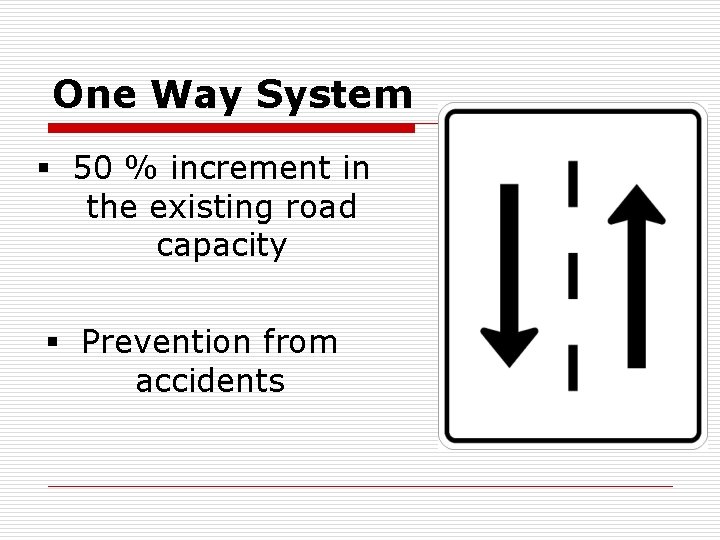
One Way System § 50 % increment in the existing road capacity § Prevention from accidents
Pedestrianization Improved public transport system Relative facilities to pedestrians Passenger information system Persuading people to pedestrianization by providing safe paths § Awareness that pedestrianization is healthful § Providing separate bus and cycle lanes § Limit of car ownership § §
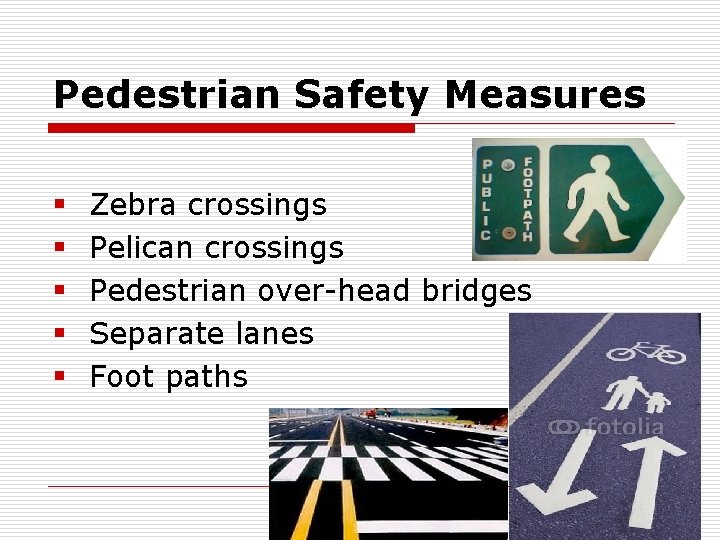
Pedestrian Safety Measures § § § Zebra crossings Pelican crossings Pedestrian over-head bridges Separate lanes Foot paths
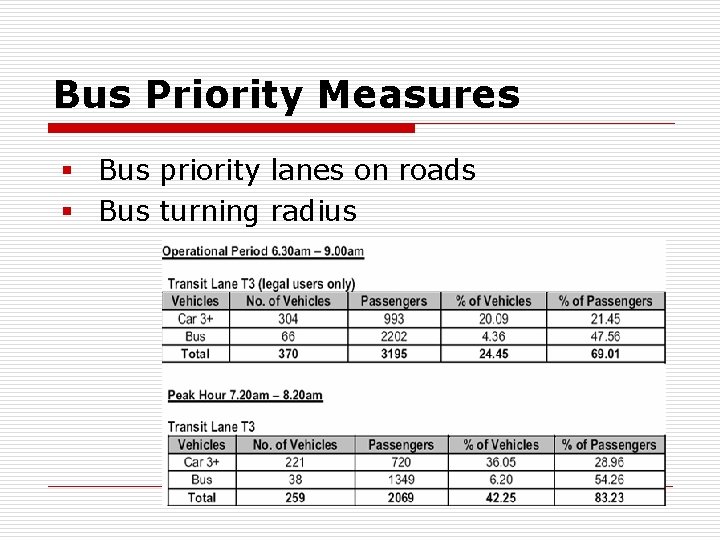
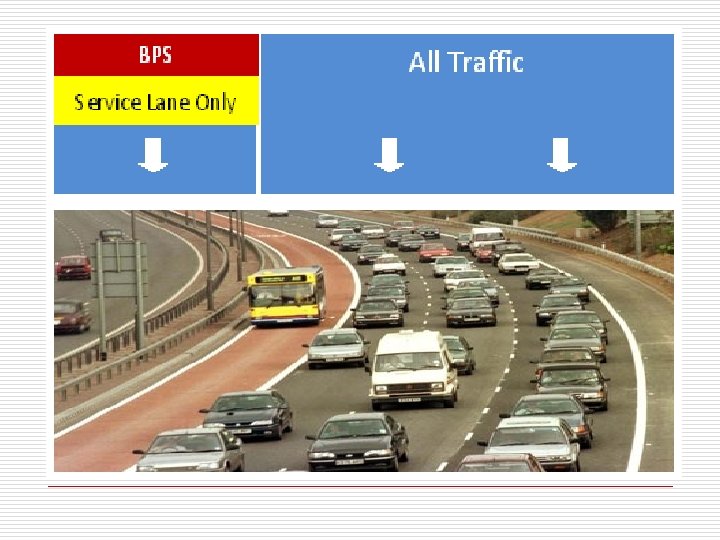
Bus Priority Measures § Bus priority lanes on roads § Bus turning radius
Junction Controls § Appropriate Traffic Signals § Provision of Roundabouts (Rotary Junctions) § Provision of underpasses & flyovers § Proper side-road Entries § Flared road sides § Undisturbed Through Traffic § Traffic Police Control Measures
Linked Traffic Signals § Linking of signals with adjacent junctions